Kodiak Assembly weighs new revenue and unlocks unused savings
In a single Thursday meeting, the Kodiak Island Borough Assembly worked both ends of its ledger — weighing a tax on the nonresidents who take most of the island's fish and game, and switching on a cost-saving purchasing account it had held for years but never used.
Roughly three out of four deer shot in the Kodiak Island Borough are taken by hunters who don't live there. To Assembly Member Jeff Woods, that number from the Alaska Department of Fish and Game is an argument: the island's fish and game are being hauled off by outsiders, and the borough gets nothing to maintain what's left. "I don't like a system where we take, take, take without a dedicated way to repair, replace, or replenish," he said.
His proposed tax on nonresident resource extraction was one of two ways the assembly spent Thursday trying to firm up its finances — one by raising new money, the other by spending less of what it has. The idea, still in its earliest form, borrows from Sitka and Gustavus, which charge a "fish box fee" on the coolers of fish that visiting anglers ship home. Mayor Jared Griffin framed it, alongside a separate draft marijuana tax, as a way of "diversifying... our financial foundation." Retired charter operators testified in support — one arguing Kodiak was "behind the curve" for not already having such a fee, another saying the money should go to harbors and fisheries.
But the concept ran straight into hard questions. Could the borough legally spare its own residents? Assembly Member Scott Smiley noted that resident-versus-nonresident distinctions in fishing fees have drawn legal scrutiny before, and Assembly Member Jeremiah Gardner pressed for language protecting locals. How would the borough even collect it — stationing someone at the airport and the shippers? And should it go to voters at all? Assembly Member Bo Whiteside, who called enforcement the biggest hurdle, said he could support the measure only if it went to a public vote. That concern was sharpened by Valerie Erson of Apognak Native Corporation, who testified on behalf of shareholders with charter businesses that a tax "being discussed with the specific goal of bypassing a public vote" should instead be put before the families it would affect. Woods had hoped to reach the October ballot; the assembly concluded the questions were nowhere near settled enough for that.
The night's easier win was on the spending side. The assembly agreed to finally activate a Sourcewell cooperative-purchasing account it had held but never used — a tool that lets governments buy off contracts the cooperative has already competitively bid, skipping a duplicate procurement. Engineering and Facilities Director Cody Anderson laid out what the borough had been leaving on the table: it paid $49,074 for a truck after a 30-day, roughly seven-hour procurement, when the Sourcewell price would have saved $6,836; even the weed eaters it bought locally would have come $221 cheaper apiece from the same vendor. Staff had been told for years not to use the account, Anderson said, on the belief it wasn't competitive — though state law expressly allows cooperative purchasing, and the borough's 10 percent local-preference rules will still apply.
Assembly members were incredulous it hadn't happened sooner. "It's kind of appalling that Sourcewell wasn't being used before," said Dave Johnson. Whiteside did the math on the hidden cost — seven hours of staff salary and benefits to buy a weed whacker, "probably more than the weed whacker cost itself." And Woods, who had spent the same meeting trying to wring new revenue out of visiting hunters, summed up the other half of the ledger more cheerfully: "This seems like a total no-brainer to me. It's efficient. It's kind of scary that we're actually looking at efficiency."
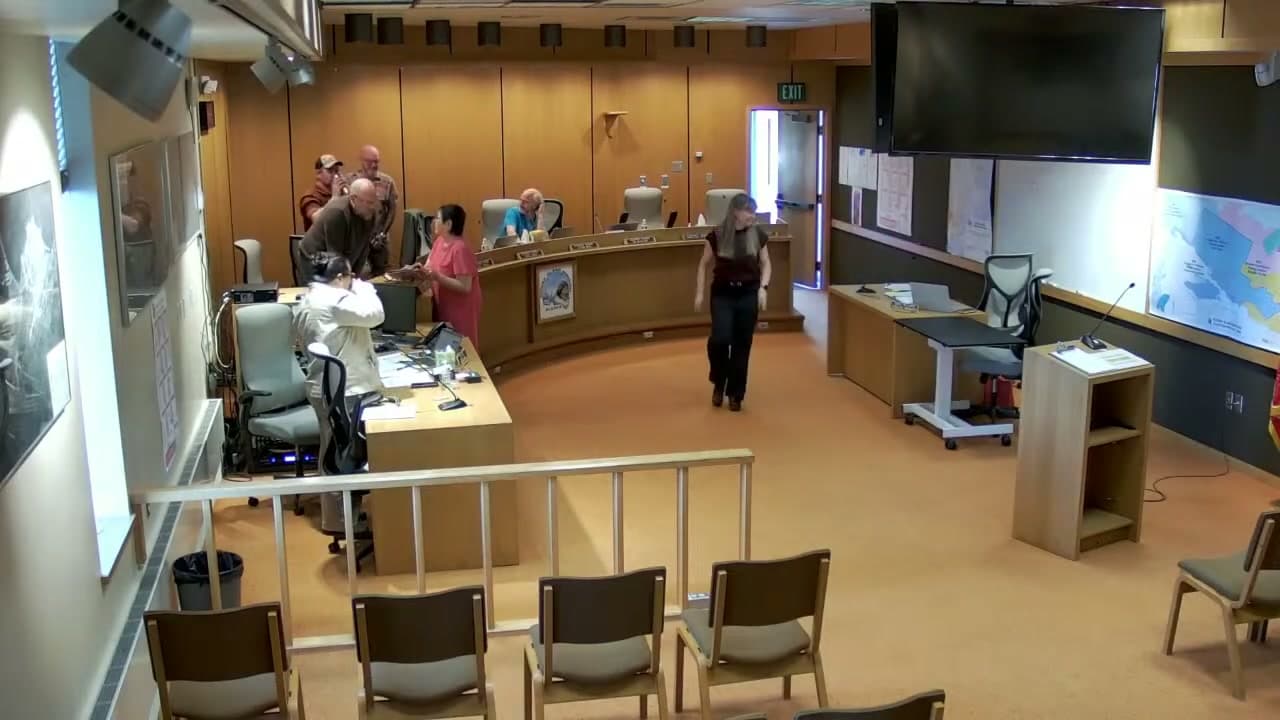
This article is based on a public meeting of Kodiak Island Borough — Kodiak Borough: Assembly Work Session of June 25, 2026 Part 1 ().
Drafted with AI. Edited by Lucas Brown (2 revisions). No full editor review is on record. Who is accountable. Transcript byLucas Brown
Watch key moments from the source meeting. Click to expand.
Stay informed. Support what matters.
Free, permanent access to local news you can verify. Subscribe to support Bill AlaskaNews and go ad-free.
Related Coverage
Kodiak Borough weighs tax on recreational harvest
Alaska News · 2mo ago
Kodiak Assembly splits over what a marijuana tax should pay for
Alaska News · 1mo ago
Kodiak held its tax rate down — and split over what it means for schools
Alaska News · 3mo ago
Kodiak Assembly weighs $800,000 school funding compromise
Alaska News · 4mo ago
Kodiak eyes 3% marijuana tax
Alaska News · 2mo ago
Comments
Sign in to leave a comment.
No comments yet. Be the first to share your thoughts.