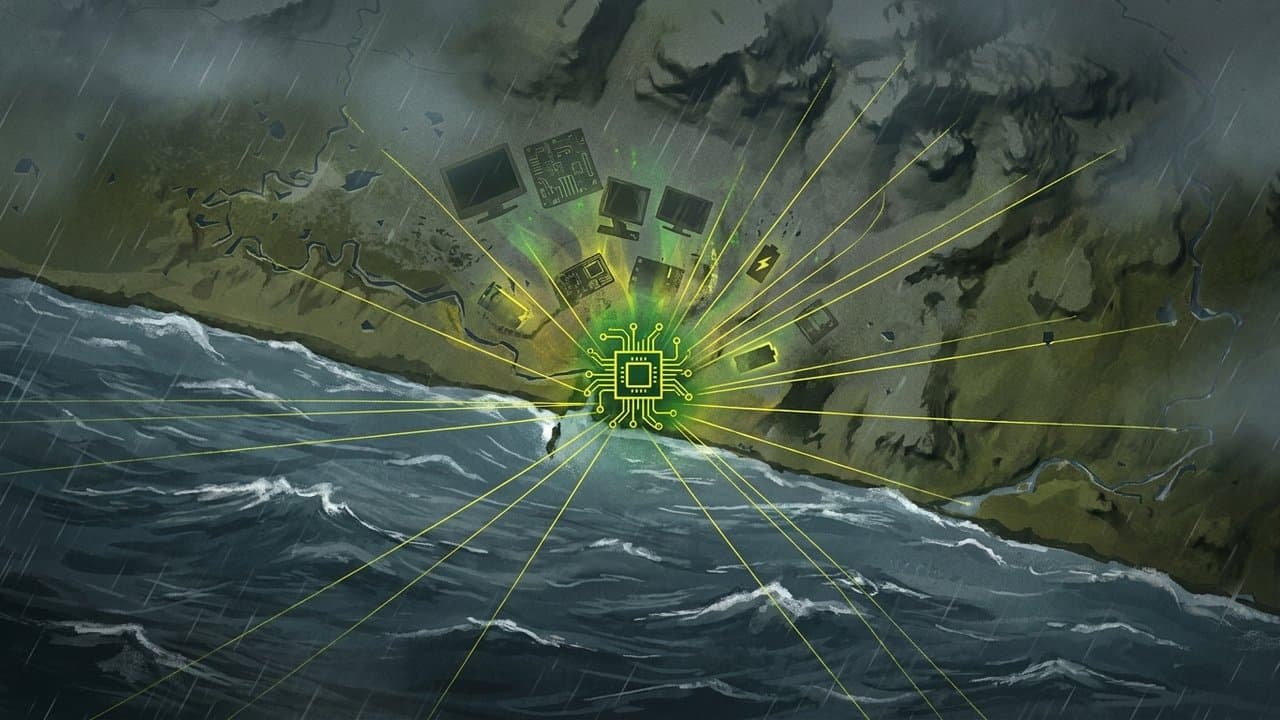
Editorial map (Gemini + Google Maps)
Kawerak hauls 4,000 pounds of e-waste out of Nome
In most of America, when you throw out an old TV, it goes to a lined, engineered landfill built to keep its poisons out of the ground. In rural Alaska, there's often no such thing — so the only safe option is to fly and barge the toxic stuff a thousand miles away. That's what Kawerak's environmental program did this month, collecting 4,000 pounds of old electronics in Nome over two days and shipping it to the Lower 48 for proper processing.
The reason is a piece of Alaska reality most people never think about. Roughly 200 remote Alaska communities run what the state calls Class III landfills — unlined pits, with little to no environmental monitoring, that were never designed to safely hold hazardous waste. Because there's usually no way to ship trash out, waste is often burned to save space. And that's the problem: burning or burying electronics releases the mercury, lead, arsenic, and flame retardants inside them, which can leach into the ground and water or drift into the air. In a region where families still eat what they catch, those toxins can end up in the fish and wildlife people depend on. Warming makes it worse — as permafrost thaws, contaminants that were locked in frozen ground can start moving into land and water.
So villages do the only thing they can: they ship the hazardous stuff out entirely, a practice called backhaul — filling the empty return trip of a barge or plane that would otherwise leave with nothing. Nome serves as the regional hub where electronics from around the Bering Strait get consolidated for the trip south. It only works because partners carry the load: Alaska Marine Lines barges the waste out, and Bering Air has flown backhaul for free since the program began.
"It's important for us to be diligent about what we put into our landfill, and recycling our e-waste is one way we can tackle this world-wide problem," said Anahma Shannon, Kawerak's environmental program director, who noted the toxins in e-waste can harm the brain, nervous system, and other organs.
Kawerak has run the collection annually since 2011 and takes materials year-round — batteries, fluorescent tubes, cans, marine debris — not just at the summer event.
Source: Kawerak, Kawerak: Spring Cleaning with a Purpose: E-Waste Event Nets 4,000 Pounds.
AI-assisted. How we use AI
Stay informed. Support what matters.
Free, permanent access to local news you can verify. Subscribe to support Alaska News and go ad-free.
Related Coverage
Sitnasuak Buys the River the Gold Rush Left Behind
Alaska News · 3mo ago
A new landfill permit for Russian Mission is one piece of a much bigger Y-K Delta solid waste story
Alaska News · 3mo ago
In Koyuk, old fuel tanks left petroleum in the ground. Now someone will measure it.
Alaska News · 3mo ago
Unalaska accepts $3.8 million EPA grant to clear junk cars and scrap metal from its full landfill
Alaska News · 1w ago
Free school supplies and dinner at Nome's Back-to-School Bash
Alaska News · 1mo ago
Comments
Sign in to leave a comment.
No comments yet. Be the first to share your thoughts.