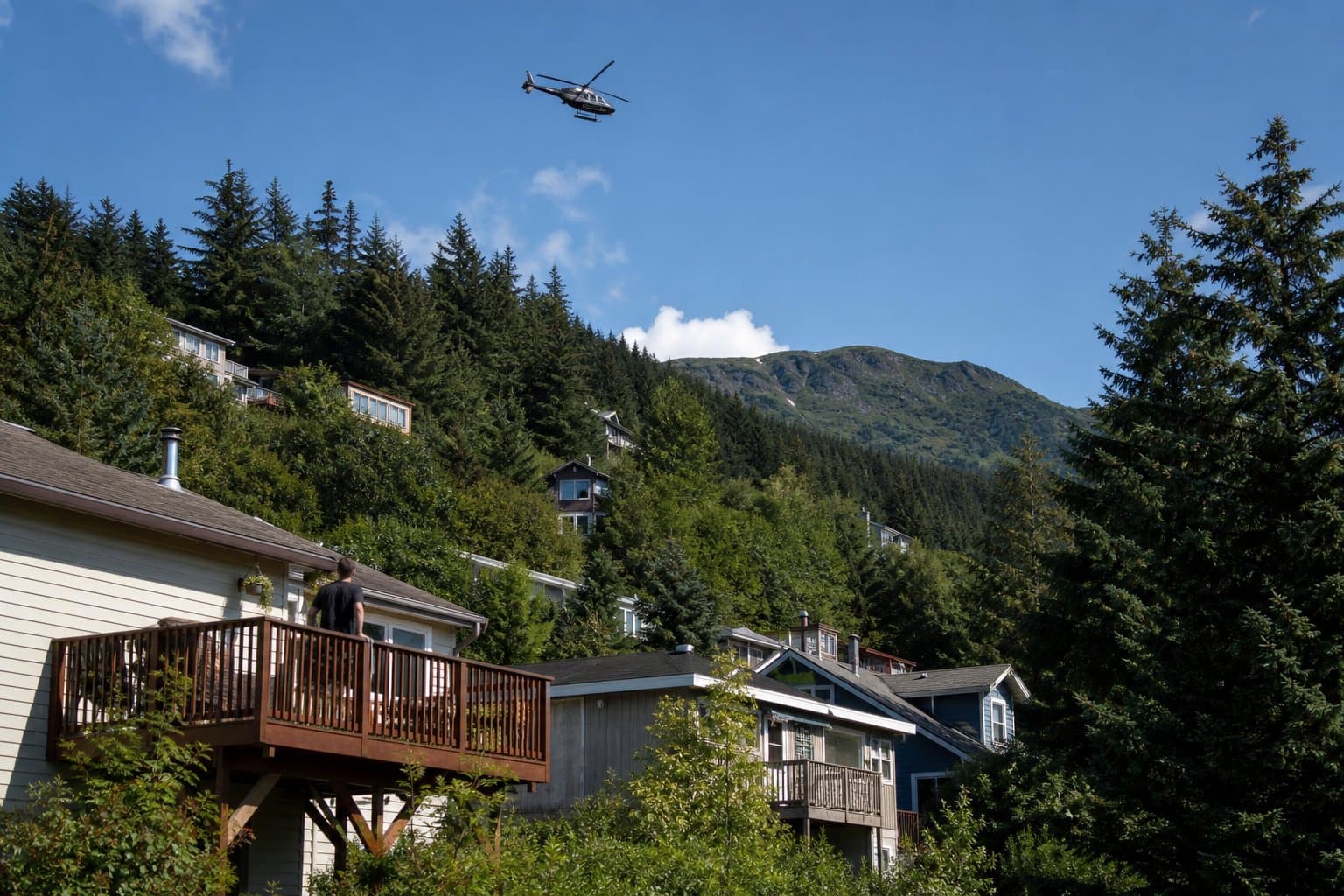
AI image
Juneau task force weighs reviving 2001 heliport study that projected 6,037 homes out of noise corridors
Juneau's tourism task force is being asked to decide whether the city's two-decade-old studies of helicopter noise are worth redoing — and city staff are warning that even if the answer is yes, Juneau can't do the work on its own.
Visitor Industry Director Alexandra Pierce laid out six items for further work in an Aug. 25 memo, after task force members forwarded them from an earlier meeting. They include consolidating operator departures under the Tourism Best Management Practices program; commissioning a study that would benchmark older helicopters against the newer H130 model; refreshing the 2001 heliport assessment with a cost-benefit analysis; auditing how many individual residents file noise complaints, as opposed to the raw complaint total; pressing residents to file complete reports with specific times and locations so operators can act on them; and adding fuller flightseeing questions to the 2026 resident survey.
The number that has anchored the debate for years comes from that 2001 assessment. Prepared by Michael Baker Jr., Inc., it screened potential sites for safety and neighborhood impact and recommended two satellite heliports — Montana Creek to the north and Dupont to the south — that it projected would drop the number of homes inside the associated flight-noise corridors from 6,037 to zero. Neither heliport was built. A companion noise study the same year set the baseline operators still work from, and both studies fed the current management program and the agreement flightseeing companies operate under today.
That the city can't act alone is the memo's central caution. "Any updated noise study or alternative heliport assessment would not be a task CBJ could undertake alone," Pierce wrote. The Federal Aviation Administration controls airspace, flight routes and the operating agreements. The U.S. Forest Service sets how many landings are permitted on the Juneau Icefield glaciers within the Tongass National Forest, and its caps shape which routes are even feasible to study.
Residents say the problem is getting worse. At a comprehensive-plan listening session last September, University of Alaska Southeast research professor Jim Powell said neighborhood associations that ranked tourism impacts found "helicopter noise is rising again."
No flightseeing operator has spoken to the task force on the issue.
Staff is asking for direction, not commitments. The task force takes up flightseeing Thursday, Sept. 3 at 5:30 pm by Zoom, meets again Sept. 10, and has a second public testimony session set for Oct. 15.
Source: Visitor Industry Task Force 2.0.
Made by our human newsroom with AI. How humans and AI work here · Grow with our newsroom
Stay informed. Support what matters.
Free, permanent access to local news you can verify. Subscribe to support Walter AlaskaNews and go ad-free.
Related Coverage
A Juneau task force wants congestion data to support limiting cruise calls
Alaska News · 1mo ago
Juneau task force takes up cruise cap criteria Thursday, with dock pressure looming
Alaska News · 3mo ago
Juneau weighs what kind of cruise town it wants to be
Alaska News · 3mo ago
Juneau's task force weighs crowding fixes amid a bigger question on how much tourism is enough
Alaska News · 1mo ago
Juneau isn't changing its cruise caps — it's deciding how to decide
Alaska News · 3mo ago
Comments
Sign in to leave a comment.
No comments yet. Be the first to share your thoughts.