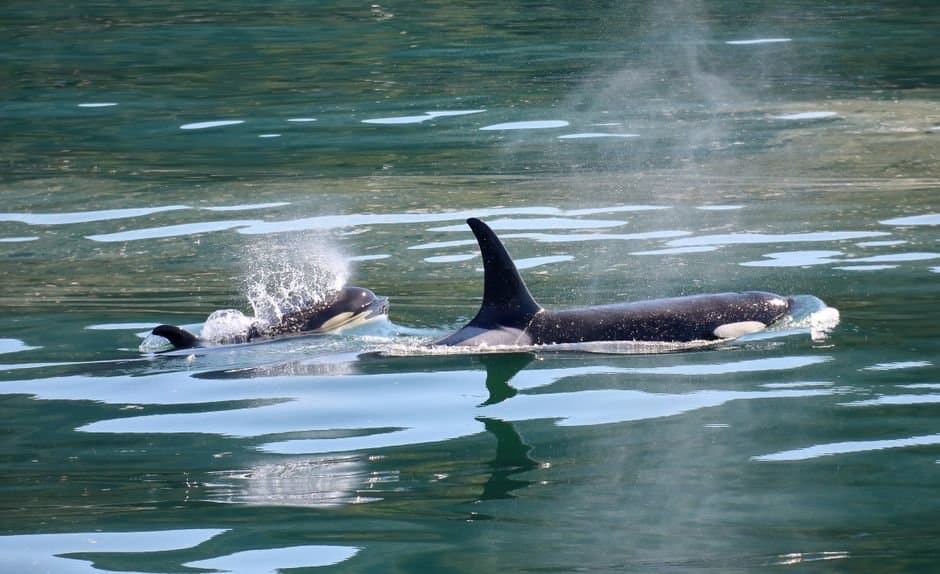
Juneau task force reviews bid to explore whale-watching license, cap
Juneau whale-watching companies could soon need a city license, and the number of boats allowed to operate could be capped. The Visitor Industry Task Force 2.0 will review those draft recommendations Saturday, Oct. 10, at a worksession that starts at noon in the Assembly Chambers. The session, open only in person, also covers downtown congestion, helicopter flightseeing and data collection.
Task force members agreed on the drafts Sept. 10, according to draft minutes. They are asking City and Borough of Juneau (CBJ) lawyers to explore a license or permit structure, a limited-entry program, which would cap how many operators can hold permits, an operator moratorium, a license cap and what the drafts call "future tapering," along with an operating agreement covering no-go zones and vessel spacing. All of it awaits refinement before a final report goes to the Juneau Assembly.
Any license would apply to the activity, not to docks or routes. A whale-watching company would be defined as one that advertises whale watching. The model is CBJ's marijuana licensing system. Conditions could include automatic identification system (AIS) tracking, membership in Tourism Best Management Practices, vessel limits and wildlife-distance rules, on top of NOAA requirements that vessels statewide stay 100 yards from humpback whales.
The 100-yard minimum approach distance is mandated under the Marine Mammal Protection Act. Whale SENSE and Tourism Best Management Practices, by contrast, are voluntary programs. A 2023 CBJ memo found that while the city, NOAA and the Coast Guard each hold distinct regulatory roles, Juneau has no enforcement mechanism of its own.
A draft cost tracker puts license work at $40,000 to $100,000 and a limited-entry program at $50,000 to $150,000. Task force members say those figures still need validation.
Other draft items would refine enforcement with NOAA Fisheries, Docks & Harbors and CBJ Law, review what the city can enforce at Statter Harbor, including speed zones and fuel-dock congestion, and move the 500-foot buoy in coordination with the Alaska Department of Natural Resources and the Coast Guard, at an estimated cost of $30,000 to $100,000.
NOAA estimated that Juneau whale watching generated $57.8 million in total direct and indirect economic impact in 2019 and supported 590 jobs. About 75 boats now operate locally, according to a Sept. 3 task force packet. "As far as we can tell, Juneau is the largest whale watching destination in the world," Suzie Teerlink, a marine mammal specialist with NOAA Fisheries' Alaska Regional Office, said in a 2022 NOAA Fisheries feature.
The Southeast Alaska Whale-Watching Association supports a cap, but in a Sept. 16 letter it urged a model closer to Alaska's commercial fisheries: permits "owned by the business and that can be transferred with the sale of a vessel or company."
The task force advises the Juneau Assembly, which will decide whether to act on any of the recommendations. A second public testimony meeting is scheduled for Thursday, Oct. 15, at 5:30 p.m.
Source: Visitor Industry Task Force 2.0.
AI-assisted. How we use AI
Stay informed. Support what matters.
Free, permanent access to local news you can verify. Subscribe to support Walter AlaskaNews and go ad-free.
Related Coverage
Juneau is weighing its first cap on whale watch operators
Alaska News · 3w ago
Juneau task force takes up cruise cap criteria Thursday, with dock pressure looming
Alaska News · 2mo ago
A Juneau task force wants congestion data to support limiting cruise calls
Alaska News · 1mo ago
Juneau weighs what kind of cruise town it wants to be
Alaska News · 2mo ago
Juneau tourism task force takes final public testimony Oct. 15
Alaska News · 1mo ago
Comments
Sign in to leave a comment.
No comments yet. Be the first to share your thoughts.