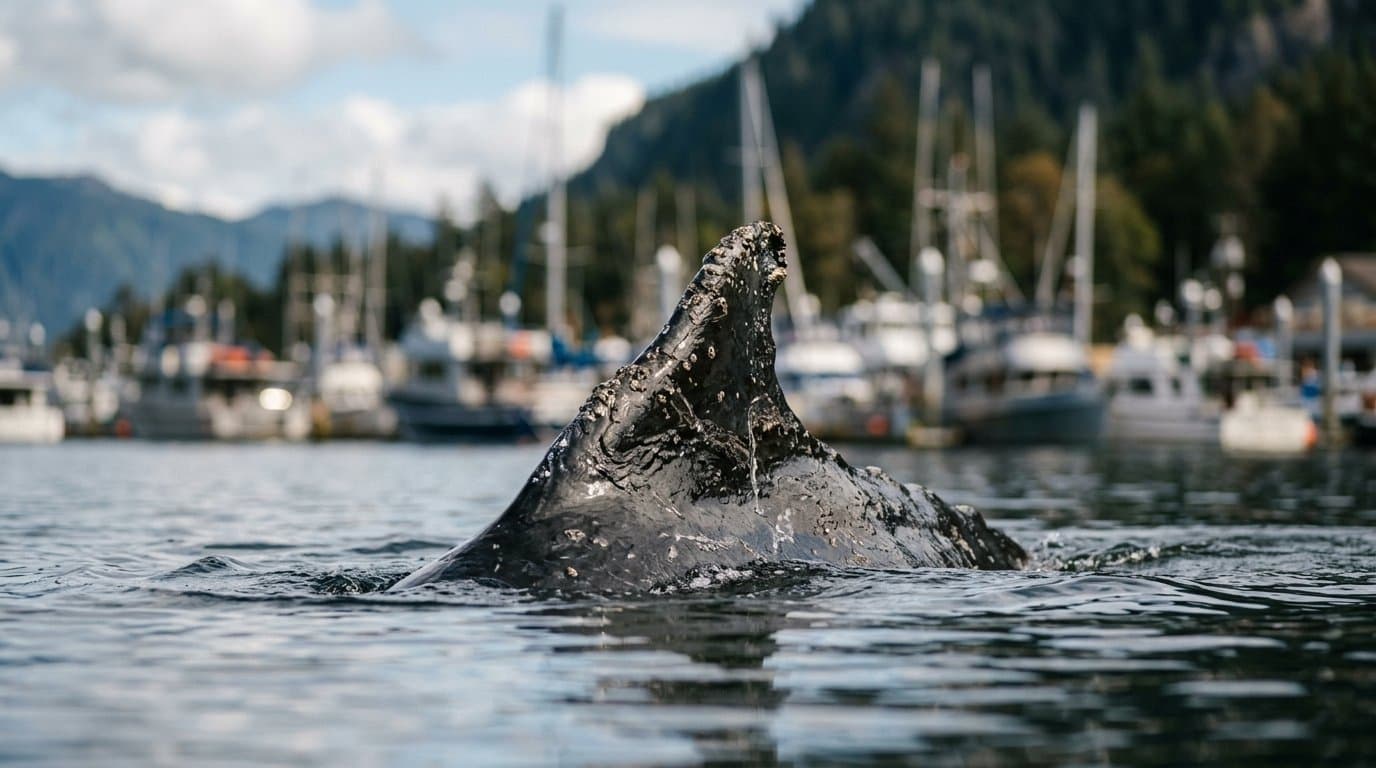
AI image
Juneau is weighing its first cap on whale watch operators
Juneau has never limited how many companies run whale watch boats out of its harbors. The Visitor Industry Task Force takes up whether to start on Thursday, Sept. 10 — the same body that has been weighing limits on cruise ship passengers.
The fleet is about 75 boats run by 24 companies, with room for 2,325 passengers at a time, by NOAA's count. That averages roughly three boats per operator and 31 seats per boat.
Visitor Industry Director Alexandra Pierce put four options in front of the task force. The city could set up a license or permit structure, which municipal attorneys have drafted and which would at least establish who is legally operating. It could go further and cap the number of operators outright, with the option of tapering that cap down over time. It could negotiate an operating agreement with the Southeast Alaska Whale Watch Association covering no-go zones and spacing between boats, and possibly ending whale-sighting guarantees, which Pierce's memo says push operators to run aggressively. Or it could extend the no-wake zone at Statter Harbor by 500 feet.
The city is working with a short lever. The enforceable rule on whales is federal: the Marine Mammal Protection Act sets a 100-yard approach distance for humpbacks in Alaska, and NOAA administers it. The Coast Guard handles vessel safety but does not enforce that distance, and federal agencies have limited capacity to patrol the water. The voluntary programs operators participate in, Tourism Best Management Practices and Whale SENSE, do not address how many boats are out there, or their wakes, or crowding. Municipal authority stops at the low-tide line, which leaves Juneau its tidelands, its harbors and its permits.
Even the harbor lever is split. The boats work out of Allen Marine's private facility, Fisherman's Bend and Statter Harbor, a mix Pierce wrote makes it harder for Juneau to use the dock controls other American whale watch ports rely on. Goldbelt has bought whale watch boats and plans maritime tours from the proposed Goldbelt Aani development.
Residents have been telling the city about this. In the 2024 Juneau Community Tourism Survey, 61 percent of respondents said they were concerned about the industry. Among those, 79 percent pointed to impacts on whales and wildlife and 64 percent to the number of boats, which works out to roughly half and roughly two-fifths of everyone surveyed.
The whale watch association itself told the task force in May that Statter Harbor is already full, and that capping commercial harbor permits is the most practical way to limit fleet growth.
Staff have asked for firm recommendations for the task force's final report. Acting on any of them would still take NOAA, Docks and Harbors, and the operators. A second public testimony session is set for Oct. 15.
Source: Visitor Industry Task Force 2.0.
Made by our human newsroom with AI. How humans and AI work here · Grow with our newsroom
Stay informed. Support what matters.
Free, permanent access to local news you can verify. Subscribe to support Walter AlaskaNews and go ad-free.
Related Coverage
Juneau task force to review draft rules that could license and cap whale-watching boats
Alaska News · 2w ago
Juneau task force nears a whale-watch cap and a new helicopter noise study
Alaska News · 18h ago
Juneau weighs what kind of cruise town it wants to be
Alaska News · 3mo ago
A Juneau task force wants congestion data to support limiting cruise calls
Alaska News · 2mo ago
Juneau isn't changing its cruise caps — it's deciding how to decide
Alaska News · 3mo ago
Comments
Sign in to leave a comment.
No comments yet. Be the first to share your thoughts.