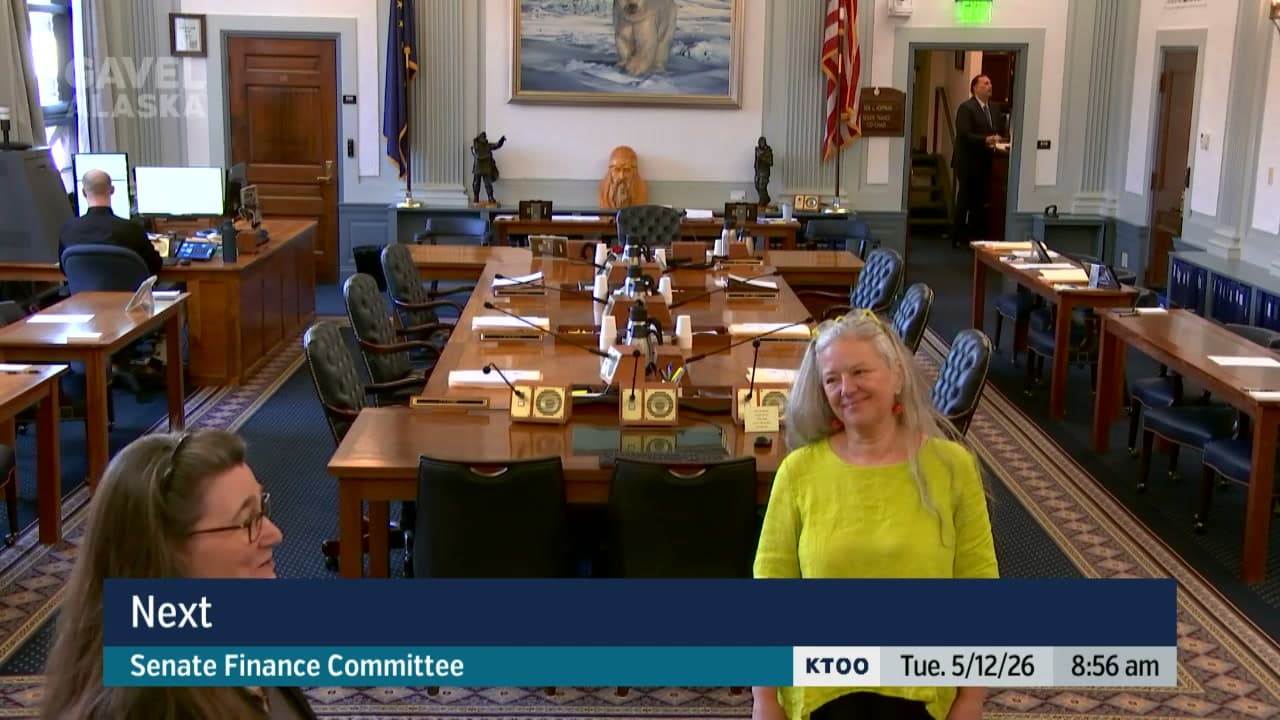
Home care worker pay mandate divides Alaska lawmakers over rural access
The Alaska Senate Finance Committee heard testimony Tuesday on legislation that would create a Home Care Employment Standards Advisory Board and require home care agencies to spend 80 percent of Medicaid personal care service rates on direct worker compensation over four years.
House Bill 96 would establish the advisory board to study workforce conditions and implement the wage allocation requirement. The bill comes as Alaska faces growing need for home care workers to serve an aging population. Disagreement centers on whether the mandate would help or hurt rural service access.
Jenn Kimball, executive director of the Alaska Association for Personal Care Supports, told the committee that providers support raising caregiver wages and creating the advisory board in Section 1 of the bill. She warned that Section 2's fixed wage requirements imposed before modernizing the system could backfire. Agencies face substantial administrative costs required by Medicaid regulations that the 80 percent threshold does not account for, she said.
"Without meaningful modernization efforts and reductions in administrative burden first, these requirements may ultimately produce the opposite outcome of what everyone in this room wants," Kimball said. "And nowhere is that risk greater than in rural Alaska."
Rural providers already struggle with travel costs and limited workforce availability, Kimball said. When the state cut personal care rates in 2019, agencies responded with wait lists and service reductions in rural areas.
Alexis Rodich, state director for the Caregivers Union representing more than 60,000 direct care workers in Alaska, Washington and Montana, countered that the 80 percent allocation is not a specific wage requirement but a guardrail to ensure fair compensation. Alaska's consumer-directed model, where clients recruit and manage their own caregivers, means agencies have far lower overhead than traditional models, she said.
"Agencies do not need to be in every single community that they are providing services," Rodich said. "However, the direct care workers themselves do need to be in those communities and often have to bear the cost of increased gas prices, heating oil, etc."
Rodich pointed to safeguards in the bill, including hardship exemptions for small agencies and a four-year implementation timeline. The advisory board would have years to assess whether rates are adequate before the 80 percent requirement takes effect, she said.
Tony Newman, director of the Division of Senior and Disability Services at the Alaska Department of Health, told lawmakers that a Guidehouse rate study found personal care agencies need a 32 percent rate increase. But the federal requirement that originally prompted the bill has been rescinded, making the 80 percent mandate a state policy choice rather than a federal obligation, he said.
"The federal government has said they will issue written guidance on this point in the coming weeks or months, and that they intend to work with states to help them develop their own methods to ensure that there is adequate workforce payment in the future," Newman said.
Current state regulations require agencies to spend at least 50 percent of rates on worker compensation. Newman said that minimum has been on the books for years and that most agencies already pay considerably more than 50 percent to attract workers.
Senator Rob Yount, who sponsors companion legislation Senate Bill 154, said the state must act now to address workforce needs as Alaska's population 85 and older is projected to increase 500 percent over the next 25 to 30 years.
"Taking care of our elders in their own home is by far the cheapest way to do it in the long run," Yount said. "Nobody is lucky enough to have all their kids and grandkids around to help with that. And even if they are, sometimes they need professional help."
Senator Cronk shared her experience trying to find home care for her parents, saying wages for home care workers are appalling while they save the state millions by keeping people out of institutional care. Her father now pays $7,500 per month for senior care in Fairbanks because home care was unavailable.
"These people are doing this because they love what they are doing and they are caring," Cronk said. "But it just seems to me 50 percent of what we are paying out is getting back to them. I think that really needs to be addressed because they are literally saving the state millions and millions of dollars."
Representative Mike Prox, the bill's House sponsor, said the legislation provides latitude through the advisory board to address concerns about small providers and cost structures. Section 5 of the bill provides flexibility if federal requirements do not materialize, allowing the advisory board to determine whether the wage allocation is workable, he said. The bill would help provide more service by raising rates to agencies, which would in turn increase provider wages.
The committee took no action on the bill Tuesday. The legislation carries a fiscal note showing a first-year cost of $206,600 in unrestricted general funds and one new full-time position, rising to $378,900 and two positions in fiscal year 2028.
About 13 agency-based and 55 consumer-based personal care service providers currently serve approximately 2,300 Alaskans, Newman said. The Senate Finance Committee will hold future hearings before deciding whether to advance the bill.
This article is based on a public meeting — SFIN-260512-0900 ().
AI-assisted. How we use AI Transcript byLucas Brown
Stay informed. Support what matters.
Free, permanent access to local news you can verify. Subscribe to support Alaska News and go ad-free.
Related Coverage
Alaska Legislature Passes Bill Requiring Home Care Agencies to Fund Workers
Alaska News · 4mo ago
Alaska House passes home care advisory board for Medicaid workers
Alaska News · 5mo ago
Alaska budget fight leaves $40M in senior, disability care hanging
Alaska News · 4mo ago
Senate Committee Hears Testimony on Nurse Licensure Compact Bill
Alaska News · 6mo ago
House panel advances telehealth pay parity bill with wage protections
Alaska News · 4mo ago
Comments
Sign in to leave a comment.
No comments yet. Be the first to share your thoughts.