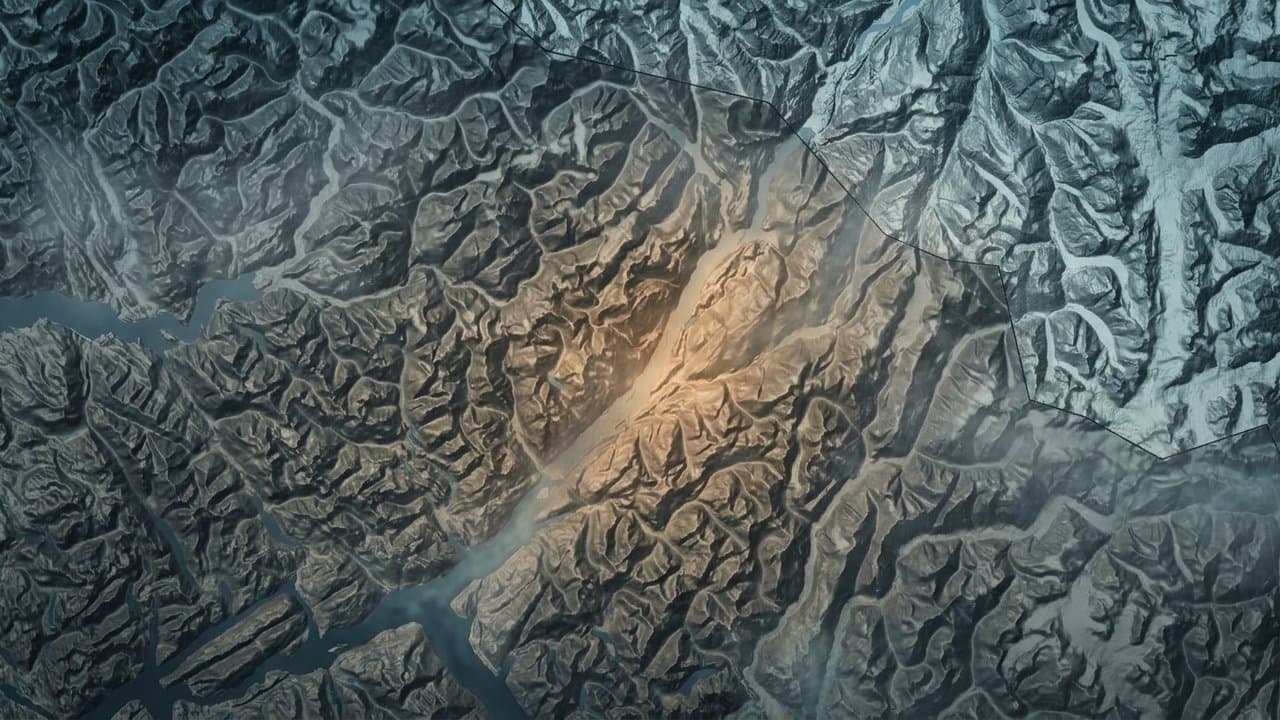
Editorial map (Gemini + Google Maps)
Helicopters will keep a remote Unuk River gage running below British Columbia mines
The Interior Department on Oct. 15 ordered helicopter flights from TEMSCO Helicopters of Ketchikan to service and maintain a U.S. Geological Survey gage on the Unuk River, which flows out of British Columbia into Misty Fjords National Monument.
The order runs through Feb. 28 and has $30,180 obligated so far, according to the federal award record. It's drawn from Interior's on-call Alaska helicopter contract.
The gage sits just below the Blue River on what USGS calls "a very remote watershed that receives few visitors each year." In the river's Canadian headwaters are three large mining projects that USGS describes as in development: Kerr-Sulphurets-Mitchell, Brucejack and Eskay Creek.
The station is one of five USGS super gages on rivers that run from Canada into Southeast Alaska. Besides measuring how much water is moving, a super gage carries instruments that read the river's temperature, pH, dissolved oxygen, specific conductance and turbidity around the clock and post the readings online.
Every six to eight weeks, weather and aircraft permitting, hydrologists fly in to collect water samples that are tested for nutrients, sediment and trace metals such as aluminum, antimony and arsenic. USGS pairs those samples with the continuous readings to estimate what's in the water between visits, according to its super gage page. The goal is to record conditions now, so any future effects from mining upstream can be measured against them.
The gage's real-time feed has posted no water-quality readings since Sept. 5, listing those sensors as "Dry," while flow and water temperature still come through. On Saturday afternoon, the river was running at 11,100 cubic feet per second, and the water was about 42 degrees, according to USGS data, which is provisional.
Congress directed USGS in 2018 to work with tribes and other federal agencies on a water-quality strategy for the transboundary rivers, and Unuk sampling began that year. In August, Interior hired Misty Fjords Air and Outfitting for fixed-wing flights for the same work, Alaska News reported.
USGS hasn't posted findings for the Unuk on its project pages. A 2021 British Columbia–Alaska working group report found no samples exceeding Alaska water-quality standards downstream of the border on the Stikine, Taku and Unuk, according to the state Department of Environmental Conservation. The Central Council of the Tlingit & Haida Indian Tribes of Alaska has called for a pause in permitting, exploration, development and expansion of British Columbia mines until a binding international watershed agreement exists.
Salmon fisheries in the five transboundary watersheds contribute about $1 billion a year to the regional economy, USGS estimates.
Source: Department of the Interior.
Made by our human newsroom with AI. Reviewed by Cale Green. How humans and AI work here · Grow with our newsroom
Stay informed. Support what matters.
Free, permanent access to local news you can verify. Subscribe to support Maggie AlaskaNews and go ad-free.
Related Coverage
Federal charter keeps water sampling going on the Unuk, downstream of three British Columbia mines
Alaska News · 2mo ago
Tok's 40-Mile Air gets $45,000 contract for helicopter flights to track Yukon-Charley wolves
Alaska News · 2w ago
Interior awards $8,360 for helicopter service to Tincan and Indian Pass snow sensors
Alaska News · 1mo ago
A $3.19 million contract will fix roads and fish passage near Ketchikan
Alaska News · 1mo ago
Park Service awards $4.5 million contract to upgrade Glacier Bay's water system for firefighting
Alaska News · 3w ago
Comments
Sign in to leave a comment.
No comments yet. Be the first to share your thoughts.