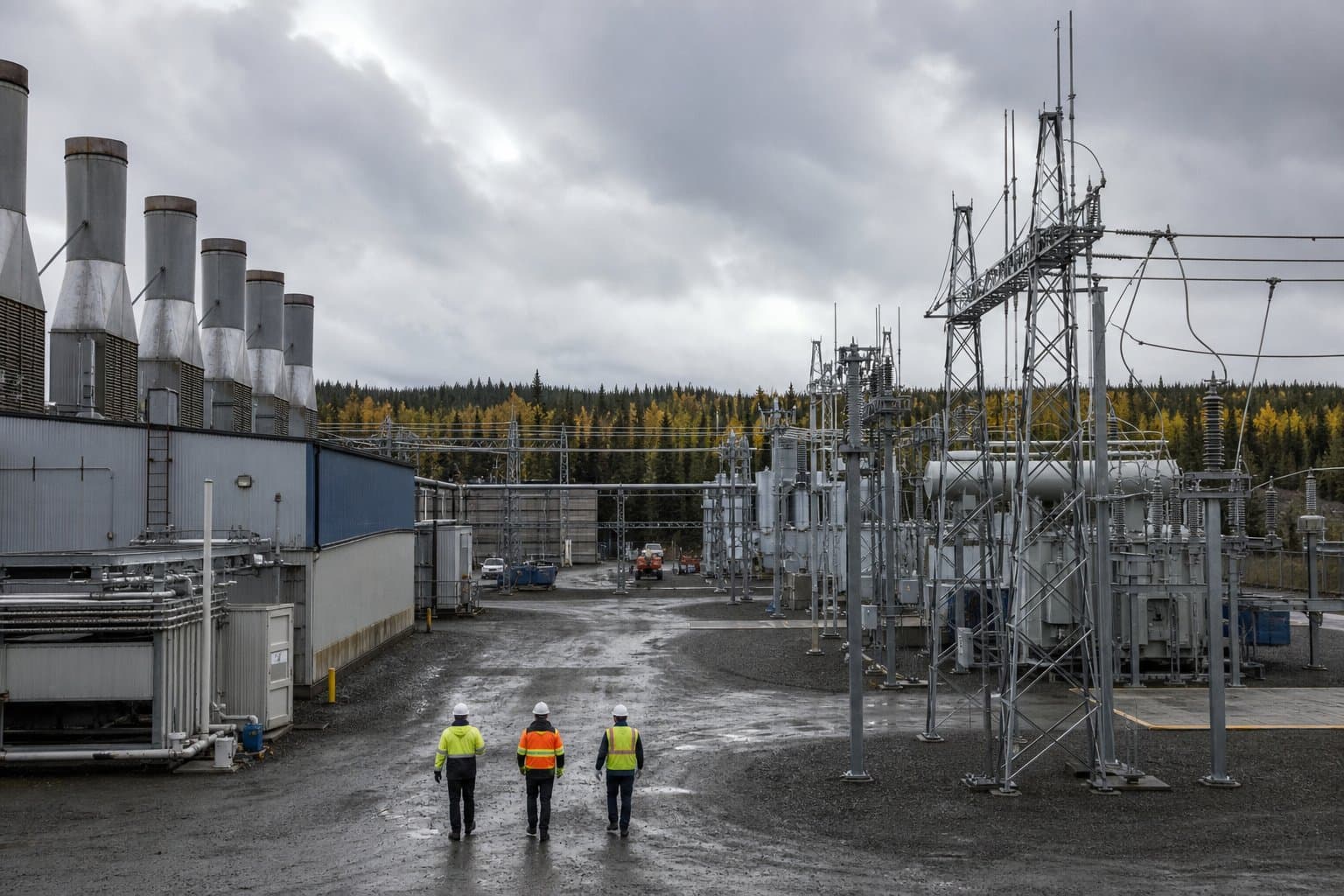
AI image
GVEA board authorizes CEO to pursue up to $80M in new generation
Golden Valley Electric Association members could see lower rates and a new source of around-the-clock power, known as baseload generation, within five years. The utility's board of directors voted Aug. 25 at its meeting in Delta Junction to authorize CEO Travis Million to pursue that capacity at a cost not to exceed $80 million.
The vote follows an Aug. 13 work session on a second LM6000 gas turbine at the North Pole plant, where staff said GVEA had operated with inadequate reserves 236 of the preceding 250 days, more than 94% of the time. The co-op has lacked access to natural gas-generated power from the Anchorage area since February 2025.
The authorization is not a purchase; any contract returns to the board for approval. Two used LM6000 units have already been inspected, with a best-case in-service date of three to four years, and the turbine could also run on natural gas if that fuel became available and proved economically beneficial to members. The resource must match the LM6000's air quality reductions, and management must review alternatives in parallel: New ERA, the USDA's clean-energy funding program; Delta Wind; and economy energy, meaning lower-cost power bought from other utilities.
Modeling projected roughly a 5% rate reduction, about $10 a month for the average residential member, driven by approximately $35 million in annual fuel savings from burning naphtha rather than diesel, a fuel that has historically been less volatile in price. A higher utility charge would be offset by a lower Fuel and Purchased Power Charge. The presentation also projected a 5% to 6% reduction in carbon emissions and a reduction of more than 90% in sulfur dioxide emissions.
Million called June's fuel charge increase "extraordinarily large" in KUAC's May reporting: a roughly 61% jump in the fuel and purchased power charge, nearly $46 a month for the average residential member, after diesel doubled from $2.50 to $5.10 a gallon.
Members who testified raised concerns about timeline, cost, environmental impact and rates, and urged continued evaluation of wind, solar, battery storage, demand response and residential solar rebates.
Director John Sloan said management's explanation of the LM6000 was pivotal to his support, while urging caution. Director Krista Zappone asked that New ERA be placed on a future agenda to determine whether it remains viable or should be deprioritized.
AI-assisted, reviewed by editors.
Stay informed. Support what matters.
Free, permanent access to local news you can verify. Subscribe to support Melinda Communities.News and go ad-free.
Related Coverage
Golden Valley was short on reserves 94 percent of the last 250 days
Alaska News · 2w ago
GVEA targets mid-September tariff filing for grid emergency alerts
Alaska News · 20h ago
GVEA's fuel charge drops 12.6%, reversing about a third of June's increase
Alaska News · 2d ago
Two new directors join the GVEA board that sets Interior power rates
Alaska News · 2mo ago
GVEA files 62% cost-of-power increase with regulators
Alaska News · 3mo ago
Comments
Sign in to leave a comment.
No comments yet. Be the first to share your thoughts.