AI image
GAO: Federal Water Rule Leaves Alaska Village Homes Unconnected
A Definition That Leaves Homes Without Water
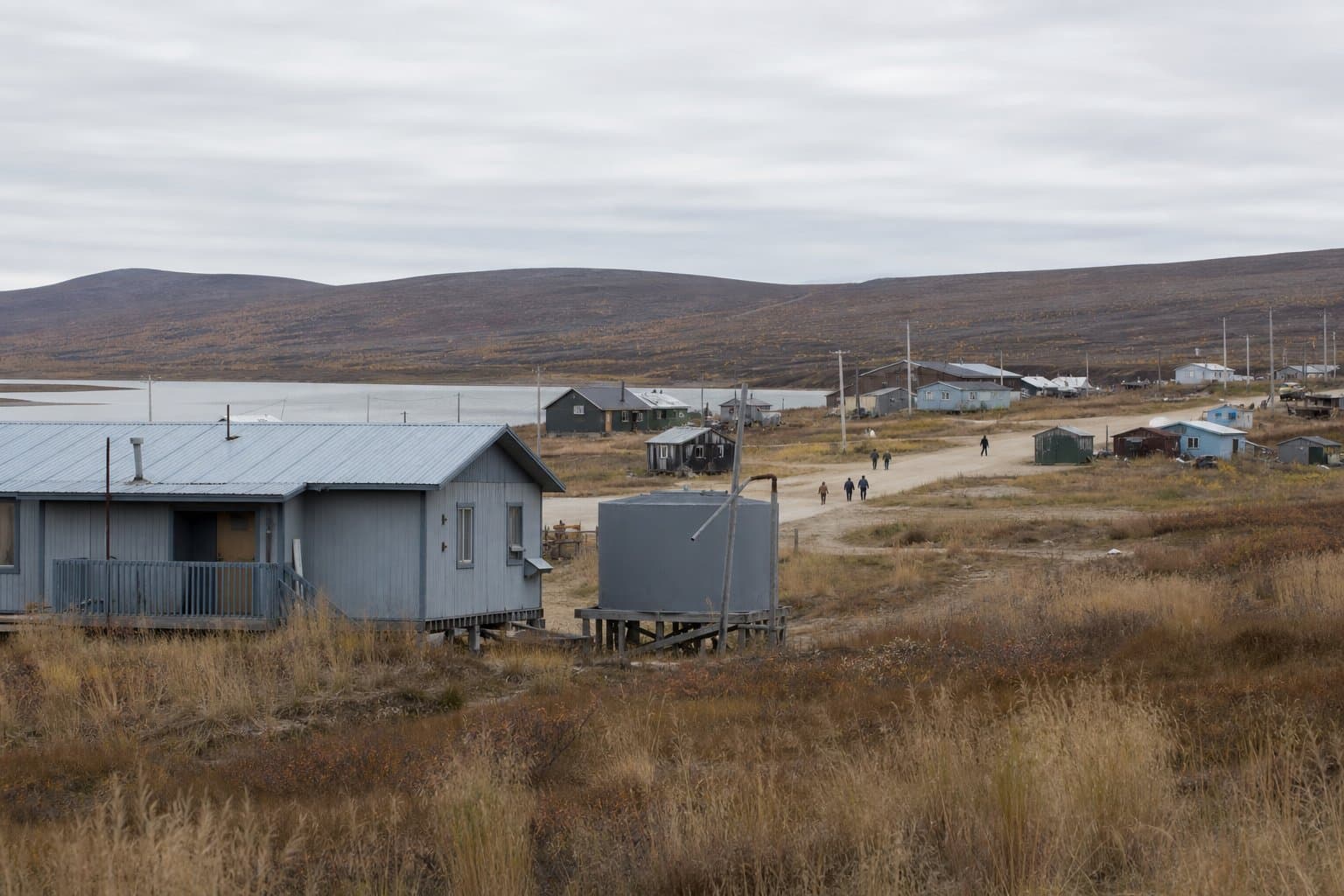
A police officer in an Alaska village lives in a home without running water because the tribe has not been able to obtain funding to serve it, the Government Accountability Office reported this week. A tribal administrator told GAO the officer is not a tribal member, and that the tribe was worried about losing the officer to another community. The report, released Sept. 22, names neither the village nor the administrator.
The problem is how the Indian Health Service defines an eligible tribal home. A home qualifies when a tribe or tribal member owns it and a tribal member lives in it, or rents it with at least five years left on the lease and no rent increase. A home owned by someone who is not a tribal member is ineligible, no matter who lives there. That includes tribal members, their children, and the teachers, medical providers and law enforcement officers villages depend on. A tribally owned home is ineligible if only non-members occupy it, or if the tribal member renting it has fewer than five years left on the lease. The definition "excludes various homes that tribal members live in," GAO wrote.
IHS officials said the agency "is not authorized to fund ineligible homes as currently defined in any circumstance," even when serving one would save money or shorten a project. Change requires Congress to amend the Indian Sanitation Facilities Act, enacted July 31, 1959, which authorizes sanitation facilities "for Indian homes, communities, and lands" and never defines those words. Senior officials said they would change the definition if directed, which would require identifying the residents of every ineligible home.
What GAO Wants Congress and Agencies to Do
GAO's three matters for Congress ask lawmakers to supply that definition and clarify which homes and buildings should be eligible, to let IHS serve ineligible properties when the administrative cost of avoiding them would exceed the cost of connecting them, and to fund a pilot covering routine operations and maintenance, including water operator salaries and energy. Twelve recommendations go to agencies: five to IHS, three to Agriculture, two to Housing and Urban Development and two to the Environmental Protection Agency. None of it binds anyone. The matters and recommendations are advisory, and HUD and USDA disagreed with specific recommendations.
The arithmetic behind the second matter is in the report. Officials at one IHS area office reported spending more than 80 hours helping a tribe apply for and monitor an $8,000 grant. On a Utah project with two ineligible homes rented to tribal members, an official said chasing another agency's money would likely cost more than serving them, and pursued contributions "for as little as $800." A separate limit, $10,000 for connecting an existing tribally owned community building, has not moved since 1985 and would be about $30,000 today. Of roughly 800 tribal water projects IHS funded in 2023 and 2024, two used those special project funds.
Sen. Lisa Murkowski requested the report as chair of the Senate Committee on Indian Affairs, and the record contains no statement of what she intends to do with it. GAO audited from December 2023 to September 2026, with site visits to Alaska and Arizona.
Alaska had 227 federally recognized tribes as of May 2026, about 40 percent of the national total, most in remote villages. The Alaska Native Tribal Health Consortium has compacted with IHS to run the Sanitation Facilities Construction program for more than 200 of them.
How many Alaska homes the rule excludes is unknown. IHS does not collect the information. It estimated in November 2025 that $5.3 billion in eligible costs and $1.2 billion in ineligible costs were still needed nationally, the second figure being the government's own estimate of serving what its rule shuts out. One tribal water utility official said every project the tribe sought or received IHS money for included at least one ineligible home with tribal members living in it.
A separate restriction bars IHS from serving new homes built with HUD grants. A senior HUD official said tribes reported HUD-funded homes being completed without water as recently as April 2026, and described an Alaska tribal housing authority cutting a project from five homes to four to pay for connections and a replacement pumphouse. Connecting a home in Alaska can be roughly 30 percent of the cost of building it. Lifting the prohibition is not a clear gain for Alaska, a tribal health consortium there told GAO: it would make many more Lower 48 homes eligible, and "such a shift could reduce the total IHS funding allocated to Alaska if IHS's appropriation is not also increased."
About 46 percent of Alaska Native village drinking water systems required to have a primary certified operator, 73 of 157, had none on staff in fiscal 2025, according to State of Alaska data. IHS attributed the turnover to tribes lacking money for salaries. Water systems account for 33 percent of some communities' total energy costs, and as much as 38 percent, because stored water must be heated and circulated all winter. In June 2024 the consortium proposed a $20 million, two-year operations and maintenance demonstration program.
The report cites research associating lack of safe water in rural Alaska with pediatric respiratory infections and dental disease. Citing a 2021 American Academy of Pediatrics article, it says 73 percent of Alaska Native children in the Yukon-Kuskokwim Delta have had dental surgery under general anesthesia by age 6 for severe early childhood tooth decay, at least 50 times the rate of the general population.
The 2021 infrastructure law put $3.5 billion into the IHS water program, and EPA added more than $868 million of its own. IHS accepted the recommendations. EPA generally agreed with one and disagreed with another as written, which GAO revised. USDA disagreed with streamlining its financial information requirements, and HUD disagreed with working with IHS to estimate the cost of water for new HUD-funded homes, saying it lacked the authority. GAO kept that recommendation, noting HUD already collects and reports the home counts annually.
The committee held an oversight hearing on housing needs in Native communities Sept. 16, six days before the report, alongside a legislative hearing on S. 5354, the Native American Housing Assistance and Self-Determination Modernization Act of 2026, and met again Sept. 23 to consider the bill. No Alaska tribe, village council or resident is identified by name in the report.
Source: A federal rule written to aim water money at tribal members is keeping it out of homes in Alaska villages where tribal members live, and the Indian Health Service says only Congress can change it. The watchdog that found this sent the report to Lisa Murkowski, who asked for it and chairs the committee that would write the fix. In one Alaska village it means the police officer's house has no water ().
AI-assisted. No editor review is on record for this article. Who is accountable.
Stay informed. Support what matters.
Free, permanent access to local news you can verify. Subscribe to support Walter AlaskaNews and go ad-free.
Related Coverage
Federal rules leave some village homes out of water projects
Alaska News · 10mo ago
Congress weighs $500 million in tribal water money Alaska can't reach
Alaska News · 1w ago
IHS proposes $93M sanitation cut as Alaska Native villages face sanitation gaps
Alaska News · 4mo ago
A remote Kodiak village tries tp fix its water
Alaska News · 2mo ago
Senate Indian Affairs Committee advances Native housing rewrite to full Senate
Alaska News · 1d ago
Comments
Sign in to leave a comment.
No comments yet. Be the first to share your thoughts.