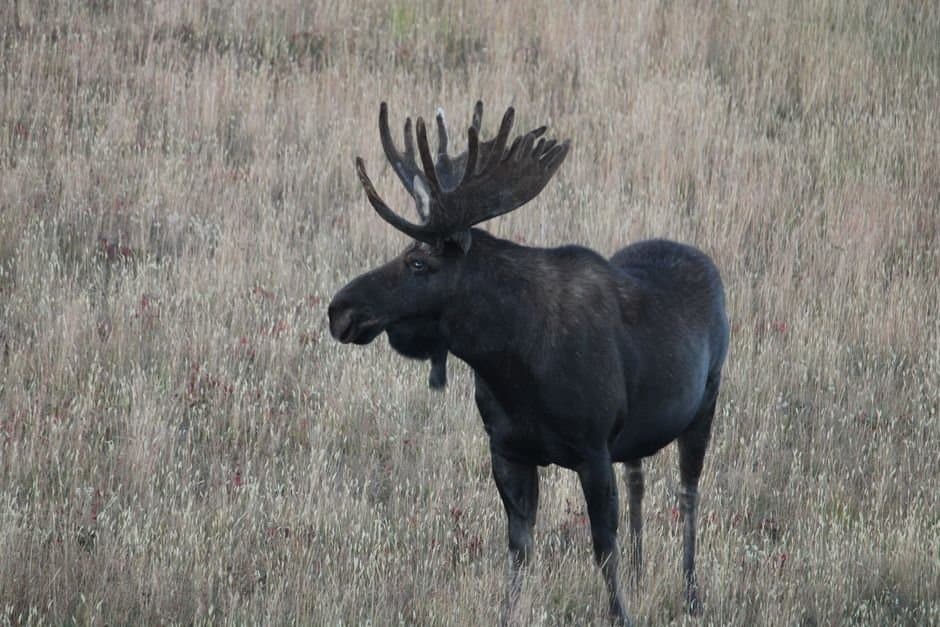
Photo by Tim Kirkland on Pexels · Source
Fish and Wildlife is putting GPS collars on moose in the upper Tanana
In the winter of 2021-22, Tetlin National Wildlife Refuge issued 73 moose permits. Thirty-four of those hunters went out. None of them came home with a moose.
The U.S. Fish and Wildlife Service is now spending $94,542 on GPS collars to learn more about the animals people are not finding. The contract went to Telonics of Mesa, Arizona, a wildlife telemetry manufacturer, and runs from Sept. 3 through Nov. 25.
Tetlin covers 700,058 acres of the upper Tanana River valley, and its boundary runs along the south side of the Alaska Highway for almost 65 miles, starting where drivers cross in from Canada. The refuge holds at least 42 species of mammals. Of the moose it describes its own ground as substantial spring, summer and late winter habitat supporting a low density population, with the rutting country higher up, above 3,000 feet.
Refuge staff track and survey moose for southeastern Unit 12, where state harvest objectives call for 250 to 450 animals a year.
The refuge has been collaring animals for a decade. Its lynx study, running since 2015, had put GPS collars on 103 of them by 2022.
It also counts twins. In 2022, biologists flew four days over the refuge for a twinning survey, the first since 2007, and found six of 31 cows with calves had two. How often cows have twins tells biologists how well the moose are eating, and how close the population is to the limit of what the country can feed.
The reason for the counting is older than the refuge. People have lived off the upper Tanana drainage for more than 10,000 years, and Fish and Wildlife describes the arrangement in its own materials as a reciprocal one, in which people agreed to "take only what he needed and to be respectful of the wildlife and fish" and the animals agreed to give themselves in return. The refuge still runs winter moose and caribou hunts for local residents by federal subsistence permit.
AI-assisted, reviewed by editors.
Stay informed. Support what matters.
Free, permanent access to local news you can verify. Subscribe to support Maggie AlaskaNews and go ad-free.
Related Coverage
Moose in Gates of the Arctic are up 48 percent, and researchers point to shrubs
Alaska News · 2w ago
Alaska is about to burn 54,000 acres on purpose, to grow more moose
Alaska News · 1mo ago
Alaska plans to burn the Alphabet Hills to grow more moose forage
Alaska News · 2mo ago
ADF&G asks Kenai bull moose hunters for tissue samples within 24 hours of harvest
Alaska News · 3w ago
Ahtna closes Cantwell-area lands to the public for moose season
Alaska News · 1w ago
Comments
Sign in to leave a comment.
No comments yet. Be the first to share your thoughts.