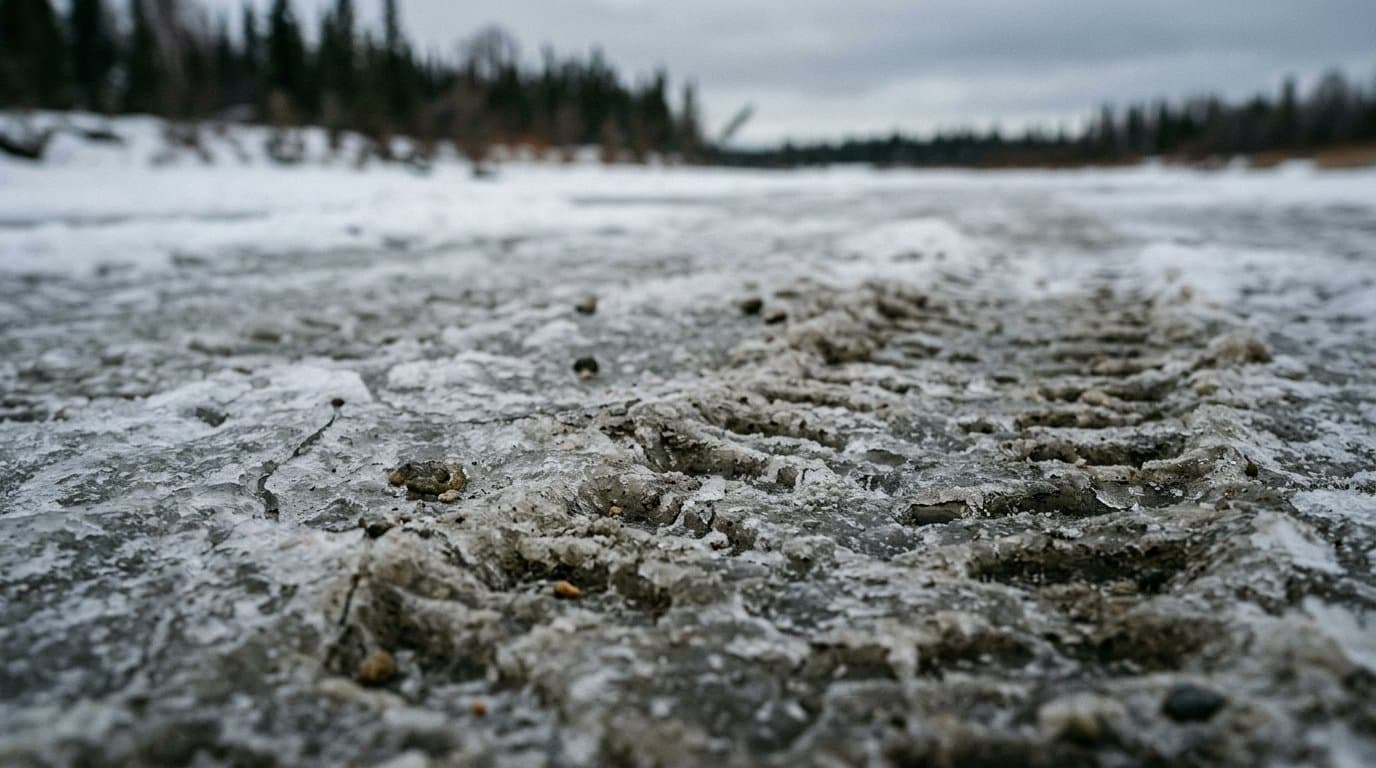
AI image
Federal grants back three Alaska ice roads, led by a Kuskokwim route up to 350 miles long
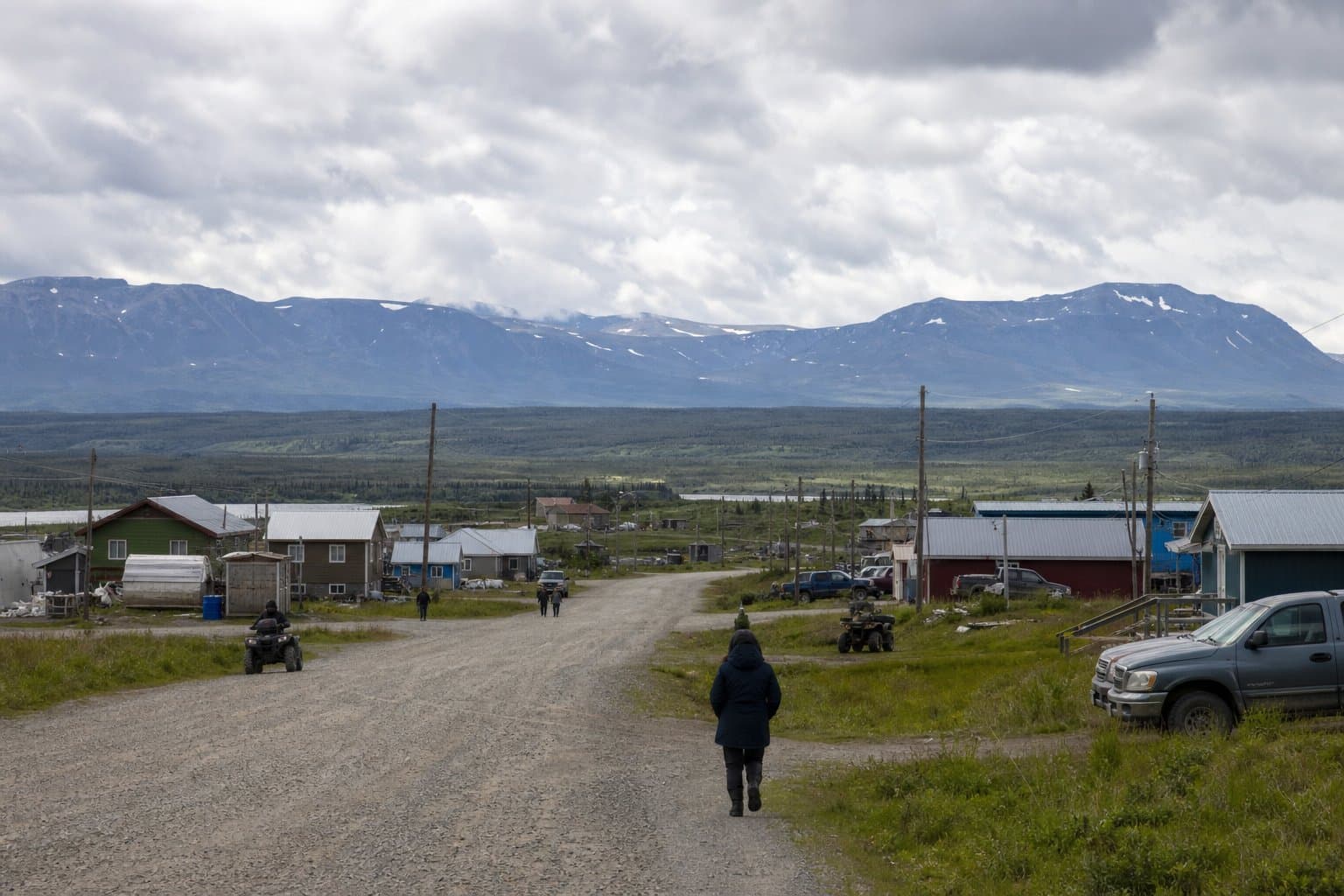
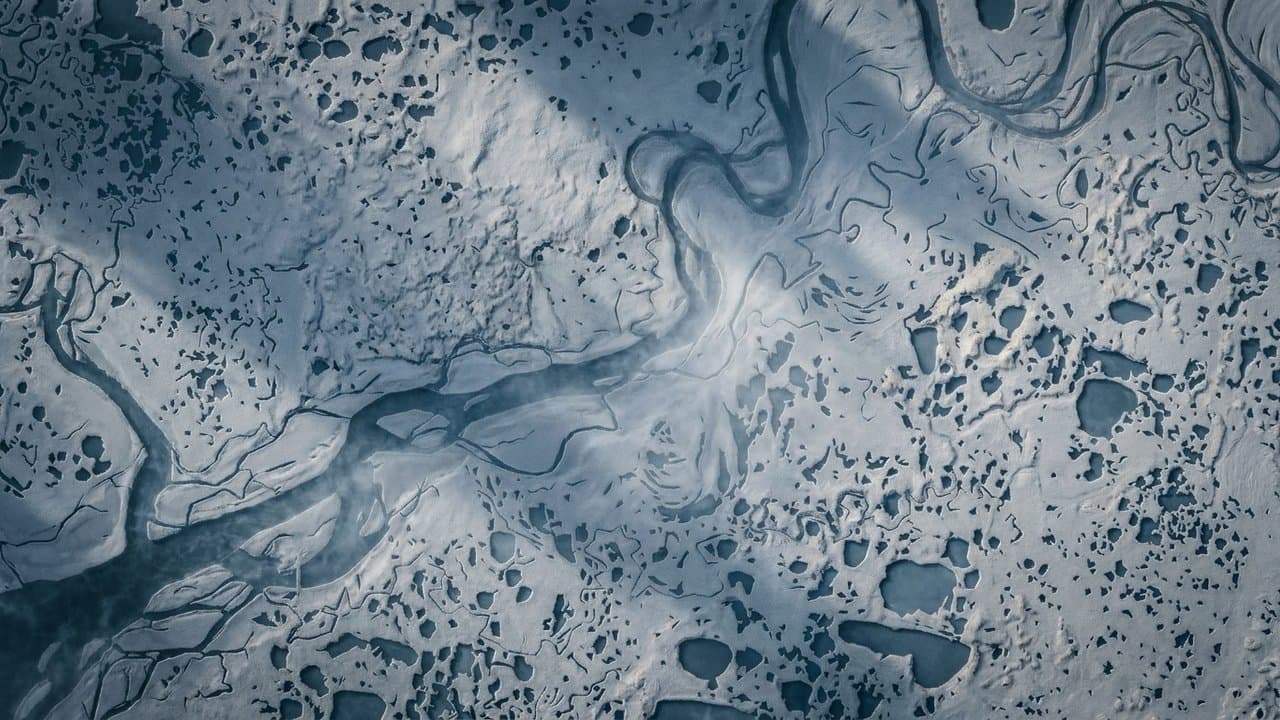
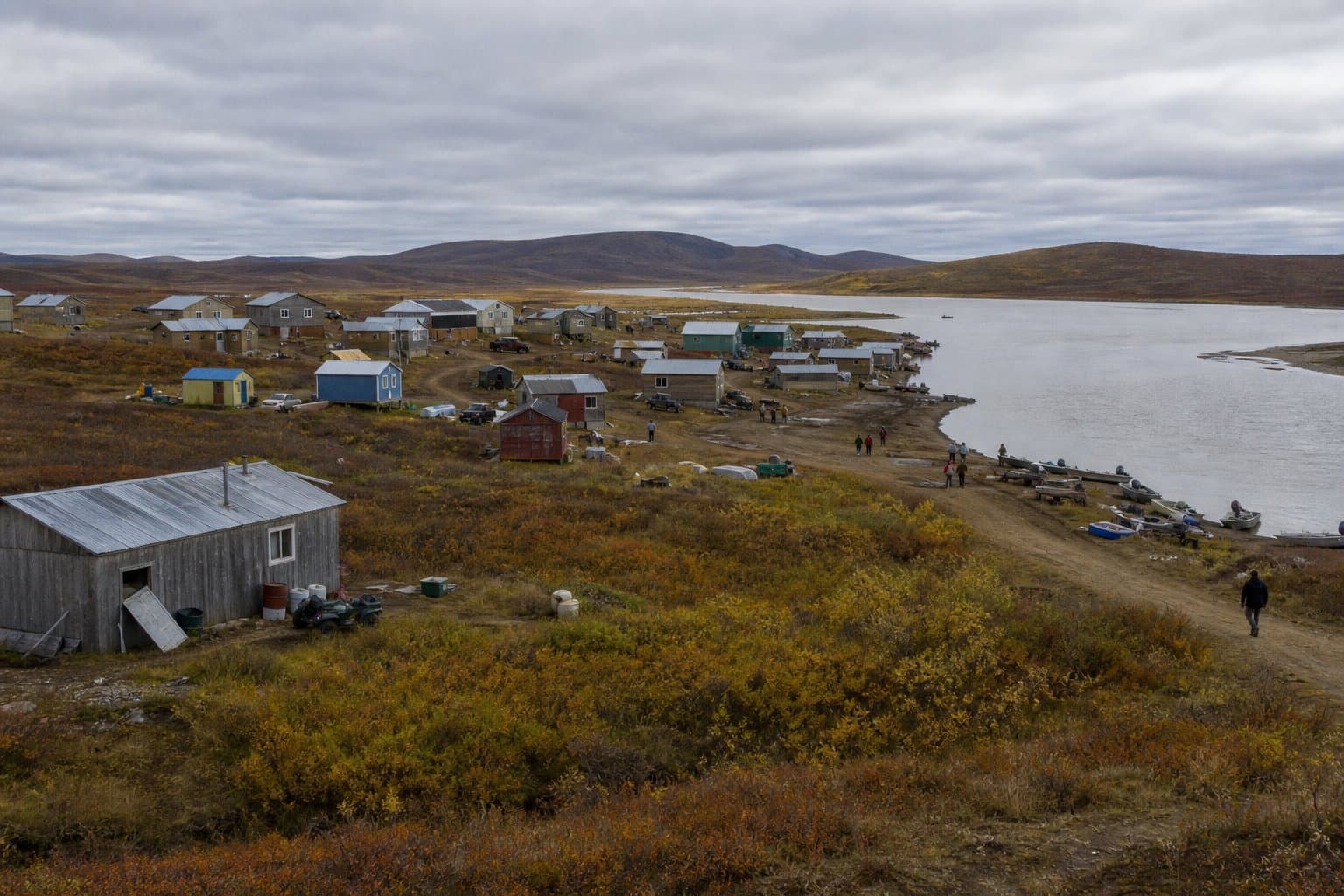
Most of the year, no road connects the villages along the Kuskokwim River. The river winds about 540 miles southwest to Kuskokwim Bay on the Bering Sea, its lower reaches crossing one of the largest river deltas in the world, a flat marshland of lakes and ponds too many to count.
In winter, crews plow a road onto the frozen river.
Now federal money is lined up to keep that road, and two other Alaska ice roads, running this winter.
The Federal Highway Administration obligated more than $3.4 million on Nov. 3 to the Alaska Department of Transportation & Public Facilities for ice roads on the Kuskokwim, at Tanana and at Healy Lake, according to federal award records.
The Kuskokwim road is the longest of the three. Depending on conditions, it runs 250 to 350 miles on the ice, from Government Cabin in the north to Tuntutuliak in the south.
It serves 17 or more villages, from Kasigluk to Crooked Creek, according to a 2021 letter from Calista Corp. and the Native Village of Napaimute, whose crew maintains it.
People use it to haul mail and freight, get to medical care and drive to games and events, High Country News reported in 2023.
"This is a real road," Mark Leary, Napaimute's director of operations, told the magazine. "For the few months that it exists, it makes life much more convenient and much, much cheaper."
During one severe storm, the crew plowed the road from Akiachak to Bethel to get an Elder to emergency care, the 2021 letter said.
Snow "insulates the ice from the frigid air above," so crews plow it off the driving lane to let the ice underneath grow thicker, according to an ice road manual the University of Alaska Fairbanks wrote for the Federal Highway Administration in 2023.
Crews can also flood the surface and let the water freeze in thin layers. That can add more than an inch of ice a day, depending on the air temperature.
Under the manual's guidance, a person walking needs about 4 inches of ice. A snowmachine and rider need 7 inches. A three-quarter-ton pickup needs 15.
An 80,000-pound load needs 31 to 40 inches, close to 3 feet, depending on how much risk the operator accepts.
Crews can check the thickness by drilling holes with augers or by towing ground-penetrating radar behind a snowmachine. The manual says the first survey of the season, when the ice is thin and unknown, can be "the most dangerous period of the winter season."
A vehicle on ice pushes a wave through the water underneath. Near what engineers call the critical speed, the vehicle is "climbing up onto the wave being formed beneath the ice sheet," the manual says. The danger is greatest in shallow water.
The manual recommends 15 mph for a vehicle on ice at the minimum thickness for its weight, and 5 mph near shore or when meeting oncoming traffic.
For years, Napaimute's crew ran largely on donations from residents, businesses and governments, High Country News reported, before state and federal grants took over.
In January, the state transportation department gave Napaimute a surplus 2005 Caterpillar 140H grader with a snowplow and wing. The department said Typhoon Halong in 2025 put new focus on dependable winter routes in the region, and that the grader will let a well-marked, maintained ice road reach Tuntutuliak for the first time.
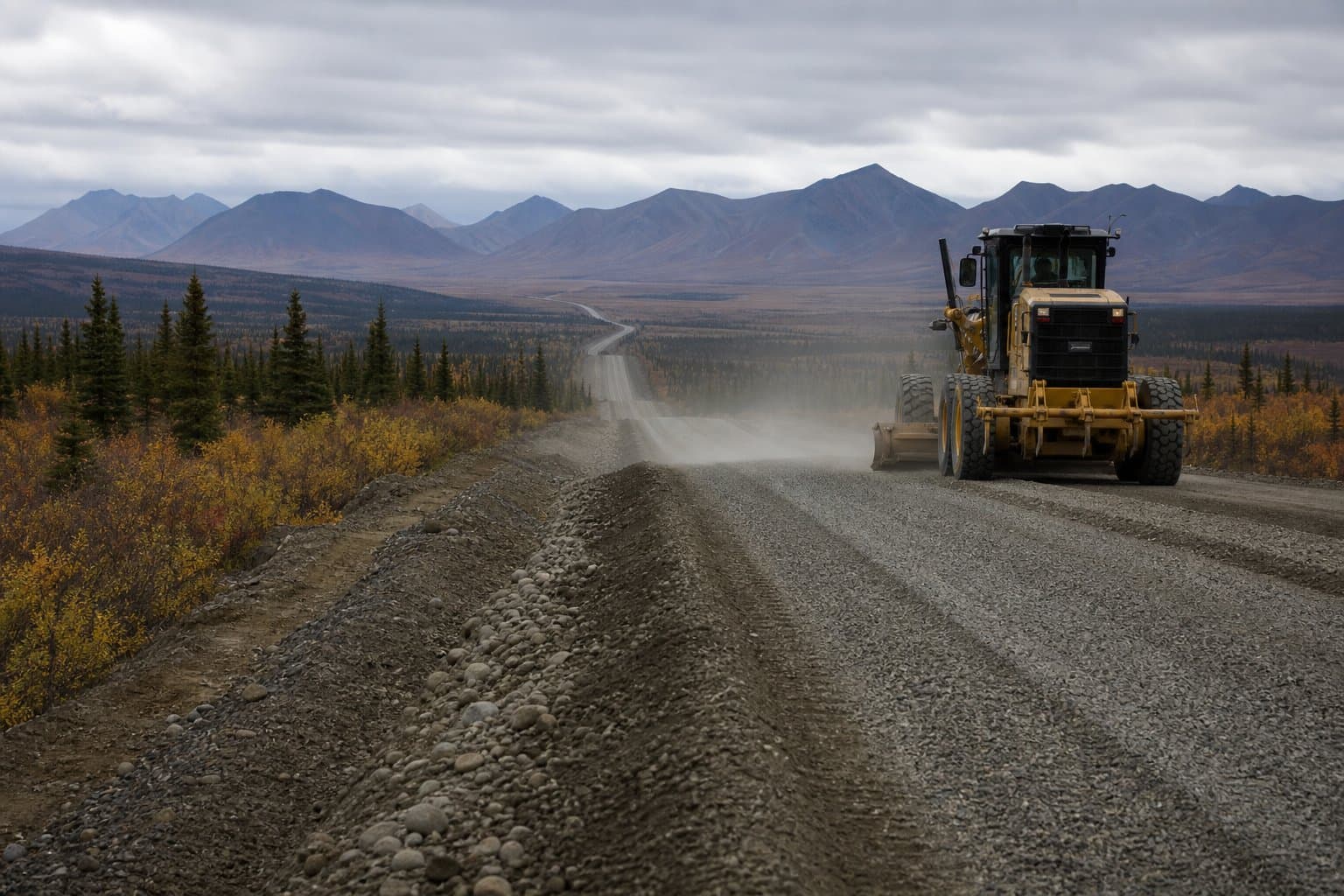
At Tanana, the 5.3-mile ice road meets the Tofty Road, a single-lane gravel road the state finished in 2016 from Manley Hot Springs to the south bank of the Yukon River, about six miles upstream from the village.
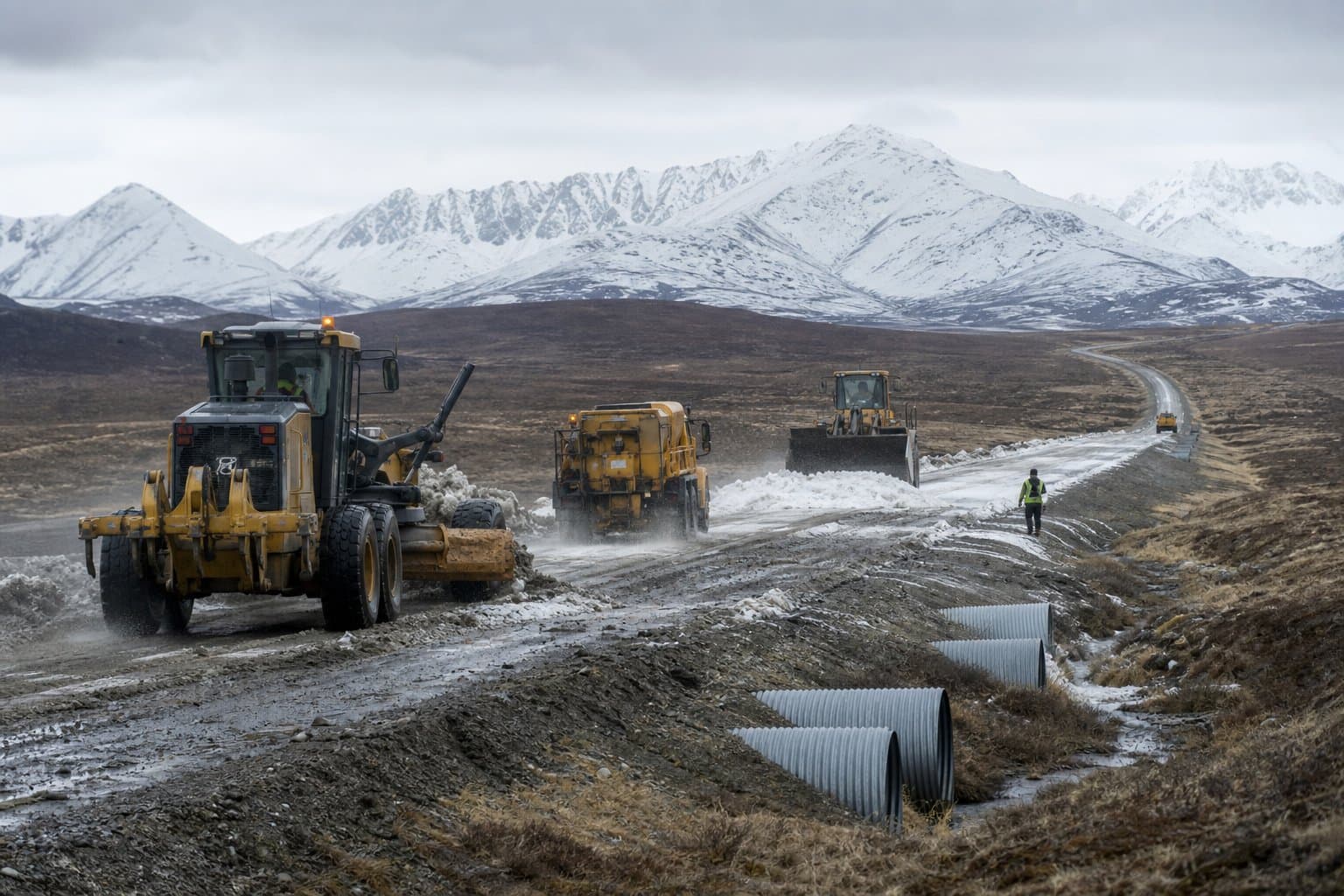
The state doesn't maintain the Tofty Road through the winter. Crews start clearing it Feb. 15 and aim to open it around March 1, timed to Tanana's ice road construction so residents can move freight while the ice is stable, according to the department's project page.
At Healy Lake, a roughly 10-mile ice road connects the Interior village to the road system.
"Ice roads will be available for less time each year," which "could lead to concentrations of traffic in shorter travel windows," the department's 2016 freight plan says.
A 2012 research report on the Pacific Northwest and Alaska said ice road seasons "are predicted to shorten and become less certain." Adapting could mean leaning more on summer barges, paying more to maintain ice roads and building all-season routes, it said.
The Nov. 3 money came in four grants. The main Kuskokwim award is about $2.67 million. A separate $50,228 award covers the river road's northeast end, from Georgetown to Crooked Creek.
The Healy Lake award is about $492,000, and the Tanana award is about $231,000.
Each runs through Dec. 31, 2027. The amounts are obligated, not yet spent.
The state designed all four projects with its own money. The required match, about 9% of each project, comes as local in-kind contributions, according to the award records.
The state also runs a Safe Ice Roads for Alaska program, which lets tribes, cities and boroughs apply for federal money to plan, mark, survey, plow and maintain winter routes. Applications for the 2026-27 season were due July 10.
What did you make of this story? (no account needed)
Made by our human newsroom with AI. Reviewed by Cale Green. How humans and AI work here · Grow with our newsroom ·
Keep Alaska News free for everyone.
No paywall, ever. Members pay so everyone can read the meetings and records Alaska News covers.
Get Alaska News in your inbox
Create your free account and get the day’s top stories around 6 each morning, in a few minutes’ read.
Top stories, around 6 each morning.
Stories on what you follow, on Sundays.
Source: Alaska Department of Transportation and Public Facilities.




Comments
Sign in to leave a comment.
No comments yet. Be the first to share your thoughts.