
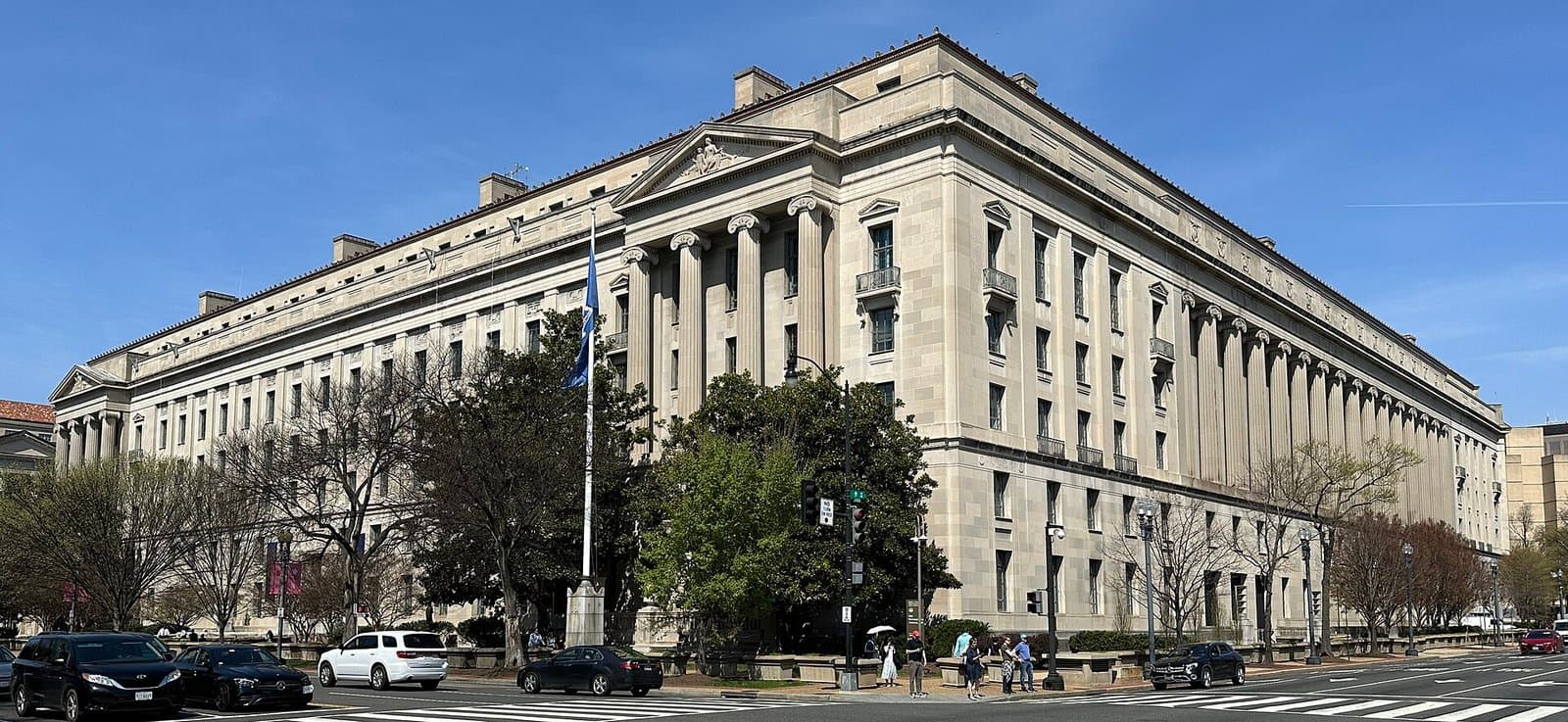
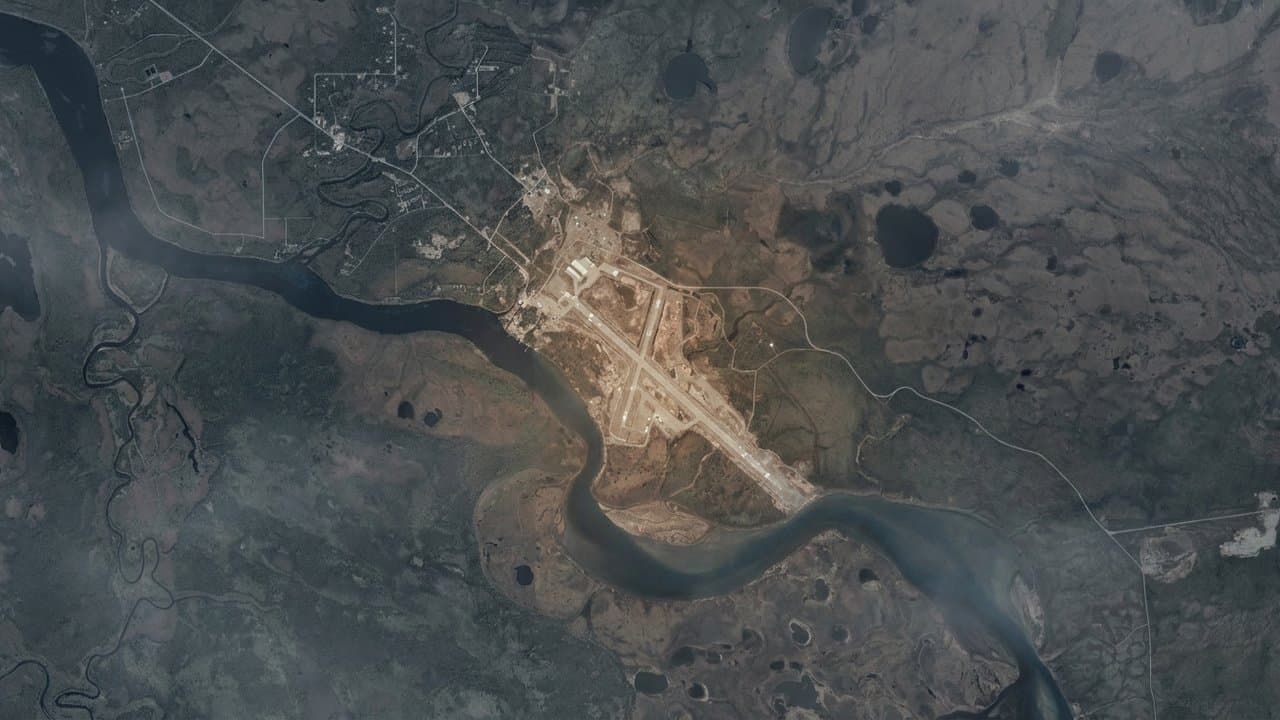
Photo: Quintin Soloviev via Wikimedia Commons · Photo source · CC BY 4.0
DOJ rewrites its Alaska Senate suit, and the state asks a judge to toss it by Monday
Editor's note: This story was updated Thursday night with a motion filed by Mary Peltola's campaign and the Democratic Senatorial Campaign Committee in response to the Justice Department's amended complaint.
The Justice Department rewrote its lawsuit over Alaska's U.S. Senate race Thursday, adding allegations from a New York Times report, then argued that made three pending motions to dismiss moot. Alaska responded within hours, renewing its bid to end the case and asking U.S. District Judge Sharon Gleason to rule by Monday, the day before Election Day.
DOJ filed its 21-page amended complaint at 12:55 pm, two hours before its deadline to answer the state's motion to dismiss. It keeps its claim under the National Voter Registration Act and adds one under the Constitution's Supremacy Clause.
It also draws on the Times' Wednesday account of a "Ballot Composition Project," alleging that Mary Peltola's team "reportedly worked with people trying to recruit another candidate named Dan Sullivan to confuse voters." That candidate is Daniel J. Sullivan Jr., a retired Petersburg teacher. DOJ calls his place on the ballot "the result of a conspiracy" and says the "sole purpose" of his candidacy is to draw votes from Republican Sen. Dan Sullivan.
The complaint also cites the Division of Elections' June finding that his candidacy was meant to confuse voters. State courts reversed that disqualification because the division used a "good faith" test found nowhere in Alaska law, without ruling on his motives.
For its new allegations, DOJ relies largely on the Times. "Although what the New York Times reports is not always true, its reporting here aligns with what the United States has been alleging on information and belief," the complaint says.
The Times said it drew on interviews with 12 people, dozens of text messages and documents. Much came from former Peltola campaign manager Elisa Rios, who was fired in August, had planned a wrongful termination lawsuit against the campaign and asked last week to retract her interviews. The Times said they were consistent with its other reporting.
Rios told the paper Peltola wasn't directly involved but was "definitely aware." In late May, just before Daniel J. Sullivan filed, Jerid Kurtz, a Democratic operative the Times says recruited candidates, spoke by phone with a Peltola aide and said he had just gotten off a plane in Petersburg, according to Rios and another person.
Peltola's campaign has said it "did not recruit any candidates into the race," and the Democratic Senatorial Campaign Committee also denies involvement. Neither answered the Times' detailed questions.
At an event in Juneau, Peltola said she had known only of herself and the incumbent. "I knew nothing about any other candidates on the ballot except for me and the incumbent," she said. Later she added, "That is all I have ever known about. I am not interested in tricking voters."
Daniel J. Sullivan has said he entered the race on his own and told The Associated Press in June he'd had no contact with Peltola's campaign. Neither he nor Kurtz responded to the Times.
The amended complaint also says the campaign and the DSCC "appear to have turned to misleading this Court" in a proposed answer that said they lacked enough information about Daniel J. Sullivan's purpose and so denied the allegation. Gleason has made no such finding.
In their own motion Thursday night, the campaign and DSCC called that accusation "Nonsense." "The only one who could possibly know Daniel J. Sullivan's true reasons for filing as a candidate is Daniel J. Sullivan," they wrote. They called DOJ's new allegations "a distraction" and said the court should consider sanctions.
DOJ still asks Gleason to block certification only if Sen. Sullivan loses and would have won with Daniel J. Sullivan's votes, pending an investigation into whether those voters meant to pick the senator. Attorney General Todd Blanche has said the department "does not seek ... to stop the certification of Alaska's election."
Its theory is that federal law tasks state officials with "protect[ing] the integrity of the electoral process," and that certifying a result shaped by the alleged scheme would "frustrate Congress's objectives."
At 2:25 pm, DOJ filed a four-page response that didn't defend the original complaint, arguing only that the amendment made the dismissal motions moot. They came from the state, the campaign and DSCC, and voter groups Gleason let into the case Wednesday.
The state called that "gamesmanship" in a renewed request for a fast ruling, and filed a 25-page motion to dismiss the amended complaint "immediately, with prejudice."
The new count, the state says, "depends entirely on accepting the same meritless legal theory": that the National Voter Registration Act, "a voter registration law," governs a case that "has nothing to do with voter registration."
It also says the investigation DOJ wants can't be done, because ballots can't be traced to voters and Alaska's constitution requires that "secrecy of voting shall be preserved."
DOJ asked for until 1 pm Friday to respond, and the campaign and DSCC joined the state's push for a fast ruling. Gleason had not ruled as of early Thursday evening.
House Oversight Chairman James Comer, a Kentucky Republican, asked Rios and Kurtz on Thursday to sit for voluntary interviews Nov. 5 and 6, warning of "compulsory process" if they don't. His press release says the two "plotted to rig" the race. The letters say each was "allegedly" tasked with helping.
The Associated Press reported Thursday, citing a person familiar with the matter, that DOJ had issued a new group of grand jury subpoenas and records-preservation demands. Reuters, citing one source, reported more than 40. None has been made public, and no one has been charged.
They follow anonymously sourced reports in July that the FBI and the U.S. attorney's office were examining the race.
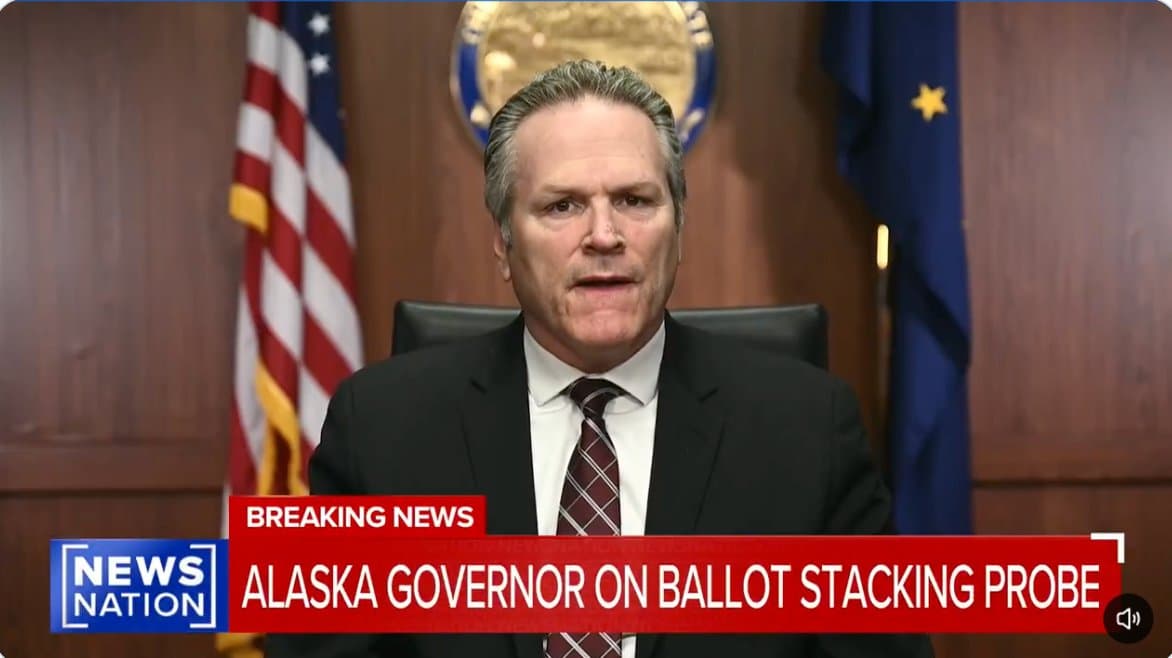
Gov. Mike Dunleavy on Wednesday directed the state Department of Public Safety to investigate whether the effort broke state law. Lt. Gov. Nancy Dahlstrom had opened one into his filing in June.
No court has ruled on whether this effort broke any law. The Times wrote that ballot-stacking tactics in general are common and "generally considered legal," and that both parties have used them in Alaska.
Source: DOJ rewrites Alaska Senate suit as inquiries widen; state renews dismissal bid.
Made by our human newsroom with AI. Reviewed by Cale Green. How humans and AI work here · Grow with our newsroom
Stay informed. Support what matters.
Free local news you can verify. Support Alaska News and go ad-free.












Comments
Sign in to leave a comment.
No comments yet. Be the first to share your thoughts.