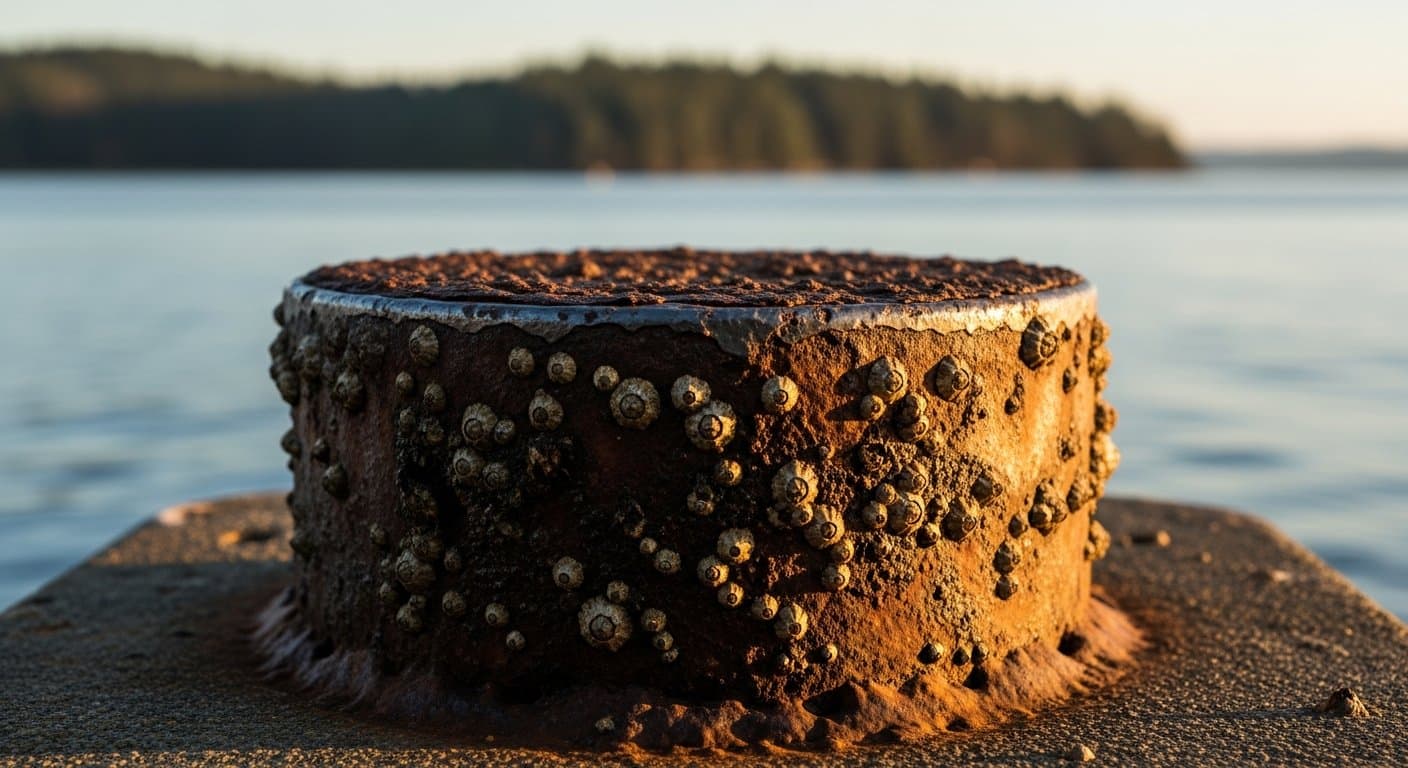
AI image
Coeur Alaska's Berners Bay dock got federal approval for pile driving
NOAA Fisheries authorized Coeur Alaska on Sunday to conduct pile driving at the Kensington Mine's dock in Berners Bay, allowing limited behavioral disturbance of several marine mammal species during repair work on two mooring dolphins damaged in January 2022 storms.
The bay matters substantively. Berners Bay, about 28 miles northwest of Juneau, hosts one of the largest herring spawns in Southeast Alaska, eulachon runs that feed major bald eagle concentrations, Steller sea lion haulouts, humpback whale feeding grounds, and salmon fisheries that support commercial, sport, and subsistence users.
The Kensington Mine context is also substantive. Coeur Alaska's underground gold mine has been a contested operation since before it began producing — the 2009 U.S. Supreme Court decision in Coeur Alaska v. Southeast Alaska Conservation Council settled a major Clean Water Act question about how the mine could dispose of tailings in Lower Slate Lake. The dock at issue in the current authorization is the mine's marine access point.
NOAA's incidental harassment authorization permits "Level B" disturbance — behavioral effects short of injury or death — during in-water pile driving. The agency made the statutorily required findings that the take will have no more than a negligible impact on affected species and no unmitigable adverse impact on subsistence uses.
The framework itself is contested. The Marine Mammal Commission, an independent federal oversight body, has raised structural concerns about how NMFS evaluates these authorizations. In a November 2021 letter on multiple Alaska harbor IHAs, the commission wrote that NMFS "continues to evaluate the effects of numerous construction projects on marine mammals and their habitat on a project-by-project basis, without fully accounting for the cumulative effects of repeated authorizations on the same stocks and in the same regions over time."
NOAA's framing is different — that IHAs paired with mitigation and monitoring keep impacts small and short-term. The Kensington authorization includes mandatory mitigation and monitoring requirements.
The dock repair itself is straightforward maintenance work. The substantive question is larger: how the cumulative weight of repeated IHAs in Alaska's most ecologically productive waters gets evaluated.
Source: NMFS authorizes incidental marine mammal takes for Coeur Alaska Kensington Dock repair in Berners Bay ().
Drafted with AI. Edited by Cale Green (1 revision). No full editor review is on record. Who is accountable.
Stay informed. Support what matters.
Free, permanent access to local news you can verify. Subscribe to support Maggie AlaskaNews and go ad-free.
Related Coverage
Juneau's fifth cruise dock clears a federal hurdle
Alaska News · 1mo ago
Whale permit for Juneau's fifth cruise dock issued with no public comment
Alaska News · 1mo ago
Federal regulators weigh a noise permit for a Douglas Island cruise terminal, with sea otters in the balance
Alaska News · 1mo ago
Pile driving at a Juneau fuel dock could damage seals' hearing
Alaska News · 1w ago
Whale permit for Ketchikan bridge counts down to the single animal
Alaska News · 1mo ago
Comments
Sign in to leave a comment.
No comments yet. Be the first to share your thoughts.