AMATS to vote on $293 million update for 5th and 6th avenues
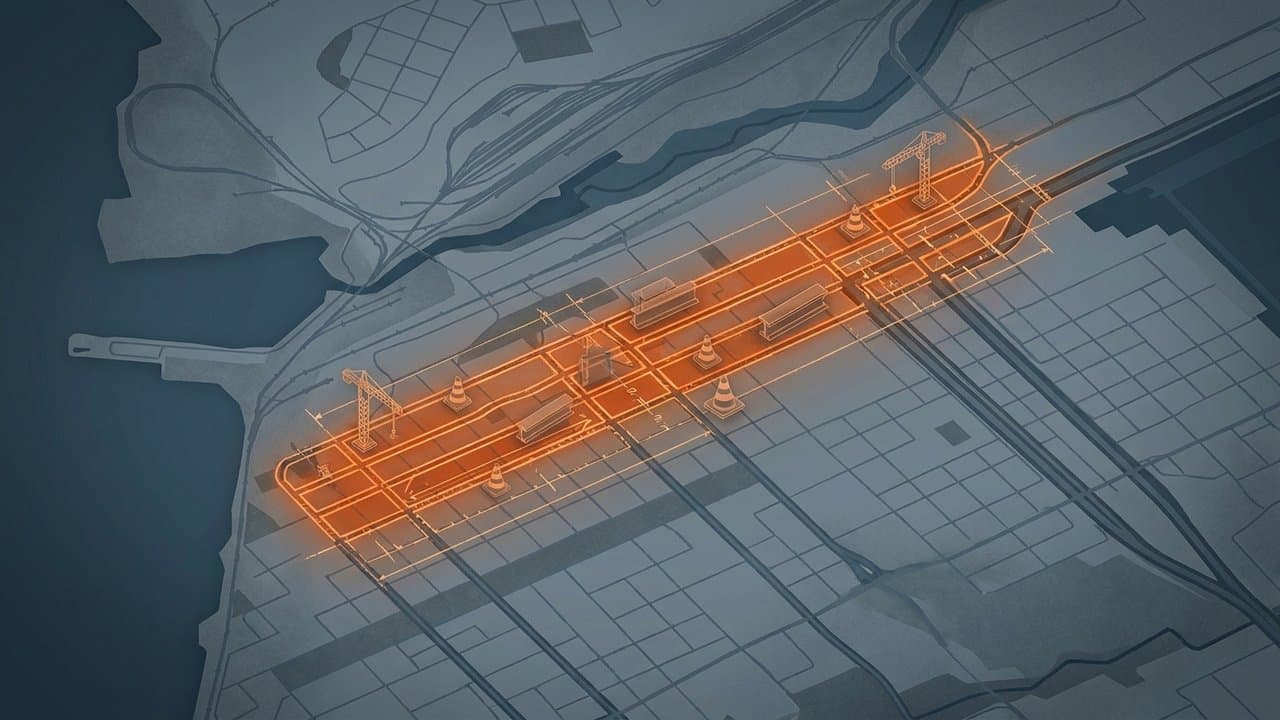
The state wants Anchorage's transportation planners to program $293 million in planning-level costs for 5th and 6th avenues, split into two segments. The larger piece, $262.5 million, would rebuild roughly a mile of each avenue from L Street to Gambell Street. The smaller piece, $30.5 million, covers work east from Gambell Street to the Airport Heights intersection. The larger segment's total is $52.5 million less than the $315 million placeholder the attached cost estimate recommends holding.
The Anchorage Metropolitan Area Transportation Solutions Policy Committee is scheduled to vote on the request Thursday, Aug. 20, as the first of four action items. The meeting runs 1 to 3 p.m. at the Planning and Development Center on Elmore Road. The AMATS Technical Advisory Committee has already voted to approve the changes and recommends the Policy Committee do the same.
An earlier Alaska News article on the corridor reported a $370 million estimate with an unclear funding source, and planning staff had flagged scope creep. The 2023-2026 AMATS funding program had treated 5th and 6th Avenue work mainly as signals, lighting and pedestrian safety upgrades.
The Alaska Department of Transportation and Public Facilities asked for three changes to the project as it sits in the 2052 Metropolitan Transportation Plan: add drainage work to the description, split the project into two segments, and set their costs at $262.5 million and $30.5 million. The figures are planning-level estimates in a long-range plan, not an appropriation or a commitment of project funds.
Where the money will come from remains unsettled. "The project cost is expected to be covered by additional funding above and beyond the historical funding provided by DOT&PF within the AMATS area," wrote Aaron Jongenelen, AMATS executive director and metropolitan planning organization coordinator, in the memorandum to the committee.
The attached DOT&PF estimate does not back the figure the memo proposes. Under Recommended Programming Amounts, it lists $262.5 million as the current planning estimate, then states: "The recommended $315 million placeholder represents a $300 million pre-ICAP allowance plus the 5 percent ICAP charge." The memo does not address the difference.
Within the $262.5 million, utilities cost more than the road itself. Water, sewer and storm drain reconstruction runs $40 million, against $35 million for roadway demolition, excavation, base, pavement, curbs and intersections. Signals, communications and lighting total $20 million. Sidewalks and streetscape cost $25 million. Mobilization, traffic control, winter protection and business access run $15 million. Private utility relocation and duct banks cost $10 million. Transit, bicycle, parking and public realm work total $7 million, and contaminated material cleanup costs $5 million. Those items add up to $157 million in direct construction. A $39 million concept-level contingency lifts that to $196 million, and a 5 percent indirect cost charge of $12.5 million applies after a $250 million subtotal, completing the $262.5 million.
The estimate covers about one mile of each avenue, roughly seven lane-miles, over three construction seasons. It names four cost risks: existing utility conditions and conflicts, contaminated soil and unsuitable subgrade, maintaining business, transit and emergency access, and winter protection and premium streetscape work. DOT&PF calls it "a generalized concept-level estimate for preliminary planning and programming, not an engineer's estimate based on completed quantities or design."
The rebuild's stated purpose is to prepare the two state-owned arterials "as coordinated downtown urban corridors suitable for long-term Municipal ownership and operation." The schedule calls for substantial completion and municipal acceptance by fall 2032. Whether 5th and 6th remain a one-way couplet is scheduled for decision between 2027 and early 2028.
The public may comment for three minutes per item, after the committee finishes discussing it.
AI-assisted, reviewed by editors. Spot an error?
Stay informed. Support what matters.
Free, permanent access to local news you can verify. Subscribe to support Walter AlaskaNews and go ad-free.
Related Coverage
The 5th and 6th avenue rebuild just hit $370 million — and even planners are flagging "scope creep"
Alaska News · 1w ago · 88% match
Alaska DOT programs Fairview Bypass into 2052 plan at $220M
Alaska News · 2mo ago · 81% match
Anchorage Assembly to vote July 21 on $351K for pedestrian and bike count program
Alaska News · 4w ago · 81% match
Anchorage faces federal funding freeze if transportation plan misses December deadline
Alaska News · 3w ago · 81% match
The state is drilling test holes for a Seward Highway fix, as a bigger $1.5 billion plan draws fire
Alaska News · 1w ago · 81% match
Comments
Sign in to leave a comment.
No comments yet. Be the first to share your thoughts.