Alaska's Right-to-Repair Bill Navigates National Debate on Consumer Access
Alaska lawmakers advanced a right-to-repair bill Tuesday that would require manufacturers to provide repair documentation, parts, and tools to independent shops and consumers. The move positions the state within a national debate over how far such mandates should reach.
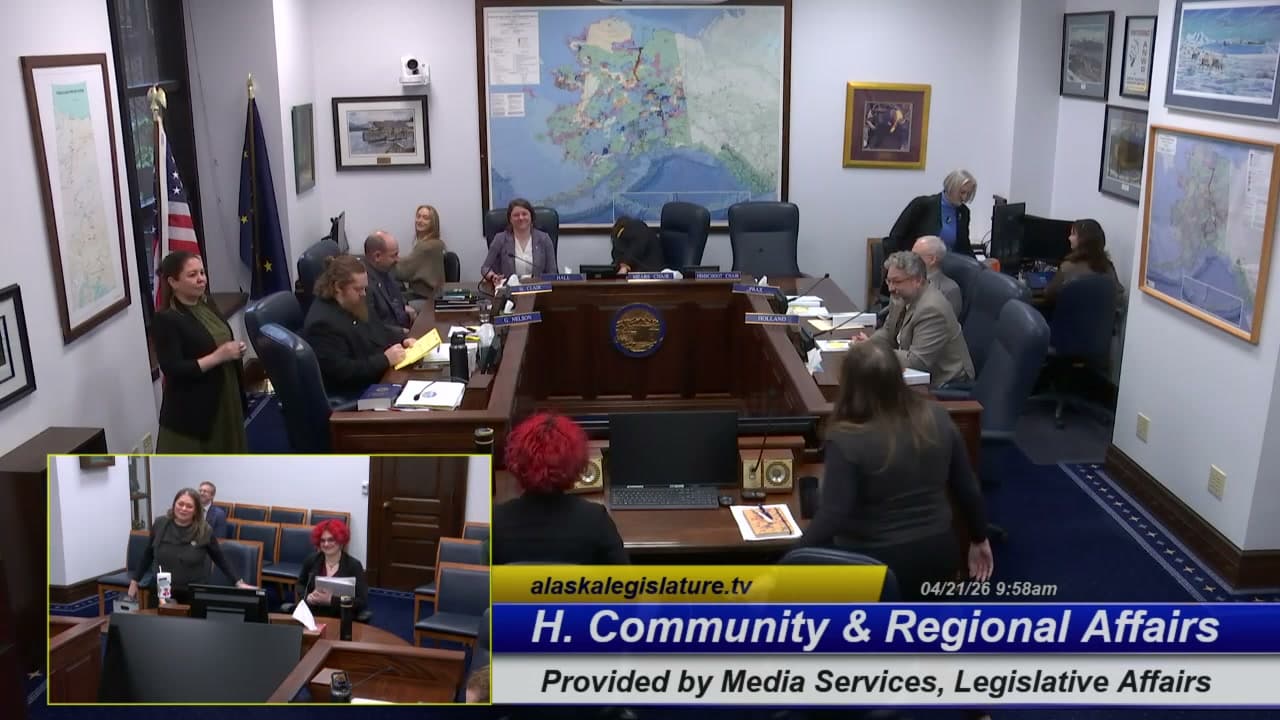
The House Community and Regional Affairs Committee voted 4-3 to move House Bill 162 forward after adopting five of ten proposed amendments during an extended hearing. The bill, sponsored by Representative Maxine Dibert of Fairbanks, would apply to digital products sold or used in Alaska, from smartphones to power sports vehicles.
The committee's work reflects tensions playing out across the country as states consider repair legislation. More than 30 states have introduced right-to-repair bills since 2021, according to repair advocacy groups, though approaches vary widely.
"House Bill 162 ensures that Alaskans and independent repair providers have access to the same documentation, parts, and tools that manufacturers already provide to their authorized service providers," Dibert said. "This bill is about access, fairness, and making sure our markets are working the way they should."
The committee adopted Amendment 1, which clarified that if a contract provision violates the statute, only that provision would be voided rather than the entire agreement. The amendment passed without objection.
The committee also adopted Amendment 2, which exempts critical infrastructure, systems and assets vital to state security, economic security, or public health. Representative Garrett Nelson, who proposed the amendment, cited security risks if repair information for infrastructure like power systems or water treatment facilities became widely available. The amendment passed 5-2.
But the committee rejected Amendment 3, which would have narrowed the bill to consumer electronics and household appliances. That amendment failed 3-4. Opponents said it would exclude Alaskans who rely on equipment like ATVs, snow machines, and tractors for daily transportation and subsistence.
"In many states, limited repair access is an inconvenience," Dibert said. "In Alaska, it is a real barrier. Because of our geography, authorized repair providers are often hundreds or even thousands of miles away."
Emma Solchinski, intern to Representative Dibert, noted that European Union right-to-repair regulations cover a broader range of products than most U.S. state laws, though the EU represents a much larger market.
The committee also adopted Amendment 7, addressing parts pairing, the practice of digitally linking components so they only work together. The bill as amended would prohibit manufacturers from using parts pairing to prevent repairs, though manufacturers could still use it for legitimate configuration purposes. That provision drew debate. Representative Kai Holland noted that proprietary replacement parts are a fundamental business model protected by intellectual property law.
"Part of me is struggling with having this language in there because it is essentially taking away a foundation of what so many products and innovations in our economy depend upon," Holland said. He voted for the parts-pairing amendment, which passed 4-3.
The Federal Trade Commission has filed lawsuits involving repair restrictions. Bill supporters cited estimates that John Deere's repair practices allegedly cost farmers $1.4 billion, though the company settled a class action lawsuit for $99 million and faces ongoing FTC litigation.
The committee also adopted Amendment 8, allowing manufacturers to charge for software tools and documentation, rather than providing them without charge as the original bill required. Representative Steve St. Clair, who proposed the amendment, said hosting and maintaining repair resources carries real costs even if copying digital files is inexpensive. That amendment passed 4-3.
The bill's effective date was pushed to 2029, giving manufacturers and dealers time to adjust. The original version would have taken effect in 2027. Representative Holland proposed the delay as a conceptual amendment to Amendment 10, which the bill sponsor accepted to gain committee support. Amendment 10, as amended, passed 4-3.
The committee rejected Amendment 9, which would have exempted power sports equipment. The amendment failed 3-4. Amendment 4 was withdrawn after the sponsor determined existing statute already covered the concern. Amendment 5, which would have removed exemptions for motor vehicles, medical devices, and farm equipment, was also withdrawn. Amendment 6, which would have removed core requirements of the bill, was withdrawn after discussion.
The bill now moves to the House Labor and Commerce Committee. It includes exemptions for motor vehicles, medical devices, farm equipment, and critical infrastructure.
National repair advocacy groups have supported broad right-to-repair legislation, saying it reduces electronic waste, supports small businesses, and gives consumers control over products they own. Industry groups have raised concerns about intellectual property protection, product safety, and cybersecurity.
Alaska's small market size creates unique challenges. Several committee members questioned whether manufacturers would comply with Alaska-specific requirements or simply stop selling certain products in the state. Representative Mike Prax called the bill "a shot across the bow" and predicted either manufacturer boycotts or lawsuits.
The bill would not require manufacturers to disclose trade secrets, override anti-theft protections, or provide parts they no longer produce. Manufacturers operating on dealership models could charge reasonable costs for parts rather than wholesale prices.
For Alaskans in communities without authorized repair providers, the bill's supporters say it addresses a practical need. Sarah Snowberger, staff to Representative Dibert, noted that rural residents rely on equipment like four-wheelers and snow machines for subsistence activities and daily transportation, not recreation.
"This is why rural Alaskans were so supportive of this bill," Snowberger said. "Four-wheelers, snow machines, tractors, they use these things every single day to provide subsistence foods, put food on the table, get to and from wherever they need to go."
The committee vote was 4-3. Representatives Carolyn Hall and Rebecca Himschute voted yes, along with Co-Chair Caradonna Mears and Representative Holland. Representatives Nelson, St. Clair, and Prax voted no.
The hearing was the bill's sixth before the committee. The committee will hear SB 63 on the Local Boundary Commission again Thursday along with a committee substitute for HB 291 on municipal property tax exemptions. The amendment deadline for SB 63 is today at 5 p.m.
This article is based on a public meeting — Alaska Legislature: House Community & Regional Affairs, 4/21/26, 8am ().
AI-assisted. How we use AI Transcript byLucas Brown
Stay informed. Support what matters.
Free, permanent access to local news you can verify. Subscribe to support Alaska News and go ad-free.
Related Coverage
Alaska right-to-repair bill draws fire over broad scope and safety concerns
Alaska News · 5mo ago
Alaska Senate Advances Right-to-Repair Bill for Consumer Electronics
Alaska News · 4mo ago
Alaska Senate Passes Right-to-Repair Bill for Consumer Electronics
Alaska News · 4mo ago
Alaska Senate Passes Right to Repair Bill for Consumer Electronics
Alaska News · 4mo ago
House Judiciary advances consumer data privacy bill with 'duty of loyalty'
Alaska News · 4mo ago
Comments
Sign in to leave a comment.
No comments yet. Be the first to share your thoughts.