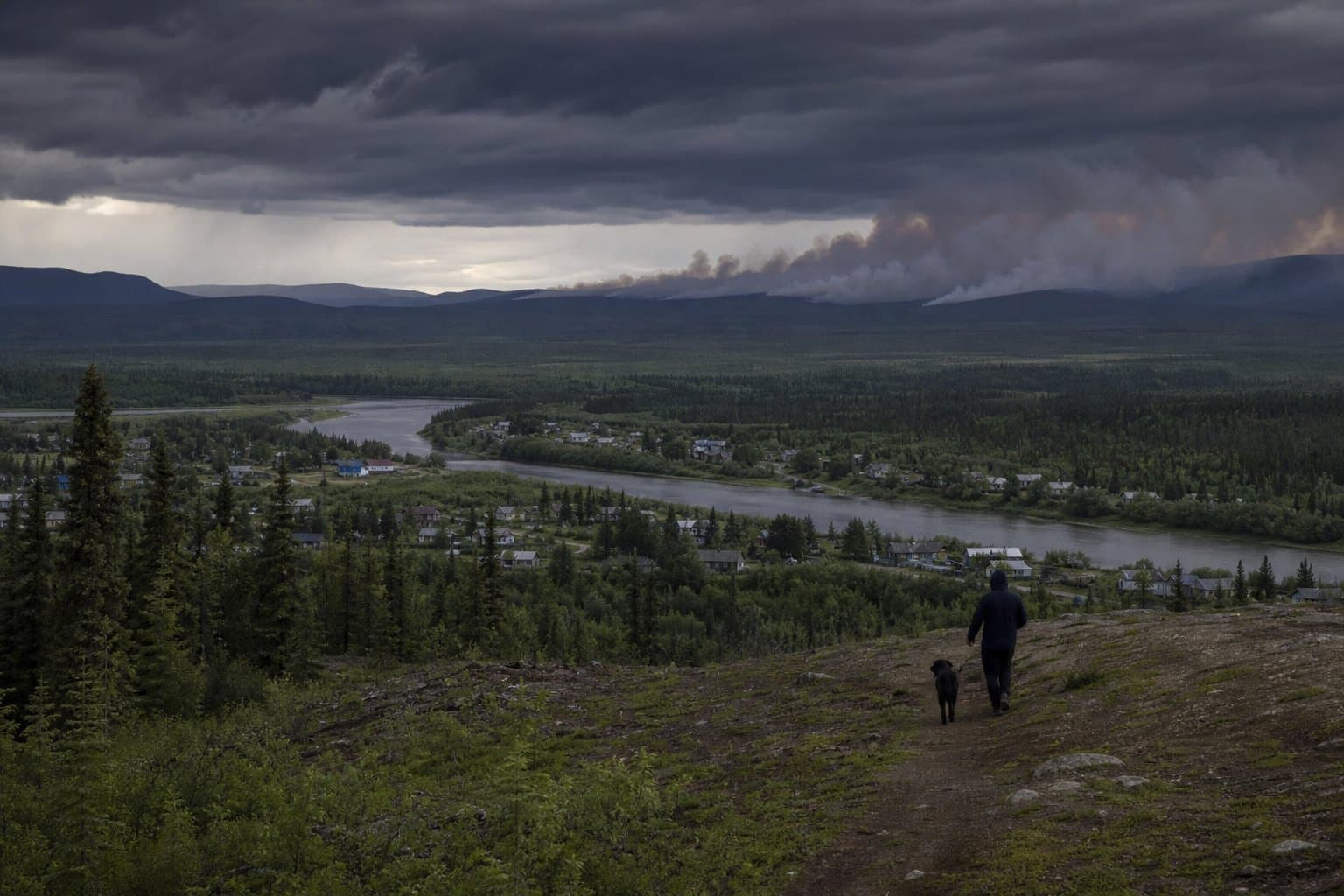
AI image
Alaska's quiet June fire season faces July's heat and lightning
Interior Alaska communities including Fairbanks, Bettles, Allakaket and Huslia face rising wildfire risk this weekend as July thunderstorms arrive over fuels that stayed moist through a surprisingly quiet June. Alaska recorded roughly 75,000 lightning strikes last month, the fourth-highest June total since 2012, yet burned fewer than 29,000 acres, the sixth-lowest June total since 1993. Rain followed the storms and kept boreal forest fuels moist. No sustained hot and dry weather arrived to rapidly dry those fuels. More than 100 wildfires ignited from about 61,000 ground strokes, but none grew rapidly.
That restraint is not guaranteed to hold. Interior temperatures reached the low-to-mid 70s on July 4, and widespread thunderstorms moved across the Interior the same day. Lightning coinciding with drying fuels is the combination fire managers watch most closely. The daily question is whether afternoon convection brings enough rain to offset the ignitions it starts, or whether drying winds follow instead.
June's low acreage masked at least one close call. The Starry wildfire, ignited by lightning on June 20, prompted evacuation notices in the Denali Borough even as statewide burned acreage remained historically low. The National Weather Service in Fairbanks had issued a Red Flag Warning for the Central Interior that weekend, citing scattered thunderstorms, humidity dropping to around 30 percent and wind gusts near storms reaching up to 40 mph. The warning ran from the morning of June 20 through the evening of June 21. Fire managers note that moisture and suppression response can keep acreage low even after many strikes, but the Starry fire illustrated how quickly a single storm cell can change the picture for nearby communities.
For Interior residents, the practical concern is the same one that defined June: whether the season stays quiet or turns. Those conditions were still in play on July 5, when a weather observer noted widespread thunderstorms continuing across the Interior as July's thunderstorm season presses on.
The July 4 heat was uneven across the state. Bettles and Allakaket reached 74 degrees and Fairbanks topped out at 71, while Utqiaġvik managed 37 and Anchorage reached only 52, below its typical midsummer range, according to preliminary figures compiled by Rick Thoman, a climate specialist at the Alaska Center for Climate Assessment and Policy. Researchers at the center caution that a single low-fire year does not reverse Alaska's longer trend, which is measured in season length and long-term averages rather than any one wet summer.
Assembled from public records the newsroom collected.
Made by our human newsroom with AI. How humans and AI work here · Grow with our newsroom
Stay informed. Support what matters.
Free, permanent access to local news you can verify. Subscribe to support Maggie AlaskaNews and go ad-free.
Related Coverage
Starry Fire forced Anderson evacuations before rain held Alaska's June burn total low
Alaska News · 3mo ago
Interior Alaska's fire season is easing — but watch for the ones still smoldering
Alaska News · 3mo ago
NWS issues overlapping fire-weather alerts across northern Alaska through July 9
Alaska News · 3mo ago
A week of lightning sparked dozens of Alaska fires and forced an entire town to flee
Alaska News · 3mo ago
Northern Alaska's staffed wildfires wind down, but crews brace for more
Alaska News · 2mo ago
Comments
Sign in to leave a comment.
No comments yet. Be the first to share your thoughts.