Alaska high court: first-filed court is preferred custody forum
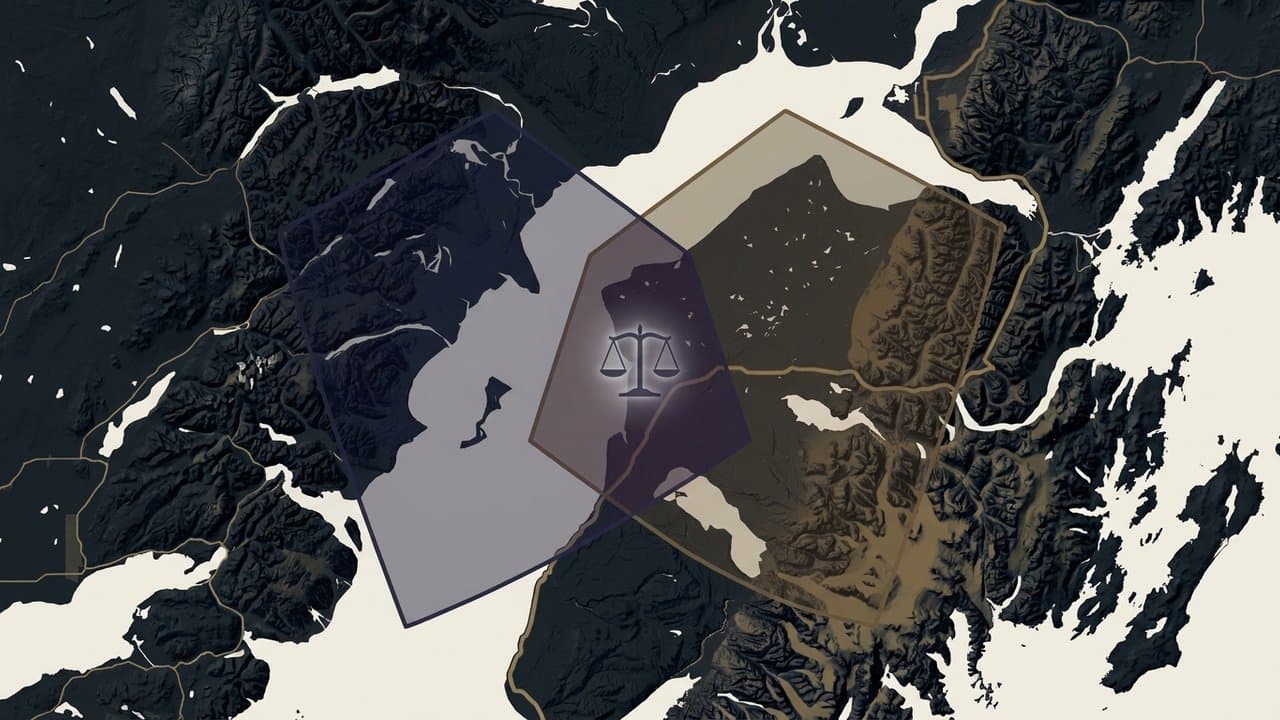
The Alaska Supreme Court ruled Friday that when the same custody dispute is filed in both a tribal court and a state court, the court where the case was filed first is generally the preferred forum for deciding it. The opinion lays out the reasoning behind an order the court issued July 11, 2025, which had already affirmed the dismissal of a state case and vacated a stay. Justice Oravec wrote the opinion, upholding Superior Court Judge Kelly J. Lawson's dismissal of a Kenai custody case in favor of the Kenaitze Tribal Court.
The rule is not absolute. The court said the superior court usually must decline to exercise jurisdiction while tribal proceedings are pending, and that a parent must exhaust tribal remedies on a jurisdictional objection only so long as tribal jurisdiction is "colorable and plausible." A parent who wants a state court to hear the case must file there before the other parent files in tribal court, or must challenge the tribal court's authority inside that court and exhaust tribal appeals before returning to state court.
Sarah Rachel Mallette and Garfield Tau Adams are the unmarried parents of a minor child pursuing the same custody matter in two forums. Adams is a member of the Kenaitze Indian Tribe. The child is eligible for membership. Mallette has no tribal affiliation. Adams filed a custody petition in Kenaitze Tribal Court in April 2024, withdrew it after the parents reached an agreement, then filed a second petition while Mallette's long-term domestic violence protective order was pending. The tribal court set a custody hearing for June 17, 2024. Mallette filed her state custody complaint on June 28.
The order in which those petitions were filed decided the case. The court found scant evidence the tribal court actually exercised jurisdiction at the June 17 hearing, but called that error harmless. The date a custody action is filed, not whether the tribal court acted, controls which forum is preferred. Because Adams' second tribal petition preceded Mallette's state complaint, the dismissal stood. The court also held Mallette waived a separate argument that her earlier protective order filing should have controlled custody jurisdiction, since she had not adequately raised it below.
"We now clarify that where cases involving the same custody matter are initiated in both state and tribal court, the court where the matter is filed first 'should properly be regarded as the preferred forum for resolving the parties' custody dispute in the first instance,'" Oravec wrote.
The court drew on the Uniform Child Custody Jurisdiction and Enforcement Act as illustrative, though that act does not govern tribe-to-state disputes. The ruling rests on John v. Baker, a 1999 decision holding that Alaska tribes have inherent, concurrent authority over custody disputes involving their members. The case falls outside the Indian Child Welfare Act, which exempts disputes between unmarried parents. That is a separate framework from state child-protection cases, where Alaska Department of Law guidance says state courts generally hold exclusive jurisdiction over proceedings involving an Indian child unless a transfer petition or other exception applies.
AI-assisted, reviewed by editors. Spot an error?
Related Coverage
Alaska Supreme Court clarifies active-efforts standard in Jace B. ICWA case
Alaska News · 2mo ago · 80% match
Alaska Supreme Court upholds ICWA termination, clarifies standards
Alaska News · 1mo ago · 79% match
Alaska's high court reversed a decision to end a Native mother's parental rights — over how the state made its case
Alaska News · 1mo ago · 79% match
Alaska Supreme Court affirms termination of Native mother's parental rights over domestic violence
Alaska News · 3w ago · 79% match
The state must bridge the language gap before ending parental rights, court says
Alaska News · 3w ago · 79% match
Comments
Sign in to leave a comment.
No comments yet. Be the first to share your thoughts.