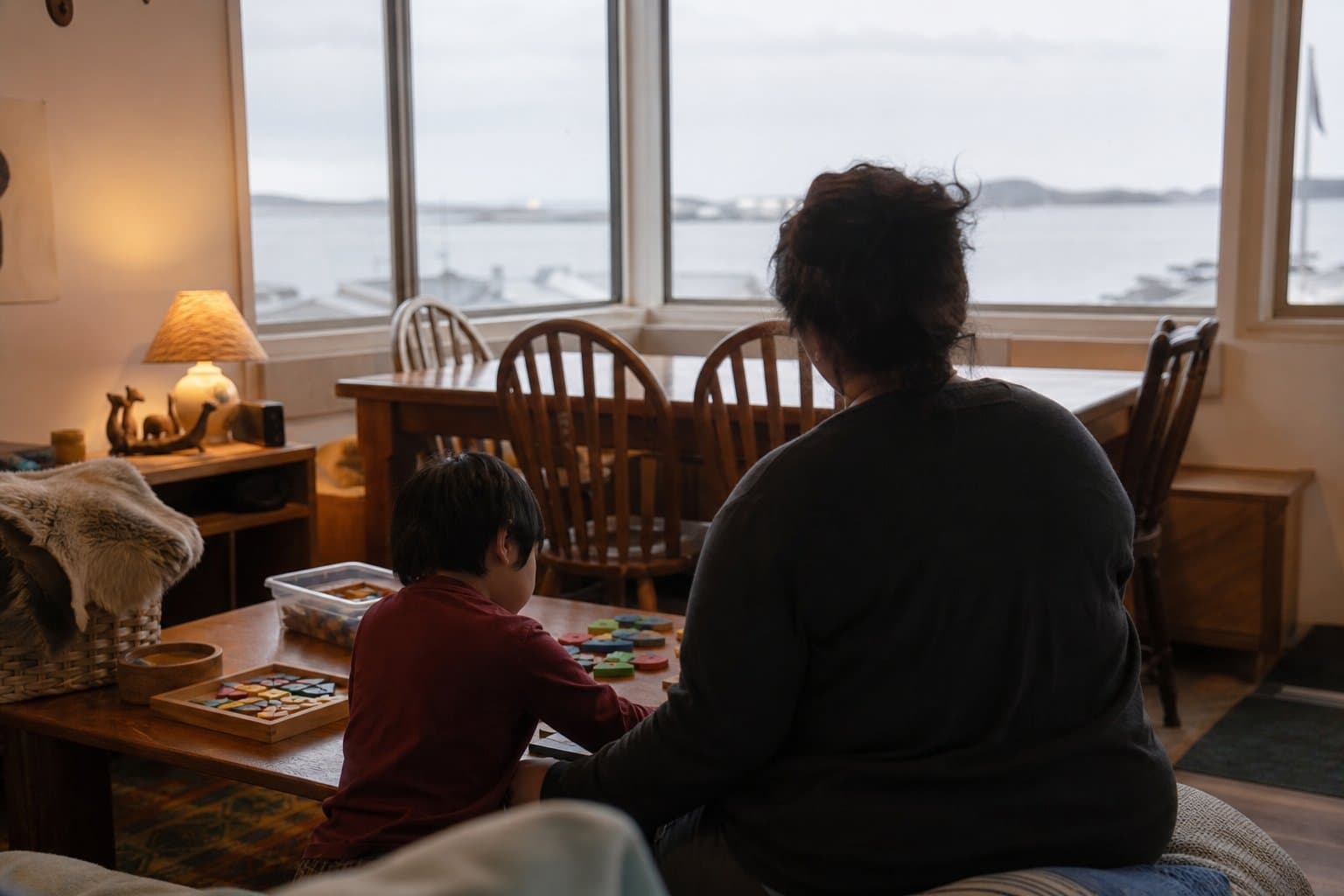
AI image
Alaska Supreme Court affirms termination of Native mother's parental rights over domestic violence
The Alaska Supreme Court affirmed Friday the termination of an Alaska Native mother's parental rights to her disabled son, ruling that nearly four years of case-plan participation did not remedy the household violence that drove his removal.
The decision, written by Justice Pate, holds that completing case-plan steps is not the same as developing the protective capacity to keep a child safe. The court emphasized that active-efforts review is case-specific, with no single formula distinguishing active from passive efforts. The Alaska Supreme Court has both affirmed and reversed terminations over active-efforts findings in prior ICWA cases, underscoring that the outcome here turns on the particular facts.
Kameron, identified by pseudonym, is an Indian child with neurological, language, and medical disabilities. OCS removed him in May 2021 after his adult brother Greg had been physically jabbing and grabbing him, causing bruising and bleeding. OCS involvement had begun in February 2020, when Greg attacked a sleeping sibling. Three days after that arrest, a caseworker found Greg back in the home. Over the next four years the pattern held. In September 2024, Greg struck his father Simon with an axe handle while Simon was lying in bed with a one-month-old grandchild. The wound required seven staples. When OCS asked Erin about a protective order, she said she felt conflicted and described Greg's behavior toward Kameron as a one-time occurrence. A cultural expert testified at the February 2025 termination trial that it would have been culturally appropriate for Erin to refuse Greg entry to the home, a finding the court weighed against her claim of conflict.
A child welfare expert testified that Erin had "a long way to go in understanding how deep [her] level of denial is and the impact this has upon" Kameron. The court affirmed on every contested point. Erin had argued that OCS fell short on active efforts by not doing more to find housing for Greg, not working sufficiently with the Tribe, and not expanding visitation. The court rejected each argument, finding that OCS made referrals, provided parenting classes and a domestic violence assessment, and coordinated with Kameron's Tribe throughout the case. The court also declined to reach the other child-in-need-of-aid grounds the superior court had relied on, affirming the CINA finding solely on the substantial risk of mental injury from exposure to domestic violence. The opinion also clarifies the court's earlier Karlie T. decision, holding that misdemeanor fourth-degree assault, not only felony-level conduct, can satisfy the domestic-violence exposure standard that triggers a child-in-need-of-aid finding. On best interests, the court held that a parent-child bond is not dispositive when the child faces ongoing risk of serious harm.
According to the court record, Kameron was doing well in foster care, with his medical and educational needs met and family connections in Nome maintained. His sister Eliza, who aged out of foster care, was adopted by the same foster family through an adult adoption in 2022. Simon's parental rights were also terminated. He did not appeal. The court found that Kameron had expressed a desire to be adopted by his foster family.
Source: Department of Family & Community Services, Department of Family & Community Services: Erin I. v. State of Alaska, Department of Family & Community Services, Office of Children’s Services.
Made by our human newsroom with AI. How humans and AI work here · Grow with our newsroom
Stay informed. Support what matters.
Free, permanent access to local news you can verify. Subscribe to support Maggie AlaskaNews and go ad-free.
Related Coverage
Alaska Supreme Court upholds ICWA termination, clarifies standards
Alaska News · 4mo ago
Alaska's high court reversed a decision to end a Native mother's parental rights — over how the state made its case
Alaska News · 3mo ago
Alaska Supreme Court rules early ICWA errors don't undo a later termination that followed the law
Alaska News · 6d ago
Alaska Supreme Court upholds termination of Valdez mother's parental rights
Alaska News · 1mo ago
Alaska Supreme Court clarifies active-efforts standard in Jace B. ICWA case
Alaska News · 4mo ago
Comments
Sign in to leave a comment.
No comments yet. Be the first to share your thoughts.