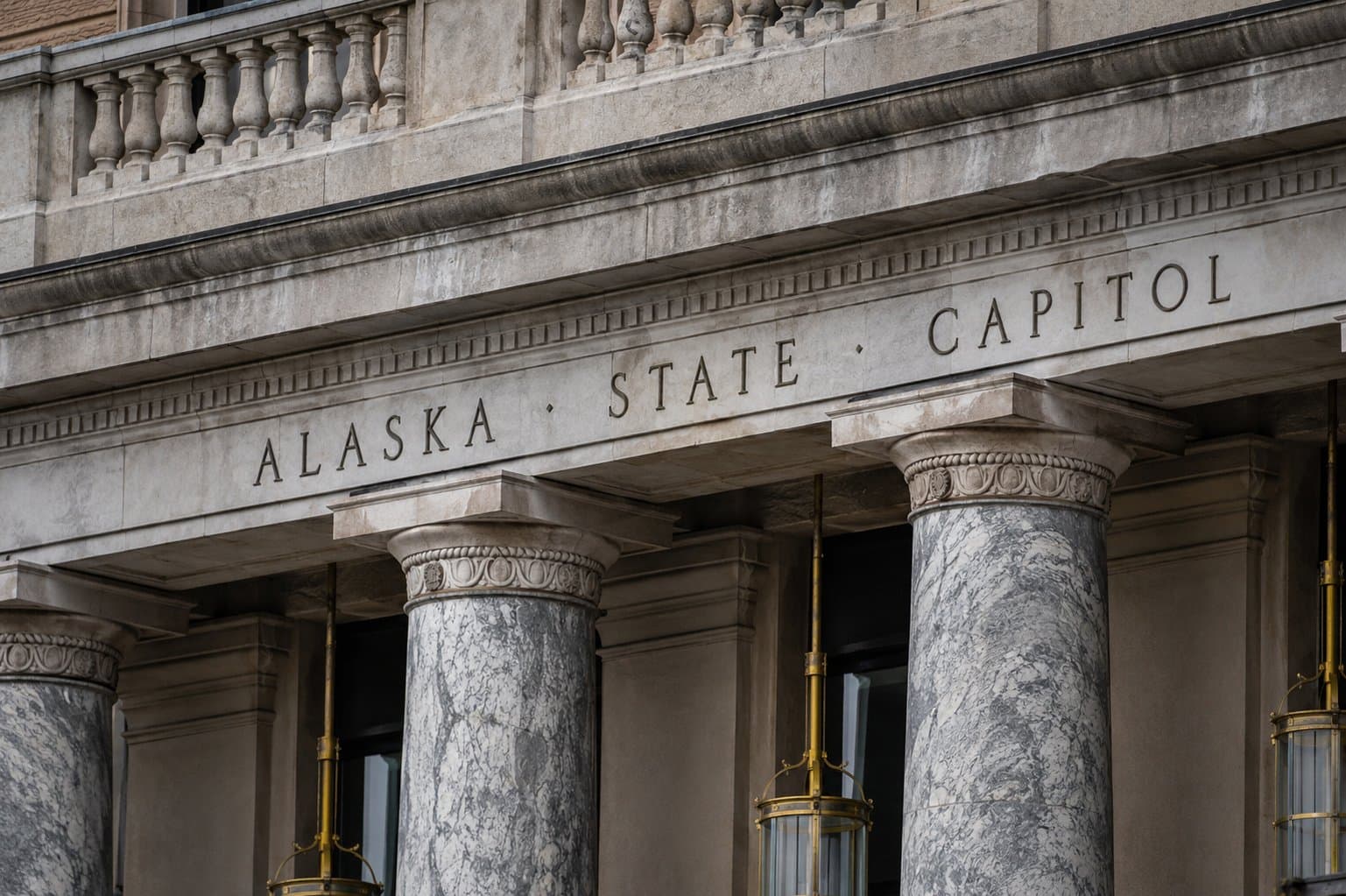
Photo by Cale Green
Alaska Senate adopts final operating, mental health and capital budgets
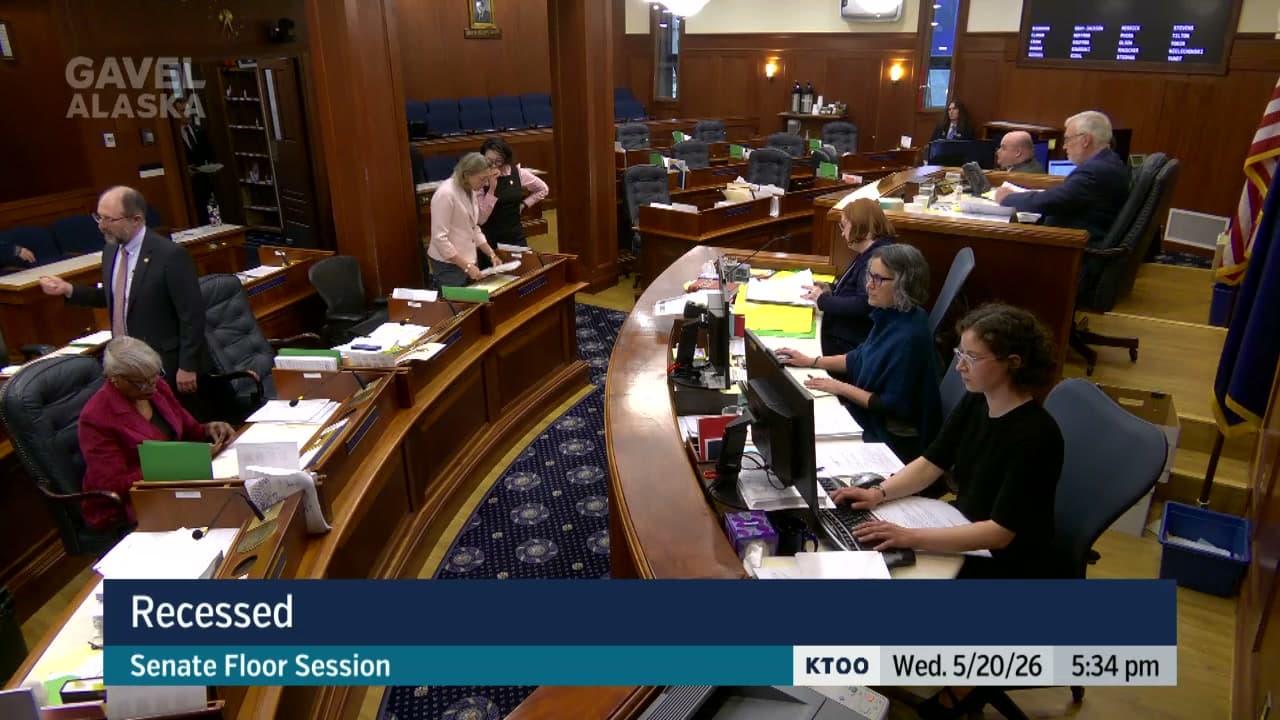
The Alaska Senate voted Wednesday night to adopt the state's fiscal year 2027 operating budget, then passed the mental health budget and concurred in House changes to the capital budget.
Senators approved the operating budget, House Bill 263, on a 17-3 vote. They also approved the bill's Constitutional Budget Reserve section 17-3, which authorizes spending from the state's savings account if needed, and adopted the effective date clause without objection.
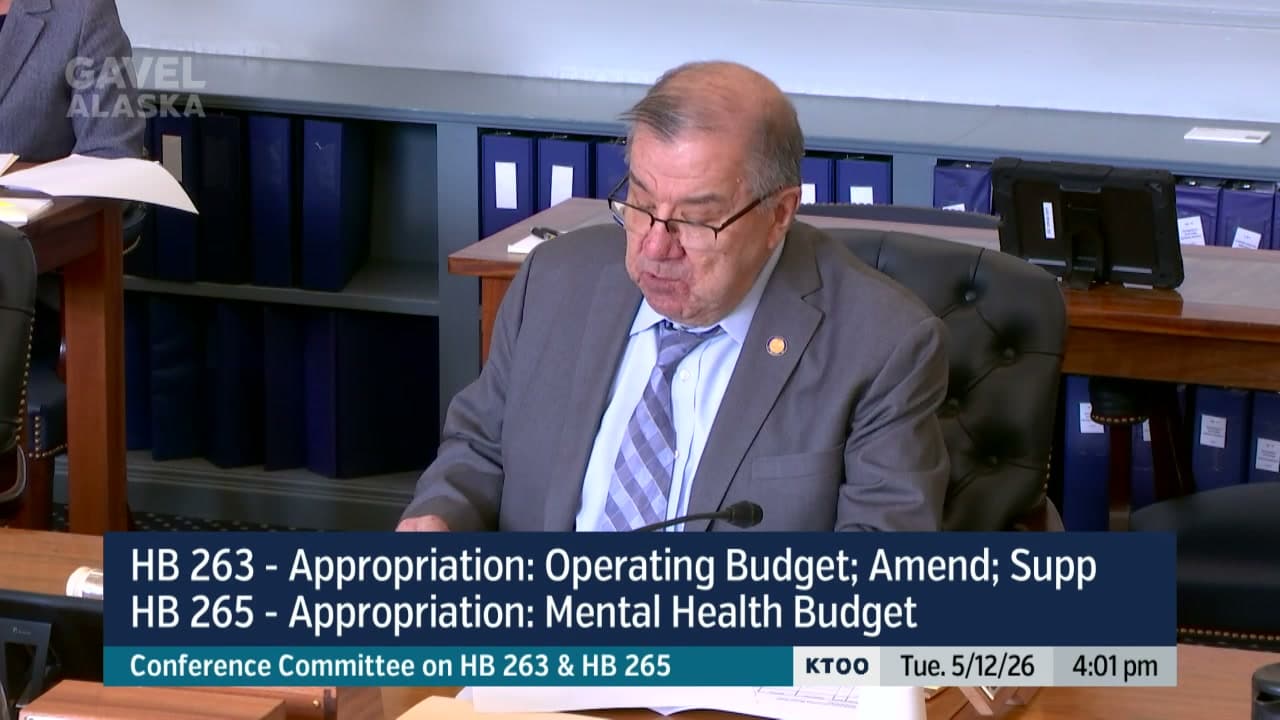
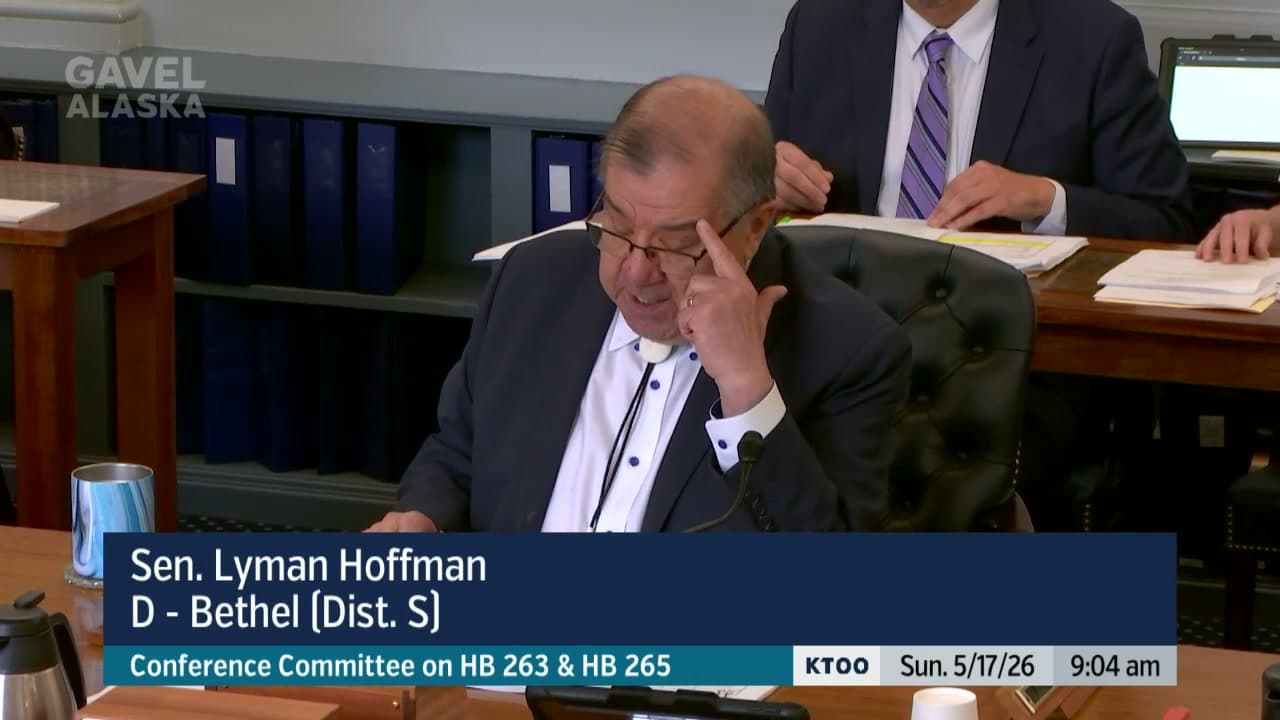
Sen. Lyman Hoffman, D-Bethel, told senators the conference committee budget balances at a spring revenue forecast of $75 per barrel oil and does not require a Constitutional Budget Reserve draw to fill a deficit. He said the plan includes just over $5 billion in unrestricted general funds for agency operations, $601 million for statewide items, and $674 million for the Permanent Fund dividend.
The Senate voted 20-0 to pass the conference committee version of House Bill 265, the mental health budget. Hoffman said the final version included five changes, including $3.5 million more for behavioral health treatment and recovery grants, $500,000 for a crisis call center, and $723,000 for behavioral health prevention and early intervention grants.
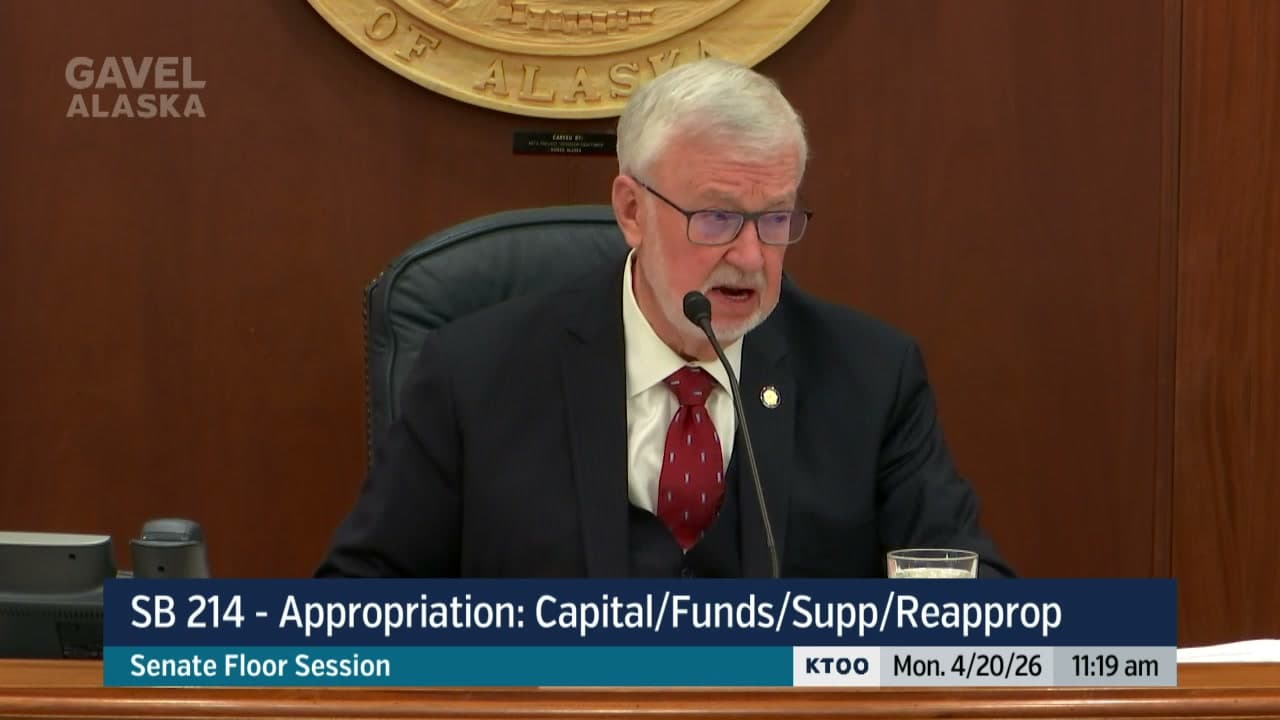
Earlier in the same floor session, senators voted 18-2 to concur in House amendments to Senate Bill 214, the capital budget. Sen. Bert Stedman, R-Sitka, said the House added $15 million for University of Alaska deferred maintenance, bringing that total to $32.5 million for the university's top 18 ranked projects.
The capital budget includes money for school deferred maintenance, the Port of Alaska, state park projects, the Alaska Heating Assistance Program, and several University of Alaska projects, according to the Senate floor explanation.
What did you make of this story? (no account needed)
Made by our human newsroom with AI. How humans and AI work here · Grow with our newsroom ·
Keep Alaska News free for everyone.
No paywall, ever. Members pay so everyone can read the meetings and records Alaska News covers.
Get Alaska News in your inbox
Create your free account and get the day’s top stories around 6 each morning, in a few minutes’ read.
Top stories, around 6 each morning.
Stories on what you follow, on Sundays.
Source: Alaska Senate adopts final operating, mental health and capital budgets.
Earlier in this story
Senate adds $156M to capital budget, prioritizes deferred maintenance
The Alaska Senate added $156 million to the state capital budget, shifting from the governor's austere proposal to fund deferred maintenance across schools, universities, and state facilities.
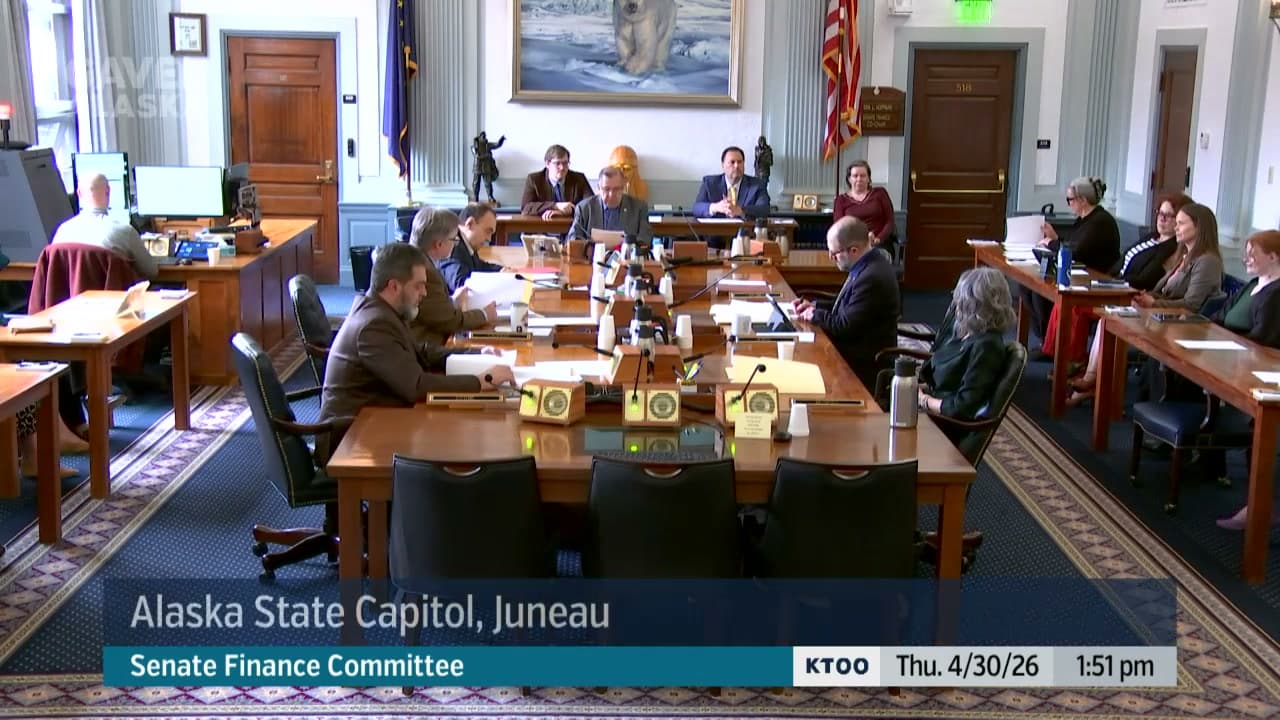
The Senate Finance Committee's version of Senate Bill 214, presented to the House Finance Committee on Thursday, directs $88.7 million in unrestricted general funds toward statewide infrastructure needs rather than individual legislator projects. The additions came after oil prices spiked beyond last fall's projections, when the governor submitted a match-only budget.
"The governor submitted a capital budget that was very lean," said David Scott, staff to Senate Finance Committee Co-Chair Bert Stedman. "With the uptick in UGF revenue, the Senate is adding primarily deferred maintenance funding to the governor's budget. This increased spending is focused on statewide issues."
K-12 schools received the largest share at $88.7 million total. The Senate funded the top 15 projects on the Department of Education and Early Development's major maintenance priority list at $45 million, after reducing a $34 million request for Galena's Huntington School to $5 million to reach more projects down the list.
The reduction drew concern from Rep. Will Stapp during House Finance Committee review. "Just through the chair too regarding Galena's Huntington School, so also been to that one. Also Moonlights is a boarding school for a lot of rural kids who come there, very similar to Mount Edgecomb," Stapp said. "I haven't had the opportunity to talk to Superintendent Johnson yet there, but I bet if I do, he's gonna tell me that skimping on the appropriation probably doesn't allow him to do much of anything."
The budget includes $17.5 million to begin replacing the Stebbins school destroyed by fire in 2024. The total project cost is $120 million, with $71 million requested from the state after insurance proceeds. The appropriation represents Phase 1 for engineering, design, and initial materials, according to House Finance Co-Chair Neal Foster.
"Total request for the school, as mentioned, was $120 million. The requested amount from the state was $71 million, so the delta there would be the insurance that was received, I believe," Foster said. "And then of that $71 million, of course, this is $17 million in what's being called Phase 1 to get the initial work done."
"The funding will be spread out somewhat," Foster added. The capital appropriation lasts five years, allowing the legislature to add funding in future budgets.
Three additional major maintenance projects addressing deteriorated fuel tanks at rural schools received $11.8 million from the Spill Prevention and Response Fund.
The University of Alaska system received $17.1 million split equally among the Fairbanks, Anchorage, and Southeast campuses for the top three deferred maintenance projects at each institution. The funding came from the university's priority list in its annual budget request, approved by the Board of Regents.
"We went down their list," Scott said when asked whether student enrollment factored into the allocation. "We did not approach it in a weighted measure."
Rep. Alyse Galvin questioned the equal distribution during Thursday's hearing. "Was there any consideration for number of students served in each university, or was it just straight up each university going to do it that way?" she asked.
Mount Edgecumb boarding school in Sitka received $13.9 million for a dining hall and kitchen renovation, window replacement in dormitories, and new furniture and laundry equipment. The projects came from the capital income fund appropriation to the Department of Transportation, as Mount Edgecumb cannot compete on the K-12 major maintenance list and must compete against the state's $2.4 billion deferred maintenance backlog.
The judiciary received $3.7 million for its top four deferred maintenance projects, all in Anchorage, and $2 million to purchase the Stratton Library building in Sitka from the Department of Education for a future courthouse. The judiciary has pursued the building for six years as a replacement for Sitka's deteriorating courthouse.
The budget includes $9.7 million for workforce development from Alaska Industrial Development and Export Authority dividend receipts. Projects include $3 million for a commercial driver's license training center in Wasilla, $3 million for equipment upgrades at the Alaska Vocational Technical Education Center in Seward, $2 million for the Fairbanks Pipeline Training Center, and $1.7 million for the Kenai Peninsula Economic Development District's instructional service center.
"I've been to all of these and they're absolutely excellent places, centers of workforce development," Galvin said. "And I know that we have, again, 40 percent of the population in Anchorage and we want to make sure to plug those folks into great work."
The Senate allocated $37.5 million in cruise passenger head tax revenue to 16 communities based on a three-year average of visitor traffic. An additional $3 million from the Ocean Ranger account will fund port electrification in Juneau and Ketchikan, allowing cruise ships to plug in and turn off generators while docked.
Other appropriations include $5.3 million for the top three Renewable Energy Fund projects, $4 million each for the Alaska Seafood Marketing Institute and Alaska Travel Industry Association, and $32.4 million in National Petroleum Reserve-Alaska impact aid.
The Senate balanced its budget at $73 per barrel oil, below the spring forecast projection of $75 per barrel. Combined with the governor's underlying budget leveraging $1.9 billion in federal funds, total capital spending reaches $2.47 billion.
"Alaska has a deferred maintenance backlog of $2.4 billion, and the Senate's capital budget is intended to recognize the necessity and fix what we have," Scott said.
The bill's path through the legislature began January 21 when it was introduced and referred to Senate Finance. The committee moved the bill out April 14, with Senators Olson, Hoffman, Stedman, Merrick, and Kiehl voting to advance it and Senator Cronk not voting. On the Senate floor April 21, two amendments failed before the full Senate passed the measure 19-0. The bill was transmitted to the House the same day and referred to House Finance on April 22. The House Finance Committee received public testimony April 29 and will continue reviewing the bill in coming days.
Senate Passes $2.47B Capital Budget Focused on School Repairs
The Alaska Senate passed a $2.47 billion capital budget Tuesday that prioritizes deferred maintenance for schools, universities, and courts, with the bulk of new state spending directed to K-12 facilities that have deteriorated for years.
Senate Bill 214 passed 19-0 after moving through the Senate Finance Committee, which reported the bill out on April 14 with five members voting "Do Pass" and one providing "No Recommendation." The budget uses $1.9 billion in federal funds while using a conservative $73-per-barrel oil price despite current market prices above $100. Of the $88.7 million in unrestricted general funds added by the Senate, 94 percent goes to K-12 maintenance.
"That's the significance of what we're doing," said Senator Bert Stedman, Senate Finance Committee co-chair.
The Senate put $88.7 million toward K-12 deferred maintenance, funding the top 15 projects on the state's major maintenance priority list. Some of those projects have been on the list for eight to 20 years. The longest-waiting project is a fire suppression system that has been on the list for two decades.
"It's a fire suppression system, so don't go striking any matches in that school," Stedman said. "The next three projects were 15 years."
The budget also includes $11.8 million for deteriorating fuel tanks at rural schools, funded through the Spill Prevention Response Fund, and $17.5 million to begin construction of a new school in Stebbins, where the existing school was destroyed by fire in 2024.
Mount Edgecumbe boarding school receives $13.9 million for dining hall renovation, window replacement in both dormitories, and new furniture and equipment. The dining hall and kitchen were built in 1939, before World War II.
"There's 402 mattresses and they didn't have any spares," Stedman said. "There's no replacement schedule for them, so we're working on that."
One laundry machine at the school had been in use since a current legislator attended high school there, and her son now attends the same school.
The university system receives $17.1 million for facilities maintenance spread across three campuses: University of Alaska Fairbanks, University of Alaska Anchorage, and University of Alaska Southeast. The funding addresses the top nine projects on the university's deferred maintenance list.
The judiciary receives $3.7 million for deferred maintenance, addressing the top four projects on the court system's list, all in Anchorage.
The Senate also put $9.7 million into vocational education and workforce development, using Alaska Industrial Development and Export Authority dividend funds. Projects include a commercial driver's license training center in Wasilla, equipment upgrades at the Alaska Vocational Technical Education Center in Seward, and improvements at the Fairbanks Kenai Pipeline Training Center.
The budget sets aside $37.5 million in cruise ship passenger head tax revenue to 16 communities, distributed based on a three-year average of passengers per port. An additional $18.3 million goes to port electrification projects in Whittier, Juneau, and Ketchikan, allowing cruise ships to plug in and turn off generators.
Stedman said the Senate followed ranked lists submitted by the Board of Regents, the Department of Education and Early Development, and the judiciary to keep politics out of funding decisions.
"We try to follow the list to take the politics out of it," Stedman said. "We don't try to jump the list."
The Senate rejected two amendments Tuesday. An amendment to add $476,000 for fire alarm and heating system upgrades at the University of Alaska Anchorage Prince William Sound Community College campus in Valdez failed 7-12. The project ranks well below the $17 million threshold the Senate set for university maintenance funding.
A second amendment to provide $750,000 for farmers market nutrition programs failed 6-12. Stedman said the program belonged in the operating budget rather than the capital budget.
A third amendment that would have funded expansion of the Palmer courthouse was withdrawn. The project is at the top of the judiciary's list for future funding.
The statewide deferred maintenance backlog stands at $2.4 billion. The Senate used a $73-per-barrel oil price for budget planning, below the Department of Revenue's $75 projection and well below current market prices.
The bill was transmitted to the House on April 21 and referred to the House Finance Committee on April 22. The House Finance Committee scheduled a public testimony session for April 29 and is expected to add additional projects.













Comments
Sign in to leave a comment.
No comments yet. Be the first to share your thoughts.