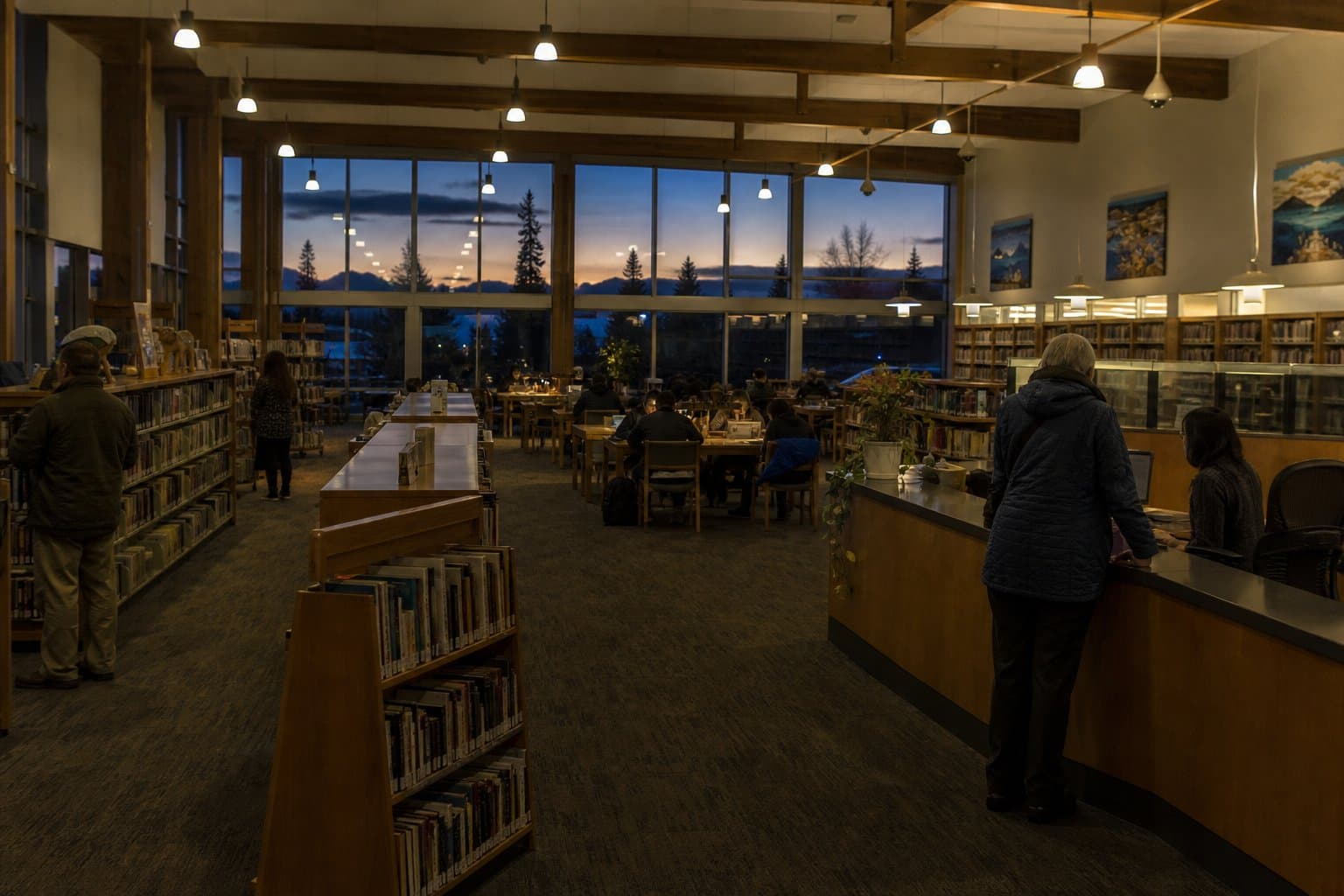
AI image
Alaska moves to cut library and museum rules, over public objections
Alaska's education department is moving to strip out big chunks of the rules that govern the state's public libraries, museums and archives — including a requirement that libraries taking state grant money offer evening and weekend hours — as part of a push to shrink state regulation.
Three whole chapters of the administrative code are marked for complete removal: the rules for library services, for museum services, and for state archives. No other area of education regulation is being cut anywhere near as deeply. The rest of the department's proposed cuts are scattered and partial; libraries, museums and archives are slated to be erased in full.
The library-hours rule is a case in point of how the review has gone. When the department opened the change to public comment, the response ran against it: of four people who weighed in, three asked to keep the requirement and none asked to remove it. "These eligibility requirements were developed and refined over decades by the state library with input from communities of all sizes," one commenter wrote. "It would be imprudent to throw all that work away to satisfy an executive order." Another questioned whether a modest opening-hours rule was really "overly burdensome for $7K in State Funds."
The department overrode all of them with the same answer. Beside comment after comment, in the column reserved for its reasoning, staff wrote a single word: "BURDENSOME." Eight entries in the department's rules spreadsheet open with it — every one of them a library or museum rule. On the hours requirement specifically, the fuller note reads: "BURDENSOME. Remove all. Not all Alaska libraries have the capacity to offer evening and weekend hours" — a real point, given that a small village library staffed part-time may not be able to keep evening hours at all.
Other targeted rules are less prominent. The department would drop a requirement that museums coordinate with the state when an artifact is removed from a collection, cut a reporting deadline, and strike a rule barring a combined public-and-school library from using public library grant money to buy school curriculum. Some of those changes were requested by commenters — a teacher who found one rule "overly prescriptive," another who said a reporting date didn't fit the school calendar — and the department accepted them, again marking each "BURDENSOME."
The drive traces to an order Gov. Mike Dunleavy signed last August directing every state agency to cut its regulatory requirements by 15 percent by the end of 2026, and by a quarter the year after. The order argues Alaska's rules have "expanded over time, often adding layers of requirements without considering the burden imposed" on residents and businesses. The education department answered by reopening most of its code, chapter by chapter.
One area was left almost entirely alone. The rules governing how Alaska plans and pays for school buildings, which make up the single largest share of the code, are barely touched. On nearly every one, the department wrote that more study was needed — routing decisions about school construction to a separate committee rather than the cutting plan. The deepest cuts, instead, landed on libraries and museums.
This account is drawn from the department's own planning documents. No one in the record is named — commenters appear only as roles, a teacher, a parent, a community member — and no legislator or library official appears. None of the cuts is final: each would still have to go through a separate public rulemaking process before taking effect. The State Board of Education next meets Oct. 13 and 14 in Sitka.
Source: State of Alaska, Alaska's education department has marked 59 regulations for deletion to meet a percentage target, and wrote BURDENSOME beside the rule requiring libraries to open evenings and weekends.
Made by our human newsroom with AI. How humans and AI work here · Grow with our newsroom
Stay informed. Support what matters.
Free, permanent access to local news you can verify. Subscribe to support Walter AlaskaNews and go ad-free.
Related Coverage
Three quarters of Alaska's planned college-rule cuts fall on student aid
Alaska News · 1mo ago
Fish and Game plans to cut about 50 of its own rules by year's end
Alaska News · 2mo ago
Alaska schools could face a choice between internet and teachers if a federal subsidy is cut
Alaska News · 2mo ago
DEC plans to cut 20% of its discretionary rules by year's end under Dunleavy order
Alaska News · 1w ago
The FCC review that could end E-Rate is filed under children and screens
Alaska News · 1mo ago
Comments
Sign in to leave a comment.
No comments yet. Be the first to share your thoughts.