Alaska House Committee Advances Five Bills in Single Session
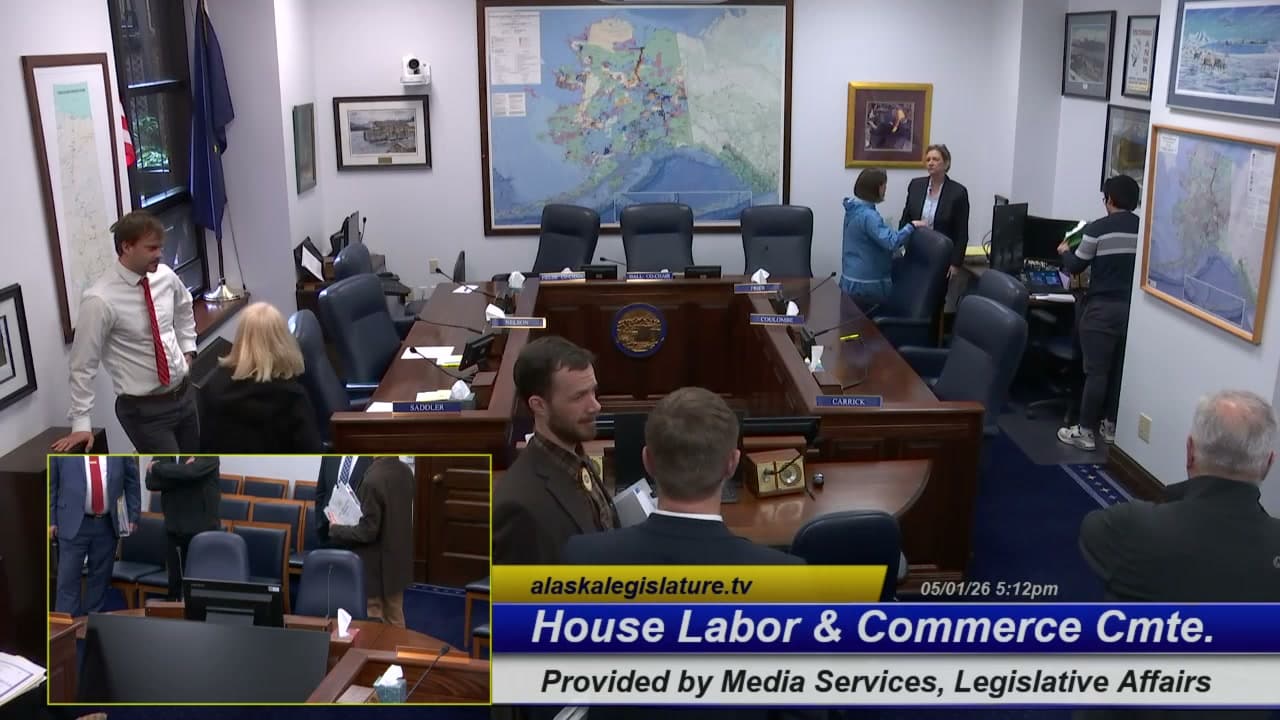
The Alaska House Labor and Commerce Committee considered five bills during a single meeting on May 1, as the legislative session nears adjournment.
The committee advanced Senate Bill 164, which eliminates several tax filing discounts and credits. Senator Kelly Merrick said the measure could raise nearly $500,000 annually for the general fund by removing the motor fuel tax timely filing credit, tobacco products tax timely filing deduction, cigarette stamp tax discount, and tire fee timely filing discount. The bill moved out of committee without amendments after Co-Chair Zack Fields withdrew a proposed change. The committee reported the bill out with individual recommendations and accompanying fiscal notes.
House Bill 325, sponsored by Representative Kevin McCabe and addressing industrial hemp regulation, passed with two amendments from Representative Ashley Carrick. The first amendment clarifies that industrial hemp remains exempt from marijuana excise taxes. The second holds existing hemp producers harmless from actions taken by the Department of Natural Resources between 2024 and 2025 that made some hemp operations technically illegal. Carrick said the amendments were intended to protect existing hemp producers and clarify tax treatment while modernizing the state's regulatory framework. The committee reported the bill out as amended with individual recommendations and accompanying fiscal notes.
The committee set an amendment deadline of May 6 at 5 p.m. for Senate Joint Resolution 28, which supports J-1, H-1B, and H-2B visa programs. The resolution responds to a federal requirement that employers pay $100,000 per H-1B petition, up from $5,000 previously. Jennifer Schmitz, director of the Alaska Educator Retention and Recruitment Center, said 183 H-1B teachers currently work in Alaska schools, filling positions that would otherwise remain vacant. She said 573 total international educators work in Alaska with active visas, including 232 on J-1 visas.
Co-Chair Fields questioned whether the resolution should focus specifically on teachers rather than all foreign worker programs. He cited reporting on J-1 visa abuses in other industries. Mike Mason, staff to Senator Loki Tobin, said Alaska's seasonal unemployment swing of 43,900 jobs between lowest and highest employment months creates unique workforce needs. He said visitor-related industries employed 68,300 workers in 2024.
Victoria Francis of the American Immigration Council said Alaska welcomed nearly 23,000 J-1 participants between 2015 and 2025, averaging 3,900 per year. She said fewer than 90 companies nationwide have paid the new $100,000 H-1B fee since it was announced.
The committee also heard Senate Bill 35, which addresses insurance requirements for transportation and delivery network companies. Senator Jesse Bjorkman said the bill requires delivery network companies to provide insurance coverage to couriers while providing delivery services, closing a gap in current law.
Brad Nail, representing Uber, said the bill differs from the National Council of Insurance Legislators model by not addressing coverage during the period when drivers are logged on but have not yet accepted a delivery. He recommended conforming to the model language and reconsidering the $1 million uninsured and underinsured motorist coverage requirement. Nail said Uber already carries delivery network coverage for all periods even without a statutory mandate, but believes statutory requirements would ensure all companies comply.
Francisco Avalos of Lyft said the $1 million requirement would increase insurance costs per ride by over 50 percent. He said drivers currently earn over $38 per hour before tips on the Lyft platform in Alaska. Deborah Herron of Walmart said the insurance amendments create disproportionate costs for delivery network companies and put Alaska out of sync with other states.
Bjorkman said he heard from a delivery driver who had an accident while logged on to Walmart Spark but before accepting a delivery, leaving the driver without coverage from either personal insurance or the company. Fields said constituents have shared stories of debilitating injuries while riding in transportation network company vehicles, with some facing hundreds of thousands of dollars in medical bills.
Representative Alyse Galvin asked about coverage for small rural courier businesses. Fields said the bill applies only to companies connecting through digital networks, not informal courier arrangements. The committee set the bill aside without taking action.
The committee continued working through House Bill 386, which modernizes charitable gaming statutes to allow electronic pull tabs. Conrad Jackson, staff to Bjorkman, walked through sections addressing manufacturer and distributor requirements, prize limits, and reporting obligations. The bill prohibits manufacturers and distributors from modifying buildings to accommodate gaming activities, restricts gifts between industry participants, and requires electronic games be tested by independent laboratories.
Jackson said the bill increases the share of adjusted gross income that operators must pay to permittees from 15 percent to 30 percent, matching requirements for multiple beneficiary permit holders. He said the change prevents operators from reducing charities' earnings through administrative costs. The bill establishes a $4 million annual prize cap for electronic pull tabs and authorizes the department to adjust prize limits by up to 10 percent annually for inflation beginning in 2030.
The committee adjourned without completing the sectional analysis, planning to continue next week with invited testimony.
This article is based on a public meeting — Alaska Legislature: House Labor & Commerce, 5/1/26, 3:15pm ().
AI-assisted. How we use AI Transcript byLucas Brown
Stay informed. Support what matters.
Free, permanent access to local news you can verify. Subscribe to support Alaska News and go ad-free.
Related Coverage
House committee hears bill to eliminate tax discounts
Alaska News · 5mo ago
House Labor Committee Advances Travel Insurance Bill, Hears Disaster Pet Plan
Alaska News · 5mo ago
House votes to eliminate tax filing discounts worth $500,000 annually
Alaska News · 4mo ago
House Panel Considers Bills to Ease Alaska's Liquor Liability Insurance Crisis
Alaska News · 6mo ago
House Faces Russian Seafood Ban, Spending Limits, and Healthcare Access Bills
Alaska News · 6mo ago
Comments
Sign in to leave a comment.
No comments yet. Be the first to share your thoughts.