Alaska fire season shifts to lightning-driven duff fires as Interior storms multiply
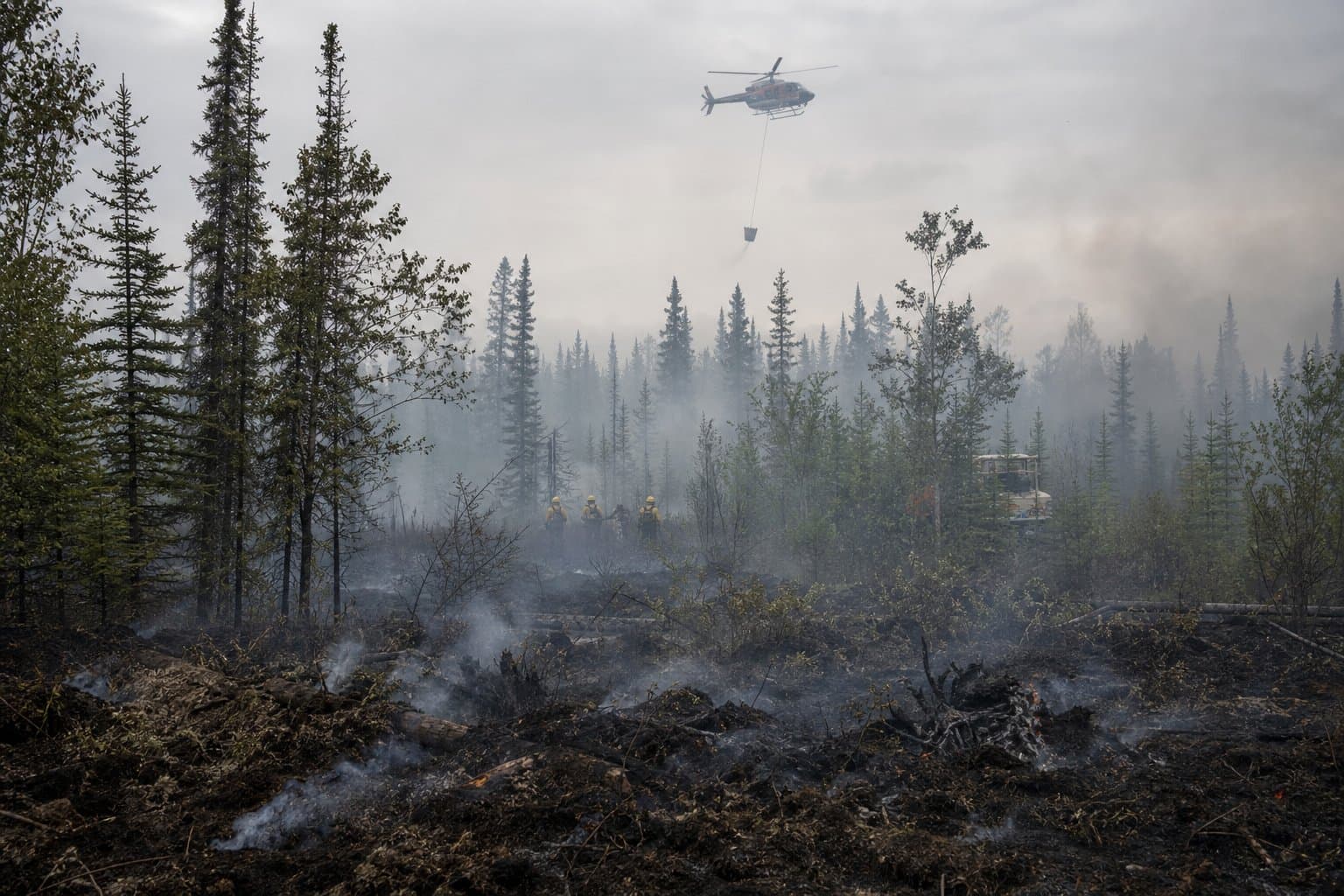
The Denali Borough issued a mandatory evacuation order for all residents of the City of Anderson after the Starry Fire ignited behind the elementary school Saturday evening, June 20, and was estimated at roughly 100 acres. The fire was burning actively in black spruce and hardwoods with crowning characteristics. The response included Anderson Fire Department and Forestry resources, Pioneer Peak Hotshot Crew, and ten smokejumpers. The cause remains under investigation.
The Alaska Division of Forestry & Fire Protection reported 43 new fires in its response area during the week of June 15 through 21, with 32 of those igniting over just three days. Thunderstorms moving north across southern Alaska generated approximately 4,246 lightning strikes on Friday, 4,356 on Saturday, and 5,135 on Sunday, for a three-day total exceeding 13,700 strikes. Those storms produced 53 new fires statewide. Warm, dry conditions across the Interior contributed to elevated fire danger throughout the period.
The division described the shift in its weekly roundup: "Alaska's wildfire season is progressing from Spring's wind driven fires in dry, fine fuels on the surface to Summer's duff driven fires where lighting strikes ignite the decaying vegetation that make up the Boreal Forest floor and tundra areas."
Resource Constraints
The volume of simultaneous incidents required managers to place several fires in monitor status. The division noted that some fires were placed in monitor status because resources were focused on higher-priority fires. Several fires were also located in Limited Management areas, a designation that affects how they are staffed. The Nowitna Fire north of McGrath was already 300 acres when it was placed in monitor status. The Hoholitna, Dishna, Flag, Chisholm, and Takotna fires were also placed in monitor status.
Proximity to Alaska Native allotments was noted at multiple incidents. The Tanana Fire was within 1.5 miles of a Native allotment. At the Joaquin Fire, Alaska Native allotments were 2 miles to the north. Smokejumpers were deployed and six firefighters were sent to the fire, while retardant tankers were unavailable because of their response to the Starry Fire. A Type 3 Incident Management Organization assigned to the Starry Fire was also tasked with developing a response to the Seventeenmile Fire, reported 2.5 miles northwest of Anderson on Sunday evening.
Agricultural Areas and Human-Caused Fires
Near Delta Junction, the Granite Fire threatening the state's agricultural project area was 60 percent contained by 10:30 p.m. Saturday, June 20. The Barley 2 Fire in the same area also involved spruce in the agricultural project, with fire managers planning to develop a response plan Monday. The Twin Bear Fire drew an initial attack force of 23 firefighters.
Sources
Based on: View Transcript
AI-assisted, reviewed by editors. Spot an error?
Comments
Sign in to leave a comment.
No comments yet. Be the first to share your thoughts.