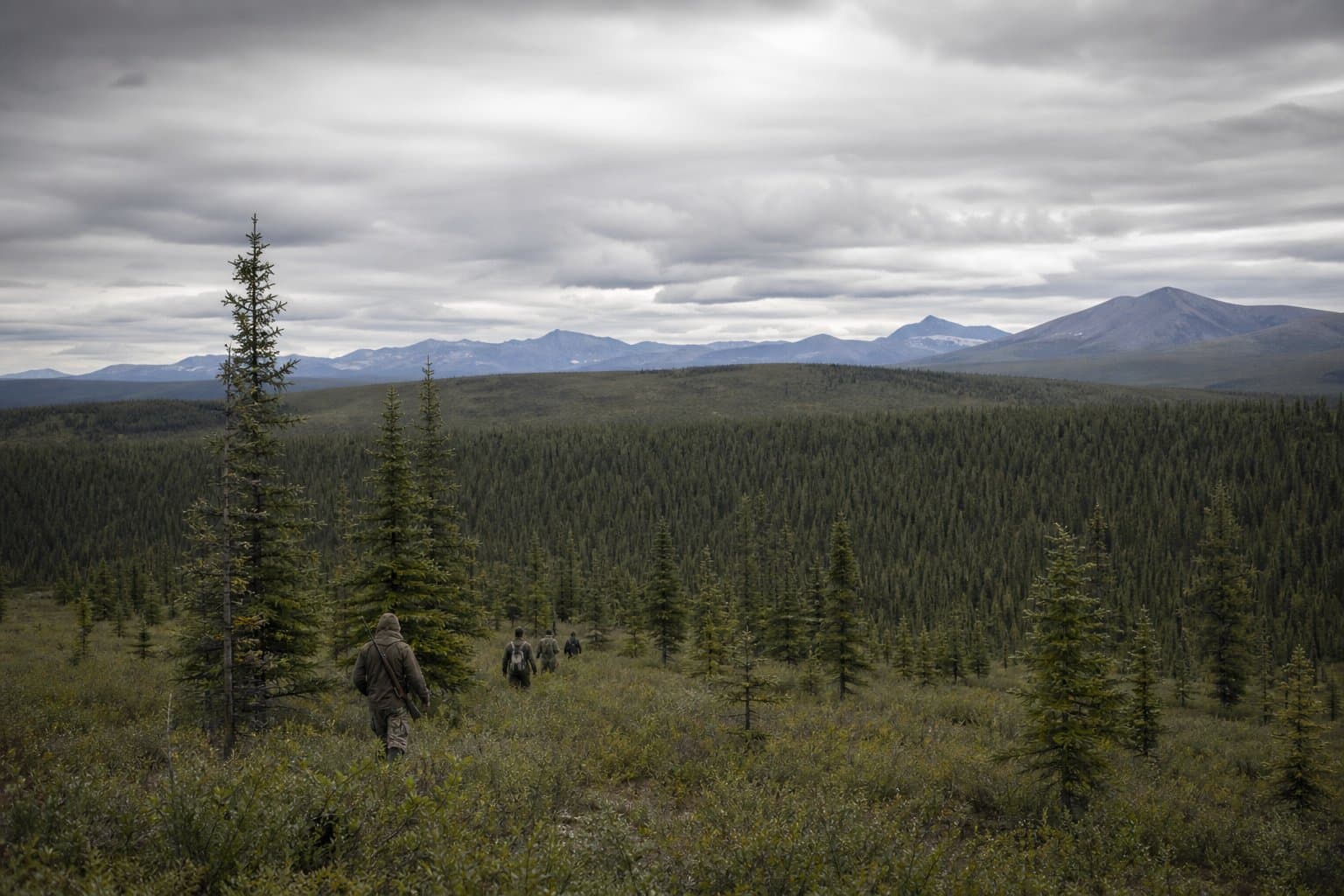
Agencies plan Alphabet Hills burn to reset moose and caribou habitat
State and federal agencies plan to deliberately burn mature black spruce in the Alphabet Hills this summer to improve forage conditions for moose and support caribou migration and foraging habitat in the area north of Lake Louise.
The Alaska Department of Fish and Game, the Alaska Division of Forestry and Fire Protection, the US Wildland Fire Service, and the Bureau of Land Management are advising the public of the planned prescribed fire operation. Aerial ignition is scheduled for mid to late July 2026, contingent on weather and fuel moisture. The project area sits north of Lake Louise and south of the Denali Highway, near the West Fork Gulkana and Susitna Rivers.
Why Burn Black Spruce
Late-successional black spruce provides little winter forage for moose. Burning clears the canopy and triggers regrowth of willow, birch, and aspen. "The goal of the prescribed fire is to stimulate the regeneration of shrub and tree species that moose feed on, thereby supporting a healthy moose population into the future," the Alaska Department of Fish and Game said. For caribou, the agencies say fire revitalizes the broader landscape by maintaining ecosystem health, promoting long-term vegetation diversity, and ensuring the future availability of large-scale, resilient habitat essential for caribou herd migration and foraging.
A 2004 prescribed burn in the same area covered approximately 37,500 acres. Researchers sampled forage biomass there in 2021, and that data informs the current proposal.
What Is at Stake for Local Communities
For hunters and subsistence users in GMU 13B, moose density and distribution in the Alphabet Hills affect food security for communities including Glennallen, Copper Center, and Gakona. The Alaska Department of Environmental Conservation will monitor air quality and smoke throughout the operation.
Operations will proceed only when weather, fuel moisture, and smoke dispersion conditions align with established prescribed burn criteria. Members of the public traveling in the region may observe smoke from the project area during active operations and for several weeks following ignition. Agencies say smoke production will be closely monitored to minimize impacts to nearby communities, transportation corridors, and recreation areas.
Additional timing updates will be released as ignition approaches.
AI-assisted, reviewed by editors. Spot an error?
Comments
Sign in to leave a comment.
No comments yet. Be the first to share your thoughts.