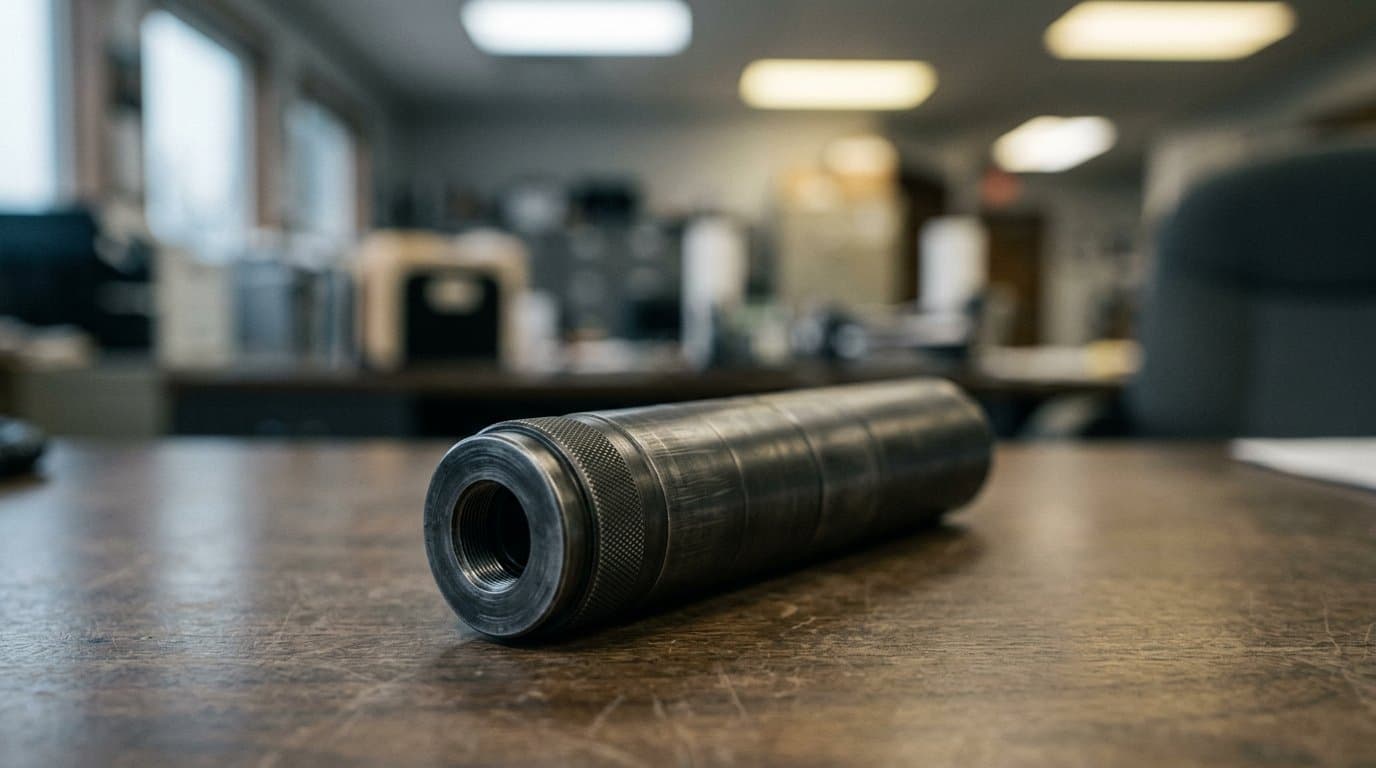
AI image
Acting attorney general asks Legislature to clarify suppressor law after federal ruling
Acting Attorney General Cori Mills on Thursday asked the next Alaska Legislature to address inconsistencies between state and federal law on suppressors, short-barreled rifles and short-barreled shotguns. Until lawmakers act, the Department of Law has asked law enforcement agencies to consult state prosecutors before filing charges under the state's prohibited-weapon law, according to a department press release.
The problem comes down to this: Alaska law makes it a felony to own one of these items, with a defense for people who registered it under federal law. The federal government stopped enforcing that registration last week.
Under state law, a "prohibited weapon" includes a device made to muffle the report of a firearm, a rifle with a barrel under 16 inches and a shotgun with a barrel under 18 inches, along with machine guns and explosive devices. Making, possessing, transporting, selling or transferring one is a class C felony, punishable by up to five years in prison and a fine of up to $50,000. The statute gives an affirmative defense to anyone who handled the item "in accordance with registration under" the National Firearms Act.
The federal side changed this year. Congress eliminated the $200 federal tax on suppressors and short-barreled guns as of Jan. 1 but left the registration requirements in place. Alaska joined 14 other states, six businesses and associations, a nonprofit and a gun owner in suing, arguing that once the tax was gone, Congress no longer had the authority to enforce registration. On Aug. 5, U.S. District Judge James Wesley Hendrix of the Northern District of Texas agreed.
The Justice Department told Congress on Sept. 24 it would not appeal. On Oct. 9, the federal Bureau of Alcohol, Tobacco, Firearms and Explosives stopped enforcing the registration and approval requirements nationwide. The ATF says it will keep accepting registrations from people who choose to file them, but its guidance says it "cannot opine" on whether an unregistered item held under its policy counts as lawfully held or registered for state-law purposes. The Department of Law says voluntary registration doesn't resolve the inconsistency.
"The court case and the ATF's guidance adds a level of confusion for many Alaskans who want access to these firearms but don't see the legal way forward in ownership under existing law," Mills said. "The proper place for this to be resolved is in the State Legislature."
A bill introduced this year would handle part of it. Senate Bill 243, from Sen. Scott Kawasaki, a Fairbanks Democrat, and five Republican cosponsors, would remove suppressors from the prohibited-weapon definition. It does not cover short-barreled rifles or shotguns. The bill cleared the Senate State Affairs Committee on April 30 and has sat in the Senate Judiciary Committee since May 1. Bills that don't pass die when a Legislature's two-year term ends, and the next Legislature convenes in January.
Until lawmakers act, the Department of Law says it will evaluate any prosecution under the statute, taking into account the federal ruling, the ATF's guidance and constitutional considerations.
Source: Alaska Department of Law, Office of the Attorney General, Alaska's attorney general asks lawmakers to fix a state gun law left uncertain by a federal ruling Alaska helped win; police told to check with prosecutors before suppressor and short-barrel charges.
Made by our human newsroom with AI. Reviewed by Cale Green. How humans and AI work here · Grow with our newsroom
Stay informed. Support what matters.
Free, permanent access to local news you can verify. Subscribe to support Walter AlaskaNews and go ad-free.
Related Coverage
Alaska backs challenge to Maine's 72-hour gun purchase wait
Alaska News · 2w ago
Alaska attorney general says law seating campaign finance commission is likely unconstitutional
Alaska News · 2mo ago
Rule would require attorney general's OK for Alaska agencies to sue or settle
Alaska News · 2d ago
A hemp-ban delay divides Alaska's senators in the funding bill
Alaska News · 2mo ago
The Supreme Court will rule on Dunleavy's agriculture department after he's gone
Alaska News · 3w ago
Comments
Sign in to leave a comment.
No comments yet. Be the first to share your thoughts.