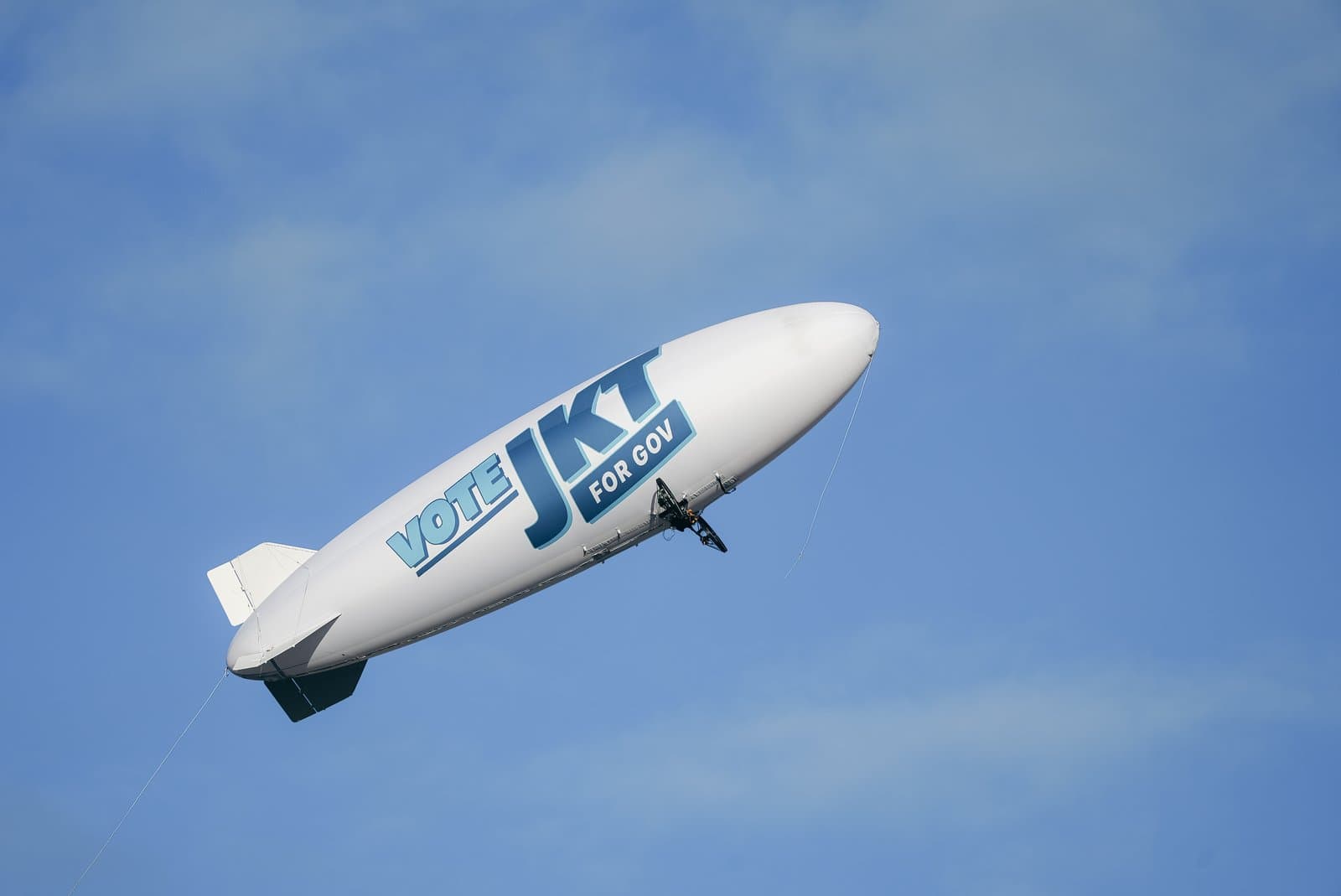
The campaign blimp passes beneath gray clouds over Midtown Anchorage on Monday. (Cale Green/Alaska News)
A "Vote JKT for Gov" blimp floats over Midtown Anchorage on the day before the election
A white blimp reading "Vote JKT for Gov" floated over Midtown Anchorage on Monday, the day before Alaska's general election, advertising Democrat Jonathan Kreiss-Tomkins' run for governor.

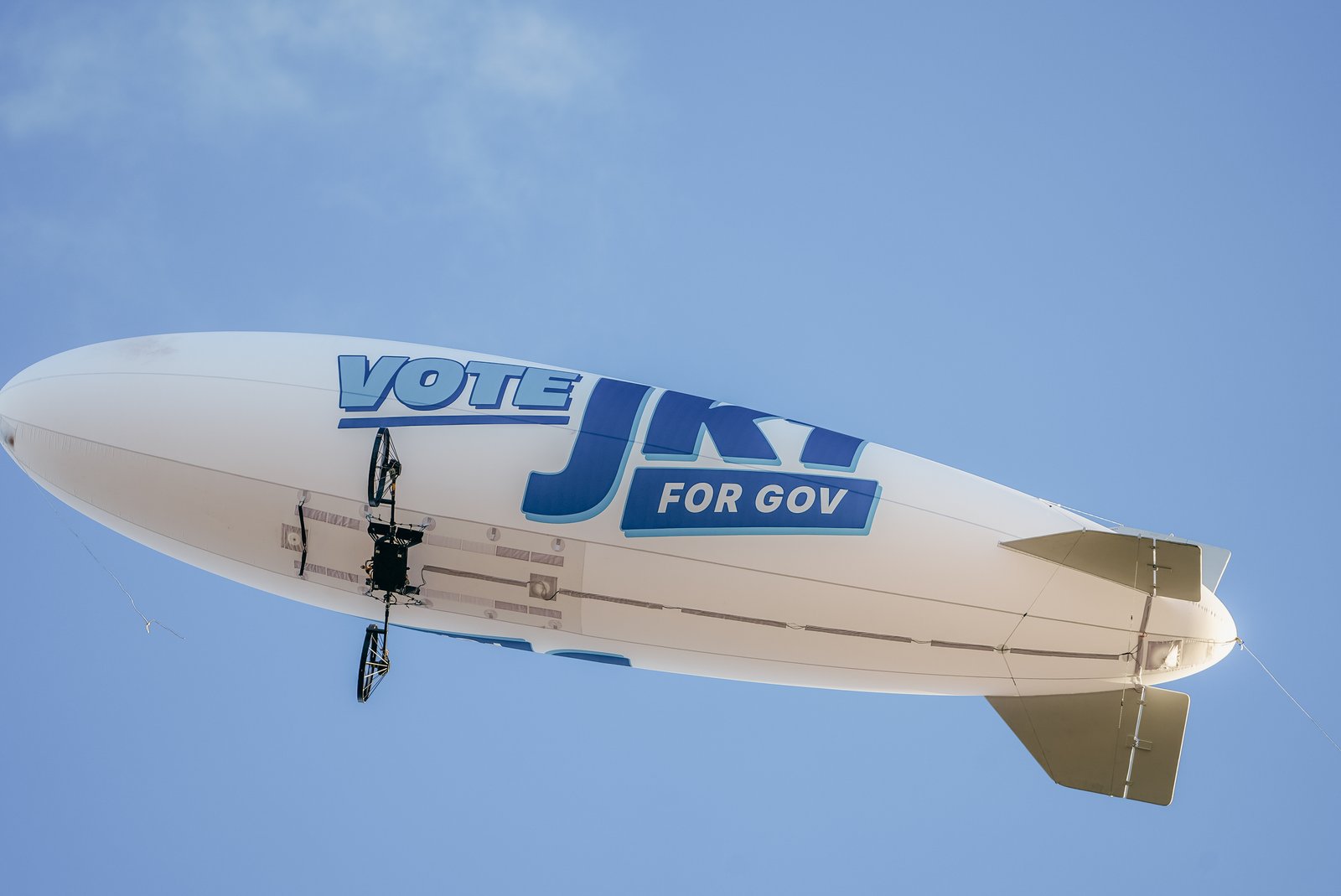
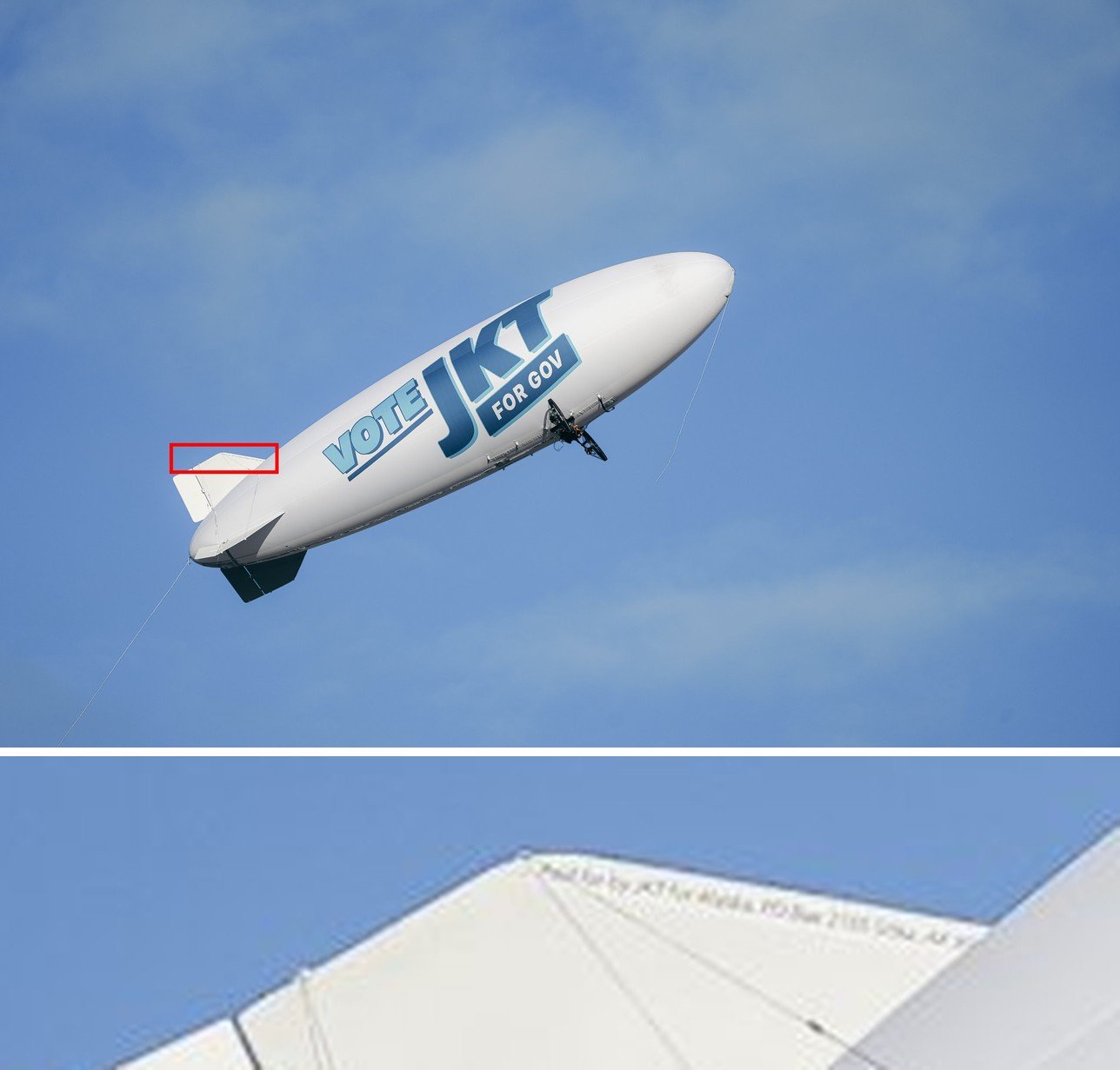
It was a remote-controlled blimp, far too small for anyone to ride in. Two propellers hung from a frame beneath it, and lines trailed from its nose and tail. Goodyear's blimps, by comparison, are about 246 feet long and carry up to 14 passengers. A tail fin carried a small-print "paid for by" line from the Kreiss-Tomkins campaign.
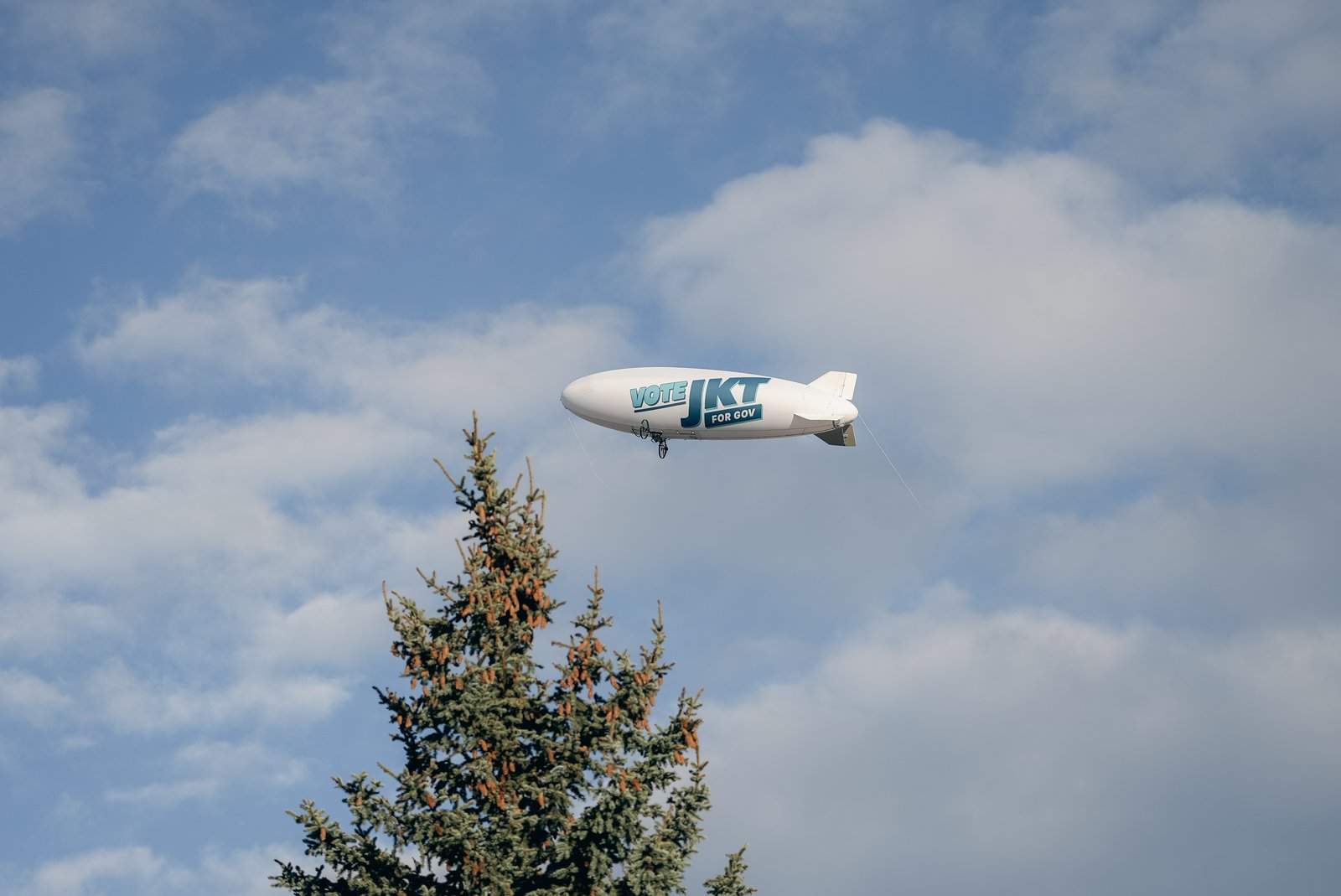
It's the first campaign blimp Alaska News has seen. It went up as outside groups have reported more than $100 million in spending on Alaska's U.S. Senate race alone. A blimp can also draw attention a campaign doesn't pay for directly, including news coverage like this story. Campaigns call that earned media.
Kreiss-Tomkins, who won a Sitka House seat in 2012 and left the Legislature in 2023, is the only Democrat in the ranked-choice governor's race. He faces three Republicans: Bernadette Wilson, Treg Taylor and Dave Bronson.
The Federal Aviation Administration treats an engine-driven blimp as an aircraft. One with no one aboard that weighs less than 55 pounds generally falls under the agency's small drone rules, known as Part 107. Those rules require an FAA-certified remote pilot to be in charge and keep the aircraft within sight. They generally cap flights at 400 feet above the ground, bar flying over people who aren't part of the operation and require air traffic control authorization in controlled airspace.
Get Alaska News in your inbox
Create your free account and get the day’s top stories around 6 each morning, in a few minutes’ read.
The day's top stories around 6 each morning. Unsubscribe in one click.






Comments
Sign in to leave a comment.
No comments yet. Be the first to share your thoughts.