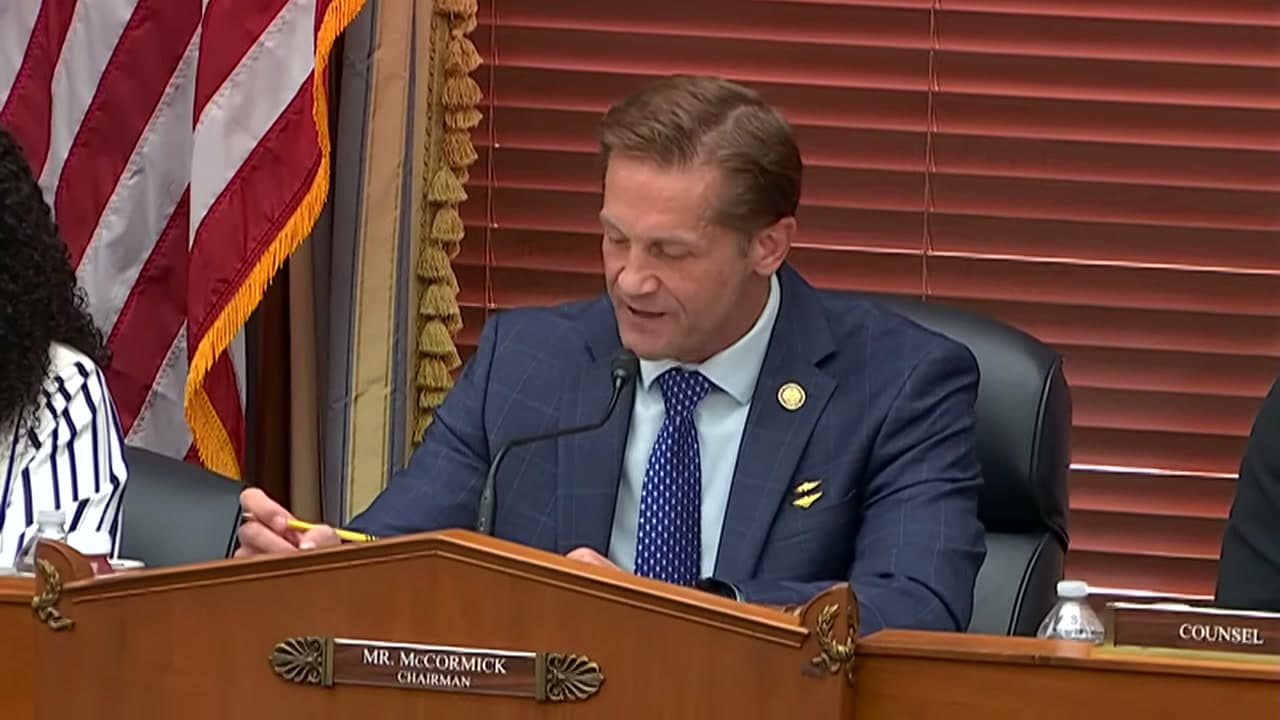
Frame from "House Science, Space, and Technology Subcommittee on Investigations and Oversight" · Source
A record year for federal research-fraud enforcement — and Alaska's stake in it
Alaska's lone member of Congress, Rep. Nick Begich, holds a seat on the House Science Committee's Subcommittee on Investigations and Oversight, which on June 24 took up fraud in federally funded research — a subject with unusually direct stakes for a state whose largest research enterprise runs on federal money. The University of Alaska reported $184.6 million in federal research funding in fiscal 2024, about 68 percent of its total research and development spending, drawn largely from the National Science Foundation, the Defense Department, and NASA. Two of those agencies sent their internal watchdogs to testify.
The figures they brought were striking. The Department of Justice recovered $6.8 billion through False Claims Act settlements in fiscal 2025, the highest single-year total in the law's history; whistleblower-initiated cases accounted for more than $5.3 billion, and a record 1,297 new qui tam suits were filed. Recoveries since the statute's 1986 amendments now exceed $85 billion. The subcommittee convened to examine how much of that enforcement now targets research.
Enforcement has concentrated in three areas: undisclosed foreign funding, falsified research data, and cybersecurity noncompliance. Jennifer Springman of the NSF Office of Inspector General described a structural blind spot — a disclosure made to one agency is invisible to another unless an officer thinks to ask. Over the past decade, she testified, NSF investigations involving universities produced 15 False Claims Act settlements recovering nearly $9 million, often where a university knew of a faculty member's foreign funding but did not report it. NSF has since opened proactive investigations into whether universities are meeting disclosure rules. Every misused dollar, she said, is one that "could have supported a meritorious proposal."
Robert Steinau of the NASA Office of Inspector General described a decade of expanding oversight — roughly 400 proactive projects yielding more than $93 million in impact, about $30 million of it recovered for NASA — and a research-security caseload that has grown sevenfold since 2018. The office is weighing site visits to grant recipients in place of self-certification.
One gap Springman flagged bears directly on institutions like the University of Alaska. Public universities, she testified, can invoke sovereign immunity to resist False Claims Act cases, leaving private schools easier to hold accountable than state ones. NSF has recommended that Congress require public universities to waive that immunity as a condition of receiving federal grants — a change that would reach every campus in Alaska's public system.
Cybersecurity is the newest front. Chairman McCormick said the DOJ recovered more than $52 million in cybersecurity-related settlements in fiscal 2025, most involving misrepresentation rather than an actual breach. Penn State agreed to pay $1.25 million over noncompliance across 15 federal contracts; the University of Delaware paid about $716,000 after failing to disclose a professor's ties to China's Thousand Talents Program; and a cancer center paid $15 million over falsified data and images in publications funded by six NIH grants.
The hearing's sharpest exchange concerned the DOJ's use of the False Claims Act against diversity, equity, and inclusion programs at federal contractors and grantees — a category that includes universities. Ranking Member Emilia Sykes pressed the DOJ's Brenna Jenny on a February remark that such cases were receiving "expedited priority treatment," arguing the statute was becoming a tool of ideological enforcement. Jenny said the cases target violations of a longstanding federal rule barring contractors from weighing race or sex in hiring and promotion, and that grantees can run DEI programs lawfully so long as decisions do not turn on protected characteristics. Full committee Ranking Member Zoe Lofgren countered that Congress has spent decades passing bipartisan laws to broaden diversity in STEM.
This article is based on a public meeting of House Science, Space, and Technology Subcommittee on Investigations and Oversight (Begich) — House Science, Space, and Technology Subcommittee on Investigations and Oversight (Begich): Safeguarding Federal Research Funds ().
Drafted with AI. Edited by Cale Green (1 revision). No full editor review is on record. Who is accountable. Transcript byLucas Brown
Watch key moments from the source meeting. Click to expand.
Stay informed. Support what matters.
Free, permanent access to local news you can verify. Subscribe to support Melinda Communities.News and go ad-free.
Related Coverage
Alaska science runs on NSF money, and the money has slowed
Alaska News · 2mo ago
Federal awards to Alaska pass $14 billion this fiscal year
Alaska News · 1mo ago
Alaska's federal obligations are down 1.7% this year, and September has barely started
Alaska News · 1w ago
Alaska's senators move to shore up the NSF office that funds most UA research
Alaska News · 1mo ago
Alaska ranks 45th in federal dollars and 8th per person
Alaska News · 1mo ago
Comments
Sign in to leave a comment.
No comments yet. Be the first to share your thoughts.