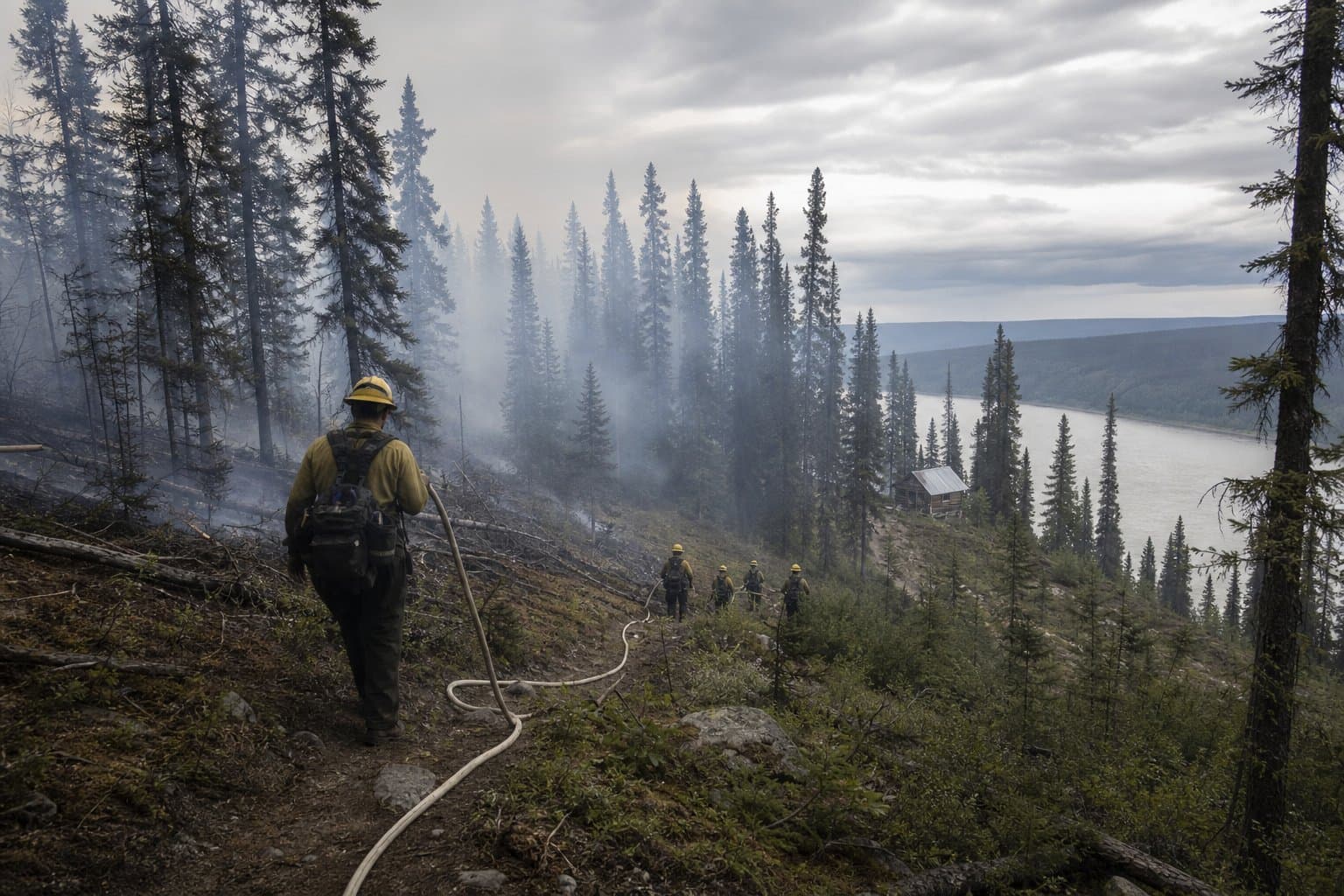
More than 4,000 lightning strikes fuel Interior Alaska wildfire threat through Sunday
More than 4,000 lightning strikes hit Alaska on Friday, June 19, and Red Flag Warnings covering Fairbanks, Nenana, Delta, McGrath, Northern Denali Borough, the White Mountains, Fortymile Country, the Upper Tanana Valley, and the Upper Kuskokwim Valley remain in effect from 10 a.m. Saturday, June 20, through 10 p.m. Sunday, June 21. The National Weather Service defines a Red Flag Warning as conditions that could lead to the development of large and dangerous fires. Additional thunderstorms are forecast through the weekend. The warnings arrive as firefighters are already working to hold the Canyon Fire (#174) away from Native allotments, cabins, and a fish camp along the Yukon River corridor.
The Alaska Division of Forestry & Fire Protection and the U.S. Wildland Fire Service warned that the danger does not end when the storms pass. "Some fires, called holdovers or sleepers, don't reveal themselves for days after lightning strikes," the U.S. Wildland Fire Service said in a June 20 notice. "Holdover and sleeper fires can smolder below the surface for several days until temperatures warm, vegetation dries, and wind breathes life into the smoldering hot spot."
Critical fire weather conditions are expected due to abundant lightning and dry fuels, with the National Weather Service in Fairbanks noting that scattered thunderstorms, humidity dropping to around 30 percent, and wind gusts near storms potentially reaching 40 mph could lead to the development of large and dangerous fires. Fuels across the Interior are very dry. On June 19, the National Weather Service also issued a fire weather watch for the majority of Southeast Interior, reflecting the breadth of the statewide pattern.
The Canyon Fire (#174), located approximately 20 miles west of Rampart, has grown to an estimated 393 acres in black and white spruce along the Yukon River corridor. The fire was active on its north end on June 19, burning in the green pocket between the two arms of the fire and Canyon Creek. The protected sites near the fire were not immediately threatened as of June 20, though conditions remain favorable for fire growth.
The Canyon Fire sits within a Limited Management Option Area, where many wildfires are allowed to play their natural ecological role. Native allotments receive full protection status in Alaska's fire management framework regardless of surrounding designation. Firefighters are focusing on protecting allotments and structures without directly engaging the main fire. Smokejumpers completed a control line around one Native allotment approximately 3 miles northeast of the fire on the north side of the Yukon River. Crews were working on setting a hose lay to protect a cabin and fish camp on private land in the vicinity. The Chena Hotshots continued cutting control line for a second allotment about 1.5 miles south of the fire, also on the north side of the Yukon River. Smoke from the Canyon Fire is visible to boaters and aviators traveling the Yukon River corridor.
Sources
Based on: View Transcript
AI-assisted, reviewed by editors. Spot an error?
Comments
Sign in to leave a comment.
No comments yet. Be the first to share your thoughts.