Mat-Su School Board: November 19, 2026 - MSBSD School Board Meeting
Alaska News • • 70 min
Articles from this transcript
Knik Elementary has had no nurse since October, Mat-Su school nurse tells board
Knik Elementary has had no school nurse since early October, a Mat-Su nurse told the school board, even as students there need insulin and daily medications.

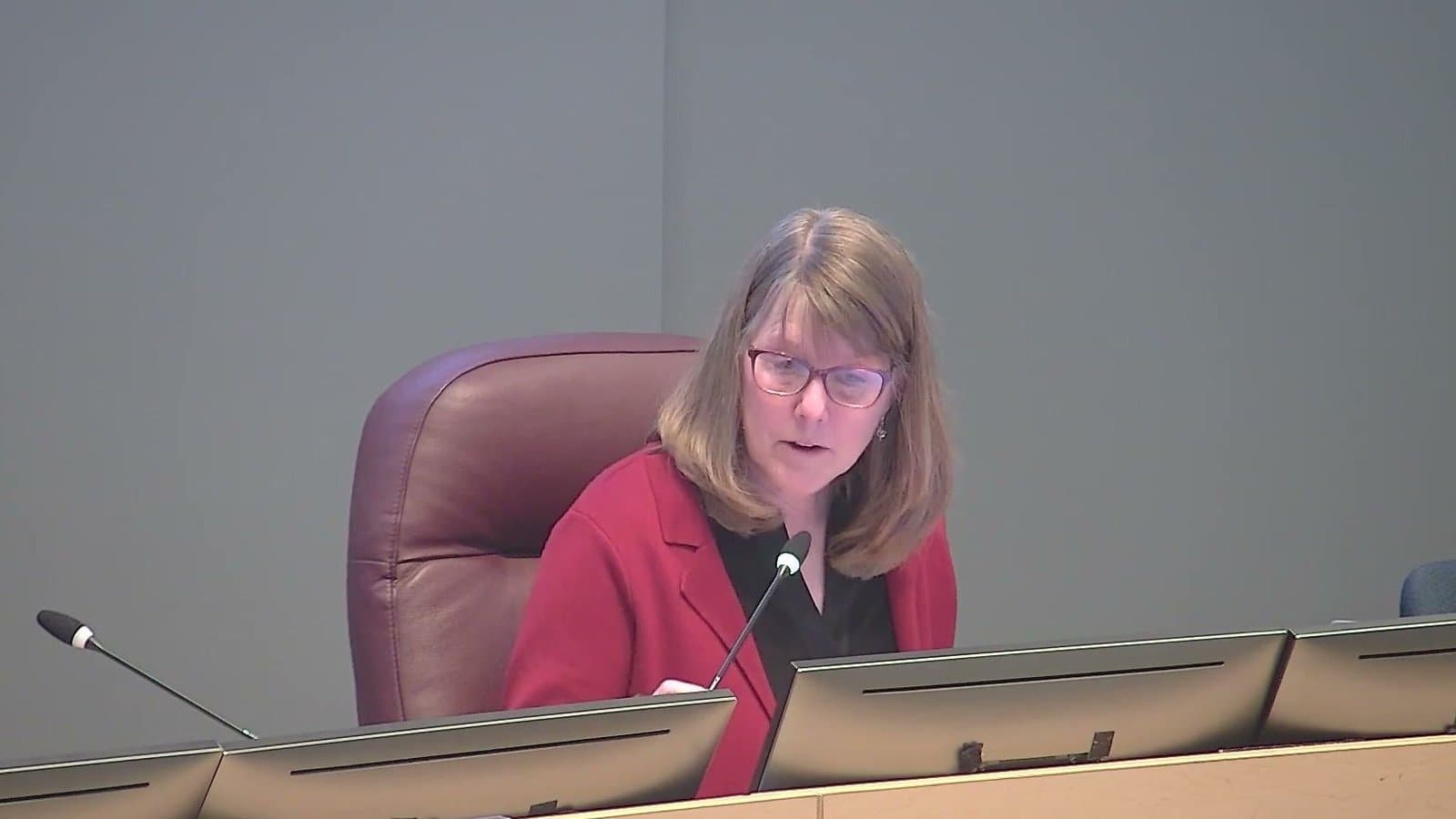
They're gonna give us a little introduction to their program. Thank you.
Hi, I am Cadet Major Bella Wynne, and I'm the group commander at Wasilla High School's Air Force JROTC. Hello, my name is Cadet Captain Tessa Gainward, and I am the Deputy Group Commander at Wasilla High School's Air Force JROTC. While I'm sure that you guys have definitely heard about JROTC, or at least its college counterpart ROTC, you've definitely never heard about a unit like ours. So essentially, to summarize what JROTC is, it is a leadership and citizenship building program, and we are focused towards building citizens who know what it's like to be a leader.
To add on to the fact, something that really puts us apart from other units is that we are cadet-run because again, we are a leadership program. We strive to push cadets to be the best they could be, and we are very cadet-run, like I just said. Take this color guard, for example. Everything about it, from the training to the presentation of the colors itself, was run by cadets.
And speaking of the cadets, usually we only average like 50 to 60 cadets per year. And so that means we have 50 to 60 cadets who are showing up to all these events, who are always serving our veterans, showing up to school events. And we actually always get over 2,000 community service hours per year. And that is a very big stretch considering the size of our unit.
To add on to our accomplishments of community service hours, we have a mandatory cadet-chosen PT once a week. Take litter carry, for example. It's very well known because it's team-oriented in the sense that the cadets don't just work in a team and they work as a team. We do these PTs and it builds our endurance. We do these PTs and we help build our endurance of our cadets to do the physical fitness test each semester to build each cadet's fitness.
In accordance with PT, we accomplished our third year in a row of winning Cadet Challenge and our 10th year in a row of winning Raider Decathlon. This couldn't have been done without our cadets' strive towards excellence. Both these teams were made and trained by cadets themselves.
And of course, being cadet-run, we have to keep up stock of our cadets, so we're always going over to our feeder schools such as Wasilla and Teeland Middle in order to go over and we do PT with them, or we give presentations such as this to them. And I would like to say, when it comes to recruiting, we are not a military recruiting program. However, In the case that a cadet decides they want to join the military later on, JROTC sets them up for success and actually provides benefits for those planning to go into the armed forces later on. Aside from academics, or aside from our physical competitions such as Cadet Challenge or Ritter Decathlon, we also offer many academic opportunities. These are referred to as our Curriculum in Action events, or our CIA events as I'll refer to them since It's easier to say.
So towards the— maybe a couple months ago, the Army National Guard came over to our school, and they presented DisasterVille, which is essentially a virtual reality rescue simulation that our cadets were able to participate in during class time. And 2 years ago, for our CIA trip, we were able to go over to the Museum of Alaska Transportation, which, if you've ever been, has very cool parts of Alaska history such as old trains, old planes, and many old vehicles that brought Alaska to what it is today.
Again, we are not a recruiting program. Our main goal is to build leaders that strive towards excellence. Overall, JROTC is a very comprehensive program, and, and what we do cannot be possible without the amount of drive that our cadets have. I'd like to finish by saying thank you for this opportunity to let us present and tell you a little bit about who we are and what we do as a program. And thank you for letting us present our colors.
It is truly an honor that we got to show you a little bit about what we do. Color Guard is just one of many things that our program offers. Thank you for your time today.
Thank you. Let me ask if any of the members have any questions. Occasionally they do, or comments. Any members have questions or comments? I have a comment.
Okay, well, we'll go ahead. Yeah, awesome job. By proxy, I'm an Air Force fan. My daughter is at the Air Force Academy in Colorado Springs, so super excited. Aim high.
Great job. Member Shane. I just want to say thank you for your presentation today. Well, very well done. Question on your challenge champions, the Cadet Challenge champions.
What all do you guys do in that one there? Like, what does that entail? There are 6, there are 6 events in Cadet Challenge. It includes the broad jump, the half-mile run, T push-ups, and 3 other events. Nice.
It's hosted by Bartlett High School in Anchorage. Okay, when does that take place? We did that last month on October 17th. Awesome. All right, thank you.
All right, thank you so much. That was really impressive, and I am really impressed at the number of volunteer hours you were able to put in because I know you probably have plenty to do with all of your regular coursework at school as well. And so thank you for all of that, and our community should thank you. So thanks.
Okay, okay, so we are on item 5.5.1, persons to be heard on non-agenda items. We have our newly elected clerk, Member Pitcher, who will read the rules and we'll get that list of names.
The speaker states his or her name for the record. The speaker is limited to 3 minutes per meeting. The speaker is limited to non-agenda items. The speaker's comments should be appropriate for all audiences, including school-aged children. The speaker is limited to comments of a general nature, positive or negative, which may not be attributable to any specific individual.
Issues involving concerns specific to any single individual should be submitted in writing and given to the board clerk to be resolved. No disturbance or willful interruption of any board meeting shall be permitted. Persistence by an individual or group shall be grounds for the chair to terminate the privilege of addressing the meeting. The board may remove disruptive individuals and order the room cleared if necessary. This is not a question and answer time.
Um, hi, my name is Stephanie Yudy. I am the elementary librarian at Cottonwood Creek Elementary, but more importantly, I am the parent of two children, um, an 8th grader and a 6th grader at Teeland Middle. So welcome, new member Sumner. Thank you for being here in person. Um, to all of you, eye contact is an important part of communication, and my hope is for transparency, listening, and being solution-focused.
Um, just to restate some of our goals, number 4 was to base our decisions on needs of the— and best interest of students and families. And 5 is to promote the safe and healthy environment for students. Um, nurses are quitting and schools aren't even allowed to post their replacements as registered nurses for this year, even though that's what our grant was for. Um, there were at least 4 nurses that are not— did not start from last year. Those positions were never posted as are-in positions to even start the year.
4 More nurses have quit since September. Um, T. Linds left in September, and there, there was still plenty of time in the year to hire a certified and licensed nurse. Um, and those who would have applied would have already known that next year was uncertain, but they were never given the chance because it was not allowed to be posted as a certified, uh, registered nurse position. Even using health aides, the aides need supervisors that are licensed. Um, there are things health aides that are legally not allowed to do.
As a parent, I've had to sign some papers because of my child, um, and that falls on someone else's license. So if we're looking at the health and safety, is there a way we can restructure their pay? Is there a way to move their contract from a teacher contract to a mid-level management contract or something? Success coaches are grant-funded positions. Um, is there a structure somewhat similar that we can look at?
Um, health aides, they require a licensed nurse to oversee them. So how do we maintain enough RNs so that even if we are using health aides, how do we have enough RNs to support that? Because that's what the plan seems to be. I feel like I haven't seen anything looking forward to next year. And we can't do that on a dime.
Um, if I have missed that, please tell me where to look, but we need a plan. I continually feel like that as a district, we're building a plane and flying without a— building the plane while we're flying without a blueprint, which is really frustrating and exhausting as a teacher, librarian, and a parent. I'm not one just to criticize. I show up. I show up to functions.
I'm willing to put in the work. So I don't want things to just work out for scrambling and scrapping at the last minute to survive, not even thrive. We want all our students and families to succeed, as our mission statement says, and we need to have a plan. Thank you.
Tracy Heislip.
Good evening, board members. My name is Tracy Hyslip, and I am the proud school nurse at Goose Bay Elementary and parent of kids at Teeland and Palmer High. School nursing at Goose Bay over the past 5 years has been the highlight of my career, working with the youngest, most vulnerable students, many of whom may be nonverbal or fully dependent on skilled nursing care for conditions like type 1 diabetes seizure disorders, ostomy care, and severe asthma has shown me how critical a full-time building-based registered nurse is to student safety and educational access. In addition to direct clinical care, I manage 504 plans, coordinate with medical providers, navigate child advocacy and mandated reporting, and provide social-emotional support, all without a dedicated prep time or sub coverage. The workload of the nurse at Knik Elementary is fairly similar to mine.
Following the closure of Meadow Lakes Elementary, both Knik and Goose Bay absorbed a lot more students. Goose Bay has approximately 321 students ages 3 to 8, Knik approximately 365 ages 8 to 12. We have absorbed high acuity students, multiple intensive resource programs, RISE and behavioral support programs. Last spring, the school nurses, as you know, were given the news that our jobs would be taken, and then the news that we would have a job from the Mat-Su Valley Health Foundation grant, which was great. However, when we learned of the new health aid program that was going to be rolled out in August, the nurse positions that were unfilled were opened up to the health aides without actual training in place for these new health aides.
The outlook of school nursing has been disheartening with the desire to replace registered nurses with health aides due to budget constraints, which I understand. Since August, many of our nurses have had to choose to find work elsewhere that has more of a guarantee of retirement or long-term employment or support of a safer workload. The nurse position at Knik Elementary has remained unfilled since early October because of that. I was approached to consider being over both schools and supervise a health aide that would potentially be hired at Knik. While I recognize the district faces severe budgetary constraints, I have serious professional concerns regarding the implementation of the health aide model and being a supervisory nurse over them.
Splitting a single nurse between two high-acuity campuses jeopardizes our students who should have access to a free and public education, many of which have complex disabilities. Considering the high acuity and large student population across both campuses, placing a single registered nurse over both Knik and Goose Bay while adding responsibilities of training and supervising a health aide without possible medical background at all or credentials creates an unsafe environment for all students and staff. This would be the same concern I have for any school in our district that this is happening at, such as Teeland and Cottonwood. While the distance from Knik to Goose Bay is not as far as Colony Middle to Teeland, the district is asking the registered nurse to provide oversight for actions happening without them in the building and under their license, putting their nursing license at risk for a sentinel event. The Board of Nursing standard dictates that delegating tasks Can I continue?
That delegating tasks to unlicensed assistive personnel, which might be somebody like the admin secretary at Knik, does not remove the ultimate clinical responsibility from the registered nurse. Expecting a nurse to oversee upwards of 9 of the UAPs between Knik and Goose Bay creates an unsustainable liability that directly risks the RN's professional license. And this is where I am. There is still no nurse or health aide at Knik. There's still medical concerns every day.
There are medications and forms dropped off, blood sugar to be monitored, insulin needing to be administered, daily meds among many other health tasks since early October. I am ethically and morally pulled in two directions. There's still no long-term plan that is safe or makes sense that I've heard of. I am deeply concerned, and I have working relationship at Knik and Coos Bay as well with the families in our community. My dedication to school nursing is unwavering, and I truly hope the school district thinks about the what-ifs when these positions are not filled for health aides or school nurses in the future.
Thank you.
David Wilson.
Good evening, good evening, um, Madam President, school board members, and congratulations to school board member Sumner. For the record, my name is David Wilson, and tonight I'm representing my agency, the Mat-Su Health Foundation, and just wanted to offer an opportunity for the community and yourselves to throw out on your social feeds about our 5th annual Mat-Su Veterans Resource Fair that's going to be held on December 5th at the Curtis Menard, uh, Sports Center in Wasilla. This is a free event that puts together veterans, active duty service members, military families, and community organizations that provides information and resources and support services and educational opportunities for our veterans and their families and military personnel. Mission is free, open to all veterans, again, military personnel and their families and friends, and a special Quilt of Valor ceremony will be held at noon to help honor our service members and sacrifices that they have made for our This event is made possible again through my employer, the Mat-Su Health Foundation, Office of Veteran Affairs, the Alaska VA, and this is about reflecting on the community's ongoing support here in the Mat-Su to these families and veterans for the services that they have given their time for the Mat-Su. So again, thank you for this opportunity, and afterwards for questions, and I know I don't make enough appearances here for the school board.
But we're again— Mat-Su Health Foundation is ready and able to support for any type of research. Um, that's what we specialize a lot in, is in terms of data on health populations, community, and, uh, continuing to help support our community for the health and well-being of the Mat-Su. So thank you again.
Okay, that's all. Is there anyone else in the audience that wanted to speak on non-agenda items?
Okay, seeing none, we're ready to move on to borough and city reports. I don't believe I see anyone here from the borough or city, so we'll move on to the consent agenda. We have the consent agenda, which is the minutes of October 19th, 2026, our special school board meeting, and then the minutes from October 21st, 2026, our regular school board meeting. Could I have a motion and a second to approve the consent agenda? Motion to approve the consent agenda.
Is there any objection to approving the consent agenda?
No objection. Okay, hearing none, the consent agenda is approved. And, um, we're on public comment for action items, but nobody signed up, so is there anyone who wanted to comment on action items tonight?
Tonight. All right, we're moving on to the action items then. We have item 9.1, request for grant acceptance, Individuals with Disabilities Education Act, Parts 6B, Sections 611 and 619. Do we have a motion and a second?
Motion to approve request for grant acceptance, Individuals with Disabilities Education Act uh, Part 6B, Section 611 and 619. Second.
Second. All right, do we have an administrative report on this tonight?
No, no administrative reports, just a comment on the 3 grants. Um, these are, these are normal, um a normal cycle. These are grants, they're recurring grants every year that are supplemental, especially special education, and help us fund related service providers, special education services, supplemental resources, and support our students who are incarcerated and some of those, those transition activities. But these are a normal— these grants are part of the normal cycle.
Thank you. Is there any discussion or questions?
Okay, seeing none, is there any opposition to this item 9.1?
No objection. Okay, hearing no objection, item 9.1 is approved. Item 9.2, request for grant acceptance, youth in detention.
Motion to approve 9.2, request for grant acceptance, youth and detention. Second.
Okay, and I believe Dr. Ainsworth, you've already talked about that one. Administrative report. All right, is there any board discussion on that?
Okay, Member Sumner,. How many, uh How many students are there? Through the chair, on average, I would say less than 5. I think right now there's 2, but I, I can fact-check that and get that, get back to you. But usually it's less than 5.
Okay, any further discussion? Okay, hearing none, is there any objection to item 9.2?
No objection. Okay, with no objection, item 9.2, request for grant acceptance, youth in detention, is approved. Um, item 9.3, request for grant acceptance, Title I, Part D, neglected and delinquent. May we have a motion and a second? Motion to approve 9.3, request for grant acceptance, Title I, Part D, negligent and delinquent, subpart 1.
Second.
Okay, is there an administrative report? I know, sorry, it was neglected and delinquent. No administrative report. Okay, is there any discussion here? Questions?
Okay, hearing none, is there any objection to item 9.3?
No objection. Okay, hearing no objection, item 9.3 is approved. Item 9.4, request for grant acceptance, Alaska Presidential Physical— Alaska Presidential Fitness. I. Was going to say.
Physical fitness, but. Motion to approve 9.4, request for grant acceptance, Alaska Presidential Fitness.
Second. Okay, any administrative report here? No administrative report. No administrative report. Are there any questions?
Discussion?
Maybe, um, I'll ask just a quick question. Do we have an idea of what that— you know, could you explain a little further? I I believe that all of our schools have opted into that program, or is that correct? Yeah, through the chair, um, I don't know if all of our schools— this is— I mentioned the 3 other grants were recurring, recurring part of the normal cycle. This is, I believe, a new grant, and we were awarded, uh, $250,000 over 5 years.
This is through DEED, and I believe it's through the rural Health Transformation Grant. That's correct. Um, and, and I think it's, it's supplies, it's training, um, emphasizing physical fitness, especially at the elementary level, which we know how important that is.
Any other questions? Member Shane,. You guys have a, uh, plan worked out on how you guys plan to execute this here? Through the chair, yeah. And I, um, Julie is not here.
She is the point of contact at the district level who's really the owner of this grant, the keeper of this grant, and she's working through the mechanics and those details. We're in the process of figuring out the rollout plan. I think we were just awarded the grant this fall, so now we're in the planning session. We can get you more information. Yeah, if the district could provide, uh, the next board meeting maybe just kind of an idea of what, what you guys have figured out.
Um, like, I have no objection to the grant, but it would be good to know what the plan is moving forward with it. Absolutely.
Okay, I have one further question. So in the grant description, it, it has a, um, a a big chunk that's for certificated salaries. Does that mean we're going to be hiring a new person, or is, um, that going to be maybe stipends at the elementary level or something like that? That's a great question. I, I don't have the answer for that.
Um, this is a grant I'm aware of, but it's not a grant that I'm tracking all the details, so I'll have to follow up with the report.
All right, are there any other questions?
All right, is there any objection to item 9.4, the request for grant acceptance, the Alaska Presidential Fitness?
No objection. Okay, hearing no objection, item 9.4 is approved. And we'll just get a report hopefully about a little more detail in that. That'd be great. Um, all right, we're on item 10, Superintendent Report.
And.
Yeah, thank you, President McCollum. Before I dive into my report, I'm going to turn it over to Mr. Ben Moore, our legislative advocate in Juneau, for a legislative update. I believe he is with us. Is that correct? I am on the line this evening.
Awesome. Thank you, Mr. Moore. Thank you. Thanks. Thanks for a few moments of your time.
Thanks, President McCollum, and a warm welcome to Member Sumner. Quick update on elections. Of course, tonight was— today was the last day for votes to come in at the Division of Elections. So final tabulations on ranked choice votes came through a little over an hour ago. Statewide, it doesn't really change the dynamics necessarily on how the majority and the minority in either body are breaking, but if you haven't had a chance to hear kind of the update, unofficial, non-certified, but these are the numbers that came out of the Division of Elections this afternoon.
In the Mat-Su Valley, Senate District M saw Ryan Berry coming out over Senator Tilton at 51.9% of the final tally, about 450 votes. Senator Rauscher is retaining his seat at 56% of the final tally. And then the House seats were really, really close. Numbers, and this will probably be subject to recount, has Doug Massey beating Representative Kevin McCabe by 3 votes, Representative Nelson holding on by 4 votes over Steve Menard, and Stephen Wright beating Representative Alexi Moore by some 46 votes. So all of those are really, really tight.
Um, and then Representative Johnson holding on to her seat with 55% of the final tally. The other votes in the, in the area here, Steve St. Clair won his with greater than 50% of the vote in round 1 for District 26. Representative Underwood prevailing over former Representative Eastman in District 27 on the first round. When it comes to recounts, particularly when we're looking at Districts 29 and 30, that 3-vote margin and 4-vote margin, Just a friendly reminder, revotes are available. State-paid recounts are available when the margin is 0.5% or 20 votes.
Candidates have about 5 days after the election is certified to request that. Certification is expected by November 25th, thereabouts. And I think most people are aware right now that Jonathan Christopkins was successful in the opening round, first round, with 51.8% of the votes that have been brought in. On the Senate side, Mary Peltola over Sullivan with 50.13%, and Nick Begich retaining his seat in the U.S. House with 51.3% of the retabulation.
So that does lead us into conversations a little bit about what the next legislature is going to look like, what the new administration is going to look like. You know, a lot of the times we can't really tell until bills start to introduce and things start to move, but we can look at what was said on the campaign trail and use that as maybe not the thermometer for what's actually happening, but a thermostat for where they want to go, right? So With Governor-elect Jonathan Christopkins, JKT's platform was very clear about his desire to begin forward funding education. If you look at some of his published campaign materials early on, it was a call for a constitutional amendment to forward fund. That process can be quite complicated.
A constitutional amendment needs to pass both the House and the Senate and be signed by the governor and then go to a vote of the people. So a constitutional amendment is a couple of years out, but they could try to move forward funding bills, so education funding bills that could pass earlier. That is the position that JKT kind of fell back to when pressed on how long it would take to get an amendment done. Something that looks like old House Bill 261, which would provide more timely funding in this next cycle. I think because we have less of an adverse relationship between the the majorities in both bodies and the executive office this time around, there may be a push for early funding for schools, a bill passing maybe March or April rather than April or May to give the board a little bit more certainty in what kind of budget you're looking at next year.
So it's something that we're going to be keeping an eye on. And it's gonna be a challenge, but I think it's something that with the calls over the last, I used to say the last year or two, but at this point it's been 6 years or so to increase the BSA every year, that conversation is louder and louder and louder. My take on the incoming majorities is that this is something that may actually be able to get legs to secure funding sooner rather than later. Other things that we're gonna be watching in addition to BSA funding is whether or not the one-time money that we saw this year become permanent. The one-time aid that came to the district, about $16 million, was a result of high oil prices and greater than expected revenues to the state.
Is there gonna be a way to continue that in the future, um, and then how major maintenance is going to be addressed moving forward and, and whether the incoming administration wants to make some moves there. We'll also be keeping an eye on pupil transportation. The Education Task Force has called for some changes to the pupil transportation formula and hold harmless provisions when there are enrollment swings. The pupil transportation formula is one that is pretty important to the Mat-Su Borough School District total budget. We, we tend to do well with pupil transportation compared to other districts, and that's one thing that we're going to be watching very closely and fighting to retain that advantage.
Speaking of the Task Force on Education Funding, sent a note through a couple of weeks ago on the task force. They've got their initial round of recommendations published and they are taking public comment until early December, I believe December 8th.
The key recommendations that we've been able to identify coming out of the, the Legislative Task Force on Education Funding is a few things they'd like to do: define what adequate education funding is to fund us, and then they'd also like to fund a study of the BSA formula. They'd like to— they're suggesting that funding for school districts be more timely, similar to HB 261, baking in inflation adjustment for the BSA, perhaps creating separate facilities operating allocations. So Putting a separate facility operating line item in towards districts, prioritizing life and safety projects on the major maintenance list. There's about a $535 million backlog in, in that area. The recommendations to fully fund energy cost reimbursement, which was about $88 million, or is anticipated to be somewhere in the neighborhood of $88 million in FY '28.
And then sort of some other smaller recommendations that they have would include a revision to how fiscal notes are drafted on the, on the budget that show the costs to districts. And as I mentioned before, reworking the transportation formula. So those are some of the priorities that, that the Task Force on Education has expressed an interest in pursuing. Typically, these task forces end up with final recommendations, and then those recommendations turn into bills, and those bills get run through the legislative process. So engaging right now is important so that the task force has all sorts of perspectives on these ideas and what may be more important to the district specifically.
But it's not our only bite at the apple. As these legislative— as the task force priorities are firmed up and they move through the legislature, there is the normal public process to engage with those ideas as they move through that process.
The last thing I'll just mention, I mentioned it before, is the makeup of the House and Senate majorities. The House majority is a coalition-style majority, primarily made up of Democrats and independents with at least one, potentially more Republicans coming across. To form a coalition majority, at least 23 members expected on that side. That number could grow, um, once they meet certain thresholds on the majority, the size of the majority. That actually changes how many members the majority has on a committee versus how many members the minority has on a committee.
Um, so a, a much broader difference between the the House majority and minority than we saw last year. Interestingly though, on the Senate, we have a similar majority, Democrat and independent primarily, but with a couple of Republicans that have jumped across to turn it into a coalition majority. But that one is divided right now at 11-9. So the majority has 11, the minority has 9. Really tight break like we saw in the House last cycle, um, makes it less likely for more controversial issues to move through, and it gives any one member of that majority essentially veto power if they choose not to stand with their caucus on certain bills.
So that tends to slow down controversial bills from moving through, because if they lose any one member, they lose the bill. It's sort of a moderating influence to have a majority-minority split that tight. We'll be watching as, as more emphasis on education comes out of the, uh, Christophs administration when a Commissioner of Education is named, um, and any other spots that are going to be filled through the transition, we'll keep an eye on and we'll make sure to keep you guys aware of. And, uh, yeah, that's a much longer report than I anticipated giving, but I'm happy to answer any questions that the board may have.
Thank you, thank you, Mr. Moore, for the update. Busy times. Um, before I jump into, to my report, um, those of you have been around Dr. Traini, I'll kind of front load my report regarding special education. He often likes to use the analogy that he wears two hats and that he is a, he is a coach and he is a cheerleader. And when he's a coach, he is providing feedback and he's, he's, he's pushing us to new heights and new standards.
And when he's a cheerleader, he is cheering and he is celebrating and he's doing all the things that a really good cheerleader would do. Um, staying with the coach theme, sometimes as a head coach you have to ask your assistants to— one of your assistants to hold the clipboard. So I'm holding the clipboard tonight, and I, I'm also going to play a little bit of the, the coach-cheerleader in terms of our, our department in our area of focus. So when you, when you look at the, the Department of Special Education, and anytime you come into a department and, and you're new, you start to— like a good coach, you start to evaluate. And what's working, what's not working, what are our action steps.
And it became very clear to myself and others that, that we had some student outcomes that, that we need to work on. And those outcomes, along with some fiscal constraints, forced us to rethink and re-strategize and kind of reprioritize some things. Not that they were broken, but we need to do some, do some things a little bit differently. When I— when we looked at the department, there were a couple things that were— that really I thought were pinch points. And one, there was an— and I, and I have another slide for this, but there were too many layers of, of coordination.
It's not that anybody was doing anything wrong, but it was just too complicated, and we need to simplify our support model for schools. We also need to improve some outcomes, especially when it comes to students with disabilities and the graduation rate. I'll dive into that. And transitioning into post-secondary, either higher education, training, or employment. And we needed to create some alignment within our, within our department, which I think we've done a really good job of.
So that brings us to— I'll stay with the coaching theme— that brings us to our playbook. And so we have two objectives. These kind of provide— they give us, they give us direction, they give us a target. So the first objective: support schools so they can remain focused on student learning. And we often say, keep the main thing the main thing amongst our team.
And that's something Dr. Randy Trani talks a lot about— keep the main thing the main thing— so we can support schools, they can focus on students. The second thing, the other objective, is just to build a really, uh, unified, highly functioning team that executes at a high level and is, is functional, is competent, and aligned. Those are two objectives. Our four guiding questions, they, they really— we talk about these on almost a daily basis. We don't always hit the mark.
There's, there's definitely tension between some of these things, but these guide us in our decision-making. First question: does it benefit students? That's the most important question. Is it educationally appropriate? Is it legally sound?
And is it fiscally responsible? Those four things will guide the rest of my presentation.
Then we move into— I'll play the role of, uh, coach and cheerleader. I'll start with cheerleader, uh, glows, where we've made progress, uh, in this department over the years. Number one, there's an increased number of students in general education. That, that's really, really important in special education, that those students are— have access and they're in a least restrictive environment and they're with their peers and gen ed curriculum and standards. 2, Reduction highly restrictive environments.
We are trending in the right direction. I think it's approximately— it might be less than, than 2%, and the state target, I believe, is 3%. And the third thing is a growth in the number of students documented for intensive funding. That number has increased. I do want to emphasize, just a footnote, that doesn't mean that we're overqualifying students.
That means that we're intentional about not overlooking students who qualify for intensive funding. So those are glows, those are areas of progress. Rows, areas that we need to get better, areas that we, um, that we need to move— we need to move the needle. The rate of post-secondary enrollment for students with disabilities is not hitting the standards. So those are students who are going in— I like to say the 3 E's.
The state uses different terminology, but are they in enrolled, are they employed, or are they enlisted? Graduation is not the finish line. The second thing is, uh, number 2, graduation rate for students with disabilities. We are over— there's a 20% delta. I think that's the next slide between our non-disabled students and our disabled students in terms of graduation.
And then improving our model for service and support of schools. And I have another slide where I'll dive into that graduation rates. So if you look, on average, we're at about the last 3 years, we're at about 85% for, for, for all students. When you look at students with disabilities, we're about 63%. So there's a 22-23% delta between those two groups.
And so we've got to get better in that area. We've got to figure out what it is in our systems and our expectations where we can get our students with disabilities to graduate at the same rate as our other students. And I, and I believe that's a little bit of a— we need some system tweaks and we need some, some expectation tweaks.
The coordinator model. There's a lot on here. This is a busy slide. I'll just, I'll keep it really simple. Program— it used to be program-based.
So our special education coordinators used to be— when they still are, they're experts in one or two things, and they have, they have really strong expertise, deep domain expertise in those areas. But we were spread out too thin, and they were serving all of our schools. So you would take someone who's a, um, a resource behavior support expert in, in our district, but they were trying to cover all of our schools, and so we were just inefficient and spread out thin. And I like to say we were a, a program where our coordinators, um, where they, they knew their, their program really well, but they were serving lots of schools. We moved to a model where they serve a smaller number of schools, so a cluster of schools, call it 5 or 6, maybe 7 and they know all the programs.
No audio detected at 43:40
And the, and the benefit to that model is they get to know those schools, those communities, those parents, those students, those teachers, administrators. They really get to know that community and work with those students and the staff. So I think we're concentrating their expertise in this new model, which is more of a school-based model. It used to be a program-based model. Next slide.
Guiding question 1: does it benefit students? The most important question. So when we look at how do we benefit students in special education, continuum of supports— there is hardly one-size-fits-all in special education. Nothing is black and white in special education. So specialized settings, least restrictive environment, gen ed with supports, inclusion Our goal is they're in, they're in gen ed settings 80% of the time.
That's the target, and that's actually one area that's, that's an area of growth for us. We, we were, we're moving in that direction, um, and in the educational world we like to call it the, the zone of proximal development. You want to get kids in that sweet spot where they're being pushed and there's tension and learning. That's where students learn. Obviously you don't want to overwhelm them, but you also don't want to underwhelm students.
So we have to push all of our students, that includes our students with IEPs. And then student outcomes, and I think we have to have— we have to continue to have these conversations. We talk a lot about inputs. Inputs are important. Outcomes, outputs are the things that we're doing.
Are we making progress? Is it working for our students? If it's not, what do we need to do differently? What levers do we need to pull? Question 2, uh, is it educationally appropriate?
IEP drives everything. The IEP drives the plan, the service. Everything is built off the student's IEP. It's built off data. It's built off evidence-based practices.
It's, uh, a team gets together. Parents are involved, case managers, teachers, district reps, coordinators. Nothing in public education, I like to say, happens alone. It is truly a team sport. SDI is specially designed instruction.
All that means is you're going to design instruction for, for kiddos who need support, and maybe it's maybe reading, maybe writing, maybe math, maybe behavior. There's a continuum of placement. Sometimes it's less restrictive, sometimes it's more restrictive. And then the service delivery— and I jumped ahead— it takes a lot of people from related service providers and teachers and case managers, our team, to support our, to support our students. Programs— I'm not gonna, I'm not gonna go into a lot of depth here.
Here's, here's the key takeaway. We have a lot of special education programs in our district. We are fortunate, we are lucky. Not all districts have the number of special education programs that we have in the Mat-Su Valley. As a theme, really what these programs embody is helping students with either behavior, academics, adaptive skills, or transitioning skills, and, and some combination of, of both.
The resource BSP programs are probably— we probably have more of those than any other programs. Project Life, we have one. Structured Learning, we only have a couple. Those are, those are our programs.
Guiding question 3: is it legally sound? So these are These are landmark cases in the world of public education. These are things that we have to adhere to. I actually say this is, of the 4 questions, this is the easiest one because you don't want to break the law. You gotta follow the law, right?
Like, the law is the law. So we have to stay within those parameters. IDEA 1975 is landmark legislation, and that provided the Individuals with Disabilities Education Act, federal law that guarantees services, rights, and protections for eligible students. When you think about all those things, that's really about identifying students, working with families, and supporting students without getting too technical. FAPE is Free and Appropriate Public Education, providing individualized educational services at the public expense.
And, and there was an amendment to that that we needed to make sure that the students were making progress. And then there's least restrictive environment. You hear that a lot in our world, and that Again, 80% is the goal, and it's to make sure that they have access to their peers and they're in that— they're in that general education environment and they have access to standards and gen ed curriculum and content area teachers.
And the last question: is it fiscally responsible? So that's, um, that's, that's a reality. We all know that. When we make decisions, financial decisions cannot solely— that's actually outlined in LRE— cannot solely be the decision, but they, they are a factor in the decision. So in the world of special education, it's braided funding.
It starts with the BSA of $7,600 and change, and then we have what's called multipliers. So in special education, we have a special needs multiplier of 1.20 And then we have the intensive need multiplier. So that's the BSA times 13 for each of those students. And then this goes back to the action items. Title VI-B is our largest grant in special education from the federal government, and that ranges anywhere from $5 million to $6 million.
No audio detected at 49:40
And then we get $100,000 and about $100,000, $120,000 in preschool funding. Special education. And that's supplemental. That is a small— to be honest, a very small part of our special education funding. I think it's like about 9%.
Most of it comes from the state.
So again, this, these, this guides our decisions. This is a framework. Um, there is the— there's a balancing act to these four questions. There is tension in these four questions all the time. I wish it was that easy.
There are competing priorities. We do our best to hit all of these. We don't always, but in the end, we're always talking what's best for students, not what's convenient for adults.
So I'll transition as I wrap up. Good of the order: intensive funding. We finalized that in October. That is, that is a team sport. That is a team effort.
We submitted our count to DEED, and we will get a report back and feedback in January, February. Calendar survey is being deployed, I believe, tomorrow to parents, community members, and, and staff. Regional Nurse Committee— our next nurse committee is coming up here, uh, on December 10th. We'll be in the small boardroom, and that'll be our second meeting, and we will— we're going to continue the conversation about what are our next steps, what, what does the plan look like. We, we have a pretty good— we have a diverse group of stakeholders in that meeting.
And then the last thing is we had— we just had our last— our second SEET meeting, which is a special education engagement team. We had that over at Mat-Su Valley School last— was that this week or last week? It's a blur. You were there, President McCollum. I think it was last week.
It's just a blur. Yeah, but really just a great great group of parents and staff, and I, I just feel like we have good communication feedback loops and two-way conversation and just, just talking about special education and trying to clarify things, and then, and then honestly trying to solve some problems for some parents and some kids. And the last thing I want to say is Dr. Randy Trani likes to acknowledge a group, which I appreciate. I just want to acknowledge our special education team with, um, during intensive funding It is a very— and no pun intended— intense technocratic process. I mean, it takes our teachers, our case managers, our coordinators, our district reps.
No audio detected at 52:20
It takes a lot of people to pull that off, and it's really important because it's a considerable amount of money for our district and our special education department.
So with that said, that concludes my report. I'll take questions from From the board, are there any questions? Member Shane?
And by real quick, I'm just, uh, can you, um, maybe elaborate a little bit more on this program-based model versus— looks like you're wanting— you're talking about moving to a school-based cluster model. Am I understanding that correctly? Are we talking about adding staff then to these programs to support them differently?
Can you just kind of elaborate on that? Yeah, through the chair, um, no, we, we, we didn't add staff. In fact, we, because of the fiscal situation, we, we actually have less staff than we had last year. Essentially what we did is we took our special education coordinators and we dedicated them to a cluster of schools. And so if you look to the, to the, to the right, all those 8 programs.
So if I'm a, if I'm a coordinator of, let's just call it the Palmer schools, my job is to work closely with those schools, administrators, case managers, and I am supporting those, let's call it 6 schools, and all 8 of those programs. Okay. Conversely, before I was, I was, let's say, an expert in BSP and resource. I was supporting 47 schools. Okay.
And so our, just our resources and our expertise were too spread out, and it just was, it was complicated for our staff. That makes sense. Thank you. And I'll just, um, maybe it's just a comment, but on that same topic, I was thinking when you were talking about that, that in my opinion You know, I can see the worry that people aren't as deeply knowledgeable about one of those things, but it's probably better because they, they can learn about all of those things. And, and students typically kind of maybe go in and out of all of those different projects or programs, so then they have those knowledge base where they can say, you know, maybe this would be a better placement for you, or we can work through this.
No audio detected at 54:40
So I really think that seems to make a lot more sense to me too, where people focus on an area instead of one, one topic and so spread out. And so yeah, I appreciate that. That's great. Maybe, um, unless there's other questions, I will ask the question. Oh, okay.
Well, um, Member Coley,. I have a question about the Regional Nurse Committee. Um, how often have they met and who serves on that committee? Yeah, through the chair. Uh, great question, Member Coley.
So we've, we've met once. I think we met in October. The, the group, the committee, internal stakeholders, I think we have 3 or 4 nurses, school nurses. We have 3 principals. I serve on that committee.
Deputy Superintendent Gardner is on it. HR, we have a Dr. Erickson is on the committee. We have the nurse— I forget her official title, but she's the state school nurse, let's call her coordinator— she's on that committee. And then we have a parent who is a part of the SEEP process who's also a part of that group. So we have a pretty good diverse group of internal and external stakeholders.
The next meeting, really, we, we kind of identified and talked about, okay, here's what— here's our challenges, here's our tasks. This meeting we really need to start talking about What are our options? How do, how do we move forward in a productive manner?
So when, um, those roles are more defined, will they be brought to the board to vote on, or will they just be implemented. Through the chair? Uh, you mean, you mean the roles in terms of health aide and, and, and school nurses? Moving forward with school, the model, the new model that will— that the committee comes up with, how will that be directed? How would that be pushed out into the community?
Okay, yes, yes, now I understand. Once we have that clarity and we're there, I anticipate Dr. Trani or President McCollum will want to— will want a board report And then we'll keep the board posted through Board Connects on progress. I just— I don't think we have enough information yet to have a definitive plan. We will definitely keep you.
Guys— okay, um, at the SEAT meeting that was last week, um, that was a nice turnout of people and good— they had really good questions. And one of the questions I think that would be nice for everybody to hear here on the board too, because it was more of a meeting about funding, and, and that's a huge topic. And the question that someone asked is the, the funding that we take in through the state, and, you know, even because that, that intensive funding is a lot for each of those students that qualifies for that, but also the, the small amount we get from the federal government, and all of it does that money pay for the whole special education program and the services that students receive without taking money from other parts of our budget? Yeah, yeah, the, the meeting was the, the SEAT committee had asked me— they asked last spring, and then they had asked in the fall to have a, a budget meeting. So that was most of the meeting, and we talked about special education and braided funding and how it works.
No audio detected at 58:00
And to answer your question, The answer is no, it doesn't, it doesn't cover all the funding. Our, our expenses exceed our revenue. So in— and Deputy Superintendent Gardner is not here, she's probably listening, so I'm not gonna use round numbers. She has the exact numbers, but really our revenue is about $62 million in state and federal funding, but our expenses are around $73 million. So that, that delta is around $11 million structural deficit in special education.
So that you ask, okay, where does that money come from? That comes from, that comes from the operating fund. That puts, that puts pressure on the general fund. And so that, that was part of that conversation. And then we talked a lot about just the mechanics and how that money is used to support students and staff.
All right. Okay, thank you. That was great. A lot of information, but, um, good to know. No, that's good.
Thanks. Okay, so, um, we don't have any more persons to be heard, I'm positive, so we'll move on to correspondence or board committee reports. Um, I don't believe we've had any board committee meetings since our last meeting here. Um, it was great to attend the SEET meeting, and a lot of great information and great questions from the public too. I really appreciate everybody's time that was there, and we were there at Mat-Su Valley School.
So if you haven't seen that school, it's also really a really nice building too for the services that are provided there. Um, okay, we'll go to future items, future business. Um, December 2nd, 2026 at 6:00 PM, we have a regular school board meeting here at MSBSD Central Office. December 8th, 2026 at 6:00 PM, we have a joint assembly school board meeting, and that also will be here at MSBSD Central Office. Um, December 14th 2026, 6 PM, we'll have a legislative reception here as well.
And December 16th, 2026, 6 PM, regular school board meeting. Not like we don't have a lot going on in December already. All right, we'll move on to comments from school board and administration. I'll offer to Dr. Ainsworth first. Do you have any comments?
Yeah, I want to, uh, thank Stacy Escobedo for the scaffolding, the support, the MTSS. Support. She, she did a great job of making sure I was ready for, for this meeting. I appreciate it, Stacy. And then congratulations to Member Sumner on being on the board.
I think your, your experience as a borough assembly member in the legislation will be an asset to the team. And then President McCollum, congratulations. A long time seasoned retired elementary teacher on the board and just a continued asset for this team.
All right, uh, Member Coley. Yes, I'd like to thank the Wasilla JROTC. Leadership classes are so important to build strong, competent leaders in our community because these kids are our future, so I commend them for what they're doing. I also want to acknowledge, you know, our past members, Bergie and Larson, for the service that they gave to our board. I want to welcome Member Sumner and congratulate Member McCollum.
Um, and you know, as a nurse, obviously the school nurse thing is near and dear to my heart too. So, you know, understanding how we're going to move forward and make the best decisions for our community That's high on my priority list. So, um, you know, this next meeting would— I'd love to hear some feedback from it, please. And I thank everyone, and I hope everyone has a safe drive home tonight.
Okay, I'm going to go to Member Cruz, who's online tonight. Member Cruz?
Thank you. I greatly appreciate the presentations tonight. I really appreciated the presentation about the SPED programs. I think that was really informative and probably the only one I've received since I've been on the board with that detail, certainly, and I really appreciate that. I wanna thank the people who came out to speak.
It's always important. And, um, congratulate Member McCollum and Mr. Sumner on their elections.
Look forward to working with both of you going forward, and I hope everyone has a good evening. Thank you.
Okay, Member Pitcher.
It's always great to have the youth come out, Junior ROTC, and their presentations, and, uh The fact that they're out there doing something above and beyond, you know, with their lives and, and planning for a great future, that's, uh, that's great to see. It's great to hear about. Appreciate the public coming out today and their concerns and bringing those before the board and keeping those on, on the radar of, of what we've got to, uh, what we've got to address, these challenges that we have coming up ahead of us. I'd like to congratulate Members McCollum and Member Sumner on this year and coming year on the board. And, and yes, appreciate all that Member Ohle and Bergie brought, brought to this board, brought to this district over their years.
And, and they really did make a difference, and it was, it was a real blessing having them over that time, and wish them the best in their future endeavors. Apart from that, I wish everyone a safe drive home.
Member Sumner.
Thank you, uh, all here. Yes, I, I also would like to hear.
Vice President Shane. Uh, well, first of all, uh, Like to thank former member Larson and member Bergie for their time on this board. Um, been— they've both been here a lot of years, and so, um, I'm, I'm gonna miss, uh, member Larson's call for a pee break because, uh, now I might have to be the one to do that. Um, but, uh, congratulations to member Sumner and member McCollum, uh, both you bring a lot of experience in different, uh, circles to the table, and so, uh, excited to work with you guys. Um, and, uh, also a big thank you to the Junior ROTC program for coming out.
Um, it's great to hear updates from them on how things are going with that JROTC. Um, if, uh, I could, I'd like to request the school district give an update on, uh, where we at on nursing staff whether or not we are, uh, maintaining compliance with the Mat-Su Valley Health Foundation grant. Um, we want to make sure that we're following that, I think. Um, and then, um, uh, just one request that I have, I guess, is, uh, when it comes to grant funding, especially when there's a new grant that's coming out or something like that, um, uh, if the district could paint a little bit better picture on like, this is the money that we're putting in for, this is, you know, what we plan to do with it, and these are the metrics that can show the success of what we're doing with that, so that way we can measure that later, right? But I do appreciate the presentation.
Appreciate staff for all the hard work putting everything together tonight. So looks like we have, uh, quite a few meetings in December, so I'll, uh, guess we'll be seeing each other's faces quite a bit next month. Uh, with that, everyone have a safe drive home. Thank you.
Thank you. And yes, it was a great meeting, and I would like to say thank you to those years of service that Member Larson and Member Bergie put into this board. Um, I know they put a lot of thought into the questions that they asked and the points that they brought up, and we may need to appoint Member Sumner to be the, the questioner for new building, um, construction. Member Larson was really good at that, and I will miss that, um, his detailed questions and digging into the plans of new buildings, which was, was very helpful. And we did— all of us, I feel like, that are here on the board learned a lot from both of them and just the historical knowledge they had of the district as well.
So we'll miss them and look forward to filling Member Berge's seat, I believe. So that will be coming up soon. And everybody have a fantastic night, and we'll see you a lot in December. Thank you.
Okay, motion to adjourn. Okay,. Second. Okay, unopposed, I'm sure. No one's opposed.
We are adjourned. Thank you.
No audio detected at 1:09:00