Senate Armed Services: Hearings to examine the nominations of William Toti
Alaska News • • 123 min
Articles from this transcript
Navy undersecretary nominee tells Sullivan he'll keep speeding Adak base reopening
Navy undersecretary nominee William Toti told Sen. Dan Sullivan he'll keep pushing to reopen the old Adak Navy base. A 2025 law already set aside $115 million that Sullivan says will help restart it.

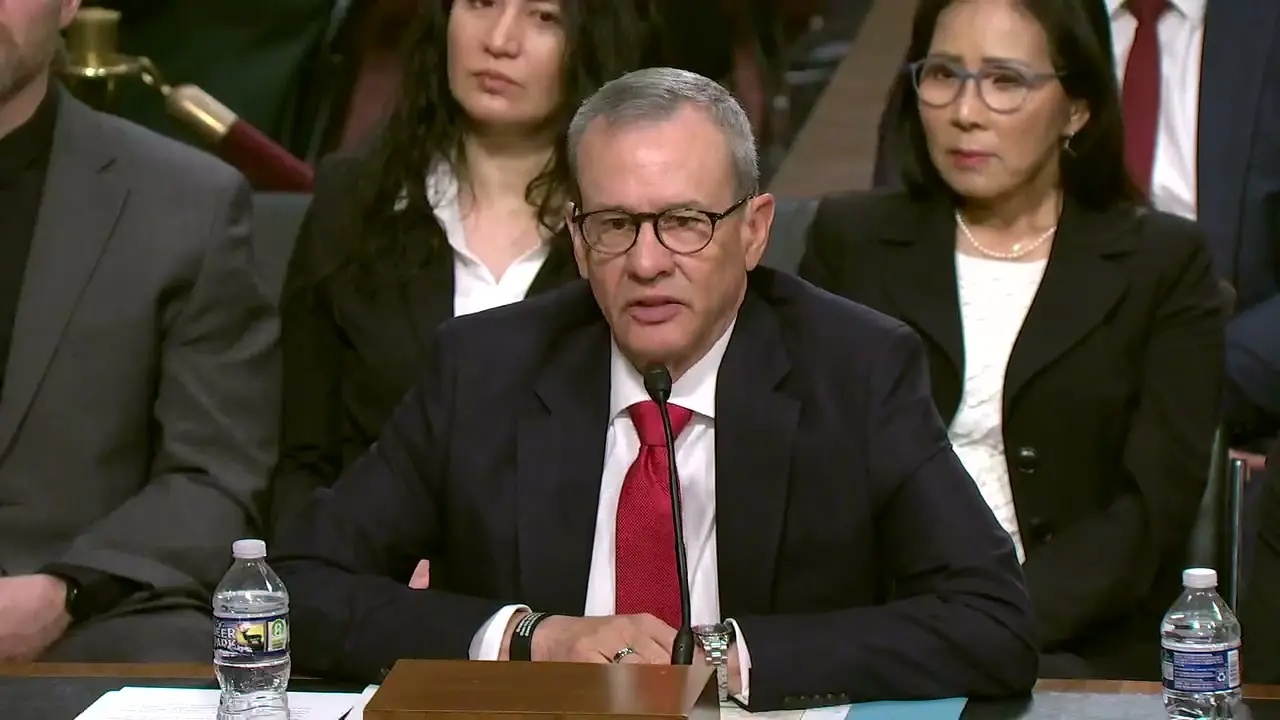
No audio detected at 0:00
No audio detected at 2:00
No audio detected at 4:00
No audio detected at 6:00
No audio detected at 8:00
No audio detected at 10:00
No audio detected at 12:00
No audio detected at 14:00
No audio detected at 16:00
No audio detected at 18:00
I welcome our nominees and their families. I'm grateful for their willingness to serve our nation. The United States faces an increasingly dangerous threat environment, and we need experienced leaders willing to step up and tackle the challenges facing our nation. First, Mr. William Totey has been nominated to serve as Undersecretary of the Navy. He brings decades of Navy experience along with an understanding of the challenges facing the department and the maritime industrial base.
If confirmed, he'll play a critical role in the daily management of the Department of the Navy and in translating the secretary's priorities into results. There's no shortage of work ahead. Revitalizing our shipbuilding enterprise, improving maintenance and fleet readiness, strengthening our industrial base, and ensuring that our sailors and Marines have the resources they need to accomplish their missions. His leadership and willingness to work with Congress will be essential in building a more capable and ready Naval force. Daniel Zimmerman, is welcomed back to the committee.
He's the only nominee in recent history who enjoyed the confirmation process so much that he decided to do it twice in 2 years. He's currently an acting Deputy Undersecretary working for Mike Duffy in Acquisition, but he's now been nominated to be Assistant Secretary of Defense for International Armaments Cooperation. A position created only last year. In this role, he would serve as the principal advisor to Mr. Duffy for defense industrial base cooperation with our allies and partners. Since Congress created this office, it's been capably led by Catherine Cantina, and it has seen impressive successes.
The team executed $500 million of Defense Exportability Features Program funding from last year's reconciliation law, along with $500 million— with a $500 million match from industry, all to adjust our weapons for export. Senator Shaheen has been advocating that for years. It's going to make a big difference. Now more than ever, we must work with our allies to strengthen our shared— our shared industrial base and weapons stockpiles. I look forward to hearing Daniel's vision for this office, as well as his plans to synchronize U.S. government actions across these critical lines of international cooperation.
Mr. Richard Breckenridge has been nominated to serve as Assistant Secretary of the Navy for Research, Development and Acquisition. He brings decades of Navy experience. His background in engineering and undersea warfare gives him a valuable perspective on the technological demands facing our Navy. If confirmed, he'll be responsible for overseeing the development and acquisition of the capabilities our sailors and Marines need to maintain our military advantage. We must accelerate the delivery of new technologies, improve acquisition performance, and address the cost and schedule challenges that have plagued major programs.
Surely everyone within the sound of my voice agrees with that. I look forward to hearing how Mr. Breckenridge plans to translate his operational experience into better acquisition outcomes and ensure our Navy can meet the demands of a potential conflict in an appropriate amount of time. And finally, Mr. Arthur Miller has been nominated to serve as Assistant Secretary of the Navy for Financial Management and Controller. He currently serves as the Department of Defense's Deputy Controller for Budget and Appropriations Affairs. Where he advises senior department leadership and serves as a principal liaison with the Congressional Appropriations Committees.
If confirmed, he will be responsible for ensuring the Navy's resources are effectively managed and aligned with its operational priorities. I look forward to hearing how he plans to improve budget execution, to strengthen financial accountability by achieving a clean audit opinion, and to ensure the Navy gets its greatest possible return on its investment. So we have 4 talented nominees here, and we need to move with dispatch in, in this hearing and get them reported. With that, I turn to my friend and colleague, Ranking Member Reed. Thank you very much, Mr. Chairman, and gentlemen, welcome today.
And I'd also like to recognize your families and your extended friends and colleagues who are here, because they will give you the support you need to carry out these difficult jobs. And Mr. Totey, you are nominated to be Undersecretary of the Navy, the second highest position in the Navy Department. If confirmed, one of your most important priorities must be assisting the Secretary of the Navy in growing and maintaining the fleet. For several years, the department has fallen well short of its shipbuilding and deployment plans. A number of vessels, including an aircraft carrier, multiple destroyers, and the Virginia and Columbia-class submarine programs, are facing delays of more than a year.
And I'm interested to know how you would address these programs and their unique challenges, and how you would work to get them back on schedule and on budget. In addition, our naval forces are stretched thin due to a series of extended combat deployments to the Middle East, Caribbean, and elsewhere. Over the past 2 years. These operations have created highly visible readiness and morale problems throughout the force. Historically, these kinds of extended deployments have driven service members out, harmed military families, and set maintenance back years.
Indeed, the munitions expended and damage sustained from the Iran war alone will take years to recover from. With China and Russia in mind, the Navy must be judicious about how it prepares for the future. Mr. Tode, I want to understand how you would plan to address and mitigate these readiness challenges. Mr. Zimmerman, you are nominated to be Assistant Secretary of Defense for International Armaments Cooperation. If confirmed, you would be the first person to hold this position, which was established in the fiscal year 2026 National Defense Authorization Act.
The position is responsible for overseeing the department's international weapons cooperation, international technology security, foreign military sales, export controls, and supply chain integration with allies and partners. I'd like to know how your goals for the position would work to the benefit of the Navy, how you would structure the office, and how you would facilitate industrial cooperation with allies and partners. Additionally, the foreign military sales process needs to be improved. The process is a complex interagency effort between the Pentagon and the State Department. And also involves working with dozens of allied governments.
Often the foreign military sales process is too slow and too rigid to keep pace with the changing world and modern innovation. Mrs. Zeman, I would like to know your assessment of the process and what steps the department can take to fix it. Mr. Breckenridge, you are nominated to be Assistant Secretary of the Navy for Research, Development, and Acquisition. This position is responsible for the development and acquisition of all Navy and Marine Corps platforms and weapons systems. In 2021, the Office of the Secretary of Defense transferred Milestone Division Authority, or MDA, to the military services.
This authority is significant as it determines when an acquisition program enters the acquisition process. Mr. Breckenridge, if confirmed, you will be responsible for exercising MDA on behalf of the Navy. I would like to know how you would approach that responsibility and your views on the appropriate balance between service-level acquisition programs and oversight from the Office of the Secretary of Defense. Additionally, this position is responsible for overseeing the Navy's Warfare Centers, which provide a deep reservoir of technical expertise for Navy programs. Mr. Breckenridge, I would like to know how you plan to support the Navy Warfare Centers, their acquisition programs, and the exploration of new science and technology efforts to develop future naval force capabilities.
And finally, Mr. Miller, you are nominated to be Assistant Secretary of the Navy for Financial Manager and Comptroller. If confirmed, you would oversee the financial management of the Department of the Navy. You would face several fiscal challenges in this position, including rising costs from the Iran War and budget instability from the uncertain outlook of the department's reconciliation request and supplemental funding I would like to know how you advise the Secretary of the Navy on facing these challenges. Thank you, gentlemen, for your commitment to serve the nation, and thank you for your previous service to the nation, which has been outstanding. Thank you, Mr. Chairman.
Thank you, Senator Reid. And now we begin with opening statements, and we will begin with Mr. Tode. Your opening statement, sir. Good morning, Chairman Wicker, Ranking Member Reid. And distinguished members of the Armed Services Committee.
Thank you for the opportunity to appear today, and thanks to President Trump, Secretary Hegseth, and Acting Secretary Chao for this nomination, the greatest honor of my life. I'm joined by my wife of more than 43 years, Karen, who did much of the raising of our children while I was at sea. Karen, you are the love of my life. Our daughter Sarah is here with her husband Adam, and our son Will is hard at work in Florida. If I bring any skills to this position, I deserve no credit.
God has been incredibly good to me, as has my Lord and Savior Jesus Christ, without whom I would not be here today. Senators, I enlisted in the Navy on a 6-year contract in 1974 and was accepted into the Naval Academy a year later. My 26 years on active duty, including 5 fast attack submarine deployments, and 3 strategic deterrent patrols gave me profound understanding of how the Navy works. Yet, in the 1990s, I had to decommission my perfectly good submarine halfway through its service life. It was the end of the Cold War, and we had foolishly come to believe that we had run out of enemies.
Of course, our crystal ball was defective. A few years later, I was in the Pentagon on 9/11. And I'm still driven by the realization that I lived while my friends died. My active duty career left room for a second full career in industry. There I watched the Navy deliberately eliminate competition to put its industrial base on life support, believing that there wasn't enough work for the companies still in the fight, thinning the supplier base created thousands of single-point failures, prolonged construction timelines, and inflated overhead costs that dwarfed any savings that they were intending to pursue.
We have become the masters of the law of unintended consequences.
I built a reputation in industry for fixing struggling companies, and my heart was in that work because I grew up in a steel town whose lifeblood was the Youngstown Sheet and Tube. Both my grandfathers worked in the mills, and my first job at age 15 was sweeping the floors in the Campbell Works. A few years later, that bill went under— that the business went under— and most of my community lost their jobs. That history is germane to shipbuilding today, except that unlike Youngstown, our government channeled support to a few primes at taxpayer expense eliminating the competition that might otherwise drive them to improve. Now, my motto is every system is perfectly designed to produce the outcome it produces.
When nearly 100% of our ships and submarines deliver late and over budget, that's not defect. It's designed to do that. And who controls the design? The government. So resolution starts with fixing our own house.
Industry is not without fault. They are complicit. If confirmed, fixing the department's acquisition process, shipbuilding in particular, will be one of my prime objectives, and I will partner with industry to do so. But my duties will reach well beyond acquisition, financial management and audits, personnel policy, installation investment, and above all, the quality of service and quality of life our sailors, Marines, and families have earned. Platforms matter only if we keep faith with the people who crew them.
I'm mindful that America's status as the global gold standard is underwritten by the Navy-Marine Corps team securing the maritime commons that carry more than 90% of global trade and with it American prosperity. If confirmed, I commit to using my nearly 50 years of experience in and out of uniform to enhance our Navy and Marine Corps ability to remain the bedrock of our nation's security. Thank you, and I look forward to your questions. Thank you very much, sir. Secretary Zimmerman, you are next, and you're recognized.
Chairman Wicker and Ranking Member Reed and members of the Armed Services Committee, thank you for the opportunity to appear before you today and be considered for the role of Assistant Secretary of Defense for International Armaments Cooperation. As both the chairman and the ranking member identified, this is a new position which Congress created in FY 2026 NDAA, and I'm honored to be nominated by President Trump and to have the support of Secretary Hagseth and Undersecretary Duffy. The mission of this role is to advance armaments cooperation with allies and partners in a way that invigorates our defense industrial base and strengthens deterrence. I care profoundly about this because it directly impacts our ability to deliver, to deliver urgently needed capabilities to the U.S. warfighter, and it connects to vital relationships we have with our allies and partners. If confirmed, I would execute this mission with the vigor, collaboration, and urgency that our country expects and deserves.
Mr. Chairman, I would like to thank my parents who are watching, David and Beth Zimmerman. I owe them immeasurable gratitude. I'd like to also acknowledge my sister Tabitha Zimmerman— Tabitha Wolpert— and three brothers, Ethan Zimmerman, Luke Zimmerman, and Nick Zimmerman, along with my dad, all four of them are serving or have served in the military, and I hold them in the highest respect. I also have four brave children: Ransom Zimmerman, Anchor Zimmerman, Haven Zimmerman, and Liberty Zimmerman. I love being their dad.
It's more fulfilling than any professional achievement. Two of them are here with me, and that's a great privilege. Most important, my wife Chloe is here, a friend without parallel. She empowers me every day. I'm grateful for many other family and friends attending or listening, and I give ultimate thanks and honor to my great shepherd, the Lord Jesus.
Mr. Chairman, I love this country. If confirmed, I pledge to faithfully execute the duties of this office, doing my part to preserve the inestimable blessings of liberty for us and for the next generation. Thank you.
Well, thank you very much. And Mr. Breckenridge, you are recognized. Chairman Wicker, Ranking Member Reed, distinguished members of this committee, I'm honored to appear before you as the nominee to be the Assistant Secretary of the Navy for Research, Development and Acquisition. I am grateful to President Trump, Secretary Hegseth, and Acting Secretary Cowell for their confidence in me. I am also grateful for the opportunity to appear alongside these dedicated leaders.
Especially my good friend Bill Totey. If confirmed, I look forward to working with them to achieve measurable improvements in support of our sailors, Marines, and taxpayers. My father was a Massachusetts lobsterman. He and my mother taught me the value of hard work, service, and keeping your word. Those lessons took me to the Naval Academy, the Navy, and the submarine service.
Over my 36-year Navy career, I oversaw operations maintenance in the fleet, and resource and acquisition from the Pentagon. After retiring from the Navy, I joined industry to continue serving the warfighter and held leadership positions focused on submarine propulsion, power generation, and missile handling systems. My military service taught me what our sailors and Marines need. My industry experience taught me what it takes to deliver it. And my recent work inside the department has reinforced how urgently We must close the gap between the two.
So having this— having seen this challenge from nearly every side, I want to share one important lesson appropriate for today's hearing. America does not lack talent, ingenuity, or industrial capacity. What we lack is the government-industry partnership needed to turn that capacity into increased production rates. Across this country, manufacturers large and small already meet demanding standards in advanced industries. They are true patriots and want to contribute to the Navy, but they need stable demand signals and a realistic chance for profitability before they will join in.
These are problems the department is now helping to solve, but there is much more work to do. If confirmed, my central objective will be to deliver American naval power at the increased rate our Navy and Marine Corps needs to safeguard our nation's security and prosperity. This is the standard by which we must judge ourselves. We have a moral obligation to properly equip the young men and women who have volunteered to defend our great country. And this is about much more than hull count.
It is about creating a durable national capacity to deliver highly capable naval forces at a pace our competitors cannot match. So how do we get there? The first big step is distributed shipbuilding. When American naval shipbuilding shrank after the Cold War, too much work became concentrated in too few places. This has to change.
The final assembly, test, and delivery of our warships must continue to be done at our major shipyards. They are critical to national security while they conduct highly specialized and complex work that only they can do. The real value of distributed shipbuilding is in expanding the capacity that feeds those yards by bringing in more geographic regions and more qualified suppliers to the process. But distributed shipbuilding alone is not enough. The second major step is beginning production with mature and well-aligned technologies, capabilities, requirements, and designs.
This requires stable and aggressive research and development by well-established teams of experienced professionals. If technologies are matured early, everything else falls into place and disruptive late changes disappear. High tempo technological innovation is our critical military advantage. Research and development stability is not simply a good acquisition process, it is a strategic necessity. The third key step to accelerating productive output is creating clear and realistic rate targets and aligning government and industry incentives to achieve them.
Long-term success will depend on measurable production outcomes with equipment delivered on time, on cost, and at a reasonable profit. If confirmed, this committee has my full commitment for candor, responsiveness, and timely notification of significant problems as well as positive progress. Once we set the course, I intend to drive results with ruthless execution while holding both industry and government accountable. In closing, I've never forgotten where I came from. My father made his living on the water.
I understand that our industrial strategy ultimately has to work for American workers and our American warriors. The workers show up every morning, build something real, raise a family, pay a mortgage, and expect government to spend tax dollars wisely. The warriors trust us to give them the equipment that they need. If confirmed, I will work every day to keep faith with both the American worker and the American warrior while we regenerate U.S. naval power at our radar national security requires. Thank you, sir.
I look forward to your questions. Uh, thank you, Mr. Breckenridge. Mr. Miller.
Chairman Wicker, Ranking Member Reid, honorable members of the Senate Armed Services Committee, thank you for the privilege of appearing before you today for this hearing. I thank Lord Jesus Christ for his grace and the boundless blessings and opportunities that he has afforded me and my family in this life. Thank you to President Donald Trump for the trust and confidence in putting me forward for this nomination. Thank you to Secretary of War Hegseth, Deputy Secretary of War Feinberg, and Acting Secretary of the Navy Cowell for the same trust and confidence. Thank you to the honorable Jules Hurst, the Undersecretary of War Comptroller, for his leadership and mentorship throughout this process.
No audio detected at 43:20
There are many friends and mentors that I owe a great thank you to, some of whom are here today, for the journey that has brought me here. The two I would like to mention have had an incredible impact on my life in recent history, and they are the Honorable Tom Cole and the Honorable Mark Wayne Mullen. To the sailors, Marines, and civilian workforce of the Department of the Navy, from the shipyards, the ports, the air stations, and the schoolhouses, out to the forward deployed fleet. From the bottom of my heart, thank you for raising your hand to serve the people of the United States. If confirmed, I look forward to the opportunity to serve you.
To my parents, Chris and Teresa, it is a blessing that you are here today. You have provided me with every opportunity to be a good man, grow, and pursue my goals in life, and I am grateful that you are here to be with me on this journey today. To my children, Emma and Arthur, uh, you're different ages, you're going through different phases of life right now, but I'm so incredibly proud of both of you, uh, and you are daily reminders of why I need to always work to be the best version of myself. To my unborn son Christopher, you are a blessing to this family and we cannot wait to welcome you into this world. And then as the foundation to all that, To my wife, Cassie, who's also behind me today, there is not a single thing in life that I could accomplish were you not here, and there is nothing that we cannot accomplish together.
You have sacrificed much in pursuit of our goals and our service in various capacities, be it in uniform or, or what I have the fortune of doing now. I love you, and I am deeply grateful for your partnership. Senators, if confirmed, I commit to being a good faith partner to every elected official in the conduct of my duties at the Department of the Navy. I will be transparent and I will work not only with you, but your staff, both committee staff and personal offices, as they assist you in the conduct of your incredibly important duties of oversight. There's a lot of great things going on in the United States Navy, especially the financial management workforce.
I will continue the march toward a clean audit opinion. I will always work to modernize financial management systems and the financial management workforce so that it is the best it can be. And of course, I will provide the absolute best advice I can to the Naval Secretariat and military leadership on the best way to secure our resources in the President's budget process. Thank you again for having me before you today, and I look forward to the questions. Thank you, Mr. Miller.
When can we expect to meet Christopher?
Thank you, Chairman. Christopher is due to arrive in the beginning of February. All right. Well, good luck with that.
Let me start with you, Mr. Zimmerman.
No, I'll tell you, let's start with Mr. Breckenridge. Oh, okay, yeah, I've been reminded now twice that we need to do standard questions. So this will be for all of you. And just please answer yes or no verbally.
Have you adhered to applicable laws and regulations governing conflicts of interest? Have you? Yes. Yes. Have you assumed any duties or taken any actions that would appear to presume the outcome of the confirmation process?
No. Exercising our legislative and oversight responsibilities makes it important that this committee, its subcommittees, and other appropriate committees of Congress receive testimony, briefings, reports, records, and other information from the executive branch on a timely basis. Do you agree, if confirmed, to appear and testify before this committee when requested? Do you? Yes.
Do you agree to provide records, documents, and electronic communications in a timely manner when requested by this committee, its subcommittees, or other appropriate committees of Congress, and to consult with the requester regarding the basis for any good faith delay or denial in providing such records? Yes. Will you, uh, ensure that your staff complies with deadlines established by this committee or for the production of reports, records, and other information, including timely responding to hearing questions for the record? Yes. Will you cooperate in providing witnesses and briefers in response to congressional requests?
Yes. Will those witnesses and briefers be protected from reprisal for their testimony or briefings? Yes. All right, and I do believe now it's time to recognize myself for a 5-minute round of questioning. And let me begin with Mr. Breckenridge and then, uh, Mr. Tode, be ready to jump in here.
Do you agree, Mr. Breckenridge, that the Navy cannot afford to continue accepting the delays and cost overruns that we've had in the shipbuilding programs? Chairman Wicker, I totally agree with that statement. Okay, well, let me— so the answer is yes. Yes, sir. Do you agree we need more disciplined approach that holds shipbuilders accountable?
Strengthens the industrial base, and delivers ships on schedule. For 10 years, the statute of the United States has said that the United States needs 355 ships. At the time we enacted that, we had bumping up against 300. Now we have far less than we had when we enacted that. So what specific changes Do you advocate and would you be able to pursue and enact should you be confirmed?
No audio detected at 50:00
Mr. Chairman, the Navy needs more ships at sea sooner, and if confirmed, I'm committed to that outcome. I believe the solution involves greater accountability by both industry and the government. I believe that we need to do a better job with our industrial architecture to balance shipbuilding across the country. Among those that can build the ships, including our major promos, but also unleashing the untapped potential of distributed manufacturing from our heartland. If confirmed, I'm committed to restoring more resilience and redundancy in our supplier industrial base that provides the vital feeds to final assembly and test of our major shipbuilders.
So balanced demand with a, with a reliable demand signal, distributed manufacturing, and greater government-industry collaboration and partnership can fix the nation's shipbuilding challenge. Mr. Totey, do you understand what Mr. Ricketts means by distributive manufacturing? And let me quote from your very excellent opening statement: Every system is perfectly designed to produce the outcome it produces. Where nearly 100% of our ships and submarines deliver late and over budget. That's not a defect.
The system is designed to produce that outcome. Now, it seems to me that you and Mr. Breckenridge are talking about a quantum leap and a massive substantive change in how we've been doing this. Is that what we can expect? And that's a pretty big ask that I think you're promising. It is, Chairman Wicker.
Um, let me say that I thank Congress for establishing that limit of 355 ships. It's the right number. During the Reagan buildup, we were building ships at a very rapid rate, which was a wonderful time for the United States Navy. The downside of that is now those ships are all getting to their end of service life at a very rapid rate. And the problem is we cannot commission ships as quickly as they're being decommissioned, which is why we're struggling to keep the number where it is, let alone grow to 355.
The, the problem additionally is that over the intervening 30, 40 years, we've set up bureaucracies and obstacles within the Navy where— conditions where my metaphor is that you've got 6 people who could step on the brakes and stop the train, and nobody who can accelerate it and get it moving again. And so by restructuring with Congress's help and establishing the portfolio acquisition executive structure where one person— I grew up in the Rickover era of the nuclear Navy— one person has the authority to say, I understand the risk and I accept that risk, and we're going to move forward by establishing that portfolio acquisition executive structure We now have disassembled the bureaucracy and we finally have a structure in place where I think we can get there. And I would— I'll use the submarine Columbia program as an example. Since we established a DURPAM-like structure, a PAE-like structure for the submarine DURPAM, we've increased production. It's called earned hours on Columbia by 40% in the last year.
No audio detected at 53:20
We're turning the corner, Chairman Wicker, and I think we're going to get there. The stepping on the brakes is a metaphor. What do you mean by that? Well, there was technical authorities who could stop us from moving forward with the construction of a ship by saying, wait, this thing's out of specification, or you're using a procedure we're not comfortable with. There is a contracting authority.
If the prime contractor and the program manager agreed on a certain course of action, but the contracting officer disagreed, the contracting officer could outvote the program manager or the, or the PEO, the program executive officer, in the old structure. We fixed that. Now everybody works for the portfolio acquisition executive, so all of those barriers to progress have been eliminated. The portfolio acquisition executive is going to step on the accelerator. Yes, sir.
No audio detected at 54:20
He has all the authority he needs to take the calculated risk and move the programs forward. And that's— and your testimony is that that is already working? Yes, sir. Congress gave us those authorities over the last year, and we are using them. Thank you, sir.
Mr. Reed. Thank you very much, Mr. Chairman. Uh, Mr. Toti, uh, in your advanced policy questions, you stated the following: we should accelerate those high-yield asymmetric capabilities that can be fielded rapidly to impose disproportionate costs on the adversary. Conversely, we must have the discipline to delay or terminate legacy systems that are no longer survivable. Could you identify those systems that have to be accelerated?
I can, sir. We are at an inflection point in the history of warfare, not just naval warfare, but of course the Navy and Marine Corps is, if confirmed, is my area. So the world of unmanned systems married to superintelligence or artificial intelligence, which increases something you'll be very familiar with, Ranking Member, the OODA loop, the observe, orient, decide, act. Superintelligence makes that orders of magnitude faster. So when you marry unmanned with with superintelligence, it completely changes the naval warfare.
While I was performing the duties of the Undersecretary, I, I was with Secretary Chao's permission, I realigned the unmanned office from where it resided underneath the standard bureaucracy directly to me. In so doing, I mirrored with Deputy Secretary Feinberg has done with his unmanned office, which reports directly to him. And in addition, we ensured that the bureaucracy was aligned with the CNO's— under the CNO's guidance, we established an unmanned warfighting development center so we can start developing doctrine. Sir? No, I completely agree.
The one thing I would add, that as you construct the technology, You have to construct the rules so that we don't have an autonomous system that decides what it wants to do. So that's one thing. But the other part of the question is, what systems do we terminate to get the resources to invest in these new systems? Well, sir, I think we have— you know, I would not want to make that decision without consulting my leadership. If confirmed, we will absolutely establish ranking or ranking and work with Congress to decide which systems we will sunset.
I think that's very fair, sir. Mr. Zimmern, I talked about the Foreign Military Sales process. It's awkward, it's being criticized by particularly our foreign allies. What's your assessment of this FSM process, and what do you intend to do to make it more efficient?
No audio detected at 57:40
Ranking Member Reed, there's a great opportunity to improve our FMS process, and in my interactions with partners and allies, it's typically the first item that they bring up as a matter of concern. And when Congress created this new role, I think it exercised a great deal of foresight and about the urgent need to, uh, to get after this. I think we need to improve the transparency of the system from the very beginning of a case to the end. And there's good news that efforts are already underway, things like the, the single tracking system to allow stakeholders to have that visibility as a case moves through the system. And there's other tools we can use to get after this, but it's a very important issue.
Thank you very much. Uh, Mr. Breckenridge, uh, The Naval Warfare Center and all the warfare centers have had a long tradition of being a catalyst for change and also a place to answer tough questions, in fact, even in the middle of a fight. And we have heard that there's studies underway that propose to realign the warfare centers in ways that might reduce the S&T capacity of the submarine centers, which I, warfare centers. Can you assure us that you will go ahead and do— make such moves carefully, slowly, and with the knowledge of and input from the Congress? Ranking Member Reid, you bring a perfect point to light, and that is we speak a lot about asymmetric advantage.
No audio detected at 59:00
Our asymmetric advantage in the United States of America is science and technology development and leading the adversary with regard to those capabilities that we bring to bear. If confirmed, you have my commitment that I will ensure that you are informed, this committee is informed regarding any changes associated with the warfighting centers, but you have also my commitment that I believe they are vitally important to the future of our Navy power. Thank you very much. Mr. Miller, my time has expired. Good luck with the most important task ahead, the child.
Okay? Thank you, Senator. The extra child.
Thank you. Senator Sullivan. Thank you, Mr. Chairman, and I want to thank all the nominees and their families for your great support of our country. It's a very qualified group of nominees, and I look forward to supporting all of you. Mr. Todea, you mentioned the defense industrial base in the '90s being shut down.
No audio detected at 1:00:20
We also shut down a lot of strategic military bases, one in my state, the Navy base at Adak. We are fixing that mistake in the Working Families Tax Cuts Act. We got significant funding to start reopening the naval base out in Adak. As you know, there was a sub-base out there, naval air station. Chinese and Russians hate it because it's 1,100 miles west of Hawaii.
A lot of people don't know that that's how strategic that base is. I have a full commitment from the Secretary of War, the Secretary of the Navy, to continue to accelerate the reopening that base. Can I get your commitment on that as well? You can, Senator. Great.
Let me ask, I really appreciated both you and Mr. Breckenridge, their discussion of distributed shipbuilding. I think that's exactly what we need to be doing. It relates to this great strategic advantage we now have that's just developed in the private sector, the new defense tech firms that are coming online that are doing all kinds of really great work, including in shipbuilding. Can you talk a little bit, both of you, quickly, just about how distributed shipbuilding can also mean making sure we bring in some of these smaller but innovative firms into the Pentagon's ability to build things, including ships, including potentially a West Coast shipyard, but how that relates directly to distributed shipbuilding, bringing in some of the newer defense tech companies for more competition with the big primes in making our defense industrial base more nimble and strong. You want to start, Mr. Totey, on that?
Yes, sir. I call it shipbuilding in the heartland, Senator. Yeah, what we do is we've got the prime contractors are going to do what they only they can do, We can't change that. They're uniquely qualified to do much of the work that they do, but they do things that they do not need to do. Yeah, it could be done in other places in the heartland of America where we have American workers and American talent and American technology that are underemployed.
So by shifting that work to the heartland and getting Middle America engaged in shipbuilding, I think we make great progress there. Of course, in order to do that, as you said, Senator, we need requalify or qualify new entrants to the market. And we have bureaucracy—. Make it easier on them, not harder on them. Exactly, sir.
And, you know, and to do that, we had to break down some barriers within the bureaucracy because people aren't comfortable working with companies they've never worked before. We're going to push that forward from the top, Senator. That's very important to change that culture in the Pentagon. Mr. Breckenridge, you have a view on this? Yes, Senator, thank you for the question.
In June, I was in Detroit, Michigan, at a Reindustrialize 3.0 symposium where my— I was heartened to see a groundswell of young manufacturing leadership rising to meet the nation's challenge. Good. True patriots that want these new entries, lower barrier to entry for these new entries that can truly revitalize and jumpstart our shipbuilding industry. It's very important that we keep the culture of the Pentagon welcoming those kind of new companies, not keeping them out. Let me turn to Mr. Zimmerman.
No audio detected at 1:03:40
This amendment, this new position, is something that I've pressed. There was a— something I championed, something I worked hard to get. Your new job. And the big idea here is our defense industrial industrial base relative to China is not, you know, they have a much bigger defense industrial base than we do. However, if you add up the defense industrial base of the United States and our allies in the innovation there, we can certainly outcompete China.
That's the whole idea in this amendment, which is this new position, which is something that my team and I wrote and got in the bill. Give me your top 3 things that you want to do, given that that's really the, the underlying purpose of your new position— compete against China with our allies and our own industrial base. What are the top 3 things you're going to want to do as the— you're the plank holder of this new position. It's really important, and I'm glad to see someone with your qualifications is going to be in that job. Senator, thank you.
And I know your leadership was paramount in, uh, the establishment of this position. Uh, if confirmed, I would approach it with all the vigor it deserves. Uh, the three, three things that I could identify just right out the gate: I think it sits right at the nexus of the need to urgently supercharge our defense industrial base and work very effectively with our partners. Those are—. So it is able to marry those two urgent priorities which are identified in our National Defense Strategy as key pillars.
It also has the opportunity to improve our— streamline and improve our processes working with the many stakeholders in the interagency, including State Department, that do have a vital role in this. And by bringing the DSCA and the DITSA, DTS, into the Acquisition Sustainment Office, and building out a single demand stack, there's a great— there's great opportunity to establish the efficiencies we need. Good. Thank you. Thank you, Mr. Chairman.
Thank you, Senator Sullivan. Senator Hirono. Thank you, Mr. Chairman. Thank you for all of you. So I ask the following two initial questions of nominees of— in all of the committees on which I said this, these two questions go to the fitness to serve.
So I'll ask you these questions, then we'll start with, um, Mr. Tode and go down the line. Since you became a legal adult, have you ever made unwanted requests for sexual favors or committed any verbal or physical harassment or assault of a sexual nature? No.
Down the line, please. No. No. No.
No. Have you ever faced discipline or entered into a settlement related to this kind of conduct? No, no, no, no. So, Mr. Todia, I found your testimony fascinating in the sense that you acknowledged in your testimony, and others have referred to this, where you say every system is perfectly designed to produce the outcome it produces? And we all acknowledge that all of our ships, shipbuilding capabilities, just about everything relating to the Department of Defense is over budget and not on time.
So are you saying that the systems have been designed to produce such a result? And what do you intend to do to turn that around? Certainly was not intentional, Senator. People didn't say, hey, let's, let's go to work today and really screw this up. Yeah, I understand that.
Of course not. But then how are you going to change things? Because it has only been thus for so long. There's another saying of mine, Senator, is if you can't change the people, change the people. So if we can't retrain them and get them to understand, then we replace them.
It's just as we would do in industry. It's the only way to change the culture And that's what got us here, Senator. So when you say change the people, I mean, who's on the top of the hierarchy decision makers? It's all of you. And so when you say change the people, I don't— I'm not quite sure.
You know, I'm all for whatever we need to do because if we're looking at systems designed to produce these kinds of costly overruns, including time, I would love to figure out how you are going to to do that. And in fact, as we talk about, I would say, unnecessary design changes that will result in millions, if not billions of dollars in costs. And this is a question probably for Admiral Breckenridge. The president wants the Navy to revert to steam catapults on all future aircraft carriers in lieu of the electromagnetic systems that we currently have. Now, what is your view of, of the president the president wanting us to go back to steam catapults?
Senator, the president has the same concerns that I have, and that is we need more ships in our Navy faster, and we need to look at every possible way to improve and accelerate shipbuilding. We're not talking about shipbuilding. I'm talking about the president wanting us to use these steam catapults, and I believe that going back to that kind of a system is going to add billions of dollars of retrofitting and everything else. So my question to you is, are you going to go along with that kind of a change? Senator, uh, we are studying this as a Navy, providing input to the White House regarding the decision space.
No audio detected at 1:09:40
I am committed to providing the best advice that I can related to this issue, but I, I concur with your assessment that we have to look at these types of changes carefully. As we discussed earlier, part of the problem we're having with shipbuilding is changes that we ought to lock design to have producibility. However, if I can build a carrier in half the time that I'm building it now by changing some of the technologies, I also need to examine that opportunity. So I think we have a system where the president can just weigh in, and he is the commander-in-chief, and he can, he can just say to the Navy, the Army, um, the military, I want you to do the X, Y, and Z. Not to mention, we are in an illegal war which resulted in the closure of the Strait of Hormuz.
No audio detected at 1:10:20
So when we talk about input and the systems designed to result in the kind of situations we're in, illegal war with no end side. I mean, really, how do you fix a system without changing the people who are making the decisions? I agree with that. So, Mr. Totey, I mean, I want to ask you the same question regarding these. This is just a concrete example of a system, a change that I think is unwarranted and is going to cost American taxpayers a lot of money.
Senator, the Congress was very wise in establishing a baseline of 11 aircraft carriers for the United States. Navy. The problem is, as I said, we commissioned carriers at a very rapid rate in the 1980s. Those carriers are coming out of service now. If we don't do something to increase the production rate of aircraft carriers, we'll never— we can't keep— we can't comply with the law that Congress wisely made.
You don't get in disagreement with me on that. And Mr. Chairman, I know I'm running out of time. Just one more thing that, that, uh, just as we are focusing on building more ships, we have to care about who's going to repair, keep these ships in repair. So I'd like to get Mr. Tode's agreement that the modernizing of our public shipyards, which provides the people who are going to repair our ships, that that is just as important as building more ships. I'm all in on modernizing our shipyards.
TAIOP needs to be continued to be supported. Thank you. Thank you. Thank you very much, Senator Hirono. The governor-elect of The state of Alabama.
Thank you, Mr. Chairman. Morning, gentlemen. Thanks for being here. Mr. Miller, welcome back. Can you give us an update on the Navy's effort to provide a clean audit for the taxpayers?
Senator, I appreciate the opportunity to talk about this. Right now, over 80% of the Navy's assets are in a clean state. We expect to get a clean opinion on the working capital fund in around the February time frame for our 26 statements. And the Secretary has just announced that we are aggressively but prudently ramping up our efforts and moving the date on a general fund opinion to our fiscal year '27 statements. That would occur in the February or March 2028 timeline.
That was a data-driven decision based on a clear-eyed assessment of where the Navy's at. And if confirmed, I look forward to joining that process. Validating all of our audit milestones, making sure that every milestone has a named accountable official. If confirmed as the Assistant Secretary for FMC, I would be the accountable official for the FMC portion of that, and it's an exciting, exciting process to join. Thank you, Mr. Simmons.
Your, your position is relatively new. What are you going to do early on? What's the first thing you want to do?
Senator, it's completely new, and I'm honored to be nominated for it. If confirmed, early responsibilities will be to fill some of the leadership roles in the office. As the chairman alluded to in his opening remarks, there's a, there's an outstanding team there in place already getting after the mission. There's work to do to, to work with DSCA and DITSA and the oversight function there. And then for the workforce of the office, recruiting some people with the necessary skill sets, acquisition, industrial cooperation, those are some early priorities.
Thank you. Mr. Breckenridge, you know that one of the Navy's edges that we have on China is with our submarine fleet. How do you plan on making sure submarine construction stays on target? While continuing to recruit and retain labor at our shipyards. Senator, once I retired from the private sector, I was recruited to come back into government service to help out with submarine throughput.
I was assigned to embed at Newport News Shipbuilding in Virginia. Kevin McCoy was leading the charge up in Groton, Connecticut. Admiral Rob Goucher, now the DIRPM subs the three of us together really took to task what we can do to revitalize and increase the pace of submarine shipbuilding. I view it as tremendously important given the threats placed by near-peer. And your point regarding development of the workforce is right on target.
If confirmed, that will be one of the central points that I will work on to get more qualified and experienced individuals, great Americans helping out with shipbuilding. Thank you. Mr. Totey, you've spent plenty of time in the service, and you know that when service members struggle with mental health, not all of them will pick up the phone and call a hotline. Those are the folks that we often sadly lose. Can, can you talk about how you think about supporting service member mental health and what insight your previous experience in setting up a ministry may bring to the department?
Senator, the mental health for not just our service members, our sailors and Marines, but their families is foremost in my mind, in my list of priorities. After I retired from the Navy in 2022— I'm sorry, after I retired from industry in 2022, um, I was called to give back. I have a good life, and I decided that I needed to do something to give back, and I decided to establish a ministry for veterans and in Brevard County, Florida. And in that ministry, I did not realize it when I started it, I ended up dealing a great deal with veterans and actually active duty folks from Patrick Space Force Base would come to us who were struggling with PTSD and other maladies. And so I worked that for the 2 years and found myself in a position where I had to personally intervene.
With 4 attempted suicides. Successfully stopped that from happening, I'm happy to report. So this really sensitized me for the significant problem that we have. It's a societal problem. It's an American problem.
But when sailors and Marines join the Navy and Marine Corps, it becomes our problem. And so one of the things I learned in all that was that the— when somebody is serious about hurting themselves, they do not call a hotline. Only people who are crying for help do that. In order to help people who are serious, somebody actually needs to show up. And that's one of the things that I, I've worked hard with while I was performing the duties of Undersecretary to make sure somebody is there to show up.
And with Secretary Cao's support, we will continue to work this as our number one priority. Senator, thank you. Very important work. Thank you for that. Thank you very much.
And thanks for all of you for coming here today and want to do these important jobs. Thank you, Mr. Chairman. Thank you, sir. Senator King. Thank you, Mr. Chairman.
I just want to put on the record that the last destroyer delivered by Bath Iron Works in May of this year was 2 months ahead of schedule. So let's not always talk about every ship being behind schedule. That was quite an achievement, and I believe that the yard will continue to maintain that record. Mr. Toti, you were interviewed back in July and talked quite a bit about building ships in foreign shipyards. You said you thought that was a good idea.
Part of your quote, I said, we're not— we understand that there may be some antibodies to that notion in Congress. I've never been referred to an antibody as an antibody before, but I'll take it. It's a lot better than some of the other things I've been called. But you said we're not going to buy destroyers that way. There's no threat to our destroyer shipyards in Maine and Mississippi.
No threat. This is additive, not duplicative. The problem is the budget had one destroyer, and it proposed building a frigate in Korea and a destroyer in Japan. I quoted this yesterday. An old New Englander said, "Your actions speak so loudly, I can't hear your words." So my concern is that you come before this committee and say, or you make in your interview, don't worry, there's nothing to worry about, but the budget said one destroyer, which was inadequate to keep the lines moving at Bath and at Ingalls.
We had to add one in the committee and find a way to pay for it. So I just, I don't understand. I mean, I understand wanting to increase output. The way to do that is with a consistent demand signal that will tell the yards, here's what's coming, you have a multi-year procurement, you can schedule, you can hire, you can invest. And that's how we rebuild the industrial base, not outsourcing the building of our most technologically advanced and security-minded ships to other countries.
So, Tell me you're no longer on the bandwagon of building ships in foreign shipyards. Senator, I'm no longer on the bandwagon of building ships in foreign shipyards. But let me make sure that I am clear in what that means. If you stop right there, you'll be in good shape. Yes, sir.
We need every destroyer we can get. I absolutely concur that we need to give a steady demand signal and steady funding to get every destroyer we can get. And Bath is doing remarkable work. I was up there just a few months ago and they showed me their plan for the next flight of destroyer, and it was, it was wonderful and remarkable, and I think it's worth pursuing. And so I'll establish that fact.
We need as many destroyers as we can get as fast as we can get them, and Bath is building them fast, and we're going to keep ordering them. If confirmed, I'm going to make sure we keep ordering them as quickly as they can deliver them. But destroyers should not be asked to do everything. We need a low-end ship. Again, Congress rightfully established a baseline of 355 ships for the combat fleet.
How do we get there in our lifetime? We don't have shipyards who can build those 355 ships. The amendment that we adopted in our committee basically said no warships, but we did authorize several auxiliaries to see how this worked. Is that— do you think that's a rational approach to this issue? I thank you for that, sir.
Yes, sir, I do think that's a great approach, but we need frigates, we need low-end ships, and we need large surface combatants. We need a full portfolio of tools at our disposal. We have destroyers today doing frigate work, and the quickest way to get frigates in the United States Navy is to establish a new shipyard, world-class shipyard, that's focused just on those ships. And the quickest way to do that— again, Congress established this law that the Navy has to follow. And the best way to do that, in my understanding, in all of the analysis I've done, is to establish— is to get a foreign shipyard who does world-class work right now to invest in the United States with a new shipyard that focuses just on those ships.
If you're talking about investing in the United States, that's different than building overseas. So we'll continue this discussion. Let me move on.
Mr. Zimmerman, I supported the language that created your position, foreign military sales. The process is ridiculous. I had a stack last year of all the regulations, literally 6 inches deep. Every ally complains about it. My favorite management motto is one throat to choke.
And you're it. So I will look forward to seeing how you reform and revitalize this process. Finally, Mr. Breckenridge, I like Mr. Tode's statement about how a system produces— is designed to produce what it produces. And we've been late on directed energy, late on hypersonics, and late on drones. There's something wrong with our system that we're missing the developments in technology that are so critical to modern warfare.
I hope that's something you can, can have some deep thought about. Number one, we need to develop all those, all three of those, and I know there's work going on, but why did we miss them? Why were we so late in the first place? I think that's something I hope you'll think about in embarking upon this very important position. Senator, there were a lot of constraints with regard to where we are now.
I think we are at a turning point. I share your commitment to those asymmetric advantages to our naval fleet. But the point I want to make is, what's the next one that we're missing? In other words, why did we miss those? I think that deserves some thought and analysis.
Yes, I totally agree. Back to Ranking Member Reed's question, we need to use the S&T hubs to anticipate and get ahead of that next new technology. Thank you, thank you. Mr. Miller, we just look forward to those audits. Thank you, sir.
Thank you, Mr. Chairman. Mr. Tode, do you have, um, Do you have an idea as to how Bath delivered that recent ship 2 months early? Senator, I attribute all those kinds of changes to leadership. I think that the leadership at Bath has improved, and to some extent, I would like to say that we kind of nudged them along. We help them.
And again, this gets back to the getting the government out of the way conversation that we had. Senator. Thank you. Thank you, Senator Scott. So I won't be long.
I want to follow up with what Senator King is saying. I think it's very important that our ships are made in America, all of our ships. And so the— I just want to know from Mr. O'Neill, Ms. Breckinridge, are you committed to doing everything you can to make sure every ship is made in this country? I think it's very important.
We have best— we have the best workers. We have—. We clearly have our shipyards investing to do it. And so what—. So is this something that you guys are going to work at, or the easiest thing is to find some foreign manufacturer to do it?
Senator, we should learn from and work with our allies to improve whatever processes we can in the United States of America while avoiding strategic dependencies. And so if confirmed, I'm committed to, as I said in my opening statement, reindustrializing America with America shipyards, subcomponent manufacturers, America labor with the most state-of-the-art techniques possible, well-developed workforce building naval ships. Mr. Totey. Senator, we have— we build— our shipyards build the best ships in the world. But they don't build them the best way.
And let me say what I— explain what I mean by that. Because they're all old, all of them are legacy shipyards that are old, the process is that we— they've basically been constrained by their footprint. And their footprint, to a large extent, ex— constrains the process by which the ships are built. And so Ideally, you would tear the thing down and rebuild it using modern methods, but we can't do that. These shipyards cannot do that.
So to some extent, a new shipyard, kind of a greenfield shipyard, would solve that problem. And bringing in the best shipyards in the world from the production standpoint, not from the quality of ship standpoint, are the Koreans and Japanese. And so by bringing those skills and by those processes in the United States, I think it only strengthens our workforce and our industrial capacity. And that's our only objective here, sir. Okay.
Thank you, Mr. Bello. Thank you. I listen to you, your commitment on getting audit done. The Marines can do it. Everybody else, you'll be able to do it.
So I hope—. I mean, I hope and I expect that you'll do it as quickly as you can. Yes, Senator, the Marines have done a fantastic job. They've got 3 opinions in a row, and there's a lot of best practices there. That we're applying, or the Department of the Navy is applying in their workforce and throughout the Department of War as well.
Okay, you can't let the— you can't let the Marines beat you, right? Thanks. Thanks. Uh, thank you, Senator Scott. Senator Kaine.
Thank you, Mr. Chair, and congratulations to each of you for your nomination. Um, your opening comments took me in a different direction than my staff memo had prepared for me because three of you mentioned your Christian faith a faith that I share. And many on this committee have deep faith backgrounds— Christian, Judaism, Buddhism, and other traditions. And I want to offer those of you who share my Christian faith a piece of advice.
No audio detected at 1:27:40
It's a challenging piece of advice, and it's one that I really grapple with as a senator and as a member of the Senate Armed Services Committee. Read the Beatitudes often. Read Matthew 5. Read Matthew 5:9, "Blessed are the peacemakers, for they shall be called children of God." And grapple about what that means in your own life and in the work that you do. I myself wonder what Jesus, the peacemaker, would say about striking boats in the Pacific and Caribbean and killing people when there's no evidence that they're transiting narcotics.
I myself wonder what Jesus the peacemaker would say about rebranding the Pentagon as the Department of War without congressional authorization and sort of bragging about that as the new mission for the Pentagon. I wonder what Jesus the peacemaker would say about initiating a war against a nation without seeking a congressional authorization that is mandated by the Constitution, continuing that war passed the 60-day limitation contained in the War Powers Resolution of 1973, continuing that war after Congress, under two Republican majorities, votes in a House concurrent resolution that the war should end. I wonder what Jesus, the peacemaker, would say about that. I wonder what he would say about a bomb hitting a school and killing hundreds of Iranian schoolchildren. I wonder what he would say about a president threatening to bomb the shit out of countries, or threatening to wipe the Iranian civilization off the face of the earth.
The Christian faith we share includes in the figure of Jesus somebody who predicted that wars would continue. He didn't believe that they would end, but he didn't celebrate them. He didn't trumpet them. He said that the peacemakers, those who bring about peace, would be blessed. And obviously, as an Armed Services Committee member, that is at an uncomfortable reading to hear preached in my church, and I hope you might read it as well with some regularity and grapple about what it means in your own life.
Since you shared your faith, I wanted to just encourage you in that. Mr. Tode, and it's Tode, right? Is that the right—. Yes, sir. Yeah, Tode.
One thing I just would encourage you on, and then I have a question for Secretary Zimmerman. You talked about the intense need that you will have in your position should you be confirmed around ship construction, and I would just say, and don't forget ship repair. Because I feel like we have a, the Navy's done a better and better job of trying to put plans for ship construction, and you know, the dialogue you've had with colleagues is a tribute to that, but we haven't been as intentional about sort of long-term planning around ship repair. And the ship repairers in this country, I think, have a lot of capacity to do more, but they can do more effectively the more long-term planning there is. So I, I would just encourage you in that.
And then, Secretary Zimmerman, to you, um, Secretary Hegseth is holding two packages of Patriot interceptors that have been paid for by Allied funds. So the Allies have paid us to deliver the interceptors to Ukraine, thus preventing their delivery ahead of what is likely to be a very challenging season in that war. It's unclear to me whether this is a purposeful prevention of the transfers, or if there's just other issues that are higher priority. Do you know why the Defense Department is holding two packages of Patriot interceptors intended for Ukraine?
Uh, Senator, thank you for the question, and thank you for your, uh, your remarks earlier. Um, as you're aware, we have a process for validating all partner needs and partner requests for armaments from the United States. And we will always prioritize the need of the U.S. warfighter first and then work diligently to supply the— to meet what needs we can of our partners. Um, and if there are specific instances you're referencing, it sounds like some specific instances where, uh, you, you would like greater visibility into the process, uh, if confirmed, I would be happy to, to work with you, uh, in your, in your vital oversight role to look at those. You're, you're not aware, are you, of any policy within the Defense Department to prevent the transfer of munitions to Ukraine, are you?
No audio detected at 1:31:40
Uh, Senator, we, uh, to the, to the contrary, uh, since President Trump, uh, set up, uh, the PEARL initiative, uh, with Secretary Ruta and our NATO allies, we have been consistently, uh, working with our NATO's NATO partners who have rightly stepped up on their own to invest more into their own security and the security of Ukraine to deliver high— the whole mix of high-end and low-end defense articles to Ukraine. Well, good. Well, I will follow up about the Patriots because my understanding is we have been paid for those by allies with the expectation that we would deliver them to Ukraine. And if we've accepted funds from allies to do that, I think we need to be good on that obligation. I'll look forward to following up.
No audio detected at 1:32:40
Thank you, Mr. Chair. Secretary Zinoman, is it fair to say that there have been some frustrations about the speed at which the PERL deliveries have been made?
Chairman, I've had many conversations in my current role with partners and allies, and across the whole FMS enterprise, there is need for speed. Speed. So, and I would very much appreciate it, I think members of the committee would very much appreciate it, if that could be addressed quickly, sir. Chairman, I understand. Now let's see, we've had some arrivals, and I am told that Senator Budd is next.
Thank you, Chairman. Yes, gentlemen, congratulations on your nominations. Thank you for your service to this point and your willingness to serve in the future. Mr. Totty, it was great speaking with you yesterday. I've read reports that indicate staffing shortages at child development centers on base, leaving service members struggling to secure reliable child care.
And if confirmed, how would you improve the situation to better take care of families on Navy and Marine Corps installations? Senator, the— as we grow the fleet, we're growing the base infrastructure to support that fleet. We have to grow the services that support those families that we're transitioning, transferring into those bases. Childcare is critically important when you are worried about your child, regardless of how old the child is. It's very difficult to focus on your job.
It's just another— becomes another stressor that we have too many of as it is for our sailors and Marines and their families. So I'm not— we, we may not have done as good a job as we should in making sure that the child support services grow to support the fleet at the same pace as the fleet. All I— what I will say to you, Senator, is that if confirmed, I will look into this issue and come to you with a plan. Thank you, and it is critically important to the morale and the service of men and women in uniform and those families. We talked about Flight Readiness Center East, FRC East, at Marine Corps Air Station Cherry Point.
It plays a critical role of all Navy aviation providing maintenance and depot-level repairs. If confirmed, how will you invest in critical infrastructure that keeps our aircraft in the air so that our pilots can actually train? Senator, as you know, historically, when we face budget pressures, one of the first things that's often traded off is maintenance and repair of ships and aircraft. The—. We've been doing better at it over the last year, but we've got to keep the pressure on.
The facility at Cherry Point for both intermediate and depot-level maintenance is critical to our fleet of aircraft, both Navy and Marine. Just as you say, Senator, we— I will commit to you that if confirmed, we will make sure that that continues to be adequately funded. Thank you. You know, the Air Force plans for its first increment of CCA aircraft, or collaborative combat aircraft, to serve on air-to-air missions. That's the Air Force, but what's your vision for the Navy's CCA program, and what roles do you think it's going to play in future aerial missions?
Senator, CC aircraft are an element of the future air fleet, the future combat capability of our aircraft carriers. We have been— for better— to put it in a better way, the Air Force has been leading this issue. We are following closely behind. But the integration of CC aircraft in the air wing is critically important as we go forward. We need low-cost, attritable assets in our air wing, and CCA will provide that.
So we have programs in place to begin developing that capability. They're still nascent, but I see that with the realignment of the unmanned capability to the Undersecretary's office, which I exact— executed while I was performing the duties of the Undersecretary, I think we'll get adequate visibility into these issues as we go forward. Do you think CCA needs to wait on F/A-XX, or do you think that's something that we can use with current aircraft? No, Senator, I think that they're independent. I think we could probably start integrating systems before F/A-XX delivers.
Having said that, F/A-XX is a critical capability. We're going to have these aircraft carriers around for the next 50 years, and the notion that the F-35s last last airplane that's going to be launched from them is just a non-starter. We need F/A-XX, and CCA will certainly be probably built into it from ground up. But I think it's a capability we'll be able to use with the F-35 specifically as well. Thank you.
Thank you all. Very explicit and welcome statement, Mr. Tode. Senator Kelly. Thank you, Mr. Chairman. Uh, Mr. Totey, one of the clearest lessons from the war with Iran is how vulnerable our forward-deployed logistics infrastructure is to missile and drone attacks.
No audio detected at 1:38:20
Iran strikes on the Navy base in Bahrain severely damaged the primary logistics hub in the region, forcing the Navy to shift sustainment operations to more distant locations, including Diego Garcia. That has significantly complicated our ability to resupply ships operating in the region. Talked about this with Hong Kao a little bit yesterday, the impacts of that. But this vulnerability was not a surprise. We've long known adversaries could target the ports, fuel supplies, and repair facilities that the Navy depends on.
So why wasn't the Navy better prepared to sustain sustain operations after losing access to a critical logistics hub. What contingency plans were in place, and why weren't they sufficient? Senator, first, thank you for your leadership in logistics in general and the merchant fleet in particular. As a World War II guy, historian guy, I understand the lessons learned, the lessons well. The— we are learning a lot of lessons from the war in— with Iran.
The vulnerabilities you speak of, shore-based infrastructures, is equally true in the Pacific, as you well know, Senator. And so it's something we need to understand and learn from. We certainly have thought these things through as it pertains to the Pacific. And so we will continue to learn these lessons and, um, and continue to develop. Well, what, what is the lesson?
Lesson is we need multiple ways of achieving the same outcomes, Senator. So in the case of, uh, why don't you talk for a second, what's the status of the Naval Support Activity in Bahrain? I think that it's already been reported that it is, it has been damaged. I do not. Do we have personnel there?
We had personnel there. Do we have any operations there at all? Senator, I stood down as the Undersecretary on September 14th. I'm not currently apprised of the status, and so I don't know the truth on that issue, but I will find out and I'll bring you the answer. So it certainly was in range of Iranian weapons systems.
I think it's fair to say we were not prepared for attacks from the Iranian missiles and drones that hit the base there.
Why wasn't the Navy more prepared? Was it that the White House didn't give the Navy enough time? Did this operation start too quickly. It seems, um, that the president wanted this to happen on a timeline that was not, uh, conducive to the preparation we would have needed. Would you agree with that?
Senator, I've been nominated for the position of Undersecretary of the Navy. As you know, the operational planning is not part of the portfolio of the Undersecretary to the Navy. So truthfully, I was not involved in the process and couldn't answer with any real integrity. But would you agree that we were not prepared at the Navy base in Bahrain? I will certainly agree that we can learn from these lessons and, and, and do better the next time.
So as we think of the Western Pacific, What do you think we should take from what happened in CENTCOM with the base in Bahrain and our logistic challenges, and how do we apply to that— apply them to a conflict if we were to get in a conflict with the Chinese? Senator, we have in place already plans to improve our logistics support with ships like Landing Ship Medium We do need more auxiliary ships, as you well know, sir. You've been leading on that issue. And by having mobile logistic forces as opposed to fixed logistic forces, we very much complicate the calculus of any adversary that we might face. Well, getting logistics across a 5,500-mile ocean is going to be a challenge.
No audio detected at 1:42:40
I've talked about talked about that a lot with our sealift capacity. We're down to US-flagged ocean-going merchant ships with US crews, we're down to 80. The Chinese have over 5,000. It is a national security imperative to rebuild that fleet.
We have the Military Sealift Command, but I think as, folks understand, you know, what we have in the inventory on day one of a war is not the same if you have— if you're 3 or 6 months in. So I appreciate you working with us to try to improve the situation here, but I also think we need to do a better job of preparing our bases, our forces, when we know there is an imminent conflict. And I did not agree with the getting into a war with Iran. I think the president got into this without a strategic goal. He had a plan that was probably developed by the Secretary of Defense, who in my opinion, that plan was not consistent with anything that made sense to me, you know, having experience doing this.
And for that reason, the administration right now is stuck, does not know what to do. We need to be better at planning scenarios, and we need to be thinking ahead, and that did not happen in this case. Thank you, Mr. Chairman. Thank you, Senator. Senator Blumenthal.
Thanks, Mr. Chairman. Uh, thank you all for being here, and thank you for your service. Uh, Mr. Totey, you've been performing the duties of Undersecretary of the Navy since May, correct? Yes, sir, but I was required to step down on September 14th when I was nominated by the president for this position. But you've been performing the duties of undersecretary?
Yes. Let me ask you, um, you're familiar with the long deployments, shortages of food and basic necessities, deteriorating living conditions, and serious mental crises aboard the USS Lincoln, correct? Yes, sir. Are you aware of those same conditions now on the USS Bush? Uh, Senator, I, I'm aware that there are going to be— continue to be challenges in this area anytime a ship deploys.
But those same kinds of complaints have arisen with respect to the USS Bush. What are you doing about them? Senator, um, we are learning the lessons from the Lincoln. We, uh, in, in every case, the support we've been giving to the ships these days is—. But are you taking specific steps to address the imminent or possibly ongoing crisis on the USS Bush, having learned a lesson from the USS Lincoln that these kinds of conditions are simply intolerable?
No audio detected at 1:46:00
We are, Senator. We've taken the lessons from the Lincoln and we have made sure that the commander—. You're aware of the complaints made to Acting Secretary Cao in his recent meeting with loved ones, parents, families?
Is any action being taken in response? It is, Senator. What we've given the leadership, the command leadership of the ships, the authority to communicate directly. I would like from you, because my time is limited now, with the permission of the chairman, a very specific account of what actions are being taken to address these deteriorating conditions on the USS Bush. Specific and explicit.
Is that possible? If confirmed, I— you have my commitment to—. No, I'm asking for that list now because you have a position as Undersecretary of the Navy acting right now. I'm asking for it now, not when and if you're—. Senator, are you asking for him to supply this as a question for the record?
If you'd—. I certainly can do that, Senator. Just to That needs to be done quickly, as I'll announce. Get the record straight, I'm not currently the Undersecretary of the Navy. I stepped down on September 14th as required by law.
Because what is your current position? Um, senior advisor to the Secretary. Whatever that— whatever the title, I'm asking for that information now. We'll provide that for the record, Senator. Thank you.
Thank you. Uh, do you agree with Acting Secretary Cowell that 8 suicide attempts should be characterized as 8, quote, suicide mitigations. Sir, Senator, one suicide attempt is too many. So you would disagree that they should be characterized as mitigations, correct? Senator, I think I would characterize it differently.
And let me ask you, are you concerned, following up on some of the questions you've been asked, by Senator Kelly that present assets of the Navy are vulnerable to similar kind of drone and possibly even missile attacks that killed 6 of our troops at Port Shuayba, have destroyed Bahrain as a hub of naval operations? Are you concerned about the vulnerability of our assets in that part of the world to those kinds of drone attacks? I'm both concerned and proud, Senator. I'm concerned because we need to be vigilant and we need to improve our defensive systems for our entire fleet. I'm proud because we've been able to, to defeat every attempted attack so far.
Every attempted attack? We have, sir. None of them have hit our ships. But what about assets on the ground of the Department of Defense and our military? Senator, some of those assets are not under the Department of Navy's purview.
But let me take that question. It's not an area I'm familiar with, but let me take that question back and get you a more appropriate answer. And if you could also confirm that there has been no zero successful attack by any drone, any missile on any of our naval assets. Let me just very quickly, uh, if I may, Mr. Miller, what is the total cost of the Iran War so far? Senator, as of November 13th, it was $48.3 billion.
That is the total of every kind of cost so far, including munitions, damage to bases, cost of medical treatment. That number includes munitions equipment replacement costs and operational cost. It does not include a, a totality of facilities. Does not include the totality of damage to facility.
That is correct, Senator. What's your estimate as to what would be the figure if that aspect of the costs were included? I do not have an estimate for that number at this time, Senator. Could you provide that to the committee? I will certainly communicate your request for that information to the department.
Well, I'm asking you whether you can, uh, as the Deputy Comptroller for Budget and Appropriations Affairs, of my own volition. I could not produce or do that without coordination, but I can certainly communicate the committee's interest to the department in that matter? Well, I think this committee ought to hold your confirmation until that number is—. Well, I think that's a fair answer, though, Mr. Miller. Thank you, Senator Blumenthal.
Thank you. And you will— you will answer that question, try to get an answer to that question on the record as soon as possible. Is that correct? Yes, Chairman. Realizing that you'll have to go through another, another office to do that.
I appreciate that. And now we have Senator Rounds. Thank you, Mr. Chairman. First of all, gentlemen, thank you for joining us today, and congratulations to all of you on your nominations. I'm going to talk specifically, basically, one issue, and that is spectrum.
I've discussed this with some of you in my office, but I've long been concerned about protecting military capabilities which require the use of the electromagnetic spectrum, particularly in the lower 3 GHz band. With the World Radio Communication Conference 2027 approaching, we're also looking closely at X-band, specifically the 7.4 to 8.4 GHz range. I've worked with many people on this committee to protect the bands critical to our national security, and I am concerned some in the administration are advocating for opening up the 7.4 to the 7. 8.5 GHz band of the spectrum for commercial use. Now, I know you guys don't normally get into the middle of a technical discussion on the spectrum of the electromagnetic spectrum, but I'm going to bring this up because it is critical to the defense of this country, because it's the same areas where our communications are at and our radar systems are located.
And for years, we've had folks trying to pick up more and more of that, squeezing it into a smaller and smaller space, which is easier to disrupt. For commercial purposes. And I want to make it clear, and I want a confirmation or an agreement by all of you, that if confirmed, you will commit to advocating for the department's spectrum equities and the critical military capabilities that operate on those bands. And specifically, I also want an agreement that you will forthrightly tell Congress if any proposed national spectrum policies that may impact those capabilities, uh, are, are, are being made available to you, uh, with regards to those areas. Mr. Tode.
Senator, thank you for your leadership on this issue. You have my commitment. I will, if confirmed, I will vigorously defend our interests as it pertains to spectrum. Thank you. Mr. Zimmerman.
Senator, again, thank you for your leadership. I don't anticipate those issues connecting to my role, but I commit to total transparency and to defense of the department's equity. Mr. Breckenridge. Senator, I share your commitment and agree with Mr. Tode. Thank you.
Mr. Miller. Senator, insofar as those equities come into the financial management space, I commit to it. Rest assured, it will hit everybody. Because the one thing about it is there's dollars involved in it. And on the commercial side, it means money available for private use because they can claim that as a part of their asset base.
But it hurts our national defense every time we squeeze those, those particular bands down into a narrow part, making it easier for an adversary to disrupt them. So I— but I appreciate all of your comments. Once again, I just want to make it clear that this is a critical item, and it's one that as it comes up, we want you to make this committee aware of any of those, those proposals. I want to talk also about co-production very quickly. The United States will need our allies to accelerate America's re-industrialization and produce the munitions that we need at a scale to maintain effective deterrence.
Co-production of weapons systems is a mutually beneficial way to strengthen our collective defense industrial base and lower costs. Mr. Zimmerman, as we continue encouraging our allies to assume greater responsibility for their own defense, How can we further expand co-production and co-development with allies like Germany, Israel, and South Korea?
Uh, Senator, there's a great opportunity there that I think Congress saw when it created, uh, this new position. And the countries you have identified, uh, are already in my mind on, on the top of the list of, uh, among a few others where there are excellent opportunities. We are looking, for example, at systems like the ATACMS and using— harnessing Germany's industrial capabilities to produce that while we transition to a system like PRISM. And there are a number of other opportunities that we will closely scrutinize on a case-by-case basis to expand our industrial-based cooperation. If confirmed, I look forward to spearheading these efforts.
Thank you. And with that, Mr. Chairman, I will yield back. Thank you, sir. Senator Rosen, you are recognized. Well, thank you, Chairman Wicker, Ranking Member Reid, and, uh, very important hearing.
I'd like to thank our nominees for your service to our country and for your willingness to continue to serve in these roles. I'm going to stick pretty much with you, Mr. Totey, today to talk about Fallon. I really appreciate our meeting earlier in the week and just want to talk about Fallon Naval Air Station, because as we discussed, the Nevada delegation has worked for years with the Navy, with federal agencies, tribal governments, local stakeholders to pass an agreement to modernize the Fallon Range Training Complex in the FY23 NDAA. It's 3 years later now, almost 4. That—.
No audio detected at 1:56:40
Thank you—. Modernization is going to expand the range by 600 thousand acres to meet critical national security training needs. Assistant Secretary Rogers joined me in Fallon last month to meet with Churchill County and impacted ranchers so we can finally work together to implement the agreement in line with congressional intent and really to make things right with my constituents, great patriots that they are. However, as I noted in Tuesday's hearing, the Acting Secretary Cow, um, We are nearly 4 years into that modernization, and in that time, the divide between the Navy and the local community has only grown larger. Per federal law, the Navy must fully, completely compensate grazing permit holders in Nevada for their lifetime of loss.
These are multigenerational ranchers who pay for these permits. Their lifetime loss of ranching operations due to the Fallon Range expansion. The payments the Navy offered to the ranchers in the B-16 range are totally inadequate. As you know, the Navy has not used official Department of Agriculture metrics as formulas to evaluate the ranching operations. And so we've had a multi-year impasse.
That's why I've been working on language for inclusion in the FY27 NDA to clarify this congressional intent of the 2022 agreement. So, Mr. Tode, if confirmed, when making fair valuations and standardized payment offers, do you commit to utilizing existing data, existing formula and metrics that we already have in the Department of Agriculture from qualified, qualified USDA appraisers who understand ranching operations, as was the congressional intent to ensure that every single permittee is made whole? Senator, thank you for the meeting and thank you for the education. Until we talked, I had no idea that 85% of the land in the state of Nevada is controlled by the federal government. That was amazing to me.
Yes. And I also want to remind— point out that I, at one point in my life, I was a volunteer on a ranch in a cow-calf operation. And so I have great sympathy for our great patriot ranchers in the state of Nevada. And I agree with you, Senator, this issue's languished for too long. So if confirmed, I commit to driving this to resolution in an expedited manner.
Yeah, USDA, Department of Agriculture has the formula. I'm gonna stick with you. As I raised again with Acting Secretary Calhoun, the Navy's agreed to take on maintenance liability requirements on the relocated Sand Canyon Road, and of course there's some other roads there too. However, Churchill and Pershing Counties are concerned about underlying maintenance and liability, those requirements falling to them for, like I said, Sand Canyon Road, Pole Line Road in particular. During the meeting in Nevada last month in Fallon with Assistant Secretary Rogers, all parties were happy with the Navy's commitment related to the maintenance and liability for the relocated Sand Canyon Road and working collaboratively to address the ongoing uncertainty related to pole line rule.
The Navy offered to coordinate with the Department of Interior, which there's multiple jurisdictions, as you can imagine, when 85% of your state is owned by the federal government. And so we want to see from the Department of Interior, is there an opportunity to seek a waiver for maintenance and liability when granting a Bureau of Land Management right of way? You already see we have 3 different agencies there. So will you, like Acting Secretary Cao did earlier this week, commit to continuing to work with my office to be sure that we can move and maintain these roads in a proper way between BLM, Department of Interior, Department of Defense, and of course our, our few counties. If confirmed, Senator, you have my commitment.
I've worked multi-agency issues while I was performing the duties, and I'm happy to coordinate again. Thank you. If Mr. Chairman would allow me to ask one more question about Fallon. Thank you. I see there's no one after me, so just finish this.
Um, you never know. Thank you. Um, FY23 NDAA directed the Navy to relocate, uh, Sand Canyon Road before going operational on the B-16 range, and the Navy has started to install restrictive gates and bollards on Sand Canyon Road before it's been relocated. And even though the law requires— the law is still requiring public access be maintained till the completion of an alternate route So this has been incredibly frustrating for our country. We are the 7th largest state.
This is our deep rural frontier areas, very mountainous, and sometimes there's just no other way to go, which is why we're doing all this. So will you commit to me that the Navy will continue to work with my office, the Nevada delegation, Churchill County, all the relevant agencies in the state of Nevada to, um, get the roads right and leave access until they are appropriately relocated? I will so commit, Senator. Thank you. I appreciate that.
Thank you, Mr. Chairman. Thank you very much.
Thank you very much. This concludes today's hearing. Before we close, I have a unanimous consent request. I hold in my hand a statement from U.S. Senator Bill Hagerty in support of the nomination of Honorable Daniel Zimmerman, he was unable to be here today, but asked that we submit this for the record.
And so I ask unanimous consent that this be inserted in the record right before the verbal testimony of these witnesses. Without objection, that is so ordered. I want to thank our witnesses for their testimony, for the information of members. Questions for the record will be due to the committee within 2 business days of the conclusion of this record. This concludes our business today, and we are adjourned.
Thank you.
No audio detected at 2:03:20
Speakers in this transcript
Angus King
Jack Reed
Jacky Rosen
U.S. Senate
Mark Kelly
Mazie Hirono
United States Senator; member of the Senate Committee on Energy and Natural Resources · U.S. Senate; Senate Committee on Energy and Natural Resources
Richard Blumenthal
Roger Wicker
Chairman · United States Senate Committee on Armed Services
Tim Kaine