Anchorage Assembly: Worksession re Update on 21st Century Policy Solutions Use of Force Recommendation and...
Alaska News • • 63 min
Source
Anchorage Assembly: Worksession re Update on 21st Century Policy Solutions Use of Force Recommendation and...
video • Alaska News
Articles from this transcript
Cameron Perez, RDA. Zach Johnson. Donald Handlin. Terri Bullen. Anna Brawley.
And I know we have a member Scout in the room. I'll mention when she gets back. And then on the phone we have Mr. Martinez.
Present. Thank you, Mr. Gooker. Here. Thank you. And Miss Silvers.
Here. Thank you. And anyone else on the phone that I missed?
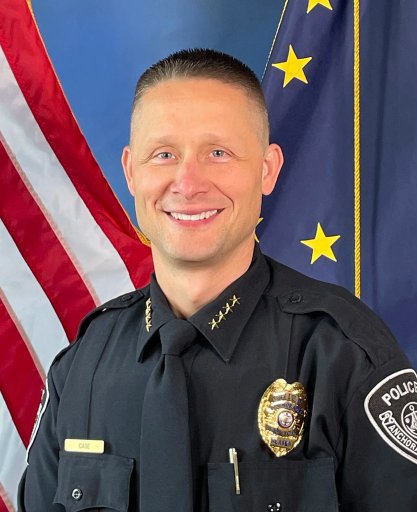
Okay, not seeing any right now. Also joined in the room by our police chief will be presenting shortly, members of clerk's office, assembly council, members of the public, attorney, and mayor's office. So with that, I will, I think, just kick it over to Chief Case. And I'll note also we do have a presentation, I believe it's online. It's slightly updated from the one that was at the committee, so you may want to redownload it if you haven't already.
Thanks. Go ahead. Before I start, Madam Chair, I'm going to kind of leave it up to you just a little bit. I know there's a lot of questions and I know some of the report has been absorbed now, and certainly the PowerPoint's been out for a little while. Would you prefer that I go through this PowerPoint or just start addressing the questions?
Because I feel like we're going to have a lot of them and I don't want to take up time necessarily going through slides if we have 45 to 50 minutes of questions. Good question. I think— and we do have an hour today and some other things after this, so I think maybe we move through and then I'll just ask members discretion a little bit. Is it something specific to that slide before we move on, or is it a more general kind of question or comment? And of course, folks on the phone, please feel free to text me or flag me down in the room.
Okay, uh, so although this, um, update is, is on the 21CP Solution, uh, independent review of the, the use of force policies and training for the Anchorage Police Department, I think it's important to back up a little bit and and look at it with just a little bit of a wider lens. We started working on things that are involved in this particular document 2.5 years ago. And so although there are a lot of policy recommendations that are in here, that's one of the reasons why a lot of the recommendations were implemented when we started receiving the drafts, is some of them were being worked on and implemented prior to 21CP getting involved. And then obviously when they were involved and we were working with them throughout the course of approximately a year, we were adding those recommendations into our policy project that we already had going. And then it's also important to note that, you know, the policy and training recommendations, they're one piece of a use of force project.
They're usually the easiest piece to look at and measure and determine whether or not they've been implemented. But when it comes to use of force, there's just a lot of things outside of the scope of just a policy recommendation, as well as how we do training that impacts whether or not police use of force can be impacted out in the public. So I'll kind of touch on those a little bit as we go, but just keep in mind this is a, this is a pretty narrow focus on a, on a much larger picture.
So to start with, I'll take you back to an update that I gave in June, June 11th, 2025.
If you recall, we had that 15-year OAS study that we started, uh, in the latter parts that was, it was done at the end of 2024. At that point in time, it was an update on what recommendations that we had made within to ourselves and what kind of where we were at with those particular recommendations. And I, and I, I bring these up just so that you can see there's some consistency with what we're doing prior to 21CP as well as some of the recommendations that 21CP came up with. In their report as well. That 15-year OAS study that we did that was completed in at the end of 2024, all of those 13 recommendations have been implemented and implemented prior to the report from 21CP.
And then we also had the Chris Darcy report again in 2025 when I, when I presented this information to this, to the Public Health and Safety Committee meeting. We had 11 recommendations. They weren't all completed as of that particular time. But they are all completed now and were prior to 21CP conducting their report. And you can see even from the first bullet point there after the recommendations, that's a theme that we also saw on the 21CP report was enhanced training for sergeants and lieutenants and things that they can learn and glean in training that will help them better put officers in positions to potentially reduce use of force.
So these are recommendations that we've been working on through several different sources throughout the course of the last, last 2 years. Uh, we also gave an update, or I gave an update on February 4th, 2026, and, and we talked about all of the, uh, particular projects that we had been working on. Uh, we also provided, um, this is a current slide here of the recommendations. Of all the current updates that we had, we're, we're at approximately 230 recommendations in the last 2 and a half years. Uh, and, and we've updated or accomplished, implemented, if you will, 198 of those.
And it's also important to talk about real quick, and this is my last slide before we get into the actual 21CP report, is where we're at with our policy project. Section 3 up there on the board, those are our use of force policies. Those are the policies that typically are going to be impacted by the recommendations from 21CP. Those policies went into effect, all signed after training, on July 31st. Of this year, so shortly after we got the full copy back from 21CP.
So that entire manual there of 10 different sections, you know, we're in the vicinity of about 1,300 pages worth of policy. So a lot of training, a lot of changes within policy. Some of them are very minor changes, some of them are wholesale changes. So just to kind of keep you updated on the volume of what's happening. Within APD.
So now moving to the 21CP report. And just real briefly, I'll just pause to check if there's any questions on that background information. We did say we'll kind of hold broad questions till the end. Okay, not seeing any. And then I'll just note we were joined in person at 10:38 by members Scout and Park, and then 10:39 Ms. Silvers transferred from phone to in person.
So okay, please proceed. Uh, so just as a reminder, uh, and this, this slide's more for your information to kind of remind where we came from, but essentially we're looking at data from January 2021 to June 2025, uh, is the data set that 2021 CP was looking at, as well as, uh, training and internal affairs investigation, use of force investigations during that period of time, as well as what, what this, uh, report came from. Uh, and I mentioned at the beginning that use of force kind of starts long before the policies, We have kind of cross-referenced very different things within not only what I would call our policing philosophy, but also integrated that into our use of force policies. One of which is that, and you've heard me say this, and I've put on many slides in presenting that our vision at the Anchorage Police Department is to create an environment where everybody matters. And we embed that into our policy statements when it comes to use of force so that, you You know, the overall vision that we have within the police department is also embedded in the use of force policies.
That way the policies aren't standalone, that the philosophy overall of how we interact with the public is also how we continue to interact with the public when force is justified or necessary to be used while carrying out our duties.
We really broke this down. The recommendations down into 52 different recommendations for us as we kind of pieced it apart. 48 Of them have been fully addressed in policy, 3 of them are underway, and then 1 is a staffing question, which is to add a third internal affairs investigator into IA where they focus primarily just on use of force investigations, something we fully intend on doing. There's a high value in that. It's just we got to create some more sergeant positions within the department before we can, we can do that.
These are the 6 primary policies that were impacted by the recommendations from 21CP. A couple of these policies are brand new based on the recommendations from 21CP, as in a lot of the information in these policies that were updated were updated as part of the statewide policy project. That was taking place. So kind of, we have two things happening at the same time: policy recommendations from 21CP and policy recommendations from the statewide policy manual project that's happening.
So some of the changes that we made, uh, within, uh, the policy is this idea of imminent threat. And, and you can stop me as I'm talking because if I get too far down in the weeds and you, you don't care about that much detail, I, I'll certainly kind of go back up and raise it to a higher level. But Basically, their policy had immediate threat and an imminent threat. And so just from a philosophical standpoint, when you have two versions of a threat, whether one's imminent or immediate, you may be able to just understand by the words alone, a threat is a threat. Not sure we need to call it an immediate or an imminent.
We're talking about fractions of a second between those two. So we eliminated it down to an imminent threat is what we use in policy currently. Uh, and when we talk about an imminent threat, we really are looking at 3 different pieces to what makes up an imminent threat: ability, opportunity, and jeopardy. And one of the places that that comes from is when you read in the report, some of the interviews that 21CPD conducted with some officers was the threat level that they interpreted based on somebody having access to or having a weapon on their person. And the weapon in and of itself alone is not a threat that we're going to take necessarily, going to use force against that person.
We have people all over Anchorage that we have contact with that have guns and knives on their person, and there's no force that's ever used on them. And so, so when we, when we decided on just the imminent threat definition, we broke it up into those 3 different categories to be able to explain to officers, first of all, do they have the ability to use that a gun or knife or object that's sitting within close proximity to them. They have an opportunity, and really it comes down to jeopardy. What we mean by that is, is anyone in jeopardy by what their physical actions, the words that they're saying, the environment that they're in? Is there some jeopardy that we can articulate based on all the facts and circumstances?
We like to refer to those as the fatality of the circumstances that the officer sees. So, you know, just a movement alone may not justify, well, that movement, you know, towards a weapon now allows us to use force. It's not necessarily true. It's reading all the actions that are happening at the time, the words that are being said, the information that the officers have going into that call. So that's kind of how we changed that definition.
There's this idea of proportional force. For us, really, that's— we explain that to officers is that our force has to be in direct relation to the level of resistance that we're seeing. Just using the word proportional alone makes it sound like if somebody punches us, that our only response is in the vicinity of punching them back. That's a little bit— it's a little bit more complicated. If you have a 250-pound person that punches a 105-pound officer, that's not necessarily gonna be directly proportional because that is an unfair fight.
But it's got to be in relation to that level of force that's being used. That means you can't have someone, you know, punch or swing at an officer and the officer use deadly force. That's not in direct relation. That is going outside of the relationship of the resistance that's being displayed for that officer. De-escalation, we actually changed the policy de-escalation twice now, once prior to these recommendations where we added about a page to the policy that really got specific on de-escalation.
De-escalation change in the policy, again, prior to this, which we added some additional language to de-escalation based on Tony Longo's recommendations, but the already expanded language that we had put in the policy about de-escalation is really one of the most significant things that you're going to see us sustain in an administrative investigation when there's use of force. And so that is that, you know, use of force could be legally justified But there's a whole list of steps, if reasonable, that we expect the officers to go through to try to minimize the use of force. That was new to our policies about 3 years ago is when we added those elements to our policies. And then, and then obviously at the end of July, we updated that to make it a little bit more, kind of strengthen the language a little bit on top of what we'd already done 3 years prior. We created a new policy, 1.10, duty to intervene and duty to report.
So there's a whole policy on, on that. And then we tighten up some languages— language on certain things like chemical agents, electronic control weapons against restrained people. Now, we didn't, we didn't authorize our officers to, to control device or tase somebody that was restrained. But, uh, but we added just some technical language to tighten that up a little bit. Uh, so there are also a lot of those changes within the recommendations that, again, the policy and the spirit of the policy and the way we use the policy didn't allow us to do that anyway, but just making the language clear.
Any questions after that slide? Uh, yeah, I've got a few folks in the queue. Uh, first Miss Silvers, then Mr. Bowen, then Mr. Perez. With you, that's a Miss Silvers. Go ahead.
Okay, Mr. Bond. Thank you, Chair. Thanks, Chief. On the—.
Actually, if we go back to the previous— wait, was this the one? Nope, sorry. Yeah, so on the— I'm just thinking about how this coincides with our budget process that we're sort of starting right now on the de-escalation training piece. And as you guys are sort of working, it sounds like you have some policy changes in progress. Should we expect to see a budget request on for de-escalation training?
And then I might be jumping ahead here, but when I attended the presentation at the Fairview Rec Center, I think there was a recommendation for some type of strategic plan as sort of the follow-up on this. And so I'm thinking about, you know, is that something that we could use alcohol tax funds for? Yeah, so my question is, what are we thinking about in terms of the budget process that's upcoming? Yeah, through the Chairman Roland, uh, no. So in our budget for the last couple of years, we've had $500,000 specifically for training.
And, uh, so we, we have the ability to be pretty flexible with that money. We've done two different de-escalation courses in the last two years using those funds. Those funds can be used not only to bring an instructor up but also to backfill to make sure that we get enough people to participate in training, uh, with staffing shortages. So we you know, call people on overtime. So we use that $500,000 with flexibility to address some of this training.
Um, we already have, uh, 2 trainings scheduled for 2027 that are going to fall within the categories of some of the recommendations that we have here. Uh, and again, we've got— as long as that $500,000 stays in the budget as it's been the last several years, we'll use that funding. Okay. And then on that strategic plan piece, did you have any thoughts there? Yeah, I think that was, uh, if my memory is correct, I think that was kind of linked to having 21 CP come back and look at, you know, some of the implementation process and kind of update to that.
I think the recommendation that they gave, if again my memory is correct, is, is 18 months is where they kind of recommended, so it'd fall into the following year. Um, I, I mean, I will just forecast and say in 2028, given what we know about staffing levels and things of that nature, uh, towards the end of next year we may be talking about needing a little money for that, but hard to say at this point. Okay, great. Thank you. Thank you, John.
Okay, next I have Mr. Perez Verde, then Mr. Handelman. Yeah, just a, a quick, um, clarification on the duty to intervene. Is that referring to officers intervening, intervening with other officers? Is that what that was referring to, or is it broader than that? No, that's, that's referring to the officer's duty to intervene when you have another officer that if they see something that's illegal, a violation of policy, particularly as it relates to use of force, is what it really focuses on mostly.
This is a kind of a— most agencies didn't have a duty to intervene following the 2020 and 2021 legislation and crowd control and, you know, issues that appeared. And one of the reasons why departments didn't have those duties to intervene is most states had a statutory requirement that an officer can't like watch another officer commit a crime in front of them. We also have some statutory language here in Alaska that has some requirements for officers to kind of report on criminal crime level. However, it— they're still gained a lot of momentum, as you probably remember, throughout the years and then throughout the country, that even with those state statutes in play, the desire from many communities and from many legislative bodies was to have an actual duty to intervene policy. So that's where that policy comes from.
Okay, thank you. Okay, next, Mr. Handlin. Yeah, my question is kind of on a similar vein there with, uh, so the excessive force, an officer who sees excessive force has a duty to stop it. I guess, I mean, I get the reported thing, but I guess, I guess, how do you envision, I guess, the stop it portion? I'm a little, a little bit more involved in that.
Yeah, great question. So we have states that have a requirement to have a policy, and then we actually have states that have criminalized this since 2020. And so you're, the concern I hear you saying, it is kind of multi-tiered. First of all, the officer has to be able to observe that there is some sort of excessive force, and I'll submit to you that that can be pretty challenging at times when I'm engaged in somebody here and we have an officer that's right here, and knowing whether or not their force is reasonable or not when I'm— when my attention is divided over here. So we understand that piece alone can make it challenging, but when an officer sees some conduct that he or she believes, you know, punching somebody in the head when they believe that there's no right to do so.
What our expectation is, is they're going to step in and intervene with that interaction. And that can be something as simple as, "Hey, partner, step back. Let me handle this." You know, just to create that separation, that distance at the time. And then there's a whole administrative process that happens if an officer was to step in and do that. This is not intended when we train to have one officer tackle another officer in uniform.
That, that, That's a little bit of a challenging environment, but, you know, the officer having the ability and the expectation that in some way, shape, or form, if you're watching an illegal act, that you're going to step in and say, "Hey, let me take care of the rest of this call. Let me help you out here, Officer Partner," so that the, that act is not continued. In some cases, it happens after the fact. And then follow up on that. So, and then also with regardless of rank, I mean, is Do you guys have, I guess, internal policies and stuff so that, I mean, if an officer of a lower rank is having to intervene in one of those situations that they are not being even further down the line, there are not repercussions for them for their career?
That's correct. Yep. That is also in policy. Yep. Okay.
Any other questions? Ms. Park. Yes, Chief, do you have whistleblower protections in place if that kind of situation?
Happens. Oh, yes. Okay. Okay. Any other questions?
Okay. I think we can move on to the next slide. Okay. We have a couple different review levels when we have a use of force incident. So the first one there that we've added to, and this is a new policy that we created, is when we have a level 3, or that's a serious use of force.
Think of a deadly force incident. We consider that a level 4 incident, or level 3 incident rather. Uh, we now have a use of force review board, uh, and policy that accompanies for those investigations. So if you think about— if an officer uses deadly force, there's a criminal investigation that takes place. So we have criminal homicide detectives that conduct the investigation, the Office of Special Prosecution that reviews that investigation, determines whether or not there are criminal, uh, charges to be filed.
Then there's an administrative investigation that takes place, uh, that's done through Internal Affairs that encompasses everything the criminal investigation conducted plus all the policy and the training and the tactics on top of that. So it's a much, much, much wider, um, investigation. The criminal investigation, our officers actually are not obligated to participate in because they have the ability when they're criminally investigated to opt not to participate, like, like any other member of this community. Um, the administrative investigation, they don't have that ability. They have to participate in that investigation.
They have to answer all the questions. Um, and refusing to do some of those grounds for for termination. So that administrative investigation takes place. We added the third layer for our Level 3, which means once all of that is done, then all that information is taken from both of the investigations, regardless of what the discipline is on the case. We get together the investigating body, we get together the, the training staff, we get together command staff members, and members of the division that the officer came from where force was used.
And we go through these investigations with a very, very fine-toothed comb, and we determine everything from anything the officer could have done better. So even if the investigation, both criminal and administratively, come back where it's not a crime that was committed and there were— and there was no policy violations, this committee still gets together and go, but, but could we have prevented this? Is there better equipment that we could have used that would have helped this case? What if the officer would've used that cover over there instead of that cover over there? So the fine details of this, these, these cases are looked at.
And, and, and this board also has the ability to even look at the administrative investigation, say, I think you missed something and this actually should have been a sustained or a not sustained or an unfounded investigation. And then those recommendations are immediately incorporated into in-service training and academy training so that, you know, any of those lessons learned are immediately implemented throughout the department. For our lower level of forces, those mid-level uses of force, those are also reviewed. They have a similar use of force review board process that they go through that are— that's now written down in policy. So those two, those two items have been added.
There's some body-worn camera, you know, gaps that, that were found. We obviously— the policy requires our officers to turn on their body-worn camera when they have contact with the public and leave it on for the duration. You know, we added some, again, clarifying cleanup language that we make sure that the policy says you also have to document if and when and why you turned off the camera. Um, you know, those are the types of things we believe were implied in the previous policy, but certainly took the recommendation to explicitly write those, those things, um, in the policy. And then there's also some recommendations in a couple different places by 21CPA about officer after critical incidents, not just officer-involved shootings or officer use of deadly force, but broader critical incidents that take place.
And so those are also in process. I don't remember the timeframe, but 3 or 4 months ago, I gave a presentation at the Public Health and Safety Committee meeting about what some of those recommendations were and what we're doing to implement those in one of the presentations I recently gave. Any questions on that? Yeah, a couple folks in the queue. First, I have myself in the queue, then Mr. Perez Verdia.
My question is, can you briefly describe the Force Review Board, like who serves on it? And I don't mean individual names, but I mean like, you know, general types of positions. And is it all within internal to APD? Can you just kind of describe what that board looks like? Yeah, so the board is going to have a command staff member, so you're going to have a a captain on the board.
The board is gonna have the investigating sergeant from Internal Affairs that did the administrative investigation. They're pretty critical in this because, uh, they have all the contents of the criminal investigation as well as the administrative investigation. Uh, we're gonna have members of the, uh, training cadre, uh, in topics that are relevant to the use of force. So if there was, you know, uh, electronic control device that was used in the incident will have an instructor in that particular category. Obviously, we'll have a firearms and tactics instructor that will be involved in the board.
And the purpose of that is when you have the administrative side on the board participating and the training side, you find out really quickly if the intent of the policy is this, and then your instructors explain what they, what they teach in the academy or in-service training. And it's not meeting what the intent of the policy is, you figure that out pretty quick in these boards when an instructor explains that something may be appropriate and the member of the command staff that knows what the intent of the policy is just like, that's, that's not what the intent of the policy is. And, um, that, that creates a pretty immediate, uh, feedback loop. And then we have, um, the commander of the individual officer, the each force that will also be on the board. So that's the makeup.
Thank you. Next I have Mr. Perez-Fordillo, then Mr. Martinez. Thanks, just a couple questions. Miss Brawley asked my question just a little bit more. So this isn't a standing board, this is a board that's established each time there's a need for it, or is there a standing board that it's the same group each time?
So the way it's going to work is that we will have a standing day every month that the board will, will operate. And that board will hear all of the qualifying cases from the previous month. Now, the membership of that board may change. So think of an entire day, because it's going to be an entire day where the board's going to run, and the members of that board will come on and off that board throughout the day depending upon the incident. Okay, that, that's helpful.
And then, um, just can you define for us an officer-involved shooting? And I, I guess the reason I asked that is when I see this, that that the officer is required to take 7 days off and see a mental health per person. I'm trying to figure out who. Is it the officer if they discharged a weapon? Is anybody that was involved in that particular case?
Is it somebody— is it someone else who discharged a weapon they were involved in? So maybe you can define what an officer-involved shooting is, and then who is the person that's required to take this 7 days in that situation? So the officer that fires their weapon, right, that officer is taking 7 days. An officer that fires their weapon and strikes an individual with the round, uh, that officer, um, well, both the officers have— those officers that fire the rounds, whether they strike an individual or not, get the 7 days and their return to work, uh, mental health assessment. Okay, so an officer involved shooting in all cases is an officer that discharged a weapon?
Sure. It's not, it's not an officer that was involved in someone else shooting? I guess that's what I'm saying. So, so that is correct. So I just want to make sure I'm clarifying that.
But other officers that were involved, that were involved in that, that did not discharge a weapon are not, are not, are not considered the, the same? It's only the officer that actually discharged? That is correct. And so by policy The involved officers are— get those 7 days off. I will tell you that we're pretty open to extend that.
So we have officers that maybe witnessed the use of force. They aren't automatically— they don't automatically go into a return to work with a BRL professional. We certainly have abilities to connect them to those services if they choose. We also allow them to take some time off. So if you have somebody that's, you know, struggling through the incident, you know, they have the ability to take some administrative time off because of that incident.
We also extend that past just officer-involved shooting incidents as well. You know, when an officer goes through a pretty traumatic case, whatever that is, you know, homicide, suicide is one of the kind of examples that come up over and over again where an officer needs a couple of days off. That's a very, very low bar that we make for the employee that are not ready to work because, you know, stuff from an incident. So, okay, that helps. And it also just, I think, clarifies for me that officers that are shot at but did not use their weapon shooting, is that correct?
That's correct. Okay. And I'll add a little bit to that because I think there's a lot of complexities to these. And so when we say an officer has been shot at, You know, there's, there's, you know, I'm sure that in, in our mind, we think about somebody standing right in front of an officer and firing around. There's a lot of cases where it's, it's not quite that simple.
You know, an officer rolls up to a call and all of a sudden rounds, or, you know, kind of go, they can hear 'em in the near vicinity of a call. Like all of these things that when you're an officer in the street, uh, can kind of be interpreted by the officer at the time as maybe being, being shot at. So they're all evaluated on a case-by-case basis. In terms of the welfare of the officer. Okay, thank you.
Okay, next Mr. Martinez, then Ms. Silvers.
Chief, I'm interested in officer care, and I'm wondering about nature of being required to participate if you're an officer in mental health assessments or You described the shooter, the shooting incident, as having a mandatory 7 days, but I'm wondering about the relationship of the volunteer nature of receiving those services versus kind of being compelled, similarly to a criminal investigation. They, police officers, do not have to participate, but administratively they do. Are they compelled to participate in mental health assessments?
Uh, Member Martinez, so not to use the word complicated too many times today, but so the ADA really governs how that process works. I can say the easy answer is that our employees voluntarily do this process. Um, they they actually want to go through this process. So that's a really easy answer and makes it super easy for me. However, if we have an employee that, that, that does not want to participate, there's really kind of two things that we have going for us.
Number one, contractually in cooperation with the bargaining unit, we all understand that a checkup, that's not a fitness for duty, and that's the big difference here. These aren't— this isn't a fitness for duty that the officer goes to. In other words, the officer's job isn't at jeopardy. And so that's a slight variation as well. So we all understand that getting in front of a doc to do a quick check to make sure they're sleeping okay, the family's okay, you know, the doc goes through a number of kind of questions and checks to make sure that officer is good to go back to work with no disciplinary, no job implications whatsoever.
And that piece we can do. As soon as you start attaching some negative consequences to the job, then it starts falling under the ADA, which requires that we have to be able to at least articulate that we have some level of suspicion that the, the call for service, or in this case, the use of deadly force, has impacted the employee's, you know, job performance based on things that we're seeing, hearing from the employee. So we put a lot of different kind of safeguards in place. It's not just this one doc that the officer can go to, to kind of get that checkup to go back to work, but we also have peer support that's built within the department. We also now have an in-house clinician that's at the department that serves not only our employees but the employees' families.
So there's a lot of, you know, real, you know, bumpers that we have in the road to make sure that we're staying within the guidelines of the ADA, we're staying within the guidelines of the policy, and we're allowing our employees that space to come back. And we're also not putting the employee in a position where they feel like they have absolutely no choice. We're forcing them to do something that they may not want to do. It's a, it's a very, I will tell you, it's a very careful road. And it's the reason why we have so many different pieces with the in-house clinician, the peer support, the contract doc, the outside referrals that we have available.
It's why we have all those pieces and puzzles so that we can make sure that we are, we're addressing the needs of the officer, we're addressing the needs of the community, and we're not going to get ourselves in trouble where we're forcing our officer to do something that may be in violation of the ADA.
And just to follow up, I just, for the clarification, you described a different process for health assessments, the checkup, or needs kind of that support versus fitness to serve, fitness to perform duty. Those are different standards and different pathways. Is that accurate? That is correct.
Thank you, Chief.
Okay, next, Miss Silvers.
Thanks. Um, a lot of people in my district are concerned about crime, um, and they're concerned about staffing levels and, um, patrol, making sure we have enough officers, um, to address the crime. Uh, and I actually had a question on this from a constituent that it's relevant to pass on now, I think, and that is, if you're now requiring the 7 days off, how does that— how is that going to affect staffing levels?
So prior to this policy change, it was 4 days, and so it was 4 calendar days. So that meant that if you were on your Friday and you had to use deadly force, it would be the rest of your Friday off and your 3 days off. And, you know, became— we're counting days and, you know, some people would get 6 or 7 days off depending upon what day of the week they're working on. And to make it simple and consistent, it was a 1 solid week is what we changed it to. So we always did have the 4 days off.
Um, so the 7 days is not a whole lot of difference because in some cases that extra 3 days are just the 3 days off anyway. Uh, but specifically to answer your question is it does impact staffing. Uh, it's not just the officers that are involved in the use of force. As I mentioned, officers that witness the use of force also, uh, were very open to allowing them to have days off. And in some cases, we'll, we'll have an officer-involved shooting where we have 2 or 3 witness officers that I keep out of work for 3, 4, or 5 days.
Uh, we also have officers that, uh, all end up keeping out of work for a couple months post-officer-involved shooting. I mean, you know, part of my job is to make sure that they're ready and available to go back and, and serve the public appropriately and to be able to make all the decisions that they have. If you back up 20 years ago, our officers were back in the field 4 days after an officer-involved shooting, 100% of the time. It was never a day longer for any reason whatsoever. And now that's not the case.
It's not uncommon that an officer that's involved in an officer-involved shooting is out of work for 1 to 2 months is very, very common right now. So it's not just the 7 days. It goes much, much broader than that. And it does impact staffing. It does cost overtime because we backfill those positions.
And, you know, unfortunately, in a situation that we're in right now where we've seen higher rates of officer use of deadly force, it's— that's compounding, you know, that we're having officers, you know, a high number of officers throughout Patrol Division, for example, well over 150 that they've either been directly involved in an officer-involved shooting, they've witnessed an officer-involved shooting, or they've showed up right after an officer-involved shooting and provided medical care to, to anyone that was involved in that particular incident. And so those are cumulative stress and compounding stress that takes place. And we're starting to see more and more recovery time, behavioral health recovery time that needs to take place, and it does impact staffing.
Okay, thank you. Okay, uh, let me double-check if there's anyone else in the queue. I don't see any, so I think you can continue.
Almost done. Uh, vehicle tactics and pursuits are the next area that we'll go over. Um, so I'm gonna kind of explain our philosophy here. And, and I'll tell you, it's, it's different from, definitely from the two evaluators that were here. And, and, and, and that's okay.
You know, we don't have to be in 100% agreement with how they do things outside of, of Alaska. Our pursuit policy is very restrictive here. If you go to California, you could pursue people for a lot more things than what we allow our officers to pursue here. That policy decision is based on the fact, uh, that We don't want in this community— and I, I, I believe it is a community choice that we've made over the last, you know, decades here— we don't want one of our police officers or somebody that we are pursuing to crash into an innocent family and kill them. Um, and so if we set the pursuit standard higher, that means we reduce that risk to the public significantly.
And the downside of that is, well, now you're letting more people go. We don't like that. So how we make up that, that kind of ratio of people that are going to quote unquote get away is we increase the use of our vehicle tactics. So therefore, we, we use our vehicle tactics to prevent pursuits before they start. So blocking and pinning are two of our tactics that we use that were also addressed in the 21CP report.
And what that means is that we put our officers at a higher risk to prevent a pursuit from happening than putting that risk on the public. Uh, some of the recommendations from 21CP is that you reduce the use of vehicle tactics because we are placing our officers at higher risk. Uh, and that is just not something that I believe that the public wants. And quite frankly, the, the philosophy of the department and the men and women that do this job don't want that either. They would prefer to take assume that level of risk to do vehicle tactics.
So for example, blocking, pinning— those two maneuvers— the recommendation in the 21CP report was that only specialized units do these particular tactics, and that patrol division doesn't do these tactics. Uh, so as far as I was willing to compromise on that was we're going to continue to do those on patrol to continue to prevent those pursuits, to continue to take folks in custody that we need to take into custody. Uh, but, uh, if there's a known gun that was used in a crime in that car, we're not going to use those tactics. We're going to reduce that risk to the officers. But outside of that, we're going to continue to use these particular tactics.
The second, uh, recommendation— that's the third bullet point up there— is the PIT maneuver at 35 miles an hour. Now, PIT maneuver at 35 miles an hour becomes a little bit challenging, um, currently with the, with the safety features that are on our vehicle. For those of you I'm sure all of us here that have had our car start to do a rear or front skid in the current type of vehicles that we have, the car is going to correct itself with you doing very little work versus, you know, 20 years ago when the PIT maneuver really started to become popular and those safety features in the vehicle didn't exist. So 35 miles an hour can make it a little bit challenging. I mean, I have several members of our EVAC cadre that at 35 miles an hour you can't you can't pit them.
They will drive out of the pit all day long. The other thing that we have to consider is we have slick icy condition roads as well, and so, uh, those, those afford us a little bit different opportunity to use, um, the pit maneuver at 45 miles an hour. We don't, we don't have to worry about, uh, you know, vehicle, uh, having any sort of, um, a higher risk of rolling, for example, on, you know, real dry pristine pavement because we have non-dry pristine pavement a lot of times throughout the year here. So we maintain that level at 45 miles an hour. We also did a pretty good review of not only civil litigation but other policies, particularly in the Ninth Circuit, and we felt legally through the municipal legal team that 45 miles an hour did not incur any additional liability on the municipality by having it 45 instead of 35 miles an hour.
Um, and then the final bullet point I'll go over in this particular slide is we have added the technology to our pursuit and vehicle tactics policy, even though none of the technology that's mentioned in the policy is even in use yet. But we wanted to make sure that our policy, uh, was ready to go when we would have some things available. So drones as first responders, for example, It would be something that we've mentioned in our pursuit and vehicle tactics policy, and that is we can put a drone up over the top of a vehicle pursuit. We want that vehicle pursuit, even if it's completely justified, uh, to, to back off and let the drone do its work so that again we reduce the risk of, um, and not only the officers being involved in that pursuit, but we also know that, uh, there are many cases when officers back off away from pursuit that the driver vehicle that we're pursuing also slows down. So by having a drone up overhead, uh, certainly unknown to the driver that's fleeing that there's a drone there, we potentially are going to get better driving behavior from the, the subject.
Then we can figure out where they go and conduct the investigation at the conclusion, or when the individual stops the vehicle, instead of having to use either vehicle tactics or continue the pursuit. So those technologies are already built into, uh, the policies. Uh, question for Mr. Handeland. Yeah, uh, can you kind of explain, I guess, when something becomes a pursuit? I mean, if I'm getting pulled over for a speeding ticket and I just keep going, I guess what point does that become a pursuit?
So there's something in policy that allows, uh, the officers to be able to articulate that it's a failure— we call it a failure to stop by policy. So, you know, you're in a 35-mile-an-hour zone, we turn on our lights, We turn on our siren, you're going 35 miles an hour, there's no erratic driving behaviors. Maybe you stop at a red light, stop at a stop sign, you're following all the rules of the road, and you're not, you're not, but you're not stopping. We allow the officers, even if that's a traffic infraction, to kind of continue to follow that person, provide updates to the supervisor. There's no indication that you're fleeing from the officer.
There's no indication that you're involved in any dangerous activity. You know, we're probably going to get, you know, the next red light or a stop sign, trying to get officers in the area and put another officer vehicle like in the way of your travel. Frequently when that happens, you know, the person driving the car, whatever caused them to not be paying attention, it happens more frequently than you think that an officer with lights and sirens are behind somebody's car and they are just head is someplace else and they are not paying attention. And, you know, we pull an officer up alongside them and, you know, hit the horn and and they look and they, you know, they're like, oh, didn't realize you were there. So there is that little bit of a carve-out, but a pursuit begins when somebody is actively eluding the— which we define in policy— the officer.
So they, they take off at a high rate of speed, they're exceeding the speed limit, they're going through stop signs, red lights. You know, you can— when you're behind someone, believe it or not, you can see a lot of activity that's happening in that car and You know, you see the eyes pop up in the rearview mirror, you see them maybe look over their shoulder and, and look at what's happening. There's indicators that they know that you're there. Anytime that officer can, can articulate that the, the individual knew, uh, that we were behind them and they failed to stop, that's going to turn it into a pursuit. And the requirements, of course, for the officers is they have to have their overhead lights and siren on while they're engaging in that sort of activity.
So by definition, we could be involved in a pursuit that's traveling at 35 miles an hour in a 35-mile-an-hour zone. So then I guess, at what point would you guys, I guess, then disengage from that? Where—. So through our training, what we like to tell our supervisors on the street is immediately they have to start coming up with a plan, uh, and that plan has to be able to be executed in short order. Typically, once we, once we see someone run through a stop sign or particularly a red light.
If that plan to stop that pursuit isn't going to happen very quickly after that red light, uh, we're gonna, we're gonna discontinue that. Um, you know, that one high risk to the public, in this case, in this example, a red light, we don't let it go to the next red light. It just increases the risk of the public too much. So you got a plan in place, you've got officers coming, you know there's a vehicle tactic that you're going to implore on that vehicle. And, you know, they go through a red light, uh, and all the resources are there, we want to make sure that you try to stop that vehicle since everything's set up and in place.
But you got officers that are 2 or 3 minutes out and we're still trying to get resources in place and they run the red light, we're gonna back up. Okay, and maybe this is something we can talk about, uh, offline, because I mean, I guess I have a little bit of concern with this because I mean, if you have—. I mean, a vehicle—. If someone's reporting, hey, there's an aggressive vehicle that's driving, I mean, are you guys not going to then be, I guess, engaging with that? Because you guys potentially are escalating that situation, but I guess members of the public are sitting there saying like, hey, well, this is, I guess, currently going on, we would like this, they are already a threat to the public.
We make a differentia— differentiation in policy about the threat to the public prior to officers engaging in the pursuit and after engaging in the pursuit. So a vehicle that's being called in, you know, driving erratically, dangerous, clearly a threat to the public, that, that actually puts it at a higher category in our, in our pursuit policy. We are allowed to pursue those vehicles. It's less so if we engage in a pursuit and then we continue to push their behavior and we increase the aggressiveness of their driving. We want our officers to back down from that.
But if a citizen calls in and says they're, they're all over the road, they're driving 120 miles an hour, they're driving into oncoming traffic, that puts them in a high-risk category that we're going to want our officers to engage in that pursuit. Uh, we're just not going to watch those, those, those aggressive drivers go at 120 miles an hour through a solid red light. Uh, just like we're not going to follow them if they go wrong way on a one-way and continue to push that pursuit. Um, because, uh, the, the risk to the public— we're actually not lowering that risk to the public. Now we're going to try to stop that vehicle.
We're We've got spike strips, we've got other vehicle tactics that we're going to try to use to stop that vehicle. Uh, so we're definitely going to engage, uh, but it is important to say that we are— we're going to put the officers a little bit higher risk to stop that pursuit than we are just let that thing go and go and go. Mhm. And then I guess one final question. So I mean, I guess looking at other jurisdictions that don't have as restrictive of a policy, do you tend to see— I mean, I guess criminals who I guess are aware of the policy here, I guess utilizing that more versus, versus other areas and stuff.
Because I mean, I imagine if like a criminal knows like, hey, the cops are going to continue to follow me, I might as well pull over and get a thing where it's like, hey, if I know if I just accelerate, do an aggressive behavior, they're gonna back off, you would tend to potentially see more of that behavior going forward. Sure, yeah, there are certainly cases of that. And I mean, I I can't tell you how well that study— there's a recent study last year that came out from IACP that did, did show some consistencies with, you know, very high, you know, pursuit policies that are like only for like very high felony crimes, that eludings are higher. We do have a higher rate of eludings, which means we define eluding as somebody that's, that's, that's eluding police, but we don't pursue them and we let those folks go. We do have a high number of that.
But when we were discussing these policies with 21CPD, and I said, in the last 25 years, we have not had a pursuit where we've significantly injured or killed someone during a pursuit, and, and, and their response is, that's, that's pretty much unheard of. So it's a, it's a balancing act of, of protecting the public from the pursuit and protecting the public from allowing someone who committed a crime to go away. Uh, I mean, their recommendation was to, to, to kind of lower that threshold for a pursuit and also lower the threshold for vehicle tactics. And, um, you know, that's, that's just, you know, our take is to, to keep our vehicle tactics and stop the pursuits before they start. Okay, thank you, man.
Okay, uh, next I have Miss Scout, and then I'll note, um, we have, uh, we could probably go a couple extra minutes, but we, uh, we're Right now we only have 5 minutes left. I know there's 2 slides. It looks like one of them is also on vehicles, but Ms. Scout and then Mr. Bullen.
Yeah, thank you. I guess I have just maybe a bigger picture, zoomed out question. Looking at this data and the internal APD policies to me feels, especially the policy updates, it feels optimistic and it also feels like very clear that you're experiencing the symptoms of larger community issues. And really what I'm curious about in the 21CP report, and just like broadly as we look at, as we head into this budgeting cycle, as we look at trying to make officers' jobs easier, is what upstream changes are we seeing in terms of housing, childcare, affordability, like food access that are impacting more violent crimes happening down the stream that you all are having to respond to. So I'm curious if any of the data that we collected here can also be used to inform the upstream policy changes and projects that we can look at, especially in the upcoming budget cycle, and if you all see patterns of you know, people who commit crimes that it's obvious to you as the person interacting with them, like, darn, if there had been an intervention months, years ago, we wouldn't be here.
So bigger picture, obviously, but I think that's what I'm thinking about with this is just you're on the receiving end. How can we help you further up the line? Okay. So none of the data that we collected here in this study would answer those questions. Now, if you recall that over the last year and a half, one of the things we put a lot of emphasis on is trying to collect more and better data.
And some of that more and better data really starts diving down to some of the things that you're talking about. So we're going to see, you know, in, you know, the years to come, kind of data that's going to show more of the things that you're kind of looking at. I think Not to bring up a commercial, but you may have heard a recent commercial about child abuse that's out on radio, and it's a kid that's basically narrating this. And the kid basically says, if parents wouldn't essentially beat their kids, then we could cut down on child abuse. And then the kid goes through this whole thing.
It's like, well, that's not exactly all it's about. It's about all the things that you said. It's about access to healthcare. It's about access to jobs. It's about school.
And so you're saying the same thing. A lot of the things that are in this report, and, you know, I know that one of the questions that is in the forefront of many of you that we're not going to get to touch on here today is use of force as it relates to the Alaska Native community. We could talk— I could spend 20 minutes talking about the layers of things that are involved in that one particular data point. And I can also talk about how the police department is actively involved in many of those things outside just the use of force. To try to impact use of force downstream from it.
So the policies in and of themselves are great, and we can accomplish the policies and we can accomplish the training, and it's going to have an impact, but it's not going to have a meaningful impact without a whole host of other things taking place. And you all can have me back at some time and I'll talk about the whole meaningful things outside of just use of force policies that can have an impact not only on use of force But arrest rates, victimization rates, the list goes on.
Okay, next I have Mr. Voland and Mr. Martinez. I'll note we'll go to 11:35. Our next work session starts at 11:45, so I will hold us to that time. Mr. Voland. Thank you.
Actually, this is a nice segue. My memory was jogged earlier that the strategic plan that I was referencing earlier was in reference to that the finding in the report that I believe it was, I wanna say about 45% of instances of use of force involved Native American or Alaska Native demographics. And, you know, that's 7% of the population. And so the strategic plan that they had recommended as a follow along had to do with the cultural competency, some training on that. And I know Member Baldwin-Day was at that presentation as well, and we had kind of a brief sidebar conversation about, okay, maybe that is something that we could fund out of those alcohol tax funds in the public safety bucket.
And I think on your last slide too, again, jumping ahead in the interest of time, it talks about training that reflects Anchorage, Alaska Native cultural awareness and missing and murdered indigenous persons training for every officer required by state law every 2 years. I guess I'm just wondering if we could do a more individualized effort here in Anchorage. If, if assembly members were to bring forward funding for a plan like that, is that something the department would be interested in being involved in?
Always interested in that. I think the only recommendation that I'll send back to you is the— what I found as the most effective training, I think generally speaking, but I'll stay in my lane and say law enforcement here, is training that has meaningful interaction between the culture that we're trying to learn about, members from that culture, and then members from the department. You know, PowerPointing people about a culture turns into a disaster. You know, the connection on how we're the same and how we're different and how we can tell the story together is always gonna get the best response. So we're always open to that type of training, but if I could just put that one disclaimer on it.
Oh, well, absolutely. You know, it's that thing of nothing about us without us, right? But I'm envisioning a process similar to like the behavioral, the task force that we did on complex behavioral health needs, where we had policymakers in the room, both at the state and the muni level, but we also had many community members in the room. The sanctioned camping, or what became the allowed camping task force, was very similar. There was a lot of community members involved, members of the public.
So I see it as something that could be a collaborative effort, but appreciate that. And thank you, Chair. Okay, next, Mr. Martinez.
Thank you, Chair. Just for the sake of clarification, to make sure that What you said, Chief, doesn't walk out of this room looking different or sounding different.
Is it fair to say that APD lets criminals go? On our not pursue policy, or is it better to say we don't let criminals go, we have a higher concern for, we concern ourselves with the balancing act for the public safety and we pursue criminals in other ways than high-speed chases. I just wanna make sure that what you said earlier doesn't get translated into the chief said on the record, we basically let people go because we won't pursue them. Can you make sure that we're clear about that point, Chief? Thank you.
I would say that's accurate, Member Martinez, and I'll kind of add to it a little bit. Uh, yes, if somebody commits a crime and we end up discontinuing the pursuit, uh, that isn't the end of the case. Uh, I just read just recently, uh, a, a case where one of our traffic officers spent, um, on a very low-level, very low-level infraction but high-speed eluding where we would allow them to pursue, spent over a year working on tracking that person down and eventually got a misdemeanor criminal conviction on reckless driving for it. So we, we have, we have officers that are going to take all the steps after that pursuit is discontinued to continue to investigate the crime, to continue to find the individual that was driving the car and try to prosecute them not only for the eluding but for the original crime as well.
Thank you, Chief. That's helpful to just make sure the clarity of that message able to be recast into APD looks the other way and they stop a pursuit. That is not what you all do. When you're protecting the public from the dangers of a pursuit, it doesn't mean the criminal gets off, y'all are still doing the work to pursue in other areas. And I think that was clearly mentioned, and I just want to make sure that was the last thing that both folks and potential criminals hear this weekend.
Uh, the pursuit may not pursue, but it doesn't mean you're not going to get followed. Thank you, Chief. Madam Chair, can I ask a follow-up question?
Um, yeah, Mr. Gerker, I will note it's 11:34, so we have 1 minute left. So, um, if you want to ask one of them, I think we have time for that, and I want to give the Chief a minute to wrap up as well. Okay, just super fast. Chief, how many of those follow-up investigations where you discontinue a chase actually results in catching the person?
Uh, off the top of my head, I don't know, but I will, I will find you that answer and let you know.
Okay, thank you.
Okay, um, so I know it's 11:35. I'll just, uh, turn it back to Chief Case if there's any concluding remarks you want to make. I know there's going to continue to be discussion on this topic, so, um, anything else you'd like to share? Yeah, just to close out, I think this is barely even touching the surface. There's, there's a lot of questions that I would expect members to have based on the 100-and-whatever-it-is-page report that, that came out.
And, and so I don't think that we're at the place where I want us to be, where we understand what's in that report and how APD tends to or will kind of address use of force within the community. So I certainly look forward to continued dialogue when it comes to this particular topic.
Okay, well, thanks very much. Um, so we will conclude our work session now. Uh, we—. Our next meeting will be the legislative committee, which will start at, uh, 11:45 in this room. So this, uh, work session is adjourned.
Thanks, everyone.