Anchorage Assembly: Worksession re Block 102 – Tozier Track trade with Anchorage Community Development Authority (ACDA)
Alaska News • • 59 min
Source
Anchorage Assembly: Worksession re Block 102 – Tozier Track trade with Anchorage Community Development Authority (ACDA)
video • Alaska News
Articles from this transcript
Okay everyone, let's go ahead and get this second work session of the day started. Today is Friday, August 28th. We are noticed— well, originally noticed for 1:10 to 2:10 PM. That might go a little bit closer to 2:30 because our great previous housing work session went long. We are here today to talk about the proposed land trade with Block 102, which is a property downtown owned by the municipality— or no, owned by the state, I'm sorry, currently— with the former Tozier Track property in Midtown, which is currently owned by the municipality.
And so we're noticed again, we'll go through introductions, but I want to say also Apologies to members. So this, I think, was not on everybody's calendar. We did get it noticed and it was sent out, and I think it happened to be sent out in this very tiny blip of time where the all-Assembly email address was not working. And so if you look at the invite, everybody's on there, but a number of members, including myself, didn't actually get the invite. So I know Ms.
Scout was affected by that. I know there's a couple other people traveling. So just to say sorry about that, but it is recorded. And then I'll also note that this item is The introduction of this item is on the addendum, so I imagine folks will talk about that. But just to note again for members who are listening to this after the fact, so other opportunities to ask questions there.
So we'll go through member introductions. We'll get into our business. George Martinez. Aaron Valdez. Daniel Bowman.
Anna Brawley. And on the phone we have Member Silvers.
Here, thank you. And Member Gerker? Yes, here. And any other members we're missing?
Okay, and then we're also joined at the table, so we have Assembly Council, Clerk, Legislative Services, a number of folks who will introduce themselves from the administration and different agencies, a person from HFC, and a number of folks in the back. So I'll just ask, as you guys present, we have our slideshow up there, just make sure to note yourself for the record the first time you speak. Thank you.
Turn it to Mr. Dole. Go ahead. Good afternoon. Bob Dole, Director of Community and Economic Development for the Municipality of Anchorage. Thank you for the opportunity to speak to this item that is on the addendum coming up shortly.
With me to my right, I have Tiffany Briggs, who's the Director of Real Estate and the HLB for the Municipality of Anchorage. To her right is Mike Robbins, the Executive Director of Anchorage Community Development Authority. And to his right, skipping a chair, is Danielle Delfino from the Alaska Housing Finance Corporation. We brought a group up here because this is a multi— this is somewhat complex in terms of basically 4 different entities involved, but really it comes down to a simple idea of bringing more housing to Anchorage and addressing 2 lots that are currently not being exercised in the process. I'll be followed by Mike, who will be giving a kind of a presentation overview Would just like to emphasize at the front end now, we are here with an item pending before the body for the swap of these two parcels.
We are not here for changing the comp plan. We are not here for rezoning. We are not here to approve a development agreement or a lot of other things that will be sussed out before you see a single shovel full of dirt moved on these properties. This is the big— this is the first step, though, in terms of posturing these properties for development in a better alignment than they have right now. And with that, I'll be followed by Mr. Robbins.
Thank you, Mr. Dole. Go ahead. Chair, thanks very much for an opportunity to talk to you again. So I do want to reiterate that, as Bob said, we're here to talk about the exchange of two viable parcels in the municipality that we can activate to use to help us with our housing needs. The idea is pretty simple.
We want to move these properties to the agencies that are sort of best suited to help us get them developed for housing. I'm going to keep my presentation pretty brief so that we can get into questions because I guess there's probably no questions at all.
So this is the beginning of the process. This is not the end. The first step for us to be able to finish negotiations, to finish arranging for this, the development agreements, as Bob said, that this is— we need, we need your support to be able to do that. It doesn't make any sense at all for us to move forward in any discussions or talks without having Assembly support for the— for affecting a trade. If this will allow us to complete our due diligence, finalize all our terms and conditions, and move the exchange forward to execution.
So you are in control of allowing us to continue that work. I want to talk next about mission alignment because I think that's important. We're trying to align these public assets for public purpose. Purpose. ACDAs mission, as we talked about a little bit earlier, was to serve as a catalyst, which is why we're here.
It's why we're talking and stirring the, stirring the drink on this one. HFC's mission is to provide Alaskans with access to safe and affordable housing. And HLB, of course, is to benefit future residents, promote orderly development, and to achieve the goals of the comprehensive plan. So this work aligns with our public interest, our public assets, And we're trying to keep each agency sort of in its lane and operating in the direction that was intended. So the Block 102 former Toys R Track presents a two-for-one housing opportunity.
Of course, these are just illustrations of what they look like, but it's an opportunity for us to develop housing in two critical areas, one in Midtown, which is, as we know, has badly needed housing demands, and then downtown, where we have an opportunity to provide some badly needed mixed-use and workforce housing. Tozer Track is located on Tudor next to— I'm not going to spend a lot of time, I guess, describing where they are because you probably all know them really well. It's located downtown, and the idea here is for us to exchange these two properties, and each property won't be developed identically. Because they're different parcels and they're in different places. But the result is that we're gonna— we hope to unlock two housing opportunities in Anchorage, as I said, one in downtown and one in Midtown, where we, we have badly needed demand for housing.
So next, I want to talk a little bit about the process of the exchange. Of course, if you look at the, the current phase we're in, which is getting our We've gotten our— started our appraisals and due diligence process. We're coming to you for the approval to move forward with the trade, with move forward with the process so that we can get all of our i's dotted and t's crossed so that we can actually affect it. When you look at number 3, once you approve it, we'll complete the exchange and transfer the properties. Number 4 would be the public process.
Both Alaska Housing Finance— and I can't speak for them, but you'll be sure we can ask them that question. There'll be a rigorous public process before we decide what's going to get built or who's going to build it or how it's going to work on both parcels. I can certainly speak to Block 102. Tiffany could speak to that. But, you know, one of the things that has been talked about a lot is the missing middle and building the right kind of housing, building what we need.
And I think that's what the public process will inform. Then they'll move into design, RFP, And with the final outcome, of course, of being to deliver the two housing opportunities, one in Midtown and one in downtown. So we've received the approval of the HLBAC Committee. When you look at our milestones, we presented to the CEDC Committee. HLB voted on the 20th.
Of course, we have this work session to try to get the members a chance to ask questions. And then we're going to be talking— there will be an introduction on Tuesday and a public hearing coming up on the 15th. And of course, we hope to receive approval, and then there would be— that would give us the opportunity to finish negotiating and dotting all of our i's and crossing all of our t's to get the actual transaction completed. And we'd hope to execute the trade sometime in October. And I'll just note very briefly, so the timing of this work session, we had scheduled it a couple weeks ago.
And the addendum just published today, so members of the public should have access to it by now. So I just want to put in the record the ordinance number for what Mr. Robbins is referring to is AO-2026-115. It is set to be introduced at our meeting on Tuesday and then will be up for public hearing when we set that in the meeting. So just a note. So as you can see by looking at our timeline, this is the beginning of— we're not finishing anything, we're really starting something here.
It's the beginning of a process of which there'll be multiple involvement by multiple departments, design approvals and permitting and planning and zoning. Everything will require permits and approvals along the way. So when you look at Block 102, one of the big questions that's been asked, of course, is what will— if you recall a couple of years ago, we hired a guy named Roger Brooks to come to town. And Roger said that he was a city expert who who knew, sort of helped us try to figure out how to make Anchorage a more attractive place to live and work and own a business. And one of the things he said when he looked out of his hotel room is, boy, do you have a lot of parking lots in downtown.
And we have a ton of parking lots. And this is an opportunity for us to take a parking lot, an underused piece of property in downtown, and turn it into an asset that will provide housing for hundreds of families. Impacts of Block 102, we did conduct— the LPPG is the Lenny Paciello Parking Garage. The state obviously uses this parking, this lot for parking right now, and there's about 228 spaces. I'm not going to get into great detail here because we're in the process of working with the DOT and with the state of Alaska to make sure that we don't displace any state employees, that all the state employees will have a place to park.
We have literally over 1,000 parking spaces in this area. Available to us to allow for parking. So this won't— nobody's going to be driving around looking for a parking spot. There's all going to be— have a great place to park when they— when this— if you approve this and allow us to move forward. So we did a parking study though of the garage, and worst-case scenario, if the trade is executed, was 209 spaces that they would need.
But that was at peak periods when like if an event or something was going on. And that was just talking about Lenny Paciello. This is not the whole area. We have lots of parking available.
And an ACDA and EasyPark will make sure and will be addressing that with our state partners.
Before we move on, Mr. Bowen, please. Thank you. I think I would actually have the opposite concern. Somebody who is sort of been in a war on downtown parking lots and parking lot requirements in general. I would much rather see us prioritize such a, like, a key site downtown for housing units, maximum housing units.
I think there are plenty of places to park in downtown Anchorage without providing more, whether on-street or off-street. So That's just my personal opinion. Thanks. Through the chair to Member Voland, it's a very good point. One of the— as we move forward in this process with DOT and the folks at the state, there won't be any additional parking assets made available.
We've got the parking assets now to take care of the need. But what we will do is, if you look in the Our Downtown plan, it calls for 200+ units at this site. Which is really what we need, I think, to help revitalize downtown and to revitalize this whole entire area.
So this is just a property comparison. I thought for your, for your edification, it would be great to just see the numbers. You could see the size, you can see the values. Of course, HL— I don't want to speak for HLB, but HLB's code requires that property be exchanged for a like value. So, and the same disposal type of code exists for Alaska Housing Finance Corporation.
So there has to be a like value exchange. You'll notice there's a small deficit, but that's being made up by the work that ACDA is doing. And there won't be any cash exchange, but there may be some in-kind parking assets provided to help get us to the value that we need. So there's a dollar for dollar, like value exchange. So the former Tozier Track is a housing opportunity for Anchorage.
Again, this is just meant to be illustrative to you, but one of the things that— and certainly HSC could speak to it, but speaking from what I know and working on their behalf and helping them— is that they are very focused on public benefit. They're very focused on creating a— taking Tozier Track and turning it into something that is what the neighborhood and the district needs in terms of housing. And in terms of meeting that need, there will be a rigorous public process that they will go through. And before they— you know, there's no— in my conversations with Alaska Housing, they've been very cautious. And when I say cautious, I mean they've been very— so I'm a— as you all know, I'm a kind of a promoter.
And sometimes I'll talk about things in the abstract and say, we could do this or we could do that. And Alaska Housing has been very cautious to make sure that that I understood and that we understand and the public, that this is going to be a process they're going to go through to make sure that they understand what's needed. They're not going to say, hey, this is what we're going to do. They're going to say, hey, this is what we're going to do, but it's based on the public process that they're going to go through.
So likewise, when Block 102 is developed, hopefully that will be a— we assume it will be a joint effort between HLB and ACDA. And that same process will apply. There'll be a very rigorous, rigorous public process. Both the, the Our Downtown plan and the D Street plan calls for this neighborhood to be— or this parcel to be redeveloped into housing, into mixed-use housing with a high amount of density. But again, that will be gone through as well.
So let's talk briefly about public benefits. Obviously, the housing production is a huge one. This will address missing middle. ACDA is focused on the same thing. I loved hearing Sean talk about the $80,000 to $120,000 AMI.
That's our sweet spot when you talk about market rate attainable housing. First-time homebuyers is potential for the Tozier lot. They'll have attainable rental units. It's going to down— revitalize downtown. It's going to meet— help Midtown meet its housing demands.
It's a public agency partnership between the State of Alaska, HLB, and the ACDA, and it will allow two major properties to join the tax base. Neither one of them is on the tax base now, so this will be additional property taxes for the municipality. Of course, it'll create jobs, and as we— these two properties are developed, it will create economic benefit for the surrounding area.
And I think that one of the most important parts about this is a public process will inform what the highest and best use for these two parcels is. There's been no design work done. There's been no— this is what we're— that I know of, at least. And I think that HLB would probably ring that true. Nobody's designed anything yet.
And that's because there's not been a public process of assignment to build. So in closing, I would just like to say that we need you guys to help us get to a yes on this project. Support for Block 102 and the exchange will help us to unlock two important housing opportunities through one coordinated effort, allowing us to conduct a public process, implement the right design for the right housing need, and create inventory in two key areas of the city. It's two properties, two housing opportunities, and one important step forward. And with that, I'll be glad to open it up to any questions.
Okay, thank you. So I have Mr. Martinez in the queue, and then I'll note— well, one real quick though, I'll check, are there other presentations or are we in the kind of general discussion? Okay, so, so after Mr. Martinez, then I'm going to ask also if Miss Briggs could briefly just give an overview of kind of HLB's process to date. So, you know, we'll— and then we can come back to kind of general discussion because I think that would be helpful. —Oh, you're good to wait.
Okay. Yeah, because I think there might be some questions about that. Okay, so then, so we'll come back to Mr. Martinez then. So, so yeah, my kind of general question is if Ms. Briggs could just briefly describe— I know this has been moving through your process, and I know there's this discussion of the land trade, and then there's the kind of community work that you're doing. And so if you can give kind of what— where you are in that process and what the timeline is.
Thanks.
Tiffany Briggs, Real Estate Director, for the record. Yes, so, so far for the HLB process, we currently have a reuse plan going on, and that was done through a Brownfields grant. Stantec is the contractor. They are working on finishing up that product. As part of that, we did have community meetings, there was community outreach, there was discussions with businesses in the area, a lot of the hospitals, to kind of look at what their needs are for their staffing.
And again, talking with the community at a community meeting that we held at the Permit Center. What does the community vision for that? We expect to have the reuse plan the middle of September. They're close to finishing it, but we have not seen the draft yet, so. That should be close.
Okay, thank you. Um, so I'll turn it to Mr. Martinez. Thank you, uh, thank you for the presentation and thank you for being here. There's a couple of background questions.
Um, when did you just describe the reuse plan, for example? Let's just start off with that. When did that begin?
Through the chair, through the chair to Assemblymember Martinez in February. What was the thrust behind that? So we were doing that as part of, again, through the chair, we were doing that as part of our broad plans to what we do with our property in HLV inventory. So that was just kind of a step for us to do, to look and see what the community needs were for that. We looked to see if there was a municipal need, And then if there's not a municipal need, what is the next steps for it?
Were there other properties evaluated similarly at the time?
Um, through the chair, not at that time, no. All right, just, uh, maybe this is a question for Mr. Roberts as well, maybe for, uh, Ms. Briggs, but who put this together? Like, where was the genesis of the, the linking of these two particular parcels? Seems that there are many parcels in the community that could be paired or matched. Why these particular two parcels?
What was the background story of that? I think we'll let Mr. Dole answer that question. Through the chair, the development of Block 102 has long, long been an objective of the Municipality of Anchorage well before the current administration. We're talking about something, um, probably when before you were in the mayor's office on staff, it was a priority to figure out what to do with Block 102. With the current administration at the state level and at the municipality, those discussions have been going on for the last year and trying to find a way to do that.
And in terms of finding a property that would meet the— or finding a means to do an exchange that would fit the needs of both parties, this is the property that was identified. So it was done in terms of this municipality's attempt to find something to be able basically to gain control of Block 102 and at the same time move Tozher Track towards housing. And finding the kind of the meeting of the interest of AHFC, the Alaska Housing Finance Corporation, probably the largest housing entity in the state, with a clear mission on housing and the— and happened to own this parcel and just what we could offer to further their mission, it came about as kind of a means of a transaction. Once it became clear that both administrations were committed to finding a way to get to yes, it was the property that lined up with Block 102.
Thank you.
This might be a question.
Uh, do you all have a— did you all have a predetermined list of potential properties that you would be interested in? And do you have access— is that list available for us to also see? Is that the list that is a master list potentially link things in, or is it— or is this a one-off?
Through the chair, Mr. Martinez, Assemblyman Martinez, as Mr. Dole mentioned, there have been a lot of properties, there have been a lot of discussions going back to the Berkowitz administration, probably before, on this property. There have been a number of properties that have been considered potentially as a swap for Block 102. When we engage in these discussions, most recently the discussions that led to the Tozier property, there were a number of properties that we were looking through. And it was similar to our other efforts in acquiring land that we did through the university last year where we were looking at, it's like, okay, that one wouldn't work. That's a good property, but no, we didn't see a path forward.
So there was an iterative process in working with Mike and Bob's teams to try and identify a property out of assets that the muni had that we thought might be able to work. And the Tozier property was the first one where we thought, okay, this one might actually have parity that's worth continuing the discussion out of the ones that we have evaluated to move forward with a feasible housing proposal. That's a great— thank you, that's very insightful. I would, I would welcome the opportunity to see the other list, especially to, to get a sense of things that might be of interest of interest to you all but wasn't necessarily the priority at this particular time. I think that would be interesting, um, as well.
I think the history is important, um, as well, but I just— just to flag one potential inconsistency, uh, is, um, housing Is the determined outcome— what does the reuse process do?
You describe that like we look at how to reuse a process. Was that framed reusing for housing, or is it more open-ended than that?
Through the chair, I might ask Ryan. So this was HLB Lane Management Officer Yell. This was his specific project for the reuse plan. So if I might ask him to come up and just speak directly to that. Thank you.
Yeah, please come on up.
Yes, so thank you. Ryan Yell, Land Management Officer with Heritage Land Bank. The reuse plan was an opportunity for us to dive in to determine what are the market needs, what are the community priorities for the redevelopment of the Tozier tract because we, the municipality, had acquired that property in 2021 under certain assumptions of redevelopment. But given the time that had passed, we wanted to make sure, are we on the right track with those assumptions and are the municipal needs still the same as when the parcel was acquired? The reuse plan was just a pot of money we could use to pursue that project.
That, that pot of money was not being used for anything else at the time, so advantageous position to put that project forward to make sure that we were able to get the development right, down the right track to fit the immediate needs of the, of the Umatilla area.
Thank you. Continuing, if you all don't mind, there's a slide that describes the approximate valuation and some points to that, the way it's determined, to describe, I guess, some degree of parity or some parallel equity there, a fair trade. I guess that's the way I read that.
But to what extent are those property— we're doing another project And one of the other projects that the administration is working on right now, for example, is looking at wildfire danger, for example, and prevention and work on that.
To what extent do we look at those other variables into determining the effectiveness or the the value equivalency. I'll give you an example. Per, per acre, the value of property downtown is way more expensive than outside of the downtown bowl, but it's also true that property in the downtown core is safer from wildfire interface versus, for example, the Tozier tract property, which sits on one of the wildfire interface urban, urban area interfaces. Um, we remember the fire happening in Anchorage in that particular area off of Tudor. That's a common area.
So it just seems that just in terms of the evaluation of properties, making sure that we're also tracking the relative risks and other things that the city's looking at now that might not necessarily be germane to a particular transaction. But the way we do business has to be important so that we're consistent. So then it raises the other questions about water lines and utilities and infrastructure that we heard the developers raise as well. Um, and so is this track, for example, lined up with infrastructure, or would it be also a part of the development challenge post-swap, considering what we heard earlier?
To the Chair, member Martinez. This property is ideally lined up with infrastructure, with stormwater down one side and utilities at the other, with accessibility. And we have been in conversations with AWU to make sure, you know, we talked to AWU, talk to the other departments prior to getting to this point to make sure that there wasn't going to be an infrastructure challenge on the property so that it could be developed. I hesitate to use the word relative ease, but as we heard our development partners talk about earlier, one of their—. He knocked on wood for the record when you said relative ease— one of their—.
One of those— one of the challenges with infill infrastructure in the city is access to utilities. And this parcel does have ready access to utilities because there's, again, there's water adjoining it, there's power, there's everything is right there. So I'll close with that. I think I've taken enough of y'all's time, but I would just flag that I think that type of information is really helpful to both the kind of the public's digestion of transactions that might be innovative. I mean, you know, this is like Sounds like a good thing happening, sounds like a way forward, bringing different partners to the table, finding the, the finance partners that want to do development and making deals.
I think that's the, that's the right way to do business, um, finding a deal. But I also think that the consistency over time is going to be important. So how we develop a rubric to do these types of deals, how we communicate to the public the infrastructure challenges, because if I tell my colleagues, if this— if you just described, for example, we hadn't looked at that yet, or there may be some of the infrastructure challenges that, for example, exist, we talked about on Raspberry or out on— the answer should also be no from the start. And I would hope that you all know that before you bring it to us, because it looks good when it comes to us, especially through the frame of a promoter, but making sure that, you know, the I's and the T's are crossed and then that there's a consistent playbook because I think the playbook is important. And I go back to that, the 4-point, the 4 pillars of our economic development framework.
You're not a housing developer, you're an economic development partner. And in that framework, I think using that language helps me and helps translate why these things makes sense, and then where the gaps are, because one gap in that area we all know is food, right? So that would essentially be why the former Ted Tudor Elmore development had a mixed-use supermarket concept in there. And so raising those types of things, I think, early on so that people know that you are aware, I think helps from my vantage point communicate that out to the public. But thank you for your answers and giving me a lot of that background insight.
Appreciate it. Mr. Dahl, want to respond? Through the chair, I just wanted to supplement for, since we're in a separate hearing now, a reminder that based upon a suggestion of Member Parks, we did some research and we can't believe we're postured to at least offer a weekend farmer's market in the parking lot of Elmore Road. And also what is exciting about this, we already have the road infrastructure. We talk about the wildland fire and the interface there, As we fill out the water system in this place, we're going to be able to move immediate response fire hydrant apparatus much closer to sources there.
So I see us actually increasing resiliency and avoiding the need for recovery in this area. Very good. Thank you. I appreciate that. And thank you for thinking of it through those lenses.
Okay, next we have Ms. Baldwin-Day.
Thank you, Chair. I would actually like to step back and maybe ask if you would outline for myself and my colleagues why each of these entities is best suited to do the work on each of these parcels, because I don't— it's not immediately clear why this trade needs to happen in order for these parcels to be developed. So I think that bit of background would be really helpful to start.
I could take it. I could start, and if I don't adequately answer— through the chair to Member Baldwin-Day. So I think that when we talk about aligning the properties, I think that an obvious partner when it comes to housing is Alaska Housing.
Housing is in their name. That's what they do. They've developed properties all over the state, and there's few entities that have, other than some of the commercial ones, that have as much experience from all sides of housing as Alaska Housing does. The muni— you know, while they have the experience with housing, I think that the importance of getting Block 102 under the guidance and control of municipality rests solely with HLB because they are the organization that manages land for the city. So they are the stewards of our land, and so their, their job or goal is to, is to utilize land for the future and for the benefit of the city.
And so having a huge parcel of land in the middle of downtown that isn't controlled by the municipality has always been a sore— at least ever since I got to ACDA, people have talked about that's not good. That we should be in control of our land downtown. And so transferring that land into the hands of our land management bank makes an incredible amount of sense. And then partnering— how you see partnering with ACDA for the development along with HLB for the long term makes a lot of sense because we're focused not on building but on making the development happen, putting the partners together and just helping provide the energy to get that done.
Did I leave anything out, Bob? I don't know.
For the chair, I don't want to put words in AHFC's mouth. However, doing jobs or projects with them one employer ago, they are well suited in terms of the resources and adaptability to develop a site like this, thinking of other projects they've done in town of various densities and frankly across the state. I think they can bring a broad array of options and resources as they figure out how to optimally develop this based on what they've done elsewhere. Go ahead, Mr. Zogno.
Sorry, um, through the Chairman's— the, uh, there are two properties and the state owns one, so we could technically develop it ourselves right now. But we wouldn't be able to do anything with Tozier because the Heritage Land Bank owns it right now. This process allows two properties to move forward through the partnership. When we look at the development profiles and what it takes to get construction started on each one of them and the resources to, to get them moving forward, developing a parcel in the middle of downtown, that involves a lot of discussions. It's a very visible property here in the city.
It's been the discussion about renovating downtown. There are different optics and there are different financial challenges to doing a property right in the middle of downtown. That— I'm not saying that the property in Tudor is easier to develop, but it's a different, it's a different profile to approach from a housing start. And it's more similar to work that we've been doing recently with something we've been calling the Lands to Housing Catalyst, where we purchased land from the University of Alaska recently and tried to, for the first time, repurpose land into the hands of developers to get different housing outcomes that didn't involve as much public investment from Alaska Housing. So it's not that there's a preference saying we like this property versus that property.
It's the Tozier property. When we were having the conversations and we saw, okay, it is lined up with infrastructure, it had all the same types of characteristics that the land that we had picked up from the university contained. And we'd seen great success from the response from the development community when we tried to get that land converted into housing. So, I would say that they can both be developed into housing. It's just the Tozier property fit more closely to a recent success that we'd had with one of our newer initiatives.
Yeah, thank you. So, that's helpful context. I think that doesn't really answer my underlying question, which is, why hasn't housing been developed on Block 102 yet by AHFC? I mean, this property has been state-owned for a very long time, and, and if it is a question of financing, then, um, that's a completely valid answer. That also makes me somewhat concerned about our capacity to do a development that is very high profile, potentially more expensive with a very different set of financial tools than AHFC has at its disposal.
So I, I guess I'm, I'm just wondering, why haven't we seen development happen on Block 102, and why do we believe that the municipality is going to have the resources and the tools to do that development in a reasonably timely fashion? And I'll stop there because I have other questions about alleged affordability, but that would be a nice place to start. Thanks. Through the Chair, Assemblywoman Baldwin-Day. I'm not the person with the most gray hair at Alaska Housing, but I'm starting to get up there now.
This conversation has been, been going on for Block 102 for a long time. I believe there's a long history as to how AHFC ended up entitled with Block 102, and there was a potential for maybe future development of state offices. There were a number of competing visions for what was going to happen with that property. And at the same time, a lot of the folks in the Outwood Building have been using that as parking. So there has been a use for the, the state folks with that property.
That was always part of the discussion. There have been several attempts to actually do something with Block 102 in the past that have fallen apart for various reasons. Some of them involved excessive deal terms that I think stopped development proposal from going forward. There were disagreements about finding properties with parity. Some of the previous properties that were discussed lacked infrastructure.
So when Mike mentioned the value disparity, you have $5 million here and $4 million there. Okay, we could find two properties theoretically that are both appraised at $5 million. But if the property doesn't have utilities or roads, We've established parity, but we've also established a new bill that we have to fund. So it's been those sorts of dynamics that have stopped a trade from happening with Block 102 and from Block 102 being developed. But a big part of that has also been the state use to address the parking.
So this represents a first attempt actually working with a person who is uniquely positioned to address the parking challenges for the state workers down there. Thank you. So I think that actually leads me into my next set of questions, and that is really about definitions.
So there's been, I think, there's been some challenges with using language that means one thing to a certain set of people and means something else to a different set of people. And so I really want to understand, because I think what we're doing here is we're setting an expectation for the community about what is going to emerge on these two parcels. And I want to be sure that that expectation is something that we can actually meet. And I'm concerned that in this fiscal environment, we are actually not able to do some of the things that we are saying that we are intending to do in this, in this project. So I think I'm curious about how we are collectively defining workforce housing.
What does that actually mean? What do we mean by attainable housing? And what do we mean by public process? Because those three terms are getting tossed around a whole lot. And I think we need to be very clear with the public about what that means and clear among ourselves what those things mean.
Because if we are, Again, if we're speaking about workforce housing or attainable housing as falling within an affordability threshold, we have no way of guaranteeing that that's going to happen given the funding stacks that are available to us. So I want us to be really careful about setting expectations because this, candidly, this happened with Block 92. We said that it was going to be workforce housing and people heard that it was going to be attainable, that it was going to be something that people who were making 80% AMI could afford. And in reality, Block 102 rents at market rates and, and higher. And so again, setting expectations.
What do we mean by workforce? What do we mean by attainability or attainable? And what do we mean by public process? And let's get very clear on those terms.
If I may start, um, through the Chair, Member Baldenday. So, um, there are interchangeable uses of those terms, uh, industry-wide. Uh, so the— I can't speak exactly to the public process, but I think that this body is very familiar with the public process that HLB goes through. They they were just talking about it, and the public process that ACDA goes through when it involves itself in a project. And so I think that, I mean, whether it's difficult to define step by step, but in general, I think that the body has a fairly, should have a good idea of the kind of public process that's gone through for the projects.
And I could let HSE talk to that on their own. In terms of workforce housing or attainable housing. As I think I mentioned during our last presentation, you know, ACDA is focused on that, that 80 to 120 or 150. It's that sort of middle spot there that we are focused on in terms of when I— when we use the word attainable anyway, when I put the word attainable on my slides, we're not talking about 60% and below, that's affordable. Generally speaking, 60% below is accepted as affordable housing.
And we're not talking about that kind of housing necessarily when I— when we say on the slides, at least we talk about affordable. I think what we talk about is attainable workforce housing, I think is the term that I used in the presentation. And attainable housing tends to be that missing middle in that 60— or excuse me, that 80 to 120, 150%.
AMI, similar to what the body gave us as a requirement on the Fireweed property. That's the requirement that you guys placed when you sold us the Fireweed property.
Yeah, thank you. I think part of what is— I think what we're sort of revealing here is that maybe these terms are interchangeable elsewhere, that I think We need to come up with a common definition for what we mean when we use these words so that we know what we're talking about. And so we can also educate the public about what we're talking about. And so, you know, right now, if you, if, if you, if you crunch the numbers, if you do the math, what is affordable to someone who is making 80% AMI is, is not $2,400 per month in rent. So, um, so I, I think these definitions are really important for us to come to clarity on.
Um, and, and I, I think it's, it's interesting to, um, you know, to think through the implications of what does it mean for someone who is making, you know, at 80% AMI, $76,000 a year to be able to afford some of the construction that we're talking about. I don't know how we build something that meets that threshold without subsidy of some kind. And I, I think what I'm, what I'm, what I'm getting at is, are we in a position where we can actually guarantee that that is going to be an outcome of either one of those developments? And if it's not, then let's be honest about that. That, that what we might end up with here is actually mostly market-rate housing.
Because that's what pencils out. Like, I— and I would love to hear if there's been other conversations about how we might structure a funding stack such that these actually are attainable units in both of these places, and with some market rate mixed in, as I understand it. Especially in Block 102. But yeah, I think that these are things that we really need to refine, in my estimation, if we're gonna be able to talk about this well with the public and if we are going to understand the terms that we're all using. So go ahead.
And I'll just briefly note, so we were joined on the phone by Member Scout about 10 minutes ago, and then now Mr. Martinez on the phone switching from in-person. Go ahead, Mr. Del Vino. Thank you. Again, through the chair, I'm Assemblymember Martinez. Gudrun dey.
I appreciate the question in more ways than you know, because this constantly comes up in our conversation on housing. We use terms that when we use them, we're thinking about audits or something in the Code of Federal Regulations or a specific program versus how the public views certain things. A couple of us were involved in a talk last night at Commonwealth North And one of the numbers, uh, that I presented was a survey of the median rents in Anchorage. So for everyone, it's like you take the lowest rent in Anchorage all the way up to the highest rent, you find the midpoint, right? It's $1,450 a month.
That's the median rent. All the units that informed that survey were unrestricted. No income-restricted units were included in that. If you look at the rent that a person can charge under affordable housing programs for a 2-bedroom unit, it can go up over $1,700 a month. So you can call something affordable in a program and have something potentially, with what we've seen in incomes versus expenses, something technically be more expensive than what a person actually sees in an unrestricted unit.
And why I'm bringing this up is that if we do things with public programs versus private sector capital, In order to operate in that affordable price point, someone needs to do income certifications. There's Build America, Buy America compliance. There are all kinds of things in the federal regulation that will potentially add costs to the development and potentially the operations. There are inspections that the tenants will have to go through that may affect someone's desire to live in the units. So affordability can mean different things to different people.
Objectively a price point is where, where we start the math on what can actually happen. So when we've engaged in, in things like this in the past, usually what we do is we start out with a piece of land and we try and make assessments about the neighborhood and what we think the band of outcomes are that the market can support if it's a rental versus if it's a condo or a single-family home. So we would try and get a sense of where the margins are where a person could build and what those price points are, so we can back into the modeling to provide you better expectations on outcomes. So that's, that's what we would do to try and, try and get a sense of what can be built and what price point that will be provided to Alaskans. What it's called in terms of affordability, it's consistency with the program, the public perception, or a specific market.
That's a bit of a moving target. Workforce housing means different things to all kinds of different people. It could be 100%, 120%, whatever. I could tell you in Anchorage, the income limit or the income growth has been such that under some programs, something can be considered affordable that's well in excess of what the, what the market is. So I appreciate the question about definition because it matters a lot when we're trying to explain to the public what we're doing with public resources.
Versus what's happening out there. Uh, with regards to process, it's another thing that means different things to different people. When we're making property like, uh, this— if we picked up Tozier available, it has to go through an open competition. So there has to be a transparent process that says these are the resources that we're making available, everyone has an equal opportunity to compete for it, there's public availability or awareness of our rating criteria, input, things like that, and everything is completely above board. So it's a contract term as much as a public engagement term for us.
But I thank you for the question. It's really— it's usually relevant to work, and it's the reason why we collect the data that you heard last night. Thank you. I appreciate that, and that's actually very validating to hear. So thank you.
So when you say public process, it is— It's an open competition, it's an open solicitation, essentially, which is somewhat different than what we do as a municipality, what the Heritage Land Bank is required to do, what ACD is required to do. It's a different set of rules. Am I hearing that correctly? Okay, thank you. I think that's all the questions I have for now.
I don't want to hog the floor, so if there are others, please jump in. Okay, um, I have myself next in the queue, and then again, I'm keeping track for folks on the phone. Um, and I'll note we have, um, we could probably go until 2:25, but I know, and I know we started a little bit late, so again, apologies for that, but that's how it goes. We have a lot to talk about. Uh, my questions are, um, I guess just brief and mostly for AHFC.
I guess absent this trade, you know, What is a realistic timeline or possibility of AHFC itself or another state agency doing something with Block 102? And I think I have the same question basically for the Muni folks, but I'll start with Mr. Delfino.
Sorry, having difficulty with the button. Chair Brawley, the answer to that one is a question well above my pay grade. It's a highly visible property. The capital involved to develop it would involve quite a few policy decisions and conversations with people in the state administration. So that would be sort of beyond what I could actually speak to.
Okay. And then on the muni side, whoever would like to answer, whether it's Bob or Tiffany.
No, just thinking like, for example, if this trade didn't happen, I'm not arguing for or against that, but what, you know, what would happen or what would not happen with these properties? Would, would HLB or another entity at the Muni be moving this forward as a development on that, on the Tozier site specifically?
Through the chair, Ryan, you know, we kicked off the reuse plans that we could determine development, realistic development expectations and priorities for Tozier tract. With the intention of once that study was completed, we would then incorporate those priorities, expectations, needs into an RFP so we could develop the Tozier Track. So it would essentially go through a similar process of potential disposal after figuring out what, what folks might want to do with it. Correct. I see some nods.
Thanks. So, and my other— so this is not a question. I just wanted to note because it is a piece of paper we have. And also the addendum timing did not really allow for us to notice the number. So I'm gonna briefly refer to something that is alongside, not directly related, but I wanna explain context, AR 2026-254.
This is a resolution by myself and Ms. Baldwin-Day. It is on the addendum so members can read it. We didn't bring it for discussion 'cause we knew that the main topic was here, but wanting to note, and I think Mr. Robbins referred to, this was the thing he was referring to, The general idea being that, that for discussions like disposal of these properties or other situations, we know there's others coming down the pike. We mentioned ASD in the previous work session. So again, this is not specific to this project, but thinking in general, as we contemplate what to do with these properties, we know that housing is a priority.
And so it really speaks in more detail to kind of— and it doesn't direct certain things, but it does. Really say, you know, we really want to look seriously at multi-unit housing, denser housing, you know, affordable and attainable housing where we can. So, so I just wanted to read that into the record. Certainly welcome comments from folks offline because I know we're running out of time today, but wanted to note that this is— because we know this is not the only discussion we're having on this topic, but wanted to just use briefly the opportunity to connect those, those dots there. So, so if, I mean, if anybody would like to respond to that, they're welcome to, but they don't have to.
So through chair, just to stick a pin in it, Nolan Ryan will be responding on behalf of the administration with some thoughts.
I'm sorry, wrong one. Nolan Clowder. Nolan Clowder. Okay. Thanks.
Yeah. So, and I'll note, so we're actively talking with administration folks about that. So members will see that on Tuesday. We'll pick up that discussion later. So then I'll see if there's any other members in the queue.
Okay, I'm just— Thank you. Just one final note, because I think this conversation really does connect with the previous one, our housing policy conversation, and that is that, you know, ultimately one of the biggest things that dictates what gets built and how much it costs and to who is money. It boils down to dollars. And I just— for my colleagues on the phone, here in the room, whoever might be watching watching this later, there are a lot of things that we don't get to predetermine if we don't have money on the table. And so I think it's worth saying out loud that if we want to be able to influence the shape of development in Anchorage, we are going to have to be able to put dollars on the table, skin in the game.
And if we cannot, then we have far less agency with respect to what we build and where we build it. So, So, for everyone's consideration, I'm going to continue to bang that drum that it is not just about land, it is also about loans, and it is about our laws, the 5 Ls that Tyler Robinson likes to talk about. And some of those are within our control. So anyway, that's my parting shot. Thank you.
Mr. Bulland. Thank you. Yeah, this could develop into a whole conversation. But yeah, that discussion, um, Baldwin Day is bringing up at this work session, the one prior, I guess I, I'm interested. I want to make sure I'm not reading between the lines too much.
Are you suggesting, um, the municipality provide loans, or what's the revenue source when you talk about investment? What are you envisioning there? Because I'm just going to say, I tried. It was called a short short-term rental tax. My colleagues did not see the similar to me, did not, did not prevail on a majority vote.
But when I hear that we need to invest more in something like that, I'm thinking about, well, with what money as we approach this fiscal crisis? Do you have thoughts on that? I think we should seriously contemplate revenue bonds. Okay, thank you. Appreciate that.
Thanks. Any other comments? I'm just checking on the phone one more time. OK, and then I'll see if you guys have any other closing comments you want to make. You know, don't have to, but you're welcome to.
Wait, through the chair. Thank you very much. I can't miss an opportunity to talk. No, it's really— thank you very much for giving us an opportunity. Thanks for the good questions.
Appreciate, you know, I just urge urge support. I think that this is a transformational opportunity for both Midtown and downtown, and I think that the stars have aligned. Some of the questions that got asked were, why now? And, and we've got a governor and a mayor that are in sync. Uh, this property is, you know, I think it— I think there's a lot of reasons to do it now.
You know, it wasn't, it wasn't as affordable to develop Block 102 before we had 100% tax abatements available, uh, and I just think we have a lot of opportunity at this particular juncture that may not exist later. Thank you. Okay, thanks. Then I'll just briefly wrap up again to read into the record the two things we discussed were something being introduced and not— so we'll not have public hearing at our meeting on the 1st, but it will in the future. AO-2026-115, that is the ordinance that is connected to this proposed disposal/land exchange.
And then also AR-2026-254, again not specific to this project, but related to general policy on disposal of property. That will be on— it is a resolution for potential action on the addendum. You'll find both of those on our agenda. And with that, we will adjourn this work session, and we have our Audit Committee in this meeting at 2:00— or in this room at 2:30. Thank you, everyone.
Speakers in this transcript

Anna Brawley
Vice Chair, Anchorage Assembly · Anchorage Assembly
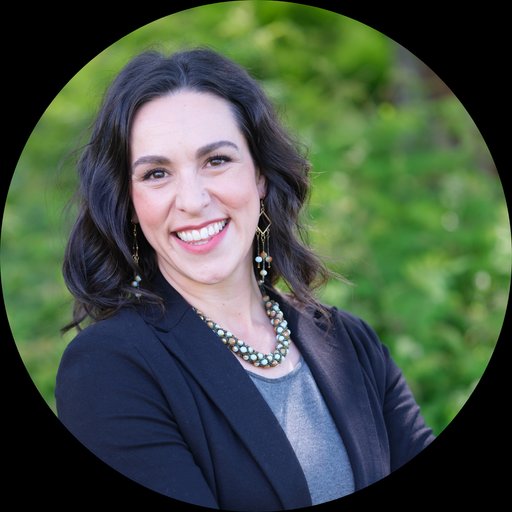
Erin Baldwin Day
Assembly Member · Anchorage Assembly
Mike Robbins
Anchorage Community Development Authority (ACDA)
Robert Doehl
Director · Municipality of Anchorage
Ryan Yelle
Petitioner · Heritage Land Bank
Tiffany Briggs
Real Estate Director