Facebook video by Native Federation
Alaska News • • 215 min
Source
Facebook video by Native Federation
video • Alaska News
Articles from this transcript
Hopefully one or two or 20 of them will take, and we will have more of us on the side of adjudicating the law rather than just making the laws and breaking the laws, because we do need more judges on the bench. I think our group is ready now to come up. I'm gonna introduce— we've got a moderator, and the moderator I've known for some time now, Alexis Bunton. She does have a different name that I just I forget every time, but it's Nafisi. So Alexis, she's a Bristol Bay shareholder, but we got to know each other a bit as we were going to school together down at UCLA.
So she's also a Bruin, and she's been working in this industry for quite some time, the tourism industry. And the whole idea here is to get better at tapping into the independent market and in Juneau. And others that are the cruise destinations. We definitely know what that means when we have the floods of that type of tourist. And we need to get better at the other kind of tourists for us to be the ones that are actually doing it.
And we do understand and know that the tourism market is changing now. And most folks that come here, they would like to spend a little time with the people who are here rather than just buy a trinket from China. So this is going to be a good panel. I'm looking forward to hearing it. I'm going to invite Alexis to come up here and make the introductions and get this panel going on the independent travel market.
Good afternoon. I just want to thank Joe here because he saved me from having to introduce myself too much. This panel is going to talk about how communities— it could be all communities, but particularly for our rural communities— can address the challenges that we heard this morning that Dr. Worl shared in terms of keeping people in their communities, creating employment opportunities in such that money can circulate within the communities, people don't have to leave them, and they can stay home and steward your territories and pass on the culture so that we don't get the young people drained so much. So we're going to talk about the opportunities in this space, the challenges, and what's coming up next. So I had to put some notes to introduce our panelists because some of them have done a lot of things.
So first we have Jillian Simpson. She's the CEO and President of ATIA, the Alaska Tourism Industry Association. And she's going to talk to you about what they do. Oh, I forgot to say, I tried to add it up, but between the four of us, we have well over 100 hours of experience in the tourism business, particularly in Alaska with the unique, with the unique context that we have here. And then we have Joe Williams.
He's the CEO of Where the Eagle Walks, LLC. And the tribal president for the Organized Village of Saxman, and here comes my list, he's a Sealaska shareholder, he is the first Tlingit Alaska Native elected mayor of the Ketchikan Gateway Borough, he's the mayor of Saxman, tribal president of Saxman IRA, vice president of the National Congress of American Indians, council member for the city of Saxman, and a member of the Tlingit and Haida Regional Housing Authority Board of Directors representing Saxman. Now he's not doing all of those things at the exact same time. A lot of them are past things he's done, but he's very esteemed. And I guess for myself, I started in tourism over 25 years ago in Alaska, and I've had a lot of learning and experience here, so I just wanted to say, I don't know if Rosita is still here, but I got the opportunity to work from her and learn a lot.
No audio detected at 3:30
From her leadership over at SHI. I got to work with my fellow panelist, Camille Ferguson, with Tribal Tours. I've also worked at the Alaska Native Heritage Center and done consulting, actually for AFN, which was an amazing experience, and other village corporations and tribes, as well as consulting in tourism in the lower 48 and internationally as well. So then we have Camille Ferguson, the owner of Cultural Tourism Development, CTD Consulting. She is a shareholder of Sealaska and Sheattika.
And she was, for a long time, she was the Economic Development Director of Sitka Tribe of Alaska. She has been the Executive Director of the American Indian/Alaska Native Tourism Association. So she understands tribal tourism inside and out. And she's consulted with other village corporations and communities, and done a lot of national work, and is consulting with me. And with that— oh, you're already here.
Says it's on. Okay, great. So we're going to start with a question for Gillian. And each panelist is going to talk, and then we're going to close. So, Julia, can you tell us about the independent traveler to Alaska?
What are the opportunities, untapped opportunities for connecting with the independent traveler and some opportunities with ATIA? Thank you. It's a real honor to be here, so I appreciate this opportunity. ATIA is the statewide trade association for the tourism industry here in Alaska, and we're also the official destination marketing organization for the state. Of Alaska.
So our overarching goal is just to make sure that we have a very healthy industry in our state. And I'm really delighted to say that, that, that is true, that tourism continues to grow. Coming up here, we have over 3.1 million visitors that have been coming to Alaska every year. Each, each year we're seeing an increase in travelers, which is really exciting. Exciting, and we think we broke another record this past summer.
Um, we, when we look at the types of travelers that come to Alaska, we kind of categorize them just by their mode of travel. So cruise is one sector, and then we have independent traveler, and those are all of the people that get here either by an airplane, they drive up the highway, or they take the ferry. When we look at summer visitors, we see that only one-third of our summer visitors are actually independent travelers. Two-thirds of our summer visitors come here on a cruise. However, in the wintertime, 100% of Alaska's visitors are independent travelers.
Even though we're talking about them by their way of transportation, really there's a huge differentiator between those two types of travelers. The independent travel is travelers, definitely who we like to focus on in our marketing efforts, because they come to Alaska, they stay longer, they spend more money, and they travel around the state. And so they actually, even though they make up less than half of all of Alaska's visitors, they have a significantly higher economic impact to our communities through their tourism spending.
So that's the independent traveler side of it. Thank you. And now there's a follow-up to that. So when we look at opportunities, we've definitely seen a shift both in what travelers want to experience and also in how we're doing our marketing. We are no longer just focusing on scenery and wildlife, which are, of course, important components to an Alaska vacation.
But really, travelers really want to have a deep and meaningful connection to the people and the places that they visit when they come here. And cultural tourism is a key part of all of that. What we are seeing though is that only about 1 in 5 of our visitors are actually experiencing a cultural tourism product when they come to Alaska. So there's a very big delta between the desire of the consumer. Also, tour operators want to be packaging a lot more in what we're actually currently offering.
So there's a huge opportunity to increase the tourism product in Alaska, particularly around cultural tourism. And so when it comes to product development, I definitely will defer to the experts here on this stage. I also want to recognize all of the work that the Alaska Native Heritage Center does in order to help support and grow cultural tourism. In the state. ATIA's purview, we really look at our role as being the marketing arm and making sure that cultural tourism is incorporated throughout all of our marketing channels.
However, we recognize that it definitely must be indigenous-led, and so we've restructured our board and we have a cultural enrichment committee that guides and oversees our marketing efforts. So we work directly with Alaska Native content creators, writers, photographers, influencers to create all of our cultural tourism content, and then we use our platforms and our marketing reach to get that message out there. So there's incredible opportunity. I think we've done a lot, but there's still a ton of room to grow and a lot more work that we can do, and we definitely invite more participation in that guidance and leadership. Thank you, Julianne.
And now I'm going to turn to Joe. And Joe, I'd like to hear about how you built your company as an entrepreneur, and what does it mean to share your culture from an Alaska Native perspective to visitors? My small business started out as a favor to a friend when I was asked to do some walking tours of Ketchikan. And little did I realize at that time what I was getting myself into. And so it became very apparent to me that the visitors were looking to me to talk about Tlingit culture.
And I Oftentimes see them when I'm giving a lecture about Tlingit culture, "I wonder if he's an Eskimo." That's easy to read on the lips. "I wonder if he's Eskimo." So I always ask, "How many first-time Alaska visitors?" Hands go up. And, "How many folks returning?" Hands go up. "How many folks this morning aren't really sure?" So they kind of chuckle about that, but I explain that. I go with that because I start out with, "You must realize in this land we have 7 distinct ethnic groups in Alaska, and they are as different as German is to French, French is to English." And I go on to say about in Southeast Alaska, in Southeast Alaska we have Tlingits, Haida, and Tsimshians.
No audio detected at 11:00
And then I relay the rest. I said, "I'm only going to be speaking about the Tlingit culture." You asked me about the Aleut Eskimo. I will only say that they're here. I'm not an expert in that. I would leave that to them.
And I asked them to please ask me any kind of question that comes to mind about Alaska, any kind of question that comes to mind about the Tlingit culture, because I go into detail of that. What's really interesting when we were preparing for this afternoon And I was told, "Joe, you have 5 minutes." I chuckle as a Tlingit when you say to a Tlingit, "You have 5 minutes." It's a big laugh in my heart and mind because when you give a Tlingit a microphone and ask him to speak, folks, you're gonna be here for a long time, okay? So I also inform my visitors that are on my tour that they will know more about Ketchikan than any of the local people, or most of the local people, will know. And so that part should tell you when you're talking about your community, make sure that you know what is in your community. And not just of your community, but community of your region or the community of Alaska.
So when I say ask me any kind of question that comes to mind, that includes the entirety of Alaska.
This is my 35th season doing this tour business here in Alaska, and I want you to know it is as fresh as the day that I begin. I have so much fun doing this, and I will continue to do this My firstborn son, when I turned 60, he said, "Son," no, he said, "Dad, when you gonna quit doing the tours?" I said, "Son, when I'm finished." When I turned 70, he said, "Now really, Dad, when you gonna quit doing these tours?" I said, "Son, when I'm finished." When I turned 80, he didn't ask. So I enjoy it, absolutely enjoy it. So I'm not sure that answered your question, but there it is. It does.
And because of the limited time, I could ask you so many questions. Thank you. Another thing about our cultural tourism that's Native-led is It's also, like you said, it's about educating our visitors. It's not about just entertaining them. A lot of them come in with preconceived notions about our Native peoples.
Like, what we got in Sitka is, "Is that the bridge to Russia?" All the time. Genuinely, like, people thought the bridge was to Russia in Sitka. So we have to educate them about the geography, like Joe said. About our cultures but also about our history. I was just talking to somebody the other day and I asked them if they ever heard of the Aleut internment and they absolutely had not.
But that affects people who are still alive today, the children of them, the grandchildren of them. People are just starting to learn in the mainstream about boarding schools but many of us, our parents and grandparents went to them and it's important that visitors learn about that and learn about all aspects because these things should be part of our history books all around the country. So I'm gonna turn to Camille right now, and I'd like to ask you about what it was like to build up the tourism department for Sitka Tribe of Alaska. There was a whole growing phase, and it's a little bit different starting it from the point of a single entrepreneur than from the point of working with your tribe to do it. And then after that, if you could talk about opportunities in the state, maybe some tips that people could use if they are interested in starting or enhancing their tourism offerings that they already have.
Thanks, Alexis. And first of all, one of the things that I, I would love to share is the fact that when I started Sitka Tribal Tours, my resources were my elders. And they were the ones that guided me on how I should, what I could, what we could talk about and made it authentic. They were the ones that allowed us to do the traditional dances, what dances we were going to do. We were able to use the Kayani Commission to talk about the edible and medicinal plants that were abundant.
We learned about the traditional name places through our elders who actually you know what, helped me build a curriculum that was utilized for our training program. So those were the resources of how we began, and it was not an easy thing to do to get into the industry. Right now the industry is, is really wanting to and thirsting for that type of experience now. And who are the best people to tell about the place or the people. And so when we talk about how to build the steps to build a cultural tourism program, it's the people that are going to be leading the way.
And it is typically the people of the place that are going to do the best job ever. And for many, many years people had talked about the Tlingit people. Talked about Sitka's history. It wasn't until the tribe actually started doing their tours where they were actually being the one showing them. So they created not just a historical perspective of Sitka, but they were actually telling— talking about how we lived.
Cultural tourism is a way of life, and it's a lot easier to be the person who's lived it to tell the story than versus someone who's read about it. There's a big difference. The opportunities for, for the people in this audience to create experiences are vast. An experience is really just as simple as doing a demonstration of beadwork, showing people how to berry pick, showing people how to process fish. Matter of fact, if you do a really good job, you could probably get them to help you and you got free labor.
But that's called volunteerism. But there are so many opportunities. I think there's opportunities to get the word out. We have a travel industry association, which is your destination marketing organization, who is looking for opportunities for our rural communities to have product out there for the independent traveler that are looking for you. We have a new— we have Native organizations like the American Indigenous Tourism Association, who is also looking for opportunities to share what Native Americans are doing.
And then we also have a brand new Native-owned and operated booking platform that is working just for the indigenous peoples. And so if you want to be a part of that, there's these opportunities. So those are just some of the things that are out there, and I just want to let everyone know I am more than happy to assist in any way I can to help you develop your, your experience in your community, because I think it's very, very important that we try to keep all our dollars in our community, and I think it's even just as more important that we're telling our story our way, and that we have this great opportunity to, to tell the narrative. And visitors are coming to your community. They will come, and I think it's an also an opportunity for you to take control of the visitors that are coming and what you want them to know and learn.
So with that, I'd like to say, "Gonukchiiizh," and thanks for letting me share a little bit of what I know.
Before I completely close out, I would like to share with all of you what I'm up to with Camille. I had to bring her on because she's the woman who knows everything.
Everything tourism. And some of the challenges in this industry that I've seen is even my eyes were opened when I started to do some consulting overseas because I noticed there was the exact same problem everywhere, which is marketing, what we affectionately call getting butts in seats, how to find and get to those people. So that's what these opportunities that we're talking about now today. So that was a big challenge. And then Alaska particularly, We have— we rely on the cruise ship a lot to bring in visitors.
And there's a place for that. It has brought money into the communities. However, they take their cut and that cut goes to Arizona or something. I don't know. It doesn't stay here.
And that's a problem too. And then these cruise ships aren't necessarily coming to some of the more rural villages where there are really amazing things to learn. And the cruise ships in the summer, you're working 6 days a week. It's really, really hard on you. And then in the winter, you don't have a job.
That's a real big challenge. And one thing that I've seen across the industry, especially in Alaska, is if people have a seasonal tourism job and let's say there's a real big need to do subsistence and they have to go do it for 2 weeks, you lost your job. Or if somebody passes away and you have to uphold your ceremonial duties for a particular time, you could lose your job. That's very difficult. And so I really wanted to solve that problem by creating an Indigenous-only booking platform.
It's the first of its kind. It's called Wahkpa. Many people know that word here, and the reason I wanted to use that name is because it's always been a really, really warm greeting to me. And inviting people in and getting to know them. So it also offers— we also offer some consulting and technical assistance for those wanting to start or enhance their tourism businesses that already exist.
And speaking of starting a business, when I got this idea, it was because I'd been to so many amazing places. And if you grow up Native and you visit other Natives, you get to do so many cool things. That are amazing and our visitors don't necessarily get to experience it. And there's a lot of room to get creative with it. So when I got this idea, I just want to share with you if you want to start something up.
I had a real big scarcity mindset. I—. Really big. I thought, "Well, I can't quit my day job and my two other side jobs. What if I can't pay my bills?
How will I have the money to start up this company?" I'm not taking out a loan, too scared of that. And then, oh, and then lots of down talking to myself. And then, I don't know any coders. I don't know anyone in Silicon Valley. I don't know how to raise money for this.
I don't have the access and the networks to do it. It took me several years, but I was able to do that and get over my scarcity mindset. So you all can too. And I wanted to tell you an opportunity. We are doing two workshops.
At this convention. One is right after this panel at 3 o'clock in the Marriott in the Skagway and Valdez rooms. We'll have coffee, but we're going to share some of the workshops and technical assistance that Camille and I do around how do you come up with an idea for tourism, how do you understand and evaluate the assets that you have that your community has? How do you create the description of it? How do you time it?
How do you attract the visitor? Budgeting. How do you price? Those are all aspects of technical assistance that we support with. So we are having a 2-hour hands-on interactive workshop, 3 o'clock today and tomorrow, same place, Skagway Valdez room in the Marriott at 10:00 AM.
So there are two opportunities to come join us, do some ideating, do some workshopping, and have us around to answer any questions that you have. So before we close out, I want to give a big, big, big, big thank you to our amazing panelists. You can clap now.
Let's see here. I know we're running a little behind, and we will close out. All right.
No audio detected at 25:30
Hi, we're going to have Megan Anders and Sherry Beretta come up here to introduce our next guests. Next, U.S. Senator Dan Sullivan.
Thank you, Gayla. Hi, my name is Megan Shukshuk Anders, and I currently serve as the chair of the Bering Strait Development Council, which represents the broad economic interests in our region, including the Bering Strait State Corporation, the city of Nome, and K'awerik. It's a K'awerik nonprofit. So I'm here joined by Sheri. Maybe I'll let you introduce yourself.
Hello, I'm Sheri Beretta, chairman of the board for Chuugash Alaska Corporation. My family's from the native village of Tutitlik, and I'm honored to be up here with Megan. Thank you. As you all know, the challenges we face in western Alaska require huge solutions and the ability for us to dream big. It's my honor and privilege to introduce a senator who has delivered on these dreams that sometimes always felt impossible.
Today, Alaska's unserved communities with water and sewer are on a path to service through Senator Sullivan's hard focus on this issue. A few years ago, Congressman Young, the late Congressman Young, asked me to testify before Congress, and I found myself asking for $2 billion Alaska's need for water and sewer. And Senator, if he's here, you delivered. You delivered on that. The Bipartisan Infrastructure Law included $3.5 billion.
$3.5 Billion for the Indian Health Service water and sewer projects across the nation. This investment creates a path towards essential services for communities that have gone without for far too long. Senator, thank you for that. Gosh, I'm not done yet. So as a former port commissioner for the Port of Nome, the late Mayor Richard Beneville and I went to D.C. and we met with you.
You were a first-term senator. It was our first meeting. And we said, Senator, we need an Arctic deep draft port in Nome. And he, boy, he secured $250 million and more to help build the Port of Nome.
The Port of Nome serves 60 communities across western Alaska, so this will help support an entire reframing of our logistics supply. And finally, Senator Sullivan has been an unwavering champion for our ivory carvers. The Artisax, which is now public law— honors and protects our ivory carvers and helps ensure Native artists can sell their art at any state in the union, across the United States.
No audio detected at 29:00
This is a huge win for our way of life and for the people who make a living through hunting and carving. And you only need to go downstairs at the Alaska Art Market to understand how powerful of a win It truly is, so thank you for that.
Well, Sherri, thank you.
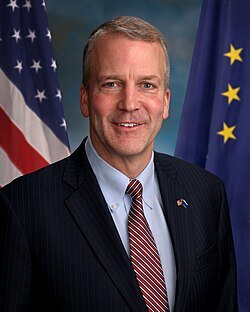
Thank you, Megan. Let's give Megan a big hand. You have to stand up here with me, Megan. Okay, there she goes. So I just want to take a couple minutes to introduce and welcome a longtime friend and advocate for Alaska Native people, Senator Dan S. Sullivan.
I've worked with Senator Sullivan for almost 15 years, and one thing I appreciate about him is he understands us. He understands Alaska Native corporations, our tribes and communities, and the responsibility we each carry to create opportunity for our people and future generations to come. And he understands that when our corporations are successful, that success comes home. It supports our shareholders, families, and communities. There are many examples of his strong work, but I'll focus my brief comments on his support of the Small Business Administration's 8 program, which has meant so much to our companies that participate in the program.
For Alaska Native corporations, 8 is more than federal contracts. It gives us an opportunity to build strong businesses, create jobs, and bring resources home to support our people, including scholarships, workforce development, cultural preservation, and connection to our land. It's also the program that saved Chugach Alaska Corporation from losing everything in our 1991 bankruptcy. It's really the missing link of the Settlement Act. Senator Sullivan has been one of our strongest champions.
He takes our issues with him to Washington, D.C. every day. He makes sure our voices are heard, and he reminds federal leaders and our congressional colleagues of the value we bring to the country and the federal government. His advocacy for the SBA 8 program has been consistent and persistent. When it comes to barriers in our way, he works to remove them. Most recently, he helped secure a longstanding change to SBA's bona fide place of business requirement, removing an unnecessary obstacle for small 8 contractors.
He stood with us 7 years ago in this room and led a fight to raise a contracting dollar threshold at the DOD, which has benefited many in this room. Senator, thank you for listening to us, for standing with us, and most importantly, for understanding why this work matters to our people. Please join me in welcoming Senator Dan S. Sullivan.
Wow.
Wow, well, thank you, thank you. First, um, Sherry and Megan, thank you for standing here and for introducing me. That was a wonderful introduction, and you've been great friends, but I have so many great friends here. But how about a round of applause for Megan and Sherri, thank you. And I just want to say I'm so thankful to be back at AFN.
I love coming to this great convention. It's the heart and soul of our state in so many ways. So thanks to all the members of AFN, the board members, the delegates, our elders, our veterans, our Native corporation leaders. And thanks also to FAI. I don't know if Roy is here, but your team put on another wonderful Elders and Youth Conference, and they deserve a round of applause for that.
Wherever Roy is. They— Now, one of the greatest privileges of serving as your senator has been the opportunity to learn from so many Alaska Native elders leaders, and friends, starting with my wonderful family. My, uh, one of our great elders, my late mother-in-law Mary Jane Fate, and my incredible, brilliant, gracious— I don't know, I'm going to run out of adjectives— wife Julie and her sisters Janine and Jennifer, who are here today.
Just for the record, I did not call my wife an elder.
I may have screwed that up, so she's not an elder yet. Kind of close. She's a beautiful elder, right? And I am truly blessed to have her as my life partner who exemplifies Native values of service and respect. And truth every single day.
I want to do another round of applause for my amazing wife, Julie.
I've also had the privilege, and I mean it's the privilege of my entire life, to have legendary Alaska Native leaders like Lyman Hoffman and some who are no longer with us, with us, Jake Adams, Oliver Levitt, Walter Sobolev, and so many others who have taken the time to share their wisdom and guidance with me when I've sought it, and that has been incredible honor for me. Through this wisdom, I've learned important lessons. Some challenges can be solved quickly, but others take years, even decades, and some may never fully be resolved. What matters is partnership, patience, perseverance, hard work, and a commitment to never give up, even when challenges seem insurmountable. That's the approach I've taken working alongside all of you, listening to your concerns, elevating your voices in the halls of Congress and at the highest levels of our federal government, in tackling even the most difficult challenges together.
No audio detected at 35:00
That's what we should be doing. And nowhere is that spirit of service, perseverance, and commitment more evident than in the extraordinary patriotism of Alaska Natives who have answered our nation's call to serve for generations at the highest rate of any ethnic group in America. Right here.
And I'm looking at a bunch of them here. During World War II, tens of thousands of Alaska Natives answered the call to sign up for the Alaska Territorial Guard. They were as old as 80 and as young as 12. Many Alaska Native women enrolled before anyone told them they weren't allowed to enroll.
Laura Beltz Wright of Haycock was the first woman to join. See her beautiful picture up there? And wouldn't you know it, she was the best sharpshooter in the Alaska Territorial Guard.
Sorry, Bill Thomas, she could outshoot you, my friend, right? And that special patriotism has continued through America's other conflicts—Korea, Vietnam, the Middle East. Many Alaska Native Vietnam vets, as we know, missed their opportunity to apply for their Native allotment because they were serving their country in a war when a lot of Americans were avoiding service. I've worked with so many in this room, and I'm looking out seeing them, there's pictures of us, to relentlessly fix this injustice and pass legislation to make sure our Alaska Native Vietnam veterans got the lands that they were promised. And you saw a couple hours ago, 3 more Alaska Native Vietnam vets got their allotment because of that legislation.
No audio detected at 37:30
So last year, you might remember, at AFN, I reached out to all of you and said, this vital program is going to expire at the end of the year. I need your help. I have a law to extend it for 5 more years, but it's being blocked. I'm going to go down the Senate floor every day until they fix this. But I need your help.
AFN, everybody else. And you know what? Everybody here answered the call. It was the Alaska Native Brotherhood, Alaska Native Sisterhood, TCC, Tlingit Haida. Everybody came to help.
And guess what? In December, they finally relented and we got an extension for 5 more years and my bill signed into law. Thank all of you.
But we're not finished because a lot of Alaska Native Vietnam vets, particularly those in Southeast and in the North Slope, don't have lands by their homes. That's why I've introduced legislation to open approximately 4 million additional acres for land selections for our Vietnam veterans in Southeast and on the North Slope, and we're going to get that done too.
So also in this spirit of service to our country, for decades, Alaska National Guard units and armories gave rural Alaskans the opportunity to serve their country close to home while strengthening emergency response and national defense. For reasons that still baffle me, most rural guard units were shut in the 1990s. Take a look at this photo. This is a gut punch to our state in my view. These were all the guard units and armories that we had in the 1980s, and the vast majority were shut down.
We saw the critical role of the National Guard during the response to Typhoon Haiyan, and in conversations I had with leaders in the region, we discussed how reopening armories and returning Guard units to rural communities that want them would strengthen disaster response But revitalizing the National Guard units throughout rural Alaska would also provide training, leadership, mentorship, and a sense of purpose for young Alaskans right at home. We need to revitalize the Alaska National Guard in rural Alaska, and that's exactly what my bill, the Alaska National Guard Rural Community Revival Act, will do.
And I'd like to tell you, this bill was already marked up in the Armed Services Committee, unanimously passed. Every Democrat, every Republican voted for it. The U.S. Army is on board, the National Guard is on board, and with your help, we're going to get this done this year for communities in Alaska that want a National Guard unit and armory back. I think it's a really big idea, and we're going to get it done.
So this is just part of a massive buildup in the Arctic in terms of military investments and capabilities. We are undertaking in Alaska the largest buildup of our military since World War II, maybe ever. Billions of dollars for the Air Force, for the Army, even my beloved Marine Corps is going to be coming up to Alaska. But the biggest area where we're really investing is the Coast Guard. We had last year a $25 billion recapitalization of the United States Coast Guard.
That's the biggest recapitalization of the Coast Guard in American history.
And a ton of that is coming to Alaska. For example, we're going to have 4 icebreakers homeported in our state. Think about that. It took our country 250 years to figure out that you should put the icebreakers in the state with the ice. But we're gonna do it.
We're gonna do it. And this means more investments for Arctic security, greater search and rescue capabilities in our rural communities, and of course, better fisheries enforcement and rescue operation. So let's turn to fisheries. When the salmon are strong, our communities are strong. Strengthening the role of Alaska Natives in fisheries management isn't just a priority, it's essential to thriving fisheries and maintaining your culture.
I've worked for years to empower Alaska Native voices through federal law in this area. That's why I've made the salmon crisis, which we are clearly going through, one of my top priorities during my entire time in the Senate. Particularly on the Yukon and Kuskokwim Rivers. A number of years ago, my wife Julie and I were sitting on the banks of the Yukon River at our family's fish camp. It was ghostly quiet.
No boats on the river. It was another year with dismal king salmon runs that generations of Alaskans, all of you, have depended on. Julie asked a simple but profound question: What is happening? We have to do something about this. Her questions echoed what I've heard from thousands of you and helped inspire my Alaska Salmon Task Force Act, which became law over 6 years ago.
This law brought together some of our best minds—Alaska Native, tribal leaders, state, federal, university experts to better understand what was happening to our salmon runs and build consensus on the path forward to strengthen salmon runs across Alaska. Now, it's not easy to pass laws on fisheries, but I've had many signed into law, and they've focused on empowering Native voices. The president also signed my North Pacific Research Board Enhancement Act into law. That adds an Alaska Native board member incorporating traditional knowledge and ensuring your voices are guiding an important principle for federal research on salmon.
No audio detected at 44:00
We also changed federal law to allow fishery disasters to be declared based on subsistence losses, which was never allowed in federal law before, to help Native communities. And based on our— yeah, that's a big deal.
And based on the Salmon Task Force law that, as I mentioned, passed 60 years ago, we are directly tackling the issue of bycatch. My team and I worked relentlessly for years to ban the importation of all Russian trawl-caught fish into America. That's very important. And now— and now we're going after the Chinese-caught fish, trawl-caught fish. As I like to say, the American people and Alaskans should be eating freedom fish, not communist fish from China and Russia.
But my Bycatch Reduction Act was recently introduced last year. It's the most comprehensive bycatch legislation ever to reduce bycatch, protect seafloor habitat, strengthen transparency and accountability in federal fisheries management, and importantly, like our other bills have done, This bill gives Alaska Natives oversight to NOAA's Bycatch Observer Program. This bill passed in its first vote in the Senate in a strong bipartisan way in the Commerce Committee earlier this year, but my effort to pass it on the Senate floor unfortunately was blocked. But you have my word that I will not give up on this bill. I will work hard to get this bill done.
That is my promise to all of you, and I always keep my promises.
Now, I want to talk about healthcare, another challenging issue, and the opportunity we have to turn one of Alaska's greatest challenges into a huge opportunity for our entire state. Alaska Native Health Organizations are a shining light for innovation in terms of healthcare across Alaska, in many ways across America. Last year, working with many of you, I led the effort to pass legislation creating a $50 billion Rural Health Transformation Fund. That is the largest investment in American history in rural healthcare in America, and Alaska got the biggest award of any state in the country on this. It provides roughly—.
It—. This, this award provides roughly $1.4 billion over 5 years for Alaska healthcare innovation. And let me repeat what I said last year at AFN: this legislation doesn't cut Social Security funding, doesn't cut Medicare funding, and does not cut Medicaid funding. But for too long, D.C., in terms of healthcare, has imposed a one-size-fits-all approach to healthcare designed in D.C., imposed on states where it doesn't work. This program flips that model.
It provides very significant funding, historic funding, but it enables us Alaskans to design our healthcare system with Alaska-specific solutions for innovative healthcare approaches for Alaska villages and communities. And in the past year, almost a quarter of a billion dollars has been allocated under this new program, including almost $70 million going directly to Alaskan tribes, many represented here, in 68 innovative healthcare programs. These awards— Everywhere I go in Alaska, all over the state, I ask, "What are we doing on the Rural Transformation Fund? What are you doing?" These awards are expanding mobile healthcare, addiction treatment, behavioral health, maternal and child health, workforce development for healthcare. Some of the innovation, I'll give specifics.
$2 Million for the Arctic Slope Native Association to expand surgical services. $2 Million for Maneelik to modernize healthcare technology, and nearly $3 million to YKHC to strengthen telehealth and telecommunications. And my favorite one, not just because my wife and sisters are from the interior, how about Tanana Chiefs Conference idea to develop a drone-based prescription drug delivery system to reach remote villages with drones? How about that? That is very cool.
And that's one of the innovations.
Healthy communities in rural Alaska also means stopping the flow of fentanyl into our villages that has been poisoning our children and killing our kids. We are doing that through legislation that finally secures the border. Illegal immigration, including drug cartels, are no longer in our Native villages. And illegal immigration with these drug cartels is almost down to zero for America, and that's healthy for all Alaskans.
Inhale the communities also means clean running water and sanitation. This issue has been a top priority of mine since day one in the Senate, and I was honored that Megan Anders mentioned it. And here's why. We are the richest country in the world. In yet some of the most patriotic communities in the world, meaning yours, with more, with more veterans per capita than any communities in America, still don't have running water and flush toilets.
And I believe that is absolutely wrong. So it is wrong. So since day one, one of my first bills that I got passed into law was a brand new program for small disadvantaged communities in Alaska for water and sewer. And just a couple of months ago in the Water Resources Development Act, my bill got marked up as part of that bill. It's going to pass by the end of the year unanimously.
Every Republican, every Democrat voted for it. And we got a quarter of a billion dollars directed to running water and flush toilets in Alaska communities in that bill. Quarter of a billion.
So we're going to get that done, especially working alongside of ANTHC.
I ran into Natasha Singh right before I came in here. They're doing great innovative work, so I want to thank them on that. And clear water and sanitation— clean water and sanitation are just one part of the historic infrastructure investments we've been making across Alaska. These are generational opportunities that we are working on now, especially in rural Alaska, that are saving lives. Take broadband.
We have secured nearly $3 billion, more than any other state by far, from the federal government to expand broadband and internet connectivity. This was done in the bipartisan infrastructure bill with Senator Murkowski and Don Young. And I, we were negotiating the formula on where the broadband was coming. And a lot of senators were saying, I want to take my state from 4G to 5G connection. And I was in the room saying, 4G to 5G, what about no G, right?
Like, we got no G in Alaska. Shouldn't we prioritize no G before we go 4G to 5G? And we got that done in the bill. And now, $3 billion later, we have the most investment from the federal government of any state in the country on broadband.
And we are making historic investments in aviation safety too. I commissioned— I had the NTSB and FAA in 2020 commission a report on aviation safety in Alaska. You all know what the results were. We have the highest crash rates in the country by far, 2.5 times higher than the rest of the country, and we have the highest death rates by far in terms of aviation safety. So we have made aviation safety a huge priority.
We had a roundtable recently with a lot of Alaska Native leaders, with the head of the FAA, the head of the NTSB, and they've announced in the next 3 years $500 million to upgrade weather systems, infrastructure, cameras, a whole host of things that are coming to rural Alaska that will do the one thing we all agree on, we all want, is make sure Alaskan pilots and passengers make it home safely every night. And we are working on that.
And finally, we are advancing major infrastructure projects that we've been talking about for decades. And here's the good news: we're not talking about them anymore, we're actually building them. From the deepwater port in Nome that Megan mentioned, to reopening the Navy base way out in Adak, to the life-saving King Cove-Cold Bay Road. And that is one I think we're all passionate about. I was recently in King Cove.
At the community meeting we had, I saw tears of joy and tears of sadness. Joy because we're finally making progress on a road that the brave residents of King Cove have been trying to get built for almost half a century. Sadness as families remembered the 18 people who lost their lives because we didn't have a reliable 9 a 60-mile single-lane gravel road. For too long, lower 48 environmental groups and the federal government have blocked this road, prioritizing birds over human lives. Not anymore.
We are building the King Cove Road.
So I also want to remember my good friend Stanley Mack. Who fought tirelessly for this road but sadly passed away before seeing it complete. Our hearts go out to his family, and in his honor, I think we all need to recommit to making sure we are going to finally build the King Cove Road.
Now, Senator Murkowski talked about one of the biggest challenges we face now, and it's the high cost of energy, particularly in rural Alaska. We are focused on that every day. We know how hard of an issue that is. We are working to provide immediate relief. In May, the White House, the Secretary of Interior came to Alaska and announced an energy task force specifically focused on rural Alaska to try to bring down energy costs in rural communities.
We got— we were able to work together to get LIHEAP assistance funding for low-income families more than doubled and to get EPA waivers for more diesel supplies for Alaskans. A few days ago, the Department of Energy announced a huge $150 million investment in Alaska's transmission lines to bring down utility costs. And right here at AFN this morning, the Deputy Secretary of Energy announced that the Office of Indian Affairs was providing a $50 million grant to 20 projects in Alaska to improve energy affordability. That is one of the biggest awards the Department of Energy has ever made for American tribes anywhere in the country. So I want to thank the Secretary.
But I think, as we all know, the best way to address Alaska's energy challenges is to produce more Alaskan energy. By and for Alaskans. And that is exactly what we are doing. Under the previous administration, Alaska Native leaders from the North Slope traveled to Washington, D.C. 8 different times to oppose unwanted restrictions on responsible resource development on their lands. The North Slope Borough, The tribe, ICAS, the ANCs, the leadership all came to D.C. and delivered the same message: Don't shut down the NPRA.
It will hurt our communities. It will hurt our way of lives. It will hurt thousands of jobs. It will hurt the high cost of energy. But the previous administration didn't listen to these Native voices.
They wouldn't even meet with these great Alaska Native leaders. Now we have changed that. We have passed laws to reverse these restrictions and open NPR-A to responsible resource development, bringing back good-paying jobs, more oil flowing through taps, which is what the native leaders of the North Slope wanted and what all Alaskans want.
Senior officials are now traveling to Utqiagvik, to Anaktuvuk Pass, and to other North Slope communities, listening to and respecting their voices. And we're going to get the Alaska Gas Line and LNG project done as well. We're going to get it done. Now, I know people are rolling their eyes. Sure, Dan, we've heard this for 50 years.
Okay. But first of all, don't listen to the naysayers. They've never built a thing. Okay, we're— they've never built a thing. Okay.
We've never been further along on this project. The federal government is now in the lead and we're going to get it done. And think about it. Think about what low-cost, clean-burning Alaska gas can do if we have it for 50 to 100 years, what it can do for our communities, for our future. It's going to keep our kids and grandkids here, this is the biggest project we're going to get done.
It will help everybody in terms of lower energy costs, more jobs, and greater economic opportunity. So our communities must not only be strong, they must be safe. And now I'm going to talk about a difficult issue for all of us. Many years ago, when I was your Attorney General, I led the— what was called the Rural Subcabinet and traveled throughout rural Alaska, to all kinds of different communities. One of the communities I went to, I met a leader of one of the school districts.
He pulled me aside and just one-on-one, and he said, Attorney General Sullivan, I just wanted to tell you a story you might not be aware of. My star student in this school came to me this morning and said she couldn't take her final exam because she had been sexually assaulted last night. And then he said, you might not know this, but not just in rural Alaska, all of Alaska, this happens a lot and nobody talks about it. This was one of the most impactful meetings I've ever had in my entire life, because he said, we have to do something about it. We have to do something about it.
No audio detected at 1:00:30
And this opened my eyes to one of the most horrendous problems facing our state that I have made my life's passion as an elected official to address, and that is to combat violence against women and children and the related scourge of human trafficking that we also have a giant problem with. As I mentioned, I've made combating this scourge my life's work in Alaska, starting with the statewide Choose Respect initiative to bring these issues out in the open so people know about them and to take bold actions across the board to combat them. And in the Senate, I've continued that work. Through legislation that I passed, one called the Choose Respect Act, the other called the POWER Act, mobilizing free legal assistance for survivors, including a focus on Indigenous women. Since its passage, the POWER Act has helped reach more than 90,000 lawyers across America to connect them with survivors of domestic violence and help them break out of the cycle of domestic violence.
And this legal representation matters. One study found that 83% of sexual assault survivors who had an attorney were able to get a protective order to break out of the cycle of violence, while those without an attorney, less than 30% got anything done. So I want to thank the advocates attorneys, tribal organizations throughout Alaska, AFN, for helping survivors find safety. We have to continue this work, and we have to continue that these heinous crimes get answers and justice. I want to thank Gloria O'Neill and Cook Inlet Tribal Council and everyone who joined our May 5th Missing and Murdered Indigenous People Roundtable.
Where Secretary of Interior, Assistant Secretary of Interior Billy Kirkland, who was here this morning, announced a renewed effort to relaunch Operation Lady Justice, which was the work initiated by our own great Alaska Native leader Tara Sweeney when she was the Assistant Secretary of Interior. We're going to continue to focus on this. We must follow through on all these things. Finally, I want to update AFN on a never-ending battle we've been fighting together. The persistent lack of understanding back in D.C. and perhaps even some lower 48 jealousy surrounding ANCSA and our unique system of Alaska Native Corporations.
Our ANCs are so important to all Alaskans, not just Native Alaskans, all Alaskans. These companies create jobs. They own their own land. They control their own destiny. They've created thousands of jobs.
They've strengthened our economy, and they support communities all over the state. Congress passed ANCSA over 50 years ago, yet we repeatedly see Democrats and Republicans alike target these organizations in a deeply unfair manner that harms all of you. Whenever this has happened, and it unfortunately happens all the time, we have worked together, we have fought back, and we have prevailed. Let me give you just two recent examples. During COVID When we were crafting the $6 billion CARES Act tribal relief package, my team and I secured language that made sure that this tribal relief package, which was huge, covered all Native Americans.
And in Alaska, that meant tribal members and ANC shareholders. So we wrote the bill to do that, and everybody was fine with it. It passed. Everybody was eligible for relief. That was the right thing to do.
The minority leader of the U.S. Senate then, Democrat New York Senator Chuck Schumer, later attacked this provision even though he had agreed to it, even accusing certain Alaska Native leaders of corruption simply because they were an ANC shareholder.
Subsequent legislation like the $2 trillion American Rescue Plan and the CHIPS and Science Act, a quarter of a billion dollars, led by this same senator when he became majority leader, consistently singled out A&Cs for unfair treatment, discrimination, and depriving them of any opportunity to receive federal funding. Now, My view, and I think most of your view, was this was an absolute outrage. I fought this relentlessly on speeches on the Senate floor. What are you doing? Why are you discriminating against Alaska Native people?
We all stuck together, even taking litigation on as it related to that CARES Act provision. By the way, that litigation went all the way to the United States Supreme Court. And guess what? Working together, my team led an amicus brief, but so many here did— AFN, others— we won this issue in the US Supreme Court.
So my team and I continue to remain very, very vigilant. We scrub every single piece of legislation coming through the Congress looking for striking and catching anything, anything that singles out Alaska Native corporations or Alaska Native tribes for discriminatory treatment. So let me give you another example. Last year, the Republicans took their turn at going after ANCs when the Secretary of Defense tried to equate A&C involvement in the SBA 8 program with DEI and said it needed to be dismantled. That was wrong.
So I called the Secretary of Defense directly and said, Mr. Secretary, what on earth are you doing? What on earth are you doing? Do you even know what you're talking about? Sherri Barreto was talking about how important this program is. So again, working with dozens of you, We went directly to senior Pentagon officials and made our case.
Take a look at that pamphlet. That was a book that we put together with all your help. We went to all these top Pentagon officials and said, "ANCs are not DEI, they are patriots. They've been working for 40 years with the Pentagon to make our military stronger, more agile, more lethal." Undermining the 8 program as it relates to ANCs doesn't just hurt ANCs, it hurts the military. By the way, that pamphlet was so impressive because what we did, we got all these programs that all of you were working on, and these are amazing programs.
I am telling you, if you saw it, you would be like, wow, I am so proud to be an Alaska Native defending our country. Well, I was so proud, I told the team, I'm going to ship this pamphlet, 40 pages of what you all were doing to make our country stronger, out to everybody so people can see how strong Alaska Natives are for the Pentagon. And then I was reminded, Senator, a lot of this is classified. You can't send any of this out. But it is a great pamphlet on just what everybody here is doing.
So as a result of our joint advocacy, we are now in a much better place with these federal agencies, as Sherri mentioned. And I do want to mention Sherri, Shawna Hegna, Nicole Baromeo, so many others who have been working with us on this. And I will say again, if additional problems arise, I will continue to pick up the phone and make our case, your case, directly to the Secretary of Defense, the Secretary of the Army, the Secretary of the Navy, the head of the SBA administration. I've called every one of these guys and ladies and said, enough, you can't do this, you're wrong on this. And now we're back in a stronger position.
So let me conclude with this. Thank you.
Julie's grandmother, the late Sally Hudson, used to tell us all the time, Alaska Natives are the most brilliant, hardworking, and resilient people in the world. And she was right. One of the greatest parts of my job is celebrating your culture and making sure the rest of America understands and appreciates it, and when necessary, passing laws to protect it. Take our great whaling captains. I've stood alongside them throughout my entire time in the Senate, fighting to protect their rights and traditions, telling their stories on the Senate floor, telling their stories even to the President of the United States.
Just last month, Julie and I were in Utiavic and attended a special church service led by Vietnam veteran Pastor Arnold Brower Jr. Blessing all the whaling captains and their families and their crews. It was a beautiful service.
And last year, we secured in law an important tax provision that will help ensure these extraordinary whaling captain traditions can continue for generations to come.
Now, Megan, Megan Anders already mentioned this next one. You look up here, take our Alaska Native artists, some of the most talented in the world, many of them downstairs at the craft fair. For years, as mentioned, Megan, certain states— California, New Jersey, Hawaii— targeted and unfairly restricted the sale of authentic Alaska Native ivory crafts. And after a decade of fighting, pushing, holding hearings here at AFN, we finally got my artist act signed into law this year that preempts state laws that target beautiful Alaska Native ivory and crafts. So I want to thank Megan.
I want to thank Melanie Banki, Vera Medcalf, Nagruk Karchuk, So many helped us on this, and of course, so many of our incredible ivory artisans who work with us. So I just want to make an announcement. Any out-of-towners from California, New Jersey, or Hawaii, you are now free to go down to the craft store and buy as much ivory as you want. Nobody in California is going to put you in jail for that.
And finally, I'm on a never-ending quest. That's a selfie I always do when I'm in Juneau, when I'm out running in the morning. A never-ending quest to make sure Elizabeth Perattavich is recognized as one of America's great civil rights leaders. Now, Alaskans know her extraordinary story, but not enough Americans do. That's why I've worked every single year to pass my Elizabeth Peradovich Day resolution in the United States Senate, and it does pass every year, honoring her remarkable legacy and sharing it with the rest of our country.
So as I've learned, as I've mentioned, as I've learned from our elders, some challenges take years, even decades to resolve. There will be setbacks. There will be people telling us some most things can't be done, but through partnership, perseverance, hard work, we can prevail on these big difficult issues. That's what I've learned from so many of you. That's the approach I'll continue to take as your senator.
You deserve a senator who works as hard as you do. Thank you, Anabasi. I'm honored to be here. Thank you, everybody.
Thank you. Thank you. Thank you. Thank you.
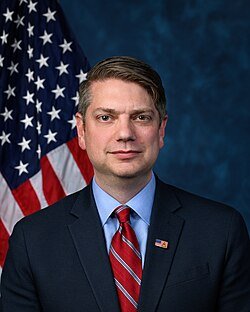
Thank you, Senator Sullivan. Let's give another round for Senator Sullivan. Next on our agenda, we have US Congressman Nick Begich. Um, we would like to welcome him to the stage. Born in Anchorage and raised by his maternal grandparents, Nick pursued higher education in the Lower 48, graduating from Baylor University with a Bachelor's of Business Administration and Entrepreneurship, and later completing his Master of Business Administration at Indiana University.
He was elected to the US House of Representatives in 2024. On the House Committee on Natural Resources, he serves as vice chair of the, of the Energy and Mineral Resources Subcommittee. Congressman Begich has passed more legislation as a freshman congressman in history. On the House— on the House Committee on Transportation and Infrastructure, he serves as vice chair of the Subcommittee on Railroads, Pipelines, and Hazardous Materials. He also serves on the House Committee on Science, Space, and Technology as an executive vice chair of the Congressional Western Caucus Please welcome Congressman Begich.
Thank you.
Hello, AFN. It is an honor to be back with you at the Alaska Federation of Natives Convention. AFN always has a remarkable way of bringing together Alaskans from all parts of this great state. It's incredible to see the excitement that this this gathering brings Alaska every single year. I want to begin by offering a special thank you to President Ben Mallott, the AFN board, and everyone who traveled across Alaska to be with us today.
Your commitment to Alaska does not go unnoticed. I also want to recognize the elders in this room. Our elders carry something that no government can create and no law can replace. You carry the knowledge. Yes, you carry the knowledge and stories, traditions, and lessons passed down through generations.
And you carry the responsibility of making sure that knowledge lives on in our children and our grandchildren.
Our traditions strengthen our families, and our families set the foundation for Alaska's future, a future that I work hard to defend every single day for Alaskans across our state. Before I go any further, I want to recognize the families and communities across western Alaska whose lives were changed by Typhoon Halong. Over the past year, many of you have faced extraordinary challenges, losing your homes and the life you built in western Alaska. Those of you who have endured these hardships, who have worked to rebuild your homes and your lives, and who continue to move forward despite the challenges, I want you to know that your determination is inspiring to us. While there has been progress, there is still a great deal of work left to be done.
And my commitment is to continue working with your communities and our state and federal partners to support the recovery and help families continue to build a stronger future for themselves. Your strength is a reminder of something we know well in Alaska, that when times get tough, we take care of each other. We do the work and we keep moving forward with our families, for our children, and for Alaska's future. Last year, when I stood before you, I made a commitment. I said I would keep listening.
I said I would keep showing up. And I said I would work with you to deliver results.
And I'm proud to report that my team and I have indeed delivered. Just 2 days ago, the president signed the Southcentral Foundation Land Transfer Act into law. And with that signing— yes, very important bill— and with that signing, we reached a major milestone. 10 Bills that I have introduced and sponsored in the House have now been signed into law during my first term in Congress. This is the latest victory, and it's especially meaningful because of what it means for Alaska Native families.
The South Central Foundation Land Transfer Act ensures that we transfer federal land in Anchorage to South Central Foundation, including the property where the Koyaanuk Clubhouse is located. That land transfer removes a longstanding federal barrier and gives South Central Foundation greater control over its future. It clears the way for expanded behavioral health services and a new facility designed to better serve Alaska Native people and families. And Southcentral Foundation is already preparing to break ground on that expansion next spring. That is what delivering results looks like.
It's taking an issue that's been held up in Washington, working with the people that know what their communities need, and getting something done that matters. I want to thank Southcentral Foundation President and CEO April Kyle, Senator Lisa Murkowski, and Senator Dan Sullivan for their partnership in getting this legislation across the finish line. It's always a team effort. You have a strong team working for you in Washington, D.C. It's another example of what we can accomplish when we work together to put Alaska's priorities first.
Long-standing problems addressed and real opportunities created for Alaska's families. Over the past 2 years, I've traveled across Alaska and met with Alaskans from all walks of life. Tribal leaders working to uphold their heritage and traditions. Community health aides and technicians in some of our most remote villages. Teachers, local artists, energy workers, and countless families.
We talked about housing and infrastructure, affordable energy, healthcare, public safety, subsistence, and the cost of living. We talked about protecting traditions and fulfilling promises that Washington made many decades ago. We've also talked about opportunity, the opportunity to build stronger communities, to create jobs and grow businesses, to make sure that our children and our grandchildren can build a good life right here in Alaska. I believe strong partnerships are built on mutual respect and a willingness to do the hard work. And over these past 2 years, that's exactly what we have been doing.
My team and I have built partnerships, we've tackled longstanding challenges, and together we've delivered meaningful victories for Alaska. I want to take a few minutes and talk about what that work has actually produced. When I entered Congress, two of the first bills I introduced were H.R. 42 And H.R. 43.
Both became law. The Alaska Native Settlement Trust Eligibility Act addressed a problem that had affected Alaska Native families for years. For too long, eligible Alaska Native elders and individuals with disabilities faced a difficult choice. They could receive distributions from their Alaska Native settlement trusts, money intended to benefit themselves and their families, but those distributions could jeopardize their eligibility for certain federal assistance programs. Think about that.
An elder could receive a settlement trust distribution intended to help pay for groceries, heating fuel, and everyday expenses, only to risk losing their federal assistance that they relied on. They were effectively being forced to choose between receiving support from their own Native community and receiving the federal assistance that they qualified for. That was wrong, and we have changed it.
With H.R. 42 Now signed into law, eligible Alaska Native beneficiaries no longer have to make the choice of federal assistance and these distributions. They can receive their settlement trust distributions without those payments being counted against their eligibility for these important programs. That means more money for families to meet their needs without putting federal benefits at risk, and that is a real result for Alaska Native elders.
The Alaska Native Village Municipal Lands Restoration Act addressed another problem that had gone unresolved for decades. Land that should have been available to Alaska Native village corporations remained tied up in outdated federal requirements. For Washington, that may have looked like an administrative issue, but in Alaska, land land means something to us. Land means homes. It means infrastructure.
It means economic opportunity. And it means having the ability to make decisions about the future of our own communities. We worked together to get that legislation signed into law, restoring greater control over these lands to Alaska Native village corporations. And we did not stop there. This year, the Cape Fox Land Entitlement Finalization Act, became law.
That legislation addressed a longstanding land entitlement involving Cape Fox Corporation and the Native village of Saxman. Another commitment that had remained unresolved for decades was finally resolved. Another example of what we can accomplish when Alaska Native leaders and our congressional delegation work to finish the job. We also secured passage of the Alaska Native Vietnam Era Veterans Land Allotment Extension Act, And I know that's a mouthful, but it means a lot to our Alaska Native Vietnam-era veterans and their families.
Behind every land allotment application is a veteran who answered the call to our nation's service. These men left their families and communities to serve our nation during the Vietnam era. And because they were serving, many lost the opportunity to apply for land allotments here at home. They fulfilled their duty to this country, and this country has a duty to fulfill their commitments to these service members. This legislation preserves the opportunity for eligible Alaska Vietnam-era veterans and their heirs to select lands to which they are entitled.
This is about keeping our word. It's about making sure that service and sacrifice are met with action. And it's about making sure that these veterans and their families receive the opportunities that they were promised. We've also made important progress on another longstanding issue under the Alaska Native Claims Settlement Act. For the first time in history, we passed the landless legislation through the United States House of Representatives.
This legislation addresses the longstanding land entitlement concerns of 5 Southeast Alaska Native communities: Haines, Ketchikan, Petersburg, Tenakee, and Wrangell. These communities have spent decades working toward a resolution. Getting this legislation through the House is an important step toward fulfilling those commitments and creating new opportunities in Southeast Alaska for their future. There's still work ahead, but we are moving forward, and whether we are talking about land entitlements, traditional arts, or economic development, the goal remains the same: remove unnecessary barriers, fulfill our commitments, and give Alaska Native families greater opportunity to build their own future. Protecting Alaska Native traditions has been another important part of my work on your behalf in Washington.
No audio detected at 1:26:00
This year we delivered a significant victory with the signing of the Alaska's Right to Ivory Sales and Tradition Act, or the ARTIST Act. I was proud to champion this legislation in the House, working along Senator Dan Sullivan, who led the effort in the Senate. This is important. It's important to AFN. It's important to our artisans downstairs.
This legislation matters for Alaska. And I know people outside of our state may not think that it matters, but it does. It matters to our communities. It's how so many Alaskans earn a living through their tremendous artwork.
Megan, thank you for coming to D.C. to testify on this and other issues. You know, let me just— let me just pause my formal remarks and just say I've had such an opportunity to meet many of your leaders, coming to Washington and meeting you in your communities. And let me say, when you make that long trip to Washington, it really does make a difference. Because people on both sides of the aisle, they're fascinated by our state, but they don't know about our state. And I'm one voice out of 435, but you multiply my voice when you come to Washington.
So thank you for being a part of that process.
So let's talk about what the Arctic Artists Act addresses. It protects traditional Alaska Native craftsmanship while expanding economic opportunities for the artists and families that produce that art. It's a practical victory for Alaska Native artists and small businesses, and it demonstrates what can happen when Alaska's congressional delegation works together to deliver results on your behalf. We're continuing that work with another important piece of legislation. Earlier this year, the House passed my bill, H.R.
6021, The Archi'kabanaw Migratory Bird Treaty Clarification Act. This legislation addresses another federal obstacle affecting traditional Alaska Native artists. For generations, Alaska Native craftsmen and women have incorporated feathers and other non-edible migratory bird parts into authentic handicrafts, clothing, and artwork. Federal wildlife laws and international treaty requirements have created uncertainty about how those traditional items can be sold. H.R.
6021 Directs federal agencies to work toward clarifying those rules while maintaining protections for migratory birds. The goal is straightforward: allow Alaska Native artists to continue practicing their traditions and selling authentic handicrafts without legal uncertainty. This is about protecting traditional craftsmanship while creating opportunities for artists to earn a living from their work. We got that legislation through the House, and now we're working to move it through the Senate. Over the past year, we've also delivered important victories for Alaska's energy and resource future.
We passed legislation addressing federal restrictions on oil and gas leasing in the coastal plain of the Arctic National Wildlife Refuge and the National Petroleum Reserve in Alaska. These measures restore opportunities for responsible resource development and economic development in our state. They recognize something that Alaskans understand well. Our state has extraordinary natural resources. Those resources can support, and do support, good-paying jobs, affordable energy, and a more prosperous future with greater self-determination for Alaska's communities.
For too long, decisions affecting Alaska's land and resources have been made by people in Washington who have never even visited the communities of Alaska. They don't always understand the distances. They don't understand the cost of living, and they don't always appreciate the role that responsible resource development can play in supporting our families. I believe Alaska should have a strong voice in those decisions. My goal is to help build an Alaska where prosperity is abundant and available to all those who pursue it.
That is the future that I want to work toward, an Alaska where families can thrive, where businesses can grow, and where the next generation has every opportunity to succeed. Last year, I talked about being Alaska's voice in Washington. Today, I want to put that just a little bit differently. You have a voice. My responsibility is to make sure that Washington hears it.
When tribal leaders explain how a federal policy is affecting their communities, that matters. When Alaska Native leaders bring forward solutions to longstanding land issues, that matters. When Alaska Native leaders come to Washington, D.C., and veterans come to Washington, D.C., and tell us that the promise of these land allotments hasn't been fulfilled. That matters. Those conversations don't end when I leave a community.
I carry them back to Washington. They become part of conversations that I have with federal agencies. They become part of committee hearings. They become discussions that I have with colleagues on both sides of the aisle. And as we've demonstrated in my office, they become legislation that becomes ultimately law.
That's how representative government is supposed to work. And it takes persistence, as we heard from the senator. He's correct about that. Alaska has one member of the United States House, one voice among 435. So when we go to Washington, we have to make our case.
We have to build relationships. We have to explain Alaska to people who may never have experienced the realities and the beauty of our state. And sometimes we have to bring them to Alaska so they can see it for themselves. Because it's one thing to talk about rural Alaska, but it's another thing to be there.
It's another thing to stand in a community, meet the people, see the challenges firsthand, and understand what it takes to build a life in our state. There are people in this room who have spent their lives working to ensure that the next generation inherited something more. Land. Culture. Opportunity.
And the freedom to determine our own future. Now we have that same responsibility. One day our children and our grandchildren will inherit the Alaska that we leave behind. They will inherit the opportunities that we create. And they will inherit the traditions that we choose to protect.
I want them to inherit an Alaska where opportunity is within reach, where families are strong, where Alaska Native traditions continue to be practiced and passed down, and where Alaskan voices are heard clearly in the halls of Congress. Last year I stood here and promised to keep listening and keep working with you, and today I can point to real results from that effort. Tomorrow we're going to get back to it because there are still commitments to fulfill, still opportunities to create, and still a future worth building. Thank you. God bless you.
May God bless the great state of Alaska. Koyaaná.
Thank you, Congressman Begich. We can have another round of applause for Congressman. Thank you.
I know we're running a little bit behind schedule, but some of the next that we have coming up won't be as a time—. A lot—. That time that was allotted on the agenda won't take as long. So thank you for bearing with us. Next, we have Representative— or excuse me, Chairman John Lowery.
Chairman John Lowery is a lifelong resident of North Carolina and a proud Lumbee citizen. John currently serves as a member of the North Carolina House of Representatives and the chairman of the Lumbee Tribe of North Carolina, the 7th person to hold that office in the tribe's history. As chairman, John has led major initiatives to build new housing, expand educational and agricultural programs, and secure record levels of funding for cultural preservation, economic development, and community infrastructure. His leadership has focused on strengthening families, promoting opportunity, and honoring the proud heritage of the Lumbee people. John led his tribe during the passage of the Lumbee Fairness Act in December of 2025, and he'll share his experience with us today.
No audio detected at 1:35:00
So let's give a warm welcome for Chairman Lowery.
Good afternoon. I'm going to speak for a few minutes and then I'm going to turn over to Ben. Ben, are you ready?
Are you ready? What? That's the inside joke. Good afternoon, everyone. I feel truly blessed and humbled to stand before you today.
It is an honor to be here among my relatives and friends at the Alaska Federation of Natives and to bring greetings from the Lumbee Tribe of North Carolina. Your theme, Rooted in Land and Tradition, Rising Our Voices, speaks to a connection we share despite the thousands of miles that separate our homelands. Our lands hold the stories of our ancestors. Our traditions teach us to care for one another. And our voices carry the responsibilities of protecting the future for the generations who will follow us.
One of the most important reasons I'm here today is to say two words: thank you.
During our long struggle to gain full federal recognition, you stood beside us. You encouraged us, you advocated for us, and you helped share our story. Your support reminded us that no matter how far apart our homelands may be, we are connected by our shared history, our commitment to our people, and our determination to build a better future for the next generation.
On December 18th, 2025, the Lumbee Fairness Act was signed into law by President Trump as part of the National Defense Authorization Act. What began as a journey nearly 140 years ago accumulated that night in the Oval Office. It was a long and difficult journey, one that my people should never have had to endure. But it was our journey to take. And through generations of perseverance, our people never gave up.
To understand the significance of this moment, we must look back at our history. In June of 1956, way before I was ever born, the United States Congress passed the Lumbee Act, recognizing Lumbee people while denying us access to federal services and benefits available to other federally recognized tribes. This happened during the height of the federal Indian termination era, when the government was seeking to end its treaty and trust responsibilities to Native nations. What began in the 1880s as a request for educational support for our children grew into a decades-long fight for justice. The Lumbee Act of 1956 became a painful contradiction legislation that recognized our people while denying us the benefits and opportunities that recognition should have provided.
For 69 years, that injustice remained uncorrected. Finally, finally, Congress took the action only it could take and passed the Lumbee Fairness Act, correcting a historic wrong and opening the door to new opportunities for our people.
But we did not reach this moment alone. When we needed allies, you all, AFN, stood with us. You remind us that Native people can stand together across thousands of miles, lift one another up, and help one another move forward. And we will never forget your support.
I want to take a moment to recognize our senior U.S. Senator from the state of North Carolina, Thom Tillis, who championed the Lumbee Fairness Act in the Senate and worked to secure the support of Senators Murkowski and Senator Sullivan. But Senator Tillis understood that getting our bill across the finish line required more than walking and working the halls of Congress. It required building relationships and bringing the right people together. I remember speaking with Senator Tillis one day, and he told me, Chairman, I picked up the phone and called Julie Kitka at AFN and talked to her for 45 minutes about the Lumbee Fairness Act.
Think about that for just a moment. Senator Tillis did not have a single constituent up here in Alaska, yet he understood the importance of AFN, the importance of Julie Kitka's leadership. And the influence that this organization has with regards to fighting for and advocating for Native people. He understood the value of building relationships. He understood the importance of asking for your support.
He even recorded a video for this conference a couple years ago asking for your support of the Lumbee Fairness Act while promising to act as your third senator if and when needed. Senator Tillis knew that the voices of Alaska Native people carry weight. From Nome to Washington, D.C. He understood the AFN has the relationships, the credibility, and the ability to reach elected officials and advocate for the issues that matter to our communities. And that, my friends, is what effective partnership looks like.
It is understanding what we do not have to face, and that we do not have to face every challenge alone. It is recognizing that another Native nation may have relationships experience, or influence, they can help us accomplish something important for our people. It is about mutual respect, strategic thinking, and understanding that when we work together, we can accomplish things that might otherwise remain out of reach.
Senator Tillis is a great friend to Lumbee people, and his efforts demonstrated something we should never forget: strong partnerships are built on relationships, trust, and the willingness to stand up for one another.
There is also another meaningful connection that makes this moment especially impactful. The Lumbee Fairness Act became law on December 18, 2025. On that same date in 1971, the Alaska Native Claims Settlement Act became law.
So our histories are distinct and the laws that shaped our people are different. But these milestones remind us of the power of Native people organizing, building partnerships, and insisting that our voices be heard. They also remind us that every historic victory carries a responsibility to turn hard-won progress into lasting opportunities for our children. For the Lumbee people, this victory represents the accumulation of generations of work, but also is the beginning of a new chapter. Now we must ask ourselves an important question: What does this moment mean for the sovereignty and future of the Lumbee people?
Sovereignty is about more than recognition by the federal government. It is about our ability to determine our priorities, strengthen our institutions, preserve our culture, and make decisions that reflect the needs and aspirations of our people. It is about taking greater responsibility for our future while honoring the generations who carried us to this moment. For the Lumbee people, the next chapter is about nation-building. We must turn the promise of recognition to meaningful progress for our citizens.
That means strengthening our tribal government, developing the capacity to administer programs and services, invest in education and workforce development, improving access to healthcare, creating economic opportunities, and protecting the cultural traditions, traditions that define who we are. It also means listening to our elders, empowering our young people, supporting our families, ensuring the decisions we make today create opportunities for the generations who will follow us. We must approach this work with a vision, planning, patience, and unity. We must build the governmental structures, partnerships, leadership, and resources necessary to serve our citizens effectively. And we must establish a clear vision for the future of our nation, one that reflects not only where we have been but where we want to go.
No audio detected at 1:43:30
Because we must remember, recognition does not build a nation. People build our nation.
Thank you.
Our people build a nation when they work together toward the common purpose. Our leaders build a nation when they listen, plan, and make decisions with future generations in mind. Our elders strengthen the nation when they pass down the knowledge, traditions, and values that have sustained us. And our young people carry a nation forward when they understand who they are, where they come from, and what they have the responsibility to protect. This is the work that lies ahead for Lumbee people.
It will not happen overnight, but our history has shown us that we possess the determination, the resiliency, and unity to meet this moment.
As we begin this next chapter, I believe there's much we can learn from our Alaska Native relatives.
Although our homelands and histories and governance structures may differ, we share a deep connection to our ancestral lands, a commitment to preserving our history and heritage, and a responsibility to ensure that our children inherit strong communities. We understand the importance of preserving our traditions while preparing our people to meet the challenges of a very, very changing world. We understand the need to create opportunities for our young people, strengthen our communities, ensure that our voices are heard in decisions that affect our future. And we understand that we're stronger when we learn from one another. I often say, I can do a lot by myself, but I can do a whole lot more working together in partnerships.
Thank you. This is why I believe our relationship should not end with a word of gratitude for your support.
It should be the beginning of a lasting partnership between the Lumbee people and Alaska Native people. As we move forward in our nation-building efforts, there are meaningful opportunities for us to work together in areas such as education, culture preservation, youth leadership, economic development, health and wellness, housing, environmental stewardship, and strengthening tribal governance. We can share ideas, exchange knowledge, learn from one another's experience, and identify practical, practical ways to support our respective communities. We can create opportunities for our leaders, educators, cultural practitioners, and young people to connect and build relationships that extend far beyond this gathering. We may come from different parts of the country, but many of the questions we face are very similar.
How do we protect our culture and pass our traditions on to the next generation? That's a question we share.
How do we prepare our young people to, to become tomorrow's leaders? That's the question that we share. How do we build strong economies while remaining true to our values? That's a question that we share. How do we strengthen our governments to ensure that our people have access to resources and opportunities they need to thrive?
That's the question that we share.
And guess what? We don't have to answer these questions alone.
The Lumbee people have much to.
From the experiences of Alaska Native communities, just as we have lessons of our own to share from our generations of determination, advocacy, and community building. Our experiences may be different, but those differences can become a source of strength when we approach one another with humility, respect, and a willingness to learn. Well, I'm here today humbling myself and looking to you guys and saying that I look forward to working with you and learning from you all.
True partnership is not simply about standing together when one of us faces a challenge. It's about continuing to stand together when the immediate challenge has passed. It's about building relationships that lead to meaningful opportunities, sharing knowledge that strengthens our institutions, and supporting one another as we work to create a better future for our citizens. As Lumbee people enter into this new era, we do so with a responsibility to honor those who came before us and an obligation to prepare those who will come after us. We want our children to be proud, and we want our elders to see their sacrifices honored.
We want our communities to have the resources, opportunities to thrive and survive, and we want our tribal government to have the capacity to meet the needs of our people while protecting the traditions and values that have sustained us for generations. We also want to build relationships with Native— with Native nations across this country that are grounded in mutual respect and a shared commitment to our people. That includes our Alaska Native brothers and sisters. So as we celebrate the historic passage of the Lumbee Fairness Act, let us also look toward the work that lies ahead. Let's continue building relationships, sharing knowledge, and finding ways to support one another.
Let us recognize that the future of any country is strengthened when Native nations respect one another's sovereignty, work together, and create opportunities for all people to succeed. Our histories have taught us resiliency. We're all resilient people. Our traditions have taught us to be responsible, and our shared experiences have reminded us that we are stronger when we stand together. So, on behalf of our elders who carried this fight, our families who never lost faith, and our children whose futures now hold new possibilities, I once again say thank you.
Thank you for standing with the Lumbee people when we needed your support. Thank you for believing in our fight for fairness. And thank you for reminding us that the bonds between Native nations reach far beyond our individual homelands. Our journey towards full federal recognition has brought us to this historic moment, but our journey of nation-building continues. We look forward to walking this path alongside our Alaska Native relatives, learning from one another, supporting one another, and building a future in which our people and our traditions survive.
May we remain rooted in our lands and traditions, uniting our purpose and rising our voices, not only for our own people but for the generations of Native people who will follow us. Again, thank you, thank you, thank you. And I want to extend a warm invitation to all you— not all at one time, but all of you— to come on down to North Carolina and hang out with us whenever you get a chance. So thank you all, and God bless.
Thank you, Chairman Lowry.
He traveled all the way up here and he had the biggest coat on last night for dinner. He was really cold. Um, our next panel that we have, I'm really, really excited for this panel. I think that we're going to have a lot of fun with this one. This one is focused as 60 years, the decisions that shaped AFN.
As we celebrate 60 years of the Alaska Federation of Natives, it is important to reflect on the leaders who helped build this organization, shape our movement, and carry our voices forward. For 6 decades, AFN's strength has come from the vision, courage, and determination of Alaska Native leaders who stood together to advocate for our people protect our rights, and ensure that our communities have a voice in decisions that affect our future. Today, we have the privilege of hearing from leaders who helped guide AFN through different chapters of its history. Their experiences offer valuable lessons about where we have been, the challenges we have overcome, and the work that remains ahead of us. As we honor our past, We look forward to the next 60 years.
Please join me in welcoming our past AFN leadership for this special conversation. We have Julie Kitka, Anna Hoffman, Nelson Agapek, Emil Noddy, and Willie Hensley. Thank you. If you guys could all come up on stage.
Well, good afternoon. It's an honor to have our panel following Chief John from the Lumbee. And for those of you that didn't catch part of the introduction, the Lumbee Tribe is recently recognized But now they're the 9th largest tribe in the United States. And they went down a path where they got recognized, but it was during the termination era, so no benefits. And that could have been us.
We could have got recognized at that time frame around our land claims and had no benefits like them. And so we're just so thrilled that justice finally prevailed with them and Thank you, Chief John Lowry, for coming up for the convention. But to get the panel going, I'm going to moderate this and call upon these distinguished leaders to share some perspectives on 60 years of AFN. And what we want to do is kind of go quickly from one person to the other. But if you want to each do an opening statement, one or two minutes about something that's on your mind.
No audio detected at 1:54:00
But what we want to talk about is what is the hardest decision that AFN made during your time in leadership, and did we get it right?
Am I on?
I think the hardest decision, one of the hardest decisions was we argued one day almost all day long.
At the end of the day, we had a lot of people in the room that were not board members, and towards the end of the day, we emptied the room of lawyers and spectators, and we were arguing whether Tlingit and Haida would join AFN. It was a tie vote. So by one vote, Klen Kitnaheida got in. And we needed their strength and their experience. And so we got them in.
Very good. Nelson.
Testing. Is it working?
First of all, let me say this.
I'm inflicted by the old age issue. I have a hardest time hearing, so let me share what I think Julie Kitka stated.
I'm a relatively newcomer to ANCSA because I, the very first convention I ever attended was in 1973. Didn't know what a convention was.
However, in due time I understand what it is.
And one of the biggest Issues that evolved during my time was the transformation of the governing board of AFN. Initially, AFN board was made up of regional corporations.
In due time, there was some discussion of adding the nonprofits and the village villages. And they were not the easiest things in the world to do.
They were not the easiest thing to do.
So, but the Governing Body was transformed into a 36-person board from a 12-person board. And the purpose of that was to create strength within the Alaska Native community through unity. Thank you very much. Thanks, Nelson. Willie?
Hardest decision? Yes, the hardest decision you have been making. Well, we had actually a lot, a lot of hard decisions, but I think one of the first ones, and I think Ima would back me up on this, was that from the very beginning, a couple streets over on 4th Avenue when we had our first meeting, there was some concern that we actually might lose control of the very organization that we were trying to form.
No audio detected at 1:58:00
And Emu invited a few of us to meet at Lloyd Avakana's log cabin out there on Potter Street.
There were not that many of us, and there were a lot of the leaders who did show up, we didn't know each other very well. But Imal had been under a little pressure, and there was some people in the Nalawmi world that were— or Gassaq world— that were not exactly excited about the natives of Alaska getting together. And so we had to figure out a way to make sure that native people were going to call the shots. In this new organization. And so the several of us who were there found a way to make sure that Emil stayed in the chair, you know, until we figured out how to move forward.
No audio detected at 1:59:00
So that was our first really, I think, I think our first critical decision long before we got into the substance of what, what became the Claims Act.
Anna, how about you?
Thank you, Roiana. I appreciate the invitation to speak here, Roiana, to all of you that are continuing to be in attendance here in the convention room. The hardest decision under my tenure here at AFN would be the succession of of you, Julie. That succession was, you know, you were here for 4 decades. There was consistency and the history and the understanding and the vast experiences that you had helped AFN weather through.
No audio detected at 2:00:00
And with the anticipated change that was intimidating for the organization, for the board, I think for our membership, but you clearly built a strong foundation because the organization continues to thrive. So that was the biggest change, the most difficult transition that I can talk about.
Thank you.
Was there—. Okay, another question for Emo. Was there ever a moment when you genuinely worried that AFN might pull apart, that the fights or the disagreements were so strong that you thought, oh, AFN's going to fail, come apart?
There were several moments. But one of them was we had a, we built our position word by word and the first distribution of land became an obstacle. It was our first proposal was divide on population. So we had North Slope with us full 60, million acres, I think, up there. And they said, "That's not fair." They only have 7,700 people and a big share of Alaska they're gonna lose.
No audio detected at 2:01:30
So they pulled out.
So we had to negotiate them back in, but we were both under pressure. We needed them. They needed us, but the big pressure was Congress was not going to choose between different regions. So we had to come up with one position. We negotiated the back end and it strengthened us.
We're glad that happened. Thank you. Nelson, how about you?
I think one of the biggest issues we dealt with since the passage of the Land Claim Settlement Act was 17 of ANCSA. That was the lands that were set aside to add into the conservation systems. And why was that?
As there were some of us, or some of the people within the Native community and the corporations that were pushing for the strongest protection of subsistence rights within the Native community.
And I know for sure that some of the members pulled out over that issue. However, there was also a movement within the Native community that we need to resolve our differences in such a manner that it creates unity rather than division. And I think we prevailed in that pretty well. Thank you.
Willie, what about you?
The question was—. Was there ever a moment when you genuinely felt that AFN could fall apart? Oh, hell yes. More than once. Oh yeah, we had many issues.
It was clear, I think, to us, as green as we were, that we had to have unity, that the politicians would be happy to forget about us if we didn't have a strong position on every key issue. They would just throw up their hands and not do anything. And we had many moments like that, and I would say that The key one involved, of course, the Trans-Alaska Pipeline. Once Secretary Udall decided not to process state claims, of course, the state went ape because the state needed that land to survive financially. And so that was when the pressure really began on everyone in AFN.
And when Wally Hickel was in office, he fought tooth and tongue to try to get that freeze lifted so they could build a pipeline, the state could survive, and everybody would get rich with all those jobs and contracts. Well, We had to say no. We had to say no as AFN because we knew that if they got the pipeline built, they would never settle the Settlement Act, or the land claims issue. We'd be in the court now. We'd be in the court for 100 years, in the Court of Claims.
And so the board selected Emil, myself, and Eben Hopson and John Borbridge to go to D.C. to see what we could do to try to save the land freeze when Nixon appointed Wally Hickel as the next Secretary to replace our hero, Stewart Udall. And so there literally was a planeload of Alaskans that were shipped down there, business leaders, politicians, some of our own board members. Were willing to take a chance and the sand was shifting from under us. But we went down there and we were sort of persona non grata. I mean, they put all the truth squad people in the front of the hearing and Emil and myself and Borbridge were way in the back row.
No audio detected at 2:06:30
But we did not stand up when they introduced all of the Alaskans who were there to support Wally because we knew we had to keep that freeze. And by gosh, thank God we were able to do that with Senator Jackson's help. Thank you. Very historic.
Anna, how about you? Was there ever a time when you thought AFN would pull apart? What would be the glue that kept it together?
Sorry. Thank you. Yeah, there were times, you know, in recent years there were times where several regions had had not paid their dues and sat out for a while. And, and that was worrisome. And, you know, you were, you were president at the time and you really helped keep us steady and give reassurance that we'll continue to do the work.
And there are times when people would ebb and flow through AFN membership. And I'm glad to say that the membership is We have strong membership again, and some of those that stepped away came back. And I think it's important that the— there was recognition that the conversations that are really critical happen here amongst each other, with our— to each other, and not just externally. So that's— I also want to Thank the regions that continue to remain steadfast throughout. That's really a good— something that we appreciate because we recognize the strength of having this Alaska Federation of Natives organization intact.
Okay, let's shift to another subject. Who is an Alaska Native leader in your mind that hasn't got the recognition that they truly deserved? Is it Emo?
I think there were two. I would name Nick Gray and Howard Rock. Nick Gray was one of the original organizers. He committed to organizing regional groups. He first organized Fairbanks Anchorage.
From Anchorage, we sent them to Cordova, Bethel, and Kodiak. And then he was the original organizer and had this dream of a statewide organization.
The other one, Howard Rock, also had a dream like that. And he encouraged us, he scolded us, He supported us, but neither one of them I think have gotten really the recognition they should have because they were very early and it was their original dream to have that. Good to flag that. Nelson, how about you?
Somewhere in the history of the Alaska Native community, all of the people, all the— not all the people, but all the Alaska Natives who met with Spiro Agnew, Vice President of the United States of America, Their names should appear in the history of our people because when these people met with Spiro, they were seeking the support of the Nixon administration because with that support, their support The Nixon administration's support led to the passage of the Alaska Native Claims Settlement Act. That's why I think those people who met with Spyer should be recognized. Raymond Christensen, Senator from Bethel, Alaska. Al Ketzler of TCC. Don Wright, AFN President, and finally Laura Burke.
No audio detected at 2:11:00
Let's remember them. Thank you very much. Thanks, Nelson. Willie?
All the many years that Abel and I worked together, we never really ever compared notes, even when we were going to appear in Congress, but we always seemed to complement each other, and oddly enough, His two names were my first two names on my list, but I added a bunch of others actually. He mentioned Al Ketzler. Actually, Al Ketzler from Nenana was really ahead of us by a number of years in terms of trying to bring attention to the Native Claims Issue. And I have a whole list of others. I'll just rattle them off so you'll know.
Alice Brown, Nels Anderson, Harvey Sammonson, Laura Belz, Jerome Treeg from Nome, Andrew Isaac, Eben Hopson, John Borbridge are some of the ones that in their way, you know, contributed to our efforts.
Thank you, Willie. Anna? And the only— Laura's been covered. I was going to mention Laura and of course my mom, Margaret Nick Cook. For sure.
Senator Ted Kennedy loved her.
Well, here now we go to a question of what did you learn about dealing with governors, presidents, members of Congress, or federal officials? What moved these non-native leaders to come around on Native positions? Was there some magic?
You're dealing with the Congress, you're dealing with the governor, and you're trying to make your best arguments on an issue, what worked the best?
What's that? What worked the best? What moved, like say if you're testifying to the Congress on an issue, what would make the Congress pay attention and come along with you?
They didn't pay a lot of attention to us for the first 4 years. We'd go down there and testify and we'd get down into the meeting room at 7 in the morning and supposed to testify at 10 or so and they'd say, "Come back tomorrow." We weren't high, we weren't an issue with Congress. They didn't really care whether we, whether we moved the bill or not. The two big issues was the Vietnam War. There was rioting in the streets.
There were students killed on campus. They were paying a lot of attention to that. The other one, believe it or not, was supersonic transports. There was a big argument before Congress about supersonic transports crossing the United States. And they never did commercially.
They flew test flights but never flew up there.
So. So early on, they just didn't pay attention to you at all. They didn't. So we had to—. We had to still do it.
We had to get their attention and we had a hard time. So on my way—. What got Wally Hickel's attention? Sorry. What got Wally Hickel's attention?
I was on the way to Seattle to Pacific Lutheran University. And on the way down, I said, I have to say something to get their attention. So I made a speech about a separate nation. Nation, not a state. Separate nation for Native people.
Who lost all of North American constant. We need our own nation. I wanted the senators and congressmen to say, what's this all about?
We have to deal with it. I don't know if it made any difference, but it was, it got a lot of attention. Okay, Nelson, what about you? Could you repeat your question please? The question is, What arguments did you make to a Congress, congressional committee, or a governor or somebody to advance Alaska Native issues to get their attention?
Was there anything special? Thank you very much.
I'm a—. Since I'm a relatively newcomer into the scene, let me just share this.
Over the years when we lobbied Congress, we gave them stacks of information until one day we met with Senator Inouye, and his advice to us was, "Don't give us a book." My staff and myself don't have the time to read your books.
What we want from you is to identify the issue, and not only identify the issue, but come up with potential solutions.
At that point, one of the lessons we learned was that since our population is so small, we must learn to work both sides of Congress, the Democrats and the Republicans.
I think when we did that, we had a better opportunity in solving the issues that we were trying to resolve. And we had to do it in a very earnest and straightforward manner and as precise as we can. Thank you very much. Thanks, Nelson. Willie, anything come to mind?
Again, what turned the power structure on? Is that what you're saying? Well, let me say this. The political leadership of Alaska was accustomed to doing whatever they wanted to do with respect to our land and our resources. So they were accustomed to us not being present For instance, at the Constitutional Convention, we should have been there.
10 Or 15 of our people should have been there so there would have been something in the Constitution that recognizes our people and our values and our ways. And so early on, Emil discovered that there was going to be a meeting in Washington of all of the political leadership and the Secretary of Interior, the two senators, the congressman, the governor, and the Secretary of Interior. They did not invite us, but Imel, I guess we took up a collection and we flew all night and we walked into that meeting.
No audio detected at 2:19:00
The point being that do not talk about our land without the presence of the Native people.
So that was— so the non-native leaders, they were not accustomed to Native people standing up. So we had to show strength, and unity provided that. But even then, they accused us of listening to East Coast lawyers as if we couldn't think for ourselves.
There were threats, especially when the pipeline was being held up. Emil had to have security around his house. You know, I wore a bulletproof vest one AFN convention. I remember I still have it somewhere. But so There was effort to intimidate, but we tried to appeal to the good side of America, the positive side.
You know, we weren't out marching, we weren't out burning things down. We just appealed to the fairness of the American people.
I would say it's persistence and the collective voice of our vote. Really, that's, that is what influences the people in power that you spoke about, governors and congressional delegation and so forth. Well, thank you. I know we could go on many questions and time, but we're running a little bit short on time, so we'll do one last question. Question on that.
Ema, what do you think is the most important message you'd want to give to the delegates today for them to think about? It's an ongoing struggle. It's not over yet. We have a settlement, but there's still issues. We need to strengthen sovereignty.
Sovereignty is like a muscle. If you don't use it, you lose it. The other one is subsistence. That's an ongoing fight and we need to pursue it. We could not hold it.
There was too much opposition. So we did not get a fair settlement on subsistence. And the last thing is we have to do something about the young people who do not have shares. If we don't include them, they lose interest. They don't get the newsletter, they don't get dividends, they don't have a voice, they don't have a vote because they're not shareholders.
So we have to solve that. Thank you, Imo. Nelson, what message would you want to give to people to pay attention to?
About 1995, or thereabouts.
There was a resolution passed by the delegates very— by a very slim vote on opening Anwar for oil and gas exploration and potential development. After the vote was done, one of the things that I remember about that convention was Johnson Solomon, traditional chief of Fort Yukon, stood up and very humbly and meekly but powerfully stated, "Thank you for giving us an opportunity to fight over this on the floor.
When we get out of this building, we're going to get out bloody, hurt." and scratched.
But let's walk out as united Alaska Natives. Thank you.
Willy?
Again, I think Emil and I came up with similar ideas. Yes, we're always going to have to fight to protect our right to hunt and fish and trap. It's always going to be something that's going to be before us, and so we should keep that in mind. The other thing is that we need to keep control of our lands. And the Nalagmiz of the world don't realize what we did.
There would be almost no private land in Alaska if we had not got the Settlement Act. Yet we had to fight the state, we had to fight the Chambers of Commerce, we had to fight the business people, we had to fight the miners, we had to fight everybody, when in reality it was to the benefit of us all that we in Alaska have control of those lands. But we're going to have to fight to protect it forever, really. And the other, of course, is the control of the stock and I mentioned in the elders and youth that if you haven't seen Killers of the Flower Moon, the movie about the Osages, you should see it. Because at one time in our history, they were pushed off onto what everybody thought was the worst land possible.
It turns out that's where all the oil was, and they became the richest people in America. But then they lost it all. And so we need the help. We need the help of our school districts because they've got the children. They need to know how hard we've fought for that land.
And they're going to have to help us keep it. Thank you.
Thank you, Willie.
Ana?
Thank you.
My message is thank you. Thank you, Julie, Emil, Nelson, Willie. Thank you for your leadership, for paving the way for AFN, for your hard work. To your families, And to the rest of us here, the message, the takeaway message is we can impact change. We've done it before.
They've shown us that we've done it before, and it's a lasting change. We also impacted change. This body here really was the group that propelled the write-in campaign for Lisa Murkowski. And without the Alaska Native people and our participation in that effort, she would not have been reelected into that seat as a write-in candidate. We can impact change.
We can not only impact change within our Native community, we impact change throughout the state of Alaska. That is what is— that is our responsibility. That's the responsibility that has been passed down to us from people like Emil and Willie Nelson and Julie. And let's exercise that. Let's be good stewards of that responsibility and exercise it.
Oyáana. Well, with that, we'll go ahead and conclude the panel and turn it on to the next part. Thank you.
If you guys could still please stay on the stage, Willie, we have a special recognition that we would like to do.
Now we'd like to call up the leaders of Native Village of Tionik for a special recognition. Please welcome President Robert Stephens Sr. and Vice President Judge Stanfire to the stage.
So I just want to thank this panel. This panel is amazing here. Julie, Emil, Nelson, Willie, and Anna. But really, as we're talking about the struggles of AFN, and Woody said that we're finding everyone. To do what we do, to do everything that we do, to go to Congress, it takes resources, it takes money, is just the hard truth.
And maybe Woody could help me with this, or Emo help with this, but when AFN got started, the Yakama gave AFN a loan, and we actually had Yakima up here a couple years ago, and we thank them again. I didn't say it last year, but also Tyonek, one of our very own communities, gave us a loan, gave AFN a loan to get started. And at our 60th anniversary, we would like to thank your community, your tribe, for doing that, because what your loan did is give us and give our future generations a gift that we can never quantify in terms of payment. It is an amazing thing that you have allowed AFN to do, create AFN, and with that we want to honor you all. So I don't know, Ima or Julie, yeah, maybe, you know, Ima and Woody, you're there, and Nels, I don't know if anyone wants to say anything, but at 60 years, just gunalchéesh kwayana for the opportunity and the gift you gave to our state of Alaska and to our people.
No audio detected at 2:29:30
Great accomplishments have been made during these past 60 years because of AFN involving tribes, Alaska Native tribal corporations, regional corporations, nonprofits, and the many partners we have engaged with during the years. We are thankful for this. Please keep in mind why I believe why this entity was formed, to share experiences, values, ideas, and to support each other. We all have issues in common for the needs and advancement of all Alaska Natives. We can agree on and work together: sovereignty, housing, healthcare, education, elder care, Veteran care, tribal courts, tribal law, subsistence, just to name a few.
We also have some issues that some have disagreements with, but let's not let that deter us why we are here to help our people, which I mean all Alaska Natives. My father once told me why this organization is so important. Is that if you can't take care of your own people, who will?
We are not here just for ourselves. We are here to be a voice for all that is why we are here. It is our ownership and responsibility to be here. We are also here for our generations to come. One of the reasons that our past leaders have helped with the last few years with AFN When they did it, it was the right thing to do.
Thank you to the Tionek Naval Corporation for standing by the native village of Tionek and continued support through all these years. Also our partners, Cook Inlet Region Incorporated, Cook Inlet Tribal Council, South Central Foundation, Tebona Foundation, Tionek Tribal Conservation District. If you'd like to know a little bit more about the story of Tionek, there, I believe it's on YouTube, it's called Tebona. The beach people.
I have to say, when we started AFN, we had nothing.
Our first bank account had $9 in it. We had absolutely nothing. The village of Tyonek stepped up. And lent us the first $100,000. Without that, we would never have gotten the start we needed to finish the job.
So thank you to the village of Tyonek.
Thank you very much for everybody's leadership. And thank you to the native village of Tyonek. We'd like to get a photo if we can with everybody up here.
No, with all of you guys up here too, with Tionek. Julie? Around the chairs? Yeah, maybe it would be best if maybe we have the panelists that were in the chairs and we could go around the chairs. I think that would make a nice picture.
However—. Yeah?
Yeah.
How—. We can make the picture work. I'm just trying to make sure that we get a good picture and get everybody where we can see everybody's faces. Yeah.
No audio detected at 2:35:30
No audio detected at 2:36:00
No audio detected at 2:36:30
And we're done. Thank you. Thank you very much, Native Village of Tionik.
Okay.
Okay. Well, everybody is moving down and we're moving along. Next, we would like to welcome Michael Hayman and Ingrid Goodyear, to speak on justice and public safety initiatives in Alaska, missing or murdered indigenous persons, VAWA-related violent crimes, and drug trafficking. Appointed in June 2025, Mr. Heyman brings more than two decades of legal experience, including work prosecuting complex financial crimes, human trafficking, and international crime activity. He joined the U.S. Attorney's Office in Alaska in 2020 and received the U.S. Department of Justice Directors Award in 2023.
No audio detected at 2:37:30
Ingrid is the Missing and Murdered Indigenous Persons Regional Coordinator for the Great Plains Region and the District of Alaska. Appointed Alaska's first national MMP coordinator in 2020, she now serves among 5 U.S. Department of Justice regional coordinators nationwide. A Valiut'in Tlingit descent, Ms. Goodyear brings more than 2 decades of leadership in tribal justice, education, and community service including 22 years as a Gwagun/Tayungun tribal judge. I hope I said that okay. Welcome, both of you.
Thank you.
Good afternoon and thank you. We appreciate being invited here today. And so thank you to the Alaska Federation of Natives particularly for the 60th convention rooted in land and tradition. We have a lot to talk about with those issues that we're going to get through over the next few minutes, but we at least wanted to thank everyone for your attention and the invitation to be here today. The U.S. Attorney's Office is part of the Department of Justice.
In the District of Alaska, we have 3 offices in Fairbanks, Juneau, and Anchorage. With about 22 criminal prosecutors that are tasked with prosecuting every federal crime possible that occurs within the state of Alaska, the district itself. To accomplish that justice issue, what we've done is we have a number of initiatives that we've rolled out. We have one that Ingrid is going to talk about significantly with respect to MMIP, and we have a number of other initiatives that address violent crime in our rural communities and drug trafficking. We'll hear about some of those things as we go forward.
No audio detected at 2:39:30
Hello and welcome again. It's so good to see you and thank you for staying, and to those people online, thank you for joining us. I am your MMIP regional coordinator here in the Great Plains and the District of Alaska with almost half of the tribes across the United States. But I'm Aleut and Tlingit. My parents are here, Dick and Edith Jacobson.
My sister is also downstairs, Tiffany Jackson. And my grandparents are Ivy and John Jacobson from Unga and Sandpoint. And my maternal grandparents are Alfred Widmark and Carmel Demert Widmark from Cloaque and Juneau. Really happy to be here and talking to you, and we look forward to talking to you about many of the things that are happening, but we're going to move really pretty quickly. So, Michael.
We apologize, you might get a little whiplash as we move through these slides pretty quickly here. So, there's a lot going on within the Department of Justice and U.S. Attorney's Office, and that's in two components. We have a tremendous amount of outreach that we've been doing, uh, and we also have a number of tangible results that we wanted to talk about a little bit today. Uh, we're going to talk about the tangible results later, but there was one that was sort of hot off the press that I wanted to raise with you. Initially that is involved in our MMIP issue.
And that being, some of you may have heard yesterday, a guilty verdict was issued in the federal court with respect to an individual named Brian Smith. This individual was convicted on falsifying documents and lying in connection with the U.S. citizenship application. And so, He will be sentenced in February of next year, and you may think to yourself, well, why are we talking about a false application to U.S. citizenship when the subject here is public safety and MMIP? And the reason I wanted to highlight those is because this individual had already been convicted of murdering two Alaska Native women here in Anchorage. All right?
He had sexually assaulted, tortured, and murdered those women. And he was held accountable on the state side, but I felt it was important on the federal side to not just directly attack this issue, but even indirectly attack this issue with every federal charge possible to ensure that a monster like this man never returns to any of our communities. And so I wanted to at least highlight that as we start talking about how we're addressing MMIP issues on the federal side. And taking every angle possible to put people in jail deserve to be there for the rest of their lives. And the one thing I want to say with that— The one thing I want to add with that is we've heard a lot about MMIP at Youth and Elders this week and just a lot of discussion about the issues and concerns.
And really what we got out of this case is just the importance of every individual, particularly every individual in this room, every individual online, every individual in our population. And that is just what we are striving to show in all the work that we do with all of our partners as we talk about this today.
We've also been out in our communities pretty extensively. Over the last year or so, the national— called Drug Czar, Sarah Carter has come out to Alaska 2 times. She was so impressed and is so committed to the drug trafficking issues here that she's come twice. We've gone out to a couple of rural villages to, to hear the challenges that are being faced with respect to especially fentanyl trafficking. Our U.S. Attorney General Todd Blanch was here a few months ago.
We went out to Bethel and Emonak to show him firsthand And there have been some real tangible results that we've immediately gotten even based on those visits that we'll talk about in just a few minutes. But in addition to that, myself and Ingrid have been going out to communities throughout the state, dozens of them, to hear and listen to what's happening in our rural communities, to share ideas, to share resources, and sometimes most importantly, I think almost every time I go out to rural Alaska, I bring home a case. We make those connections, we hear about what's happening, we talk to the law enforcement, the tribal leaders in our local communities to actually start developing federal cases so that we may start to address some of these issues on violent crime. And our resources in our office, Mike? Our resources in our office?
So we have a number of resources, and this slide is actually even outdated already with respect to the people that we have that are attempting to address MMIP and violent crime issues in our rural community. You know, a couple of them are listed here, and they're in the room today. Mandy McKenzie, a tribal liaison that's from Fairbanks, as well as Deeja Shield, our tribal victim assistance, and then of course, Ingrid. But even just within the last few months, we've gotten authorization based on Attorney General Todd Blanchard's visit to hire a tribal justice prosecutor, and that person we are in the process of hiring right now. The idea and intent is for that person to be exclusively focused on bringing cases that arise out of our rural communities, violent crime cases.
All right? We are also in the process of working with some communities to obtain additional financing from the Department of Justice and get grants to hire special assistant United States attorneys. That will be dedicated to regions and bring cases in the federal court that arise in those regions.
In addition to that, with the regional program, we also have an assistant U.S. Attorney who serves the region, Troy Morley, and we also have the Savanna's Act, which brought all of the partners together, our law enforcement victim services, our tribal and tribal agencies, to talk about how we could do this better and how we could work together on MMIP. And you can find that on the U.S. Attorney's site under programs. We also just worked with our Alaska Tribal Public Safety Advisory Committee. Could you tell us a little bit about what they just did? Sure.
Under the Violence Against Women Act Reauthorization Act of 2022, it stood up this special Alaska Tribal Public Safety Advisory Committee that had sat dormant for a couple of years, but within the last year and a half especially, it's been reinvigorated. There's been a number of tribal leaders, victim services, community leaders that have come together every couple of months, and what they've done is just within the last 2 weeks, they've put together over a 50-page report that talks about violence in our rural communities and how to use the Violence Against Women Act and special tribal criminal jurisdiction to address that issue. So there's been a tremendous amount of work that has been done just within the last couple weeks even.
No audio detected at 2:46:30
I did want to speak momentarily about this because we recognize the devastation that has caused in our western communities. But what we also want to do is thank those that are the first responders and build a system to do a couple of things. Is one, is to ensure that we don't have a secondary problem because of Typhoon Haolong. It's already caused enough devastation, but we do understand that when you have situations like this arise, that it gives rise to potential public safety issues— human trafficking, for instance. And so what we've done is focused on trying to ensure that we don't have human trafficking that arises out of a devastating incident like this, but in the event that it does happen, that we're able to swiftly and quickly address any issues that arise.
I just wanted to quickly show you this region. If you look at the blue, this is the states that we represent in the region. And as part of that, the focus is really both on prosecuting cases, but also finding missing folks. And we're going to talk about some of the finds that your tribal agencies have done, working with our state and local partners, and identifying missing folks, helping— you're going to see both here today, The state troopers are going to talk about some of their DNA projects a little bit later. But really working on that collaboration and coordination and communication, how we surround and work at working with everybody, both law enforcement, victim services, and community partners to just kind of surround around families through tribal community response plans.
No audio detected at 2:48:00
Kagasa kun. I also want to share a big thank you to everybody for announcing this and sharing this, both in youth and elders, and at all of the events that we've been at recently. There is no wait time. You know, the 24 hours, the 48 hours that you hear in the movies that you have to wait to report somebody missing is a movie myth. There is no wait time.
When somebody goes missing and you get that icky feeling that somebody is missing, Report it. That is the what gets everything going, and call 911, and get that report in to all those officers that can make that case start moving for you. Michael? Why don't you take this one? And on this next slide, I want to say gunalchéesh to all of our volunteers.
We have, as we've traveled throughout Alaska, we found some really amazing things that are happening. We have some super volunteers that are doing some amazing things with search and rescue. They're doing training. This is happening all over the place. These are just some quick examples.
In Nome, we have 30 volunteers that are training weekly, often on search and rescue, and a lot of those volunteers are showing up for that training. And in Alaska, the Kaua'ungaan Tribe and the Alaska— the police— the fire department there, they are encouraging people to join in their fire department and become search and rescue people as well. We have— we just participated in— and I'm going to say this wrong, but Quinnahooks, they're— the corporation I'm not going to say, they have a drone project that they have just started. And it's mapping the routes that folks have traditionally used and just keeping track so that when events happen, They are able to then go use that to help find where those missing people are. Some really cool stuff.
And with the wilderness plan, as people start saying to their loved ones where they're going, it helps them search them much faster and much quicker.
As we talk about these, I want to go to the tribal community response plans, and we're going to skip over that next slide. The tribal community response plans in the state of Alaska, we have 40 tribes that are actively involved in the tribal community response plans, and that includes all the partners that are involved with the Alaska MMIP Working Group. But it includes the Tanana Chiefs with the 37 tribes across the 42 communities and the municipality of Fairbanks. It includes Unalakleet, the Chao Yan Tribal Council of Dillingham. And those guys are actively responding.
And when I say actively responding, Michael, the VPSOs in Tanana Chiefs have been responding to cases. Can you tell them how many cases they've responded to? I believe there's been 93 cases in the past couple of years that they've responded to, and the vast majority of those have been successes. So it is a plan by a community that's extremely involved, and they've done a tremendous job of not only putting the plan in place on paper, but then executing it in real life.
This is amazing, but what also is amazing is that you have 33 other tribes that are actively working, and in the next year I anticipate that they're going to have their tribal community response plan too, which includes another region that is fully working on their plans. I'm going to skip over some of the outreach and education that we're doing, just in the case of time, and take us to some of the casework, Michael.
So what I wanted to do was not spend a ton of time going into excruciating detail about some of these cases, but I do want to highlight that we recognize that we can talk till we're blue in the face about vision and ideas, which we must do, but we also must do the hard work, uh, to ensure, uh, that some of these federal cases are brought. And so the first one I wanted to highlight was in the area of child exploitation. It's an unfortunate topic that we do have to have, but it's one that's plaguing a lot of our communities everywhere in Alaska. And so it's a priority within my office. We have a number, a disproportionately large number of actually, of prosecutors that are handling these type of cases.
And this is one example recently, in Utqiagvik, uh, where an individual had multiple victims and was sentenced to 18 years of imprisonment. And so currently, I would say at least monthly, we have indictments that, that are involving child exploitation materials. I'm not happy that we have to do this, of course, but it's one of those areas that requires special attention, and we will continue to work as hard as possible on these cases. And as you can see, the National Center for Missing and Exploited Children shows an uptick in these, but really, the benefit for you guys is that you can make a difference in this. You can report these to 911, you can report them to FBI, and your new BIA Predatory Crimes Unit that you heard about today, you can also report to them, and they can respond in these cases.
You can make a difference in these cases.
The next case I want to talk about is in Southeast. We have a number of drug trafficking cases, of course, that we're constantly addressing, bringing them on a monthly basis. Here's one where we had an individual distributing narcotics in the Skagway area that resulted in death of two individuals. These, what we call death resulting cases, are particularly egregious, but it's an area that in federal law law, we think we can make a significant impact. And the reason I say that is that while you may have a drug trafficking crime under state law, that may also be a drug trafficking crime under federal law.
Under federal law, we have a 20-year mandatory minimum sentence if you are convicted of distributing drugs that result in the overdose or overdose death of someone. And so we are aggressively bringing these kind of cases in my office. Whether it's overdoses or overdoses that result in death, to address those narcotics trafficking problems. And we often hear that even when we report it, nothing is happening. But I'm telling you, you need to report it and report it and so that we build that history.
You can report it at 911. You can report it at the Crime Stoppers. You can report it at TIPS. You can report it anonymously. But the more you report, the more likely it is that we can prosecute.
And again, it's an unfortunate word that we have to keep using when it comes to rural Alaska and our communities is fentanyl. And these are national statistics, but I can tell you, once you look at those national statistics, the picture is even more bleak in Alaska because our communities are so small. And I don't have a slide for it, but I'll tell you that when it comes to the number of cases and the volume of cases we're dealing with fentanyl trafficking, we have one that's been pending for a couple of years right now. That involves 69, 69 defendants, 69 individuals who have been charged for trafficking fentanyl to rural community, to our rural communities. Several of them have already pled guilty.
Some of those individuals have distributed and resulted in death. And what they've done is they've trafficked these fentanyl pills by the tens of thousands. All right, let's get our head around that. Tens of thousands of pills out to our rural communities, primarily through the mail system.
And you name it, the communities that we've done, that we found these narcotics fall coming in, to a point where there's enough of the fentanyl being trafficked that it's enough to kill every community multiple times over. And the reason for that is that the profit margin is so incredible for the drug traffickers to push this poison into our rural communities that they have a financial incentive to keep doing it no matter what the cost. And so we are on the front line. And like I mentioned, that one case that's ongoing with 69 defendants from a prison gang member in California that started this drug trafficking organization. And we will continue to do everything conceivable to stop that flow of fentanyl into our communities.
Felon in possession. Felon in possession. This is another type of case that when you think of MMIP, you might wonder, well, what does being a felon and having a gun have to do with MMIP? Well, we realize that this is where a lot of our violent crimes start, is you have individuals that have felony convictions in their background that also possess firearms. It is illegal under federal law.
And so we are using this tool to take individuals off the streets that are problems in our community. So if you have a felony With a gun, it's a criminal violation where you can spend multiple years in prison. I will also add that something that doesn't show up here is if you have, or if we know of an individual with a domestic violence protective order in place, and they have a firearm, that person is likely guilty of a federal crime. And it's not just a state domestic violence protective order. If there are a tribal organization, a tribal court, that has issued a domestic violence protective order against someone in your community, and that person also has a gun, under federal law, we can charge that person for being in possession of a firearm while there is a tribal domestic violence protective order in place.
So again, I'm coming back to this idea that we are attempting to utilize every tool in the federal playbook to address the violent crime issue in rural Alaska.
Before we go to our final slide, I just want to say thank you one more time to all those people that are involved with MMIP on the working group. I know we skipped over those slides, but we have just a tremendous amount of people that are in the room here, from law enforcement to victim services to tribes and tribal agencies. I just want to say thank you. You have done a tremendous amount of work over the last 6 years on this effort, and And thank you so much.
This is our contact information, and I try really hard to answer the phone, but we're really good on email. Please reach out if there's anything that we can do to help, but we also try really hard to get out into the areas. So if you have something going on in your communities and you'd like some training out in your communities, whether it's us or somebody else in our office, Anything more on that, Mike? I've been given a lot of invitations. As of yet, I have not declined a single invitation.
So if you have a particular problem in your community that you'd like to discuss, I would love to come out to your communities and see if there's federal resources, or if not federal resources, talk to the right people. Because look, that's my personal information. I answer every email. I've gotten a number of case referrals, and even if my office isn't the office that's the best to handle it, I will find the right place to handle it. So thank you.
How about one more for Michael and Ingrid?
Thank you for that. It's important work. And but more importantly, also just thank you for continuing to work closely with AFN and share with the community on this work. We've got the next guest here, and we know we're getting close. It's a short presentation.
This is the President/CEO of the ANCSA Regional Association and also was more recently, or right before that, Executive Vice President and General Counsel for AFN. So she'll be familiar to us, but she's coming to us with a new role. That she's been doing for a little while now with the Angst Regional Association. But Nicole Borromeo, she's from the Doyon region, from McGrath. She's a good friend, she's a lawyer, she's a champion, and she's going to help give a brief update on No One Too.
And I think there's a little presentation. So welcome Nicole Borromeo back to AFN.
Nakole Borromeo: And virtual attendees, happy 60th to AFN. As Joe said, my name is Nakole Borromeo, and I have the honor of serving as the president of the ANCSA Regional Association. I was born here in Anchorage, but my story really begins 5 miles outside of the village of McGrath on my Nana's native allotment. This is where I returned to as a baby after my Papa landed his 185 over at Merrill Field. Picked me and my parents up and took us to the homestead.
I spent my early childhood years in Harris Hill surrounded by the people and the places that have shaped me to become the woman that I have— that I am today. I'm the eldest grandchild of Don and Alice Harris. I'm the oldest child of Joe and Peter Royal and Jim Ellis. I'm the wife of retired Lieutenant Commander Emmanuel Borromeo of a former U.S. Navy aviator who served in Iraq and Afghanistan and who recently earned the title of veteran. And I'm the mother of 4 Alaska Native children: Kellen, Kaya, Kula, and Kapono, each of whom are enrolled to the Native Village of McGrath and are future MTNT and Doyon Limited shareholders.
No audio detected at 3:02:00
As I stand here before you today, I don't stand here alone. I carry my grandparents' legacy, my parents' lessons, my husband's service, and my children's future. Like many of you, I grew up living a predominantly subsistence lifestyle out in McGrath. I learned early that rural Alaska is different in a good way. It is special.
Our connection to the land and water are not abstract ideas. They are how we live. They are how we feed our families. They are how we maintain traditions, and they are how we pass down knowledge to the next generation. Like many of you, I also grew up commercial fishing out of Pilot Point.
I know what it means to work hard, to depend on resources, and I understood then as a child and now that many of our decisions, especially for our fisheries, are being determined by people who live thousands of miles away in Washington, D.C., in Juneau. When I was 13, I decided to leave McGrath for Sitka to attend the state's public boarding school at Mount Edgecumbe. I left for one reason, and that was to have an opportunity to attend college. Thanks to Mount Edgecumbe, I was the first person in my family to graduate from college. Then I went on to law school.
Today, I'm an Alaska Native attorney and an advocate.
I'm standing here today because opportunities matter, access matters, and having a voice matters.
I also believe that the people, ordinary people, deserve the chance to shape their own futures. Like all parents, when I look at my children, I see the next generation of Alaska. The decisions that we make today will shape the Alaska that they inherit. And that's why I want to talk to you about Ballot Measure 2. This measure is more than about ballots.
It's about who gets to participate in elections, how those elections shape our democracy, how money is influencing our elections, and whether we believe the political power belongs to the people or to the political parties. For me, I believe that the power is with the people, not the parties, not the wealthy special interests, and not those who believe that they should decide which voices get to be heard and which are silenced.
This belief is not new to Alaska or to the Alaska Native community. We have a long and very proud history of Alaska Natives standing up to unfair systems. As a young girl, I was taught about Elizabeth Peratovich, a brave Tlingit woman who stood before the Alaska Territorial Legislature in 1910 1945 and challenged discrimination when Alaska Native people were being denied equal treatment in our own homelands. Her courage helped change our state. Her legacy, her legacy reminds us that progress does not happen because people in power suddenly decide to share it.
Progress happens because people stand up, they speak out, and they demand a fair chance.
We honor Elizabeth's legacy not simply by remembering her words, but by asking ourselves what our own memory demands of us. For me, that moment is now. Ballot Measure 2 would undo important parts of Alaska's election system. It would end our open, nonpartisan primaries. It would roll back campaign financing disclosure requirements.
And it would eliminate ranked choice voting in general elections. Let's talk a little bit about what that means. For open primaries, under our current system, Alaskans can vote for candidates they believe are best qualified. Not the best qualified Republican, not the best qualified Democrat, the best qualified, period. Our state is too big.
Our communities are too diverse. And our challenges are too important to assume that one party has all of the answers. The parties don't have the answers. The people do. Second, transparency in campaign spending.
We all know that money has influence in politics. Think by now, we all know that they have our cell phone numbers and our home addresses, and they will keep coming and trying to influence us. The question is, do we as Alaskans have the right to know where that money comes from, especially when it's coming from out of state? I believe we do.
Ranked choice voting. Under our current system, you as Alaskans can rank your candidates in order of preference for the general election. You can rank up to 3, or you can rank as little as 1. Our democracy is strongest when the people have choices, and meaningful choices mean that candidates have to earn broad support from the people. There are three distinct pieces here to Ballot Measure 2, and every Alaskan deserves to understand all three aspects.
It's not just about ranked choice voting. It's not just about one election. It's about the rules we choose to govern elections that come. It's about whether we trust ourselves as Alaskans to make the decisions for ourselves as Alaskans. When I think about my own life, I think about leaving McGrath at 13, traveling to Sitka, going to college, and eventually becoming an attorney.
My future wasn't decided by the Republican Party. It wasn't decided by the Democrat Party. My future was shaped by my family, my hometown in interior of Alaska, the shores of Bristol Bay, and the opportunities that came to me because of my hard work.
I want my children and your children to grow up believing that their voice matters just as much as the voices of the people who are down in Juneau and Washington, D.C. I want our rural communities to know that they're not an afterthought. I want Alaskans to understand that democracy belongs to us as the people. And I want us to remember that when we vote, we're doing more than selecting a candidate or answering a ballot question. We're deciding what kind of state we want to live in.
I urge you to vote no on Ballot Measure 2. Elizabeth Peratovich and our elders fought for our right to be treated equally. And thanks to her, we saw the first Alaska Native Speaker of the House of Representatives in Bryce Edgeman.
Speaker Edgeman is continuing to work across party lines as an independent, reaching out to senior Democrat Senator Bill Wolkowski and working with the Bush Caucus. To pass an election reform bill. Unfortunately, that bill was vetoed, but I am confident that Speaker Edgeman, when he gets to the Senate, will continue to work on that bill and fight for a fair election system in Alaska. I want to thank AFN for its commitment to our election system and repeatedly defending it, including through the endorsement of voting no on Ballot Measure 2. For our communities, for our children, and for the next generation, I encourage you to please vote no on Ballot Measure 2.
We have a short video. Koyaanis. And thank you.
Alaskans don't like being told what to do. This November, Alaskans will be asked to vote on Measure 2. Measure 2 is actually 35 pages long. Full of changes to our election system. If it passes, it would get rid of some of Alaska's campaign finance laws.
Taking away our rights to know who is spending in our election. I'm all about transparency. If I'm going to accept a gift, they're going to have power over me. Alaskans have a right to know who is spending money in our elections because I think a lot of the times it could be money from out of state, special interests from out of state, and not actually Alaska Alaskans with Alaskan interests. Sunlight is the best disinfectant.
Alaska's not for sale. Don't come here and try to buy our elections. Plan Measure 2 would close our primary elections, taking away our right to vote for whichever candidate we want. When it comes to like those really stark differences between Democrat and Republican that I think a lot of people in the lower 48 see, those just don't— they don't exist as strongly up here. I like to just be able to vote for the best candidate.
Open primaries has allowed people to take back the power, especially from party affiliations here. I like people that work across party lines. I think that most Alaskans would like to vote for people regardless of party that are good, they're kind, and they work for the good of all Alaskans. Your neighbor, your, your co-workers, the people who are going to come out and rescue you when you're stuck out on the tundra somewhere, it like, it doesn't matter how they voted. Alaskans agree.
Alaska Natives agree. Ballot Measure 2 is a threat to transparency and a threat to our freedom. Vote no on dark money. Vote no on closed primaries. Vote no on repeal.
Vote no on 2. Paid for by No On 2. Top 3 contributors are Unite America PAC, Voters for the American Center, and NEA.
Thank you. Thank you, Nicole. We've got one more, and I want to thank all of you for sticking it out. This is day 1 AFN, but we're also just getting started. Our next presenter is a very important topic.
And Lonnie Paskoya is an investigator with the Alaska State Troopers. He's been—. He did 24 years or 25 years with the State Troopers. He retired and then he came back into it to take on this important role to be the— to head up the MMIP unit within Alaska State Troopers. He's born and raised in Nome.
He's a Nupiaq. He's got 6 children. 4 Of them are active in the Marines. One of them is active in the Coast Guard. I've got the good benefit of getting to know very well his Coastie son.
He lives down in Juneau with his family there, and just, it's been an honor for me to get to know Lonnie over the years a little bit. So thank you for sticking around a little longer to hear from Lonnie Pascuello with our Alaska State Troopers.
Well, thanks for the invite, AFN. Appreciate it. I'm Lonnie Paskoya. I was, like you said, I was born and raised in Nome, Alaska.
All my life I wanted to be Alaska State Trooper. So when the time, when I got old enough, I applied and was successful and made it through. I started in Fairbanks, transferred out to Galena, and then I transferred down to Ketchikan. I eventually got promoted to lieutenant. I transferred to Fairbanks and I finished out my 25-year career in Fairbanks.
I don't know who's in charge of this, but you can flip the slide.
I happily retired in 2018. I went a full career.
It was a lot. As Alaska State Trooper, you see everything, you hear everything, you feel everything, and sometimes you smell everything, unfortunately. But it was tough. I was pretty stressed out. I went through a lot.
I did a lot of things with the Alaska State Troopers. I was SWAT team leader. I managed the aircraft fleet. I managed the vehicle fleet. I managed the court service officers.
And I managed the patrol troopers on the shifts. And then all the rural troopers. And so it was demanding, but it was very rewarding for me. I happily retired in October 2018. And then one day I get a call.
My phone stopped ringing after I retired. And one day I get a call. It's Commissioner Cockrell. He's sitting right over there. He says, Lonnie, I need you to go back to work.
And I said, for what? I'm happily retired. I don't really want to do anything. But he convinced me. He's a hard man to say no to.
He's a good man, too. So we began the MMIP program. We didn't know exactly how we were going to do this. We talked about it in in my living room in Soldotna, and we kind of said, well, let's see how this works and let's just kind of work through it. Next slide.
We ended up with me for a while, and then there were a couple of— there was another guy that came in and then he retired, another guy came in and he retired, and then now we have 4 total. Back in the back there, we've got 3— the 3 others are Shane LaCroix, Christie Muhlenberg and Joel Smith, and they're all, we work very closely together as a team. We talk to each other daily. We talk about our cases. We talk about different things that we're gonna do for the next evolution for our investigations or meetings or different things.
So it's evolved. The commissioner and I talked about it. It's, it evolved to this. To these 4 categories. We do cold case investigations.
We do missing person investigations. And then we— what we call UHRS, or unidentified human remains cases, which I'll talk a little bit more in depth in a couple more slides. And then the Commissioner wanted us to communicate with you. And so we do a lot of this. We speak to people.
We speak to groups, we speak to tribal councils, we speak to individuals, we speak to relatives that are survivors that had their relatives were missing or murdered. We speak to a lot of different groups, a lot of different people, so we do a lot of this. Next slide, please.
Cold case.
It's a lot of DNA work. That's the sign of the times, that's technology, right? It's, it's evolved. Uh, currently we were looking at a 1977 case with the evidence that was collected back in 1977. None of that evidence was processed for DNA, and we're going through meetings here recently to, to discuss whether it's viable for us to do the testing.
And we think there's a good possibility we could test that evidence in 1977 and get something and get some suspect DNA. It's possible, but we're— I'd rather we try and discover that we don't have a result than not try at all.
We do a lot of— we take these cold cases and we start from page 1 and we go to the end and we analyze it. Takes a lot of time. When you print these cases out, they're about this thick. There's a lot of interviews, a lot of information, a lot of evidence, and then we go through the evidence. We decide what's been tested, and what can we retest.
Because the last evolution of DNA testing was back in 2000— I think it was '15 was the biggest step for DNA technology, and now it's gotten a lot better in the recent years. And so we think we can do a lot more with some of the things that, that has been tested or not been tested, and we can retest and hopefully get some results.
We do a lot of—. We make a game plan when we get a case. We start on page 1, we go with complainant, okay, what happened? And then we usually get new information because, you know, over time dynamics change. Friends are no longer friends, or we have different groups together that are different cliques, and new information is often gleaned from our interviews.
We get, we did an interview the other day and we found out some, somebody that was totally new that's never been mentioned in the original case. So now we're going to go find that person and see what they have to say. So there's a lot of new things that happen when we do these interviews because time changes everything. Relationships change. And so people change, people become, you know, they come older in their ways and then they decide, okay, I need to do something about this.
I had a guy the other day who says, "I can't deal with this. I've been dealing with this for years. I need to talk to you about it." That happens quite a bit. Next slide, please.
We call them UHRS and missing persons.
These are very, very powerful moments. We've identified 3 individuals that have gone missing and their remains were found.
I happened to be the one that talked to all 3 of them, their relatives, and I said, "Hey, you remember a couple of months ago I took your DNA?" "Yeah." "Well, we got a hit. We have some found remains that are your direct relative." One was a sister, one was a father, and the other one was a brother. And all 3 of those phone calls are extremely powerful for me. And they pause on this phone call, and I said, "Are you still there?" And the last guy says, "Well, it's been 2009 since I last saw my dad. I never thought I'd be able to talk about him again." 10 days later, his remains were back in the village and they were having a burial.
No audio detected at 3:20:30
Very, very powerful moment for us and very gratifying for me in my latter part of my career years here to have that experience and give closure to that family.
Of course, DNA is a big deal, right? That helps us a lot. We think that we're gonna solve cases through DNA work and we're gonna get more results. We're waiting on a big lab result here that we're hopefully gonna get in the next couple weeks. We got notice that it was in the process, so It's gonna be, result in a big meeting with the crime lab, and then we're gonna discuss what we're gonna do and go from there.
It says family reference samples. We can go to the next slide, please. Family reference samples. If you have a missing person, a relative of yours that's missing, we need the father, the mother, the brother, or the sister, or the aunt, or the uncle's DNA. Of the surviving members of that family.
Because we're going to solve cases, we're going to solve missing person cases with that. There are currently about 55 UHR cases for the state of Alaska.
If we have your DNA, we can take it, send it to NamUs. Do I have NamUs on this slide? Next slide, please.
Okay, we'll get to this in a minute, but NamUs is the National— it's a national database for missing persons and unidentified human remains. So we take your DNA, we send it to this company, they process it, and then they compare it to— with all of the DNA in the database. So it's a nationwide database, and then ours are segregated, and then all of our cases for the state of Alaska. So we can take that DNA and we can have it compared to all of those bones that were found out in middle of nowhere that a hiker or hunter found, and we can, we can see if there's a match. So if you have a missing relative, we need your DNA to solve these cases.
And, and it's only used to, to process against the missing person and the found remains only. We don't use it for anything else. We don't use it for crimes. We don't— we can't even we can't use it for anything else. It just remains in the system until more remains are found, they're processed and compared against your DNA.
And we've gotten 3 successful hits by doing that. I want to talk a lot— the previous attorney, I'm almost done here, the previous attorney, I just listened to her and she said something about voices being heard.
One of the things the commissioner wanted us to do is to go see these relatives of murder, the brothers of murders, victims, the uncles or the fathers or the mothers, and sit there and let them speak to us. Sometimes during this original case investigation and they're investigating this murder, sometimes they didn't get their voices heard completely. And we find that a lot of them didn't get to tell us everything during the original case investigation. So what we do is we meet with them face to face. We go to the village and we just let them talk.
And then we'll ask questions. But we want their voices to be heard. And I remember the attorney said that a second ago. It's important for us— for them to speak to us because in the heat of the battle in these case investigations, patients. There's a lot going on, and sometimes those relatives don't get to be heard.
So I sit and listen to them. I hear the bad, and a lot of it's bad, you know, but that's just the way it is. And so, but I correct it. I answer their questions. They have questions, I go back and look at the case report and answer their questions.
I have in my work phone right over here on the table all of those text messages for all the relatives that we spoke to, and I don't erase them. And our case investigations, our murder investigations, we, um, we have monthly meetings or sometimes a little bit longer, but I tell the relatives of these murder victims, I say, if you haven't heard from me in 4 to 5 weeks, I want you to call me and I'll give you an update, because sometimes we get busy with other things. I want you to call me and I'll give you an update. I just talked to a gentleman here for one of the cases we're working, ran into him here in the crowd, and I gave him a short update and he was very appreciative. I mean, so I want them to be able to speak to us freely and tell us how they really feel.
And if it's bad, what can I do to correct it? We have Darlene Dye, our tribal liaison. She's, she's been phenomenal for us. She coordinates all of our meetings with all the tribes. All the councils, all the board of directors.
And then we have Frieda Schrader. She's with the MMIP coordinator, and she's just starting, but they're over there. They're awesome. They've helped us organize some of these meetings and these relatives.
Big help coordinating the found remains, getting back to the son. That was— I couldn't have done it without those two over there.
We get a lot of questions today about these cases that have been in these persons' mind, the mother's mind for decades, and they never got to ask it. And that's what I do is I listen to them. I give them a chance to have their voices heard. We have a challenge coin and I put it on there, voices heard. I want the relatives, their due, They paid the price.
Their brother, their mother, their uncle, their aunt was killed for whatever reason. They deserve to be heard. And that's what— that's how I believe. That's what I believe. Our people deserve that.
And a lot of times there's new information. We just heard something new the other day. And so we're going to mobilize about that and go talk to another person, which is fine. I don't mind that we've done. We've done, I think, over 100 interviews.
We've submitted to the crime lab over probably 50 DNA samples from people. We've submitted countless number of evidence items. The crime lab knows my name by my first name now because I don't take no for an answer sometimes. One time I wasn't getting what I wanted, and so I called for a meeting, and the whole crime lab showed up, and we had a 4-hour meeting to talk about my evidence. I don't take no for an answer too much.
Uh, I think the next slide— I don't think there's jurisdictions. I want to talk a little bit about that. People think that we can take an Anchorage PD case. We cannot. We're Alaska State Troopers and we work Alaska State Trooper cases.
Uh, the, the two ladies over there, Darlene and Freda, are, uh are there to help facilitate you. Oftentimes what we do is we get a call and somebody wants to know about their relative that's missing in Anchorage. We will take the information. We're not going to push them away. They've been pushed away enough, right?
They don't need another person pushing them away. So what we do is we take their information. We have these relationships with APD, Palmer PD, Wasilla PD, all these PDs all over the state. And we call them and we say, "This is what we know about this. This is the question.
I need you to call this person back because it's the right thing to do." And so I have expectations, then I'll follow through with them and I'll say, "Did you call them?" "Oh, I forgot." "No, you need to call them." So I don't let them forget about our people that are asking the local PDs. These jurisdictions are firm. We just work Alaska State Trooper cases. But we will help with these local PD cases and facilitate the information they're asking for.
I think there's one more, maybe.
Somebody, and I don't know who's watching on TV or whether this is streamed, livestreamed, but somebody out there knows something about a murder. They have direct information or indirect information.
There's my phone. There's my email. I'll take it. I need to speak to these people. If somebody calls in and says, "Hey, I need to talk to you about this murder," you know what I'm gonna do is I'm gonna get on a plane the next day.
I'm gonna go sit with them face-to-face. I don't do interviews over the phone. I need to see them. I need to see their body language. We did an interview yesterday and The person's body language spoke louder than what they told us, and we're gonna go back tomorrow and speak to that person again.
But there's my contact. Somebody has information about a murder, and I need to know about it because I'm not gonna sit around and wait for it. I'm gonna go, and we're gonna, we're gonna take 2 of the, out of the 4 of us over there, we're probably, we're gonna go out and figure it out. The commissioner has been very gracious for this program. He's headed this up and he's given us pretty much free rein.
And I remember him a couple years ago says, "Lonnie, if that's what you need to do, do it." Yes, sir. Thank you. But Commissioner has been grateful, gracious about this whole program. He started this and I'm very pleased with this program. I think I'm very passionate.
We all are. We just want to give people what they deserve, the closure, to be heard, and to, uh, I think we're really close in a couple of these cases. I just need to tip the scale a little bit more, and there's my contact. Thank you. Thank you, Lonnie, and thank you to your team here.
They've been here most of the day. I've seen them back there. Just appreciating you and the hard work. We are at the end of the day for the meeting, so we are going to recess until tomorrow morning at 9:00. But tonight, as you know, is Koyona night, so we've got to clear out up here and give the staff some time to turn the room over and get ready for Koyona night.
And then we'll see you tomorrow at 8:30 with another cultural dance performance tomorrow morning, but Have a good, safe evening. Thank you, all of you, for being here AFN Day 1. Lots of love to everybody. Get home safely, and we'll see you in a little bit in Koyaanonite for those that make it back for that.
The kings back then would just catch fire. It was so oily. We would put up like 250 kings for the winter, but now we got to go to Chitina to get our salmon. It would be amazing if we could bring back the fish camps up and down the Yukon River. It's been a while, I just didn't vote, but now it's pretty important if we get the right person in there for our fishing.
I may have to vote.
Chinan for watching the 2026 Alaska Alaska Federation of Natives Convention. Rooted in land and tradition, rising in our voices. Today's statewide live television broadcast was made possible with generous support from Vote Today, GCI, Visit Anchorage, No On 2, 49th State PAC, and also made made possible by the following.
You can find out more about Alaska Federation of Natives at nativefederation.org.
No audio detected at 3:33:30
No audio detected at 3:34:00