Strategic Demand for Synthetic Aviation Fuel - Alaska's Opportunity
Alaska News • • 88 min
Source
Strategic Demand for Synthetic Aviation Fuel - Alaska's Opportunity
media_upload • Alaska News
Articles from this transcript
Um, and then the last thing I want to share is I know in our scope here, we have a lot of followers So one, great deal. Um, we talked very well about business, and I want to continue to work with you for your certain work. And I just wanted to talk about expectations a little bit. And, um, I know last time we had the whole finance thing, you know, and we were pushing Oh, probably.
I think it's an important innovation to try to include the other languages. I think one of the challenges is that a lot of the students who are learning English are not in Japanese-speaking conditions. Yeah, that's one of the big questions. Um, greetings!
Yeah, I think that's really kind of where we run into this, and we were talking about the customer experience too, right, during the talk, you know, but it is, yeah, like how do we sort of define what's representative for someone?
I was talking quietly, but it sounds bad.
I could, yeah, for sure. Yeah, okay. So yeah, so it's just one of those things where you're looking at all of these things. I'm actually sure that they're correct, or the same. Yeah, or the same.
Okay. So anyways, I gotta talk about this for—. I have no concept. I got a lot to talk about. And the title slide, then I'm going to show you guys how to talk to Google.
So that way it's very simple to make a mistake or— very, very simple.
This is like the city dump here. It's like, it's a lot of like, it's very, very busy. All you have to do is get your passport and make this one right here. Oh, thank you. Yep.
Thank you. You got it. Oh, this is okay. And that's closer. That's closer to the city dump.
Oh, it's very nice. You can get a beer using your passport. Cheers.
Okay. And this does pick up pretty far away, so you can also move it if you'd like it to pick up less, or Brandon can turn it down because all the mics are a little bit hot right now.
Good. So I just want to go ahead and take one of these. Yes. Put them on the other one. I'm sorry, I missed the presentation earlier.
That's all right. Okay, so we got your presentation. We don't know if it's good. We do have bios here. Um, people should know about— like their bios, right?
Okay. Oh no, there was something. Okay, I'm sorry.
Push the button. Red means you're on. Oh, okay. That's not on. Oh, it's off.
So you're red means you're on. This is our wire. Red is on. White is off.
Red on.
Okay, good afternoon everyone. On behalf of the Governor of the State of Alaska, Mike Dunleavy, I want to welcome all of you today. And today we're talking about something that's really important for us in Alaska, and we call it the ANSR Project, the initiative. And really what that is, is it's Alaska's Next Gen Synfuel Aviation Refinery. Initiative.
And so today we have a panel of guests today and I'm super excited. Folks came from like, like a lot of all of you came from all over the country. But before I introduce them, how many people flew to Alaska to get here for this thing? Yeah. Yeah, me too.
And then how many people went through the Anchorage International Airport? Yeah, that, that airport is, is really something we're really proud of. And as we talk more today about that, I think So for those of you that, you know, you've been there and you've seen it, I think some of this will really resonate. But for today, with us, we have a great diversified group to talk through this initiative. First, I will say we have Tom Hucker with the Department of Energy.
And Tom really has been working with us closely on these emerging energy projects, you know, financing pathways. Including support for these innovative technologies that we're talking about here today. Michael Darcy here is right to my right. He's the chairman and CEO of DG Fuels, and they're a company that's developing these synthetic aviation fuel facilities using biomass and other waste-derived feedstocks and through all sorts of interesting processes and technologies. We have Katherine Preston.
She's with Atlas Air. And in Alaska, when you're at the Anchorage International Airport and you see all the cargo traffic coming through, Atlas Air is our largest cargo carrier. They account for almost 30% of all cargo coming through Anchorage and Fairbanks. So they're a really important player here in Alaska for the cargo industry. So we're going to run through some presentations today.
And then once we get through, we'll get into the Q&A. And happy to— I mean, I would like all of you, if you have questions and thoughts you want to bring up, you know, that's something we want to hear from all of you. So as we go through, we'll kind of mix it up and see what questions folks have out there. And then, you know, we have questions too that we can proceed with. Okay.
So I'm going to blast through here a few things. So our Alaska NextGen Synfuel Refinery. This is something, you know, our governor, Mike Dunleavy, it was several years ago, he started, you know, asking us, the Department of Transportation, to start investigating, you know, what is possible here with some of these new technologies and these aviation synfuels, knowing that Anchorage International Airport, you know, is as busy as it is. And one thing people don't— one thing that surprised— this, you know, even this surprises me at times. When you think about Alaska, we're a very energy-focused state, oil and gas resources.
And this is something that, you know, when you think of Alaska, we have the Trans-Alaska Pipeline, we have, you know, we're working on the big gas line project. That's the resources we have. But one thing that is surprising is that we don't necessarily refine enough jet fuel for our needs. And so when you look at a place like our international airport system in Anchorage, We're only producing about 30 to 40% of that aviation fuel ourselves. The rest is coming in from all over the world.
And so from that perspective, you know, we've really been thinking hard about, well, how can we, you know, how can we make sure that we're a bit more self-sustaining? And also these days, I think when you look at the prices of things, you know, it makes some sense, more and more sense economically when we get into these areas.
The one thing that Alaska has is geography. We're in a very strategic location. And when you think about the distance where all of us are right now, we're actually standing closer to Tokyo than we are to Miami. It's closer to Seoul than we are to Miami. So it's really, you know, Alaska— and I think the governor mentioned it in his speech this morning— We really are at the center.
When, you know, whenever you see the map of the United States, you know, you have Alaska up in the corner. Well, you know, when you're flying across the world, it's a globe. And when you try to find the shortest route, and they call it the great circle route, when you're going from Asia to North America, you fly over Alaska. So that really positions ourselves as we go forward, you know, and that's what's driven this fairly infrastructure intense and cargo intense activities in Alaska. And we have more than 700 wide-body freighter flights that move through Anchorage every week.
And we have the infrastructure, we have the major airports, we have the fueling systems, we have the ports, we have the rails, we have industrial areas. And then also, you know, we have a fantastic team up here on the operations side where we keep the airport, you know, open 24/7, 365 days a year. Through all sorts of inclement weather and conditions.
The other thing, when you're driving that kind of cargo in Alaska, the demand is what starts getting really interesting for us. We're over 900 million gallons of fuel per year to supply for our air carriers coming out of Alaska. And that's— That's something that, you know, when we're looking at the economics and what makes sense out there, it really starts driving us to think, you know, about new technologies and what can drive us in the future. We also have, you know, long-term resource potential. Alaska has resources other than oil and gas.
And that's, you know, when you start talking about forestry, the fish— fishing industry, all of these things are big in Alaska and world class. We're really trying to look through this, you know, holistically for Alaska. When you look at an initiative like a synthetic aviation fuel refinery, you know, what makes sense? And with us today, you know, folks here, you know, we have partners in Alaska, and that's important too. And we found as we've gone through this endeavor that there's just a fantastic group of industry.
You know, we have Native corporations. We have federal agencies and researchers, you know, across the board that are supporting this effort. So with that, I'm going to pass it over to our Deputy Commissioner, Katherine Keith. We have two Katherines at the table today, so I'll try to keep those clear. But she's been working on this initiative on some technical feasibility studies, and we really wanted to put that out there of where we're at right now.
So with that, I'm going to hand over the podium. All right, thanks, Commissioner, and good to see everybody here. A lot of familiar faces, new faces. One thing that we're always eager to talk about is this project, this, this synthetic aviation fuel refinery, and it's certainly evolved over the last couple years since we first began investigating it at the request of Governor Dunleavy. But it was very clear that there's a big demand from our air carriers for SAF, Synthetic Aviation Fuel, SAF.
So we'll go into a little bit about what that means. But the demand when we queried our air carriers was 150 million gallons a year. So the question came to us, you know, can we do it? Like, what in the world would it take? And the DOT and even our state agencies who have some experience with synfuel, you know, these are unanswered questions.
So in the report that we've been working on pulling together, we've compiled everything that we've been discovering about this project, what it would take, what we have already as resources, where we can go with it, is it something that could be of interest to investors, would it work for Alaska. So that's what this report is, and we have it. It is now available online. It is done. It's done, sort of-ish.
So we have a peer review copy, and the QR code, when you follow that, it'll get you to our website, and then from there you can follow a link for the draft report. And what we're asking for from industry, from whether it's research, local government, what have you with your area of expertise, we are seeking feedback on this. And again, we'll explain why. The project, as we've gone through it, breaks down what this would mean for the state and what we need. And I'm going to go through this quickly because of the level of expertise here that we have in the room.
I just want to touch on what we cover in this report and then look forward to talking with all of you all on more specifics based on your interest. But what we're talking about with a refinery are a few products that would be produced. One of them is called synthetic paraffinic kerosene. It's SPK. That's what gets produced at these refineries.
That then gets blended with Jet A up to 50% ratio. And then that becomes the SAF, synthetic aviation fuel. So sometimes you'll hear these terms synonymously. But I just want to point out when we're producing 150 million gallons a year, it's of SPK, meaning once it gets blended that it would be you know, greater volume. So 150 million gallons.
But along with that, you don't just produce that SPK, you also produce other coproducts. Renewable diesel is one, a NAPFA and some other byproducts. So for us, we're following the pathway to maximize that SPK so we can get to 150 million gallons a year and walk it through the certification process. And I'm trying to go from there on what the market is for these coproducts.
There are several pathways that we evaluated through this effort to, again, try to understand what could work and what is it that either we need more information on or the technology hasn't quite developed yet. The HEFA pathway, that's hydrogenated esters and fatty acids. This takes lipids, think like canola oil and fats, and processes that into a liquid fuel. Fisher Tropes, this is a gasification process where we would take woody biomass, gasify it, and turn it into a liquid fuel. And then Alcohol to Jet, which is similar in that it can take a product such as ethanol and turn it into a liquid fuel, but first we would need to take our feedstock and then convert it into, like, an ethanol.
So of these resources, of these pathways, you know, we came to the conclusion that right now for Alaska that woody biomass is a, best solution based on our available resources, and the Fischer-Tropsch right now appears to be the most efficient and effective solution. But that was the hope of this report, is we want people to prove us wrong. What can they do better? And I think we'll hear some of that today. And where, where can we go from here?
The type of facility that we're talking about with this refinery, a lot of these components in and of themselves are not new. They're not groundbreaking, but putting them together in sequence like this at this scale is something that's not been accomplished yet, although there's several refineries that are in process. So in the report, we go through the mass and energy balance, which is ultimately the root of what we need to do to come up with appropriate capital cost estimates and operating cost estimates. And we did that for both of the HEFA pathways, which would be based on our Alaska fisheries. If we had enough fish byproducts in state, could we use that and turn that into aviation fuel?
And then from there, we understood through this mass and energy balance process what the utility requirements are. What do we need for hydrogen? What do we need for natural gas? Oxygen, water, acreage, all these questions about the scale become important. How much carbon dioxide are we going to need to manage or sequester?
Because in order to walk through the process and be considered and certified with ICAO, that gives you that stamp of approval that it is acceptable and there's a certification on the carbon intensity that you're given that the air carriers need in order to be able to use that to get credits back, which Catherine will talk more about. But for us, the feedstock, woody biomass, you know, we've evaluated a 23-million-acre area in the Mat-Su Valley and Kenai Peninsula Borough to see what we have there with the beetle kill, other standing dead trees, what do we have for live trees, who owns the land, you know, is it close to a road. So we've walked through these things, and this is in the report, lending us to understand, well, what can we do? Can we produce this amount of Synfuel over a 20-25 year period? And the answer is yes, we can, but there's certainly things that we have to take into consideration for sustainable harvestry and other ways to make that feedstock resilient and redundant.
So the— as we walk through the process, the Fisher-Tropes process, it's pretty standard. You can find a lot of information about this online. And for us, we are through this process and through sequestering carbon able to get to the carbon intensity score that we were targeting of 20.7, and that's grams of carbon dioxide per megajoule. And When we were looking at where to put it, we've ultimately landed on a greenfield site in partnership with the Matanuska-Susitna Borough at Port Mackenzie. And with the amount of convergence of industry that's happening there, you know, it will blow your mind.
Make sure you get time to talk to the borough and their staff. And this site, because of all that it has with space and the deepwater port, multiple ongoing activities including the rail extension. It's very ideal, although there's certainly other candidate locations around the state. So to wrap up here, on the capital, the CAPEX, capital cost estimate, the direct costs to build this facility at Fisher-Trops Refinery is right now at $3 billion according to our calculations. And then when you add in the cost of preconstruction and a big contingency for unknowns, The price tag for this is over $4— it's $4.38 billion right now.
The operating cost, however, is where this project really shines because of the cost of the woody biomass that we can get the operating cost down significantly lower than other pathway types such as the HEFA refinery. So here when you look at the cost per gallon for Fischer-Tropsch SPK, this would be roughly $4.85 a gallon. When we look at a comparison pathway for HEFA that most of the other refineries use around the world, it would be well over $7.50 a gallon. It's significantly higher because of the cost of that feedstock. So this is where we're at with it, and there's many assumptions that go into this.
Certainly they could be wrong, and we're asking for help from your expertise to those that have, uh, it's in your domain, please look at some of these assumptions and let us know. And we're throwing it out there hoping that we can, through this process, just because it is so diverse and interdisciplinary, looking for that perspective so that we can put the best project forward for the state that I think multiple industries, multiple governments, um, we're going to benefit from in a major way. It's like an amazing project that we are excited about and love to pass on to the rest of the panel. Commissioner, when you're ready. There's the QR code.
Okay, awesome. Thanks, Catherine. Yeah, it's been a bit of work, but we're getting there. And so that's super exciting. You know, one of a great partner in these endeavors throughout the whole time has been Tom Hooker in the Department of Energy.
They really— they have been doing this across the nation with others, and we had some opportunities to go visit some of those sites. But Tom, did you want to go through your presentation? Yeah, let me get that up for you.
Okay. Let me just hit the button.
Thanks, Ryan. Good morning, everybody. My job is to tell you about the U.S. Department of Energy's Economic Development Dominance Financing Office. We were set up about 20 years ago as— to be essentially a bank inside the Department of Energy. And the idea at the time, during the Bush administration, was to finance companies that have an innovative idea, but they still, for whatever— and they've been proven and demonstrated, but they still couldn't get a good commercial bank loan to take their product to scale in the commercial market.
And the company at the time that you've certainly heard of is Tesla. It's hard to believe, but 21 years ago, They couldn't get a decent commercial bank loan, and they came to the U.S. government looking for help. And we lent them $460 million from our office, and they made billions at their IPO and paid back the taxpayers early. So that's what we were set up to do, essentially, and that's exactly the type of authority we still have that would allow us to fund SAF development, like the great project you're hearing about from the Alaska Department of Transportation. 21 Years later, we're very proud that we have retained support, bipartisan mandate in Congress across 5 administrations of both parties.
And this administration's interpretation of our mandate is really that we are focused on boosting the nation's baseload power, winning the global AI race, hiring— bringing back jobs, strengthening industry, and restoring American energy dominance.
The focus has really been in contrast to the previous administration, this administration is really leaning into financing large-scale, high-impact, cutting-edge energy projects and supporting energy addition and making it much more attractive, something everybody agrees on, to build large-scale energy-related infrastructure projects in the U.S. And the holy trinity from this administration is we want to finance projects that make energy more affordable, more reliable, and more secure for American families. Our authority was expanded dramatically by the Bipartisan Infrastructure Law so that we no longer had to just finance innovative projects like SAF, but we could finance ordinary commercialized technologies as well. So you— if you're involved with a project that is— uses ordinary commercial technology, or you have friends that are, you should tell them about us. We have over— we have about $289 billion of total lending authority, and Congress expanded most of our authority that falls under this 1706 program that allows us to also finance projects that retool, repower, repurpose, or replace energy infrastructure that is either been decommissioned or just needs to expand its capacity and its output. And this administration in particular is leaning into— there's 11 technologies that were made eligible under the Bipartisan Infrastructure Law.
No audio detected at 44:30
This administration is leaning into 5 of them in particular. There have been dozens of executive orders on energy, as you probably know. There are numerous ones on nuclear in particular, and that's sort of at the top of the food the priority list for us, but we're also heavily investing in coal, hydrocarbon, and fuels, in geothermal and critical minerals, in manufacturing and transportation, and hydropower as well. So lots of those opportunities exist in Alaska and across the western states as well, and I'd love to talk to you about individual project ideas that you all may have. The last point I want to make is about our process.
If you have been involved in seeking a federal grant, and I know how unpleasant of a process that can be. We have a very different process. We are collaborative, we're innovative, we're collaborative, we're— our process is iterative, and it really— we are trying more and more to proceed at the speed of business. So you come to us with your ideas, and we have a pre-application consultation. It can be pretty informal.
All the things you share with us are protected under the Federal Trade Secrets Act, so you can feel comfortable bringing investors and executives and making us thought partners in developing your project. We can tell you what's going to be in scope for reimbursement and what's out of scope. And then you send us a Part 1 to establish your eligibility, which can be a 15-page narrative with exactly what you'd expect from a loan application— who you are, what you're trying to do, how much you want to borrow and for how long, and an org chart and a financial model. And that's all I need to get you in front of our investment committee to get an invitation to Part 1 formally, and then you upload that application to a— to our secure portal. You—.
We continue to progress and get you an invitation to Part 1 to establish your viability, because we need to make sure our statutory mandate is to make sure the taxpayers get repaid. So we look at your EPC contracts, your feedstock and your offtake contracts, your permits, et cetera, and then we move forward to exchange napkin terms for a loan and hire some third-party advisors to advise both of us and get you into due diligence and then make a conditional commitment to a loan before loan close. But while some projects take a lot longer, we— our current director is very focused on moving much more quickly than we have in the past, and especially for investment-grade borrowers, going from the first phone call to the loan close is as fast as 6 months. So we are eager to hear more about your project ideas. No time is too soon to talk to us, so we are aware of you and you are sort of in our pipeline.
And my contact information is in the slides, so you can review those, share them with your friends, and get back to me with any project ideas. We are very excited about this project. It has progressed dramatically since I first met Ryan and Katherine and started talking to colleagues about this project, and it is really Really impressive, the amount of progress you have made in the last 2 years, right? 2 Years? So eager to hear the rest of the briefing.
But thanks so much for having me.
Okay. Yeah, thank you, Tom, so much. And yeah, we really appreciate all the work and the Department of Energy support as we go forward. I think next, Mr. Darcy from DG Fuels also has a presentation, and so I'll get that spooled up and we'll run through that.
Okay, you are set. You can just use that. Okay, good. Well, good morning, everyone. I am Mike Darcy.
I'm the founder and CEO of DG Fuels.
We started working on this technology back in 2009, and I've got to say that it is a pleasure to see that a state has actually taken the initiative to go out and understand the nature of the industry we're trying to participate in. You'd be amazed how many states look at us and go, "What's sustainable aviation fuel?" Okay? Not to mention, it's very thick and hopefully she doesn't print too many of those because I'll end up using them as feedstock.
Look, in the end it comes down to real basic issues here. I'm a nice old Jewish boy from Beverly Hills. I am at its core using Fischer-Tropsch technology, which was perfected by the Germans during the Second World War, to convert coal into one-third a third of their diesel fuel production. This is not new. It's been done before.
We're just substituting timber waste or agricultural waste for the coal. Okay? All Fischer-Tropsch wants is carbon monoxide and hydrogen. It doesn't care where it comes from. It doesn't care how you make it.
It just wants those two fundamental items, and it makes a synthetic crude. Now, unlike most crude, ours looks pretty, pretty clear, okay? And when you refine that into products, you get something that has tremendous advantages over conventional petroleum crude. So I put this— these out, but at the core of our technology is what we call high carbon conversion efficiency. What that means is 97% of the carbon that comes in from the biomass goes out as sustainable aviation fuel.
Okay? That's the highest conversion ratio in the industry. Okay? Now, what does that mean? Well, for us, a 200-million-gallon-a-year facility uses just about 1 million dry tons of timber waste.
Now that's our proprietary technology. It's about what we patented. And it is a difference of what's been talked about in the report. The report looks at traditional Fischer-Tropsch processes. By us pursuing that high carbon conversion, it radically reduces the amount of feedstock we need per gallon of fuel.
What does that mean for the state of Alaska? It means we're basically turning your relatively low-value waste product into high-value sustainable aviation fuel, okay? That is the holy grail for export. Why do you want to export raw material when you can export the value-added product, okay? That doesn't just create jobs, that creates careers.
It draws— it keeps people in the state. It draws people to the state. It also allows you to have long-term economic advantage.
They always put these things together and then never send them to me. The— look, we are pursuing 4 primary projects, 2 of which are in Louisiana, 2 of which are in Alaska. Now the two in Alaska have the advantage, we're planning to have them be side by side. So think of it as one mega project, okay?
These are all being done for very clear reasons. And it's not necessarily just feedstock, it's not just necessarily access to one of the many infrastructure things we need. It's because a project like ours has been is described as a national security project by the Department of War. And they want to make sure that we can produce fuel on both sides of the Panama Canal. And where is the best site on the West Coast to do industrial development?
I'm from California. It's not California. Okay? When you look at the things we need I need an active state who is going to be a good partner for us to move forward. That's Alaska.
I need feedstock. You're swimming in timber waste, both white and black, as it's referred to. We can use it all. But you also have natural gas. You also have the ability to do both sequestration and EOR.
These are all critical elements to being able to do a cost-effective fuel. The state's report, looking at many of the companies out there— I don't like to use names, but if you look at a lot of my competitors, her numbers for what it costs to produce a gallon of fuel are correct. We're at $1.72.
I'm competitive with oil at $40 a barrel.
And I have a zero carbon intensity emission.
But most importantly, it's more refining capacity in the United States, and I have the ability to produce the entire list of high-value hydrocarbons. I can do Jet A, which is immensely important because you've got big cargo players here. But I can also make JP-8, and I can make JP-5. Which is in remarkably short supply.
JP-5 is massively important to the Department of War. We have 98% of the aircraft carriers in the world, and aircraft carriers need JP-5. Carriers burn to death. You need very high flash fuel, so you need JP-5. They need more of it.
We can produce it. Next issue is, what is it— what do we take in order to do a project? Well, we call this the lawyer's version. Essentially, we gasify biomass, preferably timber waste or agricultural waste like corn stover. Either one works for us.
We treat the gas that comes out of that. It goes into Fischer-Tropsch. From Fischer-Tropsch, it goes into upgrading each of these components, and I can show you that later. If you break down our entire system, each system block has an investment-grade performance guarantee from a major player. There are no small technologies involved in our process.
These are all the Honeywells of the world, UOPs, Topsoes, Johnston Mathes, etc. So there was, as we like to say, There's no technology risk in our process. There's just integration risk. And to deal with that, we have both Samsung and Black Veatch, two of the best integrators in the business.
What is it— how does this really affect local activity? Okay, so these numbers are all for all four facilities as a group, but the number that I like to focus on is this: $200 billion of economic impact to local communities are directly tied to the 4 facilities.
Doesn't matter whether you're a Republican or Democrat, doesn't matter which governor from which side of the aisle you want, $50 to $60 billion per facility matters to the local economy.
Trying to keep— we talked about the different elements that we put together for our process, these are all solid firms. There's no small Chinese developmental piece of technology in our process.
This is what we call, for the lawyers who think they're engineers, when you take a project like ours, the way we reach that high carbon conversion efficiency is because we turn the carbon in the biomass primarily into carbon monoxide. We then match it up with hydrogen from other sources. Here in Alaska, that is going to be primarily natural gas reforming, where the natural gas is converted into hydrogen and the carbon either gets sequestered through CCS or sent for EOR. There is huge demand for CO2 in Alaska for EOR in order to get more hydrocarbons out of the ground in a way that's more effective, okay? As you all can tell, I could talk about this all day.
What do you say I give you all a break and I stop now? Turn it over— back over to the panel. There'll be questions later, I'm sure. Thank you.
Yeah, that was super. And I think it's just so great, I mean, to hear the different perspectives. So we've heard the federal Department of Energy perspective, the developer perspective, and so now it's the consumer perspective, the Atlas Air with Katherine Preston. And she's the Vice President of Sustainability. And really when we started down this path of, you know, investigating and exploring these synthetic aviation fuels, The two biggest supporters for us were Atlas Air and Alaska Airlines.
And, you know, we achieved some grant opportunities together and really worked that through. So we really appreciate that. But yeah, Katherine, the floor is yours. I don't have slides, but do you still need one up there? Oh, you want— yeah, you should come up here.
It's a little bit like musical chairs. You guys remember when you were kids? That was—. Yeah. Great.
Well, thanks for inviting me back. I was here last year, and it was an eye-opening experience for the conference. And I thought I knew what was in the report. I thought I knew what the latest with DG Fuels was because we've had conversations before, and I was wrong. So there's been a lot of work that's happened.
But we've been involved. So just, you know, for those of you who may not be familiar with Atlas Air, this room actually probably has more people who know who we are than any other conference I go to, given the location. But as Ryan noted, we are the biggest largest cargo carrier here out of Anchorage and Fairbanks. We uplift over 100 million gallons of fuel at the airport here every year, and that's the single largest station for us. We have all of our trans-Pacific flights coming over, doing a tech stop here, and going on to whether, you know, other parts of North or South America or elsewhere in the world.
So it's a very important station for us. Um, we do have over 8,000 flights, uh, out of the state every year. Again, single largest station for us. We have over 500 employees based in this, uh, area of all of our pilots. We have, um, really just a tremendous relationship with the state and with the airport.
So, um, when we found out that this state was very interested in finding a way to make a SAF industry here, of course we were really excited. To participate. So just a little bit about why we are interested. At Alisair, we have our own goal for carbon reductions in our operations. But that's not just something that we're doing because we think it makes us feel good and it's great.
That's important. But it's really a customer service. It's very customer-driven. We have a lot of our customers with very ambitious climate goals. Companies from the EU, as you would expect, that maybe there's some regulatory drivers there.
But their end users, their customers are demanding it. And more and more we're seeing this interest from customers all over the world, particularly in Asia as well. So we are, we are supporting our customers in their decarbonization journey by looking at SAF. And the other important thing, and actually this makes me talk about a silver lining of the impacts that you've seen for the jet fuel market with the conflict in the Middle East have been very, very challenging economically for our customers with the cost of jet fuel going up. But what that's done is made a lot of people who maybe are not familiar with SAF or not in the sustainability world realize that there is a resilience play to having synthetic aviation fuels in our supply chain and being able to uplift fuel from different sources, particularly if we have a product here out of Anchorage would be the dream scenario for us.
So that's incredibly important. You heard Catherine, you heard Michael, you heard Ryan talk about the economics of the project. When we look at potential projects for ourselves and our customers, we're certainly looking at price. That's incredibly important. You saw some of the numbers thrown up there, looking at what Catherine shared, and typical SAF premiums over conventional jet fuel are 2 to 3 times the price kind of pre-jet fuel spikes with the, with the current conflict.
You know, we have customers willing to invest more in order to get those carbon benefits, but cost is a big factor for expansion and bringing this up to commercial scale. So it's incredible to hear the numbers that DG Fuels are able to get with their technology. So we're looking at cost, we're looking at the carbon content of the fuel, the lifecycle carbon content of the fuel. We have customers that have very stringent requirements for technical specs that they're looking at for SAF. They want those carbon reductions, so the more carbon that can be reduced on a life cycle basis for, you know, fuel A compared to fuel B, that's a point of comparison.
That's what we're looking at, and ultimately that helps us evaluate kind of the cost per ton of carbon to reduce that. So these are all the important metrics that we and our customers are looking at. And then finally logistics. You know, as we operate all around the world, we fly to 300 airports, over 90 countries. Logistics are incredibly important.
I won't bore folks with the kind of ins and outs of SAF accounting mechanisms and how you can take credit for emissions reductions that happen even if you're not uplifting the fuel directly. But there is incredible value to being able to uplift the fuel where you operate and have it in your network and on your aircraft. So I think we can get into that during the discussion phase, but, you know, all this is to say it is something that is important to us because it is important to our customers, and we really want to partner with the State on this. I will leave it there.
Okay. So that brings us into kind of the question phase, and I have questions, but I do want to open it up to everybody if there's questions out there in the audience that you want to ask. So let's start with that and we'll go from there. Yeah, Dave. So I guess I have a question about integration because if let's say you have a freighter that takes off out of Taipei that doesn't have SAF, but Anchorage is a SAF fueling station and we'll assume the FAA certifies the motors to burn both interchangeably.
How does the infrastructure of the TED or Fairbanks deal with, you know, you build a refinery, it brings money, and if you build this beautiful refinery at Fort Mack, but not all the carriers are certified to burn SAF, or they have fuel mixtures coming in with fuel remaining on your arrival flight that you're now going be putting potentially a different type of fuel in. Does the— as you develop, I guess, from the carrier standpoint, the ability to use SAF globally, how is that being factored into the construction cost and the implementation cost that DOT is talking about? I think we all could probably chime in, but the beauty of this is that it's completely drop-in, right? Once it meets the spec, you know, there's a certain blend limit, but that's happening here, and it doesn't matter. It's the infrastructure the same, it works in the aircraft engines the same, so there's no concern from our perspective there.
Yeah, and to follow up on that, because molecularly they are equivalent, so what we've modeled out here is that from Port Mac, the fuel could be through like a subsea pipe or barged, multiple ways that it could get to the Port of Alaska where there it would be blended. That's where we have storage tanks existing. There's a consortium with our air carriers at Ted Stevens for the fuel. So from there, it'd be a conversation with the air carriers if we can have just the SPK blended in at that point or if we want to have individual fueling on the tarmac there. So there's a couple of ways that it could go, but the cost of blending, the infrastructure, It is in the capital cost estimate, as is a cost of distribution on the operating side.
Yeah. As mentioned, it's a drop in fuel, right? Now, you'll find that in many airports, fueling is joint, right? One airline doesn't have its own, at least with most of the country, airlines don't have their own, you know, fueling. And LAX, one of the largest players, it's just one large pool of fuel.
Everybody draws out of the same. And that means that because of the blending issue, very rarely do people actually end up burning the molecule, right? They take the carbon intensity credit when it's put into storage and then somebody's burning the molecule, all right? Not necessarily them, but they put it in And because they put it in, somebody else got to burn it, all right? So they take that credit, all right?
As far as the kind of fuels that are being put out, look, most SAF is identical. You know, you're talking about 1/10 of 1% difference between HEFA and FT, for instance, okay? But it also comes down to what's in the materials, all right? So most SAF, conventional SAF, has very low aromatics. And that's the one thing that's different between any kind of SAF and conventional jet fuel.
All right. Now we actually have licensed technology that allows us to fix that issue. We're expecting to get a MIL-spec in about 6 months and full ASTM certification about a year. Okay. That would allow airlines, especially cargo carriers, to burn a pure SAF.
Now what does that mean? Why does that matter? Well, A, it gets past this whole blending mechanic issue. But guess what? It's also got far better energy dynamics.
A pure SAF weighs 5% less. It also has about 2.5% better energy density. What that means is an airplane can fly 7% further or carry 7% more stuff in the same airplane, okay? That's one of the reasons why the Department of War likes our technology. It's because an F-18 can get off the deck of a carrier with 990 pounds more ordnance, or it can fly further with the same ordnance load.
Okay, and if you're a cargo carrier, being able to carry 7% more cargo in the hold— because most air cargo weights out before it volumes out. Ships volume out before they weight out. Yeah, it's a general rule, all right? So this is where SAP really has a tremendous advantage over petrochemicals. Now, I'm not one of these people who believes that we need to stop all fossil fuels tomorrow afternoon and go forward with the renewables.
I mean, fine, that's, that's a fantasy, okay? But the reality is, and this is what the Department of Energy has been excellent at, 30 years ago— well, I'm going off on a tangent here, maybe I should stop. But I'll finish my joke. 30 Years ago, somebody walked into a bank and said, "I want to put in a utility-scale solar farm," and they said, "What's solar?" and, "Get out of my office, you hippie." Now, every bank has a pre-printed form for solar. That's directly do the work of Department of Energy.
They did the first facilities, taught the commercial banking world how to do a solar deal, and now everybody does them. Okay, they're doing— right now they're doing the same thing with innovative fuel programs and battery and storage and nuclear. You know, I'm not an engineer. I have most of a physics degree. I think the whole modular reaction thing is great until you run into the NIMBY thing, and then you're toast.
But that's my opinion. Okay, so when we talk about these things, these are immensely important because, you know, there's enough timber waste in Alaska to fuel all— every mile of United's flights. And when you start to add in timber waste and agricultural waste, you get to a point where this is now competition, and competition drives down costs. So that's why you want to do SAF, and that's why these blending issues matter, and we've all worked on them over the last 20 years.
Oh yeah, questions. Yeah, right in the back here. Uh, two-part question on the clean fuel production tax credit there, 45C. The first part of that is, in the study that DOT's been doing, uh, what elements of 45Z were included in that financial analysis and kind of at what level it got that information, is it 20 cents per gallon or $1 per gallon? And then the second part of it is the sunset, of course, in 2029 is going to happen with that tax credit.
Would there be some support from everyone, perhaps but Tom, for extension of that tax credit? Mm-hmm. And Catherine, you go first. Yeah, I can answer the report-related topic. So we offered a couple different scenarios with the costs per gallon.
One is pre-incentive, so that way, regardless of how those credits or incentives change, then we could— that could be used as a basis. So we didn't include calculations for 45Z. Actually, 45Q, we do include that because of the sequestration, but we felt like for this report, having pre-incentive allows work to be done from there. But yes, there's a lot of active work going on in advocacy and education about the importance of that continuance. But yeah.
Yeah, and speaking for Atlas, we participate on the SAF Coalition, which is an advocacy group looking to promote policies that support the SAF industry, including supporting 45Z, you know, and I'm sure when we get close to that deadline, we'll have activity trying to extend that. We participate in the Hong Kong SAF Coalition at the state level, Kentucky as well. We're pretty active on the policy side.
The way the industry sees it is 45C is basically the replacement for the biofuels blenders credit that used to be there, right? And that was perennially extended. Like, what was it, every 5 years they used to just sort of extend it, extend it, extend it.
It depends on, I'm going to say, what folks like you do. Your legislators respond to what people want. Okay? And if industry in the states make it clear that something like 45Z needs to be extended, it will happen. If not, it probably won't.
Okay? Now, our positive guesstimate is that you see how things like the incentive, the IRA tax credits were largely maintained in place during the big beautiful bill. More limited, but still fundamentally in place. Chances are there will be an extension to 45Z. Now, whether it's at $1 a gallon or $1.75, I have no idea.
My guess is $1 because it's basically there to replace the blender fuels credit. Yeah, and Tom, do you want to weigh in? I know this is a pretty big factor for everyone when they're looking at how these things are viewed.
You mean just on our outlook? Yeah. On whether the tax credit— I agree with everything everybody said. I mean, it's fine with me. It's up to Congress, obviously.
And, you know, many of those tax credits were certainly— Mike's right— extended in the OBPPA. And there's obviously a strong coalition that will continue to push for that. There's bipartisan support. So I would— I would feel good about it. Our internal debate is to what extent to use taxpayer-subsidized financing to support projects that are also benefiting from taxpayer-subsidized tax credits.
In particular, also state tax credits, European valuing, other things.
Not because we have a value— we are making a sort of value judgment about them, but because thinking like a bank, you're introducing risk if you sign off on one financing model that assumes that those are going to continue and then they don't continue 20 years from now. So we have to consider that in our underwriting, but there's no clear answer. It's just something that we we discuss all the time. Yeah, thanks. Yeah, over here.
Hi, I was wondering if you could share what the expected power requirements are to operate the facility, and then maybe thoughts on overall energy supply strategy for this project? Okay. Yeah, for the project modeled out in the report, it is significant. There's a lot of power requirement. We're expecting a 250-megawatt power plant is going to need to be constructed.
We're looking at a combined heat power facility, and of course, the benefits there would be the thermal energy, which are going to be needed anyway throughout the process. So right now, that's being modeled both with natural gas and then recycled, you know, off gases and purge gases that can go back in to at least try to make it more efficient But that makes natural gas a pretty key factor in the success of the facility, having access to natural gas. And—. But I do think as we navigate this further and have better input from vendors, that we'll have that more refined calculation what that power requirement would be. But some of the infrastructure are power intensive.
Do you want to add on to that? Uh, you sure you want me to? Yeah, because you say no, there's no power. I will say, I'll just pull up that engineer's plate. So look, we have another little advantage.
I assure you, we spend a lot of time and money on developing this technology. Um, geowatt power is essentially a byproduct. So we are— our facility that we plan to do here in Alaska is power neutral in terms of our demand. In fact, we export 443 megawatts continuous load power that would be a carbon-neutral power source. Also, when the fuel facility is down for scheduled maintenance— and I'm guessing right now, I've got— I'm like I said, I'm a physics major, not an engineer.
So I've got a team that's working on when do we schedule our downtime. In Louisiana, it's the last week of July, first 3 weeks of August. During that time, we're pumping 1.4 gigawatts of power into the grid when the grid is under the most stress. I'm going to assume, and this is a big assumption so please don't hold me to it, that January, February is when your grid's under the most stress. And that's when we would be dumping that kind of power into the grid.
I question whether the state of Alaska needs 1.4 gigawatts of additional power in January or February. But I bet you, you've got a bunch of data center folks who would love to absorb that 443 megawatts. Okay. And if not that, then providing more stable generation to be distributed throughout Alaska. Alaska has a huge amount of what I call disconnected power generation.
Because you don't have a solid reliable source of power in either Fairbanks or Anchorage to draw from. If we can do that, it may make sense— and this is a huge leap on my part— it might make sense to put in the high voltage lines to distribute that power to the rest of the state, or at least part of the rest of the state. When I was listening in on other folks here at the conference, They were talking about, "Wow, we have a supply crunch that's coming because guess what? You have a lot of remote villages that are burning diesel for power generation." Okay? And that's simply because is it cost effective and where's the source of that power?
Doing wind and solar helps, but it doesn't do everything. So, look, there's a lot of things that we can do in a state in one of our facilities. But you're going to find this happens with a lot of other kinds of renewable fuels programs. They very often are generally power neutral or can be worked with to provide power, especially when they are on downtime.
Awesome. Okay, we'll have time for one more question from the Fish and Game Commissioner.
Well, as I said, the Germans, you know, use coal to make a third of their diesel fuel. The truth of the matter is I don't need it. There's plenty of timber waste available. There's plenty of corn stover. And there's plenty of natural gas, okay.
So it's a little bit like, you know, the old F-4 Phantom, right? With a big enough engine, you can make a brick fly. I mean, technically we can do it, but why would you want to? When I've got other sources that are more reliable, more sustainable. And remember, I have a lot of customers.
This is public knowledge. Delta is our big domestic carrier, but so is Air France, KLM, you know, and they have environmental mandates. Rates. But when we sell fuel, by the way, we sell fuel basically at long-term fixed price contracts, okay. So that is because we're not exposed to the vagaries of fossil fuel energy costs.
And like it or not, coal and natural gas are all tied to each other. To some degree. That's my answer. Just a quick follow-up is that, yeah, I think that is something that we want to have in our back pocket, which is through the Fischer-Tropsch process, completely aligned. Waste oil, solid waste of the Municipality of Anchorage, solid waste can also be put through the Fischer-Tropsch process.
So there's some redundant feedstocks The trick is balancing out that carbon intensity score. So if we can take that coal as input, combined it with biomass, and still get that carbon intensity score where it can then be marketable to our— the air carriers, then that would be a solid redundancy, which I think is important in the system where we might have a lot of woody biomass, but is it available and what happens if there's forest fires and we lose our primary access and/or resource. So we wanted to have redundant backup, so it's good to have that. It can do it technically, and the only trick is, can you— what can you do with the carbon so that we can get it within the CORSIA standards for SAF? Yeah.
And I'll just pile on to that. You know, our role here as a customer, but it's also to meet our customers' needs and just mentioning what I said before, a lot of our customers are under environmental mandates or just have demands from their customers. So I can't really see coal as a feedstock being attractive to a lot of our customers where they would not be as interested in SAF made from coal, or at all, compared to other feedstocks or other producers. So that's what you'd have to balance as well. Because that just shrinks our pool of interested customers as well.
Okay. We're out of time. But I really want to thank the panel, Michael and Katherine and Tom. Maybe we can just give them a big round of applause. Okay.
And then I've got some things I'm supposed to tell everybody. So next up, please join us in the third floor ballroom for our lunch presentations. They begin at 12:45 PM. PM. And then of course there's the exhibit hall to check out.
And if you need more information about the conference, download the conference app if you don't have that, and you can scan the QR code on the back of your badge to get that. So thank you everyone for your participation. It was great.
Awesome. Hey, okay. Yeah, it was super good, man. It was fascinating. It's fascinating.
Yeah, I gave you the short version. Okay, awesome. Okay, yeah, it's good. All right, that sounds good.
Oh, you are? Good, good, good.
So we're working with a group in Canada, okay? Our biggest problem is, you know, sizing.
Speakers in this transcript
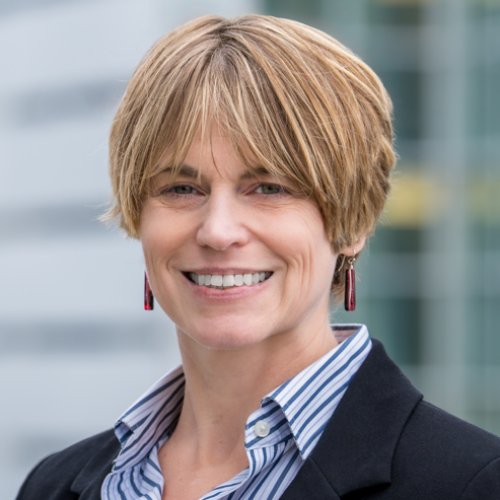
Katherine Keith
Deputy Commissioner, Alaska Department of Transportation and Public Facilities
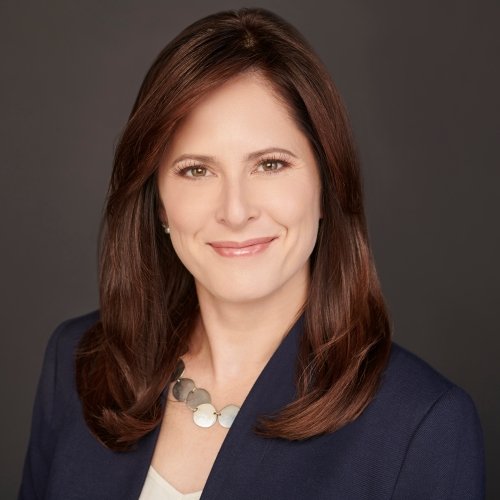
Katherine Preston
Vice President of Sustainability · Atlas Air

Michael Darcy
Chairman and CEO · DG Fuels, LLC
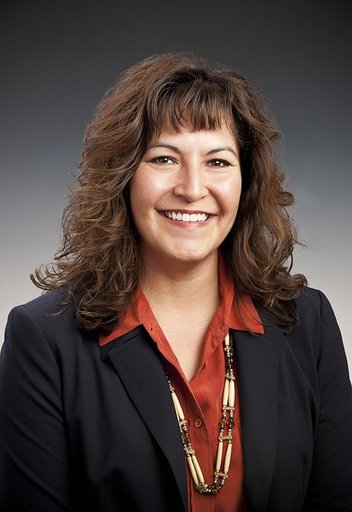
Ryan Anderson
Commissioner · Alaska Department of Transportation & Public Facilities
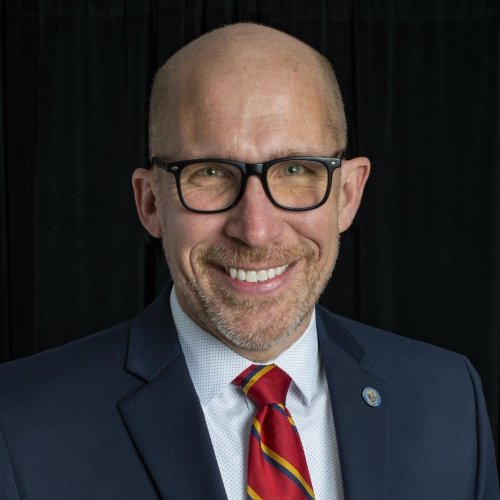
Tom Hucker
Lead for State & Territorial Engagement · U.S. Department of Energy