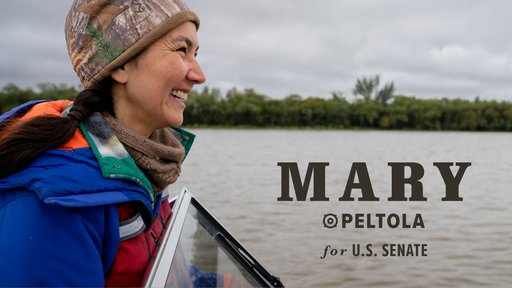
August 27, 2026 - AOGA US Senate Forum, Dan Sullivan and Mary Peltola
Alaska News • • 56 min
Source
August 27, 2026 - AOGA US Senate Forum, Dan Sullivan and Mary Peltola
media_upload • Alaska News
Articles from this transcript
Um, not a free-form debate, and our goal is to give both candidates equal time to address federal issues that directly affect Alaska's energy industry and economy. A few ground rules before we begin. Each candidate will have 90 seconds for an opening statement. After that, we will move through a series of technical and policy questions. Each candidate will have up to 2 minutes to answer each question, and we will stick to that time limit.
Our focus today is what— on what each of you would do as a United States Senator. So I may occasionally ask candidates to be more specific about the actions they would take. We'll keep the discussion moving so both candidates receive equal time. We'll rotate the order of responses throughout the forum, So neither candidate is always first or always last. And if I miss that, you just let me know.
It could happen. There will be no lightning round. We have 8 or 9 substantive questions, and we intend to use our time on those issues. At the end, each candidate will have 60 seconds for a closing statement. The candidates have not been provided the questions in advance.
We have a visible timekeeper, and I will give you a warning, or you will see the timekeeper as your time winds down. And when time is called, I'll need to move along. For the audience, please hold your applause during individual answers so we can maximize the time available for the candidates. We'll give both candidates a well-deserved round of applause at the end. Thank you again for being here.
So earlier this morning with the campaigns, we had a coin toss, and fittingly, we used the Alaska Oil and Gas Historical Society commemorative coin with the Trans-Alaska Pipeline System in heads. Based on that coin toss, we'll begin with opening statements with Representative Peltola, and you have 90 seconds.
Okay, I'm on. Good morning, everyone. It's really good to be here again. It's wonderful to see so many familiar faces, so many old friends and people I've worked with for decades on everything that we're working forward— looking forward to and working on. Together, those of us in this room, we have lowered cost and we will continue to lower costs.
We've created jobs and we're going to continue to create jobs. We've been— we have ensured that Alaska has the control that we need over our energy future, and that is the biggest struggle as we go forward. We have to make sure that we are in the driver's seat when we're talking about developing our resources across Alaska. Two years in Congress has shown me that D.C. is broken. Oil and gas is the foundation of Alaska's economy.
Our jobs, helping to lower costs, which is always a struggle. And in Alaska, our producers do it right. You have shown the way across Alaska, across the world, across the United States. We have proven that we can develop our resources and protect our environment. We've got to have permitting reform.
We need clear and consistent rulemaking. We need timeless timeliness. From the agencies and predictability. And we've got to stop using our projects as political footballs. I will use every tool in the toolbox and invent new ones to get this done.
Thank you, Senator— Representative Peltola. Senator Sullivan. Thank you, Michelle, and thank you, AOGA, for all you do. Our state faces many challenges, particularly the high cost of energy. But the best way to address these is to produce more Alaskan energy for Alaskans.
We all had a recent death experience where my opponent's anti-Alaska Liberal 48 allies in Congress and the White House tried to put all of you and thousands of Alaskans out of work. But we fought back together. And now, because of policies I've championed, Alaska has one of the most exciting oil and gas comebacks in the world, with thousands of jobs being created, more production, lower costs, and more revenue for our state. My approach as your senator is to work with all stakeholders regardless of party, devise serious strategies to achieve Alaska's goals, and relentlessly pursue those through hard work, even if it takes years. And of course, to fight back against politicians and special interests, many of whom are bankrolling my opponent's campaign, when they fight, when they try to shut down Alaska.
We have done significant work across our energy sector, and we must keep this momentum going for the thousands of Alaskan working families in our energy sector and for our kids and our grandkids' future. That's why this election is so important. My opponent and I have very different records and very different visions for our state. I look forward to discussing those in this debate. Thank you.
We're now moving on to our questions. I've decided in advance that the person who chose to stand next to me will go first on this first question. So Representative Peltola and Senator Sullivan, this question is about permitting reform. Congress established EA and EIS deadlines of 1 and 2 years in the Fiscal Responsibility Act. The Supreme Court's The Seven County decision limited CEQ's regulatory authority.
What else would you pursue in the Senate to shorten timelines and reduce litigation without eliminating meaningful environmental review? Representative Peltola. Thank you. Alaska, all of our projects, all of the private sector, as we go through the NEPA process, we've got to have permitting reform. We have to have permitting reform.
And I really— I'm very much in favor of the Seven County infrastructure versus Eagle County decision. I think that that needs to be codified. I think that having hypotheticals, endless hypotheticals and reaches and stretches is not in the best interest of making sure that our private sector can stick to their deadlines, stick to their timelines, make sure that we're meeting our construction windows and transportation windows. Our construction windows are so short in Alaska. They're like nowhere else.
Developing in the Arctic is so unique. If we miss a barge, that can cause a year's delay or 2 years delay. If we miss a shipping window, that can have devastating effects for the life of the project. We've got to have predictability. And costs in check in order to boost our production.
We need consistent and timely permitting, and we've got to figure out a way to work around these very clueless and out of touch lower 48 regulators who do not understand the unique challenges that we have in the Arctic and across Alaska in developing our projects. You all stick to your timelines. We need a judicial process that doesn't carry on forever. We've got to invest in our judiciary and make sure that through judicial litigation, that isn't a dead end. I'm very proud of the work that I've done in sponsoring legislation to tackle permitting reform and get our arms around this and create certainty and predictability for our private sector.
Senator Sullivan. Michelle, this is a huge issue. It's something I've been focused on my entire career. And here's the reason why we need permitting reform, because we need certainty. And what one of the most important things that I want to emphasize here is we're already doing it.
So as you all know, my opponent's Lower 48 liberal allies in the Biden administration issued 70 executive orders to shut down Alaska, primarily in the oil and gas sector. What we have done is we passed laws, Congressional Review Acts, to rip out these regulations for NPRA, for ANWR, for the Central Yukon Territory. These are laws that I have led and we got done. What that means is these agencies cannot re-regulate. So for example, if Kamala Harris wins the presidency in 2 years and wants to shut down Alaska again, they won't be able to do that because we've already gotten permitting done for Alaska on bills that I've led.
You know, the other thing we've done is when agencies try to make sure we can't bring oil and gas leases for Alaska in a timely way, we fixed that. Last year, we got mandatory lease sales in the law for the next 10 years in NPRA, in ANWR, in Cook Inlet. This is permitting reform. And this is important, and we've gotten it done. Every Democrat in the Senate who will— my opponent will empower, who are supporting my opponent, every Democrat fought against these really pro-permitting reform issues for Alaska.
I beat them. And we now have permitting reform in our state. We need broader permitting reform. We are working on the SPEED Act in the Congress for timelines, for litigation reform, for standing reform. These are all things we need to get done, but we are getting permitting reform done for Alaska.
And again, the, the people in the Congress who my opponent would empower, who are backing her campaign, have fought against every pro-Alaska permitting reform we have. And that's one of the reasons this election is so important. So for both of you, our objective here is to understand what you specifically will do going forward. If you are in the U.S. Senate. And so I'm going to ask a follow-up question, up to 30 seconds for each of you.
And this is, this is the second part of the question that I asked. What would you pursue in the Senate to shorten timelines and reduce litigation without eliminating meaningful environmental review? What would you specifically do? Representative Paltrow? I think codifying into law.
I mean, it was a great judicial decision. It was a great ruling and a precedent. The the 7-county infrastructure versus Eagle County in Colorado. But that is a one-off. And we have seen many instances where judicial precedent isn't enough.
We need these fixes codified into law, into broad-based law, where this is a new, a new part. You know, the other thing is, I, Well, never mind. Senator. Well, Michelle, as I mentioned, the, the legislation that we've passed, signed into law, which again, every one of my opponent's Democrat colleagues who she would empower in the Senate, they all fought against these reforms for Alaska. We've gotten them done.
That's really important. But we are working on a broader permitting reform suite. I have the Rebuild America Now Act. That does things like it deems approved projects if a regulate— if an agency is taking too long to approve it. It also would, um, it also would, uh, limit litigation and standing on when and how lower 48 environmental groups can sue to stop projects.
These are all the reforms we're doing, but we're undertaking permitting reform in a strong way and getting Okay, moving on to the next question, uh, and we'll start with Senator Sullivan. In 2025, the Supreme Court emphasized that NEPA is procedural and reinforced agency discretion in defining the scope of environmental review. What should Congress and federal agencies do to translate that decision into faster, more predictable permitting for Alaska projects, and where should the limits be? Well, again, let me begin by saying on NEPA, uh, I have legislation called the Rebuild America Now Act. It is a huge NEPA reform bill that undertakes faster timelines, that undertakes, as I mentioned, deemed approved projects.
So if an agency is taking too long, it deems that project approved. But we should build on that Supreme Court precedent. And one of the things that I did when I was a member in the last couple of years— NEPA is a huge issue. You might remember the Biden administration, in addition to issuing regulations to shut down NPRA, to shut down ANWR, to make it harder to lease in Cook Inlet, they undertook a massive NEPA reform regulation that they put forward in the federal agencies. I led the effort with legislation, bipartisan legislation, by the way, to get that rescinded because that was a target on Alaska's oil and gas industry.
That NEPA regulation was designed to slow down and hurt oil and gas production here. All of you backed it. I really want to thank our labor unions. They all backed it. And with bipartisan support in the Senate, I got that NEPA regulation rescinded by the Biden administration.
It's a huge win for us. Then it went over to the House and it died. My opponent, Congresswoman Peltola, was over in the House. This is in late 2022. We pushed them, hey, move this forward.
Let's get this done for Alaska. Let's get this done for the oil and gas sector of our state. Let's get this done for the workers. All the labor unions came out. All of you came out.
To get this done. She didn't do anything. They just let it die in the House. And that's because Lower 48 liberal allies were supporting my opponent's campaign, were not looking forward to any kind of NEPA reform that would help our state. I think it was a huge mistake to not move forward on that, but that's the kind of NEPA reform we need to get done.
Thank you, Senator Sullivan. Representative Peltola. Can you repeat the question, please? Of course. In 2025, the Supreme Court emphasized that NEPA is procedural and reinforced agency discretion in defining the scope of environmental review.
What should Congress and federal agencies do to translate that decision into faster, more predictable permitting for Alaska projects, and where should the limits be? All right, thank you. Alaska energy producers, you all hit your deadlines. Agencies have got to hit their deadlines as well. When agencies miss their deadlines, industry suffers and Alaskans suffer.
We have inconsistent enforcement. We've got partisan leadership. That is one of the biggest stumbling blocks within Washington, D.C. right now is partisan leadership. And we've got government shutdowns left and right. They're getting longer and longer.
And we have a severe understaffing at every agency, which is slowing down the, the process. We have to fully staff agencies. Even before the catastrophic, injurious DOJ cuts that Alaska has suffered, we've— we had so many positions unfilled. And this really needs to be addressed, especially in Alaska, where we have 60% federal land. Where half of our economy is reliant on federal spending, and so much of that are these positions within federal agencies.
We've got to have a hammer. We need— as Congress, as the Congress side, we've got to use the power of the purse. We have a major hammer that we are not using, and this is, I think, the best tool in the toolbox. And we've got to ensure that we have quality leadership in our agencies by only confirming secretaries that are worthy of those positions. We, you know, my opponent, he voted yes to confirm Deb Haaland, who is one of the biggest stumbling blocks Alaska has ever seen.
We need to make sure that we're confirming secretaries that are going to understand our mission and not be roadblocks and not be activists. I'm really proud of the work that I did within the Biden administration to talk about Willow in a way that they could understand. And we moved Willow forward thanks to me.
Okay. Thank you. Representative Peltola, this next question goes to you first and then to Senator Sullivan. And this question is about the Endangered Species Act. Endangered Species Act Section 7 consultation can become critical path item for Alaska projects.
What legislative, regulatory, or administrative changes would you support to make ESA consultation more timely, transparent, and science-based while preserving the statute's conservation purpose? The Endangered Species Act means, you know, it does definitely have a purpose. And Alaskans, we all have such deep ties to the resources that we live around and the species that, that we share Alaska with. We have to make sure that we continue to balance conservation and development. And again, you all wrote the book on this.
You are the best example, and, and you're leaders by example. On Chinook salmon and listing Chinook salmon, king salmon as an Endangered Species Act, I took the lead on making sure that that wasn't a listing, because we all know that Chinook salmon run with chums and reds, and, and they're resident species. And if we preclude Alaskans from being able to harvest Chinook, that means we're precluding them from harvesting just about everything during the summer. And ESA Section 7 is a perfect example of how— why a DC one-size-fits-all does not work for us in Alaska. Solutions from lower 48 folks do not work in Alaska.
Producers need clear and consistent paths, and the current system is very inconsistent. Um, you all are our partners. Um, we've got to make sure that we continue to do things right with things like, uh, polar bears, and we've got to make sure that we're holding regulators to the same deadlines and requiring timely and clear feedback as we go forward. Okay, Senator Sullivan. Well, you know, Michelle, the ESA, like many, uh, well-intentioned statutes, has a good goal, but it's been weaponized.
It's been weaponized by far-left lower-48 groups, many of, again, who are supporting and bankrolling my opponent, to make it harder to do oil and gas development. So what we need to do is have litigation reform. We need to have timelines. We need to make sure that not any group can sue under these federal laws, and we certainly need to reform them. But we also need to listen to our own communities.
You know, one of the things that I've been very proud of is working with our communities on the North Slope. Our whaling captains under the Marine Mammal Protection Act— I've said you always will have a right to hunt whales. But you know what they really cared about, Michelle? They cared about the national NPR-A Petroleum Reserve regulation that the Biden administration put forward. And 8 times the leadership of that community, the tribe, the borough, the Lower Forty, the ANC came to D.C. to try to get meetings with the Biden administration to say, don't regulate, don't put forward that NPR-A reg.
And 8 times they could not get a meeting. Opponent couldn't help them get one meeting with the Biden administration. So what we need to do is make sure we have the oversight of these agencies. Again, we got that regulation— I was— I led the effort to get that regulation rescinded, and that was absolutely critical. It's what they wanted to do.
This is the kind of work we need to do. And again, my opponent's allies in the lower 48, in Congress, fought every single one of these positive developments into law for our state, rescinding the Biden NPRA rule, rescinding the ANWR rule. This is the kind of work we need to do. She would be allied with them. I would be allied with you.
All right. Thank you. Okay. Senator Sullivan, you will answer this next question. First, and it's a favorite of mine.
TAPS is currently seeking a 30-year right-of-way renewal. Assuming the Department of Interior promptly agrees to the renewal, what are you prepared to do to protect the right-of-way renewal from the litigation and attacks of other forces? And what are the risks of not protecting TAPS from outside interests? Well, again, Michelle, We're very far along in terms of the TAPs renewal, and I want to thank Secretary Burgum. I know Secretary Wright's here.
We have been working directly with this administration to get that renewal and to get the PL 5150, which the previous administration, uh, would not grant for us. But again, to me, it goes back to the issue of certainty. One of the huge problems we had during, uh, the previous administration was how they were coming after the North Slope in every way which they could. ANWR, NPRA. And what we've been able to do is bring certainty back.
As I mentioned, I led the efforts to rescind those Biden administration regulations that would certainly hurt TAPS. It would certainly hurt our ability to produce. I led the effort to get mandatory lease sales. So if Kamala Harris, who has supported my opponent wins in 2028, they can't do what they tried to do before, which is shut down the great state of Alaska's oil and gas development. And look, there's provisions in different bills that would help on this.
My opponent, for example, put forward a bill called the Alaska Right to Produce Act that had good permitting, um, provisions. It had good ANWR provisions. In NIN, She voted against her own bill. She voted against her own bill because her Lower 48 liberal allies didn't like the bill. It came up in committee, she voted yes, and then when it came to the floor, she voted present.
I don't even know what present means. And then she lobbied her colleagues, her liberal Lower 48 allied colleagues, to vote against the bill that would help Alaska. So look, my opponent talks a big game in terms of supporting oil and gas, but when you look at her actions during her two terms as a congresswoman, she consistently voted with Lower 48 liberal allies of hers against our interests. And that is why this election is so important. Okay, Representative Paultola.
I just want to remind both candidates, we're really interested in what you are going to do going forward. So please keep your focus on that. Could you restate the question? Of course. TAPS is currently seeking a 30-year right-of-way renewal.
Assuming the Department of Interior promptly agrees to the renewal, what are you prepared to do to protect the right-of-way from the litigation and attacks that will surely come? What are the risks of not protecting TAPS from those outside interests? Look, TAPS has just been such a critical part of the Alaskan economy. The Trans-Alaska Pipeline, you know, over 80% of the oil revenues, of the revenues that the state of Alaska operates with, are generated by oil and gas, and in large part the Trans-Alaska Pipeline. This renewal is so critical to the continued success of our state as we move forward.
And I'll use any, you know, as I said before, there are tools in the toolbox now, and I'll invent more as I go along, as needed. And we just need so much more certainty. And, and the litigation part is, I think, the biggest weakness that we have right now in the NEPA process. When NEPA was designed, we didn't have a super litigious United States. We, we weren't— we didn't have lawsuits at every turn that can just go on forever.
You can just kind of wait out the clock and there go, there go your investors. We've got to provide so much more certainty as we move forward, even as we're extending the legacy projects that we've built our state on. One of the things that I'm really proud of in my term, my 2 years in the House, is that Joe Biden tried to add a whole nother element within the NEPA process between the final EIS and the record of decision. It was because of me. It was because I had a caucus who wanted me back again.
They made sure I got a meeting with Joe Biden and, and that administration. And I was nice enough to bring our senators along, and I was able to use arguments that were compelling. You're interested in social justice? Well, that's great, because all the Native groups in Alaska, all of the Alaska Federation of Natives, every union in state want this project, want Willow to go forward. If you're interested in social justice, this is the best way to help us get that.
You need to listen to the people of the North Slope Borough, the Inupiaq people of the North Slope Borough. They have said—. Thank you, Representative Peltola. Thank you.
The next question is about the Marine Mammal Protection Act, and you will begin, Representative Peltola. Alaska oil and gas activity often requires incidental take regulations and authorizations under the Marine Mammal Protection Act, including for polar bears, walrus, Cook Inlet beluga whales, and other marine mammals. Does the current process provide enough certainty and timeliness for multi-year industrial activity? And if not, what specifically would you change? No, I don't think the current process provides enough certainty or a good timeline.
The Marine Mammal Protection Act does a great job keeping our marine mammal populations strong and vibrant as they should be. We've— and again, I just can't say this enough— Alaskan producers and our process up here, our regulators, we have created a great world-class best-case best example study of how we can balance development and our natural resources. We all understand that the process doesn't provide enough clarity and it does not move fast enough. When on the East Coast there was a move afoot by Nymphs to, to curtail travel down to just 10 nautical miles an hour by all of these different user groups on the East Coast to protect the right whale, I was the first out of the gate to say, this is a crazy solution to a very complex problem. This is not a workable solution.
This could be very dangerous requiring people to go no more than 10 nautical miles an hour. If you've got the tide and the wind and the current working against you, there are many cases where that is a life and death situation and you've got to apply power. We have to make sure that NOAA and NMFS are clear with applicants and use Alaska-based science. And having multiple agencies oversee the Marine Mammal Protection Act has been very, very challenging. These different agencies have different missions, they have different objectives, they have different cultures, they have different timelines.
The number one thing I think we should do with the Marine Mammal Protection Act is place it into one agency so our producers are working with one agency to get these timelines met. Okay, thank you. Senator Sullivan. So, Michelle, this is an important issue, and I know that AOGA has been working on it. Uh, we are working right now with the current administration to make the ITR for, um, marine mammals much more workable.
And the key, in my view, is timeliness. It's litigation reform, The regulations have made it so anyone can sue almost at any time. We need to tighten standing for litigation reform. And very importantly, particularly when it comes to marine mammals, we need to work with our local communities. The indigenous knowledge on the North Slope with some of these marine mammals is second to none, and we need to work with them.
I also want to just make a point about my opponent claiming a lot of credit on things where she doesn't deserve it. Don't deserve it. Uh, the NEPA process, as I mentioned, under the Biden administration, I led the effort in a bipartisan way in the Senate to actually rescind that. It went over to the House when she was there and nobody touched it. It died.
That was a NEPA regulation that was designed to hurt Alaska oil and gas. And when it comes to Willow, I think it's really important where my opponent is raising a lot of, uh, claims of getting it done. We got Willow and NPRA done before she even came to the Congress during the Trump administration. It was done. The only reason we had to save Willow was because my opponent's lower 48 liberal allies came to power and worked to kill not only Willow but NPRA and ANWR.
I had been working on a comprehensive strategy on Willow for years before my opponent showed up in the Congress, focusing on working with you, working with the administration, working with our allies like the trade unions who deserve a ton of credit for getting Willow done. My opponent, you know, claims one meeting with Joe Biden, which was actually an embarrassment. He was clueless. And then you went out and said he was the smartest, sharpest guy in D.C. What happened in Willow was a comprehensive strategy. Thank you, Senator Sullivan.
We're moving on. I do have a follow-up question, and it shouldn't take 30 seconds for each of you. The question is, should Congress impose clearer deadlines for ESA consultation and Marine Mammal Protection Act incidental take decisions? Yes or no? Yes.
Yes. And the important thing, Michelle, is litigation reform, standing reform, and making sure lower 48 environmental groups can't sue at any time on any issue to thwart development as it relates to ESA and marine mammal protection and ITR issues. Okay, thank you. Okay, the next question is the Clean Water Act question, and Senator Sullivan, you will begin. Am I right about that?
I think so. Okay, thank you. How should federal policy balance protection of wetlands and waters within Alaska? What is your view of Section 404 permitting and achieving state primacy? Well, I think whenever the state can have more primacy on these kind of issues, we should seek it.
And I think that's important— clean air, clean water— because we have the best agencies that care about and know how to balance these issues. Again, these issues are ones that require balance, but these issues are ones that, again, have been weaponized by so many groups that don't want development in our state. So many groups, by the way, lower 48 liberal groups that are supporting my opponent. So what should we do? We had a recent Supreme Court case, the Sackett case, which has an enormous opportunity for redesigning the waters of the U.S.
This is a giant issue for the state of Alaska because, as all you know, 60% of all wetlands are considered in Alaska. So right now I am working with the EPA administrator, who's been up here a number of times, to get a revised Water of the U.S., um, regulation out. The key thing on this is we are trying with the help of the North Slope Borough and the people who live there to not include permafrost. This would be a gigantic win that, again, my opponents, Lower 48 liberals, fully oppose. But here's a big issue, Michelle, that I want to emphasize, a difference between me and Congresswoman Peltola.
The Biden administration put forward a WOTUS rule that was targeting Alaska, that was bad for Alaska. I led the effort in the Senate to rescind that with Democrats and Republicans. It went to the House. Democrats and Republicans in the House voted to rescind that Biden WOTUS rule. My opponent voted to keep the Biden WOTUS rule.
Then it went to the president. He vetoed it. She voted to sustain the veto. So twice on a WOTUS rule that was essential to our state, She voted with her lower 48 liberal allies, not Alaska. And that was critically important in terms of our Water of the U.S. and Clean Water Act.
Thank you. Representative Peltola. Thanks, Michelle. The state of Alaska— Alaska has the vast majority of our wetlands, and we have almost all of the permafrost in the United States. We have a federal government, Washington, D.C., that doesn't understand Alaska, and we've got to continue to lead in balancing our development and preserving our ecosystems.
The cookie-cutter enforcement of the Clean Water Act is an example of how D.C.'s one-size-fits-all policy just doesn't fit the needs of Alaskans. Eisenbeck Road is a really good example. Of this, this reach. We're talking about 11— an 11-mile gravel road. And this is a life and death issue for the people of Cold Bay.
And it is being completely precluded because of the wetlands. Alaska, you know, we as Alaskans, those of us in this room, those of us who understand our issues, We have got to be in the driver's seat. We have got to have the resources and the control to administer our own 404 process. The EPA was good on Pebble when it comes to 404, but we cannot be using a preemptive veto. We've got to have folks who really understand Alaska and the scale of Alaska, that an 11-mile gravel road is not going to be impactful.
It's not going to provide injurious effects to the wetlands in that region. It's a measly 11-mile gravel road. And I think that's a really good example. And I think we really just need to be sending people to Washington, D.C. who can communicate effectively and in a way that people are receptive to and will be open-minded to. Okay, thank you.
Thank you. This next question is about federal lands. And again, I'm interested in your view and what you would do going forward. And so is the audience. So, Representative Peltola, you will have the first response to this question.
And the question is, what should Congress do to provide greater durability for congressionally authorized resource development in places such as the NPRA and ANWR, so that access does not swing dramatically from one administration to the next. Thank you, Michelle. Alaska Energy, we just cannot be at the whims of activists and activists within agencies. We have to make sure that we are signaling to investors within the, you know, as private sector folks, we need to be signaling to investors that we do have a stable jurisdiction to operate in. And we need to make sure that these unstable, untimely, you know, the current system isn't going to kill critical projects and kill good-paying jobs.
Alaskan energy projects, the future of our projects can't be changing at the whims of every new administration. It feels like we have whiplash from the political footballs that each of our projects is used as. And it's such a slap in the face to all of us in Alaska when Lower 48 bureaucrats bypass Alaskans and our elected officials to kill projects. If you look at ANWR, ANWR, that, that ANWR, it's the law. You know, there are things that are written into the law that are being completely ignored, and that is completely unacceptable.
When we're talking about NPR-A, I think it's really important that we use the words National Petroleum Reserve Alaska. It's in the name. It is in the name that we have set this aside to use those resources. And if If agencies aren't going to listen to us, then we've got to be able to use the power of the purse. And again, I just think it's really critical that we are only confirming people within administrations who are going to help us in Alaska develop our projects and get good-paying jobs for our families and our regions.
Senator Sullivan. Michelle, I just want to mention, I do agree with my opponent on King Cove. I was actually just out there. Held a community town hall. People were very excited, and then what happened?
We have Lower 48 liberal allies of my opponent who are suing to stop that. It is an outrage. We've been trying to get that done for 40 years. And by the way, the senators who she would empower, Senator Schumer, all the other senators if she got elected, they're all the ones against the King Cove Road. So you can't have it both ways.
You can't empower the people people who want to shut us down and then say, I don't want to shut you down. But I couldn't agree more with you on this whipsaw. Now, the whipsaw matters. The Biden administration came into power, said we're going to kill Willow, we're going to kill NPRA, we're going to kill ANWR, we're going to kill all the jobs here, Cook Inlet. They issued 70 executive orders to try to shut us down.
We fought that. I fought that. Um, we were able to get The Trump administration issued an executive order on day one to unleash Alaska's extraordinary resource potential. That was important, but we need certainty. And this is what we've been able to do.
Again, in bills that I led on in the last two years, we've ripped out all the Biden regulations to shut down NPRA and ANWR. That gives certainty so federal agencies who would be in power, my opponent would empower, who want to re-regulate NPRA and ANWR, they can't. We have mandatory lease sales now for the next 10 years. This is why we had the biggest NPRA lease sale in history, because of certainty. This is why we have a promising future, because of certainty.
Every Democrat senator who my opponent wants to empower voted against every single one of these pro-Alaska provisions. And her bill to have Alaska's Right to Produce Act had a lot of these good provisions. And there was another bill called Lowering Energy Costs for America. They both had really good provisions in this regard. Thank you, Senator.
She voted against both of them when she was a congressman. Okay. I have a follow-up for both of you on this, because we've heard quite a bit We've been talking yesterday and today about durability and the importance of keeping durable these changes, these great changes that are helping out our industry. So the specific question is, what should Congress do to provide greater durability?
You want me to? We'll start with Representative Peltola and then we'll go to you as we did. Well, again, I think codifying as much as we can into law is really, really important so that we have both the law and the courts on our side. And, and we just, we cannot expect the private sector to be, um, the only one keeping on your deadlines, the only one at the table, um, you know, with that. And, you know, I think it's really interesting and important when we talk about durability.
I think we need durability across the board. I think that We need to have people within both parties, within both caucuses, within both chambers who are conversant and onside and willing to bring more and more people onside with us. Thank you. Senator Sullivan, what can Congress do? Michelle, I mean, Congress has acted in a huge way already.
Mandatory lease sales for 10 years for Alaska, Cook Inlet, NPR-A, ANWR. That is certainty. Now listen, if my opponent's allies regain power, they'll go after it again. We know that. That's what they do.
That's what they've been doing for 5 decades. But the other thing we were able to do is we were able to rip out the previous Biden regulations. They can't reregulate under the law. They might try, but this is belt and suspenders certainty. And finally, what we did for Alaska is we finally got a 70-30 split from federal lands.
That will be more revenue for our state in the future. We've been trying to get that done for a half century. We got it done. Thank you, Senator Sullivan. You will have the first response to this next question, which is about regulatory certainty and investment.
Companies compare Alaska projects with opportunities around the world. Specifically, what federal policy changes would you pursue to reduce the risk that a fully a fully permitted, leased, or gassed—. Lease—. Yeah, a fully permitted or leased Alaska project is delayed, reversed, or materially changed after significant capital has been committed, what federal policy changes would you pursue? Well, I don't want to sound like a broken record, but we've been pursuing them and we've been getting them done.
And that's why we just saw this very, very successful NPRA lease sale. We had companies coming back. We had big companies, small companies. That was the most successful lease sale in history. And it's exciting, not just for the oil and gas industry, but for our state, for our future, for our kids, for our schools.
'Cause again, what we are also able to do is make sure they can't re-regulate. And if my opponents, liberal Lower 48 allies, they get power again, the Democrats, if Chuck Schumer's in charge again, she's committed to supporting him, they will come after us. Regardless of what Congresswoman Peltola says, they will come after us. So we need that certainty. But here's what else, as I mentioned, we already have: a 70-30 split for our state.
This is huge in terms of more revenues for our schools, for our roads, for our infrastructure. So we've gotten the certainty that we need on the North Slope and in Cook Inlet because of the policies that I've championed. And again, every single Democrat senator fought me tooth and nail on these pro-Alaska provisions. All the people that want to empower— that my opponent would empower— and I beat them. I beat them all for our state.
The final issue that relates to this is what we talked about at the beginning. Permitting reform is absolutely essential. It's something I've been working on for over 10 years. We have to make sure that my opponents, Lower 48 liberal allies, can't abuse federal laws and sue at the last minute and claim standing on issues solely because they want to shut us down. We are ground zero for that kind of weaponization, so we need to fix that as well.
But we are on the right path, and if the election comes in a different way—. Representative Peltola.
Thank you, Michelle. You know, we really did see a case of this with Willow, and, and it's just my most recent example, and I, and I really do like talking about about it because I think it's a great case in point. We had an administration who was trying to force the Willow Project to 2 pads after all of the work done, all of the investment, all of the projections for, um, profitability had shown that it had to be 3 pads. And I was happy to go in and explain, hey, if you at this stage of the game, after the final EIS from all of your agencies, are going to change this this late in the game before the Record of Decision? That is untenable.
We are sending a message that we are closed for business. How are we ever to get investors in the future? We have to make sure that people in these jobs where they're not— their whole way of getting paid, their whole idea idea of retirement. That is very different than the way the private sector operates. Their paycheck is guaranteed.
No one in this room's paycheck is guaranteed. And explaining that to folks, like the, the negative repercussions if we change the rules of the road here this late in this— this late in the game, I think it's so important to help explain things to bureaucrats in a way that they can understand how tenuous these relationships are, how tenuous these business plans are if the government is going to come in at the last, at the 11th hour and change the rules on us. So this is something I have proven I am capable of doing. I'm proven I'm willing to do, to invent new tools in the toolbox to get the job done. I'm happy to have done it.
It was the honor of my life. And I'm happy to do it again. Okay, let's move on to agency accountability. When BLM, EPA, Fish and Wildlife Service, NOAA Fisheries, the Army Corps, or other agencies miss statutory or practical permitting timelines, what oversight or enforcement mechanisms should Congress use?
Representative Peltola. Yes. Alaska energy producers, you all hit your deadlines. Agencies have got to be there hitting their deadlines as well. And when agencies miss their deadlines, everyone in this room suffers and everyone in Alaska suffers because that's just an unacceptable delay and an unnecessary delay.
Inconsistent enforcement. Again, partisan leadership playing partisan tricks for just the next election cycle. That has to stop. Are government shutdowns. That has to stop.
And we have to get our arms around this really severe understaffing that we had even before the DOJ cuts. DOJ impacted Alaska more than any other state, and no other state is more impacted by our federal agencies and our federal employees in Alaska. No other state is as dependent on the decisions and the work of our federal employees as Alaska is. We've got to fully staff all of our agencies from top to bottom. No more, you know, no more excuses on that.
We've got to also be willing to use the power of the purse and really level not just threats but actually execute on these threats to make sure that agencies are doing their job and living up to their their, their obligations. And again, it's so important that each of these agencies, from the top down, the culture within those agencies is one of responsiveness, listening to people, and working with people. Not what we had when we saw Deb Haaland confirmed by Dan. Okay, Senator.
So agency accountability is a critical thing, and oversight is a critical thing. Now, as I think everybody here knows, the truth of the matter is it, it matters which groups are in power in Washington, D.C. Again, my opponent's liberal Lower 48 allies, when they're in power in the Congress, when they're in power in the White House, That's when agency accountability is a huge issue. And we saw it. They canceled the ANWR lease sales despite Congressman Don Young, Lisa Murkowski, and I getting that done in the 2017 bill. They tried to make the Cook Inlet lease sales, um, very difficult for anyone to bid on.
They purposely went out to try to shut down Alaska. This is who my opponent would empower. This is who my opponent is actually voting with on a number of issues. Let me again give some examples. The most important tool we have in the Congress in terms of agency accountability isn't just hearings, isn't just oversight, isn't just confirmation hearings.
It's using what's called the Congressional Review Act. You guys know what it is. It's a law that enables Congress to go to agencies and say, wait a minute, you just regulated on my state. I don't like that regulation. I'm going to rip out that regulation.
It takes a lot of hard work, Congresswoman. I'm going to rip out that regulation and we're going to pass a law to say you can never regulate in that area again. We got that done for NPRA when Biden tried to shut it down. We got that done for ANWR when Biden tried to shut that down. We got that done for the central Yukon area when And Biden tried to shut that down.
All of these were passed into law. All of these were opposed by the people who are supporting my opponent. All of these are opposed by the lower 48 liberals who she will empower. And finally, when it came to her, a NEPA CRA that we got to rip out the Biden NEPA rule that was hurting Alaska, she didn't do anything on it. In the WOTUS rule, rule that was really hurting us.
The blind quotas rule. Thank you, Senator. Thank you. That concludes our question period, and it's now time for closing statements, and you'll each have 60 seconds. We will end as we began, with Representative Peltola going first with 60 seconds.
All right. I just really appreciate being here. I really just want to thank all of you for the important work that you do across our state, and you really are the foundation of our economy, and I'm looking forward to continuing our good relationships and partnering with you into the future. Alaska oil and gas is the key to lowering our costs, providing good opportunities, and I'll stand up to anyone to reform the permitting process and hold agencies accountable to Alaskans. I also really wanna thank AYOGA, for partnering with the Archangel Foundation.
And I know that they are selling raffle tickets here, and this is an amazing group. The Archangel Foundation does incredible work for our Alaska Air National Guard families and has even been a tremendous help and support to me and my family during some really challenging times. And I just want to mention that I'm— I'll be donating— my campaign will be donating $1,000 to match the first $100,000 sold in raffle tickets. And again, I just really want to thank you. And let's make D.C. work for Alaskans.
Okay. Senator Sullivan, you have—. Thank you again, Michelle. You know, only 2 years ago, our state's critical oil and gas sector was at an inflection point. My opponent's liberal Lower 48 anti-Alaska allies in the Congress and the White House were focused on completely shutting down Alaska oil and gas.
In killing thousands of jobs. Had Kamala Harris won and Schumer kept the majority in the Senate, they would have done this. Congresswoman Peltola talks about her support for oil and gas, but time and time again she voted against us, including lobbying against her own bill to help Alaska. If elected, she would once again empower, vote with, and be beholden to The same far-left politicians who for decades have worked to crush our state. We have a better path forward for Alaska's future and our kids.
Working with you, I've been honored to fight back against the anti-Alaska radicals and lead our state in an oil and gas recovery. We need to keep that going. I'd be honored by your vote. Thank you again for all you do. All right.
Thank you. That concludes our forum.
Senator Sullivan, Representative Peltola, thank you for being here and for engaging on these issues. We know you have a long road ahead and wish you the best, and we appreciate your willingness to serve Alaska. Please join me in thanking them once again.
Michelle, thank you again for moderating, and thank you again to both of our outstanding candidates. Before we break for lunch, we have the opportunity to recognize a contractor partnership that represents the best of what Alaska industry can look like when local knowledge, safety, and long-term stewardship come together. The AOGA Contractor of the Year Award is sponsored by Shell. Thank you to Shell for supporting this recognition.