Last Frontier Republican Club Alaska Governor Debate 2026
Alaska News • • 124 min
Source
Last Frontier Republican Club Alaska Governor Debate 2026
video • Alaska News
Articles from this transcript
No audio detected at 0:00
No audio detected at 1:30
No audio detected at 2:30
No audio detected at 3:00
No audio detected at 6:00
No audio detected at 15:00
No audio detected at 18:30
No audio detected at 19:00
No audio detected at 19:30
Good evening. Oh, like, yeah, I'm not spending a lot of time. Yeah, just whirlwind or kind of in the right direction and all the rest. Yeah, and Bernadette, I guess. No, she's down at the— actually, someone just told me a minute ago.
Good evening. Oh, that was a little louder than I was expecting. Hello, gentlemen, please be seated.
Good evening, gentlemen. Good to go on the live stream?
Thank you. Good evening and welcome. My name is Shireen Crosby and I will be the moderator for tonight's debate forum. Please silence your cell phones.
Last Frontier Republican Club President Fred Brown has asked me to make the following announcements. Last Frontier is a new Republican club, not yet one year old, and not affiliated with any party. Last Frontier has previously held two successful events, including a sold-out Lincoln Day dinner and a Ted Stevens Day picnic, and is very pleased to be hosting tonight's also sold-out gubernatorial debate forum. All questions tonight were submitted by club members to the club's debate email [email protected]. This email will be used again for the October 5th Ballot Measure 2 forum.
Candidates here have not been provided these questions beforehand. Tonight's forum is being livestreamed on our website and on Facebook. And now, thank you to our special guests seated here in alphabetical order. From your left to right, Mayor Dave Bronson, Representative Jonathan Christopkins, and Attorney General Treg Taylor.
Miss Bernadette Wilson is unable to attend tonight due to a scheduling conflict. So the format for tonight's debate will be as follows. Each panelist will be given 2 minutes for an opening statement. Then I will provide 11 questions in which each panelist will have 2 minutes to answer. I will rotate which panelist will answer first.
Please note our timekeeper here and the warning cards for 15 seconds remaining and time is up. And if you go 5 over, I will interrupt you kindly. If a panelist refers to another candidate in an answer, I may offer a 1-minute rebuttal as well as a 1-minute surrebuttal. After the 12— excuse me, 11 questions are answered, each candidate will receive 1 question that is specific to them based on their platform cornerstones with 2 minutes to answer. Lastly, each panelist will be given 2 minutes for a closing statement.
To turn on your microphone, tap it and it will turn green for on and red for off. So we will begin with opening statements for 2 minutes each. It was determined, determined by drawing a name from a hat that we will begin with Mr. Bronson and progress from left to right. Mr. Bronson, please begin with your opening statement. Well, great, and thank you, Shreen.
Thanks to the, uh, let's try that. Thank you for this opportunity, and thanks to Last Frontier Republican Group for hosting. This is an important, uh, venue. I'm assuming most folks in the room, except for maybe the media, are Republicans, and we really appreciate y'all being here. If you don't know, and I've seen, I think I've talked at some point or the other, everybody in this room, my name is Dave Bronson, and I am running for governor.
I'm the former mayor former manager of the Ted Stevens International Airport of last year, military officer, retired, but most importantly, I'm the husband of the best woman in the world and the father of two great kids. And I'm in this race because I think I've got a lot to offer, I think the most to offer. I've got the most executive experience by far of this field, and I think that's what matters because being the governor in this state is a difficult job and you gotta look at someone's resume, you gotta ask, can they do the job? And as difficult as it is, I did this before at the city, roughly 40% of the population of the state and the challenges are the same or are identical. The issues are different, but the challenges stay the same.
People ask, well, did you struggle dealing with the assembly? I most certainly did. But we got a lot accomplished at the city. We got a lot accomplished downtown, things that are still in the works downtown. We worked hard on homelessness.
We brought in $200— the assembly and I brought in $200 million for this, for this Danyung Port of Alaska. Those are important accomplishments and they impact each and every one of us in the city and in this state. I just hope to use that experience going forward as governor Governor and working with the legislature to accomplish great things for the state. Thank you. Thank you.
Mr. Christomkins, you may begin.
Hi, I'm Jonathan Christomkins, one of the candidates for Governor. I was born and raised in Sitka. I spent my life growing up in Southeast as a Sitka High graduate. I graduated as an Eagle Scout, and I ran for public office when I was 23 to the House of Representatives, and for 10 years I had the privilege of representing the, the rural Southeast Alaska Island District in the House of Representatives. It's a politically diverse district.
It voted for Trump and also voted for me for 10 years. And so I felt like it was a good microcosm of Alaska in terms of Ds and Is and Rs and rural and less rural communities. And my 10 years in the legislature, I think I really sort of cut my teeth in terms of the realities of trying to work together and solve problems. And I was a member of the Bipartisan Coalition in the House. A key element of the campaign has been that sort of cross-partisan collaboration in order to solve Alaska's problems, which I think has been chronically missing the last 8 years.
And I really want to bring that to the governor's office. A key priority for me is being clear-eyed and sort of pro-math. When it comes to the realities of Alaska's budget and really making the sort of tough calls that can create a durably and sustainably balanced budget in Alaska. And so that's a real priority for Zach Johnson, my running mate, who just arrived in the back as an independent member of the Anchorage Assembly, and myself. And we're really grateful to have the opportunity to join this forum today.
Thank you, Mr. Taylor. I'm back. Surprised nobody out there has a neck brace on. I certainly needed one for a little bit there, but it's great to be back. If I'm a little rusty, it's because I had a little week vacation there.
And so bear with me. But I wanted to first introduce two people that are very important to me. One is my wife of 27 years, Jodi. Together we've raised six beautiful children and we love Alaska and we want our children to be successful and have opportunity in Alaska, just like Alaska gave to, to Jodi and I. And the second individual is my lieutenant governor candidate, Candy English.
And I think it's fitting— thank you, well deserved— I think it's fitting that we're here in the Petroleum Club because Candy has made a career in the oil and gas industry and started with ARCO in the heyday up on the North Slope and then translated well into her own business, Northern Solutions, which is wildly successful, has employed hundreds of Alaskans with great paying jobs for Alaskan families and has built something that we as Alaskans can be proud of. And I'm really, really honored that she agreed to be my running mate. I'm especially honored that she has agreed to take on the permitting and regulatory reform that our state so badly needs. We hear a lot of lip service for that, but we don't have a lot of action on that. We need someone that's going to doggedly pursue it, not take no for an answer, because we need to move our bureaucracy in a direction that's going to move at the speed of business.
That is going to be complementary to business rather than antagonistic to business. And if we do that because of this beautiful state we live in with the vast resources that God has blessed this state with, there is no reason why we can't be first in education. We can't be first in economic opportunity for Alaska families, and we can't move this state forward in a place where we can be proud and know that our kids are going to have the opportunities they so badly deserve. And so it's an honor to be here in front of you. I can't wait to answer some of these questions.
And thank you. Appreciate your support and vote. Thank you. Next, we will begin with questions regarding the LNG project and our economy. Anchorage's cost of living is 26% above the national average.
As we shift to imported LNG to heat our homes and businesses, Ratepayers could see utility costs increase up to 100% by 2030. In addition, local and state lawmakers continue to propose new revenue measures. Add it all up, the cost of living could increase to 45% higher than that of the Lower 48. That's on par with California and Massachusetts outside of Hawaii. The Alaska LNG project could change this trajectory.
But lawmakers just spent a regular session and 3 special sessions failing to agree on the terms. With that said, question number 1, and this will be for Mr. Christomkins first, and then Mr. Taylor, and then Mr. Bonson. Do you support the Alaska LNG Project? If yes, name the specific concessions or actions you would take as governor to get the state and Glenfarm to a final investment decision to move the project forward. If not, what are your alternatives that offset our high cost of living and ratepayers paying for imported LNG?
I would love to see— I would love to see the Alaska Natural Gas Pipeline, or AK LNG, project succeed in Alaska. And I think the cue that I really look for in private investment projects is where private capital and private investment is going. And for AKLNG, I think the state should be a partner in trying to make that project succeed. I do support the state restructuring our property taxes in a reasonable way, and there's sort of shades of gray there in terms of what the right compromise is. I think the legislature participated in that conversation and was willing to make concessions.
You know, specifically, I think sort of backloading the tax obligation for that project after gas flows rather than before gas flows makes a lot of sense and sort of makes sense in terms of the cash calls that would be required with the development of not just a mega project, but a giga project, one of the largest private development projects in the history of the world. So I think that conversation is appropriate for the legislature and the governor to have with a project developer. And also, I really look for private investment and private capital that is willing to invest itself in the project. And so I think that is a key signal that we as Alaskans need to look for, and that helps us know if the project is real and if it's economic. And, and so I think there's a two-way street and a two-way conversation that needs to happen.
The legislature, I think, can make those concessions and restructure taxes in an appropriate way. And also, I think we should be clear-eyed that the economics of the project are sound and that there is private capital and that there are customers, willing paying customers, that are going to make that project real. And I think if that sort of two-way street can happen, hopefully you can have a project and long-term energy sustainability for Southcentral. Mr. Tymon? Thank you.
This is important for Alaska's future for the reasons that you stated. We have to approach energy with an all-of-the-above approach. And we have to, we have to move forward on these projects. We can't sit there and study these projects or continually second-guess these projects. Alaska, the pipeline was not built.
Can you imagine Alaska without TAPS? I mean, it would— we would be a completely different state. Thank goodness that people had the good sense to push that project forward, which changed the trajectory for Alaska. It changed the quality of life for all Alaskans. And that's what we're looking— this is a generational project and it has the ability to be a cash flow to not only the state, but provide 5,000 construction jobs for 5 years and 1,000 full-time good-paying jobs for Alaskan families thereafter and provide an energy source that is affordable and reliable, which we're missing.
When you talk to businesses about coming to Alaska to invest, their first question is, where's the affordable, reliable energy? That gas line would have provided that. And, and so my, my message for the legislature is it was, you know, as Attorney General, I helped negotiate that contract with Glenfarm. I've had many opportunities to help push that pipeline forward. We had private investors, we have private investors, but they're looking at Alaska right now and saying, wait, I thought Alaskans wanted that project.
The way that our legislature has dealt with this project, the legislature has to give that project Project a chance. There's many legislators I've heard question the economic viability of that project, and yet it's not their job to question the economic viability. If the project's not economically viable, it's not moving forward. That $50 billion investment in our state is not going to happen. Glenfarm didn't take 75% ownership of 8 Star to fail and to lose money.
So that answer is going to be answered whether we— when we build this project, and then they can recalibrate. They can recalibrate once we have actual gas flow through the pipeline, then they can recalibrate. Okay, they are making these types of profits. We can tax them at this rate and still create a viable environment where it decreases the cost that you and I pay for energy, which is suffocating Alaskans all around the state and have an export product that brings money into the coffers of the state. Thank you, Mr. Bronson.
I can't help but think of the conversations that have happened over the decades in this building about developing energy in the state. This gas line should have happened many times over the years and it just hasn't. We're at the closest point. I've only been here 35 years. We're at the closest point to this that I have seen in 35 years, and it's essential that we get this across the line.
But to look at the reasons of why it didn't get across the line, it's because of failed personal relationships in Juneau, and you can narrow that down to about less than half a dozen people. They're fighting with each other. That's got to stop. We can't have a governor go down there and promise to fight the legislature, the legislature, and expect things to get better. If you want somebody, if you want a governor that's going to go down there and just fight like crazy with the legislature and even advertise that in this campaign, I am simply not your guy.
You got to go down there, the governor's got to go down there and work with these people. To the issue of the gas line itself, is what we got to remember is why is the capital not coming in? Like, why are we having great challenges here? And the challenges are because the bankers and the developers, they look at what the legislature is doing and has done for decades to projects. Every time they turn around, the tax structure is changing.
And it's like whenever the legislature is looking in the seat cushions for a few extra pennies, they want to change someone's taxes. And it's always in the upper direction, not in the lower direction. They don't trust us. They don't trust the legislature. I don't even know if they trust the governor's office anymore, not this governor, but they're just sick and tired of the politics in this state.
That's why it's not moving forward and it's gotta move moving forward. You gotta remember, we're not gonna monetize, we're not gonna get the benefit that we hope to get out of this thing for years because it's got, it's not gonna be monetized until after phase 2 is complete. So we've got real challenges coming, especially in natural gas delivery out of Cook Inlet this winter. Thank you. Question 2: Even on the best timeline, which you just referred to, the Alaska LNG Project doesn't deliver gas before 2029, and Cook Inlet deliverability will get even tighter before then.
What is your bridge plan for the next 2 to 5 year gap, and what does that look like for Anchorage's families and businesses? Mr. Taylor. Well, unfortunately, we've walked ourselves into a little bit of a corner, and we're going to have to take drastic measures that are going to drastically affect the outcome for a lot of Alaska families. And we're going to have a lot of Alaska families questioning whether they can remain in the state. And unfortunately, that's just kind of where we're at.
And the importation of natural gas is probably inevitable at this point. We're going to have to import LNG to supply the needs of the rail belt. And when I talk, when I was on radio stations in rural Alaska, I always made a point to point out that what our rates do on the rail belt, your rates do eventually with the power cost equalization. And so you should be very concerned about what's going on on the rail belt. The other thing is, is we've got to incentivize.
There's gas in the Cook Inlet. The problem with the gas in the Cook Inlet is the development costs to bring it to market We don't have the market to justify those costs. Our railbelt market is not big enough to justify the capital expenditures for those projects. So one of the things the state could do is further incentivize development of the Cook Inlet gas to supply the immediate needs of Alaska as we enter this phase of uncertainty in regards to our, our energy supply. Once you know, if you put the right incentives in for companies and private groups, they're gonna, they're gonna produce and they're gonna, they're gonna expend the capital.
But that equation has to equal out, and unfortunately, beggars can't be choosers on that. And so we've got to take those actions to make sure we have the supply necessary for Alaska businesses and Alaska families to survive. Thank you. Mr. Bronson.
Well, the first thing to remember is that we're not running out of gas in Cook Inlet. We have 19 trillion cubic feet of reserves. We have 3 trillion of proven reserves. This notion that we need to— that it's running out of gas is what we're running out of is contracts for deliverable gas because Hilcorp wants to exit the basin and move to the North Slope because they make more money out of oil than they— and they saved us. Remember, we've been in this boat before.
In 2012, they came in and they helped us develop Cook Inlet by buying up BP's resources, and they helped us to develop Cook Inlet Natural Gas Storage Area. That's where we can store natural gas in the summer underground so that we can use it in the winter when we need it. But we've been picking on them long enough. We want to change their tax structure. They've been pretty good partners to us, and now too many people in the legislature and in government want to change the tax structure, change how we look at them and treat them from a tax standpoint.
They've been a good neighbor, and we're abusing them. Uh, the, the important thing to remember in the inlet though is this, is we need to drill about 30 to 33 wells a year, and HEX is doing that, and Hilcorp is still doing that. We've got the rigs, we just need to keep drilling as much as we can in the inlet to keep that supply in place until the gas line comes in and is able to help supply us. Mr. Chris Tompkins.
Ultimately, I think we need an all-of-the-above energy policy in South Central, and we need to approach it with vigor and urgency because it's an urgent situation. And every BTU of gas that's burned out of the Coconut Basin that's used for heating is a precious commodity, and the extent to which we can conserve the gas resource and use it for heating and diversify the sources of energy for electricity. So we're not burning natural gas for electricity, I think is a smart and necessary strategic decision for South Central and the rail belt as a whole. And that means bringing new sources of energy on that aren't going to burn natural gas for electricity. And there's the Dixon Diversion Project to expand the Bradley Lake Complex, which is the basically the cheapest source of energy in the entire rail belt.
We should be moving that forward with urgency and vigor. There's Godwin Creek near Seward, 30-megawatt hydro resource. We should be pursuing that for— with urgency and vigor. We should be looking at renewables when renewables pencil. And if you look at 40 cents a kilowatt hour plus electricity up in the Golden Valley region, renewables start to pencil when you're paying through the nose for diesel-generated electricity.
So all of those sources of energy should be aggressively pursued. So we can conserve the natural gas resource in Cook Inlet. And speaking of Cook Inlet, I think aggressively promoting exploration production of Cook Inlet is a matter of the state interest and having DNR make sure that BlueCrest is aggressively developing Cosmo off Anchor Point and making sure that Hex is aggressively developing Kitchen Lights is something the state of Alaska should be doing. And I credit where credit's due. DNR under this governor you know, the DNR leadership, John Crowther, um, have done a good job promoting that development exploration.
I want to make sure we keep it up because Southcentral depends on it. Thank you. Question 3: The rail belts for electric utilities Golden Valley, Matanuska, Chugach, and Homer Electric currently operate separate grids. Independent studies show combining them into a single jointly run grid is the cheapest way to lower energy bills for families and businesses. As governor, would you force these utilities to unite into one grid despite their objections?
Please explain your answer. Mr. Bronson.
I always get a little nervous when people say let's have government force private enterprise or even a utility to do something. That's a principle of mine. But the other thing is, is I would work real hard at convincing them to do just that because we, we have our, we have Essentially 5 major utilities in this state and our entire state of 730,000 people. We have utilities in the lower 48 that have way more than 730,000 people on their network. We need to— we need to concentrate the capital.
We need to get our network or our grid under one house. And we really do. I've read the reports. It is actually true. It can drive down our energy costs.
It can concentrate capital. So we can invest in the infrastructure we need quicker, faster, and cheaper to deliver the electricity that we need. Let's not forget that 80% of our electricity on the rail belt is created by natural gas, 80%, and the rest is hydro and some renewables. Now, renewables, I'd like to talk about. Windmills are not renewable energy because the windmills don't last and they're not— you have to bury them.
And they only last 15 years. They, they, a windmill never pencils, ever. Solar panels, on the other hand, on the grid are actually effective because they use the excess sunlight we have in the summertime to create electricity, thereby the gas that we would use in the summertime to create electricity can be put back into Tsingtao. So in February, when we hit a week or two of 20 below, will have natural gas. So again, it's a very systemic approach.
You've got to drill more, we've got to produce more, and we've got to do those things that make sense for the grid because the rail belt is the industrial heart of the state. Thank you, Mr. Christ. Tompkins.
Ultimately, I think it's, it's important that the rail belt electric grid behaves like a rational market. And if you have an independent power producer that is developing a project and wants to sell electrons at a competitive price into that grid, that they should have the means to do so. And the market should behave in a rational manner and compete for the cheapest possible power. And right now, because the grid is balkanized into these 4 different co-ops, you don't have, I think, a rational market response the way there should be. And I think the legislature in the state of Alaska should work to take steps to create what I think energy wonks refer to as unified economic dispatch, so that the cheapest electron is going to the consumer, going to the ratepayer in a rational way, and that that is the direction we should go.
It reduces redundant administrative costs. It promotes the creation of new independent power that can be cost competitive. So I think that step in having a postage stamp tariff on the rail belt, rail belt electric grid is the direction the state should absolutely go. And the sort of layers of bureaucracy and administration and redundancy that exist in the current system, I think very few people who are familiar with it defend it, or if we were going to start from scratch, would say, "Oh, this is the way we're going to design a rail belt grid for 500,000 Alaskans. We'll create these sort of 4 subunits with all these redundant layers of bureaucracy." I think we need to move in that direction.
And I would, I would just note in terms of renewable energy, I mean, if we talk with our friends in Kodiak, I think they feel pretty happy with their investment in wind power. If you talk with people of Texas or Iowa, where billions of dollars of private capital are flowing into renewable energy because it's cost competitive in a certain environment, like you should respond to what the economics are. And so I think if the economics are good in Alaska, we should aggressively aggressively pursue the development of renewable resources, renewable energy resources as well. Thank you. Mr. Taylor.
So I have a little bit of experience in this. I was a commissioner at ML&P when it merged with Chugach Electric, and there was a lot of great arguments for that, economic arguments that why we have two plants up and running and one spinning just in case, you know, they had a surge and needed to spin up. That all has increased costs. So this idea of a grid, which we are gradually moving to, it's inevitable in my opinion. And we're building the infrastructure up, by the way, right now to have those redundant systems.
And those redundant systems are going to be key for military base expansion, for example, because they're there. They want to expand. They need to expand. Their strategic location demands they expand. But we have one line going into these bases, not two.
We are earthquake prone, as we all know, the different things for the different reasons that are needed for these redundant systems. But yeah, you need that dispatch to take the cheapest power and send it to Fairbanks, to send it to Homer or wherever that cheapest power is being produced. And, and luckily we do have mechanisms for private companies to produce power. We got Terra Energy that's about to hopefully get across the finish line. We're hopefully going to see development from Terra Energy, and they'll produce if they're— if their electrons are cheaper to produce than what is being produced by Chugach, for example, Chugach will buy those electrons under our current, our current regime.
And that's great. We want those private producers to come in. I think the more and more as we see power costs increase, it's going to make a lot of sense for these private producers. So they'll alleviate and they'll bring the cost down. But that's going to be a long process.
And unfortunately, we have some immediate needs that need to be addressed as we talked about in that last question. But I think it is inevitable. I, I, I, I think I, I hesitate for government to force anything, but that is the direction that needs to occur. And I think everybody is coming to that conclusion a little slow, but they're getting there. Thank you.
Question 4: For more than a decade, Alaska has lost more residents than it has gained. If you were elected governor, what specific What policies will you use to change that trend? Mr. Christomkins.
Oh gosh, focus on the fundamentals. I mean, a lot of the people who are leaving the state are people in my generation, and key reasons they're leaving, they've lost confidence in the quality of schools in Alaska. I know multiple families that have left the state because they no longer have that confidence in the quality of their children's education. And the quality of, you know, the education I got growing up in Sitka, I think is no more in Alaska. And that's a frankly crisis level.
And those sort of core institutions of, you know, a well-functioning society, if they aren't functioning well, like, you know, things are going to go south. And seeing year over year net outmigration of working-age Alaskans, I think is just a blinking red light of things. Not going the right direction in Alaska. So, so making sure that basic infrastructure like public education is sound is something the state needs to address. And I think trying to create a culture of entrepreneurship and, you know, I also have a lot of people in my generation who have doubled down in Alaska and taken a big bet on our state's future and started businesses.
And, and I think the state should be working to sort of support people taking those risks, you know, work with entrepreneurs, work with people who are making big investments in the state, and try to clear the way. And I think, you know, sector by sector, that looks very different. You know, I'm familiar with fisheries, I'm familiar with tourism, I'm a student of many other industries, and the state being nimble and responsive to the challenges that entrepreneurs and investors are facing in the state is something that I think should be You know, would be a quality that would define our administration were we to be elected, to try to sort of foster that culture of innovation, entrepreneurship, and investment. Thank you. Mr. Taylor?
Yeah, I know this is a, this is a big question because as father of 6 children, this is always on my mind is where this, where's the opportunity, and it all comes down to where we are economically. Are we growing economically or are we shrinking economically? And, and what's really sad is given all these vast resources that we have, we've left the vast majority of it untapped. And it's because we haven't thought big. We haven't been bold in the— we haven't fully embraced the idea that we are a resource state, in my opinion.
And, and so the keys to getting the economy moving, I touched on a little bit, it's permitting regulatory reform. You know, the amount of red tape. Jodi and I, we have a business. We've had many dealings with bureaucracy that is just antagonistic to business growth. Here we are trying to build a business in Alaska, create opportunities for Alaskans, and you feel like the bureaucracy wants nothing more than to see you not survive as a business.
We had an experience where we— it took— we had a business license that needed to be changed from the prior owner to us. When we approached the bureaucracy about that, they told us we needed to get an attorney to make that business license change. We got an attorney. A year and a half later and $40,000 in attorney's fees, we finally had that license changed into our ownership. But that's just shooting ourselves in the foot.
When bureaucracy does that, all they are is driving up the cost of everyday goods. They're driving up the cost of housing. They're driving up the cost of groceries that you and I buy in the store. And driving up the cost of energy. And we need to get out of our own way.
We need a permitting and regulatory structure that moves at the speed of business, that holds business accountable, but also helps business succeed. The other thing is, is what drives up costs is, as we talked about, is the energy. I mean, energy drives up the cost of everything we do. Every good and service that is provided in Alaska requires energy, and the higher that cost, the more that, that Alaska families have to foot that up. And I agree with it.
As Attorney General, I tried to recruit a lot of attorneys up to serve in the Department of Law, and I had a lot of—. Thank you. Time is up. Thank you. Thank you.
Mr. Bronson. I think you'll hear a common theme amongst all of us here tonight. This is a, well, for example, I'll just give you when I was the mayor, a company, a new company, major corporation was coming to town. They says we had 21 new executive positions that they're offering to come up. And then I talked to them several months later and they said no one took them up on it.
And the reason they— and I says, well, why not? And they said because of the quality of education. These are mostly young executives. And they said, we came up and looked at your school system and says, we're not moving to Alaska. They're running away from something when they leave this.
And a lot of it is, like Jonathan said, it's the quality of education. And so we got to look at our education system. I'm for forward funding. I'm committed on March 1st of every year to make sure school funding is locked in at the beginning of the budget process, not at the end. We've got to do that.
But at the end of the day, we've got to demand better, better education for our kids. Our kids are grossly unprepared for higher education, our public school kids. The irony is that some of the best educated kids in the country on record are charter school kids in Alaska. They do a very good job, but it seems to me that the school system, at least in Anchorage, is attacking the charter school system even as they're trying to force every last kid into the zip code schools. You're going to school just because you live somewhere.
You should be able to go to school just and have— everyone should have that choice. And so we are, we're number 51 out of 53 jurisdictions monitored by the federal Department of Education in 4th grade and 8th grade reading and math. Math, that means we're, we're dead last, and that's got to be fixed. We've got to get— Donald, be blunt with you— the NEA has got to get out of education. I'm all for unions, I'm a union guy, but they should be focused on negotiating contracts and getting out of education.
Let the principals and the parents and the teachers make the education decisions which are best for our kids. Thank you.
Question 5: In 2024, Alaska voters approved raising the minimum wage to $15 by July 2027 and require paid sick leave for nearly all employees. Since small businesses employ more than half of Alaska's workers, many say these policies make it difficult for them to stay open. As governor, what specifically would you do to support small businesses? Mr. Taylor. I've heard over and over and over again from small business owners being suffocated by that new law and the requirements for that new law.
And it's unfortunate because it does nothing but create an environment where these businesses can't survive. And these businesses are who employ Alaskans, which further exacerbates our problem of the outward migration that we're experiencing. I am hesitant for government to ever mandate and determine economic requirements. And so we should defer to the market on those things. I think it was an error in the passage of that bill.
And I think we're going to see the results. And on the Kenai Peninsula especially, I've talked to multiple business owners that are probably going to have to close up shop, which does nothing for Alaskan families. And, and so the environment, again, they just need— they have desires. They want to build a business here in Alaska. They just need a government that's going to support them in that endeavor.
Yes, they need to be there. There's a regulatory function that government has, but they need to get out of the way of business and let business do what businesses do best. Which is create wealth, create jobs, create economic opportunity. And right now we rank last, dead last in business-friendly environment for the states. We've ranked dead last 7 out of the last 15 years.
It's no wonder that businesses, new businesses struggle in the state, and we've got to reverse that. Otherwise, we're going to see a steady decline in, in our economy and in the, the families that are able to make their home home here and enjoy Alaska in the way that our family has. Thank you. Mr. Bronson.
Government is the greatest challenge I think small business faces. It's over and over again. I saw that at the city. You had to get— you just got to get government out of the way. We came in, I came into office during COVID and it kind of was very highlighted at that because that was an extreme example of government intrusion.
But it highlighted the problem, and that is government forcing, like you said, government forcing on the previous question. I don't do that. I would do as governor, as I did as mayor, as we came out of COVID which was get government out of the way, let people run their businesses the way they see fit, and move along. Deregulation, as Craig has said, is absolutely critical because government gets in the way. My opinion is that as we move forward in this culture and in this state, if we don't accomplish this one thing, getting government out of the way, deregulating government, we're gonna fail.
It's a holistic approach that we're looking at. You look at energy, you look at small business, you look at all of these things, education, they're all tied together. We're failing as a culture. We're in this, it's a death spiral. And I don't mean to be pessimistic because I'm an optimist here.
I think we've got fantastic opportunity going forward in the state with our natural resource development and all the projects that we've, we've had come to avail since the last federal administration got off our back. We've got a lot of opportunity, but there's things that are on our shoulders that we've got to do. We've got to elect the right people to go to Juneau and get government, get government functioning for us, not against us, and getting government out of the way. Thank you. Mr. Christomkins.
I do support a strong minimum wage, and I think it's important that government and society, we establish a, a respectful floor that, um, acknowledges the dignity of work and how hard minimum wage work can be in the service sector. And, you know, someone working $7 an hour trying to provide for their family I mean, can you imagine doing that in Alaska and trying to make ends meet?
I think it's important that the state of Alaska stand up for people who are otherwise really going to struggle to make ends meet. And so, um, there's a balance and there's a compromise in all of this, but I absolutely stand strongly in support of a meaningful minimum wage for Alaskans who work incredibly hard to make ends meet and support their families. And I also support paid sick leave, and I think there needs to be, you know, a dialogue between state government on that policy that was passed by voters to make sure that it is reasonable and works with business owners. And if adjustments and amendments need to be made, then absolutely that should be a conversation and something that the legislature engages in the coming session. But more broadly, supporting small businesses and businesses of all sizes, incredibly important for our economy as well.
And, you know, I think it should be an and both. It doesn't have to be an either or labor and capital. And I think whenever there's a pinpoint like Treg described earlier where you've got a year and a half business license transfer, that's an abomination. And the state should be homing in on that problem, you know, like a heat-seeking missile to solve it. And as governor, that would be mindset.
And I think also investing in basic infrastructure, which creates the conditions for economic opportunity and growth. And that's a role that state government should be playing, and I think has largely failed to play over the last 8 years. So I think creating that environment for opportunity and entrepreneurship is very important. That would be my North Star. Thank you.
Question 6: Do you see large-scale data centers as a meaningful engine for Alaska's economic diversification, or are our resources better focused elsewhere? What financial incentives, if any, should Alaska offer to attract data centers? How should local jobs fit into any plan for data centers in Alaska? Mr. Bronson.
Well, from the fundamental issue, from the high level, data centers are coming. AI is coming. It's here. You're not going to stop it. You can be mad.
I know the buggy whip manufacturers are still mad from 120 years ago when we got rid of the horse and moved to that thing called an automobile. It's coming in, and I can look at it from many different aspects. One is military, and that is this, is that AI is in data, therefore data centers. The processing power of data centers control much of our weapons systems today. China is ahead of us.
We cannot fall behind on this. Data centers are absolutely essential if, with a big caveat, and that is if they're done right. You need to deal with the noise, you need to deal with the water usage, and you need to, and you need to deal with the electricity. I'm speaking regularly with data center developers who want to come to this state, and the technology is changing rapidly and it's addressing those three, those three big problems. One, the big one that we always focus on, and we should, is the electricity.
They tell me, I say, I would welcome you to the state, but you gotta deal with the electricity issue. You just can't come on our grid and say that, and then take away electricity from us and drive up our rates. And this is what they tell me is, we would never trust your electrical system because they have to get to something called 5 nines. That's 99.999% reliable. And he says, You don't have that.
We just talked about the challenges of our electrical grid. And I said, well, what would be a reasonable ask if you came in and the government demanded that you provided maybe 1.2 or 1.25% of your maximum electric demand so that you could sell the excess capacity back into the grid? And he says, that's very reasonable. We would love to do that. And the sound issue and the cooling issues, they have the ability now of turning their cooling water into potable water.
There's— the technology is modernizing. So I think this is a bit of a boogeyman that we're all afraid of. But if we compel them to do it right, they'll do it right. Thank you. Mr. Chris Tompkins.
I support a moratorium on data center development in Alaska until the legislature can pass a comprehensive regulatory framework for that development in Alaska. And I think that— I mean, it's a, it's a conversation and dialogue with the legislature what that framework should look like. I think some of the elements that, that Mayor Bronson mentioned, I think, are important and need to be spoken to, making sure that there's no sort of spillover subsidization on normal residential ratepayers paying for that new electrical load, making sure that noise impacts are addressed. I think it's important that those in the region sort of have a say in whether development does or does not go. But sort of by way of example, I think there's a very big difference between a non-grid-connected data center in the North Slope and a grid-connected data center in the heart of South Central, for instance.
And I think we should have a regulatory framework that recognizes and acknowledges that difference. But I think it's important if, for, from a social license perspective, if nothing else, that there is a regulatory framework that speaks to concerns, reasonable concerns that Alaskans have, that is on the books first before development proceeds. And so I think that that order of operations is really important to maintain the public trust. Thank you. Mr. Taylor.
I think we've seen how fast government moves to address current issues. We've seen that with the Alaska Gas Line, and we're gonna see that if we wait for a regulatory environment and reform by the legislature that's comprehensive, that addresses data centers. Look, it's, it's reality in our, in our lives. And, and we've seen where it works right now. It's really loud where it doesn't work right.
Right. And so we know what works. One of the beauties of being one of the 50 states is we've got these Democratic laboratories that are the other 49 states. We've seen what works in those states. We've seen what doesn't work.
And, and so we just need to put— we need to implement the right policy with regards to those. And, and, and I think we need to embrace it. It's— this is our environment, our plentiful water supply. We have all the markings of, of a great place for a data center to thrive and produce good-paying jobs for Alaskans. The one caveat of that is the energy side, right?
Like, Absolutely right that they're not going to want to plug into our current. And that's what, frankly, the answer I've been given by every single tech company that I've spoken to is they just don't— they lack the energy. So they're going to have to bring their own energy. And it is an opportunity for them to sell extra energy into our grid and provide cheaper cost of energy for. So it doesn't have to drive up costs if you do it correctly.
It can produce a net savings to the ratepayers in Alaska. And it's a service everybody's using and everybody has to adapt to and use, or you're going to get left behind.
Thank you. Moving on to education. Question 7: School districts set their budgets in April, but state education funding is often not finalized until June. This uncertainty can lead to perennial spring layoff notices and uncertainty for educators, students, and their families. As governor, how would you make school funding more predictable so districts can plan ahead?
Mr. Christomkins.
Forward funding of education, I think, is one of the sort of lowest-hanging pieces of fruit in terms of making the state work better, and it can attract bipartisan support. I think there's bipartisan support at this table. For that reform. Honestly, I think the reason it hasn't happened for all these years, all these decades even, is there just has not been the executive leadership to push it forward. And it's this sort of looking only a couple inches in front of you instead of looking at the— taking stock of the big sort of structural dysfunction that affects the state negatively year after year.
And our process of education funding our calendar of education funding, I think, is unfortunately a really prime example of that. Ultimately, I think there needs to be a constitutional amendment that requires separate education funding budget be passed earlier in session so school districts know with certainty how much funding they can budget with, how many teachers can be retained, how many teachers may have to be let go. But we don't do this frankly insane process of firing and then rehiring, and if there are line item vetoes, firing again, and if the vetoes are overridden, rehiring or re-rehiring teachers. It's just wasteful. And it's not just wasteful at the teacher level, it's wasteful at the school board level, it's wasteful at the business office level where you have to prepare 5 different budgets for 5 different budgeting scenarios.
It's just really stupid. And we should stop doing it. So the big picture, the structural solution, is a constitutional amendment to require education funding be passed earlier in session, the 30th day, the 45th day, so that school boards across Alaska have that certainty. In the interim, I think there needs to be leadership from the governor that I would be committed to provide to work with the legislature to, um, motivate an earlier education funding bill so that absent that big picture structural reform, those school districts have the certainty that they need. Thank you.
Mr. Taylor. I think, you know, education funding unfortunately has become a big political football in Juneau and one that holds up a lot of progress on every other issue that we need to be addressing. It's become akin to the PFD. It's just a political football that they use uh, to bludgeon each other with down in Juneau. Um, you, you're, you're absolutely right, there needs to be some certainty in that funding formula.
I do think it probably might necessitate a, a constitutional amendment given some Supreme Court, um, decisions on, on the ability of a legislature to forward fund. Um, and I think it, it, it, it would keep this from becoming the political football that it has become and give certainty to school districts in how they're going to do their budget and keep them from using the scare tactics that they use every year, which is your favorite programs are going to be cut, your charter schools are going to be cut, we're cutting hockey, we're doing all these other things. And, you know, anybody that has children has seen those emails come home from their teachers, from their principals. And so it is an issue that we need to deal with, and it just makes sense to figure out how to get that done earlier than later. Mr. Bronson.
I could easily support a constitutional amendment to compel us to get our education done sooner. You got to remember, there's no left or right in this because right now we're really screwing it up and the only people that suffer are our kids and the parents, and this is not treating them the way they deserve. The Constitution compels us to fund fund education. It's just a matter of when and how much, but we have to get this, this done. And so a constitutional amendment, I could easily support that.
The date of it, probably 30 days. I've been saying March 1st, it's got to be done so we give a, you know, month, month and a half to do the rest of the budgeting process. That simply has to be done. But again, education, and I want to pivot a bit here, education, as I mentioned before, It's our quality of education that is the problem. Unfortunately, our public education system, we're indoctrinating and we're not educating, and what that creates is it creates parents vacating or leaving, pulling their kids out of school.
What is that? What happens when that happens? The money goes with the kids. Now we're in an underfunded situation systemically within the school system. Get the parents to get, bring their kids back to the public school system by teaching them a classic liberal arts education, a classic education.
When the parents come back, the kids will come back. When the kids come back, a lot of the money will come back. Not all of it. We still need to organize our budgeting process around education, but we need to do a better job. We are failing as a state in education, as Traig said.
We're failing as a state as being business friendly. There's a lot of things we're failing at, and I'm not gonna blame this current administration. This failure has been going, these failures have been going on for nearly 40 years. We failed in, in not building a gas line. We failed in education.
We failed in our budgeting. It's time to stop failing and start moving forward. Thank you.
Question 8: Should public dollars follow a child, including to a private or religious school? The Correspondence Allotment case, which touches nearly 23,000 Alaska students, is still in the courts over that constitutional question. Please tell us plainly where you stand on school choice, Mr. Taylor. Well, I was the Attorney General for that case, the beginning of that case, right, where the NEA, um, didn't like the fact that over 20% of our school-aged children were attending correspondence program, which by the way is a public education.
It's directed by a teacher It uses public funds. It just gives the parent a little more say in what their kids are learning and doing in their school a day. You also get a public degree when you graduate from the correspondence program. So when the NEA tried to shut that program down and tell 20,000+ school-age children's parents that they were going to put their kids back in brick-and-mortar schools, obviously that was a big deal. And I sued over that, and, or I defended that lawsuit, and we won in the court.
So basically what the NEA tried to say is that the statute that authorized the correspondence programs was unconstitutional on its face. There was no way to read the statute that was constitutional, and we won that fight. Now, the fight that we're currently in, and it'll probably take a couple more years because they brought in several school districts, and so all that disclosure has to happen. And that's gonna take a long time. But now they're arguing the way that those school districts, the way that those correspondence programs are implementing the program is unconstitutional.
I think the Alaska Supreme Court gave us a good insight into where they're gonna head. I think what they're gonna find is wholesale use of public money to fund private tuition is erroneous, but you should be able to take classes from wherever you want. Right now, A lot of our correspondence program take courses from private colleges, for example. That should be allowed. And I, for one, am fully on board with a constitutional amendment that allows the money to follow the child, and that is a key part of our public education.
The only way our education system gets better, our education system gets better if there's competition, and there has to be viable competition. Thank you. Mr. Bronson.
Well, I think the money should follow the kids, and then like Treg, I do support this notion of a constitutional amendment. They call it— it goes with the backpack. The money goes in the kid's backpack, and wherever the parent says the kid goes, the money goes with them figuratively. I think that's absolutely critical, critical, and why the NEA is involved in education issues again NEA is a labor organization and that's what, that's what, how they should be representing their membership. They shouldn't be, they shouldn't even be in this discussion.
Sorry. We're again, we're failing on this and once we get our finances and our education and things done in the state like that, that relate to education, we're gonna attract far more more people to this state and they're going to bring their kids with them because right now, several questions ago, we realized we're shrinking. We're shrinking and we've got, we're a natural resource haven and we're shrinking. We've got everything it takes to grow and grow robustly and we don't because we're messing up on these fundamentals. It's like football, you got to get your blocking, tackling, and passing down before you get onto the fancy stuff and We're not doing that.
We're not getting our fundamentals right, and we, and we do, and there's nothing more fundamental than education. So again, I like Craig, and, and I don't know about Jonathan, but I support a constitutional amendment to say that the kids— the money stays with the kids wherever the parents want the kids to go. Thank you. Mr. Christomkins. I support diversity of public education options, neighborhood schools, charters, if parents want to homeschool.
School, homeschool. Um, however, I do believe it is important that public money stay in public education, and I don't support vouchers. Um, I don't know exactly the language of the constitutional amendment we're collectively discussing right now, but I think I would probably oppose it. Um, and if parents want to educate their children in a private or parochial school, by all means, that should be their right. But I don't think public money should pay for that education.
To the litigation currently active in Alaska courts, I can't say I am an expert on the finer points of that litigation, unlike my esteemed colleague who has deep professional perspective in that case. I would respect the wisdom of the courts, however they rule on the finer points of whether public money is going to private education or not, or where that line gets drawn. That's what the court system does as the third branch of government. But I think the principle of public money staying in public education is important to me, and I would uphold that principle as governor. I'm going to offer Mr. Taylor a rebuttal for 1 minute if you'd like to address what Mr. Christophsen just said.
Sure, I'll, I'll take that opportunity. Look, we're failing our kids. Plain and simple. And we all have— if you have children, you know they're all different. You know, Jody and I have chosen multiple different paths for our children's education depending on their personalities and what's best for them.
We currently have someone in the correspondence program that's utilizing courses both in the brick-and-mortar school and online, and that works really well for her. My son is firmly planted in a brick-and-mortar school. That's what works well for him. Um, and, and, uh, and we also— our youngest is in a, is in a private school. That's what we chose for her.
Um, and giving the parents the ability to navigate that, giving the parents the ability to put their kids where they're going to be successful instead of being forced to put them, their kids, into failing schools. That's another issue. If you live in a school— if you live in an area where you're forced to put your kid in a, in a school that's failing, how is that as a parent? I can't even imagine that as a parent. They should not be forced to do that, and, and that's where I come from.
Thank you. Mr. Christopkins, would you like to, sir, rebuttal? I don't think I necessarily disagree with any of that so long as the principle of public money being used to fund public education is honored. Um, so, you know, if you're a parent and you have one kid in a charter school and another kid in a neighborhood school and you're homeschooling the third kid, I think that's all fine and good, but I think honoring that separation between private education and public education and public money staying in public education is important to me. Thank you.
Question number 9: The legislature passed a bill this year to bring back guaranteed pensions for public workers and teachers. The governor vetoed it. Would you have allowed the bill to become law? If yes, Please explain your plan for the increased financial liability to the state. If not, please explain your plan to retain teachers and public safety employees.
Mr. Bronson.
Well, this complex subject— to answer the question clearly, though, I wouldn't— I, I would not have allowed that to become law. It's the conflict is between a defined contribution 401 and a defined benefit plan. Defined benefit plan is a real challenge. My experience was this, is I had a great one and I was going to retire as an airline guy with a great deal of money every month. And I got to be 48 years old, mandatory age 60 retirement, and I lost it.
And so from 48 to 60, I was anticipating having to make up the entire difference. You know, a lifetime of work and savings into a pension plan just about gone. Is what my company and my union did was got together and created a DC defined contribution plan, 401 plan, at a high contribution rate. And that solved it. And this is what I learned out of this.
I wouldn't wish a defined benefit plan on anyone, but there is a methodology to get to one in this state if absolutely necessary. But that plan doesn't involve the public treasury being obligated for these legacy costs forever. It's pay into a fund managed by, say, a Fidelity or a Janus fund, and then they manage it and they assume the liability. That's the only way you can get to a defined benefit plan. But remember, I had the largest police department in the state work for me and the largest fire department in the state work for me.
We know what's going on. We exit survey everyone. This isn't the big issue. It's an issue, but it's not the big issue. People leave.
Because their wife doesn't like the cold or their husband has got to go home and take care of parents. That's why people— the reason people are leaving. And think about it as an employer. You want to create a trap for your employee? You want a defined benefit plan so they feel like they can never leave?
Is that the kind of employer we want to be as a state? I don't want to be that guy. I want to create a nice working environment so they want to Thank you. Mr. Christomkins.
I would sign that legislation were it to reach my desk. And the state's current retirement system, I think, is falling short of the mark. And the data is pretty clear. We are really struggling to retain professionals in Alaska in occupations that this state depends on to run and run well. I mean, just looking at teachers in the state of Alaska, the teacher turnover rate right now in Alaska is between 18% and 21% year over year.
Basically, 1 out of every 5 classroom teachers is exiting the profession year over year. It's somewhere between 2 to 3 times higher than the national average. And if you talk with teachers who are exiting the profession or leaving the state to go teach somewhere else where they can get a better retirement, retirement is one of the main motivating reasons why they're leaving Alaska. Ben Walker, Alaska Teacher of the Year, grew up in this state. His parents are still here.
He wrote an ADN op-ed earlier this year. He's now starting academic year in Washington State after spending his entire life in Alaska because he can't financially justify him and his wife, who is also an Alaska State Teacher of the Year, who also loves the state, to continue to stay here because it's basically financial self-harm given the retirement system we currently have for him and his wife to stay in the state and teach. So we have to make a change. I do think, however, it's important that we are actuarially honest about the retirement system and make sure that it nets out to zero. And I was in the legislature when we made multi-billion dollar payments to unfunded liabilities for the old defined benefit system.
And as a young person who's appropriating billions of dollars into the retirement system to benefit people generations above me, that does not feel fair.
And the reason that happened is we had an actuary that screwed up big time. And I just think it's very important that the state of Alaska be actuarially honest if we do adopt a defined benefit system. Thank you, Mr. Taylor. Every place that has adopted pensions has been actuarially honest and landed their budget in the dumpster. Um, it's, it's, uh, it— I would absolutely have vetoed that.
Um, I think it's— there's areas in where, um, we need to get more money into the classroom. We need to get more money to the teacher. Um, we spend an inordinate amount of money on our school system here and a lot of it goes to buildings and property and not to the classroom. It goes to administration. It doesn't go to the teacher.
My mother was a teacher. I watched her with a pension program, and I watched her penalized over and over and over again because of that pension program. When we moved from Iowa to Utah, she lost years on her retirement because of that move.
It's one thing that I don't quite understand. One of the biggest— there's two deciding factors about generational wealth. One, do you rent? That's a big factor that there's not going to be generational wealth. The other one is pensions.
People with pensions do not generate generational wealth. They leave nothing to their children. They work all those years and have nothing to give to their children. And to Dave's point, I think Dave's absolutely right, it's designed to trap. Workers into a system that they can't leave because, oh, they just need to put in 5 more years before they can collect that pension.
It's not transportable like the way a 401 is. I've changed my career or changed jobs multiple times. I went from private practice over to in-house counsel, over to the state. Every time I've been able to take my 401 with me. That simply doesn't exist in a pension system.
And I think it's a disservice to our employees rather than a service. Thank you. Moving on to fisheries. Question 10: Trawling supports thousands of Alaska jobs and is an important part of the state's economy, including a substantial impact on 65 small western Alaska communities that participate in the CDQ program. As governor, how would you address or change trawling and bycatch while protecting Alaska jobs fishing communities and the broader seafood economy?
Mr. Christomkins.
I have long been concerned about the rates of trawl bycatch in the Gulf of Alaska, in the North Pacific, um, and Bering Sea. Um, I, I think it is a fair and honest statement to say I did more in my 10 years as a legislator on chum, Chinook, and halibut bycatch in the Gulf of Alaska and Bering Sea than any of the other 59 legislators Juneau in that period of time. I attended North Pacific Council meetings. I authored 4 legislative sign-on letters on Chinook, Chum, and Halibut bycatch reduction. I testified at meetings.
I lobbied for North Pacific nominees who I felt would act in the state's best interest on bycatch, um, and authored 2 ADN op-eds on bycatch. So, um, this is an issue that I have worked hard on and care a lot about, and my constituents in Southeast Alaska who depend unhealthy fisheries, care about this a lot, and so do Alaskans at large. I think we have to do a lot more in terms of reducing rates of bycatch in both the Gulf and the Bering Sea. I'm also very concerned about habitat impact from bottom trawl gear in both of those areas, and I think there being recognition that mid-water trawling, mid-water trawl gear has a lot of bottom contact despite Being categorized as midwater trawl gear is another issue that really concerns me. And, you know, ultimately there's, you know, opportunity costs when fisheries are managed in ways that allow for bycatch or allow for habitat damage, and it hurts other stocks and it compromises other people's ability, namely Alaskans' ability, to fill their freezers or to sustain small boat commercial fisheries in coastal Alaska.
Like the communities I used to represent. So the governor is arguably the single most important person in charting the direction of North Pacific fishery management, and I'm very committed to nominate members of the North Pacific Council who will work to reduce rates of bycatch and protect our benthic habitat. Thank you. Mr. Taylor. Yeah, this is a big hot button issue, so I appreciate the question.
You know, it's the The governor does have a lot to say on this issue. Um, yes, he can only make recommendations to the Secretary of Commerce or who sits on the North Pacific Fisheries Council, but he can make sure that those individuals are going to put Alaskan first. That's my policy when it comes to Fish and Game. It's Alaska fish, it's Alaska game, it should belong to Alaskans first. And we have to get serious about prohibiting practices that destroy habitat, and we have to get serious about reducing the bycatch.
And above all else, we cannot have one user of a resource— think of all the users of that fishery resource. There's lots. It's not just commercial. We can't have one user of that resource benefit to the detriment of every other user, especially when those other users are Alaskans like you and I who are trying to fill their freezer. Setnetters, those types of individuals.
And so Alaska fish, Alaska first. And that's where my policy comes down on that. I'll make sure I point people to the board because we know how Oregon and Washington are going to vote on that. They're going to vote fish, fish, fish every time. Right.
It's because it's not— it's, it's, it's not their waters. It's our waters. And so we've got to put Alaskans on there that are going to put Alaska first. First. And, um, and, and that's my commitment.
And also, I'll just say, I've made a commitment on this campaign not to take any money from the trawling industry, uh, and, and that is so that there is no perception that I am, uh, controlled or making decisions based upon that industry. I just— it's such a hot-button issue, I just felt I owed that to the public. Thank you. Mr. Bronson.
In this campaign, I believe I've taken a lead on this issue, on trawling by— I too have not taken any money. I've sat down with folks in leading this industry. They're not bad people, but they're terribly wrong people. Their numbers that they generate, I think, are wrong. And just look at the numbers.
First 5 months of this year, they took in bycatch, in bycatch, 388,000 crabs. In the North Pacific. Okay, that the, the waste is fundamental. So my policy will be not unlike Craig's. It's this, is appoint— the governor gets to nominate for appointment, um, 6 people on the 11-member NPFMC.
I'll appoint people that represent Alaskans. If you look at that membership, it overwhelmingly represents the industry that's taking from us. Now let's get to the issue of Alaskans first, because when you swear an oath to the Constitution, you swear an oath to Article 8, Sections 2, 3, and 4, which says you have to manage for the people, for abundance, and for sustainability. And we're not doing that right now because what we're doing right now is not sustainable. We see that every year.
We can't catch kings in the Kenai anymore. We can't catch fish for kings in the Upper Cook Inlet anymore. Where are the fish? And I keep I ask everyone in government, I ask folks in the NPFMC, technicians, members, and I go, "Well, where are the fish?" And they go, "Alls we know is it's not trawl." And I go, "What kind of stupid answer is that? You don't know anything except one thing on this issue that's so important to every last Alaskan is that it's not trawl?" Well, it's not only trawl, I do know that, The trawl's got a big part of it, and you just can't keep taking this many fish and expect nothing to happen.
We're in a serious decline, and it's not gonna get better until we make some really big changes. Thank you. Last question for all candidates, the Permanent Fund and the dividend.
Ooh. Question 11, Alaska's Permanent Fund annual percent of market value draw contributes more than 60% of the state's budget while Alaskans continue to debate a full Permanent Fund dividend. This is a two-part question. As governor, would you actively pursue a PFD statutory change? Please explain your answer.
And would you support amending Alaska's Constitution to turn the Permanent Fund into an endowment that pays both state services and a PFD? Please explain your answer. Mr. Taylor. You know, many of us can remember fondly when the PFD wasn't such a political nightmare in Juneau, and we didn't waste an inordinate amount of time in Juneau fighting over the permanent fund dividend. The reality is Alaska families are incredibly pinched right now with the cost of living increases, with the cost of energy.
Many people in Fairbanks, for example, paid more for utility costs than they did on their mortgage this winter. And it's unsustainable. And taking more from Alaskans isn't the answer. That's how we have outward migration. Um, on this specific issue, when we didn't fight about the PFD was when the economy was moving.
That's the answer to this question. We have to get our economy moving again. Oil pipeline— look at the amount of oil that we're putting— while it's increasing and we should applaud those efforts, and while we've had record lease sales in the NPRR and ANWR, which, by the way, as attorney general, I sued to make sure that those leases went through and was successful in doing so. Despite all that, we are still running, what, 400,000 barrels of oil through that pipeline? What did we do in our heyday?
Over 2 million? 2 Million barrels. We've got a lot of room for improvement. And if we jumpstart this economy, we're not going to be fighting over the PFD anymore. I am in favor of a constitutional amendment that does enshrine that PFD.
And I think it'll help us to get other things done in Juneau, frankly. Worry about our educational issues. We need to talk about educational issues. All we do is talk about funding for education. We need to talk about results.
We need to talk about accountability and stop focusing so much on the dollar per student. We've seen success stories on education all over the nation. We've seen Mississippi move from bottom of the pack to top of the pack. Florida move from middle of the pack to top of the pack. And they do it in a matter of years.
This isn't a 50-year process. We need to do what's working here in Alaska and win for our children. Thank you. Mr. Bronson, some people will tell you that you can cut, um, cut your way to a full PFD.
You can't do it. It's not mathematically possible. These are the numbers. The— a full PFD, 600,000 people, by 2, multiplied by about $4,000, full statutory PFD is $2.4 billion every year. That's the dividend check.
Fine. Guess what? You could come in and cut every last of the 15,000 employees, cut all their W-2s, get rid of them, just get rid of them permanently. That's $1.2 billion. You can eliminate every state employee and get to one half of one year's full PFD.
This isn't mathematically possible, and anyone who tells you it is has no idea what they're talking about. Is what you've got to do, there's only one mechanism to get to get to a full PFD, if that's the question. And that is this, you've gotta grow your way out of it. It's like Treg was saying, you gotta start firing on all cylinders. And right now we got a dead engine and we've gotta grow our way.
We gotta put more oil in the pipeline. I think it was 1991 or '92, I think we were at 2.1 million barrels a day. I think I just heard on the news this morning, we just went over, because of PECCA, we just went over half a million. That's good, but 74% of our budget, 70% of our budget comes from earnings off the PFD. So to answer the question clearly is this, I too support creating an endowment.
The reason being is the mechanism by which they're stealing from the corpus of the fund, the fund is in two parts. It's the corpus and the earnings reserve account. It's the earnings reserve account mechanism that is allowing the legislature to take from the corpus. Protect the corpus by creating an endowment, make it one fund, and make it constitutionally protected by a very fi— high voter threshold within the legislature. That's the way you protect it, because that's the engine that's going to get us out.
That $90 billion, if we can grow that to $115, maybe $120 billion, we can fund everything, to include education. Thank you. Mr. Chris Tompkins.
I find myself agreeing a lot with Dave's answer. And protecting the golden goose should be the single most important priority for Alaskans. And that is the Permanent Fund, the $90 billion sort of cornerstone of our state's future. And I will do you, Sherene, as the question asker, one better. And I introduce the legislation.
To do exactly what your question contemplates in 2019 and 2020 and had bipartisan co-sponsorship to establish a constitutional POMV that would protect the intergenerational integrity of the fund and allow it to grow with time. And I reintroduced it in 2021 and 2022. I believe deeply this is the single most important thing we have to do, which is fully and permanently protect the permanent fund so it can never be spent down It can never be overspent. It is protected from political pressures year to year when legislators want to get out of Dodge and just grab an extra couple hundred million dollars out of the permanent fund and think no one will ever notice. To me, it is a question of when and not if that happens if we do not constitutionally protect the permanent fund and turn it into a one-account endowment.
And that would be one of my highest priorities is Governor to get that two-thirds vote in both chambers in order to protect the permanent fund forever. I think if we can do that, if we can take that cookie jar off the table, it allows the legislature to focus on the harder decisions that legislators are elected to make, which is budget and budget reductions and taxes and revenues. And that's the way every government in the United States works. Those are the questions our legislators are elected to answer, and you can sort of simplify the decision space by taking the $90 billion off the table, protect it forever, let it grow forever, and balance our budget the old-fashioned way. Thank you.
Now for personalized questions. Mr. Bronson, you are the only candidate who committed in writing to pursue a ban on trawling, which is primarily managed by federal entities such as NOAA and the North Pacific Pacific Fishery Management Council. This is a three-part question, some of which you may have touched on when you were answering question 10. Please explain why your approach to fisheries is different from your support of other resource development. As governor, what specific changes would you make to Alaska's fisheries?
And lastly, how would you replace the hundreds of millions of dollars and thousands of jobs that could be lost to Alaskans?
Well, first and foremost, last question first, we've already lost thousands of jobs when we started overfishing our fisheries. Kodiak used to be the king crab fishing capital of the world. They don't even fish anymore. Kenai River was what it was, which was the king salmon fishery capital of the world. We don't fish king salmons anymore.
So a lot of the damage is already being done. My goal is to shift that burden away from the people, away from the, the personal use fishermen, away from— they've already taken their cuts. Cook Inlet is essentially shut down for subsistence fishing. Sport fishing is drastically reduced. They've already paid their price.
We pushed all these tiny little buttons to fix this Cook Inlet and western Alaska and all these— it's not working. It just isn't working. Now we got to start grabbing some pretty big levers, and we got to get this thing fixed, because you— we're going to hit a biological tipping point where they're not going to recover for generations, many generations. And so one of those big levers is to drastically reduce trawling across the state, reduce it and— or eliminate it in some areas, if not most the areas. But the trouble is, it's a jurisdictional issue.
The governor only has control, executive control, over 3 miles. The federal government controls the rest of it. That's why you need to work the appointments on the NPFMC. That's your authority. We already talked about that.
We've got to appoint people who represent Alaskans. I'm tired, whether it's fishing, hunting, mining, I'm all done being a colony. We're not a resource colony for anyone else in this world, not Washington, D.C., and not anyone else. And we've got to stop acting like it and allowing them to do to us what they are doing. We've got to stop this, and we've got to start taking care of ourselves.
That's what I intend to do. Thank you. Mr. Christomkins, you've proposed broad-based tax revenues— excuse me, broad-based revenue such as statewide income tax or sales tax as part of your platform. Could you please explain your plan? Please, given that an income tax traditionally falls on high earners who are most able to leave the state, how you would prevent this from accelerating additional outmigration?
My orientation towards balancing the budget is being mathematically realistic, and I agree with a lot of Dave's previous comments about the math on the permanent fund dividend and what the statutory formula requires. And ultimately, I think there needs to be a big picture compromise where all the major stakeholders, constituencies in Alaska are going to have to give a bit. And I think that's going to include making sure that the Permanent Fund is fully and constitutionally protected. I think it's going to be a sober reassessment of what a realistic Permanent Fund dividend formula looks like. It's going to mean downward pressure on the operating budget.
And it's going to look— it's going to include revenues in some measure, hopefully modest. And I think that's going to include the resource industry in a reasonable and hopefully modest way. I think also ultimately broad-based revenues are going to be mathematically realistic for Alaska. All, you know, it's got to be part of sort of a broader brokered compromise where all of those constituencies and stakeholders are leaning in and compromising a little bit in order to get to that durably and sustainably balanced budget. But for Alaska to rely on volatile oil and gas revenue, we can't continue to balance our budget on the backs of a geopolitical crisis in the Middle East year in and year out and sort of hope that missiles fly because that bails us out just one more year in order to avoid going into our savings.
So ultimately, I think both downward pressure on the operating budget and revenues are going to be a part of that balanced budget, along with the necessary changes to the permanent fund and reconsidering the permanent fund dividend formula. And I think ultimately that is, if you look at the math and the numbers of the budget, sort of a realistic assessment of where we are as a state and, and what will get us to a balanced budget that we can rely on. Thank you. Mr. Taylor, based on your campaign website, you blocked federal vaccine mandates, took the fight to court, and stopped Biden's unlawful vaccine mandates. If a future public health emergency hit Alaska, what tools would you be willing to use, and which are permanently off the table?
Well, first, in response, I'm really proud of that record. Of pushing back against the vaccine mandates. It was absolutely necessary. Um, uh, the amount of intrusion into somebody's person with that mandate, um, just, uh, it was atrocious. Um, and what we were talking about, by the way, is it was going to force vast groups of Alaskans to have to decide whether to stay employed or lose their job.
And that required, if they wanted to keep their job— so any employer over 100 people was going to be— were going to require to have their, their employees vaccinated or fire them. Any employer, employer, employee in a, in a health industry was going to be required to get a vaccine or lose their job. Any employer that had any type of federal contract, subcontract— it didn't matter if you just supplied bolts to, uh, to Boeing, uh, you are going to be required to have all of your employees vaccinated. And this is the scope of what was going to happen if we didn't push back, and so I think we've done a huge disservice. The public trust in the way that we dealt with that, COVID is gonna leave a lasting mark, and you're right, it might have, I think the insinuation in this is that it might have lasting effects into the future with people's willingness to trust health officials in these public-type emergencies, and I think it will.
I think it could be to the detriment, detriment of, of, of people. But what we can't do, absolutely no matter the crisis, we can't trample on people's constitutional rights. And that is something I will simply be unwilling to do as governor. We had some absurdities going on. We had people that could go to the liquor store to buy liquor but couldn't go to the church service, no matter if that church service was in a parking lot and you stayed in your car.
These are the types of absurdities that we can't— we, we— the Constitution is there to protect us, and we have to, we have to, we have to do everything we can to, to, um, uh, to, to back the Constitution and live up to its ideals. Thank you. Now for closing statements, which will be 2 minutes each, and in the reverse order, beginning with Mr. Taylor. You may begin your closing statement. Yeah, Alaska needs a governor that's going to fight for Alaska, but also can get rid of the partisan politics as usual and be able to work across the aisle.
I am that governor. I am a proven fighter on behalf of Alaska. I partnered with law enforcement as the chief prosecutor for the state. We were able to reduce crime rates to 40-year lows. We reduced violent crime to 5%, sexual assaults down 26% during my tenure.
And we were able to pass great legislation working across the lines to make sure that drug dealers whose drugs result in drug overdoses, deaths, get the second-degree murder charge they deserve. And so I'm proud of that record. We also, by the way, solved 10 cold case murders and successfully prosecuted those during my tenure. That was a big emphasis for us, is how to bring down the crime rates in the state. By the way, we still have the highest crime rate when it comes to sexual assaults in the nation.
We have a lot of work to do, and I'm looking forward to get back to work on behalf of Alaskans. Also, as your attorney general, I fought back against the onslaught of Biden's 70 executive actions designed to shut this state down, and I'm proud of that record. We've preserved the ability for many different industries to build job growth, help Alaska families. On the other side, being able to work across the aisle, I was elected unanimously by the Democrat and Republican attorneys general in the nation to chair an organization called the Attorney General Alliance. And we work together to solve a lot of the issues.
And I'm proud of that record of being able to work with them, put aside partisan politics. We accomplished some great things. Opioid epidemic, for example. We went after the distributors and the, and the opioid companies opioid manufacturers for the lies they told about how addictive opioids were. I got $100 million for Alaskans to, to address addiction recovery.
Um, we, we, we, we push back for data privacy against big corporations. We forced social media companies to adopt more parental controls for their social media platforms. We did all kinds of good things. And those are the type— we need somebody, we need a fighter, but somebody that also work Seattle. I am that candidate.
I appreciate your, your support and gaining your, uh, your vote. Thank you.
Mr. Christomkins, you may begin your closing statement. 2 Minutes. The ticket that Zach and I represent is about bipartisan problem-solving approach to state government, and if you have liked the last 8 years of governance in the state of Alaska, you should not support us.
If you want change, if you want a different approach to government in the state of Alaska, a problem-solving approach, a bipartisan approach, you should consider supporting me and Zach for governor and lieutenant governor. And we want to bring new energy and new ideas to Juneau and to state government and the governor's office. We want to establish a relationship with the legislature that is built on respect and trust and a zealous desire to solve problems in Alaska. We have no shortage of problems. That is the kind of culture we want to bring to the Third Floor in Juneau.
And Zach and I have no interest in partisanship. The fact that I'm running with Zach, an independent, not a Democrat, I think speaks to my commitment to work across party lines. My 6 years in the Bipartisan Coalition in the House of Representatives I think also speaks to that. We want to build an administration for all Alaskans, regardless of party. There's a quote from the former mayor of New York City, Fiorello LaGuardia, how there's no Republican or Democrat way to pick up the garbage.
And I think that applies to a lot of government, especially in the executive branch, where your goal is to provide services for citizens that make their lives better. And that is the kind of government that Zach and I want to leave. Lead. And I ultimately want to have a cabinet and administration that represents all of Alaska, living up to the Don Young ideal of, you know, someone representing all Alaskans. And I think this is sort of a notional example, and it speaks to the spirit that Zach and I believe in, but a cabinet that's one-third Democrat, one-third independent, and one-third Republican.
And you can have a great commissioner of corrections, a great DC commissioner, and it doesn't really matter what what party they are, as long as they have integrity and they care about the state and they want to make it better. And that is the kind of government that Zach and I will lead, and we'd appreciate your support in the election. Thank you. Mr. Bronson, 2 minutes for your closing statement. Well, change truly does need to come to Alaska government.
Uh, it's, it's long overdue, but be careful what that change is. I remember 2008 when someone came along nationally and says hope and change. And look at the change we got. It didn't end well for any of us. So it's yes, change.
Jonathan's right. Yes, change that does need to happen. But it depends on what change that is. What you're doing here today and the people that are watching is this, is you're interviewing us for a job. And those of you who are executives or senior people and have hired people before is what you always do is you look at their resume.
Do you have any experience? And experience is what matters. This is hard. 20% Of your time roughly as a political executive is dealing with the legislature. The other 80% is dealing with government, establishing and advancing your policy— policies, making sure your commissioners are doing precisely what you've directed them to do.
So yes, dealing with the legislature is absolutely critical, but the time you spend on it is de minimis compared compared to running your own government, establishing your own policy. So look at experience, look at the resume. I have the best resume in this field. I always had. Of the, of the 17 people in this race since day one, I've had the best resume and it was earned, very difficult.
I remember what it was like being a brand new guy coming into government as mayor in this city. It was extremely difficult. I learned a lot of hard lessons. Those lessons everyone is gonna have to learn. I don't have to relearn them.
I paid in blood practically for learning those lessons. I had assembly members say in private meetings, Bronson's got the right idea on homelessness, but we're gonna vote against it because we're not gonna give him a win on anything. That's the world. I look at a 50-50 legislature down in Juneau. I look forward to working with the 50-50 legislature.
That's gonna be a pretty good time. So anyways, I'm Dave Bronson. I'd appreciate your vote. Thank you very much. Thank you.
That concludes tonight's gubernatorial candidate debate. Two brief announcements. The USS Ted Stevens commissioning ceremony is set for October 3rd in Whittier. You may request tickets at usstedstevens.org. You may become a member of this club by visiting lastfrontierrepublicanclub.com.
Com, and we invite you to join us for the next forum regarding Ballot Measure 2 on Monday, October 5th, 5:30 PM. On behalf of the Last Frontier Republican Club, thank you, Mayor Bronson, Representative Christ Tompkins, and Attorney General Taylor, for joining us.
Thank you.
Thank you to everyone who attended tonight in person and online. There are refreshments in the room off to the side, and good night and safe travels.
No audio detected at 1:59:30
No audio detected at 2:00:00
No audio detected at 2:00:30
Speakers in this transcript
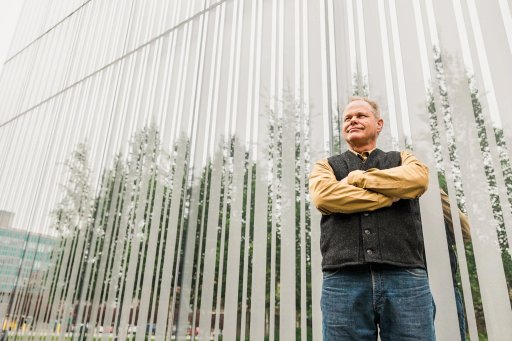
Dave Bronson
Former Anchorage Mayor; 2026 gubernatorial candidate · Office of the Mayor of Anchorage (former)
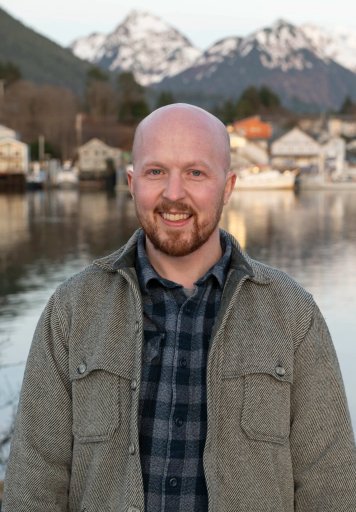
Jonathan Kreiss-Tomkins
Former State Representative; 2026 gubernatorial candidate · Alaska State Legislature (former)
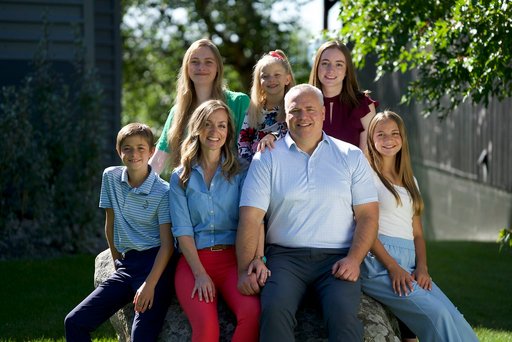
Treg Taylor
Attorney General of Alaska; 2026 gubernatorial candidate · Alaska Department of Law (former Attorney General)