RDC: AI Technology in Resources Panel.mp4
Alaska News • • 37 min
Articles from this transcript
ConocoPhillips' Alaska tech chief says AI will change jobs, and that it should
ConocoPhillips' Alaska tech chief told a resource conference AI will change jobs, and should, so engineers can be engineers. Humans still check the work.

No audio detected at 0:00
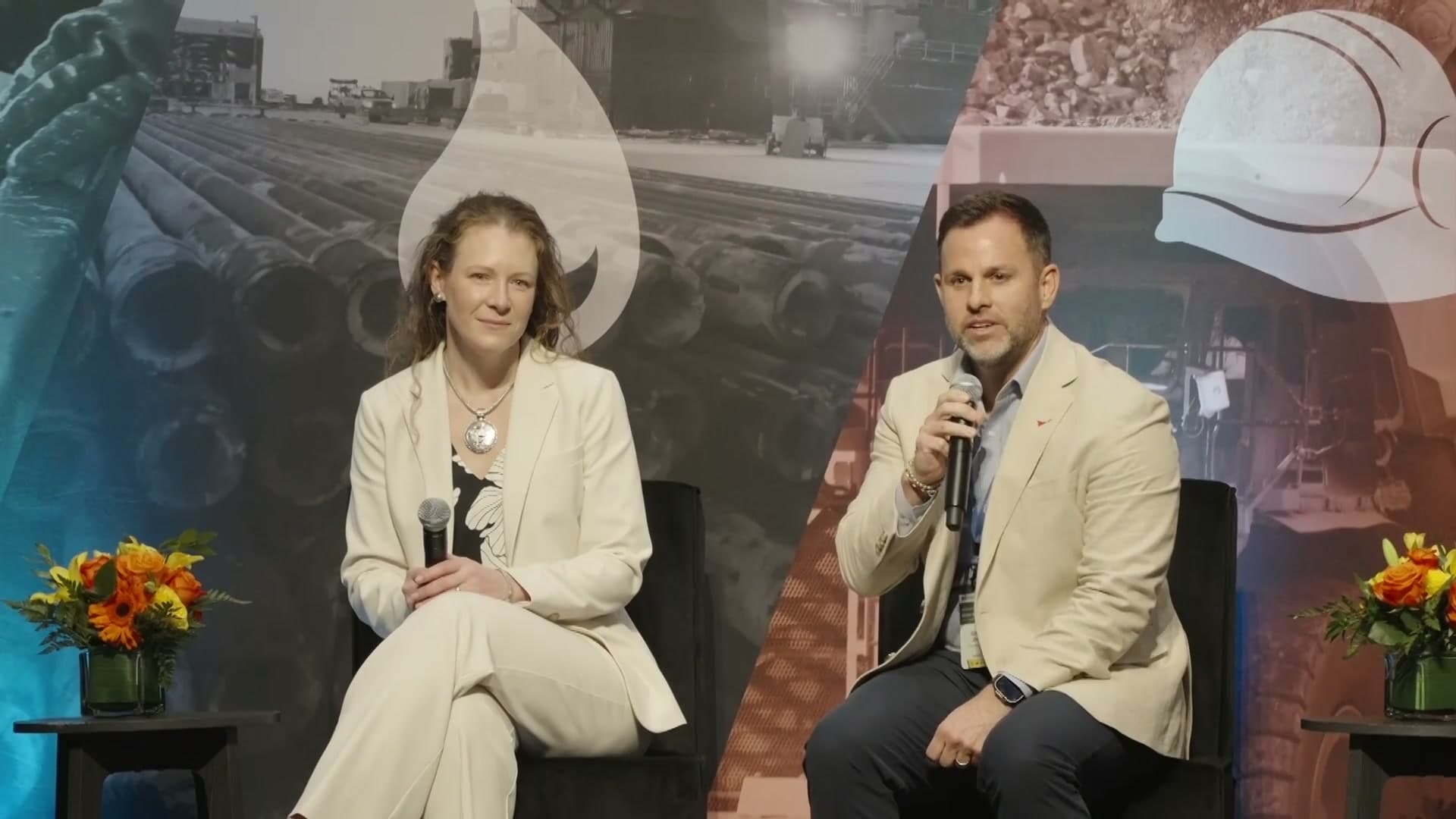
Talked a little bit about technology as part of the last presentation, and so I'm going to kind of stay with that same theme of technology and our next is on AI technology and resources. So really excited to bring this next panel up. It's a bit near and dear to my heart, I must tell you. So our panel is going to be emceed by John Tull with Humanaxis. And then we are going to have two panel members, Shelley Thomas, who is our AI program manager at ASRC Energy.
No audio detected at 0:20
No audio detected at 0:40
So I will have to say a little bit about her before she comes on. And as well as Randy John, who's the CIO for ConocoPhillips in Alaska. I know from working with both of these organizations that they're very forward with the opportunities that AI bring. I can certainly speak personally for our experiences with Shelley's value. And in case she doesn't say it, I'm going to go ahead and say it, which is a lot of the folks in our organizations work really hard.
They work long hours, they work extra hours, and they do it without complaining. And oftentimes they're spending time doing things that's fairly rote, that doesn't add a lot of value. But at the end of the day, they don't have a choice 'cause it has to be done. And there are opportunities that AI brings to give people more day, more hours on their day back to a little bit more balance and also to spend more of the time that they have doing the things that are adding value to their future and adding value to sort of what they're contributing to the company. And we see it firsthand.
So I'm really excited to have this panel come up and talk to us about some of the things that they're doing. And with that, I will ask John and Shelley and Randy to come to the stage. Thanks so much. Thank you. I, I really am looking forward to this panel.
This is a very important topic for most companies in Alaska and elsewhere. And I wanted to ask these guys to give a brief introduction of who they are, and then we'll frame sort of what we're going to talk about today. So Randy, you want to tell us a little bit about yourself? Sure. Yeah, I'll get started.
Thanks, John. So Randy, John, I've been with ConocoPhillips over 20 years, over 23 years really working in different parts of the business. I came up to Alaska about a year ago. Actually, I left Houston, Texas. It's 85 degrees out here, back there.
No audio detected at 2:20
And when I got here, it was zero, literally zero degrees. And I heard over and over again from different people. I shared this story with other— my— the company a couple of weeks ago, and I want to tell it with you guys because I want to refer to it as we go throughout the next 40 minutes. But when I moved here, I heard over and over again, there's no such thing as bad weather. There's only such thing as bad gear.
I was like, you guys are crazy. Quit telling me that. There's no such thing as bad weather. It's freezing cold here. I'm just going to huddle up on my couch and watch Friends or whatever.
And I heard it over and over again. And I started saying that, saying to my family as well, so much to my daughters. I have two daughters that they were like, Dad, stop. It's not funny. But we took it to heart because we were literally inside.
We were freezing to death. And we took that and we set— we set out to get good gear. And I remember one night we went out, it was freezing cold. It was like 8:00 at night. I mean, we could have been in bed and my daughters were bored and I was bored and we're like, hey, let's go out.
And so we went out, we ventured out and there we were. Who would have known, you know, 2 years ago that someday, 2 years in the future in Alaska, we'd be literally laying in the snow because we had gear. We went out, we were laying in the snow and we were just poking fun at each other, having fun. And then all of a sudden, in all of its glory, the skies were opened up that night and you see the Northern Lights start to appear. It was an amazing thing to us that because we had the gear, we got out and we were rewarded by getting out.
And this makes me think of AI. AI is that gear. Without AI, you can get so far, but with AI, with the right gear, you can get out and then you see what is meant for you in all of its, all of its glory. So that's kind of my introduction to coming up to Alaska, where I stand today. And oh, I guess the real introduction— I lead the digital technology organization at ConocoPhillips.
Excited to be here. Thanks, John. Great. Thank you, Randy. Okay.
That is going to be a very hard story to follow, but I'm also really excited to be here in Alaska. I came here Anchorage just a little over 2 years ago, almost 3 now, and I'm an engineer. And one of the things I noticed about Alaska is that there is a really cool, very tight community of engineers in Alaska. And I've also been really excited to talk with people about all of the amazing things that AI can do and how it can become part of your toolbox for survival, which does you know, play a part in Alaska. How can we be more resilient?
How can we be better at our jobs? I notice everybody I meet in Alaska takes their job very seriously, and they're all really the best at what they do. I think you've got to be to be here and to do well. And so I'm just— I'm so excited to talk with you guys about the cool projects that we've been doing. Shelly Thomas, ASRC Energy, and we are doing some amazing things with our team at ASRC Energy and for all of our clients.
So yeah, thank you. Thank you, Shelley. So my name is John. I am an Alaska Native. I left for 25 years and ran software companies in Southern California.
But I am back now. And this is my— this is my home. We do work in Alaska and Southern California in the AI space. So I wanted to start this conversation by framing a little bit about what AI is and is not for the purposes of this discussion, because we have a sort of a diverse group here. So we're not talking about ChatGPT, very powerful tool.
It's excellent for the individual, but that's a smaller piece of the puzzle. We're not talking about agentic AI for the desktop, something like a personal assistant or a tool to help manage your email and calendar. Very powerful, but that's also not what we're talking about here. We're talking about bigger projects where AI people, data, and systems are working in concert to solve significant problems with a business. So let's talk about what significant problems means.
Often it's ROI, right? It's not just a nice to have, but it moves the dial for the business in an important way. And that is not gained for free, right? There has to be some significant thinking about the business process and the business problems prior to starting. That sort of foundational work of thinking things through is critical.
So even after you've thought them through, you have to engage all the stakeholders that are involved in that process. This would be those who run the systems and the people who do hands-on work making the systems function. So until you think about ROI, systems, and people working in concert, you're really not talking about the things we're talking about here. And the scale of projects that ASRC Energy and ConocoPhillips are doing are these larger-scale projects. So we're trying to derive value from that set of outcomes.
So with that, boom, I'm clicker-free.
Ah.
Well guys, we're gonna start at this slide. That's actually not the first slide, but we'll be okay. So the way these slides are set up, you can see that the general topic here that we're gonna use for discussing is noted. And then there's a, a QR code that is a link to resources related directly to that topic. And so as we go through different topics, all of the materials are unique.
So let's talk about data readiness and planning. So prior to starting an AI initiative, and given not only your personal experience with your companies, but also what you've learned from others, how do you know when you're ready to start?
Oh, I get to take that one. Yeah, great. I think, you know, one of the ways that we start at ASRC Energy is we sit down with the stakeholders and the subject matter experts. That's so important because you can have mountains of data. Like the last presentation, I feel like I heard the word data a lot, and it is because I think we're all starting to recognize the importance of data, but you can also be drowning in data.
No audio detected at 8:50
And so you've got to sit down with the people that really understand the business and that data to be able to figure out what problem are you trying to solve, what opportunity are you trying to really uncover for the business. And so when you sit down with those people, you understand the opportunity, that's when you can start to become ready. And then make sure that that opportunity is worth solving. So once you start having the conversation of here's all the data and here's what we're trying to solve, AI iteration can become very fast. You can do a lot of projects.
It's a lot easier to solve these problems than it used to be. And to uncover the opportunities for the business. So I think stakeholders is the first step. Yeah. So I'll back up just one step on the data foundation.
So a lot of people get scared about AI for different reasons. One of them is data. And so if you wait for your data to be figured out, you will never get started because your data is never going to be perfect. Ours wasn't. But we had to make that decision to one project at a time to get started.
But I'll tell you, in parallel, you do have to work on what that data foundation looks like. And if you want to get one project done, that's fine. You can make it work with, with bad data, I'll call it. But if you want to get to 2 to 10, 20 to 40 projects, you have to work that data foundation. And we took the time to do that.
It's the type of work that's not sexy. Nobody's out there clapping for data work, but we took the time, we called it NextGen, we included our ERP in with it. But because we did that, now we have built that base layer, if you will, to get to that 40th project, start building on top of this data foundation that we have. So when you guys were working through that project in its first iteration, how much time did you spend on data prep and making sure you're ready to go?
A lot. Yeah, it is a lot. It is. It's a lot of time and it's a lot of money that goes into that to really look at normalizing your data. I mean, you could have Alaska out there.
You could have Alaska abbreviated as AK. You could have it spelled out in lowercase. You could have it capitalized. And in the old days, that could have meant 10 different things. But as you normalize your data and as AI steps in to help you normalize that data, now all of those can be crunched into one thing.
So that, that investment that we made in bringing our data and normalizing our data has really paid off for us to now take off with AI. Okay, thank you.
Here's another element here, the critical considerations before you start an AI project, and data is certainly one of those elements. Can you think of any other things for the audience that would be really an excellent preparatory step before attacking a project? I think reliability is a big one, right? Because you can sit down with the stakeholders, look at the opportunity for the business, you can analyze the data all day long, but you've gotta have a reliable solution. And if it's not reliable, it's not scalable, right?
No audio detected at 12:00
Absolutely. Reliability is key. You gotta be able to trust your data. I'll tell you 3 other things that I've been thinking about that are hardcore critical considerations when starting your AI journey are you have to have support from the top. You have to have executive support because you're— if you take AI to optimize, optimize a broken process, you're just doing your broken process faster now.
And so now we're talking about actually going back. If you're, if you're a good fisherman or if you're a good miner or if you're a good operator, you have your way and you do it really good and you've probably done it really good for 20 or 30 years. Now for us to really find value and to get the most out of AI, we're almost having to go back and break down those things that we're really good at and say, oh my gosh, I can do those faster now. And so you have to have support from the top, not only because you're changing process flow, but you're also asking for a lot of money to be able to do those things. And so speaking of money, you're thinking about ROI, you're thinking about the value.
You know, you could get lost in doing a bunch of AI work. You could get lost in ChatGPT, and you could actually build agents with some of these tools. But you can find yourself all of a sudden you have 200 tools, you think you're really productive, but what did that do to, to impact the bottom line of your company? Maybe nothing. So was the— is the ROI that you're spending on AI really there?
Maybe it is, maybe it isn't. And so then the third thing I'll mention is buy-in. Those operators, those fishermen, those miners, they have to have— you have to have their buy-in. So how do you get that buy-in? I think about the movie Field of Dreams.
If you ever, ever seen Field of Dreams, you, you hear him say, if you build it, they will come. You're going to get pushback. But once they see the art of the possible and then they start coming in and you put that in their hands, actually, it's not me building something for them. So you have to use this. He's putting it in their hands and now they're seeing how easy it is to build with AI.
Now they can change their processes. And to me, those are 3 critical things, considerations you have to have to be successful with AI. That's interesting. That sounds like a vision transfer as well. To get stakeholder involvement, it has to be bidirectional, not only the champion at the top, but the people that are doing the work as part of that team, right?
And what I found, and I don't know if this is true to your experience as well, but there are often processes that are not clear at the executive level that are day-to-day further down inside the teams. And those processes in some cases are so critical to the functioning of that particular group that to omit those and not have that team buy-in will create risk for the project. Have you experienced that as well? Yeah, for sure. And I think, I think, you know, back to the question of like why executive buy-in is is so important.
It's because it creates a space for people to explore. And that is crucial because you've got to have those people that are doing the real work exploring the possibility of solutions. You can't just come to them and say, hey, I want you to fix this with AI. I mean, you can, but it doesn't work nearly as well as creating that space for them to explore.
So thank you. Yes, when we think about— Moving through this process from the initial conceptualization and then preparing your data to make it ready, you're moving towards step of implementation. And so for those who are in the audience, what are some critical things involved in the implementation process that you'd need to engage and think about in advance to make implementation successful? All right.
Again, there's a lot that goes into this. And so just thinking about what, you know, my strategy would look like if I'm trying to productionize or trying to scale AI across the organization, you, you have to look at it. It has to be a platform over a project. And I'll come back to that. It has to be something that you can reuse over rebuild.
And it has to be something that you can productionize over just a POC, just a proof of concept. And what I mean by that is a platform. When I was talking earlier to get from like 2 to 10 to 20 to 40 projects, you can't do that without actually having a platform. So if you, if you stay like in project purgatory, you're going to get stuck in there without this, you know, this big highway that you can just let people go on and drive on. And so we're talking about a platform and reusability.
Like I was talking about, the more you get into this, the more skills you're building. And if you have just people doing bespoke things over here, you're wasting a lot of time. And so you need that reusability rather than everybody just rebuilding their own thing. And so there's things called skills repositories that you can put your skills in and people can go and pick those up all around the world. So what we're doing in Alaska is not being rebuilt in Australia.
And then the last thing was just productionization over proof of concept. Like I said, you could get stuck in this, this proof of concept or project purgatory. But once you're in productionization, you trust your, you trust your model, you use it every day, you You have monitoring set up. So, those are 3 things that I think are critical to an AI strategy to be able to scale it. And I think, you know, in relation to scaling and the monitoring aspect, that's one thing that we always build into our projects is just the, you know, we have the stakeholders and those subject matter experts checking it all along the way because you've got to have really clear visibility to any issues that pop up.
You can't just have your AI working in a black box and then you don't know what it's going to spit out. I mean, it spit out something and we think it's right, but we're not sure it's right. You've really got to have visibility to the whole flow of the project and have those subject matter experts involved and have them closely looking at that data to identify when things can go wrong. And that stop button that's in manufacturing lines, you know, that everybody can hit stop the line at any point, you've got to have that in place too. So what I think I'm hearing is that the process from proof of concept to engagement with the team is iterative.
Yes? And so one of the things I've observed in some projects, the executive team needs to understand that iteration does mean change upon change. And as you envisioned it initially may not be the way you envision it at the subsequent step. Has to be some patience involved because that's learning. Have you experienced that as well, or do you design your projects so that's not necessary?
I, I think AI greatly accelerates learning, and that's, you know, one of the cool things that we find when we have that executive support. You create that space for exploration, and then your teams are constantly learning. They're constantly bringing new things, and that's part of an innovative culture, you know, that we're definitely very behind at ASRC Energy because we want people to bring those opportunities to us. So just building on that innovative culture is key and making sure it's got support. It sounds like learning in the entrepreneurial process is being failure resistant as well.
No audio detected at 20:00
There, the iterative change is not always predictable. So, is that, am I hearing that correctly?
We talk about workforce management. This is perhaps a little more tricky. It's simply because people are impacted by these changes, especially since the changes happen so quickly. What sort of guidance would you provide to the people listening here today about that complication and that really human side of implementing AI in an organization?
I think what we heard in the last talk was talking about how Alaska does struggle to produce enough people for all of the needs that we have. And people are working really hard. They're working long hours. Sometimes they're working on things that are very repetitive, like Kristi mentioned, that are like, it's just, it's— they know that that's not the best use of their brain, but it's got to get done. So I think any time that you can start as a leader of your company and start asking people, how are you using AI to help you in your day-to-day, not just do work faster, but like, take some of this stuff off your plate so that we can actually use your brain for what we need it for, for the business, because our people are precious.
Their time is precious. Your time is precious. You've got to find that work-life balance. And AI is, is really, like you said, it's the gear that can help you get there. It can also be a rabbit hole that you can get sucked down into and hard to get out of.
But, but definitely it can help you with that work-life balance piece. And I think that is so important to support our employees to be able to do more higher-value work, keep human in the loop on all of our projects. Yeah, I'll add on to that. So just kind of listening to some of the people talk today, even hearing JKT talk about permitting and some of these problems we have, the lack of people— AI is going to change the game on some of those things. So just to address the elephant in the room, you know, AI is coming after my job.
I'm not going to sit up here and tell you that things are going to change because they will. They should. You know, you didn't go to engineering school, right, to write reports when you come in every morning. No. The answer is, well, maybe some part of it you did, but we don't have to do that anymore.
We want engineers to be engineers. We want a reservoir engineer engineering the reservoir. We want production engineers doing what you do best— wells, et cetera. And so we want to, like you said, we want to put them on that high-value work. There is work that AI can't do.
Sometimes we got to make a judgment call. Sometimes we have safety calls, you know, relationships that we're building today. AI can't make those, build those relationships for us. So definitely we need to address that. I think we need to equip our frontline supervisors with what does AI really mean for our organization.
And the key to that, here's the key, I hope that you leave with this, is trust. They have to trust their frontline supervisors that we are really going after the high-value adding work and we want to retool, reskill, and continue to take the business to new heights. So am I, understanding properly that there's a repositioning and training element you think would be advisable for companies who are introducing AI where there may be some change to what workers do to higher value tasks. Absolutely. I won't go too deep into that one, but yes, there's an opportunity to look at how we do things differently.
No audio detected at 24:10
And all I'll say is that those processes are uncomfortable at times. To, like I said about the fishermen and the operators and the miners, things that they've been doing for 20 years. Now all of a sudden, if they just step back and they think about it like, oh my gosh, I can do this differently. I can take a totally different route to that point than I did before.
Let's talk about some of the pitfalls and dangers in AI projects, really things to avoid if you can. As you think through how you're going to roll this out and make a change in your company? What things do you avoid and how do you avoid them? Yeah, so I'm just gonna double down on a couple things that I said earlier, and that is that pilot product that you, project that you have that you celebrated and that you clap for and everybody loved it, and it never made it to production. It never went through, how much is this thing actually costing me?
No audio detected at 24:50
Is this thing really secure? Am I able to monitor this thing? And so it sets in kind of a proof of concept or a pilot phase, and it never really gets scaled adequately. That's a big pitfall, and you could get stuck in the— in that pitfall alone. The other one that I touched on earlier is having these bespoke solutions.
So if you get caught with these bespoke solutions, the pitfall is that you are creating yourself more and more work because people are recreating these skills over and over again. So those are probably the two biggest ones. Well, one of the biggest ones that I didn't mention is AI.
Is very confident that it is correct. And this is where the human comes in the loop. And sometimes you ask it for directions. And even if you go into Waze or Maps, sometimes you're like, tell me how to get to Moose's Tooth. And you're like, I know that's not how to get to Moose's Tooth.
You know, try again. You're— even your ChatGPT will tell you that sometimes. So that human in the loop is necessary to just challenge it. And that's where the brains come in. That's where the engineer, somebody who actually knows that process, has to be able to say, stop, that's not correct.
No audio detected at 26:30
So definitely a pitfall there as well. And the other one that I said earlier, that if you automate a broken process, it's still a broken process. Try to avoid that pitfall. Yeah, I, I would echo all of those things. But also, I think one of the biggest mistakes companies make when they first get AI is they hear over and over everywhere you go, Even some of the big, big AI companies are guilty of pushing this narrative, and it's just try one thing, right?
How many people have heard that's the best advice right now out there, right? Just try one thing. I think that's a mistake. I think you should sit down with the business, the executives, the stakeholders, the subject matter experts, and pick projects that really matter. Pick the projects that are hard, because even if you think it's impossible, even if you think there's no way that we can make this better, but we know that we've got to fix something, AI can probably help you figure out how to make it better, even if you can't see a way to it right away.
So I think that's a, that's a big problem, is that companies just, they kind of sit there at the bottom and they do all these easy projects, then they say, yeah, this is Great, it's a fun pilot project, but they're never really making that huge impact, that transformational impact. And it takes guts because you've got to sit down with people and say, I think this might change your job a little bit. Is that okay with you? And guess what? Most of the time they're probably okay with that.
They're like, as long as we've got a path to the future, I'm going to be doing better value things for the company. You'll get an incredible amount of support. So those are the two things that I'd watch out for. That's interesting. I spoke to a company here, it's a client that we had early on, and when we talk about business transformation, they went through that process and it was a mix of encouragement and despair, right?
As you go through and try to figure out how can we do better at this core process? So the attack plan was we thought through all the details in advance, to make sure that we're shooting at high-value targets. That was really important. And then we broke down how those processes could be symbiotic with each other. And if we solve a series of them, they move the dial for the business.
So we went through that exercise and then built the technology around solving problems. So after 6 months, we handed off the, the whole project to the client, and the client continued to evolve it after that. So I can't get into the specifics. They have a booth here, actually, Alipex, out in the hallway. But if you'd like to know how well they did with this, ask them.
I can tell you this: they widened the top of their sales funnel dramatically. You can ask them what dramatically means. And they streamlined their operational functions to be much lower cost. And they'll give you some insight into that. What I can tell you is net-net, they were already a profitable company, they tripled their margin.
So when it comes to business transformation, this is the scale of opportunity for some businesses. It's not just moving the dial, but it's really creating a different business at the end, a business that's triple the margin of what it was before, or I would argue is not the same business. And so even if it's done in larger scale, larger companies would have more difficulty creating those kind of outcomes, but still transformation is possible and certainly is a target along this evolutionary path.
This is a big one. You know, this is like a college course. It's like a survey course. Let's talk about AI in 40 minutes, right? And so security is a big deal.
And, uh, this could be a whole series of discussions by itself. Um, but it's a really important area to consider. And we've all probably read articles about, uh, you know, data being introduced into a chat that was corporate data. And there's these risks associated with that. So, as you ponder the security issue, What do you think companies should consider and things to avoid when attacking an AI initiative related to security?
I feel like this is a good one for you. You're big on this. Thank you. Like you said, we could talk about security for hours here today. One thing that I'll talk about, or maybe a couple of things that I'll talk about when it comes to security is your people are going to do this whether you allow them to or not.
And so if you ban security at your company, your people are going to get on their phones, they're going to get on ChatGPT, they're going to figure out how to create agents. They're probably going to take your company data somehow and put it in those agents or ChatGPT. Maybe they have to go out to the parking lot to do it, but they're going to find a way to do it. And so the advice that I would give is to give them a secure platform to go do it. Because what happens, you'll find in some of your contracts, if you— if there's supply chain people in here or contract people in here, you have a lot of your vendors that are using your data to create their own models with.
And so one thing that I would caution you on as well is to know what your contracts say and to know what your vendors— how they're using your data to train their models on. That's a real thing. Not to be doomsday or anybody, but just be careful about that. I think that's a security thing. I think a big one here in Alaska is making sure that you're building your AI strategy with or without connectivity.
We are going to experience issues here. That's the world that we live in up here in Alaska. So just make sure that you have a fallback plan. If you have something running completely on AI that's critical or a safety hazard, make sure that you have connectivity, you know, backup plan. Security is real.
I think I'll turn it over to you to maybe share some thoughts that you have. I, I think like, like Randy said, it's, it's great to give people guardrails. It's great to have a really good understanding of what those guardrails are and how we can work within them, what the accepted tools are. There are some really good ones out there that you can do incredible things with. And sometimes people don't know that they're using a tool that's maybe not approved, and they just don't know that tools have been approved.
So making sure that you have that clear communication strategy about like, here's our comfort zone of where you can work is so important. And then celebrating the wins of the people who actually have done something positive, I think is also good. Because sometimes people can get frustrated if they can't use the tools that they wanted to use and they say, well, I'm just, I'm just going to give up. I don't know what to do. They don't let me use the tool I want.
But sometimes by celebrating the wins of the people who are working within that framework, you can like kind of inspire the other people to be like, oh, maybe, maybe I can do, do something good with this. Like, for instance, I think Copilot is a good example. I've run into tons of people that maybe tried it a year ago and said, ah, Microsoft Copilot is terrible. And they did go through a period of time where they were— yeah, things weren't great, but it's gotten a lot better. So you guys, you guys use that as well.
So I think just giving it time, knowing that things change really fast and, and staying current with that, there's a lot that can be done with the tools that we have.
On the security side, and Randy, just speaking to this issue of having a backup plan, do you think it's necessary for companies to have their own AI infrastructure so they can run models when they lose access to the outside world? Not necessarily. I'm probably not the right person to give the guidance on whether they should have their own AI backup plans or not. But I do know that some, some companies are small. Some companies in here may be 5 people.
No audio detected at 34:50
I don't know if you're, if you're a small company, it probably doesn't make sense to invest in a complete AI backup plan. But you have to know what those contracts say. You have to make sure that, for example, like ChatGPT doesn't containerize your data, but Copilot does. You need to know what of your data is getting out there to the universe and what of, what of it is staying containerized where you think and you want it to. So this, this strategy is about awareness.
And in, in the ConocoPhillips example, it's to give people a a place to play where it's safe to experiment with data. Is that fair for me to say that? That's right. Yeah. Okay.
I think there's a partnership too with— I mean, just because we have these AI tools and we can do a lot of citizen development, there's still a really important place for us to lean into the IT expertise in our companies and say, hey, how do we make sure that this is a secure environment? How do we make sure that we're protecting all the data? And we take that very seriously. So, I think that's, you know, that's something that we can benefit from is just that partnership. Outstanding.
No audio detected at 36:00
Well, I wanted to thank both of you guys for your participation in the panel and your preparation for being here today. In this last slide, you can see it says, "Let's connect." That QR code would take you to a page and you can— it'll fire off an email with whatever questions you may have for Shelley Randy or I. And we'll be out in the hallway signing autographs and that sort of thing later. So if you'd like to join us, thank you. Thank you.
No audio detected at 36:30
No audio detected at 37:00