RDC: Holland America Line Update_1.mp4
Alaska News • • 31 min
Articles from this transcript
Alaska Airlines plans terminal projects in Kodiak, Utqiagvik, Bethel and Nome
Alaska Airlines plans new terminals in Kodiak and Utqiagvik, says Bethel's is due for a rebuild and has Nome on the list. Kodiak's comes down soon.

No audio detected at 0:00
No audio detected at 0:10
My name is Michaela Fowler. I'm the Vice President for Government and Community Relations for HAP Alaska Yukon. Serving Holland America, Princess, and the Carnival family brands. Investment in Alaska holds unique risks and challenges, and it's a really long-term commitment. Putting a transportation and tourism lens on that conversation, I'm very pleased to welcome my boss, Robert Morgenstern, Senior Vice President for Hap Alaska Yukon and Alaska Operations.
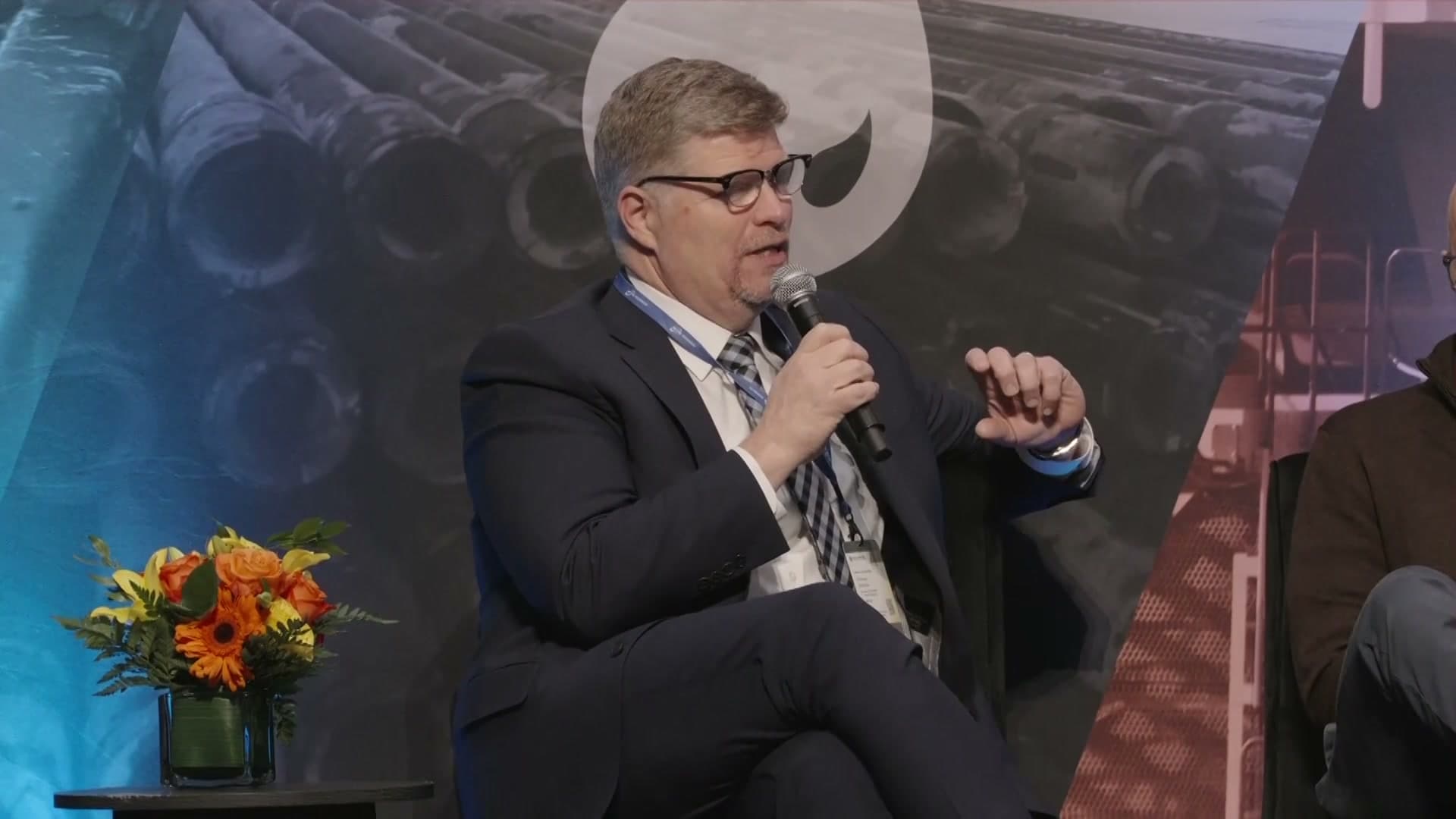
Scott Habberstad, Managing Director of the Alaska Market for Alaska Airlines. And our moderator, Jillian Simpson, President and CEO of Alaska Travel Industry Association, up to the stage.
Good morning, everyone. Good morning, gentlemen. So excited to see you here. Well, I'm excited about this topic and the opportunity to present this with a tourism lens. We know that Alaska is an amazing visitor destination.
No audio detected at 1:10
It's why a lot of us live here, and it's definitely why people like to visit. In fact, um, we've been seeing a growth trend in visitation to Alaska. Um, we have over 3 million visitors that come to Alaska annually, with 2.7 million of them coming in the summertime, and that was in 2025. I think when we get our numbers for this past summer, we'll see that number, um, actually increase a little bit, which is very exciting. Um, of those summer visitors, two-thirds of them are actually taking a cruise while they are sailing through Alaska, so that's pretty exciting.
Um, and then the rest of them are independent travelers who are primarily getting here, um, on airplanes, um, with our great partner Alaska Airlines for a lot of them. And of course, all of our winter travelers— I would say maybe 99% of our winter travelers are definitely arriving by air. So with that little framework, I wanted to start by asking you both this question a little bit about— based on this demand and this growth that we have seen in Alaska, what do you think the role is of industry to help meet and fulfill that demand from visitors without compromising the visitor experience in Alaska by oversaturating the infrastructure that we can sustain? And Robert, if it's okay, I'll start with you. Great, thank you.
It's great to be here. Um, getting right into it, there's no softball. Um, yeah, so we, uh, have a large footprint throughout Alaska. So when we look at cruising, we have to think about port communities, and that's really where some of the, uh, the points you're kind of getting at are a little bit more acute. But we also have a large portfolio on land in Alaska.
No audio detected at 2:50
We have 8 hotels train cars, buses, and a variety of different JVs and do our best to truly try to get guests dispersed throughout the state and experience all the great things that they can. But there's no doubt that there is sort of a pressure in particularly in the, in the port communities of Southeast Alaska. I think one of the things that's really interesting about that is By no means are these new issues. About almost 30 years ago now, down in Juneau, my company and some folks involved in that set up an organization called Tourism Best Management Practices. And it was really private industry getting together, tour operators, business owners, to come up with a framework of self-regulation and just guidelines to be good neighbors, to be good members of the community, and to avoid conflict.
No audio detected at 3:20
No audio detected at 3:40
No audio detected at 3:50
Because there was concern about growth in tourism, and back then there was 500,000 visitors to Juneau. Now there's 1.7 million. And I think, so my point is, is that these issues are always part of the tourism experience to a certain extent. But if we jump forward to where we are today, there's no doubt that some of these communities have hit sort of a carrying capacity threshold based on the infrastructure that's available. And so what we've done as an industry is work directly with the assemblies and city managers in these locations.
And I would say Alaska is really a leader in this regard in terms of a destination. Anchorage, Alaska. We have 3 negotiated memorandums of agreement with the city of Juneau as an example. 2 Of which basically capped growth. We agreed to a limit on ships and limit on passengers.
No audio detected at 5:10
And all of that was done with the idea that we also recognize that there is a point at which the visitor experience also degrades for our guests. And we need to collectively figure out how to improve infrastructure, and perhaps someday those limits can be, can be adjusted. But so we've been a direct participant for many, many years in ensuring that, you know, the experience for the guest is, uh, is a good one, as well as for the communities that we operate. Thank you. And I just want to really underscore what you're talking about, that voluntary memorandum of understanding is really unprecedented.
No audio detected at 5:30
No audio detected at 5:40
I mean, really, when you talk about Alaska being the lead in that and the fact that the lines all came together recognizing the need and the importance of it, I think it really speaks volumes to you as a company and as an industry. So thank you. Scott, what are your thoughts? Yeah, what's our role? I mean, I'm going to take a little different approach here and look at it not only from the visitor industry but the community industry and the state as a whole.
With respect to Alaska Airlines, we need to understand what's going on in the communities we serve. We need to understand what the economy is doing, what the community needs, and we need to be a conduit to help those economies grow. As it relates to the industries that support those growths, whether it be the oil industry, the timber industry, mining, seafood, fishing, or the visitor industry, including cruise, we need to understand what their demand looks like, right? What they're doing in specific markets to help them grow, to help Alaska's economy grow. And so a great way in which we do that is being engaged with organizations like RDC or ATIA, or state chamber, or all the associations in the state, to stay close to our partners, to understand where they're growing.
No audio detected at 6:30
A great example there is, you know, when our friends at Santos were building out PEKA, they needed more capacity to the slope. So we added more aircraft to the slope to facilitate the construction phase of PEKA. We're starting to dial some of that back because there's not as much need right now. With our friends in the seafood industry, in January they have a huge movement, about 4,000 people that come from the lower 48 to Alaska. To help process.
We add capacity for that. Or you've seen some incredible growth by Alaska Airlines in new nonstop destinations out of Anchorage in the summer and Seattle. A lot of that is to facilitate the growth in the visitor industry for both independent and cruise travel. We work with the cruise industry, we work with the tourism industry to understand where the markets are that they're marketing to and then help facilitate that travel and drive the economy by putting capacity there to meet their needs. So we match capacity with demand.
To help drive Alaska's economy. Yeah, and I think that's really unique actually that you do look closely at that and work with all of the different sectors. And I do wanna also just note that when we talk about two-thirds of our visitors are on a cruise, there's still a portion of them, over a quarter of them, are actually crossing the Gulf of Alaska and are only traveling one way. And so they need a flight either to begin or end their cruise. And so the airline partnership, the partnership that you have with the different cruise lines, is really critical.
No audio detected at 8:00
Shifting, Robert, back to you. Holland America, it's really exciting. You're making some big investments in land infrastructure right now, which I'd love for you to talk more about because that is really unique for a cruise line to have land investments. But also talk about what is it about Alaska's operating environment that helped you make that choice to make these investments?
No audio detected at 8:30
Yeah, we, we are excited. Alaska is unique for not just our, our line, but really among all cruise lines in that we actually have a large array of land-based assets here. The only other sort of comparable would be in the Caribbean, where some of the lines, including some of ours, have invested in, you know, private island resorts, that kind of thing. But there's nowhere else in the world where we have an extensive array of hotels, trains, buses, and do multi-day land tours. So we have about $1 billion invested on land in Alaska across our portfolio.
No audio detected at 8:50
And this year we're excited. We have a $70 million project going on in Denali at one of our two resorts up there. It's a bit of a renovation and an expansion. We'll be adding a net about 80, 82 rooms or so. And we just see incredible demand for Alaska and particularly our cruise tour product, which is a cruise combined with that land experience.
And, and everybody goes to Denali. And so really removing the bottleneck or opening that up will help increase the total net number of visitors to Alaska. We'll do somewhere in the neighborhood of 150,000 guests next year, and booking curve is incredibly, incredibly strong. To the second part of that is sort of the environment question. We're very bullish on Alaska, particularly for Princess and Holland America.
It is an incredibly important destination. We've been coming here for 80 years. It's a long-term investment. Alaska is a difficult investment for us in terms of we, you know, every trade, every destination competes for capital. And it's an expensive place to build, particularly in the middle of the winter in remote places like Denali.
But the fact the company sees value in that to match the incredible demand is really an indication of a long-term view. We also find, particularly with construction projects up here, that we have great support. We have a fantastic GC, and the process is very predictable for us. And so whereas if you're looking at infrastructure investments in Southeast Alaska in port towns, it's— it is more complicated. It's more difficult politically.
And doability on projects is a bit more challenging. And so we are excited about where we're headed. And I think this won't be the last. We've got a lot of properties we have to continue to invest in to keep them up to our guest standard. But we're excited.
I'm going to be up there tomorrow and hopefully it's, it's on track or my replacement will finish the project next year. So. I'm sure it'll be on track. I'm sure it'll be on track. Well, and we had some great amazing construction happening in Denali that was just completed this summer with the Pretty Rocks Bridge.
And so it's just really fantastic that you're making that investment in additional rooms so that more people can experience the park in the full park. So thank you for that. Scott, what about Alaska Airlines? You guys have been serving Alaska, which probably feels like forever, I think. Can you talk about the infrastructure that you have invested in up here and how it supports Alaska's travel needs?
Absolutely. Yeah. Next year will mark 95 years Alaska Airlines serving the state of Alaska. Started in 1932, and that first flight was right from here out to Bristol Bay and serving the industry then. So a lot of it stayed the same.
You know, we keep saying Alaska is unique, but it truly is. And I don't know that a lot of people realize this, but we serve 19 communities in the state of Alaska, only 3 of which are accessible by road. And so travel in Alaska is more than a necessity, right? It's It's not the luxury that other people feel elsewhere. You have to do it.
And so in 13 of those communities we serve, we actually had to go in and build our own terminals. So we own and operate 13 of the terminals we fly into here in the state of Alaska. And that's unique. I mean, nowhere else in our network do we do that. You know, a lot of those terminals were built in the '80s and '90s.
And for me, that feels like yesterday. But reflecting back, that's like 30, 40 years ago. And demand has changed, right? How we serve the markets changed, the communities' needs have changed. And so, you know, this past year we launched our Great Land Investment Plan where we're going to invest over $60 million in select terminals throughout the state.
And so those of you who have spent time in Kodiak, we're in a temporary facility in Kodiak and we're about to tear down our current terminal, start building the new terminal. We expect to have that done in about 2 years. In Utqiagvik, we have bought the DOT terminal or the DOT building next to our terminal in Utqiagvik, and we're in the planning phase of what that terminal is going going to look like moving forward. And then the other two that are on the list, we've got to rebuild Bethel, and that's on the term. And then there's just a lot of opportunity going on in Nome right now.
We're seeing Nome grow with the port expansion up there. There's a lot of mineral activity, and there's a military— growing military presence there. So Nome is on our list to build out as well. And so those are, you know, for the main projects we've got coming down the pipe. You know, a big thing that you can't miss, about a decade ago we rebuilt our brand new— well, we rebuilt a new hangar.
It's not brand new anymore, but it looks new if you've gone inside. And the reason we did that is our old hangar wouldn't take one of our new aircraft. The wingtips were too long. So this new hangar allows us to continue to do the maintenance here in Alaska and have a strong maintenance base to ensure we have on-time arrivals and on-time departures for our guests. And I'm happy to say we are number one in on-time through, uh, to this point this year in the industry.
And so we're really back to where we need to be, blocking and tackling, getting planes in and off on and delivering our passengers where they want to go, when they want to go there. Wow, that's really significant investment from both of your companies in Alaska, and it definitely is going to improve the travel experience. And I know as Alaskans, we're also probably pretty excited as well for all these new terminals and lounges and things like that. Well, shifting gears a little bit, and I'll go take this back to you, Robert, to start with, but what, um, We've talked about opportunities and investments and wins and growth, but what do you think are the biggest risks to the visitor industry in Alaska?
No audio detected at 15:10
Boy, I think first and foremost, particularly for our industry, is maintaining community welcome.
No audio detected at 15:40
Very large presence during the summer season when we're operating in Southeast Alaska. And it's up to us to continue to work hard to engage with the community, with the assemblies, elected community groups and so forth, and be a good listener and be a good neighbor. And as I said earlier, I think we've done a good job of that. And but we can't stop. You can't let up.
Over the past, you know, 5 or 6 years, there's been, I think, 6 different initiatives launched in Southeast in some form or another trying to limit or curb cruising. And they've all been unsuccessful, which is, which is great. But it's an indication that there is a portion of the community that, you know, would rather see less guests, but it's heartening to see that the majority of the community understand the value of tourism. So I think continuing on that, infrastructure is the next one. There is just more demand than there are places to go in Southeast in particular.
So developing new ports is extraordinarily expensive. A lot of the infrastructure that was built to support shipping was built, you know, a generation ago when ships were quite different. So today ships increasingly struggle in some of the, the places for, for the infrastructure. So looking at, you know, a long-term view, there needs to be some investment in infrastructure. And then I think the third is really a different kind of infrastructure, which would be human capital.
It was touched on in the prior presentation from The Economist, which I thought was great, but You know, the visitor industry depends incredibly heavily on outside labor coming into Alaska, seasonal work. We, our company alone, hires 3,500 people every year to come work in Alaska. And the reality today is, and this is true for restaurants, for visitors, gift shops, everybody, you have to, as part of your employment, offer housing. And housing is really difficult. We have built housing.
The largest hotel in the state is actually our employee housing in Denali. It's 1,000 beds. In Southeast Alaska, in virtually everywhere, I think of the 3,500 people we are housing and feeding, 3,000 of them. And so, but I hear this all the time from our tour operators. And so when they look to expand their business, maybe they can add a raft or a vehicle or build on, maybe open another.
The labor or the cost of that project gets burdened with, but I also have to have housing. And so it is a statewide problem. We hear it in the news a lot, but it's an acute one for the visitor industry as well. Yeah, and I can only wholeheartedly support what you're saying. We just had our annual convention a few weeks ago and our membership was saying the exact same thing that Anchorage, that is their number one challenge is being able to provide housing for their workforce.
And the two go hand in hand as a challenge for growth, I think, or as an obstacle for growth. Scott, what about you? You have now— Alaska Airlines has a global perspective. So what do you think are the biggest risks to Alaska tourism? Yeah, Jillian, we've been blessed to work together for quite a while in the visitor industry, right, with ATIA and transition from AVA.
No audio detected at 19:10
I think I'm going to take a little different perspective than Robert, but it'll it'll link up in the end. I think it's complacency. I think we've got a challenge in the visitor industry over the last, you know, 20 years. We've talked about the beauty of Alaska, right, and how we've got a competitive advantage over the world and how vast we are. I don't think we make independent travel to Alaska easy, right?
No audio detected at 19:40
It's hard to book a trip to Alaska and know what to do. You can book an airfare, but you can't link your experiences to that. We haven't cracked that nut. And I think that's supported by looking at the growth in the cruise industry, who has really crushed that. They make it easy, right?
No audio detected at 20:00
The cruise industry, you can get on a 7-day cruise or a 10-day cruise, and you know when you get on, you know when you get off, and you get the experience all along the way, right? Independent travel, we don't make that easy. And so we've seen a stagnation in independent travel, whether it be summer or winter, across Alaska, while our partner in the cruise industry continues to grow. And where that really resonated with me was, um, this past year we launched Service Seattle to Reykjavík, right? And I envisioned Reykjavík just a smaller version of Alaska, and albeit much smaller version of Alaska, and I didn't think that was going to be a successful flight because it's a 6.5-hour flight.
No audio detected at 20:20
You can get the same experience in Alaska in a 3-hour flight. Why would you do that? And then my eyes were opened. That flight was incredibly successful. And the difference between what they're doing and what we're doing is they've made independent travel incredibly easy.
No audio detected at 20:50
And they market. As you and I know, I mean, the, the Disney industry budget has been at a high as $16 million over a decade ago, down to about $2.5 million this past year. And so we've been reliant on the beauty and our name for a long time. And everybody else is out promoting us. And so we've got to figure out that nut or we're going to continue to just bop along.
No audio detected at 21:20
Yeah, I obviously couldn't agree more that I think we think Alaska sells itself because we know how amazing it is and it's so beautiful and it's such an amazing experience when you are here. But there are so many other global destinations that are getting people's attention and attracting them to come visit and instead of coming here because we don't have the marketing reach to get them. So thank you for that, Scott. Well, we've covered some exciting things and the risks that we are facing, but let's talk a little bit about what can combat those risks. How do we mitigate them and ensure that there's a healthy operating environment in Alaska?
No audio detected at 21:40
No audio detected at 21:50
No audio detected at 22:00
And Scott, is it okay if I start with you this time? Sure. Okay.
Sure. Yeah, there we go. Third time's a charm, right? You threw me off, I turned my mic off. Yeah, um, so safety is the number one priority for Alaska Airlines, right?
I mean, it's the first thing we wake up thinking about, it's the last thing we do at night. And, um, the FAA is a great partner with Alaska Airlines, but let's be honest, um, in the industry, um, our aviation infrastructure across the United States is aging. And, um, fortunately Congress passed the FAA Reauthorization Act, that there was a sub— well, the FAA Reauthorization Act invested over hundreds of millions of dollars in aviation industry across America. As part of that was DASI, named after Don Young, which carved out a big chunk of that, putting millions of dollars in Alaska to improve our infrastructure right here. And so why is that important to folks?
No audio detected at 22:40
No audio detected at 22:50
Weather is incredibly important for the airlines, whether it be small GA, whether it be medium 135 operators, or commercial operators. We can't serve the communities we do without accurate weather going in there. And so DASI is investing millions of dollars— not hundreds of millions— millions of dollars across Alaska, improving AWOS and ASOS systems everywhere. In addition to that, for more of the GA and the small 135 operators, they're putting weather cams in passes, in areas, to improve safety. So pilots understand what the weather is before they get there, and they can plan their trips out.
So this takes time. Our friends in the FAA are slow, but there's a great working plan with Alaska Air Carriers Association working directly with the FAA and other principals to advance the, the basic infrastructure that we need throughout Alaska to improve aviation safety. That, combined with what GCI and Starlink doing to bring broadband and internet connectivity to improve connectivity is increasing safety across the state. So we're excited about that. It's been a long time coming and it'll improve completion rates.
It'll improve safety. It'll be good for everybody, both the visitor industry and local communities. Yeah, absolutely. I mean, it's really exciting to see that not only for Alaska Airlines, but as you said, all of the, the small carriers and the small runways across the state. You can't get to a remote lodge without flying there, so it's, it's critical.
Robert, what do you think? Yeah, I think first of all, we, we have to take a long-term view, particularly with regard to infrastructure decisions and investment in Alaska. Capital likes predictability, so having, you know, assurance of doability with projects, knowing that money can be placed here and that that it's going to be able to be put to work for many years is hugely important. And I think we, as a visitor industry, have to keep telling our story more broadly in the economy and to the community. There's a tendency sometimes for tourism to not be viewed as an industry in the same way that other, maybe more traditional industries are viewed.
No audio detected at 24:40
No audio detected at 24:50
No audio detected at 25:10
And we have to continue to remind people of the economic value And engagement in the communities is key. I always explain to my team that, you know, if you look at a bell curve of society, there are people on one end of that curve who no matter what you do aren't going to like your industry. That's true of everybody in this room. You have your critics and you're probably not going to move a lot of those folks, nor should they really drive your agenda. On the other far end of the spectrum, you have people who are in your industry or who love you, and in our case, they may be even cruisers, right?
No audio detected at 25:30
No audio detected at 25:40
No audio detected at 25:50
But the important part of the bell curve is the meat of it in the middle, and the movable middle, as we call it. And there are people who, you know, they're living their life every day, they're going about taking care of their kids, going to work, whatever. And what they know about the visitor industry may come to them through a single Facebook post or through an offhand comment. And for us to be in a position of strength, we need to think about that movable middle, and that's who we need to communicate to, and that's who we need to remind the value of this industry and not get so hung up on the polarity side of it and not take for granted the complacency issue you raised earlier that people understand what we do and the value of it to the economy. So, So we all say this all the time in our sessions, but we have to continue to tell our story.
No audio detected at 26:10
No audio detected at 26:40
Even when it gets old to us, it's new to the community and it's new to folks who need to hear it. I think that's a really great point. I guess I would probably be on that far end of the bell curve that thinks our industry is amazing, but—. Hater or the support? Better feel that way.
Well, since I have the mic, I'll say, you know, tourism supports 48,000 jobs in Alaska and injects over $5 billion into the state and local economies. And before we close, we're wrapping up on time here, but I— because tourism is about sharing our stories and our culture with people all across the world, I would love it if each of you could share a memory or a story of sharing Alaska with someone for the first time that's really stuck with you and maybe put a spin on it about why you love our industry, why it's more than just a job, if it is.
No audio detected at 27:20
No audio detected at 27:40
I'll go first. Yeah, I mean, I came up here in 1993 as a seasonal employee to pay for college and sort of thought one and done, I'll go do some time in Alaska, make a few bucks, and then get on with my go get a real job. I was going to be a lawyer. Thank God that didn't work out. And, you know, like Alaska does, it got under my skin.
No audio detected at 28:00
No audio detected at 28:10
It just— so many people. And one of my favorite things in my job is now I am in charge of all that stuff. And when I go through Alaska and talk to our seasonal employees 30 years later, 30-some-odd years later, that has not changed at all. And people still come up here, still fall in love with it, still get the magic of it. And when I drag executives through on executive babysitting, I mean VIP trips, it's the same thing.
No audio detected at 28:30
You tell these stories and you show them the uniqueness and it just, for somebody sitting in Miami, it kind of blows their mind sometimes. I just, I'm then reminded that this is a pretty good gig, pretty good business to be in. Similar vein, I grew up in Ketchikan, went to flight school out of high school, came back to Ketchikan, started flying floatplanes. And initially we were serving logging camps, right? And then all of a sudden the timber industry went the way, and it did.
No audio detected at 29:00
And the next day we were doing nothing but flightseeing trips to Misty Fjords for cruise ship passengers and guests that came. Most people that know me know that I don't have a problem talking or yabba dabba doing with people. And the opportunity to take people on 4 or 5 trips a day out to Misty Fjords, which is just incredibly beautiful, and for them to experience that, and they've never experienced anything like that before. And then on the same day, take somebody up to the Annan Bear Observatory and see the bears. And things that we really do get an opportunity to take for granted every day.
No audio detected at 29:30
No audio detected at 29:40
This is a people's once in a lifetime opportunity. What we need to do is make sure it's not once in a lifetime. They keep coming back with marketing, but I mean, the smiles on their faces. I don't remember a person that had a bad time that left us without a smile on their face because it was truly spectacular. And again, we take it for granted and I just try and remember how beautiful it is here every day.
Yeah, thank you. That's both what you both have said was just really beautiful and it really just shows how we're in the business of making people's dreams come true and how lucky we are to be able to do that. Well, thank you both so much. Let's give these wonderful gentlemen a round of applause. I appreciate your sharing your insights with us today.
No audio detected at 30:20
No audio detected at 30:30
No audio detected at 30:40
No audio detected at 30:50