Senate Commerce, Science, and Transportation (Sullivan): Business meeting to consider S.3467, to reauthorize the Virginia Graeme Baker Pool and Spa Safety Act, S.3929, to require the Administrator of the Federal Aviation Administration to acquire and install certified airborne position reference tools at air traffic control towers, S.4573, to designate the Great Lakes Commission as a Regional Great Lakes Partnership, S.4749, to amend the Communications Act of 1934 to create a Federal cause of action to address jawboning, S.4938, to reduce trawl gear impacts on bycatch and seafloor habitat in the Bering Sea, Aleutian Islands, and Gulf of Alaska, to establish gear performance standards, seafloor contact detection, and salmon excluder requirements, to improve Council transparency and participation, to prioritize ecosystem analyses, to modernize electronic monitoring, to prohibit unsustainable foreign seafood imports, and to establish a Bycatch Mitigation and Habitat Protection Assistance Fund, S.4950, to amend the National Telecommunications and Information Administration Organization Act to codify the Institute for Telecommunication Sciences, to direct the Assistant Secretary of Commerce for Communications and Information to establish an initiative to support the development of emergency communication and tracking technologies, S.5188, to amend the Professional Boxing Safety Act of 1996 to establish requirements for unified boxing organizations and to further enhance the well-being of professional boxers, S.5224, to improve training for airport drivers in the movement area at commercial service airports through the establishment of a task force and the use of technology, H.R.7022, to provide for the transmission of emergency alerts by satellite, and promotions in the Coast Guard.
Alaska News • • 77 min
Source
Senate Commerce, Science, and Transportation (Sullivan): Business meeting to consider S.3467, to reauthorize the Virginia Graeme Baker Pool and Spa Safety Act, S.3929, to require the Administrator of the Federal Aviation Administration to acquire and install certified airborne position reference tools at air traffic control towers, S.4573, to designate the Great Lakes Commission as a Regional Great Lakes Partnership, S.4749, to amend the Communications Act of 1934 to create a Federal cause of action to address jawboning, S.4938, to reduce trawl gear impacts on bycatch and seafloor habitat in the Bering Sea, Aleutian Islands, and Gulf of Alaska, to establish gear performance standards, seafloor contact detection, and salmon excluder requirements, to improve Council transparency and participation, to prioritize ecosystem analyses, to modernize electronic monitoring, to prohibit unsustainable foreign seafood imports, and to establish a Bycatch Mitigation and Habitat Protection Assistance Fund, S.4950, to amend the National Telecommunications and Information Administration Organization Act to codify the Institute for Telecommunication Sciences, to direct the Assistant Secretary of Commerce for Communications and Information to establish an initiative to support the development of emergency communication and tracking technologies, S.5188, to amend the Professional Boxing Safety Act of 1996 to establish requirements for unified boxing organizations and to further enhance the well-being of professional boxers, S.5224, to improve training for airport drivers in the movement area at commercial service airports through the establishment of a task force and the use of technology, H.R.7022, to provide for the transmission of emergency alerts by satellite, and promotions in the Coast Guard.
video • Alaska News
No audio detected at 0:00
Good morning.
Senate Committee on Commerce, Science, and Transportation will come to order. The bills on this morning's markup span the committee's jurisdiction. From fishing to aviation to sports to telecommunications to tech. Senator Sullivan's Bycatch Reduction Act reforms how fisheries manage these— those excess or accidentally caught fish they do not want and cannot sell. It puts forth a number of fixes like establishing gear performance standards for mid-water and bottom trawl fishing vessels.
I want to commend Senator Sullivan for his dogged leadership in working to protect honest fishermen and the environment. Senator Peters' Regional Great Lakes Partnership Act, introduced with Senator Moreno and co-sponsored by Senator Duckworth, would make clear that the Great Lakes Commission is an authoritative and important leader in NOAA's Regional Ocean Partnerships Program. Turning to aviation. Senator Sheehy's Air Traffic Situational Awareness Enhancement Act requires the FAA to acquire and install certified systems for use at certain air traffic control towers. These tools are for towers that lack traditional radar, where controllers often depend on sight.
As my aviation staffer put it, and I at least pretend to understand the lingo now, APRT is like ADS-B for ATC.
Amen. That sadly was a real sentence in a real conversation we had.
Relatedly, Senator Moran's Runway Safe T Act, co-sponsored by Senators Hickenlooper, Klobuchar, Wicker, Blunt Rochester, Fischer, and Sheehy, would have the FAA convene an airport driver training task force. Air Force. The bill responds to recent near misses and runway incidents, including the ground collision at LaGuardia Airport in March of 2026, where a landing flight hit an airport fire truck. Senator Klobuchar's Virginia Graham Baker Pool and Spa Safety Reauthorization Act, introduced with Senator Curtis, reauthorizes a Consumer Product Safety Commission program to prevent drowning in pools and spas. Sad to say, drowning remains the leading cause of death among children ages 1 to 4.
This bill would dedicate resources to prevent such tragedies. The Muhammad Ali American Boxing Revival Act, which I introduced along with Senator Rosen, would establish a new option for league-style unified boxing organizations. Unlike other major professional sports, boxing has no central authority to govern itself, leading to the decline of the sport. The bill is widely supported by boxing organizations and fighters, including Nico Ali-Walsh, the grandson of Muhammad Ali. Finally, we have telecommunications bills.
The Mystic Alerts Act is a response to disruptions in wireless coverage that occurred amidst the severe flooding in Central Texas last summer. The floods horrifically resulted in the death of at least 135 people, including 25 children and 3 employees at Camp Mystic, a Christian girl summer camp. While multiple alerts were issued in the lead-up to the storm, Coverage gaps limited the reach of alerts to those spending the night at Camp Mystic. This bill from Representative August Fluger would ensure that the wireless emergency alerts can be transmitted to mobile devices via satellite, helping solve that problem. Similarly, Senator Duckworth's ITS Codification Act will help develop emergency communication and tracking technologies to locate individuals trapped in caves and other places where radio communication is limited.
The bill codifies ongoing efforts being led by the Institute for Telecommunications Sciences within the NTIA and the Communications Technology Laboratory within NIST. Finally, a word about the Jawbone Act, which I have introduced along with Senator Wyden. The abolitionist Wendell Phillips once said that, quote, eternal vigilance is the price of liberty. We must be zealous in protecting First Amendment rights, not only when it is convenient, but when it is hard. The Jawbone Act, named after a type of censorship where the government compels a third party to suppress the speech of another, takes important steps to protect a constitutional right of citizens that government is supposed to serve.
This bill protects the First Amendment without fear or favor to different kinds of speech. It doesn't give the government an excuse to trample your First Amendment right and take down disfavored opinions under the expansive and phony pretense of safety or national security. The Supreme Court has repeatedly found that jawboning is prohibited by the First Amendment. In 2024, however, It held in Murthy v. Missouri, a case with which Senator Schmidt is intensely familiar, that censored Americans lack standing to pursue their claims. The Cruz-Wyden bill would provide a private right of action for the coercive governmental threat itself when the threat is made against a broadcaster, social media, or similar kind of tech company.
And it would ensure that the public has needed visibility into the instances where the government directs platforms to take specific content actions. As Ranking Member Cantwell has said on this issue, transparency is a, quote, "good antiseptic." I urge my colleagues to support this bipartisan proposal. I now turn to Ranking Member Cantwell for her opening remarks. Thank you, Mr. Chairman. Before I start, I want to give my condolences to those impacted by the LA helicopter crash of a news organization that occurred last night.
Similar crash occurred in the state of Washington in 2014, and I hope the NTSB's investigation of both that crash and this crash will lead to better safety measures. I also want to reiterate my support, as Senator Cruz and I did, for getting the Rotor Act passed and into law before the end of this year. This week we joined with the families who lost loved ones in the mid-air collision over the Pacific over the Potomac to say that this legislation needs to get over the goal line. While we've made great progress working with our House colleagues, much more work needs to be done, and I hope that aviation safety remains a top priority. Today we discuss 9 bills and 4 Coast Guard promotions.
We consider 2 aviation safety bills: the Air Traffic Situation Awareness Enhancement Act by Senator Sheehy Merkle, Daines, and Wyden, would require the FAA to deploy airborne, airborne position reference tools and non-FAA towers that do not have certified radar displays. This would improve safety at small airports across the country, providing air traffic controllers a radar display of airspace to supplement their visual observations and radio communications. The Runway Safety Act by Senators Moran, Hickenlooper, Klobuchar, Wicker, Blunt, Rochester, Fischer, Cortez, Masto, Sheehy, and Kennedy would require the FAA to establish a task force composed of key stakeholders to develop recommendations for improving training programs for personnel who operate ground vehicles at commercial airports. Recommended personnel training improvements, including technology to help understand safety risks and what could have the potential to help reduce the frequency and severity of vehicle safety incidents on taxiways and runways and other airport airport safety surfaces. The Virginia Graham Baker Pool and Spa Reauthorization Act.
I want to thank Senators Klobuchar and Curtis, who reauthorized and strengthened this act, which supports a grant program that provides funding to implement and enforce pool safety standards and education programs to help prevent the drowning and entrapment of children in Pool spas. I want to thank Senator Klobuchar for getting this law first enacted. It was her leadership that got it into the law, and now we need it to be reauthorized. So thank you for that continued advocacy on this important safety issue. It's Codification Act, which is from Senator Duckworth, codifies the Institute for Telecommunication Sciences, a division within NTIA that performs research and development for telecommunications technology.
It would also require ITS to better support the development of emergency communication and tracking technologies that are used for locating individuals trapped in confined spaces like mines, where traditional radio communications can be impaired. The MISTIC Act, a bipartisan bill from the House, which would modernize the emergency alerts—. Last year's tragic flooding in Texas showed how much we need to do. And, and Mr. Chairman, I remain totally committed to the Weather Act, totally committed to other technology improvements in responding to what are weather conditions and giving our, uh, residents across the United States better information further in advance. So it's all hand in hand, but in this instance, allowing the alerts to be sent via satellite in case ground cell phone networks fail is an important step.
The Regional Lakes Partnership Act by my colleague Senator Peters and Moreno would designate the Great Lakes Commission as a regional Great Lakes partnership under NOAA's Regional Ocean Partnership Program in order to strengthen the federal support for the Great Lakes research and conservation efforts, data enhancement, and coordination across state agencies. I can't say enough about this approach. Most people realize that we did a similar approach for the Chesapeake, and that provided a lot of good management and science. We've tried to do similar things for Puget Sound. Just because you have large bodies of waters that aren't called oceans doesn't mean that they don't deserve a lot of attention.
And I think that's what this bill does, is give large bodies of waters that have significant impacts on our economies the kind of scientific research and management strategies that we really do expect out of NOAA. So thank you both for your leadership on that issue. The Muhammad Ali American Boxing Revival Act of 2026 from Chairman Cruz and Senator Rosen. I want to thank Senator Rosen for her leadership on this. I get that Las Vegas is the capital of a lot of boxing events and a lot of people who live and organize around that.
So very much appreciate making continued improvements on the existing federal requirements. Under this legislation, UBOs would be permitted to combine the traditional roles of sanction bodies with promoters, which is not currently allowed in boxing. This bill would also establish new health and safety standards for all boxers, setting a national minimum health and, health and insurance coverage, requiring medical examinations before a boxer is cleared to fight and requiring the certification of ringside physicians. There is the bycatch legislation by Senator Sullivan seeking to reduce bycatch. Obviously a big priority for all of us.
And the re— the, the bycatch reduction and engineering program. And finally, Mr. Chairman, I can't tell you how much I support yours and Senator Wyten's efforts on jawbone. We had a great hearing here where most of the witnesses agreed on what had to happen. Let me start with what happened with Chairman Carr and ABC and Jimmy Kimmel. Under the current law, Mr. Kimmel almost no—.
Had no way to vindicate his rights. Chairman Cruz called that dangerous as hell, and he was right. He was right. A speaker should have a real remedy when the government leans on a platform to silence them. And this limit This legislation would provide that remedy.
But the bill also includes a number of other provisions that I don't support, which is, first, it includes AI models as covered entities. There is essentially right now no federal law governing AI. So under the chairman's text, almost any government conversation with an AI company and safety could be called coercion. For example, if an employee at the Department of Energy asks a company to stop its model from explaining how to enrich uranium, that is content action with no existing federal law behind it. That means that communication could be illegal under this bill and the employee could be sued.
Americans for Responsible Innovation have shared their concerns and implications on AI safety of this bill. At this time, when Americans are increasingly concerned about the risks of AI, We should be focused on giving them the actual government oversight and regulation and tools needed to address safety, not threatening them, and, uh, because they have conversations with providers. The bill, uh, potentially makes every employee, contractor, consultant in the executive branch subject to lawsuits rather than limiting it to actual decision makers. Finally, it opens the door to a potential abuse of the Judgment Fund After the $1.7 billion anti-weaponization fund, we should not create a new cause of action that could be settled conclusively. So for these reasons, I don't support the bill today, but I look forward to working with the chairman on it to get the bill over the goal line.
Thank you, Mr. Chairman.
Thank you, Ranking Member Cantwell.
All right, I'm going to start with a motion. I move that S.4749, the Jawbone Act, as amended by Cruz substitute, be favorably reported. Is there a second? Second. Is there discussion?
Yes, Mr. Chairman, I call up Cantwell number one.
Cantwell number one. I'm sorry, it's a substitute. It's a Cantwell substitute.
Go ahead. Thank you, Mr. Chairman. I mentioned the Jimmy Kimmel issue and again applauded you and Senator Wyden for your general efforts here. My substitute keeps that part of the bill intact, but it does fix 4 problems. First, it takes AI models out of the bill, which I'm happy to continue to work on, and I hope that we will have a markup and get Senator Klobuchar's Thune bill and many other bills that we passed out of this committee 2 years ago that got held up in the lame duck.
Hopefully we'll get those really, really basic bills about empowering NIST and others to do their important work and background on standards and setting done and accomplished. But right now there is essentially no federal law governing AI. So under the chairman's text, almost any government conversation with an AI company about safety could be called coercion. If the Department of Energy, as I mentioned earlier, uh, asks a company to stop its model from explaining how enriched uranium and saying that there— because there is no statute behind that, the employee could be sued. Second, it strikes the portal of government communication Section 4 and 5, making every federal employee log content conversation with a platform, broadcaster, AI company for the posting on the website.
That is a database of government speech, and as has a practical matter. So, um, fourth, it requires the judge to find any consent judgment in the public interest. So I hope that what we will do, Mr. Chairman, working with organizations like Americans for Responsible Innovation, who share my concerns about this bill, take this improvement and continue to work on the AI section of the legislation. I ask my colleagues to support the substitute.
Thank you, Senator Cantwell. Um, I oppose this amendment. I urge my colleagues to vote no. As everyone here knows, artificial intelligence is the next transformative technology. It will be the means by which we create and share new expression.
As humans, AI developers and their users don't surrender their First Amendment rights merely because they communicate through a new technology. If the government coerces an AI provider into suppressing speech, That is unconstitutional under current law. But Ranking Member Cantwell's amendment is meant to neuter the protections in Jawbone with respect to AI, so the government has the ability to dictate the content of LLMs. That concerns me. First of all, when such communications are coercive, they clearly run foul of the First Amendment.
And moreover, dictating the expression of the frontier labs is exactly the kind of thing that should give us all pause. The last time we saw censorship under the guide of public safety and security and public health, it was at the height of COVID when the government tried to suppress dissent from the medical establishment. We had a hearing last fall about how CISA tried to, quote, fortify our elections by suppressing political posts on Twitter. Judging from some of the panic going on right now, I could see the government trying to do something similar with AI. Remember, Jawbone doesn't try to redefine what constitutes government coercion that is unconstitutional under the First Amendment.
It just supplies a remedy for jawboning when the government attempts at censorship is unsuccessful. And so in the scenario where AI is providing some dangerous technology that could pose a legitimate harm, such as nuclear technology or otherwise, The government has the full ability to express that, that view to the company. And indeed, as Senator Cantwell noted, I have been working closely with Senator Klobuchar and Senator Thune on legislation to fortify the government's power to address and mitigate the potential for catastrophic risks from AI.
Jawbone addresses the altogether different situation. If you imagine hypothetically if my Democrat colleagues could imagine. The Trump administration calling the major AI companies and coercing them to produce as a result, if someone types in, who are the Democrats, that your answer must be the Democrats are communists who hate America. Now, some might agree with that statement, some might disagree with that statement. I hope all of us would agree the federal government has no business forcing AI companies to give that answer, to give the speech that whatever party in power happens to agree with.
That should not be government's role. And so I ask my colleagues to join me in voting no on Cantwell 1.
Uh, Mr. Chairman, if I could just respond to that when you're done. Sure. Yeah, Mr. Chairman, the issue is the fact that we have no federal AI policy. So by definition, any communication by any agency, which would then be recorded with a company, could be seen as coercive and more so can be sued over that. So we know AI can provide a step-by-step instruction on making pathogens like Ebola.
I want scientists at our national labs to work with AI companies to manage these risks. But right now, when we have no federal policy on that, if that scientist or agency said, this is dangerous policy, take it down, they could end up being sued under your legislation. So I ask us to fix this and get it right. I ask us not to have a chilling effect on the communication at an urgent time. We had—.
All intents and purposes, a private sector whistleblower say something really, really shocking to all of America, that AI could actually kill humans. So now is not the time to basically say when there's no federal law, if you're a federal employee and you jawboned as a NIST employee over someone's printing Ebola instructions, they could be sued, I think is a ludicrous idea.
And I will say, Senator Cantwell, I don't believe this bill would do that, but I'm also happy to commit to you that after we move this bill out of committee, I'm happy to work with you and your team to make sure that we harmonize what this bill does with the Klobuchar-Thune catastrophic bill, because I want to move that as well. And this is not in any way intended to facilitate catastrophic risks to human life. And I agree the government should have meaningful protections against that. This is, this is focused on political censorship, which both parties have engaged in and have abused. And we should be willing to protect the First Amendment regardless of which party is in power.
I appreciate that commitment, but the current draft doesn't do that. So, Mr. Chairman, I'll call vote. Uh, Senator Young, could I ask her a question briefly? Um, I do. I share some of the concerns that were just articulated, uh, by the ranking member.
It is my intention to support your Jawbone Act because my reading of it, uh, is not consistent with the ranking member's. I'm encouraged that you intend to work with her, uh, to get her more comfortable with the language and how it reads. As someone who believes that government does have an essential role rather than relying on people with a financial stake to make the moral judgments that are associated with our AI policy.
I wonder if ultimately, and you needn't answer affirmatively now, but a colloquy just making clear on the floor, in addition to any substantive changes you make to the language, might be appropriate to reassure myself and other colleagues on this front that are construction of the language is appropriate. And I'd be happy to do that, Senator Young. All right. Thank you, Chairman. Roll call.
If there's no further discussion, the clerk will call the roll.
Mr. Thune.
No by proxy. Mr. Wicker. No. Mrs. Fischer. No.
Mr. Moran. No. Mr. Sullivan. No. Mrs. Blackburn.
No. Mr. Young. No. Mr. Budd. No.
Mr. Schmidt. No. Mr. Curtis. No. Mr. Marino.
No. Mr. Sheehy. No. Mrs. Caputo. No.
Ms. Lomas. No. Ms. Cantwell.
Aye. Ms. Klobuchar. Aye. Mr. Schatz. Aye.
Mr. Markey.
Aye by proxy. Mr. Peters. Aye. Ms. Baldwin. Aye by proxy.
Ms. Duckworth. Aye. Ms. Rosen. Aye. Mr. Lujan.
Aye. Mr. Hickenlooper. Aye by proxy. Mr. Federman. Aye by proxy.
Mr. Kim. Aye by proxy. Ms. Blunt-Rochester. Aye by proxy. Mr. Cruz.
No. The nos are 15, the yeses are 13. The amendment is not agreed to.
Is there any further discussion? Well, Mr. Chairman, I do have several other amendments. I think the best thing to do at this point in time is to finish up this markup and work on fixing this bill. So.
Well, if there are further amendments, I'm happy to vote on that. I'd like to move the bill today, but as I said, before it moves on the floor, I'll commit to work with you on this because it's not my intention to to in any way harm the ability to prevent catastrophic misuses of AI.
Okay. Okay. If there's no further—. Vote on the final passage. If there's no further discussion, the question is on the motion.
The clerk will call the roll. Mr. Thune.
Aye by proxy. Mr. Wicker. Aye. Mrs. Fischer. Mr. Moran.
Aye. Mr. Sullivan. Aye. Mrs. Blackburn. Aye.
Mr. Young. Aye. Mr. Budd. Mr. Schmidt.
Mr. Curtis. Mr. Marino. Mr. Sheehy. Mrs. Caputo. Ms. Lummis.
Aye. Ms. Cantwell. No. Ms. Klobuchar. No.
Mr. Schatz.
Mr. Markey? Mr. Peters? No. Miss Baldwin? No, by proxy.
Miss Duckworth? No. Mr. Rosen? Yes. Mr. Lujan?
No. Mr. Hickenlooper? No by proxy. Mr. Fetterman. No by proxy.
Mr. Kim. No by proxy. Miss Blunt-Rochester. No by proxy. Mr. Cruz.
Aye. Yeses are 18, the nos are 10. I'm sorry, the Schatz and Markey are yes by proxy.
Did the clerk get those? Yes. So what's the total? The yeses are 18, the nos are 10. The motion is agreed to and the bill is ordered to be reported favorably.
Senator Schmidt. Thank you, Mr. Chairman. I just want to thank you for your work on this. As you know that I have a bill that is similar, but, but also allows for individuals to sue big tech companies and lose their Section 230 protection if they're engaged in censorship. And I want to thank you for committing to having that on the next markup.
Thank you. I look forward to it. Uh, and I will now recognize Senator Rosen for a motion.
Um, thank you, Mr. Chairman. I move that S.5188, Muhammad Ali American Boxing Revival Act of 2026, as amended by the Cruz-Rosen substitute, Cantwell 2 as modified, Cantwell 3 as modified, Cantwell 4 as modified, and Cantwell 5 be favorably reported. Is there a second?
Is there any discussion?
Mr. Chairman? Ranking Member Cantwell. The bill would exempt new entities under the Unified Boxing Organization, UBOs, from current federal law regulating industry, which allows the UBOs to combine traditional rules of boxing.
Boxers should not be required, in my opinion, to sign long-term contracts with UBOs in order to have the opportunity to fight one of the other UBO fighters. So I want to thank you and Senator Rosen for working with me to make improvements on this, and I want to continue to work with you as this bill moves through the process.
Thank you. I look forward to our continuing to work together on it. Is there any further discussion?
If there's no further discussion, the question is on Senator Rosen's motion. All those in favor say aye. Aye. All those opposed say no. No.
Mr. Chairman, if I could be recorded as a no. While I appreciate all of the work of all my colleagues in this space, there are some leaders in New Mexico that are very involved with boxing, some of them that serve in the WC and others. That have concerns. And so I just certainly hope that we can continue to work together before this gets to the floor. I'd like to be recorded as a no.
Senator Lujan will be recorded as a no. Mr. Chairman, Ranking Member Cantwell. Senator Fetterman would be like to be recorded as a no. Senator Fetterman will also be recorded as a no. The motion is agreed to and the bill is ordered to be reported favorably.
I now recognize Ranking Member Cantwell for a motion.
Mr. Chairman, if there is— let's see, I move Senate Bill 4950, the ITS Codification Act, as amended by Senators Duckworth, Blackburn Substitute, and Cruz-Wan, as modified, be favorably reported. Is there a second?
Is there any discussion? Mr. Chairman. Senator Fischer. Thank you, Mr. Chairman. I would like to call up my amendment, Fischer 1.
This amendment addresses some concerning national security implications of codifying the Institute for Telecommunications Sciences, or ITS, in the way that this bill currently does. DOW spectrum research Testing and evaluation are core national security functions that require sufficient autonomy to ensure U.S. forces and systems can operate securely and effectively in congested and contested spectrum environments. The bill and substitute go beyond codifying a spectrum research lab. They elevate ITS over other federal research entities expand its spectrum authority, weaken coordination with DOW labs, and prioritize certain spectrum users at the expense of military readiness in contested spectrum environments. My amendment would address these concerns.
It would ensure that codifying ITS does not give this lab authority over or create a new approval layer for sensitive DOW spectrum research, testing, training, and operations. If we expect our military to fight and win in a contested spectrum environment, DOW must retain the ability to independently test its systems before those systems and their vulnerabilities are tested and exploited by our adversaries. While I appreciate the conversations that my staff and I have had with Senators Blackburn and Duckworth, Chairman Cruz, and Ranking Member Cantwell and their staffs, my concerns with the bill and the substitute were not resolved during those conversations. For that reason, I cannot support the bill today. I hope to continue working with my colleagues to protect DOW from inadvertent impacts to spectrum work.
With that, I will offer and withdraw my amendment. Fisher one. Thank you, Mr. Chairman. Thank you, Senator Fisher. Uh, Senator Duckworth.
Thank you, Mr. Chairman. Um, I just want to, uh, acknowledge my colleague's concerns and, as a fellow member of both this committee and the Armed Services Committee, reassure her that I would do everything I can to support the Department of Defense's efforts. But this bill, the ITS Codification Act, is written to simplify— to simply codify a research laboratory that has been in existence for decades. This straightforward bill passed the House by voice vote last year, and while I do hear the Department of Defense's concerns, nothing in this bill stops DOD from conducting its own spectrum research. In fact, I have concerns that the chairman and ranking member share as well, that this amendment would actually prevent ITS from conducting spectrum research that might benefit DOD.
The amendment would fundamentally change the work that ITS is currently doing by restricting its activities and weaken its ability to deliver crucial data on spectrum sharing and interference tolerance for both commercial and DOD use. And because of that, I cannot support this amendment. I would be happy to work with Senator Fischer moving forward to ensure that ITS can continue its work to conduct important research, but that also that the— that make sure that that research the DOD can benefit from. Thank you, Mr. Chairman. Thank you, Senator Duckworth.
Is there any further discussion? If there's no further discussion, the question is on Ranking Member Cantwell's motion. All those in favor say aye. Aye. All those opposed say no.
The motion is agreed to and the bill is ordered to be reported favorably. Mr. Chairman, Senator Fisher will be recorded as a no. And Mr. Chairman, may I be recorded? Senator Wicker will also be recorded as a no. I now recognize Ranking Member Cantwell for a motion.
Mr. Chairman, I move that Senate Bills 3467, the Virginia Gourmet Baker Pool and Safety Reauthorization Act, as amended by Klobuchar substitute, as modified S-29— I'm sorry, S-3929, the Air Traffic Situation Awareness Enhancement Act, as amended by Sheehy substitute, as modified S4573, the Regional Great Lakes Partnership Act of 2026, as amended by the Peters substitute, the S4938 Bycatch Reduction Act, as amended by Sullivan substitute, as modified, S5224, the SAFE-T Act, as amended by the Moran substitute, as modified, and H.R. 722, The Mystic Alerts Act, as modified by the Cruz substitute, be favorably reported. Is there a second?
All those in favor say aye. Aye. All those opposed say no. The motion is agreed to and the bills are ordered to be reported favorably. Mr. Chairman, I, I just wanted to thank you and the ranking member for advancing this bill.
This bill goes way back to a 7-year-old girl who died in 2002 in a pool suction horrific incident, and then a girl in Minnesota, Abby Taylor. And I just want people to know that sometimes— and thank you to Senator Curtis— when you do things that are seemingly small, in this case requiring certain drain covers that only cost like $100 in public pools, we were losing a handful of kids and many more injured every single year. And since the bill was signed into law in 2008, There have been zero pool entrapment deaths in compliant public pools. So just to give you a sense that sometimes things that sound small about pool drains actually make a huge difference. So I hope it's a message to all my colleagues as we go through our work.
Thank you. Well, thank you for your hard work protecting the lives of kids. Mr. Chairman, Ranking Member Cantwell, on S4938, the bycatch, if myself, Senator Klobuchar, Markey, and Schatz could be recorded as a no. All 4 will be recorded as a no. I recognize Ranking Member Cantwell for another motion.
Mr. Chairman, I move that PN7692, PN1228, PN—. 1028. 1028. PN1128. 48, And Coast Guard promotions be favorably reported.
Is there a second? All those in favor say aye. Aye. All those opposed say no. The motion is agreed to and the nominations are ordered to be reported favorably.
I ask for unanimous consent that staff are authorized to make technical and conforming changes without objection. So ordered. Are there any members wishing to make remarks on any of the agenda items? Yes, Mr. Chairman. Senator Sullivan.
Thank you, Mr. Chairman. I want to thank the committee on that important vote that we just took on my Bycatch Reduction Act. I know that I speak a lot about fish in the Commerce Committee. My colleagues tolerate it. They probably love it.
But I want to thank them again because fisheries, Alaska fishermen and our coastal communities and interior communities on these issues are very, very important to me. And I want to thank all of my colleagues for that very strong bipartisan vote. And I want to thank you, Mr. Chairman, for this markup and including my Bycatch Reduction Act, which is the most comprehensive bycatch bill ever to start moving through the Congress. You know, this issue is a really important one to My fellow Alaskans, I hear from so many throughout our state, all throughout our state. Salmon is the lifeblood of our state in Alaska.
And we've had huge variable runs of different salmon species in different parts of our state. We continue to have strong sockeye salmon runs in Bristol Bay, which is a blessing and Certainly one of the most biggest salmon runs in the whole world. At the same time, other salmon runs, for example, on the Yukon River— my wife's family has had a traditional fish camp on the Yukon River for thousands of years, for generations. The king run on the Yukon is very, very weak, and it's devastating communities throughout our state. So these are huge issues, Mr. Chairman, that I've been working on at the behest of my fellow Alaskans for years.
And one of the things we were able to do in this committee a number of years ago, actually in 2022, was to start to address this issue of the huge variability in salmon runs and what is causing that. So we were able to pass, and this committee did it, with their help, the Alaska Salmon Task Force Act, which was signed into law in 2022, that brought together the best minds in Alaska— academic, Native, indigenous, industry, state, federal— to identify what is happening to our salmon declines. Why are they happening? And to put a pathway forward to start to address this, to get back to what all Alaskans want, which is strong, resilient salmon runs in all of our rivers among all of our species. So that was an important first step, that legislation, Mr. Chairman.
The Salmon Task Force Act, which had, again, the best minds in Alaska, uh, put forward a report working with the federal government, working with our Native communities that highlighted recommendations on areas of increased investment and policy recommendations to move forward on addressing these salmon declines and huge variabilities in our salmon runs. There were many recommendations on that, research recommendations, policy recommendations, but one was addressing the issue of trawl bycatch, something I've been working on for a number of years because so many Alaskans care deeply about this. So that was why last year we introduced the Bycatch Reduction Act, which does all kinds of things. It's a very comprehensive bill that improves our fisheries in the North Pacific to address these salmon run challenges. To address the issue of trawl bycatch, to uphold healthy marine habitats, to dramatically limit bottom contact by trawler nets in the North Pacific, to provide timelines and mandates to the North Pacific Fisheries Management Council, to provide transparency and reforms to the council process, investments in innovative gear and technology, and to strengthen and modernize moderning, monitoring.
So this is a very comprehensive bill. I want to thank so many Alaskans. Hundreds and hundreds of Alaskans helped us write this, helped us with their input, helped us with their ideas. And now we are moving it. It is a significant movement on this very, very important issue.
And again, I want to thank Chairman Cruz and this committee for voting on this bill. And we are now looking with that strong vote to bring this bill to the Senate floor and move it forward. Thank you, Mr. Chairman. Thank you, Senator Sullivan. And I will say you have been a relentless and tremendously effective advocate for the people of Alaska, for the Alaska fishermen, for the Native peoples in Alaska, and for protecting the environment and fish population in the waters of Alaska.
Congratulations. On the overwhelming bipartisan vote on your bill here in the committee, and I have every confidence that you will similarly get an overwhelming bipartisan support in support of it on the floor of the Senate. Mr. Chairman—. Senator Rosen. Thank you.
Thank you, Chairman Cruz. I want to thank you again for your partnership on the Muhammad Ali American Boxing Revival Act. This bill is critical to revitalizing boxing in America. It's a crucial part of Nevada's history and our sports tourism economy. The Muhammad Ali American Boxing Revival Act would establish a framework for new league-style unified boxing alongside traditional promoters and sanctioning organizations.
The bill would also update long-overdue health and safety standards and establish new contract protections for all boxers. We work closely with boxers, state regulators, and those across the boxing industry to strengthen this bill. Nico Ali-Walsh, the grandson of Muhammad Ali and a professional boxer himself, originally testified against this bill before committee in April. But after his work with us to strengthen critical protections for boxers, like extending the free agency period, adding contract limits, financial disclosure requirements, and fair and transparent rankings, he now supports this legislation. His work to improve this bill was essential to getting us where we are today.
To be clear, this bill is a much stronger bill than what passed the House and creates parity between UBOs and incumbents in the boxing industry. This legislation includes provisions to hold UBOs to the same standards on rankings, the same disclosure requirements at at the state level and the same penalties for violating the act. This bill will enable greater competition between UBOs and the traditional boxing industry, which will allow boxers to choose the best deal and the best fight for their career. I'm proud that the bill we have before us today successfully creates opportunities for the sport of boxing to continue to grow while still protecting the core of boxing. The boxers themselves.
I'm so glad to see this bill passed today. Thank you again for your work, Mr. Chairman. Well, thank you, Senator Rosen, for your tremendous hard work on this bill. And this bill, it has been a pleasure to partner with you and work alongside with you on this bill. I think this bill will make a real difference benefiting the sport of boxing, benefiting boxers across the country.
It'll make a real difference in your home state of Nevada. Nevada. And so congratulations on the big bipartisan vote in favor of it today. Senator Duckworth. Thank you, Mr. Chairman.
I ask to be recognized to offer brief remarks on Senate Bill 4950, the ITS Codification Act. I am so pleased that our committee passed this simple bipartisan bill, and I thank Senator Blackburn for her partnership on this. I'd also like to thank you, Mr. Chairman, and Ranking Member Cantwell for working with me, and Senator Blackburn to refine and improve our bill. The Institute for Telecommunications Sciences, or ITS, does important work as our nation's spectrum and communications laboratory. Its mission is to advance innovation in communications technologies and investigate our most pressing telecommunications challenges.
ITS supports private industry by researching ways to use spectrum more efficiently and solving interference issues. Its work—ITS's work—also benefits the federal government, and its research findings inform Congress and the executive branch as we work together to form policy. The ITS Codification Act will ensure our nation's premier research and engineering laboratory has the statutory authority to continue conducting valuable theoretical and applied radio science research. Our bill also tasks ITS with supporting the development of emergency communication and tracking technologies to locate people trapped in confined spaces such as underground mines and collapsed buildings. This is important because two decades after Congress passed the Miner Act to require coal mine operators to establish underground wireless communication electronic tracking systems, actually establishing such capabilities in confined and shielded environments remains a technical challenge.
ITS research is vital to eventually solving this practical operational constraint. This is especially important for Illinois, which operated 7 underground coal mines last year with more than 2,000 underground miners. Illinois also unfortunately set the record this year for the most tornadoes in a state in any single year. So rescuing people from under collapsed buildings is a pressing concern for my constituents. Thank you to my colleagues and the committee for passing this bipartisan bill.
You have back, Mr. Chairman. Mr. Chairman. Senator Cantwell. My colleagues Blunt-Rochester, Fetterman, and Kim want to be recorded as a no on 4938.
They will be so recorded. Are there any other members wishing to make comments? If not, that concludes our executive session for today. The committee is adjourned.
No audio detected at 1:16:30
Speakers in this transcript
Amy Klobuchar
U.S. Senate
Ben Luján
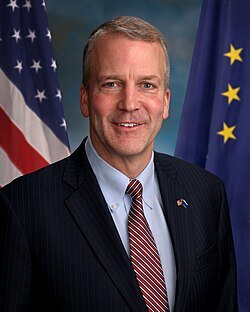
Dan Sullivan
U.S. Senator · U.S. Senate
Deb Fischer
Eric Schmitt
United States Senate
Jacky Rosen
U.S. Senate
Maria Cantwell
Ranking Member · U.S. Senate
Tammy Duckworth
United States Senate
Ted Cruz
Chairman · U.S. Senate
Todd Young
U.S. Senator; member of the Senate Committee on Commerce, Science and Transportation · United States Senate; Senate Committee on Commerce, Science and Transportation