Facebook video 1118570150823121
Alaska News • • 480 min
Source
Facebook video 1118570150823121
video • Alaska News
Articles from this transcript
No audio detected at 3:00
Ang ang. Hello everyone and welcome to the 2026 Alaska Federation of Natives Convention. I'm Jennifer Nelson, Senior Director of Rural Affairs at GCI. GCI is proud to once again be sponsoring this convention, as we have for the past 17 years. We take pride in working closely with tribal, local, and regional partners to build networks that are shaped by community priorities.
That was the case in Usinki. This is a great example of what can be achieved when we all work together to bring value to our communities. Let's take a look.
This place, it's just— there's something magical about it. It's beautiful! Our location couldn't be more perfect. We got a lot of great people here who really want to see this community thrive.
It's been in the making for almost 4 years while they were designing the building and putting it together. We knew GCI was coming in with their fiber optic line. GCI was so supportive. They jumped on it. I think they were—.
The reps that I worked with were probably as excited, if not even possibly even more excited than I was when we started talking about this building and the potential it has. We're lucky to have the opportunity to have them helping us out become a real part of the real world. GCI places priority in working with local, tribal, and regional partners as we work to build out major infrastructure projects in rural Alaska. And that brings a ton of advantages. One, it's community-led.
Two, they are the local experts and have local knowledge that we need to know about to be successful. The greatest thing about Eezinki is that we're doing it together as a community. We have the three entities in Eezinki that work together. The city, the tribe, and the corp worked together on it from the start. We've never had anything like this in the village, so we're building it as we go, you know, building a plane as we fly it, so to speak.
It was originally an internet café, and so the more and more we looked into it, we ended up turning it into more of a connectivity and a cultural side and a wellness side. Getting physical therapy for elders, getting basic understanding of weightlifting, strength training for our youth and elders. I know that for healthcare, video teleconference appointments are a big thing for us, especially because of our weather. So if the planes can't fly, if the skiffs can't go into Kodiak, then, you know, it's either a phone call or a video conference appointment. Both sides of the building are outfitted with giant flat-screen TVs and with cameras and audio, so they have two-way audio/video.
Like so many other villages here, you know, we want to share our culture and be able to let people know what Kizhiki is about. Before, in the past, I would get calls, and it could be domestic violence or assault or a fight or something like that. And I've had to leave calls, leave emergencies to go get cell service or go to the next-door neighbor's. Before we got fiber optic in the village, we relied solely on Wi-Fi for phone calls, for text messaging, for anything. And so when there'd be emergencies, we'd have no way of getting a hold of the responders.
Now I have cell service everywhere and it makes life a lot easier. You know, seconds matter. It's life or death. So it's, it's been huge. It's just tough to put into words.
We are very fortunate, very fortunate to have this opportunity and to have been able to work with GCI to provide our communities, and today particularly Uzinqui, with a facility like this and an opportunity that they have. Our high school kids, they won't have to go off island if they don't want to further their education. What a deal! Having connectivity like this allows those shareholders and tribal citizens access to economic opportunities, education opportunities, access to healthcare, but really providing those— that economic engine to have employment opportunities or start a new business. So there's a ton of benefits that come to shareholders and tribal citizens when their communities have access to modern-day communications.
No audio detected at 8:00
We can access the world and they now can access us. So as our teachers are learning to teach, our language learners are learning to teach language and craft, carve, and all the things, we're going to start being able to offer to the world how to do those things from this facility. To sit here and think that, you know, our small community has this fiber optic online and connectivity reaching out to the outside world is unbelievable.
No audio detected at 9:00
No audio detected at 9:30
Welcome to the 2026 Alaska Federation of Natives Convention. Rooted in land and tradition. Rising in Our Voices. Today's statewide live television broadcast is made possible with the generous support from Vote Today, GCI, Visit Anchorage, No On 2, and 49th State PAC. Also made possible by the following: Now let's go to the convention.
Live from Anchorage, Alaska.
Good morning. Welcome to the 60th anniversary of the AFN convention, Rooted in Land and Tradition, Rising in Our Voices. My name is Anna Sattler. I'm on loan from the Alliance for Tribal Clean Energy as we support the AFN. And the convention providing the live broadcast webcast of the convention.
This week started on Sunday for the Elders and Youth Conference, which concluded Wednesday, and then yesterday was the first full day of AFN, and then we had Wiyana One last night. We, from 7 to 11 PM, we ended at about 11:15. Today we have a full day of resolutions and many other things, and then tonight, If you're watching, be sure and join us for Koyaanisqooyaanis starting at 7 PM. Today's live broadcast is being held from 8:30 to 5:30, and then Koyaanisqooyaanis Alaska Night 2 starts tonight at 7 PM. If you're watching online, you can join us at nativefederation.org, AFN's Facebook Live, AFN's LinkedIn, You can download the AFN app as well.
And then on TV, we're being broadcast across the state on ARCS, KTOO 360 North, and then on— with utilizing the KTOO app, you can also watch us on Roku and Apple TV. A couple very full days. We had the keynote address by Rosita Worrell. We had the congressional delegation all day yesterday or parts of yesterday. We also heard from the Deputy Secretary of DOE, Department of Energy, as they made the unleashing announcement.
Over half of the funding that will be available will be spent here in Alaska, which is super important. We know how high energy costs have been across the state. People are very worried. There are some $26 per gallon prices for diesel and gasoline in some parts of Alaska. All electric rates across the state are increasing.
So this is a huge boon for Alaska. We had meant to interview the deputy secretary. Unfortunately, we weren't—. We didn't—. Excuse me, we weren't able to find the time.
AFN Convention has been very busy. It's been really fortunate if you were able to watch because, um, the, the schedule has just been so tight. Um, they're doing a really good job of making for good TV. Um, today the, the, um, AFN Board Resolution 2602 will be presented by the Yukon-Kuskokwim Delta leadership. We will hear from the Alaska State Legislature Bush Caucus.
No audio detected at 13:30
We have a couple of videos, One People One Voice Standing Up for Alaska Salmon and Our Way of Life. That's a, that's going to be a really good video and presentation by Sharon Hildebrand, who runs TCC, Vivian Korthius, who runs ABCP in my region, Gayla Hosseth, the AFN co-chair, and Richard Peterson, who runs Tlingit and Haida down in Southeast Alaska. This afternoon, um, we will also hear from Alaska's existing framework and AFN subsistence listening sessions report. We'll hear from the CEO for the National Indian Health Board, We'll also get an update from ARTIC, the Alaska Resource and Tribal Infrastructure Coordination Project update. We'll hear again from Alaska Voting and the importance of voting, Get Out the Native Vote, which is a huge endeavor that has been going on, you know, in the state for a couple of decades.
But Shelly Spark, one of the triplets from Bethel who runs that program now for AFN, Alaska Federation of Natives, We'll provide another report this afternoon. We'll hear from Chief Chuck Hoskin Jr. with the Cherokee Nation, and then the candidates forum will be held this afternoon at 2:45. We do conclude at 5:30 PM today for the, for the live broadcast and webcast, and it's going to be another full day. We conclude at 5:30, and then make sure that you come down here for for Goyaan Na Night 2. It's the final night.
And then as well, you know, here at the Dena'ina Center on the first floor, it's completely full of Alaska Native artists and for half of the floor and then exhibitors on the other half of the floor. So you'll see representation from all across the state. And then on every single floor all the way to the third, you're going to you know, run into the congressional delegation. BIA has a room downstairs where you can go and talk to them about your Native allotment, about being an heir and how to transfer your land and Native allotment, those kinds of things. And then up here on the third floor, of course, of course, is where we are showcasing AFN Convention, the largest convention in the state and the largest convening of Alaska's First People in Alaska.
So this is really huge. We are expecting 5,000 to 6,000 people per day. And I just have to note that the First Alaskans Institute Elders and Youth Conference, it was very well attended this here. I heard that across the board and got messages across the board. Thousands of participants, elders and youth from across the state come to participate in that Sunday through Wednesday.
And then of course, all of the delegates that represent Alaska Native corporations and Alaska Native tribes across the state are here representing their communities. It's been a couple of fun-filled days. We often affectionately refer to the AFN convention and the week as Native New Year. Our calendars are set by this week in October. You can feel the, you know, the energy and how happy people are to be here and to see each other, support each other.
It's, it's Absolutely beautiful. I do have to note last night that the group that you're seeing today are— that you will be seeing here in a minute is Ossie's group. And he, he had my little sister Mary Peltola start the show for them, and she was able to perform last night one song. It was really good. But we heard from Barrow and a bunch of other groups.
They were absolutely amazing. We're looking forward to another full night. 7 Dance groups again tonight, uh, for Koyaanisqooyanaa too. Um, yeah, so let's go to the dancers and we'll be back, uh, later on today, hopefully during the lunch hour, to interview a couple, um, of people with, um, with energy, energy-related topics. Thank you and good morning.
No audio detected at 19:00
No audio detected at 19:30
No audio detected at 20:00
No audio detected at 20:30
No audio detected at 21:00
No audio detected at 21:30
No audio detected at 22:00
No audio detected at 22:30
No audio detected at 23:00
No audio detected at 23:30
No audio detected at 24:00
No audio detected at 24:30
No audio detected at 25:00
No audio detected at 25:30
No audio detected at 26:00
No audio detected at 26:30
No audio detected at 27:00
No audio detected at 27:30
No audio detected at 28:00
We're interns and we vote to protect salmon. We vote to protect subsistence. I vote to protect the language and I'm an intern and I vote to protect our oceans.
No audio detected at 29:00
No audio detected at 29:30
Hello everyone and welcome to the 2026 Alaska Federation of Natives Convention. I'm Jennifer Nelson, Senior Director of Rural Affairs at GCI. GCI is proud to once again be sponsoring this convention as we have for the past 17 years. We take pride in working closely with tribal, local, and regional partners to build networks that are shaped by community priorities. That was the case in Usinky.
This is a great example of what can be achieved when we all work together to bring value to our communities. Let's take a look.
This place, it's just— there's something magical about it. It's beautiful. Our location couldn't be more perfect. We got a lot of great people here who really want to see this community strive.
Been in the making for almost 4 years. While they were designing the building and putting it together, we knew GCI was coming in with their fiber optic line. GCI was so supportive. They jumped on it. I think they were— the reps that I worked with were probably as excited, if not even possibly even more excited than I was when we started talking about this building and the potential it has.
We're lucky to have the opportunity to have them helping us out, become a real part of the real world. GCI places priority in working with local, tribal, and regional partners as we work to build out major infrastructure projects in rural Alaska, and that brings a ton of advantages. One, it's community-led. Two, they are the local experts and have local knowledge that we need to know about to be successful. The greatest thing about Yuthinkee is that we're doing it together as a community.
We have the 3 entities in Eezinki that work together. The city, the tribe, and the corp worked together on it from the start. We've never had anything like this in the village, so we're building it as we go, you know, building a plane as we fly it, so to speak. It was originally an internet cafe. And so the more and more we looked into it, we ended up turning it into more of a connectivity and a cultural side and a wellness side.
Getting physical therapy for elders, getting basic understanding of weightlifting, strength training for our youth and elders. I know that for healthcare, video teleconference appointments are a big thing for us, especially because of our weather. So if the planes can't fly, if the skiffs can't go into Kodiak, then, you know, it's either a phone call or a video conference appointment. Both sides of the building are outfitted with giant flat-screen TVs and with cameras and audio, so they have two-way audio, video. Like so many other villages here, you know, we want to share our culture and be able to let people know what, what Eezink is about.
Before, in the past, I would get calls and it could be domestic violence or assault or a fight or something like that, and I've had to leave calls, leave emergencies to go get cell service or go to the next-door neighbors. Before we got fiber optic in the village, We relied solely on Wi-Fi for phone calls, for text messaging, for anything. And so when there'd be emergencies, we'd have no way of getting a hold of the responders. Now I have cell service everywhere and it makes life a lot easier. You know, seconds matter.
It's life or death. And so it's, it's, it's been huge. It's just tough to put into words. We are very fortunate, very fortunate to have this opportunity and to have been able to work with GCI Alaska Sea Institute to provide our communities, and today particularly Usinky, with a facility like this and an opportunity that they have. Our high school kids, they won't have to go off island if they don't want to further their education.
What a deal! Having connectivity like this allows those shareholders and tribal citizens access to economic opportunities, education opportunities, access to healthcare, but really providing those— that economic engine to have employment opportunities or start a new business. So there's a ton of benefits that come to shareholders and tribal citizens when their communities have access to modern-day communications. We can access the world and they now can access us. So as our teachers are learning to teach, our language learners are learning to teach language and craft, carve, and all the things, we're going to start being able to offer to the world how to do those things from this facility.
To sit here and think that, you know, our small community has this fiber optic line and connectivity reaching out to the outside world is unbelievable.
No audio detected at 36:00
I served in U.S. Army, and when I was serving in active duty, one of the things that I defended was our freedom of choice. And freedom of choice meant freedom of choice of candidates who might be elected to defend where we stand, not only on subsistence, but other ways of that affected our lives. During the 1980s and during the 1990s, I was working at AFN. One of the biggest issues we were faced with at the time was the subsistence issue and the subsistence rights of the Alaska Natives. At that point, there was a lawsuit by the State of Alaska against the federal government regarding our subsistence hunting and fishing rights.
No audio detected at 37:30
No audio detected at 38:00
When we went out and casted our votes, We wanted to be sure whoever was elected at that time would be supporting our subsistence rights and that type of thing. Thank you.
No audio detected at 39:00
Good morning again, everybody.
We're going to call the 2026 Annual Convention of Alaska Federation of Natives back to order. I'd like to thank Nelson for your video, Goiâna for your video, Nelson and sharing. I have to cover the safety moments again before we begin our day. So, as a reminder, in the event of an emergency, strobe lights will come with an announcement telling us to proceed calmly to the nearest lighted exit and will continue to the nearest lighted exit until you are in an exit stairwell. The muster point is outside of the building in the City Hall parking lot across the street.
No audio detected at 40:30
Good morning.
No audio detected at 41:30
No audio detected at 42:00
No audio detected at 44:00
Amen. Very beautiful. Um, we have a few more announcements to make as well. We would like to, uh, please remind delegates to please sit within their regions. We also want to remind everyone that early voting is available across the street at the Anchorage City Hall for all Alaska voters.
So it's just right across the street in the parking lot over there. We'd like to encourage all eligible voters to take, to take advantage of this opportunity to participate in this upcoming election. Please bring the required identification and check with the election officials if you have any questions. And always remember that your voice does matter, and participating in our elections is one way we can help shape the future of our communities and our states. And I know that the team has been working really hard to really encourage everyone to vote, so I would really encourage everybody to please vote today if you're not able to go home and vote on, on Election Day.
Some people were questioning as to whether or not they were able to stream or livestream the convention. The convention, Nkoyona, will be broadcasted statewide by KTOO 360 TV, and the convention coverage is also available online at AFN's website at www.nativefederation.org.
There's a hospitality room for veterans and elders on the first floor. Which will be open throughout the convention. There's coffee service is generously provided by The Nature Conservancy. So thank you for that donation. Please download the AFN app for caucus schedules, more information and updates to the workshop, the latest agenda, and maps of our exhibitors and artist booths downstairs.
Our agenda does change and it does, um, it won't be the printed one that you're able to receive. When you checked in and signed in as delegates. So next we're going to do a commemorating of the survivors of Typhoon Halong. This morning we want to take a moment to recognize and honor the survivors of Typhoon Halong and the communities across western Alaska that have been deeply impacted by the devastating storm. We'd like to welcome leadership from the YK Delta, region to the stage.
We have Darren Cleveland, the chair of Yukon Kuskokwim Health Corporation. Martin Andrew, the vice chair of Association of Village Council Presidents. Chairman Wayne Morgan, AVCP Regional Housing Authority. Chairman Willie Kasayuli from Chalista Corporation.
In times of hardship, we are reminded of the strength of our people. The importance of our communities, and the responsibility we share to care for one another. As families face the challenges of displacement, loss, and rebuilding, we stand in solidarity with the survivors and all those working to support their recovery. The Alaska Federation of Natives Board of Directors has passed a resolution commemorating the survivors of Typhoon Halong and recognizing the strength, resilience, and determination of the people of Western Alaska. This resolution is a reflection of our collective commitment to stand with our communities, not only in moments of crisis, but throughout the long process of healing, recovery, rebuilding.
No audio detected at 47:30
We recognize the leadership of the YK, the Yukon-Kuskokwim Region, and the many tribal leaders, community members, first responders, and volunteers who continue to support their people during this difficult time. At this time, we would like to invite the Yukon-Kuskokwim leadership forward to receive this resolution on behalf of the communities and the families impacted by Typhoon Halong.
No audio detected at 49:00
No audio detected at 49:30
Yes. So as people are coming up on the stage, we offer our deepest respect to the survivors and our heartfelt support to every family and community navigating the road ahead. May this resolution serve as a reminder that you are not alone and that your AFN family stands with you.
And as we're going to close this moment, we're going to— we're inviting everyone on the stage to join us for a moment for a reflection as we listen to a hymn. May its words bring comfort, strength, and hope to those who have endured so much and remind us of the power of faith, community, and standing together.
Please join us in welcoming the choir members from Kipnuk and Kwiganak, Kwiganak, for the hymn dedicated to the families impacted by the typhoon. Oyana.
All right. Good morning, everyone. My name is Nikolai Joke, and I serve on the board of AFN Board of Directors representing the villages in the YK Region. It's my honor this morning to introduce the community choir members from the villages of Klipnuk and Gwigilnuk, which suffered widespread damage from the devastating impacts of Typhoon Halong a little over a year ago. Many of the people on the stage today, along with their families, had to evacuate from their homes and are still displaced today, some of whom are separated by hundreds of miles across the state.
A lot of us still remember the sheer terror of the events that unfolded on social media live broadcast as people fled to safety or were trapped in their homes during the storm. What I remember and what I hope to share with you today are images of incredibly resilient people singing praises of Thanksgiving for their safety. Please give them a warm welcome as they sing in Yukon, "The Prettiest Flowers." Koyaanisqo'iana.
No audio detected at 52:00
No audio detected at 52:30
No audio detected at 53:00
No audio detected at 53:30
No audio detected at 54:00
No audio detected at 54:30
No audio detected at 55:00
No audio detected at 56:00
No audio detected at 57:00
Good morning, everyone. I wanted to take a quick minute to acknowledge the Alaska Federation of Natives and thank this forum on behalf of the Association of Village Council Presidents, on behalf of the Yukon-Kuskokwim Delta residents that have been affected by Typhoon Halong. So thank you.
Morning. On behalf of our distinguished leadership in our region, and thank the AFN Board of Directors, on your behalf, we accept We humbly accept the resolution that AFN has put forward.
And this resolution is just saying our work is not done.
It's a reminder.
There's a lot of work ahead to help with your families that are forever displaced right now. Your subsistence activities displaced, where you have to reestablish that in a different area, very difficult. So on our behalf, we humbly accept this and ask for continued prayers for the families that are here Some of them that are here, continued prayers for them to heal. Thank you.
No audio detected at 59:00
On behalf of Alaska Corporation, Unakwane, Right now, one year ago, Good morning.
No audio detected at 1:01:00
Okay, so on behalf of our region, we'd like to thank everyone.
All of us know the hardships that we've gone through, and we know there is hope with your support. We just want to thank you. I also want to mention that this resolution really came from the Anchorage Assembly here in Anchorage. They emailed it to ABCP. ABCP Board of Directors passed that same resolution, and then we forwarded it to AFN.
So really, our communities feel, and we really appreciate the support the whole country and the whole state has shown to our communities and our people.
All we can say is thank you. Ooyaanah.
No audio detected at 1:04:00
No audio detected at 1:05:00
As we transition, we have— we have our— going to invite up our AFN co-chair candidate remarks. This year we solicited nominations for one AFN co-chair seat. We received 3 nominations. We have Victor Joseph, Wintanenaa Chief's Nathan McGowan, Aleut. Angela Totemoff, Chugiach.
If they could come up to the stage and give their candidate remarks. Thank you.
Let's give one more big hand for the families. And the communities.
I'm honored to stand here before you as a candidate for the co-chair of Alaska Federation of Natives. Speak into the mic! Yes, bud.
So my name's Victor Joseph. My late mother was Kitty Margaret Smith Tanana. Joe Burns, my father was Joe Burns of Fairbanks. My late grandmother was Virginia Newby. My late grandfather was Ben Joseph of Tanana, and Chuck Newby of Virginia.
I'm the proud parent of 9 children, 20 grandchildren.
I think I'm going to get one more because my daughter keeps on bringing one extra home.
I'm a proud member of the Native Village of Kanena, and I'm also the Chief Administrator Officer of Tanana Chiefs Conference.
Looking around today, I better stop. I'm going to stop right here, and I'm going to stop. Doreen, please stand up.
This is my wife.
Without her, I wouldn't be able to do this. And I'm pretty sure that my chief, Julie Roberts, back there, and Chief Sharon Hildebrand would also say, hey, we got a voice too, because they all support me in running for this role.
I'm in awe looking at this room today and what AFN stands for. There's over 192 federally recognized tribes that are represented by AFN, 152 Native village corporations, 11 regional entities, and 11 nonprofits and tribal consortiums.
The mission of AFN is enhancing and promoting the culture the economic and political voice of the Alaska Native community. This is the cause that I have dedicated my life to.
My whole career is a reflection of AFN's mission. I have the— have had the privilege of serving our people in a variety of roles, from health director to being elected the chief chairman of the Tanana Chiefs Conference for serving my tribe as the executive director and then being brought back to TCC as their chief administrator officer.
For the past several years, I've also chaired the HHS Secretary Tribal Advisory Council. And I also co-chaired the IHS National Budget Formulation Workgroup.
I realize that many of you may not know me, and this was brought to my attention yesterday, and I thank the person for bringing it to me. So I want to take a moment and share a little bit about my history and who I am.
For 30 years, I have been working for our tribes and our tribal communities. I've been advocating for various causes that include the protection of our lands, our fish, healthcare, housing, education, law enforcement, and a variety of other programs. What I've learned through this abvocation is that when we do it for one tribe, one region, we do it for all.
It's like a ripple effect when we stand up and speak for our causes, like throwing a rock in a pond and watching the ripples go through and touch every piece of the land.
At the end of the day, no matter where we live in our great state, we want safe communities. We want good jobs. We want affordable living. We want reliable infrastructure. And we want to be able to practice passing on our traditions and culture to our children's children's children.
We want to live our life as our people have lived their life since time immemorial.
I ask myself, what would people tell you about me if you went up and asked them? And this is what I believe they would tell you: I'm a hard worker. I'm committed.
I have a strong love for our people. They would also say he works with others well and he wants to find solutions for complex problems.
I'm running for co-chair because I believe the 30 years of experience I bring to the table will really benefit all of us.
But why am I really running for co-chair?
My family, my tribe, my communities, for all of you, because we're one big family when it comes to AFN.
My dedication has never wavered because I believe we are stronger together when we work together.
I look forward to continuing the important work alongside the people that are currently working at AFN, the co-chair. And I also want to just give a shout out for Joe Nelson. And can we give Joe Nelson a really big hand for the work and services that he provided? Please stand up.
Busby.
If elected, I can only do a couple things for you, and I can only promise a couple things. One, I'll continue to work hard for you, as I would, and I would use my voice to support your voice if elected.
I will also work hard to keep the united voice because we need the strength of AFN. People recognize and come to AFN when they see and need to go someplace to get information for the Native people or ask for our positions. And that's because of the 192 tribes in here. That's because of the 152 village corps. That's because of the 11 regionals.
That's because of the 11 nonprofits. And that's because of every one of you. They come here first.
I want to leave you with a closing note.
I have a strong belief in God.
I have a strong work ethic. Work ethic. But most importantly, I want to leave you with this closing verse. And I want to also say to the other candidates, good luck. And you will choose who you choose, and we'll all be able to— either one of us would work hard for you.
But I do ask for your vote. My verse that I want to leave you with today comes from Numbers.
6:24-26. May the Lord bless you and protect you. May the Lord smile on you and be gracious to you. May the Lord show you his favor and give you his peace. Basiik.
Thank you for this opportunity, and I hope I get your vote. Basiik.
Thank you, Victor. That was beautiful.
Nathan and I were going to do an arm wrestle to see who had to go first, so I guess I lost that bet.
Chamaka kaisinichit, pweesakhlek, kitakiakmihkwa amkhem tatishlakamisa ranga. Mom Annika, chinigakumut.
Thank you. My name is Angela Totemoff. My people back home know me as Sakalak. And who is— who am I? Who am I?
Why am I running for co-chair? And before I get into that, I just want to give a huge appreciation for you giving me your time today. And I also want to point out a huge appreciation for this beautiful new podium. The old one went up to here. And I was worried I was going to need a footstool to give you a presentation today, so I'm glad I don't have to do it.
If Rosita could come up here and present on this beautiful podium, so could I. So who am I? I'm from the beautiful Chugach region, coming from the native village of Tutitlik. I was raised by my amazing parents, Roy and Evelyn Totemoff, to have grit and to work hard and make the grade. And later on, they encouraged me to work hard and respectfully for my people.
And that led me to my 15-year career working for my corporation and my tribe as a bridge to make our— to elevate our people. My village and my corporation taught me to care for our lands and our waterways. And my corporation supported me and helped me grow. They invested in my education and my early professional career. And I carry those lessons with me and I'm still learning from my leaders and my elders today.
The decision to run was not easy. I prayed a lot about it. I wanted to make sure I was leading with my heart and not my ego, and with my people in mind and our people in mind and our homelands in mind.
During Alaska Day a few years ago, the AFN board was meeting with cabinet members in D.C. and high military ranking officials. And one of our board members who I highly respect started telling a story about her nephews going hunting. She described their hunting grounds and the tundra and how long it took them to get their catch. Then she explained to me what they had been noticing. The climate was changing, migration patterns were shifting, and fish numbers were declining.
The point she was making that was that her hunters had been seeing those changes long before science had caught up to it. And that stayed with me. She was saying that our knowledge needed to be taken seriously, and we need to be at the forefront of sharing that with the people that are getting the science in order. She took her time, and she spoke to those officials as naturally as she would speak to her nephews and nieces. And she was confident and respectful and gentle, and those fancy suits did not entertain her.
Well, they may have entertained her, but they didn't intimidate her. I would have been hesitant to tell my own story in that room, but watching her helped me understand the power of our experiences and our truth. Our knowledge and cultures belong in those conversations. We do not have to set aside who we are to be taken seriously. That moment stayed with me.
It is part of why I chose to follow my heart and run. Our elders and leaders have encouraged us to step forward, and I want to honor that encouragement by doing the work. I know what it means to live through difficult times in a small village. I know how much the support of our people, corporations, and our organizations matter. That experience shapes my hopes for our future.
I want our fish back. I want our families to be able to harvest and share our foods, and I want our children to be able to learn alongside of us. I want to be— I want to see no more missing and murdered Indigenous people and women, and I want to see 100% Native voter turnout, and I want our people living and thriving in their villages and communities, and that takes affordable housing and livable wages and access to medical care and behavioral health care and adequate public policy and safety. I want our traditions and our values to guide our decisions. Humility to listen, respect for one another, integrity in our work and honesty about our progress and our challenges.
And I want to see our corporations thrive and continue to provide benefits to their shareholders and our descendants. I want our corporations, nonprofits, and tribes to work hand in hand supporting our culture, just as the model that I have done over the past 50 years, acting as that bridge between those. And I want our people to feel a part of AFN. What you saw up here at the stage with the YK Delta supporting the victims of Ha Long was an amazing show of what we can do as the AFN family. To feel seen and heard is incredibly important, and that's how I want you to feel when you approach our AFN family.
As co-chair, I would focus on 3 things. First is continued engagement. What we saw over the last year, over this last summer, they had an amazing subsistence listening sessions with every region, and that brought the AFN team down to every region And that was amazing. What that did is reinvigorate and reacquaint our team with your homelands, your people, and your culture. I would like to see more of that.
AFN's power comes from in our ability to connect people with resources, and for that to happen, we have to remain connected and engaged. Second, I want to turn words into action. Action, action, action. I would ask each individual— each region needs to lead their priorities, and AFN needs to know them. We need to have a strategic plan in place to be able to guide our living actions.
It should be a living document that we should be referring to every day that is guided by each and every one of your regions. I will continue to show up and provide testimony, advocate for more tribal representation, and for more benefits for our corporations. And to make your region heard. And last, continued unity. Our regions will not agree on everything.
Our tribes, corporations, and organizations have distinct responsibilities, and I respect that. But as Native people, we have the grace and patience to find common ground and bring more work and expertise into the issues that need to be worked on. And we can strengthen our shared voice while respecting our differences. As co-chair, I would help the board set direction and advocate for our priorities, and I would support the president and staff in carrying out that work. You can count on me to be prepared, to listen before making decisions, and to ask those difficult questions respectfully, and to follow through on the responsibilities that I take on.
I care about this work because I care about the people that are counting on us. And in closing, I want to thank the leaders that have gotten us this far. The Albert Kookeshes, the Rosita Ruhls, the Will Mayos, the Anna Hoffmans, the Joe Nelsons. I can go on and on. And these leaders that have made this organization into what it is today continually set the bar and showing us what it takes to stand in this position to be a true servant leader.
I also want to encourage our youth to pay attention. Not soon, but today we are calling on you to lead the way for your generation, just as I'm stepping forward for my generation. And I also just want to give a shout out real quick to Taylor Higgins from Seldovia. She won our AFN Youth Leadership Award last year. Good job, girl.
She's Where are you? Congratulations to her. She is leading the way, and I am so proud of you at a ripe 20 years old.
And I also want to thank my husband for his support. He has been my companion during this campaign, really reminding me of hope and love and bringing me courage into stepping into this role.
So again, who is this lady? I am I'm from the Chugach region. My name is Sáhkhalekh. I'm here to bring my 15 years of corporate leadership and community development experience to put to work for you. And there is no limit to what we can do, what we can achieve, where we can reach new heights in the next 60 years of AFN.
Some of us might need a footstool for the short ones, but we can reach those heights without a problem. So I would be honored to serve as your co-chair. Thank you for your votes and thank you for your consideration. Koyaanisqo'ina.
Good morning, everyone.
My name is Nathan Yandl'k'eniich McCowan, and I'm so pleased to be here with you today.
It's so nice to see all of your faces on this glorious morning.
My clan is from a village that no longer exists in Southeast Alaska named Dry Bay.
My grandmother was Tlingit. Her grandfather was Tsimshian.
Her husband, my grandfather, is from St. George in the Pribilofs.
The Aleutians are working, workshopping my Aleut name.
And what they've been settling on is K'muthuk, which means a long woolen sock.
They have a strange sense of humor, my grandfather's people. And so, but I love them dearly and I thank them for supporting me here today.
My grandfather, 60 years ago, was standing where I'm standing now, speaking to all of you as the first chair of AFN. But back then it was not AFN, it was AFNA, the Alaska Native— the Alaska Federation of Native Associations. Because that was before land claims had even happened. That was even before all of the Native associations had fully formed. And if Grandpa were here today, he would ask me the same question that so many of you have asked me: Why are you running for co-chair?
And I would tell him what I'm telling you today.
Rooted in tradition.
We have a value in Southeast Alaska called wuch'ak, which roughly translates as balance. Balance. There's a similar concept in the Aleutians and in St. George. Which is atxu sas, atxu sas, which is walking a line.
As we look out into our world today, I know you share with me that there is very little balance to be found. Things just seem out of joint.
Whether it's our economies, whether it's our weather, whether it's our fisheries, Whether it's going on in the world, whether it's the amount we have to pay at the pump, things are out of balance.
AFN has been, can be, will be a powerful force to bring balance back, not just to the Native world, but to the non-native world. We show them by being here today in this forum in this way what unity looks like, what compromise looks like, what the ability to forgive and embrace looks like, even when we have differences, even when we have perspectives, as we're dealing with the most important issues that fall before us, saving our communities, saving our traditions, saving our ways of life.
Balance in Southeast means speaking up, never letting your father's people's tears fall on the ground.
Taking care of your grandfather's people, your mother's father's people.
Saying what you know to be true in your heart.
Doing it with care. Doing it with respect. What we saw today here among us was an example of wuch'ak.
The people of the YK Delta were grieving, and all of us raised to balance them, to provide them with support, just like they would do for us, just like we will continue to do for each other.
AFN is strongest when all of its member entities are strong. Its tribes, its regional nonprofits, its village corporations, and its for-profit entities. All of them must work together for the benefit of the people, because when any of them are weak, it's the people that suffer.
There's an expression that's been coined in the Pribilofs We have bull seals that mark out large pieces of territory on our beaches.
And when two bull seals fight, it's the beach that loses.
When we can come together here in this arena and work out our differences, the people as the beach do not lose. And so I thank you all for being here. I thank you all for participating in that.
Where do I think AFN should go? Where do I think it should head?
I think AFN should go forward to actively, aggressively pursue the resources that all of our member entities need. I've been the president of my village corporation for 13 years. I've been an employee of one of my regional corps for 10 years. I've been the chair of the board of the Village Association for 10 years. I've been there in the halls of Congress speaking to administrations, in the halls in Juneau speaking to administrations, fighting to procure the resources that we need.
Because when we have the resources, we can fight the fights. We can win what we need to win to satisfy the needs that we have in our communities. AFN needs to focus on delivering the resources back to the members. We need a comprehensive change to the way this thing called subsistence works. I don't like the term subsistence because it minimizes what it is to us.
It's not merely satisfying our nutritional needs, our basic caloric needs.
It's our communities, it's our generations, it's our grandparents, it's our way of life, it's how we wake up in the morning and what we think about when we go to bed. It's the spiritual and the physical.
We've spent so much time discussing how to allocate the small quantities that are left that we forget that what we have to do is rise above it. We need to restore our Aboriginal hunting and fishing rights.
We need a seat at the table, not so that our voices can be heard, but that so we get to decide on allocation decisions.
We get to decide instead of being told what meager amounts we're going to be allowed to have.
I'll leave you with this, and I thank you for your time.
I ask for your support for Co-Chair. I thank the other two candidates for putting their names forward. I believe in them as leaders, and you have an excellent opportunity before you to pick between 3 amazing individuals. But all of us need your help as well, whether it's the people here in this room or the people watching on television. We all need your help Vote.
You have to vote. You have to get your cousins and your aunts and your uncles and your grandchildren and your friends to vote. Everything that we want to do is made easier, is made stronger by you voting. The powers that be will listen to us when they understand that we go to the polls and we vote.
Do not be afraid. Do not be intimidated. Your voice matters. When you do the work, it makes all of the leaders' lives able to go forth and bring you the success that we know that you deserve.
I want to thank my wife, Colleen, for supporting me, tolerating me. I should— I think that's really the aim of the game. I want us to thank my children, Henry and Madeline. Henry, if you're watching, you're supposed to be in school.
I want to thank all of my ancestors for having paved the path that allows me to stand here before you today.
My name is Nathan Yada'kaniye'ch McCowan, and I would appreciate your support. Thank you very much.
Thank you.
Thank you, Victor, Angela, Nathan, for your wonderful speeches, and good luck on your guys' elections. Next, we have the Alaska Bush Caucus update. We would like to welcome Representative Bryce Edgemon to give the Alaska Bush Caucus update. And Representative Edgemon is the Speaker of the Alaska House of Representatives and has represented Rural District 37 since 2007. Born and raised in Dillingham in an Yup'ik-speaking household, he spent over 20 years as a commercial commercial salmon and herring fishermen in Bristol Bay and chaired the board of Chugachng Limited, the Alaska Native Village Corporation in Dillingham.
He holds his degree from the University of Alaska Anchorage in 2017 and became the first Alaska Native to serve as Speaker of the House, leading the country's only tripartisan governing coalition. And I'd like to welcome Representative Bryce Edgemon to the stage. And as he comes up on here, I just wanted to say the importance of voting. It was a historical moment when Bryce won the election by— it was a tie, and he won his election with a coin flip. And so that one vote really does matter.
Well, as I wait for a number of my colleagues to join me on stage, and we have a really impressive number of legislators here in the building, I just want to say that I hope your convention is going well. I hope you are getting out and being able to go to the dancing in the evenings and other things. And I've got my early button, my early, my sticker for early voting. I voted back home a couple days ago, and if you get the opportunity to early vote, I highly recommend you do it. There's a little concern about your vote maybe not getting to where it needs to go.
I can assure you that that's not the case and that early voting is safe. We have behind me the Bush Caucus, which by all measures has grown quite considerably because there's 4 of us in Western Alaska. But I'm very pleased to have a number of colleagues both from the House and Senator Hoffman, which we are very honored to have you here with us, Lyman. And our time is fairly limited, so I'm gonna just jump in and talk about a few sort of overriding issues with the legislature and begin by saying that like a lot of you, change is at hand because we have a new incoming governor. We have new legislative leadership.
We've had some key retirements. Senator Hoffman is retiring, so I can't say 4 more years for Lyman because he's actually officially retiring. But we also have new legislative leadership coming into office. So a lot of things are out there. And then in the midst of it, we are really in uncertain times with fuel prices and with the cost of living and the challenges that are facing us in a world that out in the bush particularly is getting more and more difficult to survive.
And so I wanted to kind of talk a little bit about those themes as well. And then to say, thank goodness, I think it's what, 11 days till the election is has come and gone. And so no more flyers in the mail and no more TV ads. Yes, yes.
But I want to jump in and just talk very briefly about some of the major accomplishments from the last couple of years. I want to start with education first and foremost. I talked with Lyman before we got on the stage, and he said be sure to mention that we got into the Foundation Formula for Education, a permanent increase for fuel help for our schools, particularly in a time like this year. This can be a major difference for a lot of our schools that are struggling. But overall, we increased funding for education quite considerably this year, $115 million.
And if you stack on all the other elements, it comes up to at least easily $200 million or so, both for operations of schools as well as going down 33 schools on the major maintenance list, getting some really badly needed capital money out to a lot of schools. But in all honesty, we're just tapping the list in terms of the need out there for our capital for schools and what have you. But I want to also bring to your attention, and I want to compliment Neil Foster for his leadership on this, the home heating assistance fuel. We put $11 million into a— absolutely, yes, give them a big hand.
We put $11 million into the state side of the heating assistance program. The federal side, of course, is LIHEAP, Low Income Heating Energy Assistance Program. You heard some discussion about that yesterday, but on the state side, we finally got some money into that program. And if you qualify, you can get up to a $4,000 voucher. And I think that's a program that we're probably gonna have to go back and put more money into because that's just not gonna get us as far as we needed to go.
So please keep that in mind. If you haven't already looked into the program, it's through the Division of Public Assistance. You should, you know, when you get back home, make some inquiries and make sure you get signed up for that program because that'll help out a little bit. But we also added to a number of other programs, the bulk fuel loan program, we doubled that. We made sure that PCE was fully funded.
But in all honesty, those programs are going to help, but they're really not going to, sadly enough, make up the difference in really just, you know, unprecedented times in terms of fuel costs and what have you. Yesterday I was on the phone with Gwen Holdeman out of Alaska Center for Energy and Power, and she did a study just in the Northwest Arctic region. Region alone that talked about how fuel prices, if you take diesel, gasoline, and aviation fuel, have gone up $3 on the average since January. And then cumulatively, that's about $32 million additional cost for just that one region. And there's a— if I remember right, there's 11 villages in the NANA region.
And so if you just think of it in that, that small area of the state and then multiply it out Alaska's economy but also just, you know, the tremendous toll that it's going to take on our entire state. So keep up the hope we're gonna get through the winter. It's going to be tough. And when we get back down to Juneau, we're gonna do everything we can. We've got a lot of helping hands here to help you all get through what literally is going to be maybe, you know, the toughest winter for a lot of people out and about.
You know, the subsistence fight— we're going to keep that at the top of list. I applaud AFN leadership for thinking forward and making sure that, as Ben talked about yesterday in the President's Report, doing the field work to set the stage for what we think we can eventually take action and get the federal law and the state law into alignment. And then we can get over this rural preference fight that, you know, has been really around for 30, 40, or more years or so. In terms of the the Ha Long storm, all the best to the people out on the coast right now. Nellie, where are you?
You know, because there's another storm out there, right? It's going to hit sometime later today or what have you and might not be to the extent that Ha Long was, you know, about a year ago or so, but it's going to be another major storm. And I want to give Nellie Jimmy a shout out for her resolution, HCR 46, that made sure that we in the legislature are not forgetting the fact that we're, you know, we might have gotten through phase one in terms of evacuating and getting people into safety and schools and what have you, but it's still not the ultimate objective. And that is to get people back in their communities and hopefully move Kipnuk and Quig to a place of their choosing, which is going to be more longer-term efforts and really going to require the state, the federal government, everybody else on board to give a helping hand. So I don't probably have a whole lot more time, but I want to just sort of circle back around to the change that's at hand and the reason that I feel, as somebody who's been a legislator for a long time, I feel a real sense of optimism amidst all of the other sort of concerning characteristics that are before us.
No audio detected at 1:47:00
No audio detected at 1:47:30
And the reason I feel optimistic is because for the first time maybe, going back to the Egan administration back in the '60s, we might have actual alignment between the House, the Senate, and the governor's office in a way we haven't had before. And a lot are, yeah, cheer, please do. Yes, absolutely. Yes, thank you.
We, the last 8 years, we have been having to play, I don't know how else to put it, but a game of perhaps cat and mouse and constantly being on the defensive, it seemed like, with a governor who we agreed with on a few things, but on a great many other things, we had a huge ideological divide. And as I stand here, I can just think of the pension bill that we got to his office to get our valued teachers, our public sector employees, whether they work for DOT or where they work for Fish and Game or whoever, to get them a viable pension plan so they had more incentive to stay in the region, to stay in the state, and not take their talents elsewhere. We also had a really great compromise elections bill that we finally, you know, I think to quote Senator Wielekowski, There have been like 60 attempts in the last decade to make election reform that I think we're all going to wish we had in place with election coming up here in less than a couple of weeks, but only to get that vetoed by the governor as well. So I'm really excited that we're going to have a change down in Juneau. I hope the change that I personally desire takes place.
No audio detected at 1:49:00
I think many of you do as well, in that with like-minded legislators that we can go down to Juneau and really affect change in a major way. I should also tell you that oil prices, of course, have not been in our favor. If you were out there paying the fuel prices, but that it does, it has given the state treasury a big boost. So when we get back down to Juneau, we'll have opportunity to hopefully do some good things with that. And I'm going to close by saying, Senator Olson, if you were out there watching, We miss you today, wish you were here, and I know you would have been here if you could have been here, and look forward to working with you down in Juneau.
But Senator Hoffman, thank you for being here, and I want to thank you once again for your service, for Lillian's help, of course, who's in the audience. Thank you all for being here, and I wish you all the best convention. Not so fast, Mr. Speaker. Uh-oh.
I'm Representative Andrew Gray. I represent the Umed District, and I'm so happy to have served with our caucus under the leadership of Speaker of the House Bryce Edgmon. I just want to say for everybody to understand what an incredible sacrifice it is to be the Speaker of the Alaska State House. He has had to let go of his own agenda in order to keep us together, to push us forward so that we succeed. He sacrificed his own goals for us.
It is an enormous, enormous lift. It is very difficult, and we are all so proud and thankful to have served under the leadership of Speaker of the House Bryce Edgeman.
We have gifts for you. We didn't bring them. Take this. Thank you.
So actually, hold tight for one second while I do one more here. Under—. It was going to be the same, but Andrew beat me to it. This Bush caucus some years ago, it was smaller and a bunch of villagers, and it's a little more diverse right now. And it is one thing to be an elected official at a local level or the head of your tribe, your corporation, your nonprofit.
It's a whole next level for all of us to have our own— is he still here? Yes. Bryce Edgeman doing what he does, leading all of Alaska in a powerful way. And I want to thank all of you because we are all excited to get out there and vote. And we thank you for your public service.
And we know it is a huge sacrifice to all of your families to do what you do, but there's just us. We're in this together. So we love you. A lot of AFN love for all of you to get through these next few days to November 3rd. And we're with you.
So thank you.
Good one. Thank you for the kind words. Appreciate you. Thank you so much. I got one, but I'll take Congratulations!
That's the trouble with living in Juneau. I'm from Yakutat, but I'm also in Juneau and happen to know these folks pretty well for many, many years. Uh, we are going to keep moving. This is a very powerful time that's coming next that we have every year. It's the President's Awards, and we want to thank all of you for putting in the nominations.
Our Convention Committee Chair, Tabitha, Tabitha Tolof, is here, is going to manage the President's Awards for us. So everybody, I think, is going to be queued up and ready. And we do love this time to thank all of you for your service, and we do enjoy this part of the convention. But I'm going to hand the podium over here to Tabitha.
Thank you. Good morning, everyone. My name is Tabitha Tolof. I serve on the AFN board for my region, Cook Inlet Region Incorporated. Shout out to my people who are sitting over there.
And I serve as the AFN Convention Committee Chair this year. I am from Alaska, Anchorage, born in Anchorage and raised in Nakiski, Nakiki, North Kenai. And my great-grandmother was Margaret Albert Reed from Rampart, Alaska. And I'm also going to have one of our regional youth help me, Taylor Higgins here. I'll let her introduce herself, but she actually won the Lou Young Youth Leadership Award last year.
Tabitha, thank you so much. So good to see so many relatives, friends, aunties, uncles, Everyone that, you know, and being in communities together. Again, my name is Taylor Dongenik Higgins. I'm Yup'ik, Dena'ina, and Sugpak. I was born and raised in Anchorage, Alaska.
I'm the granddaughter of the late Flora Meehan Thiel of Seldovia, Alaska, and Otto Thiel Sr. of Bethel, Alaska. I'm the daughter of Teresa Thiel of Anchorage, Alaska, and the daughter of the late Michael Higgins of California and Alaska. I'm so grateful to be here with you all today. Happy Native New Year. Yeah, I'm excited to share some amazing awardees and share this time with you guys.
Thank you. Koyaanis.
And in your convention guide, the awardees are starting on page 32, if you'd like to turn to that in your guide, and we will start. So our first award is the Eileen Panagayo McLean Education Award, and our recipient is Teresa Mae Prince. This award is named for the late state legislator, elementary and bilingual teacher Eileen Panagio. This award recognizes an Alaska Native who has demonstrated strong commitment, competence, and sensitivity in the education field and whose accomplishments have improved educational opportunities for Alaska Natives across the state. Individuals nominated for this award may be involved in traditional education, preschool, elementary, secondary, or post-secondary education.
The nominee can be a cultural educator, parents, committee members, school board members, administrators, teacher aides, or other education-related professionals who have been a positive role model for our Alaska Native community. Our recipient, Teresa May Price, is a respected educator, cultural bearer, and community leader from Kotlik, Alaska. Beginning her career as a Yup'ik bilingual educator during the BIA area in 1970s, she dedicated decades to teaching language, culture, and values to our young people. Alongside her educational work, she shared traditional skills and knowledge that strengthened cultural identity and community well-being. Teresa continued her own educational journey, earning an associate's, a bachelor's, and master's degrees while working full-time and raising her family.
Her leadership has extended beyond the classroom through service on the Kotlik Tribal Council, the Kotlik Yup'ik Corporation, and ABCP Healthy Families. Her lifelong commitment to education, cultural preservation, and community service has left a lasting legacy across the Yukon-Kuskokwim Delta. Congratulations, Teresa. We are so honored you're here.
So on, uh, on behalf of the Association of Village Council Presidents, we wanted to show appreciation for Teresa Prince for receiving the President's Award. So on behalf of the Association of Village Council Presidents, Teresa, we present you with a small gift.
Good morning. My name is Audrey Ahlstrom. I'm from Alaska and I'm a member of the Chilista Board of Directors. On behalf of Chilista, we proudly congratulate Teresa on receiving the AFN's President Award in Education. Well deserved indeed.
Theresa's dedication to Yup'ik education in our region is truly inspiring. She has earned her associate's, bachelor's, and master's degrees and has devoted many years to students in Kotlik and the lower Yukon region. She exemplifies the values of lifelong learning, perseverance, and service to others, something I myself aspired to. So through her commitment to education, Teresa has shaped the lives of many and countless students while setting a powerful example for our younger generations. Her work reflects the values we hold dear: respect, humility, kindness, and dedication to our people.
So as a token of our appreciation, please accept accept this gift, Teresa. It's a Yup'ik doll made by Sarah Chamberlain. Congratulations and be'ana.
Waqaadunaa chit Marya Baagzakka. I'm originally from Kootlik, and it's not here right now, but we're going to bring you some fabric and rickrack for your qasbaq projects as the years come. I was one of Teresa's students a few years ago, and she was my Yup'ik teacher in Kotlik, and I remember being in a classroom and then also being on the plane with her and counting all the moose between Imanup and Kotlik. There were like 80 or something, counting in Yup'ik. I was—.
First of all, I am very thankful for God's blessings during my lifetime. I'm especially thankful for my late parents, Wanda Willie Camp Cove and Anna G. Skok Tamkoff, who instilled in me and my siblings the way of life called Yuyaaq. Their teachings included their strong faith in God, lots of love, disciplining, strictness while growing up in a log cabin living the subsistence or survival ways of life.
Their teachings has shaped me and my siblings to become responsible individuals, and now we are all practicing our elder years together. And my siblings are Benjamin Kamkof, who now lives here, my sister Jocelyn Campcoff Murphy, who lives in Kotlik, and our younger brother Richie Campcoff, who had passed last April due to cancer. We miss him dearly.
I'm thankful for my late husband Michael, who has supported me and our 7 children Moot, who granted us 23 grandchildren, and now enjoy seeing my 1.5-year-old great-grandchild. She is amazing in every way, to see her growing and learning so much.
I love her very much, including my children and grandchildren. My parents were my first teachers that I have always treasured in my heart and soul.
Attending Wrangle Institute Boarding School for me was for 3 years was the beginning of learning the Western education. For some of you, maybe remember reading Dick and Jane stories and singing nursery rhymes like Old MacDonald Had a Farm.
And anybody remember the rhythm that goes right after that?
At that time, I did not realize also losing my own Yupik language, culture, and the ways of life until I got older and began to feel emotions of anger, felt cheated, sadness. But I didn't let that bother me. I dropped that thought and kept going.
And after 3 years, my parents sent me to village of Imangak, 3rd grade, for 1 year and learned a little more basics of reading and mathematics. At that time, I lived with my Uncle Fred, my dad's brother, and Christine Kapka.
The St. Mary's Mission education for 8 years has given me the best years of learning my Catholic faith, reading and math, and social academics. And it's always great to meet old friends and classmates today. During my career as a BIA teacher aide, and then as a bilingual, bicultural instructor, had me earn college degrees up to master's in linguistics. Now that I'm retired from teaching, I'm enjoying my services as a traditional council member and as an ABCP Healthy Families, which I enjoy.
I feel more at home. I feel more blessed to be at home with my children and grandchildren living in Katlik.
I'd like to thank AVCP and AFN for recognizing my education award.
I'd like to leave you this saying or my thought.
Love one another and respect each other.
Thank you all and God bless you all. Booyana jakna.
What a blessing our elders are. She's cute. So our next award is the Jindit Richard Frank Military Service Award, and the awardee is Dempsey Woods Jr. This award recognizes an Alaska Native who demonstrates a strong commitment and willingness to serve in the United States Armed Forces in the defense of the United States of America. Individuals nominated for this award may be involved in the U.S. Armed Forces in active duty, reserves, National Guard, or as a veteran who was honorably discharged from active duty or reserves.
No audio detected at 2:07:30
Dempsey Woods Jr. grew up dog mushing in a military household with deep connections to the Alaska Army National Guard. His family still practices a subsistence lifestyle and for many years has provided salmon from their subsistence nets to the people of Kotzebue and the surrounding villages of the Northwest Arctic. Shortly after graduating from high school, He enlisted in the Guard and now lives in Anchorage with his family. Dempsey currently serves our state and nation as a full-time federal technician in the Alaska Army National Guard as a small arms repairer. He has served in the Alaska Army National Guard for 11 years and holds the rank of sergeant.
Dempsey has volunteered for and responded to Typhoon Murbach in 2022, Typhoon Halong in 2025, the 2024 and 2025 flood events in Kathabu, as well as deploying to the Middle East with his unit as a team leader in 2023 and 2024. Dempsey is a skilled carpenter and weapon repairman who served as a non-commissioned officer in charge in Kathabu during the 2025 response to Typhoon Halong before going on to also serve in the YK Delta across multiple communities in the response to Typhoon Halong. He has consistently shown a dedication to rural and western Alaska by stepping up to respond to the devastating storms that have disrupted life for so many of our people. Congratulations, Dempsey, you're so deserving of this award.
No audio detected at 2:09:00
1942, Me Alaska, me. Ashi suli papanga Dempsey Woods Senior. Bitchuxaplugwu. Ilalidit kuplugwu angoyiaktonun. Apkutikrangandaluneyiaksaqlugwu.
Taja angoyiak toruk'epawak. Good morning and greetings to all of you. I'm Linda. I'm from Shungnak. We are honoring a young man, Dempsey Woods Jr., who as a young man went to camp at Kallugrivik, and during those camp nights on those evenings, his grandfather Wesley Woods Senior told him stories about he himself being in the armed forces in 1942 in Alaska.
Also, his father Dempsey Woods Senior encouraged him to figure out his path to have a good career, so he joined the armed forces.
It is my deep pleasure to congratulate you on behalf of the NANA Regional Corporation for this well-deserved recognition of your dedication to Alaska, our communities, and the nation. Your willingness to serve during deployments, disaster response efforts, and times of need demonstrates true leadership, humility, and commitment that are hallmarks of Inupiaq ilitqusait. We are proud of the difference you continue to make, and daykool la bak for your service, and especially the example you set for others. Congratulations, kutana.
Good morning, welcome. I am pleased to help announce the presentation on behalf of Maniilak Association and our Northwest Region tribes to congratulate this distinguished honor of his dedication to his military community and our community in our state and in our region. Thank you, Mr. Dempsey.
Good morning. My name is Thomas Baker. I serve as a first lieutenant in the Alaska State Defense Force. I also serve as president and CEO of Kikíktuk or Kiniipak Corporation. Mr. Woods, first of all, is a shareholder descendant from Kikitaagrinipaa Corporation.
He is a role model. He is someone who I believe is a perfect example of this award. And most importantly and most proudly, he's my little cousin, even though he's taller than me.
We went to high school together in Kotzebue. We played basketball together. Our lives diverted when he moved to Anchorage after high school. He joined the National Guard. I eventually joined the State Defense Force.
And in 2024, when the flood happened in Kotzebue, I was sent to the airport to pick up the volunteers, the soldiers that were coming in from Anchorage to help respond to the flood, respond to the damage to our community. And I saw this real tall guy coming off the jet and I thought, we're going to be okay. There's someone that cares, that someone that wants to do the work, that is taking time away from his family, from his job to come out here and volunteer to come to Kotzebue. Speaking not only to that, but last year again, Kotzebue was hit by a flood. Dempsey came out with a number of volunteers.
He was the noncommissioned officer in charge of all of those folks working with us very closely to again help Kotzebue. And it was a year ago this week that we got on a C-17 from Kotzebue and went to Bethel to respond to Typhoon Halong. And I cannot speak more highly of Dempsey Woods Jr. and the commitment he has made to our rural communities. Together, we are on the same team in the Bethel area, going from Bethel out to Kongiganak to Oscarville in the Paskiak. He also went on to other communities.
But on behalf of the Northwest Arctic, on behalf of the Alaska Organized Militia, and on behalf of a very proud family, I'd like to congratulate Dempsey Woods for this award.
Good morning, everybody. I'm Kathy Sherman, and I'm the chair of K'ayisi K'ik'ik Tagruuk Inupiaq Corporation. His mother, Fannie Woods, and we grew up as neighbors, so I wanted to let Bani no, congratulations, you raised a fine young man, and your mother and father would be very proud today. Congratulations, Dempsey.
My apologies. I just wanted to say, first of all, arigatou gozaimasu, AFN. Nana. KIC, and thanks for all the communities that I went to with all the hospitality shown me. It made me very proud to be an Alaska Native.
Arigaté go.
And I also wanted to say I was already ready for the yelling before I went to basic training because I grew up dog mushing with my father, so I was already ready for that. Came back home, it was very welcoming. Feel the cold air from being downstate. But first of all, I thank all of you guys, along with my family, my father, My mother, my wife, they all give me strength to keep going, along with my boys.
I know this lineage will not end with me.
We are very proud. Thank you all.
Thank you so much for your service, Dempsey. You're an amazing human being.
So our third award is the Hannah Paul Solomon Woman of Courage.
And our recipient is Barbara Franks. This award is named for the late Hannah Paul Solomon, recognizing an Alaska Native woman who demonstrates through their life and work the strength of our culture and values and tremendous courage. Barbara Jean Franks is a Tlingit woman originally from Hoonah, Alaska, whose nearly 3 decades of suicide prevention advocacy grew from profound personal loss.
In 1997, Barbara's 23-year-old son Ron died by suicide. Two days later, her husband of 25 years died from cancer. At a time when suicide remained deeply stigmatized and resources for surviving families were difficult to find, Barbara made a courageous choice. She turned her grief into service. Barbara returned to school, earned an Associate of Applied Science degree in Human Services, and pursued extensive training in suicide intervention, bereavement support, and critical incident stress management.
Through her professional and volunteer service, she has educated and supported individuals and communities throughout Alaska. Barbara served for years on Alaska's statewide Suicide Prevention Council representing survivors of suicide loss and ultimately became its chair, helping advance statewide collaboration, awareness, and prevention efforts. Congratulations, Barbara. Thank you for all you've done, and we invite you to come to the podium.
Just one other thing about Barbara's background is she was, she helped with the National Prevention Suicide Hotline that is now today 988 for anybody who's feeling the need or need assistance, feeling down and out and who may be considering it. But 988 is there because of Barbara and the people that she's worked with. So, gunishtizh. Nationwide. Yes, gunishtizh.
No audio detected at 2:20:00
On behalf of Sealaska Corporation, we were one of them that recommended her for this award for all her hard work that she's done. And a gift for you from Hinday, Donald Gregory. It's a nice silver pendant for her to take home with her. Oh my goodness. Thank you.
Thank you. Barbara, I think Blanket and Ida wants to speak before you respond. Okay.
If you've been coming to AFN for as long as I think many of us have, you know Barbara's face. She has been monumental in being a voice for those of us that have had families and loved ones that have had come into Alaska the ways that take us to a place where none of us want them to be. Barbara has been a lifelong friend to my family. On behalf of Tlingit and Haida, I want to just give love and our gratitude for the work that she's doing and continues to do and into the future. Gnaaxiiš.
Oh, thank you.
In Tlingit, for good morning, we say tsu ha kakwai a. The day has dawned upon us again. It brings me great joy to introduce my dear aunt, Neech Tla Barbara Franks, of the Xw'xw'nikadi Raven Coho Clan and child of the K'agwantan K'ukhit Box House. Her father, Gustihim David Marvin, was the older brother to my maternal grandmother, Julia Marvin Lindoff. So we have a very strong, cherished connection to this very special and proud lady.
Today I call my nephew Daikinak Connor Ulmer to have the honor of helping wrap her in her robe as per our Tlingit protocol. Please join us in warmly welcoming my Auntie, Neech Tlá.
Gadaa sheesh, gadaa sheesh. As my niece had mentioned, my Tlingit name is Neetchklaaw, which means mother of the shoreline. My Auntie Lull told me that, you know, there's a boat out there, and if you picture me standing at the edge of the ocean, is that the boat will come in and it will bring people to me. And not to get too acquainted with them because the boat will take them back out. And so when I asked my auntie, why am I doing this, why did my son die by suicide?
I don't know, those are questions that will never be answered. But she said, you were chosen at birth. And so it's not very often that we're able to find, after 30 years of working with suicide prevention, that I would be standing in front of you you today. I like the theme that you have, you know, rising in our voices, and the person that this recognition is named after had fought so hard for women's rights and being able to stand in front of you today.
No audio detected at 2:25:00
I don't know if my son would have called the 1-800 number. But I knew that, you know, there were a lot of people that were working with cancer already, and so I said, "I'm not gonna take that road. I'm gonna work with suicide prevention." There was one book at the consortium, and out of all the libraries in Alaska, there was one book with one paragraph, and it said, "One suicide may affect up to 6 people." And I said, "Ooh, I'm gonna have to do something about that 'cause they don't know my family." But you know, all this work that I've done covering 700,000 miles throughout Alaska, flying around, the training that I did that helped me learn how to help you, but with the approval from the tribal health elders that gave me permission to come into the 12 regions, it's only appropriate that I'm here standing in front of you today to thank you for allowing me to come into your community, your village, your region. There's a saying that I have in the morning now: God granted me another day. But I want to add to that and say that he blessed me by having you in my life.
All these people standing with me today, standing by my side, you know, gave me the strength that I needed to go on a little bit more. I always say that, you know, that I would love to have a time where I walk into a place that does not have a carpet on the floor, because I don't want you to hide the drugs and alcohol. I don't want you to hide domestic violence and substance abuse. I don't want to hide where you come from. I want you to be able to talk about it.
I want you to be able to be safe to talk about it.
10,563 Days ago, my son died by suicide. But, you know, it in— I feel it's so appropriate that I'm here 60 years that you've been in existence and allowing me to talk about suicide. And so I want to leave you with a thought that, you know, wherever you are, whatever you're doing, that you have the 988 number to call. Find an honorary uncle, find an honorary auntie that would listen to you. I'm here.
I haven't gone anywhere, you know. And so thank you so much for believing in me in all these years and for allowing me to have this time with you today. I appreciate it very much. Katya Karankevich.
Natasha Singh.
I'm going to ask her to show her robe. You need to show the back of your robe to everybody.
The 3 cohos on the back of my robe was made by Grandma Joe White in Hoonah, Alaska. And if you look at the circle—. I'll look at this way—. If you look at the circle in the 3 cohos, jumping it, and it's like the circle of life. And so sometimes if you see a coho, it has some scrapings on the bottom, and it means that they got too close to the edge and it scraped part of the fins off.
No audio detected at 2:29:30
But, you know, when they make it through the other side is that they survived what they went through. And if you have 3 of them together, is that you always have people next to you to help you. And so my mother gave this to me, and the bib that I have is made by the Larry Marvin family, and when I graduated at the age of 53, and the hat was made by Morgan Fawcett, who worked with FASD, and he thanked me for the work that I do with suicide. So thank you. Just on behalf of AFN, .
We love you, Barbara. Thank you. Thank you.
Thank you.
So I have the honor of presenting this A fourth award, and then I'll turn it over to Taylor for the final four. This is the Katie John Hunter Fisher Award going to Anthony Tony Christianson. This award recognizes an Alaska Native who exemplifies and preserves the spirit of successful subsistence hunting, trapping, and sharing, and our way of life. Nominees acknowledge and ensure that the next generations of providers will carry on the traditions and customs in harmony and peace to sustain their extended families. Anthony Christianson is a lifelong Alaskan hunter, fisherman, provider, community leader, and advocate who has dedicated decades of service to protecting subsistence, strengthening traditional food security, advancing responsible stewardship, and ensuring rural voices are represented in decisions affecting Alaska's lands and waters.
No audio detected at 2:31:30
A longtime leader in Hydaburg, Tony has served as mayor of the city of Hydaburg since 2006 and as natural resources director for the Hydaburg Cooperative Association. His service extends to the federal level through the Federal Subsistence Board. Appointed in 2012 to represent rural subsistence users, he subsequently assumed the role of chair, bringing the federal fish and wildlife policy, the lived experience of a rural Alaska provider Hunter and Fisherman. We present the award to Anthony. I hear he's not here today, but he has plenty of family who, if somebody wants to come up and accept the award, we're honored.
I'm not here to accept. That'll be Barbara.
My name's Karen Linnell. I'm the executive director of the Alameda Tribal Resource Commission. But more importantly, I am Wazinédi from Keh Kwan. I am Neltjeen from Chisholm. And I have had the honor and privilege of arguing with Tony, of presenting and speaking to proposals and our traditional ways of life at the Federal Subsistence Board.
No audio detected at 2:33:00
And I so appreciate his ability to hear our people when they talk about our subsistence, to understand the vast differences that Alaska Natives have, and his ability to convey that to the federal representatives that sat on that board. They rotate in and out. Tony, Charlie Brower, and Rhonda Pitka were fighting that battle alone for a long time. 3 To 5, a lot of times that was the split on the vote. And then more recently, we got the Federal Subsistence Board expanded with 3 more tribally nominated seats.
People who are on the land every day, and they get to create a balance because those federal managers that get appointed with new administration don't know the land. They're not here for generations. They don't have that traditional knowledge that carries on from our ancestors to our grandchildren and our grandchildren's grandchildren. And so that balance came last year and was almost overturned with this administration.
I want to encourage you young folks to get involved, to get involved in the federal management system, to get involved in the state management system. Even though your lands may be under— surrounded by federal jurisdiction, you need to participate in the state system too because they manage the waters, the navigable waters and the nearshore waters. You need to be involved in the state management system too. So this is my call to action for you folks to get involved in this and Help to protect our ways of life. Help to protect our ways of life.
Again, I have so much heartfelt gratitude for Chief Justin's board, and I just wanted to get up here and honor him and say thank you. Tony, for all your work on the Federal Subsistence Board and managing your community, your home town as mayor. It's just, it's a lot of work, and we do appreciate all that you do. Chinan, gunalchéesh.
No audio detected at 2:36:00
It's our privilege at Clay Kitahayda to be able to, to be participating in this award. Tony, coming from a very small community, just like many of us right here, he lives our way of life. This isn't just him coming from a large urban community, but he's coming from a small village where this is his way of life. And so when he's fighting, he does so with a unique way of articulating just how we live 365 days a year. And he does it without apologies because he's fighting for each and every one of us.
And for that, we say, "Ganachysh, ganachysh." On behalf of Sealaska, with Tlingit and Haida who nominated Tony, just want to express how much of an amazing leader he is, how inspiring he is. He is living into his ancestors' wishes. He's improving himself on a daily basis. He thinks about his community 24/7. When you show up in Hydaburg, he says, "Let's jump in the boat.
No audio detected at 2:37:30
Let's go king salmon fishing. Let's jump in the car. We'll go hit Soda Bay for— go deer hunting." You know, he is a leader in that community that keeps that community strong. And he lives their values. And he's not here because he's living those values.
He's the mayor of the community and he is supporting the community at a time of need, as he should. And we're trying to honor him as well as we can with all the love that we have for Tony. So gunalchéesh for standing in his place and thank you for speaking for him.
Good people, it's an honor to stand before you. It's kind of funny because a few years ago I was actually on this stage accepting an award, the military award for my brother, and it's an honor to also be standing here and accept this award on behalf of our cousin Tony. You know, and it says something that these men in our family are so busy living their values, so busy out on the land and water and caring for their community, and that they send me to thank you for them, and I'm proud to do it. When I asked Tony what he wanted me to say, he didn't talk about the hours on the water or the miles walked in the cold. He talked about love.
No audio detected at 2:39:00
He said, "The energy to provide comes from the love you see in the eyes of the receiving person." Anyone who has carried fish or meat to an elder's door knows exactly what he means. It isn't just food being handed over, it's the look on their face when they realize someone was thinking of them. That look is what gets you up before dawn. That look is what keeps you going when the weather turns and your hands are numb. Tony put it simply: To be thought of, shared with, and bonded by our traditional foods, that is what creates community.
Our foods have always done more than feed us. They connect households, they connect generations, and they connect us to the land and waters that have sustained our people since forever. Every jar of fish, every share of harvest is a way of saying you belong and you are not forgotten. Tony also wanted to be clear that this recognition is not his alone. In his words, "It's owed to all the uncles who taught me the ways to hunt and fish and share our harvest with the elders and those who cannot provide for themselves." Those uncles didn't just teach him how to set a net or track an animal.
They taught him responsibility. They taught him that what you take, you share. And that the first portion goes to those who can no longer harvest for themselves. And he wanted to honor the aunties too. The aunties who send out good thoughts and prayers while the men are out working to provide.
Every provider knows he doesn't go out alone. He carries those prayers with him on the waters and in the woods, and they bring him home safe. The uncles who teach, the aunties who pray, The providers who harvest and the elders who receive. Together, that is what makes our way of life priceless. So on behalf of Tony and on behalf of the uncles and aunties who came before him, thank you.
Hawa for this recognition. And thank you to everyone in this room who keeps our ways of life alive and caring for each other. Hawa.
I just have to say one thing for Tony. I was texting him saying, "Hi, congratulations," when I came back from my caucus, but I have to say that Tony is an awesome leader, leading the Federal Subsistence Board with strength, courage, kindness, and most importantly, humor. Tony is loved by all of us. And we couldn't have a better chairman of the Federal Subsistence Board. So, play on it, Tony.
Good afternoon or good morning, everyone. Um, next up we have the Roger Lang Youth Leadership Award. This award is going to Wallace Ōngwiluk. Sorry, excuse me. Ōngwiluk.
His—. This award is named for the, for the late Roger Lang, former AFN president, who encouraged young people to expand their horizons and challenge themselves to become future leaders. Nominees must be young men 18 to 30 years of age who demonstrate leadership qualities. Wallace Ōngwiluk was born in Nome, raised in Gambell, Alaska, on St. Lawrence Island, where he developed a strong foundation in his Alaska Native culture, subsistence living, and living his community values. After graduating from Upangaluk High School in 2017, he pursued higher education in the Lower 48, earning a bachelor's degree in business administration and psychology, followed by a master's degree in management and leadership.
No audio detected at 2:43:00
From Multnomah University. While competing as a collegiate basketball player throughout his academic and athletic career, Wallace established himself as a dependable teammate and leader. He later served as an assistant, as assistant coach for Lewis& Clark State College and continues to coach athletics in Gamble, mentoring student athletes through player development and academic support and leadership both on and off the court. Congratulations, Wallace, on this well-deserved award. I'm going to welcome Wallace to the stage to share his remarks.
Kweyana.
Thank you. My name is Wallace Angwiluk. Yup'ik name is Qawalraq. First, I want to say thank you to Bering Straits Native Corporation for their nomination and AFN for their selection.
It's a huge honor to receive this award, but I cannot take all the credit. I believe that the person I am standing before you all is a byproduct of all of those that have supported, mentored, and guided me to become the person I am today. I wish I could name everyone I owe thanks to individually, but they would have to add an extra day to this conference for me to do so. To name a few, first I have to give glory to my Lord and Savior Jesus Christ. I am nothing without him.
I have to thank my parents standing here behind me for raising me to who I am today, for their endless love, support, and patience. To the countless coaches, mentors, and teammates I've had throughout the years for believing me and pushing me to be my best. To the families I've been incredibly blessed to have been adopted into, The Carlberg family, the Wirock family, and the Kroll family, thank you for your love and guidance. They say it takes a village to raise a kid, and I've definitely been raised by the whole village of Gamble. I was encouraged to give a speech upon receiving this award, and at first I wasn't sure what I would say.
I was told that it might be good to talk a little bit about how I was able to get to where I am today. So I got 3 lessons from my experience. It all started in the 8th grade when I decided that I wanted to play college basketball after high school. I had the delusional confidence that I would be able to do so one day, and I say delusional confidence only because no one had done it where I come from at the time. So the first lesson is this: just because no one where you come from has done what you want to do doesn't make it impossible.
It just means that you have the opportunity to be the first.
Now, when you make that— now, when you make that decision to chase your dreams, it could feel a little daunting. You might not know the exact path you need to take in order to achieve your dreams. You might not have the people around you that have done what you want to do before for guidance. In my case, through my first couple years of high school, I did not know every little detail about what I needed to do to get me closer to being a college basketball player, but I did what I thought I needed to do. Went to basketball camps in and out of the state, and at these camps I had coaches who were current and former college basketball players and coaches that took me under their wings and mentored me throughout college— throughout high school.
Letting me know exactly what I needed to do one— to one day be a college basketball player. So lesson number 2: you might not know all the steps you need to take to achieve your dreams. That's okay. If you commit to your dreams and do what you think you need to do, God will put the right people in your life to help you along the way.
Nothing about my journey to becoming a college basketball player from a tiny Alaskan village was easy. It was probably the hardest thing I've had to do. My first 2 years of college, I was on the team but mostly sat on the bench. I spent so many hours in the gym working on my craft those first 2 years to eventually being in a position by my junior and senior year to be a starter on our team and helping lead our program to its first conference playoff appearance in school history. I—.
Thank you.
I tell the boys that I coach back at home to choose their hard. It'll be hard to show up each and every day to put in the work that is necessary for us to be a successful team. But on the other hand, it is also hard to lose. It'll be hard to leave home to further their education or earn a trade, but it'll also be hard to stay home and struggle to find a job or settle for a job that they are not passionate about. It was hard for me to leave home to play college basketball and go to school to earn two bachelor's and a master's, but it would— but it also would have been hard if I didn't do any of that and stayed home.
So lesson number 3: Choose your hard. I've heard it said that there are two pains that you have to decide between: the pain of waking up each and every day and doing the things necessary to get you closer to your dreams, or the pain of regret of having never tried in the first place. So dream big. If your dreams don't scare you, you're not dreaming big enough. And always remember that you are capable of achieving anything you set your mind to, regardless of your circumstances or where you come from.
You come from a people of strength and wisdom, a people that are resilient and adaptable. Igaamseeyaayuwikamsi. Thank you, and God bless.
Hello everyone, my name is Bobby Evans. I'm the chairman of Bering Straits Native Corporation. And each year the Bering Straits Board sees those AFN awards and we look within our region. And when we saw this award come up, he was an easy, easy choice for us. And on behalf of the Bering Straits Board of Directors and the Bering Straits Region right here, we congratulate you, Wallace.
We're proud of you. We look at our young men from our region as strong young leaders, and you are the perfect example. We remember when you played basketball, and now that we watch you coach basketball, your young people are great examples of what sportsmanship, hard work, and dedication looks like. So thank you, Wallace.
Wallace also has incredible social media, so I encourage you all to go and look at his work. Koyaanis Wallace, well deserved. Next up we have the Small Business Heaney and— Small Business Award. This will be going to Heaney and Lee Staley II. This award recognizes an Alaska Native business owner who has demonstrated success in business with a commitment to their community, which has also improved economic opportunities for Alaska Native people.
Lee's Sea Air is an Alaska Native family-owned business in Kiana, Alaska, owned and operated by bush pilots Heaney and Lee Staley II. Flying runs deep in this family. Each and every one of their children are pilots. Together they, they keep their, keep their region moving through every season. Their work reaches far beyond air charters and freight.
It is a place where, uh, in a place where resupply can be delayed for days, they keep their shelves of their convenience stores stocked year-round so families can always find what they need, from fresh milk to generator parts, the Staley's have often, often have what you need when you need it the most. Additionally, their bed and breakfast offers steady, welcoming lodging for visitors and workers far from home. Congratulations, Lee's Sea Air.
No audio detected at 2:52:00
Good morning. Uvlá loták. Okay, good morning. Okay, everybody's awake. Everybody hear me okay in the back?
Nice and loud? Awesome. If any of you know us, this is a little bit early because our store usually doesn't open until noon. So we're a little short on coffee this morning.
25 Years ago, my parents were on this stage. Wow, 25 years. The reason they were up here was because 25 years ago, one of their kids had received the Roger Lang Youth Leadership Award, and today they are here as the recipient of AFN's Small Business Award.
Being a small business owner is challenging. To be a thriving small business for 50+ years is even more challenging. Being in rural Alaska adds adversity to the equation. Being successful in their business affords them the luxury to do a lot of things, some of which include the annual Easter egg hunt that was started before I was born, the ability to fly cover for Snow Go races, The fun in pulling kids and even adults behind the boat at the sandbar. The means to take kids in, in addition to their own, whether it was for one night or for over 10 years.
The wealth to feed whoever came to my mom's table. Bless you. And the wealth to feed whoever came to my mom's table. And if anyone knows Heaney, I'm sure they're thinking of salsa or pizza or my Papa Joe's favorite, tuna melts. Legend says he ate 7 of them in one sitting.
They also have the ability to house and feed 14 airplanes full of people when Kotzebue gets fogged in, and sometimes for days on end.
As we get closer to Halloween, I'm sure some of you are even looking forward to the burritos that they give out to the trick-or-treaters.
My mom has spent countless hours sewing, not for sale, but for fundraising for family and friends who are in times of need. My dad has spent time with so many youth who need a little direction. Maybe you were one of the kids who got sucked into helping him with many jobs. But little did we know that during these, he was also telling us valuable life lessons. And some of us kids are on this stage today.
If any of you here today have spent any time, any amount of time with my parents, it has made you a better person. My parents' small family-run business may not say it out loud, but they put back not only into their village of Cayena Alaska, but also to the surrounding communities. These two are always thinking of how to make things better. They are always thinking of everyone else but themselves. My dad has asked for many favors over the years, asking C-130 pilots if they would show the cockpit to a kid interested in becoming a pilot someday, asking the barge captain if they would give a tour of the bridge to us village kids.
Always trying to find ways to show, to show our youth the many different opportunities for careers and in life available to us. I can't think of any couple that has worked together for so long and still haven't strangled each other yet.
I can't think of two more deserving people of this Small Business Award. Please help me in congratulating all of the 2026 AFN President's Award recipients.
We appreciate the Federation having us here.
We have done a few things to try to help, especially the kids in our village, but kids in the region, and we'll continue to do so.
We'd like to say thank you to the person or entity who nominated us and the awards committee for selecting to recognize our family. It takes all of us to make things work. Both Lee and I had great parents to get us ready for life and taught us to work hard.
Thanks to my mother, Lillian Munson. And my father-in-law Lee Staley for helping us become successful. Thank you to our children, Giselle, Lexi, Julie, and Big, and all the other kids we have helped along the way that helped us build our business to help it become successful. Thank you.
No audio detected at 2:58:30
I'm back. Uh, once again, Thomas Baker, President and CEO of Kikiktaka Guinea Pig Corporation. As part of the Northwest Caucus, we are very proud to be a part of nominating Lee Sierre and being involved in this. Um, I try not to tear up because I'm one of the kids that gets sucked into jobs, and I can't say how amazing these people are in this family and the, the wealth of good that they have done for our region and the state and anyone, regardless of where they're from, the impact and the positive impact they've had on so many lives. So on behalf of KIC, thank you.
Good morning, I'm Derek Haviland Lee, and on behalf of KIC, we'd like to present this gift to you guys for your recognition.
And I wish I could say I was one of the kids that got sucked into the store and helped. And you know, Lee actually offered it to me when I was a teenager. He said, "Come to Kayana, work for me, I'll help you with whatever you need." But, you know, I was a wild teenager, so I wasn't interested in any of that, and I wish I would have taken that opportunity. The things that you guys have done for so many kids in Kayana, in our region, is so appreciated, and thank you.
Good morning. My name is Jessica Snyder, so I didn't introduce earlier. I'm their neighbor from the next village, Norvik, and I've also known them as a neighbor from Mambais. And you know, the relationships that they help build inspire our youth and our communities. And just the giving of their time and the businesses that they hold in their home and the leadership roles that their children bring.
So I want to extend our appreciation and thanks from the AFN. I'm also a representative for our region and the people that voted them in. Thank you, and thank you to the people online watching and those at home. Congratulate Lee and Heaney, our friends, on behalf of Minniluk Organization.
Wlalo dup.
I was one of the kids. I had the privilege of growing up with the Staley family in Kiana In fact, my first job was working at the store there in Cayana, and I was responsible for stocking shelves and cleaning the floors and running the till. And eventually I got a promotion to fueling the airplanes, and sometimes it involved babysitting the kids behind me. But it was a true privilege to grow up with Lee and Heaney's influence in my life. In addition to operating a successful business in Cayana, as you've heard from a lot of the speakers this morning, Lee and Heaney have created opportunities for youth in Cayana to develop work and life skills, and they have changed the lives of many, many people and provided a change to the trajectory in how youth have developed in our community and around the region.
I just, it's, I said I wasn't going to cry coming up here, but I, when I think of Lee Unheaney, I think of perseverance and hard work, which is one of our Inupiaq ilikisaat, our Inupiaq values. And despite his inability to walk, Lee never let that become a barrier. They have developed this amazing business and this amazing legacy in the community of Cayana and in our region and beyond. And I just want to say a personal thank you, Lee and Heaney, for, for the opportunities and the positive influence that you guys provided in my own life as well as many others. And on behalf of the NANA Regional Corporation Board of Directors, we'd like to present you with this this award.
Yep, for those of you who can see it, it's their, the logo on this piece of beautiful jade, their company logo, Lisiere Kayaana Alaska. So thank you guys, and also want to acknowledge the kids, Zaz and her family, Lexi and her family, and Big, and all the grandkids here. I know, like you said, Heaney, everybody has contributed to running this business, and thank you guys from the bottom of our heart. We love you guys.
No audio detected at 3:04:00
What do you want? You want to get some pictures? Okay, we're done. I think so. So everybody, uh, everybody from our region, please come up and start, uh, join us for, um, singing.
We're going to sing the Aadi Gaa song. For those of you who don't know, this song was composed by the late Austin Thomas from Kivalina, and oftentimes our region will come together and sing Sing this song in times of comfort and in times of celebration, and we're so happy today that we could sing it today in celebration of the awards for Dempsey Wood Jr. and Lee and Heaney Staley, as well as everybody else who is and will receive an AFN President's Award today. So come on up, we're gonna get this song kicked off.
No audio detected at 3:05:00
No audio detected at 3:05:30
No audio detected at 3:06:00
Congratulations again, so well deserved. That gave me goosebumps. I don't know about you guys.
Next up, we have the Glenn Godfrey Law Enforcement Award. This will be going to Darren Scott Topcock. This award is named for the late Glenn Godfrey, Colonel and Director of the Alaska State Troopers and Alaska Commissioner of Public Safety. This award recognizes an Alaska Native law enforcement officer, federal, state, or local, who has shown outstanding dedication to the safety of the public in any location within Alaska, often requiring heroic courage in the face of danger. Darren Scott Topcock is an Alaska State Trooper whose life and work are deeply rooted in western Alaska.
No audio detected at 3:08:30
Raised in Nome— raised in the Nome region, Darren's commitment to public safety began at home in 2020. Alaska, serving as a village public safety officer in the communities that supported and shaped him. After taking a break from law enforcement during a move into Nome, he was presented with an opportunity to return to his public service in a broader capacity as a roving VPSO. His time serving in this position across the region deeply— deepened his passion dedication and commitment to public safety, ultimately driving him to apply for the Alaska State Troopers to serve on an even broader scale. In May of 2026, Darren completed the Alaska State Trooper Academy, officially earning his badge and title as an Alaska State Trooper.
Congratulations, Darren. Thank you. Thank you.
Good morning all. Just to clarify, preparation and time management isn't my strong suit here, so I spent a little bit of time after work last night typing up a quick speech to give to you guys, and I'm going to ultimately thank my family and friends that are here and family and friends that aren't here.
So I've been in law enforcement for the better half of 6 and a half years to this day, and during this time I'd experienced a lifetime of emotions crammed into that 6 and a half years of law enforcement. It's been crazy, it's been fun, and it's something I'm willing to do and I'm wanting to do until retirement. And I'm hoping that I can continue service for the next 20 to 25 years. And if I can do that, I will be fulfilled and very happy to serve the great people of Alaska and continue protecting our families, our loved ones, our friends, our elders, and everyone else in between. So it is an honor to stand before you today here at the AFN Convention Center, and I'd like to express my gratitude to the Bering Straits Native Corporation for the nomination.
And I would like to thank the AFN committee, the leaders, leadership, and everyone else involved in selection with this award. I've done a little bit of research on what the award means. The people who have received it before, and I am just humbled to be associated with the award and that I'm receiving it today. And I gotta let you know that I have not done that alone.
Um, I've had incredible support from mentors, from instructors, from co-workers, from just about anyone involved in the field of law enforcement, and I cannot thank everyone that supported me enough to get me to this point today.
The people that has guided me to this, the people that supported me, they've set a really high standard in public safety, and I'm hoping that Through my service, I can continue to uphold that standard that is set from the people before me.
And since I've been employed with law enforcement, I've learned that standard, the high standard with public safety that we have within Alaska, it isn't upheld by rank or authority. It is upheld by character, integrity, and a ton of dedication towards the people that the law enforcement officers serve in Alaska.
And again, to be associated with this award, it's an incredible and a great reminder of the duty that we carry within law enforcement.
Another thing that I have also learned while working this career is that just like in life, the calls will not always be easy.
The path ahead may be uncertain and the weight on your shoulders might feel heavy, but in those times you, you learn that you have a lot of support to fall onto to help you through tough times, through uncertain times, and through hardships.
And you learn that your values, your connection with the community, your relationship with others and your family will hold you above the line to keep you strong.
Again, you cannot do this job alone. You've got to have the support from your family, from friends, from co-workers, the goodwill of strangers, and leadership before you. And I am very fortunate and I am very blessed that I have all of that before me today, and I am very certain that I will have it moving forward in my career. As you can see, I have a huge amount of my family here up on the stage today, and there is many more that are watching, that are not present, that are back at home and doing their own thing.
So I've been told that I was a strong person to continue, continue in this career, and I've experienced that the strength that I have been told that I have, it doesn't come from my badge or uniform. It comes from the people beside me. That is one of the biggest takeaways that I've learned since I've started working this career.
It comes from the community that places trust in you.
And it comes from the courage that you dig up within inside you and a little bit of hard work. Hard work speaks for itself, but to have courage, and it's mentioned before, in the face of danger, um, you don't need to have courage in perilous moments or in the face of danger. You also have to have the courage to be yourself and have the courage to step out of your comfort zone. That's how you make this field of work will work for you.
If I have achieved anything worthy of this recognition for the Glenn Godfrey Law Enforcement Award, it is because of the mentors that have guided me through my field of work.
They have really set a great example of what public service means and how I should conduct myself in public service.
Having a little bit of hard work, a good work ethic, a little bit of courage, partnership, mutual respect with other people, and commitment to protecting one another, that is what has helped me in this career.
To my fellow officers serving across the state, I would like to thank you for your service, your resolve, your sacrifice, and your incredible dedication for what you do for the great people of Alaska. I am humbled to be here, and I am humbled to serve everyone that I have rendered service to, and I look forward to continuing service for everyone in Alaska, if possible, until retirement.
I will accept this nomination not for the work that I have completed so far, but I will accept this nomination for the work that needs to be done ahead. I will continue to serve the great people of Alaska with integrity, honor, courage, dedication, and sacrifice. Thank you all, and may God bless you.
No audio detected at 3:18:00
Doesn't he just look like a trooper?
I'm Bobby Evans again with Bering Straits Native Corporation, and we're proud and honored to not only nominate him, but that the AFN board has chosen to select him. When we put his name forward, we knew he was a brand new trooper, but all his work he did as a BPSO pushed us to pick a brand new trooper, and we can never be so proud of you, Darren. I've known you and your family for my whole life, and I can tell how proud they are, the community of Teller, Brevik, the whole region. The Bering Straits region. So you say you need courage?
We'll be there for you. And I think all across the state, when we see an Alaska Native state trooper, we feel a little bit more prouder. Maybe we'll slow down a little bit on the highway.
We're like, "Oh, there's a trooper," and keep on driving. But Again, on behalf of the Bering Straits Native Corporation Board of Directors in the Bering Straits region, congratulations.
Good afternoon. My name is Carolyn O'Clock. I am Darren's aunt. On behalf of his parents today, I kev and ovaak, a kespak that I made with his grandmother Edna Wiigasaak Okolak's pattern, and I'd like to present this to you in memory of your grandma. Thank you.
I'm Blanche Akpia Karni from Teller, from Tough Teller. We call it Tough Teller where Darren grew up because we don't have anything there. We've had no law enforcement, no church, no store, no water and sewer. Probably the poorest community in our region and in our state. But we have a lot of good people who take care of each other.
Like Darren grew up taking care of other people and he served our community so well. He was asked to go around and serve our region and other small communities and he did such a great job. Then he went into the Trooper Academy to serve the whole state. And wherever you go to serve, we're proud of you and we'll continue to pray for you, and we wish you well on this journey to serve the whole state.
Angel Oliver. Hi, I'm Angel. I'm his cousin from Barrow, and I just wanted to say a few words. So on behalf of the Topcock family, we're truly honored and proud to see Darren recognized for the Glenn Godfrey Law Enforcement Award. This recognition not only reflects not only Darren's dedication to law enforcement, but also the strong ties he maintains to his community and culture.
Those connections are a benefit to his people and a reminder that serving a community means more than doing a job. It means showing up for the people who call it home. We also want to acknowledge Darren's family, because behind every person who serves their community is a family who supports them, encourages them, and shares the sacrifices that come with this responsibility. Today, we honor not only Darren's accomplishments, but also the family who shaped him, instilled these values into him, and continues to stand beside him. This recognition is a moment of pride for the entire family, and we hope they share in knowing how meaningful Darren's service is to our people.
Sorry, my voice is a little raspy from kwayaananay.
Coming from a small community, we understand how important it is to have individuals who lead by example, look out for one another, and carry our values forward. Darren's work and commitment shows our younger generation that they can make a difference, take pride in where they come from, and become leaders who give back to their people. May Darren's accomplishments continue to inspire our young people to serve with integrity, lead with compassion, and never forget the community, culture, and the family that helped shape them.
May God continue to protect you, your coworkers, your family, and the state that you so faithfully serve and protect. May he guide you in your work, give you strength in difficult moments, and bring you home safely to your loved ones after every shift. Koyun'akpuk for your service, your leadership, and the example you set for our communities and the younger generation. Thank you.
Congratulations again, Darren. Such a well-deserved award. Give another round of applause for Darren.
Our last award that we are presenting is the Health Award. This award will be going to Dr. Elise M. Plantnikoff. Plantnikoff. This award is given to an Alaska Native in the health field who has improved the health outcomes of Alaska Native peoples through their competence and commitment. Nominees may be doctors, nurse practitioners, nurses, case managers, schedulers, providers, traditional healers, or healthcare administrators.
Dr. Elise Pletnikoff is a Sun'ak and Unangam physician, community leader, and mentor who was born and raised on Kodiak Island. She earned her medical degree from the University of Washington Medical School of Medicine, excuse me, through the WWAMI program with emphasis on indigenous health and rural and underserved medicine. She completed family medicine residency training at Swedish Cherry Hill and the Seattle Indian Health Board before returning home to Kodiak in 2013. Today, Dr. Plantnikoff is a board-certified family medicine physician and chief medical officer of the Kodiak Area Native Association. She provides, she provides comprehensive care across the lifespan, from newborn, pediatric, prenatal, and adult care to elder and end-of-life care.
No audio detected at 3:25:00
Her practice is grounded in long-term relationships relationships, cultural respect, and an understanding of the realities facing rural and Alaska Native patients. She also serves patients through Providence Kodiak Island Medical Center. Dr. Pletnikoff is not here to accept her award, so I congratulate Dr. Elise Pletnikoff, and I allow someone to— I, um, yeah, thank you guys for accepting her award, and congratulations again. Let's give a round of applause for Dr. Pletnikoff.
No audio detected at 3:26:00
I'm Candace Branson, the tribal administrator for Native Village of Afognak. Koyaanis for helping us as we celebrate and congratulate Dr. Pletnikoff on her award today. She's watching us from the SeaTac Airport. She's on her way home from a professional development experience. We hope that she can see how many people are up here to show our support and gratitude for her service to our community.
Carissa Stowerker is going to be accepting her award on behalf of her as her colleague at the Kodiak Area Native Association as Vice President of Health. This year, both the Native Village of Afognak and Tangiknak Native Village nominated Dr. Pletnikov. TNV staff researched and wrote up an awesome nomination describing her accomplishments and demonstrating her commitment to education, which demonstrates her passion to bring home the best medicine to our community. But I think that the reason her schedule is always booked 4 to 6 weeks out is that she makes her patients feel heard and respected. She asks the questions that need to be asked and listens until you're done.
She considers family history and historical trauma, and she knows that we know our bodies best, and she trusts us when we talk to her. She asks questions like, "How can I support you?" and "What would you like me to do?" Even my husband will go to see the doctor if it's Elise. Being a doctor means long hours sitting with people during the most challenging moments of their lives, helping people who don't trust medical professionals, and bringing new life into the world. She's on call nights and weekends, and she makes decisions all the time that affects people's lives, not just her patients, but their families too. This is a huge responsibility, and it's not one that she takes lightly.
As the chief medical officer for the Kodiak Area Native Association, she mentors other providers to ensure that our communities across Kodiak Island get the best service and care available. I'm so grateful that we have a Kodiak-grown Alaska Native woman serving our community as a doctor and as the chief medical officer. Her role in our community inspires others to pursue their dreams, even if that means spending many additional years in school. I think it shows our community too that there are options, as we need more Native people in leadership, and Elise is showing us how that is done. Koyaanis sinak for your leadership, kindness, care and dedication to the health of the people in our region.
On behalf of the Native Village of Afognak, I'm presenting her with a necklace made of Devil's Club stock beads and Devil's Club tea. These were made by Michael of Juneau. Let's see, Michael Wilson of Juneau. So I'd like to gift those to Carissa.
The Devil's Club has a healing and spiritual aspect, so I know that she'll love the significance of that gift.
Chimay, on behalf of T'niknuk Native Village and Woody Island Tribal Council, It is an honor to recognize Dr. Elise Pletnikoff as she receives her 2026 AFN President's Award for Health. We nominated Dr. Pletnikoff because she represents the very best of Alaska Native leadership, bringing her medical knowledge home to care for the people and communities that helped shape her. As a Sun'ak and Unnganen physician, she provides compassionate, culturally grounded care while mentoring Alaska Native students and inspiring future generations to see themselves as physicians and healers. Dr. Plant Nutclough, Kweyana, for your dedication, your leadership, and your commitment to health of our people, we are incredibly proud to celebrate this well-deserved honor with you. Kweyana.
Shumai, I'm Shawna Hegno with Konyag, and on behalf of our nearly 5,000 shareholders, we extend our deep gratitude to Dr. Pletnikoff for her commitment to our families and to our region. We are delighted to present her with this painting by Konyag descendant Linda Ifante Lyons. I understand she's a huge fan of her work, so we're so excited to be able to gift this to her. Koyaanis.
No audio detected at 3:31:00
Good morning. I'm Mike Pfeffer, the Chief Executive Officer with the Kodiak Area Native Association, and I recognize this is the last award of the day. I know what you're thinking, and I want to reassure you that not every one of us is going to be speaking today.
I would like, though, to take this opportunity opportunity to thank everybody who nominated today's recipients and to congratulate those who received awards today. And with that in mind, I would like to acknowledge the Native Village of Afognak and T'nik'nak Native Village for nominating Elise. We really appreciate you recognizing her contributions and what she brings to our community. I'd like to say a couple of words—. Oh, please.
Thank you. Elise joined the Kodiak Area Native Association in 2013 as a family medicine practitioner. She became our medical director in 2019, and she became our chief medical officer in 2023. And as others have said, she really meets patients where they need to be met, and she provides the best opportunity for people to make the decisions they need to make for their healthcare. We admire her approach to caring for our patients, and Elise, I know you're watching us from the Seattle airport.
We have this Preston Singletary piece to give to you, and I know that you're concerned that I'm going to drop it, but I assure you that I won't. We'll see you in Kodiak, and thank you for everything.
Hello, my name is Carissa Stoker. I am not Elise Blitnikoff. I have the privilege of serving as the Vice President of Health Services for the Kodiak Area Native Association, and I've had the opportunity to work with Elise for almost 10 years now, and I can say truly that there is no better partner that I could ask for in doing the work that we do. She's a truly inspirational leader, and she is dedicated to continuing to grow and develop and wants to bring everybody along with her, and especially young Indigenous future leaders and providers. So it's my honor to work with Elise.
That being said, she does owe me just a little bit for having to stand in for her today. So it's a favor I will definitely be calling in. She did send a few remarks. So these words are from Dr. Pletnikoff. It is an incredible honor and humbling to accept this award from the community I am proud to call home.
It is an absolute privilege to partner with the people of our Kodiak region alongside our brilliant and supportive KANA team and so much fun. Koyaanis for your trust and support. So on behalf of Elise, thank you and thank you all for nominating her. She truly is fantastic and I'm happy to be a part of celebrating her today.
So that concludes our President's Awards. Thank you very much to our deserving awardees. They're also so inspirational. Thank you. And I'll invite Ben Mallott to our AFN president to come.
Caught me off guard a little bit, so we're going to quickly turn over the stage. In the meantime, I have a video We might run a little bit into lunch, but please stay tuned for our next panel. It's going to be a really powerful and critical panel on subsistence. So give us one second. So thank you.
On behalf of Nana, welcome to the Alaska Federation of Natives Convention. This time of year when people travel in from every corner of Alaska, and familiar faces fill the room. There is a feeling here that's hard to put into words. Connecting with each other at this event matters deeply to all of us. My name is Apmugok Lee Big Boy Staley, and I serve as the chair of the NANA Board of Directors.
It is a genuine honor to be in this room with you, with our elders whose wisdom guides everything we do. And with the leaders, partners, and friends who have traveled from communities across the state. We're glad you're here. This year's theme, rooted in land and tradition, Rising in Our Voices, is meaningful to the team at NANA. Our lands, our cultures, our traditions are not only part of our past, they are the foundation we continue to build to build on.
They give us the strength to meet today's challenges with clear eyes and to keep building a future that our children will be proud to inherit. Over the next few days, we hope you will take the time to connect with one another, to listen, to share, and to strengthen the relationships that connect us. These are the conversations that carry us forward. They remind us who we are and what we're building together.
We hope this gathering leaves you feeling renewed in your connection to the land, to your traditions, and to one another. Welcome. It's good to be with you all.
Good afternoon. I know it's lunchtime. We do, however, have a really good panelist, so if you wanted to stick around, we're going to be talking about salmon and our way of life and standing up for salmon in the state. We'd like to ask Chief Sharon Hildebrand and What? Hold on just a second.
Sorry, what was—. Sorry, we had a change in the schedule, so I didn't write it down. So we have Chief Hildebrand, Vice President Will Ware, myself, um, Gayla Hassett, AFN co-chair, and Vivian Cortez to the stage for our next presentation. And we'd also like, um, AFN subsistence committee members to come and join us on the stage in the chairs behind us. If you serve on the AFN Subsistence Committee, please come up to the stage.
This panel brings together Alaska Native leaders united in the shared responsibility to protect our salmon subsistence traditions and the way of life through the voices of Sharon Hildebrand, Gayla Haasit, Vivian Korthias, The discussion will highlight the importance of standing together to defend our subsistence rights, protect our resources, and uphold the cultural practices that sustain our communities and future generations. Joined by AFN leadership and the subsistence committee, this panel will serve as a powerful demonstration to unify— of unity and collective commitment to ensuring Alaska Native voices remain at the forefront of decisions affecting our lands, waters, and way of life.
We have a video that's going to be playing. Once.
We were so many we couldn't be counted.
For some of our clans, life began in high mountain birthhouses, others through tundra to great inland nurseries. But for all, the path from birth has always been the same. We follow the code Small trickles that become creeks that grow to great rivers and run out to the sea.
At the end of our lives, we return to the river and sacrifice our bodies so life can carry on as it always has.
We had an agreement once, you and I. You took only what you needed from our populations for food, protected our spawning grounds, and we agreed to come back year after year and sustain you. We used to swim wild in great numbers in the currents of the Atlantic. You blocked our rivers so we couldn't return to spawn, fouled them, and netted too many of us. Soon we were all but gone.
For a time, we surged in the eastern rivers of America in numbers so vast we were fed to pigs as an afterthought. You chose once more to block our upstream passage, poison our spawning beds, and take far too many of us for your own needs.
For thousands of Years, the rivers of the Pacific Coast teemed with our bodies, and again you thought we were of infinite supply. Our numbers shrank while your numbers grew. We had an agreement once, you and I.
Sharon Hildebrandt, Chief Chair, Tanana Chiefs Conference. Everyone in this room understands what salmon means to our people. We do not need to explain the crisis because we are all living it. We have seen the impacts in our communities. Heard the concerns of our elders, and felt the loss when fewer fish returned to our rivers.
Today we come together not simply to talk about the challenges before us, but to reaffirm our shared responsibility to protect salmon, strengthen our communities, and speak with one voice on behalf of future generations. Salmon are not only a source of food and livelihood, but a vital part of our cultural identity, language, and way of life.
Protecting them is not only an environmental responsibility, but a cultural and spiritual obligation that we all share. The significance of salmon to our communities is well understood. The question before us is whether our children and grandchildren will have the same opportunities, memories, and connections that so many of us were fortunate enough to experience growing up.
Being raised by my grandmother, I had the opportunity to go to fish camp and eat fish, have no communications, no internet, no Starlink, and my grandmother was able to share stories at fish camp. That is something that we want for the next generation.
For Alaska Native people, the salmon are much more than a resource. They are woven into the foundation of who we are. They are in our DNA. For thousands of years, our people have stewarded these lands and waters. And in the ways that they have sustained us in abundance.
Our communities were established along the rivers for a reason. These rivers are our highways. They are our gathering places and the sources of food that sustain us every day.
Life has always followed the rhythm of the river. When we go to cultural activities and gatherings, we notice the absence of salmon. Where we used to smell the good smell of king salmon strips in the community hall, it is no longer. In Alaska, survival has never been guaranteed. Many of our communities remain remote and face long, harsh winters.
With the high rising costs of fuel, also where access to affordable and healthy living is challenged every day. Healthy food is limited. We have seen diabetes skyrocket. Filling our smokehouses and freezers is not a tradition. It is essential to feeding our families and ensuring that stories are told across generations.
Every summer our families travel from our villages to fish camp where identity is formed and knowledge is passed on. It is where elders teach younger generations how to harvest, process, and preserve salmon, how to care for one another and the land. Many of us carry our own memories of fish camp like I shared about my grandmother, I know that all of us had our challenges growing up. We lived a simpler life then. Today is a little bit more complicated, and we've got to move through this society in a good way together.
Many of us carry on the memories. Those experiences shape who we are, and we want to ensure future generations have those same opportunities. While the specific practices differ across regions, the values remain the same. Take only what you need, ensure enough remains for others, and always think of the generations yet to come. This relationship with salmon and the responsibility to care for them has sustained our people for thousands of years.
Today, that relationship is under unprecedented strain, and the decisions being made now will determine whether future generations inherit abundance or continued decline.
So where we are today, the salmon decline and its impacts. Alaska is experiencing prolonged and severe salmon decline, with Chinook and Chum runs across the Arctic, Norton Sound, Yukon, and Kuskokwim River systems at critical low levels. The impacts extend far beyond subsistence restrictions, driving out migration from rural communities, harming physical and behavioral health, and eroding the language, culture, and traditional knowledge systems tied to salmon. None of this is new to the people in this room. Our communities have been raising these concerns for years, and many of us have watched the situation worsen despite those warnings.
No audio detected at 3:47:30
As salmon productivity has declined, fewer fish are returning their spawning grounds, and for many years we have not met the minimum levels needed to sustain the fisheries. For Alaska Native communities, this has resulted in the inability to fish in our own rivers, Alaska, Alaska, Alaska, Alaska, with subsistence fishing for key species closed or nearly eliminated in many areas for multiple conservative years. Climate change is compounding these impacts by reducing salmon returns and disrupting traditional systems, threatening our tribes' fundamental ability to feed themselves, themselves, an essential aspect of our sovereignty and survival. In the absence of salmon, communities are being forced to rely on extensive store-bought food for emergency distributions, creating severe food insecurity throughout much of Alaska. Our communities have made the greatest sacrifices.
Families who depend on these fish have accepted restrictions, closures, and conservation measures year after year because we understand the responsibility to protect future runs. For nearly 6 years, many subsistence users have not been able to harvest salmon while salmon continued to be intercepted and caught in other fisheries, including as non-target bycatch in large industrial trawl operations, operate further depleting stocks that are already in crisis. As a result, even when salmon are present offshore, Too few are making it back to our rivers, leaving villages on the rivers without access to the fish that decline— define who we are as people.
While subsistence fishing remains our highest priority, we support sustainable fisheries that can coexist with healthy and abundant salmon populations. However, these fisheries cannot come at the cost of further salmon declines. As the loss of these resources jeopardizes our food security, cultural practices, and our ability to sustain future generations, elders are increasingly concerned that without opportunities to fish, younger generations will not learn the skills, values, and responsibilities that define who we are as the Ōlŋax̱ŋax̱ŋ people.
The loss of salmon also has direct impacts on physical and mental health, as well on community well-being and identity. While economically, the loss of subsistence increases reliance on a cash economy that is often inaccessible in rural Alaska.
This is not simply a fisheries issue. It is a food security issue, a public health issue, a cultural survival issue, and ultimately a question of whether Indigenous communities will have meaningful access to the resources that have sustained us since time immemorial. Too often, The communities making the greatest sacrifices have the smallest voice in the decisions affecting the future of these fish.
Alaska tribes have long advocated for a meaningful role in salmon management. Yet decision-making authority remains fragmented across multiple state, federal, and international systems that frequently fail to align with tribal priorities and subsistence needs. This lack of coordination continues because tribes do not have a seat on key governing bodies, even though Alaska Native people make up approximately 16% of the state's population. As a result, Native communities whose cultures, food security, and livelihoods are most directly tied to salmon are not equitably represented in decision-making processes. This inequity affects subsistence users across our communities.
No audio detected at 3:52:00
It also affects many tribal citizens who participate in commercial fisheries and rely on healthy salmon runs to support their families, businesses, and local economies.
Everyone here understands how complicated salmon management has become. The issue is not that tribes do not understand the system. The issue is that the system too often fails to fully recognize tribal perspectives, tribal stewardship, and tribal priorities. Canada controls the headwaters and much of the spawning habitat for several of Alaska's most productive salmon rivers. In marine waters, including the Bering Sea and the Gulf of Alaska, fisheries are managed under the Magnuson-Stevens Act, which focuses on conservation and optimum yield but does not recognize subsistence as a management priority.
Many Alaska salmon fisheries are also governed by the Pacific Salmon Treaty, an agreement between the United States and Canada that sets rules for conservation, harvest, and allocation of shared salmon stocks. These frameworks do not operate as a coordinated system, even though Salmon migrate across all jurisdictional jurisdictions throughout their life cycle. As a result, management approaches are often inconsistent and conflicting, leaving Alaska tribes with no viable options but to pursue lengthy and costly administrative challenges and legal actions against state and federal agencies. This lack of coordination and ineffective management is further illustrated by recent state actions by the state of Alaska. After years of tribal advocacy for fishery subsistence priority, the Attorney General's Office unilaterally voided the Board of Fisheries bycatch, bycatch restrictions, measures adopted through a public science-based process to reduce the harvest of salmon returning to our rivers.
By overturning these protections, the Attorney General's actions undermine subsistence priority, disregard extensive tribal input, and override the board's public decision-making authority. We know that there is no single cause and no single solution to this crisis. Environmental change is part of the challenge, but so are the decisions being made now about how the salmon are managed and whose voices are heard when those decisions are being made.
My name is Will Ware, and I am sitting in for President Peterson, who had to make a trip home to take care of some very important things that are occurring. Just to give you a short introduction of myself, because it helps me start off the speech. My name given at birth is Tsk'ek'ayish. I'm Tlingit of the Duk Deyntaan Clan of the Hau'kit of the Freshwater Mark Sakai House.
Salmon is the one thing that binds every one of us in this room together.
It's the one thing that we can all agree on. Talking to us and sharing about the importance of salmon is like telling every single one of us the importance of oxygen. It's not just our food, it's not even just our way of life, For many of us, it's who we are. Just this week, I fired up my smokehouse for the fall time for jarring fish. Why?
Because I like the cooler temperatures when I'm smoking my fish.
I had my kids, I got 5 kids, I got 4 boys and a daughter. When they're done with work, they're coming over to my home because I'm reminding them as I got to every year, how wide to cut the strips, how much to put into the brine. I'm not going to share with you my recipe.
But to remind them, and then to hang the fish in the smokehouse and to check it all the time.
When we're teaching our kids and we're teaching— when you and I are teaching our kids and our grandkids about putting up our fish, it goes beyond just teaching them our traditions. It's building a love, an accord with them that can't be broken.
When we put up our food, our traditional foods, it's not just because we want to subsist on it in the cold winter months. It's done because it's acts of love. When we share with our elders, it's acts of love.
You know, our salmon, we don't— they don't stop at our regional boundaries. What happens in the Gulf, in the Yukon, Kuskokwim, Takús, Takene, Eunuch, Bristol Bay, and Cook Inlet, it affects all of us. When we see numbers dropping in one region, it should be alarming to every single one of us.
And for decades, our Alaska Native leaders have called for conservation, Responsible management, meaningful tribal participation in decisions that affect our salmon, that affect you and I.
We cannot allow salmon to follow the path of other once abundant resources that our people, our relatives, have been forced to watch disappear. This cost is measured not only in fish but in food our families can no longer put away, the ceremony, the traditions our young people may never experience, and the uncertainty of our future. Therefore, we must— this is our call to action— we must put subsistence first by supporting federal fisheries law changes, including the reauthorization of the Magnuson-Stevenson Act, that better recognize subsistence needs and strengthen tribal participation in fisheries decision-making. We need to invest in tribal co-management and regional intertribal fisheries commissions so that tribes have the resources to contribute to research, monitoring, and management. We also need to manage and plan for the long term by protecting our salmon, their habitats, their ecosystems that they depend on, not sacrificing their future for the short-term investment.
And then we need to stand together and hold decision makers accountable for protecting salmon and respecting tribal sovereignty and stewardship. You know, we talk a lot about this, about, about.
Having informative meetings and tribal consultations. But I'm also going to tell you there's another action that we need to do is we need to get our young people, maybe even us, more involved into the state and federal matters as well. One of my sons that I've challenged with this very topic is don't wait for the government to come to us and to consult with us. Get up, go to those meetings, and get involved. My son now serves on on the Alaska Fish and Game committees where his voice is heard.
He wasn't appointed by our local tribe. He appointed— he went and applied on his own accord and he got appointed.
I'm not trying to diminish consultation by the government to us, but we all seen how that works. We need to get up and get involved and force our voices to be heard. One of our emerging— well, our emerging leader right now, her name's Shaniah. Super proud of her. She gets herself involved in some of these subsistence and all of these subsistence talks.
She educates herself. She's articulate and she's powerful.
This is what we need to encourage our people to do. But there is another piece of work that we cannot overlook. We have to get our people out to vote. We must elect leaders who will stand with our tribes, listen to our communities, and work with us to make Alaska a better place to live, to raise our families, and build a future for our children and our grandchildren. This is not just about Alaska Native people, but it's about building a stronger Alaska for all Alaskans.
Now AFN has always been strongest when we come together around the issues that matter most. Let's carry that same unity into our advocacy, our communities, in the ballot box. Let's support one another across regions. Make our voices count. Elect leaders who will work with us, not against us, to build a better future for Alaska.
We owe this to our ancestors and to our children and to the generations still to come to protect our salmon, to stand together and do our part to shape Alaska's future.
Let's stand together for our salmon. Let's get out to vote and build a better Alaska for our people. Now, I was given a portion here to talk about, get out there, to take action, a call to action.
I'd be remiss if I didn't bring this up.
AFN recently received a contribution from the Alaska Pollock Fisheries Alliance. And I'm not here to create any controversy or to cast shade on anybody. I'm not here to create an issue within AFN, within us. That's not what I'm here to do. AFN is the shield and the sword of our people here in Alaska.
And what we should be doing— is request respectfully of AFN to return the money back to the Alaska Pollock Fishery Alliance.
Again, I don't say this to cast shade. We are AFN. This is a request done to create a clear line of delineation of what we stand for, and that's our salmon. Gunaaxiiish.
I want to say that part of this panel of what we wanted to do— this panel was presented to the National Congress of American Indians during the summer, the mid-year conference, and we wanted to bring it here to AFN And part of what our call to action is, is that within the AFN subsistence committee, you'll be having the presentation later on this afternoon of when we went on the road to every region of subsistence and the rollout of that report. Jaylene and Nikki will be going over that later on today. But as we take on these issues, it is our— we have our part of our subsistence committee here in the back. We meet frequently with the subsistence committee. This is a big issue that we talk about, and what we're going to ask is that if We can all stand together, that we are collectively as one, that we will stand up for salmon in the state of Alaska.
No audio detected at 4:04:00
No audio detected at 4:04:30
Thank you, everybody.
No audio detected at 4:05:30
Welcome back to the 60th anniversary of Alot of Fun Natives, or AFN Convention. We're here at the second day. They are able to go to lunch today. If you tuned in yesterday, you know that they went throughout the entire day from 8:15 on, and then last night was Guyana number one from 7 to 11. They went till about 7:15.
I think I got home about 11:30, and then we started early this morning. So, um, this morning you saw the President's Awards if you were tuning into the live television broadcast or any of the web services under AFN, nativefederation.org, or their LinkedIn or their Facebook Live, you're able to see the President's Award. And I'm here with two people that I have been a fan of for a long time, but it's the first time I've ever met them. I stayed at their place in Cayana. I didn't get to meet them, but this is Lee and Heaney, and I want you guys to I— this is so embarrassing, but I don't even know your last names.
No audio detected at 4:07:00
It's like, you know, Beyoncé. It's just Lee and Heaney. Could you guys tell us a little bit about yourself? I'm Heaney Staley, and this is my husband Lee. I grew up in Kotzebue.
My family's originally from Buckland, and I married Lee.
I'm Lee Staley. Our last name is a Swiss name that my dad brought, or I guess his parents brought, came over to California. We call it Stee. We went to Switzerland, they said we say it wrong, it's called Staale. It's supposed to be pronounced.
You guys are pillars of the Northwest Arctic Borough and region, and especially in Cayana. Even without knowing who you guys were in person, I have heard about you both for a long, long time. You guys live very exemplary lives. You're, you're very positive influence in Cayana. Just we, before we were, um, went to the lunch break, we had a couple of chats.
Could we just ask like how, how Lee's Flying Service came about? And then just go back and forth here between you and Heaney? Well, from what I know, before I was born in the early '50s, my dad was working for Wien Airlines, the company from Alaska to Europe. And on the side, he started his own air taxiing supercouple. He was on floats in the summer, skis in the winter.
That's where it started from, and he lived for years, and then we moved to Cayana and operated out of there.
So you, you say you're from Buckland, you lived in Kotzebue, and you live in Cayana. Yes. Tell us a little bit about your family history, Heaney. My mother is Lillian Munson, and she was quite the woman. She, you know, my family had trouble with alcohol.
My mom was an alcoholic growing up, so I had a lot of other motherly influences in my life that helped out to teach us how to do things. But my, when I became pregnant and I started having, we started having kids in Cayena, my mother would come up to visit and That's when we— that's about the time we started the store. And she— that's what she knew. Her and her husband had many businesses in Kotzebue. They bought fish and had a cab service, and he was always building something, doing something, and she would do the store.
So she came up and helped us after we were done with our arcade portion of our life. She came up and helped us start the store, but when she would come to visit, she would be sober, and then she would say, "It's time for me to go," and she would leave. And then I was pregnant with Big Boy, and I said, "Mom, I don't want my kids to see that part of your life." You know, I saw her in the hospital. She about died. And she said, "Okay, I'm done." And I said, "What do you mean you're done?" And she said, "I'm done.
I'm done drinking." And she had never in my life told me she was gonna quit, never said she wanted to quit. But the thought of her missing out on her grandkids made her decide she was going to quit drinking. So I said, you know, Manilak was just starting their alcohol program then, and I said, maybe we should send you to Seattle or someplace. And she said, no, if I'm gonna learn to be sober, I gotta do it here in my home with my friends. I have to, I have to be here.
And I knew in my heart she was done. She was gonna give it a try and She did. She was, she was sober until she passed away at 89. When you first told that story when we were off camera, it made my eyes leak, and my eyes are starting to leak again. It's, it's absolutely touching.
But I wanted to just ask Lee, you guys have been a real influence in Cayana and the region, but you told a really touching story about your— how your home came about. Could you tell us a little bit about that?
When my dad, I guess, kind of left the airplane business to us and moved to Hawaii, he left us some money to build on. We took that money and bought a bunch of building material, and we weren't carpenters, and it sat in our yard. We got it shipped to Kiana, sat in our yard for a couple years. This old fella, friend of my dad's, friend of ours, walked up the hill, 80 years old, with a tool bag. He was a carpenter his life, and he said, what you can do with that material out there?
It's getting rotten. And I said, we would like to build a house, maybe have some offices downstairs. He said, well, we should get busy. And I told him we didn't have any money to pay anybody to get it going. And he said, did I ask you for money?
And I said, no. He said, well, let's get busy. And he got stuff out, he started laying out foundation and the pads. We were helping him, and before long, somebody else stopped by on the road, and he didn't start cooking, and before long, there was probably maybe 15 people. Yeah, from town.
All not— no promise of money, nothing, just helping us every day. Pretty much every day. Sam Reed. Sam Reed. Yeah, Sam Reed was I wish we could talk for hours because I really could talk to you guys for hours.
I just want to say really quick because they told me it came full circle because you watched his granddaughter. She lived with you for 12 years, right? Yes, Julie. She came to spend the night and not like just a day or two after that, her parents moved to Norvik and she stayed with us. She just didn't leave.
There was no OCS state people involved. She just lived with us. That, uh, that was during the summer and school was starting, so we put her into school and she came home and she said, "Can I have a chore?" "Yes, you'll have a chore." But now she's in the military. She's been in for 12 years in the Air Force and she bought her own home in Alaska. Little Rock, Arkansas, so she's doing well.
I hear the dancers up there. I want to tell you guys from the bottom of my heart that this has been one of my favorite interviews in all of the 20-something years that I've been covering AFN and Guyana, and I really thank you. I'm so honored to meet you. Thank you. Okay, we're, we're gonna go up to the dancers, and if we have time later before The convention reconvenes.
We may have another interview. Gwiyana bō' so much for making my eyes leak 3 times.
You're watching the statewide live television broadcast from Anchorage, Alaska. We'll be right back.
Ads on Instagram, Facebook, and TikTok can be creative and enticing, but they can sometimes be deceptive. Here are 4 ways to shop wisely on social media to get your money's worth. Check to see if the company is legitimate. Look for a physical address and phone number. If there's no address on the company's website, Think twice about buying anything.
Read the fine print. Look for spelling errors and odd disclaimers. Also, make sure they allow at least 30 days to make a return. Do your research. Do a search with the name of the company and the words "fraud," "complaint," or "scam" after it.
Use other consumers' experiences to guide yours. And pay with a credit card. You can dispute dispute charges and potentially get your money back if the item never comes or you're not satisfied and the company doesn't help you resolve your issue. For more tips, go to aarp.org/fraudwatchnetwork.
Get out the vote in your community. 49Th State PAC is hiring local organizers across rural Alaska for the final weeks before the election. Earn up to $800 a week ensuring your neighbors have a plan to get to the polls. At AFN, find us at our booth on the 3rd floor. Questions about where or how to vote?
Call 1-855-498-6837. Paid for by 49th State PAC. I'm part of NANA Corporation and they disclose their top earners each year. Of who is making the most money in our corporation. And I feel like it needs to be that way for politics as well.
You support transparency? Yes, absolutely. I support transparency. Sunlight, the best disinfectant. Yes, absolutely.
The sunlight is the best disinfectant for all dark money.
Paid for by no one to the top 3 contributors are Unite America PAC, Voters for the American Center, and NEA.
Welcome back to the live TV coverage of the 2026 Alaska Federation of Natives Convention.
No audio detected at 4:19:00
Okay, welcome back. We just interviewed Lee and Heaney from Kayana. I have to tell you, that's the first time I've ever cried on TV. That their energy is just so positive. They're so deserving of the President's Award.
And like I was saying during my interview, I've spoken to them, I've texted them a whole bunch, but I'd never met them before. And they are exactly the people who everyone describes and who I got to know via text and over the phone over the last or so. Just amazing group of people. We're at the lunch hour here at the second day of the AFN convention, and we're listening to, let's see, one of the dance groups.
Gala is going to call the meeting back to order at 1, so we have a few more minutes.
This afternoon we're going to be going over the Chief Executive Officer for the National Indian Health Board Alaska Resource and Tribal Infrastructure Coordination project update, the importance of voting. As we know, Get Out the Native Vote has been a huge endeavor, and I wanted to highlight this Bristol Bay 2026 voter guide. We're seeing these kinds of things everywhere. Um, Shelly Spark of Get Out the Native Vote and AFN was telling us during the Elders and Youth Conference as well as the AFN convention either today, yesterday, or today that Alaska's First People represent 25% of the voting population. Our voice is strong.
No audio detected at 4:21:00
We have to use it in order to, to be heard. So November 3rd is Election Day. Early voting has been open since October 19th. October 24th is the last day to request a vote-by-mail ballot, and December 2nd is the deadline to request electronic transmission of your ballot. So super, super important.
Everywhere we are, there's an opportunity to vote.
Um, let's see, we're going to go to the video now and we will be back shortly. Thank you.
My name is Jody Mitchell. I was born and raised in Juneau, And I'm also a member of the AFN Board of Directors. We need to make sure that we speak up and vote for people who support us and our way of life, especially when it comes to subsistence and other things.
You know, Indigenous knowledge really needs to be incorporated into our preserving our salmon and our hunting and fishing and whatnot.
I think that the current management plans are just not adequate, obviously, because things are not the way they used to be. If we vote for people that represent our needs and people who understand our way of life, then they will make sure that we are not— that we're not going backwards when it comes to subsistence and other things.
So we really need to have people who in Congress and other leaders in the state to recognize our way of life. I want leaders that recognize the Native community and all of the beauty of our culture that we bring to Alaska. Alaska would not be Alaska if it weren't for the Natives. So I think that's really important.
Kay, welcome back. Second full day of AFN convention, or as often and as we often refer to as Native New Year. We mark our calendars by AFN Convention. Earlier this week, we participated in the Elders and Youth Conference that started Sunday and concluded Wednesday, and then AFN Convention is held Thursday through Saturday with 2 nights of Guyana Night. Last night was Night that is aired via television across the state as well as webcast worldwide through nativefederation.org, AFN's LinkedIn, and AFN's Facebook Live.
We're also being viewed on KTOO 360 North ARCS statewide, or what we used to call RATNET, but it's ARCS now. And then on the KTU-OO app, you can also watch the live program on Roku and Apple TV, as well as if you download the AFN app, you can watch, um, the live broadcast on the app. So we're here at the lunch hour on the second full day of AFN convention. We have just about 15 more minutes before Gayla Haaseth calls the meeting back to order.
Gayla and Joe Nelson— Joe Nelson, this is his last year. Earlier this morning, we heard from the 3 candidates that are vying for his spot as the co-chair for a couple of years. And now we're going to go to a video and we will be back shortly. Thank you for joining us.
There wasn't a plane that landed in my home community for an entire month. There were 3 ferries that canceled, so no groceries were coming into town. For an entire 3 weeks. There were no fresh vegetables, no fresh fruit. Our people need to be able to hunt extra deer.
They need to be able to get fish. That's why we need to strengthen the way the program is implemented on federal lands, because in rural Alaska, there is no alternative. But in Alaska state regulations, there's no priority for rural subsistence.
Okay, we're back from another video that— there's a dance group up on stage. We're at the lunch hour of the second full day of the AFN convention. We're so happy that you guys are all watching. Be sure to text me or Facebook message me or comment on my social media and AFN social media and let us know where you're watching from. We do this broadcast, AFN does this broadcast so that everyone in the state of Alaska can watch it, but especially rural Alaskans, anybody that's traveling outside outside of Alaska or anywhere else in the world.
We want, we want Alaskans and we want others to see what the Alaska Federation of Natives are doing. They represent a lot of tribes, 229 federally recognized tribes in the state, as well as Alaska Native corporations. And Alaska, you know, is pretty unique in that ANC And Alaska Native tribes operate very differently than they do in the lower 48. 229% Of the tribes are 40% of the tribes in the nation, right? Of the federally recognized tribes.
We're really huge. If you were to superimpose us on top of a map of the lower 48, we take up a huge portion. And I've heard that if you split Alaska into thirds, It would make Texas the fourth largest state. I have to say that I love saying that. You've heard today from the President's Awards that happened for a couple of hours today.
Our People, One Voice, Standing Up for Alaska Salmon and Our Way of Life. You've heard from Sharon Hildebrand, the chair and chief of Tanana Chiefs Conference. Vivian Korthuis, the president of ABCP, Gayla Haase, the AFN co-chair, Richard Peterson, president of Tlingit and Haida. Earlier this morning, AFN Board Resolution 2602 was presented by YKHC. There was a really touching and moving hymnal provided by um, the YK Delta, uh, for, for all of the displaced residents of Typhoon Palong.
They're still mostly displaced. They are trying to rebuild those communities, but it is taking time and of course money. Yesterday we heard from several people, and I know I keep highlighting this, but the deputy— excuse me, the deputy direct— the Secretary James Danly of the U.S. Department of Energy was here yesterday during the lunch hour, and he presented on the unleashing grant. Half of that complete pot of money for the entire United States, is for Alaska communities. So we had wanted, we had originally wanted to get in a one-on-one interview with him, but unfortunately we weren't able to.
No audio detected at 4:29:30
That's one of the nice things about the AFN convention. They really have, they really run a tight ship in terms of their agenda. So we weren't able to do one-on-ones yesterday, but that's fine because they were busy up on stage. We hope you guys have enjoyed the broadcast. Like I said again, last night was Koyaanisqooyaaanaa 1.
The house was full. We had 7 dance groups, representatives from all over Alaska. Barrow closed us out last night and then again tonight. So the broadcast today is a slightly different than the one yesterday. It's 8:30 to 5:30.
We conclude at 5:30, and then we come back at 7:00, 7:00 to 11:00, for the second and final night of Koyaanisqatsiin Alaska, night 2. Tomorrow morning is the final day of AFN, and I'm sort of sad we're halfway through this.
Is the final day of the AFN convention. You'll hear from the resolutions chair, that's Jodi Mitchell. She used to run Inside Passage Electric Cooperative. She's on the Sealaska board and also the AFN board, and she'll be running that, the resolutions. And that takes a couple of hours tomorrow morning, I believe it is.
And we should conclude, I believe, around 3:30 tomorrow. Tomorrow, give or take a little bit. And then if you're here in town and you're participating, you also know about the AFN banquet, um, that is coming up tomorrow. That isn't going to be televised, I don't believe, but there is entertainment there. And then the entire third floor up here at the Denae Center is full of banquet tables.
Um, yesterday we heard from Mark Cruz, the IHS director, We also heard from Billy Kirkland, who is the Assistant Secretary for Indian Affairs, Department of the Interior. BIA has an entire room on the second floor to be able to answer any questions related to BIA, whether tribal membership or probate cases. There's some $10 million in probate, in funding that's under probate at BIA. And so they have staff here available to be able to answer any questions related to that. We had the Denali Citizen of the Year Awards yesterday, and as well as the keynote address by Rosita Worl, which was really lovely.
No audio detected at 4:32:30
The dance group is singing right now, and we're going to go to a video and we'll be back shortly.
I can't emphasize enough how important it is to vote. It's really important, and especially in those positions, who we're going to have represent us and that we can call our house our House of Representatives up and say, "Hey, I have this concern," or, "Could you tell me a little bit more about this bill?" And working with the staff in Juneau, right, for both the House of Representatives and on the Senate side, and understanding that process and what that means. And the people that we put on there should be knowledgeable of both urban and rural Alaska, and also making sure that we have tribal seats on those, on those boards and that we're fully represented for advocating for our subsistence priority in the state. The missing link when we were looking at these regulations that were written for us, we weren't involved. We go to the Board of Fish, we go to the Board of Game, we go to the Federal Subsistence Board advocating, fighting the fight, I guess you could say.
No audio detected at 4:34:00
And then when we have those victories, it's great. Sometimes we don't, And what we do, we try again next time. We try again the next cycle. And then we keep bringing it back because what happens is the people who are making the decisions that are sitting on either board, on the Board of Fish, the Board of Game, or the Federal Subsistence Board, it's always a rotating door. And so since then, what we're doing is one at a time, one proposal at a time, we're getting back our customary and traditional ways of life.
Or as we're also fighting different proposals, we're really advocating of keeping what is our way of life.
No audio detected at 4:35:30
That's so much. I miss you.
What kind of face you making?
No audio detected at 4:36:30
No audio detected at 4:37:00
No audio detected at 4:37:30
No audio detected at 4:38:00
No audio detected at 4:38:30
No audio detected at 4:39:00
No audio detected at 4:39:30
Welcome back. I have to say, I've been looking forward to this interview for all day because my little sister, or my younger sister, Mary, is here. I know you guys have seen us on camera or Koyaanisqatsi for the last couple of decades, but I really am happy. Koyaanisqatsi, Mary. Yes, Koyaanisqatsi.
Thank you also, Anna. It's so good to be here. I am just every year blissed out when AFN comes. Despite how serious the discussions always are and the challenges that we have in Alaska, there's so much joy, there's so much love, there's so much humor. You know, you can't go very far without hearing uproarious laughter.
People just—. And arts and crafts. Oh, arts and crafts. So yeah, no, and I have to admit, I was here slightly before 8 yesterday morning, you know, just, you know, eager beaver, early bird. Did you get lots of Christmas gifts?
No, I went to one booth and spent my whole allotment of money at one booth, but it was worth every penny. No, it's so good. So many friends that you've known for decades, folks you haven't connected with for a long time. The social cultural part of this is so much fun in addition to all the serious issues that folks are wrestling with. What else is your most favorite part of Native New Year?
Native New Year, I think it's Kweyana Night. Honestly, it's back to Kweyana Night. This is not something that has always happened during AFN. The first one was 1982. A lot of groups, you know, there were decades and centuries where dancing and singing were prohibited and frowned upon.
And so it's been a real resurgence in dancing and singing. And last night I went to Koyaanisqatsi:ni. It was amazing. And of course, I know you were there. I saw you there interviewing people.
But no, the amount of children that are being raised in dancing and singing is so heartwarming. And that is not the era that we grew up we did not grow up in that, that same era. So we really have come a long way and we still have a long way to go. I know one of the big things that people talk about this week is the preservation of our languages, and singing and dancing are certainly an amazing piece of that. But I just— it's so heartwarming to see how many new groups and groups that we've seen for over the last decades and how they've grown and adapted and gotten better and better every year.
I mentioned this before on the live broadcast, but my sister introduced Ossie's group. It was the third dance group, and she—. You got—. She did such an amazing job. And just a little brag, I just love how welcoming and open arms and love that they showed you.
That was just an incredible moment. It was really fun. The dance group, they dance at, uh, they practice every week at Alaska Native Medical Center every Wednesday. And man, apparently they have—. They—.
Their group can go to as many as over 100 people. Um, so that is a real testament of the breadth of, um, you know, um, participation and, and It's really something in Alaska's biggest village here in Anchorage that that is an opportunity for Anchorage young people as well. And it's such a gift when people, you know, from my generation and before choose to spend their time working with young people and sharing those dances. You know, none of this is worth anything if we're not including young people and training up our young people. And I love this.
This is another great thing about AFN. Everybody has a baby in tow or some grandkids, teenage nieces and nephews. And in our meetings, you know, it's not just dancing and hunting and fishing, but our kids grow up in meetings. You know, you and I both grew up going to AFN and appreciating AFN and the cultural and social parts of it. It wasn't until many years later that I dialed into the resolutions part of it, the more serious parts.
I love the picture that Janie Lees posted on Facebook of you and Mike Orr when you were youth representatives at Elders and Youth Conference. That was—. Yeah, I mean, 11th grade. 11Th grade. Yeah.
And that was the first year that Julie Kitka was our president. Here. And just seeing, uh, you know, and Janie Leask had been the president before that. So such a long tradition of Alaska Native leadership, uh, women in leadership. And, and AFN really does a good job making sure that there's a balance.
There's, you know, really cool changes happening with the chairs, a big, big, you know, changes happening last last AFN, Anna Hoffman, decided to retire from being chairman after 13 years. And we were so— we are so proud of Anna Hoffman and all of her contributions. And we're excited about Gayla being the new co-chair and representing Bristol Bay. And she just is so impressive. And I'm just excited about her.
And then just You know, there's 3 people running for the other co-chair seat that Joe Nelson is vacating. He decided not to run for that again. But, you know, it's been really great and exciting thinking about who the next— what the next 2's dynamic will be. I agree. I just love this time of year.
Tonight is Woyaanatu. Are you going to make it or are you busy? I'm definitely going to Woyaanatu. I want to see the— Point Hope dancers are the last dancers tonight. I know, they were— the Barrow dancers last night were so good, but our Yup'ik dancers were amazing last night.
I mean, tell us, tell us about your experience in the audience, what it was like. Well, it was so cool dancing with the Atxiskax dancers. We—. It was a long dance, but it was so much fun. Mary, thank you so much.
We're going to go to a video and we'll be back shortly.
Hi, I'm Shay, and I'm Brad, and we're part of the Talkeetna Skatepark Committee, and we are here at the future site of the Talkeetna Skatepark, which is in Talkeetna, Alaska. Our committee has been working to create a permanent welcoming skatepark where people can be active, challenge themselves, themselves, build confidence, and spend time together. The temporary ramps at this site have already given our community a glimpse of what is possible. We've seen kids, teenagers, adults, and families come here to skate, ride, watch, and connect with one another. But a successful skate park is about more than ramps and concrete.
It also needs comfortable places for parents, grandparents, friends, neighbors, and visitors to sit, rest, and enjoy the space, even when they aren't skating themselves. With support from the AARP Community Challenge, we'll be adding the durable benches benches and picnic tables that will help create an accessible and welcoming gathering area beside the skatepark. The new furniture will be made by Alaska Plastic Recovery using recycled plastic material called Grizzlywood. Grizzlywood is made here in Alaska by turning recycled plastics into strong, long-lasting building material. That means this project will not only improve our community space, it will also support an Alaska business and give discarded plastic a useful new life.
Grizzlywood is especially well suited for an outdoor community space like this. It won't rot, chip, or splinter like traditional lumber, and it won't need to be continually painted, stained, or sealed. That will give our community durable, low-maintenance seating that can remain here for people to enjoy for many years. A grandparent will be able to comfortably watch a grandchild skate. Parents will have somewhere to sit while their kids use the park.
Friends can share a meal, and community members can stop rest, and visit. That is what makes this project truly intergenerational. Talkeetna is a small community, so welcoming shared spaces like this are incredibly important. When people of different ages and backgrounds have a comfortable place to gather, it strengthens the entire community. These benches and tables and future signs may seem like simple additions, but they will make a major difference in how people experience and enjoy the space.
We are extremely grateful to AARP Alaska and the AARP Community Challenge for investing in Talkeetna and helping us create a place designed not only for recreation, but also for connection, sustainability, and belonging. Thank you for helping us move the Talkeetna Skatepark one step closer to becoming a welcoming community space for people of all generations. Thank you, AARP.
No audio detected at 4:49:30
Performances is exclusively broadcast statewide by KTOO 360 TV. Watch over the air, cable, satellite, and streaming on Roku and Apple TV. You can also watch AFN's live stream at www.nativefederation.org. Please stop by the A&M Health Fair at the AFN on the second floor, sponsored by the Alaska Native Tribal Health Consortium and Southcentral Foundation. You can download the AFN app for more information and updates on workshops, the latest agenda, and maps of exhibitors and artist booths.
You can rate these, these sessions on the app. You can download the AFN by searching AFN Convention 2026 in the Apple App Store or Google Play Store. It is a free— it's also free to download.
So this afternoon on the second floor workshop rooms, the following meetings will be taking place. The Elder Appreciation and Wills Clinic is in room 5 until 5 PM. The Veterans and Elder Room is open until 5 PM on the first floor in the Exhibitor Hall. You can download the free AFN app for additional workshop information. Next, we have Alaska's Existing Subsistence Framework and AFN Subsistence Listening Sessions Finding Report with Jaylene Kookesh and Nikki Stoops.
As part of AFN statewide subsistence listening sessions, we have worked to better understand the frameworks that have governed subsistence in Alaska, the challenges of our communities face, and opportunities to strengthen Alaska Native rights. These conversations brought together tribal leaders, elders, hunters, fishers, gatherers, and community members from across the state to share their experiences and perspectives for the future of subsistence. Please welcome Jaylene Kookesh, who participated in these listening sessions in helping bring this presentation to communities throughout Alaska. Her presentation, Existing Subsistence Framework, provides important context for understanding the current systems that govern subsistence and the issues we must consider as we work toward a framework that better reflects Alaska Native perspective, priorities, and rights. We also welcome AFN's own Nicki Stoops to the stage, who will provide an update on AFN's subsistence listening sessions finding report.
No audio detected at 4:52:00
Nikki serves as AFN's vice president and helps lead this effort to gather perspectives from communities across Alaska on challenges, priorities, and future of subsistence. She is Inupiaq from Kotzebue and is the daughter of Mamie and Trigvi Gorgason. I hope I said that right. And the granddaughter of Norma and Louis Reach. She has been with AFN since 2022.
I've had the honour to travel to 10 regions with these ladies. We have had a great time getting to know a lot of you in your regions and hearing what you guys have to say on subsistence, and it's been an honour to be in your guys' homelands. Please join me in welcoming Jaylene and Nikki. Thank you.
Thank you, Gayla. I hope you all can hear me well. Good afternoon. It's an honor to be here with all of you and all of you out here watching online.
Tlin'idi.
Nakatsiti.
Koyukon, Athabaskan, Dutch-Kon, ayaxat.
So my Tlingit name is Katju Hayne. I also have the name of Kinagwat. I am Tlin'idi. I am dog salmon from the central house in Angoon. I was born and raised in Southeast Alaska.
I am the child of the late Senator Albert Kookesh, longtime co-chair of AFN.
I was just texting my mother before I came up here saying it's so different being at AFN without my dad. It's still good. But it's not the same. But I know he's here in spirit.
And my mom is Sally Woods Kookiash. She is from— her family's from Rampart and Tanana, and she also grew up in Manly Hot Springs. So I did grow up in Angoon, a proud graduate of Angoon High School.
I'm also a Sealaska shareholder, a Doyon shareholder. An enrolled citizen of the Tlingit and Haida Indian Tribes of Alaska. I'm also a Kootznoo shareholder. And all that really means is I'm Alaska Native.
And I'm proud to be Alaska Native. But the reason I'm up here is I'm one of your Alaska Native attorneys.
Thank you. Don't mind my cheering section over here.
So I have the privilege of working with AFN on this project for subsistence listening sessions. I am an attorney with the law firm of Van Ness Feldman. I may have some colleagues out here in the crowd. And our firm is based in D.C. and Seattle and a number of locations across the country. But we started our work doing a lot of work on behalf of Alaska Native corporations.
Some of our founders were the original drafters of the Alaska Native Claims Settlement Act. But I also spent 15 years in-house at Sealaska Corporation. I spent much of my life working on subsistence and our Alaska Native subsistence issues and on ANCSA. And so I guess I'm sort of qualified to help AFN on this project, but it's been my honor and privilege, despite being a lifelong Alaskan and Alaska Native, I had never been to Utqiagvik, never been to Nome. I'd never been to Kotzebue.
I'd never been to Dillingham. And this project allowed me to go to all of these places that we visited to hear from Alaska Natives on what their concerns are on subsistence. So what were we doing with this project? We had direction from the subsistence board and from the Natives to go out to our communities and to convene these listening sessions to educate, to listen, and to hear how we can make changes that will improve the subsistence rights of our people. And why now?
We had recently had Governor Dunleavy come to the Alaska Federation of Natives and asked them to take part in an appointment of members to a task force to amend the Constitution to bring Alaska in alignment with ANILCA. And he said, I want to bring this task force into fruition in 2 weeks. Go. And our Alaska Native Federation of Natives board said, "Two weeks and you didn't talk to us about this task force, and why should we quickly move and act for you on subsistence and doing a constitutional amendment?" And then in the background, we're also doing litigation on U.S. v. Alaska.
With the state of Alaska to defend the status quo of our subsistence rights. So the board at AFN said, we're putting out fires constantly on subsistence and trying to protect our subsistence rights. So this is the time to, to be more proactive and to hear from our communities and to seize this opportunity to go across the state and hear from all of our regions and hear what they have to say about What issues are they facing? What can we do to address the concerns that they have? And how can we finally move forward to strengthen our subsistence and our traditional way of life?
I do want to say I'm using the term subsistence because that is the federal term of art that is in the law. I know we don't like it. Traditional way of life is the way we prefer to call it, but I'm going to use it throughout the presentation because that's the legal term of art. So don't shoot the messenger. But, but I know it is our traditional way of life that we're talking about.
So what we did is we convened many meetings across the state. We went to 12 communities across the state and we educated. That's what my, my role was. Was to basically share the backdrop of why we are in the situation we are now. And then we posed questions and we heard and we listened.
And AFN does not have, I guess, a particular solution in mind. We just wanted to hear what are people's thoughts, what are their ideas, what are their concerns? And we recorded all of this and we documented it and we shared the report with the body. And the body should have— all the members should have this report. And my partner here will— Nicole, Nikki— will summarize the report.
So I'm going to do— and I think Ben, when he introduced me the other day, said I was actually one of the non-boring lawyers. So I'm going to do a non-boring overview of subsistence really quick. So what I did was sort of give a background at every meeting to give people a sense of why we are in the predicament that we are with subsistence, because a lot of people don't understand why— sorry, I'm going backwards and forwards here— why we're in the situation that we are with subsistence. Why do we have dual management? So I'm going to give a quick overview.
I'll have my friend Val over there nudge me with her crutch there if I'm getting boring. We went to law school together. So, and just for your information, we have many versions of our background on AFN, on AFN's website on subsistence. There's a long version, 6 hours. There's like a medium version, 3 hours, and then there's like the shorter version that I do that's like 45, 30 minutes.
I'm going to try to do this in like 15 minutes, 10 minutes. So, but if you want to see a long version and you are really interested in the detail, you can go on to AFN's website. So obviously we've been here for 10,000+ years, and for many years our people just lived our way of life. Alaska, we just existed the way we existed, right? We lived off the land.
We took care of our families, and we just took care of each other, and we took what we needed, you know, and the environment took care of us. And obviously, eventually we were, quote unquote, discovered. Other people came into our homeland, and initially it wasn't an issue. There was some contact. Some parts had more contact than others throughout Alaska, but initially there wasn't a lot of conflict.
But over time we started to have some more tension, started to have a little bit more tension, and that kind of grew a little bit more as we were transferred over to United States ownership. In the 1884 Organic Act, there was some reference to the Indigenous people's rights, but they didn't give us clear legal rights. They just said you can continue to use and occupy the lands as you have, and we'll deal with your actual legal rights later. But they did contemplate that they were going to have to deal with our legal rights, but they didn't deal with it. But there was starting to be some more tension.
So in the early 1900s, you started to have the formation of the Alaska Native Brotherhood and Sisterhood and across the country, Across the state, there were other similar organizations forming, kind of the precursor to what we are today, AFN. And then fast forward a little bit, you obviously had creation of the state of Alaska in the Statehood Act.
And that really caused some tension for us as Alaska Native people. The state of Alaska was granted over 100 million acres of land to select in our homeland. And, you know, the long and short of it is many of our people were not happy with that. The state was given the right to select places that we lived on and used and occupied. So that's where we had started to have some real protests and concerns amongst our people.
And so, um, that's where we started to have real concrete meetings that weren't only regional, but we started to have concrete meetings across the state of Alaska jointly in the beginnings of the formation of AFN. And then what further exacerbated that was the discovery of oil on Prudhoe Bay. And then not only did the state get to have land, but the federal government wanted to claim land now too.
So fast forward again, we get to the Alaska Native Claims Settlement Act. Which we all know now have been living with for over 50 years. But at the time, if you can believe it, it actually passed very quickly. The initial bill was introduced in '68. It passed in 1971.
3 Years. Yeah, it's been both a blessing and a curse, right? It passed so quickly that there's so many details that, that we've had to amend. And fix, but we've made it our own. I think as a Native lawyer and policymaker, I think we've all done a lot to make it— indigenize it, if you will, make it our own, fix it.
That's what I love about being a policy lawyer, is if we don't like it, we can amend it. And so we've done that. It's been amended almost 100 times to make it work for us as Alaska Native people. But I will say that, you know, the way it was drafted initially, it dealt with our land rights. But I'm here to talk about subsistence, right?
So what the Alaska Native Claims Settlement Act did— and as countries deal with Indigenous people, they generally at some point extinguish or resolve or do away with our Aboriginal rights and replace them with Western or legal rights that are written on paper, right? So that happens across the world. So that's what happened in Inksa. They extinguished our Aboriginal title, our Aboriginal use and occupancy rights, and our Aboriginal hunting and fishing rights. ANCSA did create a replacement for the Aboriginal title and use by giving us 44 million acres of land.
So it did replace that Aboriginal use and title with actual title, fee title to 44 million acres of land, but it extinguished our Aboriginal hunting and fishing rights. And it didn't specifically replace that with clear legal rights to our hunting and fishing. What it did was create a promise for dealing with it. If you see, there was a reference in the Congressional Record that the state and the Secretary of Interior were supposed to deal with our hunting and fishing rights. They didn't put it in a statute in ANCSA.
They said, you're going to have to deal with it at some point in the future. So it wasn't specifically dealt with in ANCSA. So where did they deal with it? They dealt with it in ANILCA. But I guess I would premise that that future promise, was it fulfilled by ANILCA?
Maybe half fulfilled. Partially fulfilled because it's not an Alaska Native preference or promise that was created in ANILCA. It's a rural preference. So if you look at Alaska National Interest Lands Conservation Act, ANILCA, which was passed in 1980, they did finally address the importance of the traditional way of life for Alaska Native people, but they had trouble adopting an Alaska Native preference. Anilka.
They did recognize that it was important for natives and non-natives to practice this way of life in rural Alaska, so they adopted instead a rural priority. And this was a priority for subsistence uses on federal lands, and it was a priority for customary and traditional uses by rural Alaska residents of wild and renewable resources. And so that is what was adopted in ANILCA. And the state could have managed subsistence on federal lands if they could implement this rural preference throughout Alaska. So in 1982, the state did assume management responsibility on federal lands in ANILCA.
But in 1989, they lost that authority because of McDowell decision in the State Supreme Court.
So now I'm going to talk about fun stuff for me, case law. Not for everyone.
So, surprise, surprise, somebody filed a lawsuit regarding hunting and fishing rights in Alaska. So eventually the state Supreme Court found that the ANILCA preference, rural preference, was a violation of the state constitution. And it said that the state constitution's equal access clause was violated by ANILCA's rural preference in Article 8. So Section 3 of Article 8 says that fish and wildlife and waters are reserved for all the people in Alaska for common use. Section 15 says that there's no exclusive right or special privilege of fisheries in Alaska.
And Section 17 of Article 8 says that the use or disposal of natural resources applies equally to all people in Alaska. So that's what McDowell said. It's unconstitutional in Alaska. So the result is that from 1990 to now, the state is not in compliance with ANILCA. So that's why we have today dual management.
That is why the state manages state land and the federal government manages federal land.
And thank you for bearing with me if you already knew this, but a lot of people actually don't know this information. They don't teach it in our schools. A lot of our young people don't know this. Um, I will say that there were over 30 attempts to amend the state constitution to try to bring the state in alignment with ANILCA. None of them passed.
I know my dad pounded his fist many times in the legislature in his 16 years of serving, and it didn't happen. So there was an attempt And but we've been living under this dual system for over 30 years. So in sum, we have dual federal-state management. ANCSA extinguished our Aboriginal hunting fishing rights, didn't replace it with something legally. We only had a promise that it would be dealt with.
We have ANILCA. It's kind of a partial, I guess, fulfillment of that promise. Alaska, even though it's a rural preference, and we now live under dual management thanks to McDowell. So what does that mean? It means that we have a very complicated management framework that we live under based on location, based on the species, based on what you're harvesting.
You have a federal priority that applies if you're on federal land. You have a state priority or state management system that applies on non-federal lands. You have different statutes that apply depending on different species, like the Marine Mammal Protection Act, the Endangered Species Act, the Migratory Bird Treaty Act, the Whaling Convention Act, the Magnuson-Stevens Fisheries Act. And we can go on and on and on. And actually, just a plug for my firm, I've got a lot of lawyers at my firm that know a lot about all these things.
So, um, So what kind of challenges does it bring? A lot, right? So we don't have a priority for Alaska Natives. It's a rural priority. So someone like me who grew up in Angoon, now lives in Juneau.
I don't have a priority. Thankfully, I have family that still lives in Angoon and I can trade with them, but I don't get to practice the things that I practiced growing up.
Different management approaches apply. It's a Western science approach. It's very hard to get traditional knowledge implemented in this management system. We're dealing with very complex management frameworks. You have the Federal Subsistence Board, the RACS, all the RACS across the state.
You have the— the Board of Fish, you have the State Board of Game, you have the North Pacific Fisheries Management Council, you have the Whaling Commission. And, you know, I mean, there's so many different entities that we have to go to to deal with the management of our resources. And we have maybe one person at each tribe or at each Native village corporation who can try to provide comments and be at these meetings. And we don't have the resources to, to participate in all of these things. It just really makes it hard for us to be a part of these processes.
And Alaska Natives have such a limited role in all of these. We were lucky to get additional seats added to the Federal Subsistence Board, but that took a lot of work. And now people right now are trying to fight to get those removed. So it's just— there's a lot of obstacles. To the management system right now.
And then co-management. There's all the different frameworks in each federal organ— agency on co-management. And a lot of times it's more like co-stewardship and we really have no say in it.
So what can be done? Sorry, Nikki, I'm trying to hurry.
So there are some federal legislative options. I'm going to just run through them really quickly.
We can repeal the ANCSA extinguishment clause. They didn't really replace it with something complete, right? They gave us a rural preference. They didn't really complete it, completely repay us for that extinguishment of our aboriginal title. We could amend ANILCA to provide an Alaska Native priority or a rural plus Native priority.
We could revise the definition of Alaska Native through multiple statutes. A lot of them say 1/4 Alaska Native or varying definitions. We could revise ANILCA to improve that whole program to increase Alaska Native participation participation. We have 5 different agencies represented on the Federal Subsistence Board. What do they know about subsistence hunting and fishing?
We could do other targeted ANILCA amendments, like right now, ANCSA land is considered private land. So ANCSA land is subject to the state subsistence management. It's not subject to the federal priority. So we could do an amendment to make Aksalán subject to the federal ANILCA priority. So those are just some of the, some of the options that we were talking about in all of these listening sessions.
No audio detected at 5:16:00
We could also— now, these are just some federal administrative options. I wouldn't say we could talk about them with this current administration, but these are options that could be out there seeking executive orders to mandate co-management or to incorporate Indigenous knowledge. We could amend the definition of rural. We can do amendments to regulations for Alaska Native co-management or to expand contracting and compacting opportunities. We can do amendments to regulations to restructure the RACs or the Federal Subsistence Board.
So there are things we can do regulatory-wise still, but again, you just have to have an administration that's willing to work with you.
Stateside, we also have some options, and I talked about this already. We could amend the state constitution. It is complicated to have a dual management system. To think about whether you're on state land or private land or federal land, to make sure you have your GPS on to know whose property you're on. So maybe it might work if we worked with the state to have a state constitutional amendment.
So that's an option.
Now this one is another thought. Working with the governor for co-management or to have more Alaska Native participation in state management on state lands or on private lands. This is why participation in this current election is so important, because this current administration hasn't been super supportive of working with our Alaska Native community and has in fact been involved in litigation on subsistence. So this is why we need our people to vote. Because our governor is very important in working with us on subsistence, in appointing people to the Pacific Management Commission or Council, and appointing people to the Board of Fish and Board of Game.
No audio detected at 5:18:00
So this is why we need people to vote.
So And I know a lot of people are very opposed to state management, but just, just food for thought. If we did have state management, there are some things we would want to have in place. Obviously, if state— the state took over management, our concern would be that the Federal Subsistence Board would go away. But maybe we could work out a way that we have some sort of Federal Subsistence Board still in place to make sure that there's oversight. Of state management to make sure that they're implementing ANILCA properly, right?
So maybe we don't want the Federal Subsistence Board to go away entirely, or we have something similar to that. And then what would Alaska Native people need in place in the state of Alaska if Alaska were to take over management? What would we need in place in terms of representation at the Board of Fish and the Board of Game and in terms of the regulations what would we need to change in the regulations to make that work for us?
And just in terms of any legislative proposal, we would have a lot of work to do. So as we go through this process and define what works and what our community wants in terms of legislative proposal, we would all have to work together to navigate what political challenges we would have, who would be our allies, who would be our adversaries, and working on language that works for us and definitions that work for us and really coming together in a unified voice to get something done with whatever option that we pursue. We will have adversaries and we will have allies. So we all need to agree upon steps and go forward, because I think we can all agree that the current system is not working very well for us.
So, and I think this has been discussed before, a couple years ago AFN did adopt a very comprehensive subsistence resolution, and I'm just looking to all of you and through these meetings we've been looking to all of the communities to give us guidance on narrowing down this resolution to prioritize Which options should we pursue going forward to advocate for all of you for change for our communities? And this is a summary of some of the questions that we asked all of the communities that we went to. We were asking all of the communities, what does subsistence mean to you? What are your top priorities in subsistence? What are your greatest challenges and threats?
No audio detected at 5:21:00
What principles or values should guide change in subsistence? What protections, rights, or priorities are non-negotiable? And if you could change one thing about subsistence, what could that be? And what role should our tribes and Alaska Natives have in this process? And then also, what role should AFN play?
And so I guess lastly, I just want to say thank you to AFN for letting me be a part of this process. It's been amazing to go out and hear from all of you. You know, we heard anger, we heard tears, we heard frustration, we heard everything. And like I said many times, I wish it was federal and state agencies out there listening to our Native people's voices and hearing them cry and hearing their anger instead of us. But we heard you and we are carrying your messages forward and we are here to do the work on your behalf.
And so with that, I'm going to hand it over to my colleague Nikki, and thank you for your time.
Good afternoon. My name is Nikki Stoops. I'm the daughter of Mamie and Trigby Jorgensen. I'm the sister of Kimberly Jorgensen. I'm the wife of Jake Stoops, and I'm the mother of Casey and Kale Stoops.
Afn's 2026 subsistence listening sessions, and it looks like this. It was in your delegate bags. It's also online.
Our sessions brought together tribal and Alaska Native corporation leaders, elders, subsistence harvesters, youth, natural resource staff, and community members to discuss subsistence and stewardship in their communities. These conversations gave us an opportunity to hear directly from the people who live these issues every day. We heard about the challenges that communities face, the changes people are observing in land and water, the barriers to harvesting, and concerns about current management systems. But we also heard about solutions. People shared ideas about tribal leadership, community-based management, protecting access, strengthening advocacy, and ensuring that younger generations can continue these practices.
No audio detected at 5:24:00
Throughout these listening sessions, we heard that subsistence is not simply an activity or a resource. It is who we are, how we care for our families, how we sustain our communities, and what we are responsible for passing on to our children.
One of the clearest messages from these sessions was that subsistence is so much more than harvesting food. Across the regions, people describe subsistence as their way of life. It is how families come together, how we care for our elders, how knowledge is passed down, and how young people learn their responsibilities to their families, communities, and the land. We heard the importance of sharing. Not just harvesting for ourselves, but providing for our elders, relatives, and community members who may not be able to harvest on their own.
We also heard that subsistence is deeply connected to identity, spirituality, health, language, and stewardship. It teaches patience, respect, responsibility, and the importance of of taking only what we need. One concern raised throughout the report is what happens when people lose access to the places and resources that make these practices possible. When fish camps close, resources decline, or families cannot afford to get out on the land, we lose opportunities to pass on knowledge and tradition. That is why subsistence cannot be understood only as a resource management issue.
It is also a cultural, community, and intergenerational issue. When we understand what subsistence means, we can better grasp the seriousness of the challenges communities described.
The report identifies several interconnected challenges that are making subsistence making subsistence increasingly difficult. First, communities across Alaska raise concerns about fish and wildlife populations, particularly salmon declines, as well as the impacts of commercial fishing, bycatch, and decisions about how resources are allocated. These concerns vary by region. In some communities, salmon is the central concern. In others, people are focused on caribou, marine mammals, waterfowl, and other resources that sustain their families.
No audio detected at 5:27:00
Second, we heard about environmental changes. Participants described changing migration patterns, warmer temperatures, unpredictable freeze-up and breakup, erosion, flooding, storms, and changing waterways. These changes affect not only resource availability, but also whether people can travel and harvest safely.
Third, access is becoming more expensive. High fuel prices, equipment costs, transportation expenses, licensing requirements, and restrictions on traditional harvesting areas can prevent families from getting out on the land and water.
Finally, participants raised concerns about complicated regulations and management decisions that they feel do not adequately reflect local conditions and knowledge. These challenges do not happen in isolation. Declining resources, rising costs, and access restrictions compound one another. As a result, families face greater difficulty providing traditional foods and creating opportunities for young people to learn these practices.
These challenges lead us to one of the report's most consistent themes: communities want a meaningful role in decisions about the resources they depend on.
One of the strongest themes throughout the listening sessions was the desire for greater tribal authority and meaningful participation in subsistence management. Participants expressed frustration with state and federal systems in which decisions may be made far from the communities most directly affected. They called for stronger tribal roles meaningful co-management, and in some cases, direct tribal or community management of fish, wildlife, and lands. Traditional knowledge was another major theme. People emphasized that knowledge held by the elders, harvesters, and residents is simply not anecdotal information to be considered after decisions have been developed.
It is expertise gained through generations of living with and observing the land, water, fish, and wildlife.
The report also highlights the need to strengthen tribal representation on boards and commissions and to ensure that communities have the resources and capacity to participate in decision-making.
These conversations raise important questions about the relationship between tribal governments and state and federal management systems and about what meaningful co-management should look like in practice.
Legal, administrative, and policy questions will require further work, but the message we heard from communities is clear. They want a greater voice and a meaningful role in decisions affecting their lands, waters, resources, and way of life. So how do we turn these findings into a coordinated response? That is where AFN's work moving forward becomes especially important. These listening sessions were never intended to be an endpoint.
They were an opportunity to hear directly from communities and establish a stronger foundation for AFN's ongoing subsistence work. The finding will inform AFN's subsistence strategic action plan for 2026 through 2030 and help guide our continued advocacy, education, communications, legal strategy, and community engagement. I see 3 important priorities moving forward. First, we must continue advancing strategies to protect subsistence rights and access. That includes addressing the barriers communities identified in resource management, regulations, land access, and the ability to harvest traditional foods.
Second, we must strengthen tribal leadership and meaningful participation in decisions affecting subsistence. The report makes clear that communities want their knowledge and expertise reflected in how resources are managed. Third, we must build collective strength across Alaska while respecting regional differences. AFN can help bring tribal governments, regional and village corporations, tribal consortia, and other partners together around shared priorities.
The report also reminds us that communities offered practical ideas and solutions, not just concerns. Those ideas deserve continued consideration as AFN develops its strategies and determines how best to move that work forward. Our responsibility is to carry these voices forward and ensure that the findings help shape our priorities and actions. Not simply a report that becomes something that you put on the shelf.
As we move forward, we must remember that a statewide strategy will only be effective if it respects each region's unique circumstances.
I want to return to the people who made these listening sessions possible. We heard from elders, tribal leaders, harvesters, youth, and community members who shared their experiences, their concerns, and their hopes for the future of subsistence. Although the challenges differ across Alaska, the report identifies a strong common ground: the need to protect the ability to practice subsistence, safeguard the lands and waters that sustain it, respect Indigenous knowledge, reduce unnecessary barriers, and strengthen Alaska Native communities' authority in decisions affecting their resources and ways of life.
A community that depends on salmon may face different immediate challenges than one that depends on caribou or marine mammals. Our approach must recognize those differences while bringing us together around shared principles.
Our convention theme is Rooted in Land and Tradition, Rising in Our Voices. I think that speaks directly to the work reflected in this report. We are rooted in knowledge, traditions, and responsibilities passed down to us. We must continue to raise our voices collectively to protect those traditions and ensure future generations can Alaska can experience subsistence as more than a memory. Our communities have told us what is at stake and what they want protected.
It is our responsibility now to carry those voices forward into meaningful action. Before we close, I want to thank all of the communities that welcomed AFN, our subsistence committee, and members of the AFN board of directors throughout these listening sessions. Thank you to the elders, tribal leaders, harvesters, families, and community members who took the time to sit with us, to share your experiences, and to speak about the challenges facing subsistence in your communities. We recognize that sharing this knowledge takes time, trust, and a willingness to speak about issues that deeply affect your families, cultures, and ways of life. We have a shared commitment to protecting subsistence, strengthening tribal leadership, ensuring meaningful community participation in resource management, and passing traditional knowledge on to future generations.
We also heard that each region has its own experiences and priorities, and that we must respect those differences as we move forward. These listening sessions were not to end in themselves. Now we must carry your voices and recommendations forward to AFN's Subsistence Strategic Action Plan for 2026 to 2030 and our continued work in advocacy, engagement, and education. So, teku for welcoming us Alaska, for your shared knowledge, and for helping guide this work. We are grateful for your trust, and we remain committed to working together to protect subsistence for our children, our grandchildren, and generations to come.
Now we would like to share a sneak peek at AFN subsistence documentary that we've been working on. Thank you for your time.
I've been here on the beaches of Dillingham doing fish with my grandmother. And learning how to process fish in many different ways with my gram ever since I was little. So I've been doing this really for about 50 years out here now. But then when you, when you realize that you're at that grandmother stage and then now I'm the teacher, I'm the one who has all the knowledge from my grandmother that was passed down to me and my sisters. And now I'm passing that down to my granddaughter.
The Native food that we eat is really healing. It's grounding. It's, it's food for our spirit. It's food for our soul. And we always say that if you have a full freezer, you're rich.
So you're rich in your food and your subsistence food. And when we're not seeing certain subsistence come back or certain foods come back, that's where we're really seeing seeing the impacts on people with health, with mental health, with physical health.
Commercial fisheries dominates the catch, and so when I see other people around the state of Alaska not being able to do what we are doing here in Bristol Bay, I look at it as Bristol Bay and Southeast are kind of like the last of all of the fish that we have coming back, kind of like the lower part of of Alaska from Cook Inlet down. And when we're starting to see those declines here with king salmon and chum, what's next?
I also had some friends that came down from Nome last year and helped her ship a bunch of fish up to Nome. And we caught a pretty good-sized king salmon. And, you know, she just— she was like, "Oh my gosh, I haven't seen one of these in years." Right? She hasn't seen a king salmon in years. And I said, "You could take that fish home with you." And she started crying.
She's like, "No, give it to an elder here." And I said, "No, we're good. You know, you take it." And she was like, "This is going to be our Thanksgiving." Thanksgiving meal was that king salmon. That still makes me cry today. I didn't think I was gonna cry, but that makes me cry thinking that that is their Thanksgiving meal, is that king salmon, whereas traditionally other people are having, you know, turkey and, you know, what have you, but it was gonna be saved for a meal of thankfulness.
So our fish are slowly going away in the state, and how are we going to protect that to bring the fish back?
There's going to have to be a sacrifice in some of the other user groups. They don't necessarily have to stop fishing, but there should be a reduction in fishing for a time to make sure that that that fish swims up to those rivers to spawn.
That's basic knowledge. That's how the state should be managing it. That's how the federal government should be managing it. And if we're not managing it like that, what are we doing? We talked about traditional knowledge earlier and how important traditional knowledge is.
Traditional knowledge is making sure that that fish gets up to that river to spawn so that the fish are always coming back. But if we take every fish that is going to try to make its way up there, um, it's not going to be sustainable.
AFN delegates in the room, do me a huge, huge favor, and as we do this round of applause, let's have everybody in the room stand up just for a minute and let's do a round of applause standing up here for this whole issue here.
'Cause we all know that's for Jayleen and Nikki, but we also know it's not just for them. It's for all of us. It's for our grandkids. It's for our grandparents. There's an interesting difference between the Western world and our tribal worlds.
And one of the fundamental differences is how shamelessly individualistic the Western world is. The United States is the most individualistic country in the world. And that runs totally counter to the rest of us as collectivist people, as tribal people, as villagers. We are just so grounded in the group identity that what good is having that group identity If we can't do our thing in our own homelands, this is a fight between the state and the Fed. We're not in the middle.
We're going to stand up, and I'm going to ask you to walk across the street and vote at City Hall, because we do have a choice here to make some difference here. I encourage all of you to do that when you walk out of here, straight to City Hall and cast that vote.
We have another one of our own who's not new to the stage, and she's been giving updates to the AFN board for a little over a year now. Sarah Lukien's been doing her own business under Lukien Advisory Group, and she's been helping. She's got much better delivery than I do, much better looks than I do, and all the things. She's just a ball of energy that is channeling in a good way through her own business for all of us to help coordinate infrastructure projects. And AFN's fortunate to have her working for us.
So she's going to do better, but she's from the Kodiak region there and she's from the Port Lions and she's a member of the Village Corp and the tribe and the, you know, the regional corp and all the things, all the hats. But Sarah Lukin Advisory Group and TJ Thank you for doing your work for us. I'll let you take it over.
Thank you, Joe. I'm going to move this back, guys, because I have a loud voice. Let me know if you can't hear me, but I highly doubt that's going to be your experience today.
Chamai. Good afternoon, everyone. As Joe said, my name is Sarah Lukin. I'm Alutiiq, originally from the native village of Port Lyons on Kodiak Island Uh, and I am the principal of Lukin Advisory. My colleague TJ— where'd he go?
He's right back here— um, TJ Presley and I, uh, help bring Alaska Native priorities and local experience into policy discussions that affect our Alaska Native and rural communities. For the past 15 months I've had the privilege of leading AFN's Alaska Resource and Tribal Infrastructure Coordination, or Arctic Project. The Arctic Project is about helping our Alaska Native and rural communities prepare for energy and resource development decisions and identify opportunities for lasting local benefit. This project has 3 phases. The first is listening to Alaska Native tribal and community leaders across the state, turning their experience into practical policy recommendations, and developing tools they can use.
No audio detected at 5:45:00
I'll briefly walk through each of these and then explain how we're taking the policy recommendations to Washington, D.C. Alaska's emergency agency and sharing those tools that we've created across the state. But first I want to be really clear that the Arctic Project is not about supporting or opposing a particular energy project or resource development project or an industry. Okay? It's about empowering our communities and helping them prepare. So if any development comes knocking, you can answer the door with clear priorities and questions of your own so that you can participate in the process as early as possible to ensure that your village, your community, your region has a voice and a seat at the table with federal agencies and developers.
Alaska.
In 2025, executive and secretarial orders directed federal agencies to expand resource and energy development in Alaska. AFN and the Denali Commission partnered on the Arctic Project to bring Alaska Native and rural community perspectives into how these directives would be carried out. The time for our communities to prepare and engage is early, so while you can help shape plans and really identify opportunities for things like local jobs, infrastructure, and other long-term benefits, the Denali Commission recognized that need for that rural and Alaska Native voice at the table and helped make the Arctic Project possible. So, kwayana, thank you to the Denali Commission for funding the Arctic Project, and in particular to Julie Kitka and Jocelyn Fenton for keeping their long-term vision for rural Alaska and infrastructure and helping AFN and our partners work collectively to to help achieve that vision with them.
No audio detected at 5:47:00
So, all of this work with the Denali Commission and AFN really came together with 4 key strategic partners: the Alaska Native Village Corporation Association, the ANCSA Regional Association, the Alaska Tribal Administrators Association, and the Alaska Municipal League. The first phase of this project was around listening. Between October 2025 and January 2026, AFN and our partners held 11 statewide and regional listening sessions. We talked about community and economic development infrastructure needs, uh, and what would help communities benefit if energy and resource development moves forward. I often describe these sessions that we held as really like brainstorming sessions.
We wanted to hear about challenges, but also ideas. What's worked in your community or your region? What could work elsewhere? What would you change if you could do it all over again?
Participants brought experience in tribal and Alaska Native corporation leadership, local government leadership, project management in things like energy, lands, resources, infrastructure.
And I would be remiss, folks, if I didn't also note that Ben Mallott actually attended almost every single listening session with me. To hear firsthand what mattered to leaders in your communities. And so Ben really made this work a priority and listened to our leaders across the state of Alaska. So thank you, Ben, for joining me on that. And to everyone who participated in a listening session, submitted comments, or helped us bring people together to have these critical conversations, Your contributions really shaped this work, so I'm excited to tell you about it today.
No audio detected at 5:49:30
The second phase of the project was turning what we heard from across Alaska into shared priorities and policy recommendations. That started with checking, uh, that we had accurately captured the listening session, um, feedback. So, after the sessions, uh, I actually brought the preliminary findings to a statewide, uh, group of Alaska Native and rural community leaders, as well as our partners. And I asked the working group and our partners, does this summary really reflect your experience in your communities and your regions? What have we missed here?
What needs clarification? And their comprehensive review really helped us make sure the listening session summary report accurately represented what leaders across rural Alaska and Alaska Native communities shared with us. Um, it really became a strong foundation for the rest of this project.
Um, there were ultimately 6 shared priorities that emerged across the listening sessions. So regardless of the region or the village, we were hearing these 6 things consistently across Alaska, and they became the Resource and Infrastructure Priorities Framework. So what were those 6 things? The first was capacity and navigation support. Participating in development takes time, um, and expertise.
You know, it takes— someone has to read the project documents, understand the permits, brief your tribal council or your board of directors, and prepare a response. Communities need access to staff, technical assistance, and information they can use. Second was environmental review and permitting alignment. A federal review schedule needs to account for how projects actually happen in Alaska. A delay a few weeks can actually mean missing not only a barge but maybe a construction season, um, or an entire year of work.
Third was workforce housing. Jobs are important for a community, but a community also needs somewhere for workers to live that won't displace local residents. Housing has to be part of a project, uh, from the very beginning planning stages. Fourth was clear consultation expectations. Tribes and Alaska Native corporations need adequate notice, understandable information, and time to review it, and follow-through from federal agencies describing exactly how that tribal or ANC input ultimately affected that agency's decisions, whether that's around permitting or whatever relative to the project.
Fifth was transportation and logistics. Participants described the cost and difficulty of moving people, equipment, and supplies. They also saw opportunities to plan infrastructure so that where feasible, uh, project investments could also help meet community needs. And sixth was around safety and emergency infrastructure. As activity grows across the state, communities need to understand what that means for emergency response, search and rescue, and local public safety services.
These priorities are all connected. You can offer a training program and workforce development, but people also need a place to live, so they need housing, and they need a way to reach their job. So you can invite a community, you know, to a meeting, but the leaders need time in advance of that meeting to review materials, and they need the resources capacity to, to do that. So the framework that we created really helps us as a team keep all of those relationships in view. The next step was to take these 6 priorities and turn them into clear policy recommendations that decision makers in Washington, D.C. could act on.
Our partners worked with AFN through a series of policy sessions. They reviewed numerous drafts of a policy report and ultimately, I'm very pleased to report, signed on to the Arctic Project Policy Report as co-authors with AFN. We also sought review from legal and policy and community subject matter experts across the state. All of whom collectively had a wide range of experience, including statewide Native nonprofit leaders, former congressional staff, and we even had a former State of Alaska Attorney General join our review team. So we also ensured that that group of reviewers was— included both people from a Republican background and a Democrat background.
No audio detected at 5:55:00
We really wanted both of those perspectives, and that range was incredibly intentional, folks, because at the end of the day, if AFN and our partners are going to put together policy recommendations, we want them to be concrete policy recommendations that can stand the test of time and remain useful no matter who serves in Congress or the administration. And so our subject matter experts really helped make the policy recommendations clear and ready to put into practice. Now, spoiler alert, many of these policy recommendations that I'll talk to you about and you'll read on the AFN website will sound familiar to you. Because they reflect issues our communities across Alaska have been raising for years. So it's not that they're innovative or something that folks have never heard before, um, but the strength of this policy report is that the shared position behind them and the statewide collaboration that went into putting this together.
So our listening sessions brought together tribal leaders, Alaska Native Village Corporation and regional corporation leaders, regional nonprofits, health organizations, and local city and borough government leaders. AFN and our partners, the Alaska Native Village Corporation Association, the ANCSA Regional Association, the Alaska Tribal Administrators Association, and the Alaska Municipal League, collectively they represent all of these different communities and organizations across Alaska, right? And so we're bringing to Washington, D.C., recommendations developed together, and that shared message gives decision makers a clear basis for action. The final policy report makes recommendations in 7 areas. Broadly, these recommendations would make environmental use more efficient for essential rural infrastructure while protecting subsistence resources and environmental health.
Aligned, um, permitting schedules with Alaska's short construction season, um, and the time needed to order supplies, move equipment, and personnel. It would establish a senior federal point of contact for Alaska projects to to help agencies work together with our communities. It would create consistent guidance and permitting approaches for recurring project types. It would strengthen tribal and Native corporation consultation through advanced information, timelines that account for subsistence seasons, and clear explanations of how tribal and Native corporation input shaped those agency decisions. It would adapt funding programs to the reality of rural community costs, small populations, and limited matching funds, helping communities move, uh, faster from a planning stage to an actual funding and construction phase.
Um, and it would improve access to affordable financing for energy and community infrastructure projects.
Many of these recommendations can really begin under existing authority. Um, others require funding or changes in federal law. The policy report, uh, lays out a path for each of those. The policy report recognizes that each community has its own priorities, and sometimes a community cannot support a proposed project because of its potential effects on subsistence resources, lands, waters, or their community. The recommendations we're proposing support informed decisions and meaningful participation, whatever position a community may take relative to a specific project.
The policy report also includes 5.
Case studies developed under TJ's leadership, uh, with review and approval by each of the, uh, Native organizations that participated. These case studies span different regions across energy, across resource development and community infrastructure projects, and every case study is at a different stage in its life cycle of development. But what they really collectively demonstrate for Washington, D.C. and for each of you is the strength of Alaska Native-led projects. And they also offer lessons that other communities can draw on.
To the agency officials, policymakers, and industry folks that are here today, please, please read the Arctic Project Policy Report. We truly welcome the opportunity to partner with you, um, and to, you know, put these recommendations into practice together, um, to really help deliver lasting benefit for local Alaska rural communities. The third phase of this project was developing practical tools that communities across Alaska can actually use. So TJ also led the development of the toolkit to help your communities prepare for project discussions, communicate your priorities, and stay involved as decisions are made. The toolkit walks through federal policy, permitting processes, and consultation, and it includes a number of tools you can use for tracking deadlines, preparing for meetings and drafting tribal consultation requests and public comments.
It also helps communities identify infrastructure needs and prepare to discuss whether a proposed project could help meet those infrastructure needs. So let me give you an example of how this might look. So imagine you're, you know, a tribal administrator. We'll call her Susan. And one morning an energy developer calls Susan about a proposed energy project near their village and asks to meet with the tribal council next week, because that's how those calls always go, right?
It's always next week.
And so fortunately Susan got on the AFN website and she has the Arctic Toolkit, which gives her a place to start. And the tools she can adapt, saving time she would otherwise spend building everything from scratch. So Susan really wants to help her tribal council prepare for the meeting. She knows there might be opportunities there for the tribe and the community, but she knows for sure there's definitely going to be questions that the tribe needs answered. And so she's going to start with the community priorities worksheet to help the council organize what matters locally.
She's gonna record all the deadlines and all the contacts in the tracking sheets, and then she's gonna move to the agency meeting preparation sheet and the questions for project developers to prepare for the upcoming discussion. Bottom line is, by the time that Susan and the tribal council walk into the meeting with the project developer, they have clear priorities, they have concrete questions to ask, and a way to track the answers any commitments made. So that's ultimately the goal, to make preparing for these discussions easier and to save you time as you prepare for these. You can also use one or several of the worksheets that we provide you. You can adapt the toolkit language, you can add your own questions, um, and bring them to your council, your board, your community meeting.
Ultimately, this is designed to help you prepare, recognizing we're giving you the tools. The decisions on what you choose to do and the conversations you have is on you.
So all of the final reports that I just went over, the toolkit, all of the worksheets are available on AFN's website. So you can scan the QR code if it comes back up on the screen here. Or visit nativefederation.org/ARTIC.
And I would just say with those three phases complete between now and the rest of this year, our focus is now on putting the policy recommendations and the tools to use. So AFN and our partners will be traveling to Washington, D.C. to brief Congress, the administration, and federal agency— agencies on the policy report's recommendations and discuss opportunities to put them into practice. And TJ and I will also be providing regional and statewide briefings to discuss the Arctic Project's findings in more depth, as well as go over the toolkit with folks. So if your region would like a session, please reach out to us. I think our contact information is on the screen.
And I would also be remiss if I didn't say, as you use the toolkit, we want your feedback. We truly want to know what tools were helpful for you, what needs clearer explanation, and where would another example make a difference for you as you use them. We also welcome continued conversations with federal agencies, state agencies, and industry. We know that you bring important experience in project delivery, permitting, financing, and construction, and we want to understand where our policy recommendations could help and what implementation would require. So there is a shared interest among all of us in getting this right, folks.
No audio detected at 6:06:00
And, you know, progress will take continued work among all of us. Because development should not have— should happen with our Alaska Native and rural communities, not to them. With our people at the table from the beginning, we can help shape responsible energy and resource development projects that bring lasting community benefits, strengthen our local village infrastructure, and protect the subsistence resources that are core to who we are as Alaska Native people. Koyaanisinaak. Thank you very much.
No audio detected at 6:07:00
Good afternoon, everyone. I just want to thank Sarah and TJ again for their amazing hard work on this project. In addition to our subsistence listening sessions, we did these also, the sessions as well. So it's really been amazing just for AFN and our team and our board. Just to actually engage with the regions and membership in such an amazing way that we have this year.
And again, I just want to recognize that AFN is a small team, a team of 9, and with the help of Sarah, TJ, we really are doing a lot and can do a lot this year as well. We're a little behind schedule, but I'm going to welcome a really good friend of mine, AC Locklear, who's the Chief Executive Director of the National Indian Health Board. AC is Lumbee. You heard from his chief yesterday, chairman, so It's amazing how these relationships that AFN has. AFNs are very far away from D.C., and we rely on partners like AC and National Indian Health Board to work with us on so many different issues.
But I'm going to let AC introduce himself. Again, we're happy to have him, and welcome. Goodakshish.
Good afternoon, everyone. Members of the AFN board, elders, delegates, relatives, thank you for welcoming and inviting me here. My name is A.C. Locklear. I am the son of Anthony and Terry Locklear, grandson of Saron Doughton and Pauline and Erdle Ransom, and I'm a citizen of the Lumbee Tribe of North Carolina, and I had the unique honor and privilege of serving as the CEO of the National Indian Health Board. For those who don't know, tribal nations created NIHB more than 50 years ago to be their collective voice in Washington, D.C. on health.
We serve all 575 federally recognized tribes, Alaska Native and American Indian, working alongside our regional health boards, including the Alaska Native Health Board. I want to take a moment to acknowledge our NIHB Chairman, Chief Bill Smith of the Valdez Native Tribe. He represents Alaska on our board and chairs Alaska Native Health Board as well. And NIHB is strong today because of his leadership. So, it is an honor to stand up here on this floor as Alaska Federation marks its 60th year.
For as long as I have done this work, and for probably a lot longer, Alaska is where the rest of Indian Country looks to, to see what tribally run healthcare can look like, especially in places where the roads don't reach. I grew up alongside the Lumber River, the people, or the river that my people are named after. My father used to take me canoeing on it. Dark, slow water, cypress, longleaf pines, oaks hung with Spanish moss. He would tell me about how our people would build canoes from those trees, and they would fish those riverbanks, hid in the swamps when hiding was necessary.
And that river isn't just scenery to us, it's in our name. So today, there are many fish in that river. But the unfortunate part is we are warned not to eat it because of levels of mercury. And what I learned on that water is simple. When our river changes, so does our health and our identity.
You all know this better than I do. Same teaching, different waters. When the king salmon don't come back to the Yukon and Kuskokwim, Washington tends to file that under fisheries or interior. But for us, that is a public health emergency. Because subsistence isn't a lifestyle, it's a food system.
And it's medicine.
Salmon, seal, caribou, moose, berries, those foods that kept your people strong for thousands of years, when they disappear and what's replaced with it in a box is processed, expensive, and is nowhere as good for us. I've talked to many elders in this room who remember when diabetes was a thing that was very rare in their communities. And that's not a coincidence. So protecting salmon, caribou, the right to hunt, fish, and gather is diabetes prevention, it's heart disease prevention, and it's mental health care, because food sovereignty is health sovereignty. So when your theme says rooted in land and tradition, I hear health policy, the oldest health policy that we have.
And 60 years ago, when this Federation came together, tuberculosis was still taking Alaska Native lives. Families sent relatives outside to sanatoriums, and some never came home. And the villages— and in the villages, people didn't wait. Neighbors handed out TB medicine, caught babies, set bones before anyone in Washington gave it a name. And in 1968, Congress finally put money behind what the villages were already doing.
The Community Health Aide Program. Today, there are hundreds of health aides in more than 170 villages. Then Alaska did it again. When village children were told to wait months for a dentist, you trained your own dental health aide therapists. First ones started seeing patients in 2025.
Now tribes in Washington and Oregon are building the model that you made. Through the Alaska Native Health Compact, Alaska Native people run nearly the whole Indian health system in this state. Most of Indian country is still fighting for what you have already been doing for almost 30 years.
And one more, just because I'm a lawyer and I cannot help myself. Maniilik Association looked at their clinic, a clinic the federal government had been underpaying for years, and said, The Self-Determination Act requires you to pay the real cost of that lease. IHS said no. Manilac took them to court and won. One village clinic changed the law for every tribe in the United States.
Those 105L leases are now a line Congress has to reckon with every single year, and tribes from Arizona to Maine are now collecting from them.
So I want to make this really clear. In the 60th year of this Federation, when Alaska raises its voice, all 575 of us rise with it.
Yes.
You didn't just build a health system for Alaska. You wrote the playbook the rest of us are still reading. And I won't sit here today and pretend like that work is finished. It is far from it. So, we hold both truths.
The strength is a self-governed system that the world comes to view and to study. And the struggle is health aid posts that sit empty, clinics running on a computer system that's older than many people using it, an Indian health system that's funded at roughly 13% of what it actually needs, and our young people dying by suicide at rates no other community in this country would accept. But those numbers aren't a measure of our people. They are a measure of promises that continue to be broken. So I want to tell you what keeps me up at night in Washington.
There is an effort inside of the federal government right now to rewrite who we are, to take programs that exist because of treaties, the Constitution, because of ANCSA and Self-Determination Act, and call them race-based, call them DEI. Some tribal programs have already lost grants in that purge. Lawyers at the Justice Department have written opinions trying to shrink Morton v. Mancari, the Supreme Court that says Indian preference is political, not racial. So I want to be clear because this room can say it louder than anyone. We are not a diversity initiative.
We are sovereign nations. Our relationship is with the United States, is a government-to-government relationship that we paid for with land, with water, with lives. We have to defend Mankari as it stands, and we don't want to hand anyone an opening to rewrite it.
Rising in our voices this year means a few concrete things that I ask of you from this floor. Pay the health aides. Medicare still won't reimburse community health aides, behavioral health aides, or dental health therapists the way Medicaid does. In a lot of villages, they are the only provider there is. If Medicare won't pay for the person who actually shows up, it's not covering our elders, it's pretending to.
Make the promise mandatory. Contract support costs and the 105L leases that Manilac fought for are legal obligations. The government owes them either way. They belong on the mandatory funding side so they stop eating up the services the rest of the IHS budget is supposed to buy.
Renew the diabetes program. The special diabetes program for Indians is running out again. It's helped cut kidney failure in our people by more than half. Congress should renew it and make it permanent at at least $250 million a year so that we stop fighting for it one short extension at a time.
And guard our political status in every resolution, in every testimony, In every meeting with your delegation, when someone calls us a racial category, correct the record every single time. Your delegation sits in rooms where these decisions get made. They listen to this hall. Use that. And NIHB will be right there with you.
We will keep fighting for Alaska Native health in Washington alongside Alaska Native Health Board for as long as it takes.
And at NIHB, we are doing a version of this work right now. We are writing our strategic plan for the next 5 years, 2027 through 2031. And we didn't start in a conference room in Washington, D.C. We started on a listening tour. We visited 8 IHS regions, Alaska among them. We asked tribal leaders and health directors what whole and well looks like for our people and we wrote down what they said.
Our new mission begins with 4 words: established by tribal nations. A national organization does not get to set its own decisions. The nations we serve do. So when this plan is done, you will find your words in it.
And 60 years ago, people came from every region of the state, many of them young, most of them with no money, and decided to speak with one voice about their land. 5 Years later, there was ANCSA. 4 Years after that, the Indian Self-Determination and Education Improvement Act. The National Indian Health Board was born in the middle of those years out of the same conviction. That generation was rooted, and because they were rooted, they could rise.
So that's the order. It's always been the order. You have to have your roots first. So I would be remiss if I didn't speak to the young people in this hall, the ones who will stand at this podium for AFN's 100th. The roots are already here.
Your elders put them down for you in fish camps and village clinics and rooms in Washington, D.C. we were never invited to. And your job is to rise. So I ask you all to remember, our land is our medicine, our voice is our power, And our sovereignty is the ground that we will never get back. NIHB will always be here to stand with you and to represent your needs in Washington, D.C. And I thank you for the time, for inviting me here, and the time we've spent together. Thank you.
How about one more round of applause for AC for continuing to maintain this relationship?
So in 1912, the Alaska Native Brotherhood is formed. In 1929, at their convention in Haines, one of their directives leaving that convention was to go fight, to go fight for the land. And we're very fortunate to still have the Alaska Native Brotherhood and Alaska Native Sisterhood very active. Southeast. And we collectively made history a bit ago with the first Alaska Native Brotherhood Grand President being a lady.
And that lady is a powerful woman who's also— I've known her for some years now and doing lots of good work for a long time. But we're happy to have her serving the Alaska Native Brotherhood. She's bringing a broader contingent, but please welcome Grand President Heather Gerko and the rest of Alaska Native Brotherhood and Sisterhood delegation. To talk to us about voting.
Good afternoon, and thank you to the Alaska Federation of Natives for bringing us together. Good afternoon to all of our elders, our relatives, our leaders, and friends. Shaawk'ei duusaaq. My name is Heather Gerko. That's my English name.
My Tlingit name is Shaawk'ei. I am Tlingit from my mother's side and Dutch and Norwegian from my father's side. Natasha Singh. I am of the Raven Moiti, the Duktayin Tong Clan, and of the Freshwater Mark Sakai House from Hoonah. I live in Portland, Oregon.
I work in Juneau. I get to serve all of you through Sealaska, and I'm incredibly grateful for that role as well. I stand here today not alone. I stand here with our ancestors. As Co-Chair Joe said, in 1912, our ancestors came together, and just not in Southeast Alaska, all throughout Alaska, and recognized that we needed to to stand together and fight for our rights and to be seen as human beings and to be able to have equity and be able to be a part of the system that unfortunately was trying to erase us.
Today I stand here alongside our ANS, or Alaska Native Sisterhood, First Vice President Sasha Andersstrom, as well as the ANB First Vice President Matt Andersstrom, and one of our very youngest ANS junior members, Ramona. I also stand here with past presidents of the ANS. We have ANS Executive Committee woman Cecilia Tavallero, ANS Executive Committee woman Paulette Marino.
I also stand here with my brother Marcelo. He is also a past president, so Executive— ANB Executive Marcelo Quinto.
And we also stand here with a past ANB Second Vice President, Andrew Hope. I forgot his name for a moment. Oh, Roberts. Roberts. It's Roberts.
I apologize. And if we have any other past executives within the room, please stand up and be recognized.
If you're an A&B or an ANS member, please stand up and be recognized.
Today I am proud to stand alongside our ANB and ANS Grand Officers, executives, committee members, and past Grand Presidents representing two of the oldest indigenous civil rights organizations in the United States. The Alaska Native Brotherhood was founded in 1912 and the Alaska Native Sisterhood in 1915. I also bring greetings from the ANS Grand President Heather Lakey Mills, who is unable to be with us today She's in Sitka supporting family and community as they gather for the K'oo'ik, which is one of our traditional ceremonies for Chuck Miller. Her presence here reflects something central to who we are as Native people there with them in Sitka today. Our responsibility to one another, our traditions, and to those who came before us.
And that responsibility is at the heart of what I want to share with you today. When I think about the ANB and the ANS, I think about the courage and the vision of our predecessors. More than a century ago, our people faced tremendous discrimination and injustice. Yet the founders and early leaders of our organization refused to accept that the world was the way it was and that we had to have this world for our children to inherit. They organized, they advocated, they challenged injustice, and they helped create pathways towards citizenship, voting rights, educational opportunity, and equity.
They understood something powerful: Change does not happen simply because we hope for it. It happens when people come together and act. And they weren't just fighting for themselves. They were fighting for us, for people they would never meet, for generations they would never see. That is the legacy that we stand here with you today fighting for.
But our history is not simply something to look back on with pride. Is something that calls us forward and into action. AMB and ANS have never been organizations that simply acted things— accepted things just the way they were. Our predecessors saw injustice and believed that they could change it, and advocacy was never just about challenging what was wrong.
This crashed as soon as I touched it. The fuck?
We're talking about our children's education, the safety and well-being of our communities, access to healthcare, and the future of our communities. We're talking about protecting our languages.
You have a chance to do it though.
No audio detected at 6:27:00
Of caring for the legacy entrusted to us. Our commitment is to build upon the courage and the determination of those who came before us, to continue advocating for the rights and well-being of our people, and to stand together in addressing the challenges of our community. We know that meaningful change comes through relationships and collective action and a shared belief that our voices do matter. And just as our predecessors helped shape the better future for us, we have a responsibility to help create the same opportunity for generations that will come. Excuse me.
And that work has never belonged to leadership alone. It belongs to all of us. So as we approach this election, we encourage each of you to recognize the power of your participation, not simply as an obligation, but as an opportunity, an opportunity to help shape the future of our communities, to advocate for what matters to our families, to ensure our perspectives are part of the decisions that affect our lives, and to help someone else recognize that their voice matters too. Our predecessors did not wait for change to happen. They organized, they advocated, and they helped make change possible.
And now we have the opportunity to continue that work. And I want to leave you with one thought.
We are not only the beneficiaries of our ancestors' courage, We are the ancestors of generations to come. One day those generations will look back at what we did and what we did with the rights and responsibilities that are entrusted to us. And just as we honor those who came before us, I hope they will know that when it was our turn, that we showed up. We used our voices, we stood together, and we continued the work. I hope that when they walk upon our ancestral lands, when they fish in our waters, when they speak our languages and carry forward our traditions, that they will know that we stood up for them, that we voted, that we advocated, and that we made our voices heard, not only for ourselves, but for their rights, for their opportunities, and their future, just as our ancestors did for us.
Ganaakchiiish.
I'd like to give the opportunity for our opposites, which is the sisterhood in our case, to share a few words with you as well. So as I mentioned, this is our ANS First Vice President, Sasha Andersstrom.
Good afternoon. It's an honor to stand before you today to speak on behalf of the Alaska Native Sisterhood at this year's AFN Convention. Over a century ago, the founders of the ANB and the ANS looked at a world that sought to silence us. And they chose to fight. They fought for our citizenship.
They fought for our land rights. They fought for our right to be heard. For Alaska Native people, voting is an act of sovereignty. It gives us a voice and shows we are still here. We are powerful and that we can shape the future of our state and our country.
When we vote, we are making decisions that impact our daily lives. We are voting on our subsidized and rural healthcare, protecting the funding and resources for our clinics and health organizations. Our subsistence way of life, electing leaders who understand that hunting and fishing traditions are our culture, our survival, and our sacred right. Our children's education, ensuring schools receive the funding and teachers needed, and that students are matched with an education that ties in our culture and allows them to thrive, not just survive. Our safety, demanding resources to combat the crisis of missing and murdered Indigenous people.
Our sovereignty, holding federal and state governments accountable to the tribal trust responsibility. When we don't vote, we allow others to make those choices for us. We hand the decisions to people who have never stepped foot in our villages, who don't know the cost of fuel and don't understand the connection we have to our land and waters. Alaska Natives make up a powerful, decisive percentage of our state's population. History has proven that elections can be decided by just a handful of votes.
We are the swing vote. When rural Alaska shows up to the polls, we change the course of history. We decide who goes to Juneau And we decide who goes to Washington, D.C. Our ancestors fought for us.
Our ancestors fought for us to have a seat at the table and the right to vote. It's up to us to use it. Gnaaxiiish.
Good afternoon. My name is Marcello Quinto. My Tlingit name is Kaaxalxaayt, which means lucky mouth, so I want you to listen real closely.
The Alaska Native Brotherhood and Sisterhood have been around here for well over 100 years. And if you look at our little card, you would note the number of issues that have taken up. I think the real key for us today is the reason why we started the organization, was started in 1912 and in 1915, is because we were not able to be educated. Our language was gone. We didn't have the housing.
We didn't have the jobs. We couldn't, we didn't have the right of citizenship. And we had that, the organization fought for all of these things for the past 150 years. And if we look at our news forecast over the past several years, you would almost think that we're back 150 years, and we are. It's just a whole different people talking to us.
What I think right now is the vote that we took many, many years ago and fought for. It's in the very same issues that we are facing today. When I look out here, and I've been around to a lot of the places in the state of Alaska, you know, your cost of living, your housing, your health, you know, the education, you know, all of these things, you know, transportation. Have skyrocketed today, and it's all because of who's governing us today. So the importance you have today is to take a look at your life and your family's life and say, how do I make that change?
And that change can only come by us voting in the next few weeks. We need to make sure that we take care of our We need to take sure that we take care of ourselves. It's really important that we support the people that you think are gonna support you. That's the thing that I feel very strongly about, is that I look at it and I say, what is that person representing? And what is he gonna do for me?
I hope that all of you get to the polls and vote your conscience. And I'm hoping that we win the way we should. And I thank you very much. B'nish'chish. Thank you for listening to us.
My name is Cecilia Tavallero. My Tlingit name is Kleiukchuu, one of them. I am of the Raven moiety. My clan is Dak Deyntahn. My house is Freshwater Mark Sakai House.
I was born in Kake, raised in Petersburg, and my clan home is Hoonah. I joined ANS years and years ago to be around the elders that were around then. I wanted a measure of their wisdom. And I wanted to speak about Elizabeth Pradovich just really quickly, please. She is the one that traveled throughout all the communities, even up north, when they were going to pass the anti-discrimination bill.
She went to the communities and she told at meetings, "This is our plan. This is what we're going to do." And in 1943, the bill did not pass. Alaska in 1945, it did pass. Even when those very— I will call it as it is— racist legislators, territorial senators said, "Is a bill against discrimination going to do any good?" And she retorted with, "Do your bills, do your laws against murder and larceny prevent those crimes from happening?" She goes, "No, at least when you pass this, you will show your intent to come against this present evil." And it passed in 1945. Those signs that said outside of businesses like restaurants and hotels, "No Natives allowed," "No dogs allowed," they got torn down that very day that bill passed.
No audio detected at 6:37:00
And her and her husband went to the Baranoff Hotel, which was a fine hotel at the time, and they ate at the restaurant and they danced the night away. But I'm saying all that because Elizabeth went around and she created the spirit of unity. Many of us know unity is a very powerful thing. It's a spirit. It's a good spirit.
So when we talk about all of us getting together, especially here like at AFN, let's all keep in mind the spirit of unity. It can do very powerful things. So I'd like to just say gunalchiish to all of you for listening to me. Thank you.
My name is Matt Annerstrom. I'm from Yakutat, and I'm the Grand First Vice President of ANB. And most of you folks might know me from my subsistence work. It brings us all together, and I feel like that's kind of the area that I've drawn on.
Because subsistence isn't just putting food on our table, it's our way of life. It's passing on all of our knowledge to our young ones.
And it helps to have an organization like this one who can stand up for you and encourage folks to vote. And Part of the reason why I joined ANB at such a young age was watching the strength that comes in numbers when people stand together. And that's kind of the entire point of the ANB and ANS is to stand together on our issues. And this year our big one is to get that vote out. Vote how your heart feels.
Make sure that the person who you're voting for is going to stand up for his promises or her promises that they're making you. Hold them accountable. But to make sure that we continue to have our voice, exercise your right, come out and vote. One other issue I wanted to bring up was, you know, talking about strength in numbers.
We've been around for over 100 years, these organizations, and our doors are always open to other individuals. If anybody would like to join us, we have other camps in other communities. We're working on a large revitalization in Yakutat right now. One of our main goals here is to strengthen our voices, make sure that people hear us. That includes voting.
Wokonakchish. Thank you for your time.
I am of my mother's people, the Klinadee. I'm a child of the Kogwanton. My Tlingit name is Teikunyeek. It's an honor to be amongst you today. Aklain gunaxchish to those of the Dena'ina at the Baskin Land on which we stand and in which we release these words as representatives of the Alaska Native Brotherhood and the Alaska Native Sisterhood.
Gunaxchish to the leadership of the Alaska Federation of Natives. Gunalchéesh to the delegates, our guests, our veterans, our elders, and our children who are here today. My English name is Paulette Marino, and I've served as a past 3-term ANS Grand President and currently an executive woman along with those that are humbly beside me at this time. The Alaska Native Brotherhood and the Alaska Native Sisterhood, as has many of our communities, From all across Alaska, we hear of our grandmothers and our grandfathers. We hear of our great-great-grandmothers and grandfathers who went to polls, who went to voting polls, and because of the color of their skin, the hue of their eyes, the strength in their voice, and the threat of their presence, were not allowed to vote.
Organizations fought very hard together. The Alaska Native Brotherhood and Sisterhood had regional organizations, and we still do, for many communities here in Alaska and also in the Northwest in California. And with this collective voice, we challenged the narrative that was trying to be spoon-fed to us, that we were not enough. We are enough. We are the original people of this land.
We have tens of thousands of years of traditional customary harvesting. These are our watersways. These are where we put our feet. This is where we have given birth to our children and our grandchildren. All that has been, all that is now, and all that is will be was selected.
For us to walk this land. Our Creator brought that forward. So in these spaces that we are able to walk, even right across the street to City Hall, or in our communities, as long as there is fair and proper voting, we have the right to rise up our voice. This week at AFN, I have seen potential and sitting congressmen, senators, Governance candidates all here, and they are here to court our vote because we do make that difference. We do get them across the line.
We have that power, we have that strength, and we have that responsibility. So you are a valuable, important person. Every one of your votes count because we have everything at stake right now. With our way of life. Our tens of thousands of years of history and stewardship are the best way that we can go forward as a people.
And in those spaces when they speak for us, we want to make sure that they speak with us and they represent us. So as you go forward and as you vote, remember those great great-grandparents who were turned away at those voting booths because somebody said that they could not create our own destiny. So go out and vote, everybody, because we are not only going to create our own destiny with our votes, it is going to be our destiny on our land with our people, with our salmon, our herring, our deer, our our caribou, everything that runs through our veins is connected. You make the difference. So as my brothers and sisters have said, go out and vote.
No audio detected at 6:45:00
The power is with us. The responsibility is our foundation, and we will choose the leadership of Alaska. Aklain, guna sheesh. Thank you.
No audio detected at 6:46:00
We are now going to welcome Chief Hoskin Jr., Principal Chief of the Cherokee Nation, to the stage. The Cherokee Nation is the largest tribe in the United States. United States with more than 450,000 tribal citizens. Prior to being elected in 2019 and reelected in 2023, he was Cherokee Nation Secretary of State and also served as a member of the Deputy Speaker of the Council of the Cherokee Nation. As Principal Chief, he increased minimum wage at Cherokee Nation and Cherokee Nation business and secured the largest language investment in the tribe's history to expand Cherokee cultural preservation.
He appointed the tribe's first delegate— he's— he appointed the tribe's first delegate to the U.S. Congress. He prioritized health and wellness initiatives, including record investments in behavioral health and addiction treatment. Chief Hoskin also expanded tribal workforce training programs, sustainable housing protections for natural resources, and educational opportunities for Cherokee Cherokees of all ages. He, along with the First Lady, January Hoskins, has elevated the voices of women and children and their safety within the Cherokee Nation Reservation. Welcome, Chief Hoskins.
Thank you.
Wado, Chief. Chair Hoseth, Chair Nelson, President Mallott, board members, delegates, and ladies and gentlemen, I bring you greetings from the the Lesser 48 and from the Great Cherokee Nation. I want to—. Thank you.
We've got a delegation here from the Cherokee Nation. I do want to recognize some of them who occupy cabinet seats, but the first person I want to recognize is a person I've known all his life. And he doesn't get to travel with me very often, the first son of the Cherokee Nation, Tristan Hoskin, is here. I'm glad he's here.
We've got the delegate to the Congress of the United States from the Cherokee Nation, Kim Teehee.
And we've got the Marshal of the Cherokee Nation, Daniel Meade. Natives, Natasha Singh, here with us.
Friends, it's an honor to once again address the Alaska Federation of Natives Annual Convention. I want to congratulate AFN on 60 years of progress, 60 years of advocacy, 60 years of seeking accountability, 60 years of perpetuating the languages, cultures, traditions, and economies of Native Alaskans.
Major milestones of progress across Indian Country span those 6 decades. All of us stand on the shoulders of Native people of great courage and tenacity. All of us are reaping the rewards secured by Native peoples who in the 1960s had the audacity to exist and the determination to remind this country that tribal nations are still here.
AFN was born in 1966, that same year the National Congress of American Indians stared down the Congress and insisted that natives have a seat at the table for the reform of the Bureau of Indian Affairs. That was groundbreaking then. Today we simply call it tribal consultation.
Closer to my home, the Intertribal Council of the Five Tribes got its start in 1949 but began to hit its stride in the 1960s. The list of tribal organizations fueled by the organizing efforts of the 1960s goes on and on. Those efforts, those acts of Native solidarity led to great legislative milestones in this country. You celebrate the Alaska Native Claims Settlement Act of 1971. We celebrate the Principal Chiefs Act of 1970.
We all celebrate the Indian Self-Determination and Education Assistance Act of 1975. IGRA in 1988, NAGPRA in 1990, NAHASDA in 1996. These legislative milestones yielded economic and cultural milestones for our people, and these economic and cultural milestones helped unshackle tribal nations. They helped us move forward towards a great restoration after generations of American oppression, Suppression and dispossession.
For the past 6 decades, Indian Country has been on the rise, and the evidence is everywhere. Back home in the Cherokee Nation, we achieved a long-held dream in healthcare. It's a dream that's also held by the Alaska Native Tribal Health Consortium. We took over the Claremore Indian Hospital last year. The consortium just took over the Alaska Native Medical Center, and I congratulate them on that.
Ladies and gentlemen, that is bigger than changing the ownership of two facilities. That means that two major federal IHS facilities are now in the hands of Native peoples where they belong.
When healthcare is in the hands of Native peoples, great things happen. Now, we value our partnerships with IHS, and it's an agency full of dedicated professionals. But for generations, IHS decided who got healthcare how much they got and where they got it. The agency operates on a fraction of the funds that it needs to meet its obligations, and you know it and I know it, we get shortchanged. But when tribes run their own health systems, we build systems around the patient and treat them like family because they are family.
No audio detected at 6:53:00
We prioritize care according to our needs, and we invest in great facilities and put them within reach of our people. We invest in a healthcare workforce. At the Cherokee Nation, we have the Oklahoma State University College of Osteopathic Medicine setting records for Native graduates, and next year we will open the University of Oklahoma College of Nursing so we can get some more nurses out there.
Send us your young Alaska Natives and we'll send you back doctors and nurses.
But we'll try to keep as many as we can.
At the Cherokee Nation, we are doing what I would recommend that every tribal health health system consider. We earmark 10% of third-party health revenue for wellness in every sense of that word. It's called the Cherokee Nation Public Health and Wellness Fund Act, and it is our most powerful law. Last night I visited with residents of Cherry Tree, a very low-income rural Cherokee community. Now, I know when I say a rural community out here, you all chuckle a little bit.
It's very rural out here, but we've got some isolated parts of the Cherokee Nation. They gave me an update on a community revitalization project. We're investing $9 million of our Public Health and Wellness Fund Act into that project, and not a single penny of it comes from the government of the United States.
Because we are in charge of health and wellness, we decide what public health means. In Cherry Tree, we decided that housing is public health. We decided that a community center is public health. We decided that sidewalks are public health. We decided that more tribal law enforcement is public health.
We decided that new streetlights are public health. We decided that a ball field, a playground, and a gym where kids can feel safe is public health. We decided that a dining hall where elders can eat for free is public health, and it's good medicine for our elders.
This year alone, we'll spend $50 million on wellness centers and other projects and programs and services to help our people become healthier. Before they set foot in a health clinic. These are decisions that cannot and should not wait on a federal bureaucracy. When tribes run their own healthcare systems, they can stop waiting on the government of the United States to come to the rescue on the great health challenges of our time. I traveled here today, friends, to say wado, the Cherokee word for thank you.
To AFN for blazing the trail, not just for Alaska Natives, but for all of Indian Country. What the organizers of AFN did in 1966 was not just a spark of collective action, it was a flame, and that flame is still burning. What you do continues to inspire us each and every day.
This is the second time I've addressed AFN as Cherokee Nation's Principal Chief, and it will be my last. Term limits mean that I'll leave office in less than a year. Over the course of more than 7 years in this office, I hope I've become a better chief. I've made some mistakes, but I've listened and I've learned. Early in my tenure, in the midst of the COVID pandemic, I let my ignorance of Alaska Native Corporations and the great challenges of sustaining Native life here in Alaska overtake my better judgment.
Although we supported Alaska Native villages, we challenged the rights of ANCs to access federal CARES Act funds. You won that fight, by the way. I offer my apologies for my part in that fight.
Over the last few years, my visits to Alaska, my visits to Alaska Native villages, to Alaska Native consortiums, with leaders and with everyday Alaska Natives has opened my eyes. Your spirit of welcoming me to AFN and into your communities means so much. Your high aspirations, your challenges, your setbacks, your triumphs, and your perseverance speak to our experiences at the Cherokee Nation. They ring true. Like the Cherokee people, Alaska Natives got knocked down a time or two, but you never stayed down.
Like the great Cherokee Nation, Alaska Native villages may have bent under the pressure of the last 5 centuries, but you never broke. Cherokee Nation and Alaska Natives have made so much progress together during the last 60 years. In the next 60 years, we need to make even more progress. The only way to do that is to work together. Let's work together to get this country to pay some bills that have come due.
Congress needs to reauthorize NAHASDA and stop only spending pennies on the dollar of what we need to provide decent housing for our people.
At the Cherokee Nation, we spend tens of millions of dollars annually on housing from our own revenue. That's a sign of strength, but we cannot and we will not let the federal government off the hook. The same is true for healthcare, where the federal government remains billions of dollars behind on healthcare infrastructure and staffing in this country. And let's be clear, the United States spent the better part of two centuries and billions of dollars in a concerted effort to destroy languages, cultures, and traditions of Native peoples Let's work together and bend the Congress. Over the next 6 decades, the United States of America needs to help pay for a renaissance in language, culture, and tradition.
As Chief, my biggest concern is that in a few generations, what it means to be Cherokee could vanish. If that happens to my people or your people, there's not a chief or an ANC that can write a big enough check to get it all back. That's why at the Cherokee Nation we've invested over $182 million in the last 7 years to bring back our language, and that's why we press the United States to follow our lead.
Congress also needs to protect the SBA 8 program.
If there's one group in America that ought to get a foothold in federal contracting, it's the Native peoples of this country who spent most of the last two centuries locked out of the economy.
Congress needs to understand that when ANCs or tribes like the Cherokee Nation win a federal contract, we build capacity, we create jobs for our people, and we generate revenue for programs and services. Every penny earned under the 8 program is reinvested so that we build self-reliance. The federal government is not going to rob that from us without a fight. So let us be prepared to fight.
Alaska Natives know a thing about fighting and winning because you just won a major fishing right case in United States versus Alaska, and I congratulate you for it. Now.
I'm asking you to stand with the Cherokee Nation as we take the governor of the state of Oklahoma to federal court to give him a history lesson. We will show Governor Stitt our treaties and remind him that treaty rights to hunt and fish are the supreme law of the land.
We've got federal agencies trying to roll back protections of Section 106 of the National Historic Preservation Act, and they've got federal agencies trying to whitewash our stories right out of American history. Let's stand together and tell this country that our artifacts are human remains and that the true telling of our history And what this country did to Native people needs to be told. It needs to be understood. The truth needs to set us free.
No audio detected at 7:03:00
In Alaska, Native peoples are deciding elections. It's beautiful and it's powerful. Back home, we work day in and day out to get our people registered through the Cherokee Vote Project. Let's work together to get natives across Indian Country registered, get them to the polls, and help raise their voice so it's heard in Washington, D.C. Lastly, friends, we need to work together on something that's bigger than any single one of us. It's bigger than any tribe, and that's American democracy.
American democracy has been put to the test, and it will surely be put to the test over the next 60 years. But sometimes I worry whether American democracy will even make it another 60 years. Native peoples have been practicing forms of democracy long before Europeans got lost and thought they discovered somebody.
We've been governing ourselves based on the common good before anyone ever heard of the United States. Cherokee Nation, in fact, stands as one of the oldest democracies on the planet. So in the years ahead, I hope we all feel a sense of urgency and obligation. As the first Americans, let's stand up and insist that America remain a democracy of the people, by the people, for the people, based on laws and not men.
Friends, the next 60 years can be even more powerful than the last 60 years. How far we go will depend on whether we practice Gadugi, the Cherokee word for working together. Rest assured that this chief and the Great Cherokee Nation stands in solidarity with AFN. Thank you all very much. Wado.
No audio detected at 7:05:30
What an honor to have Chief Hoskin with us. Let's give him— awesome, thank you. Thank you so much for coming.
Well, we're getting to the moment that we've all been waiting for. We are going to get ready for our candidate forum, and I'm just going to— we do have a protest policy now at AFN, so I'm going to read through the protest policy and code of conduct while we get ready for setting up for the forum.
So the AFN convention brings together Alaska Native leaders, delegates, elders, youth, tribal representatives, public officials, and guests from across the state. We welcome open, honest, and even difficult conversations about the issues that matter to our people. Respectful disagreement, advocacy, and peaceful expression have a place at our convention. At the same time, every person attending this convention is a guest of AFN and deserves to be treated with respect. Our policy is intended to ensure that everyone can participate safely, be heard, and move freely throughout the convention.
No audio detected at 7:07:00
We would like to clarify several important expectations regarding signage, demonstrations, and conduct during convention activities. Signage and apparel outside the room or main convention floor. Attendees may hold or wear signs, buttons, and apparel expressing a position, value, or advocacy message, provided the content is not derogatory, obscene, racist, or personally demeaning toward an individual. Signs must be used— signs must not be used to harass, ridicule, or intimidate Anyone. Attendees may stand or sit quietly with signs outside of the room, provided they do not obstruct another person's view or movement.
However, signs, banners, or apparel used primarily to protest a specific person, organization, or issue are subject to the policy's restrictions inside of this room.
Organized marches, rallies, and demonstrations are respectfully asked to take place outside of the convention centre. Groups planning an organized demonstration are encouraged to notify AFN Convention staff in advance so that space, safety, and scheduling can be coordinated respectfully, including avoiding conflicts with cultural protocols and other scheduled activities. Group demonstrations, chanting, and coordinated walkouts during general sessions, caucuses, or other convention proceedings are covered by protest policy and must not disrupt convention activities or prevent others from participating.
The conduct that is not permitted: at no time may attendees display signs or just disturb— distribute materials containing derogatory, obscene, racist, or personally demeaning language or imagery. Language or imagery targeting a person's character, family, or identity rather than their public position or actions is also prohibited. Attendees may not block, follow, surround, or physically confront another person, including delegates, candidates, invited guests, or speakers. Shouting over speakers, preventing others from hearing proceedings, or otherwise disrupting General Sessions, caucuses, and culture programs is not permitted. Please keep aisles, doorways, stages, and accessibility routes clear at all times.
Signs, banners, bodies, equipment, and other materials must never obstruct these areas. The use of bullhorn speakers or other sound application inside the convention's facilities requires prior authorization from convention staff. Threats, intimidation, or any conduct that places another person's safety at risk will not be tolerated. Almost done. Um, enforcement.
AFN convention staff and the sergeant-at-arms are authorized to redirect activities that violate this policy or ask participants to stop prohibited conduct.
Participants who do not comply with the redirection request may be asked to leave the convention premises for the remainder of the day. Conduct that threatens anyone's safety will be referred immediately to venue security or local law enforcement. These rules apply equally to everyone, regardless of the position or viewpoint being expressed. The policy is not intended to silence disagreement or favor one perspective over another. Its purpose is to maintain safety, accessibility, respect, and orderly conduct of convention activities.
We ask everyone to respect these guidelines, our speakers, our elders, our fellow delegates, and all those who have joined us. Our convention is an important place for our voices to come together, address difficult issues, and work toward a stronger future for Alaska Native people. We encourage everyone to express their views respectfully while honoring the rights and safety of others. Thank you for your cooperation and for helping us maintain a safe, respectful, and productive convention, everyone. Oyaana, thank you.
I'm going to— I'm going to go ahead and invite— we're going to have some gubernatorial candidates and our U.S. House and U.S. Senate are, as we all know, I think it's the governor's race first. So I'm gonna go invite folks to come on up. So Antonio, and I'll make the introductions as they come up to make sure we can stay on track. So it looks like they're here. I see them.
Yeah, if you don't mind making your way up to the stage and then I'll start with introductions here.
So at 60 years in 2026, we are very happy to be the host here, and it's been a long couple months, a long many months And we're looking forward to rounding the corner here. And as we do, a big part of our job is to bring information every year to the convention. And this is obviously a very important election coming up. And we're very thankful for all the folks that get in there and run. And we are also debating our system every time in the last couple years about the open primary and these sort of things.
But one thing for sure at AFN, Alaska Federation of Natives. We're not Alaska Federation of Democrats. We're not Alaska Federation of Republicans. We're Alaska Federation of Natives. And as Alaska Natives, we're very diverse.
We have so many different languages, so many different cultures within ourselves, but we come together. And when we do that for the benefit of everybody, that's when we're all going to rise as one. And so I do want to thank Another one of us from Lower 48 who's gonna help manage this, Antonia Gonzales. You're gonna recognize her voice. If you don't recognize her right here, you'll recognize her voice.
She's been to at least 20 of our conventions, and we really had a tough time for a minute trying to figure out how to find somebody who fits to be the moderator. And then we was like, oh, there we go. She's right here with us at every convention, and this was her moment. We want to give her a lot of gratitude for moderating the panels for us. Their questions were prepared and developed by the AFN board and convention committee and others, and the candidates have had them, so it's not a gotcha type of thing.
No audio detected at 7:14:00
And you see they're sitting down comfortably here, and we know that in all of our cultures, we have those posters on all the classroom walls one word in English that every poster has is respect. So, and we know we get that just inherently, but we're going to share that with others because we know have others coming in who didn't grow up in our classrooms or our homes. And I just want to respectfully turn the microphone over and the stage over to Antonia and our candidates for governor. And thank you, gentlemen, for your service. Thank you and welcome to our Alaska Federation of Natives candidate forum.
And this This is a moderated forum. This is not a debate, and candidates will be asked the same questions within the forum. Each candidate will have 90 seconds to respond.
And I'd like to introduce the candidates running for Alaska governor: Traig Taylor, Jonathan Chris Tompkins, and Dave Bronson. And we will go in that question— in that order with our question. So, uh, Trigg, we're having an icebreaker first. Anyone who travels around Alaska knows that getting stuck at an airport is sometimes just part of the experience. If you're stuck in rural Alaska at the airport, what are 3 things you hope you packed in your bag?
I, I think, yeah, that's happened many times actually in my travels as the Attorney General for the of the state, but you always hope you have good boots and a warm coat because that allows you to go explore the community. You know, and that's really cool. Every community is a little bit different. They have some really awesome qualities about them that are very unique to each of those communities. And so go exploring, whether that's borrowing or renting a snow machine or a four-wheeler, and then heading on over to the school because there's usually something going on at the school, some function, cultural event, and The other thing I'd want is snacks.
I remember I smoked salmon one year and I went back down to school in the Lower 48 and I was at a college football game and I had the smoked salmon with me and I was glad I brought a lot because you could smell it throughout the stadium and everybody was like looking at me like they wanted smoked salmon. So if you bring snacks, you're going to be very popular at the airport if you're willing to share those. And then the last thing is I've, I've never had one, but I always tell myself I should bring one is a pillow. Because a pillow through the night is so much better than trying to put your head on the floor or your backpack or a piece of luggage. So, pillow.
Jonathan?
I'd go with a thermos of black coffee and hopefully you can refill if there's a little extra just to power you through the day. I'd plus one on Trek, couple of extra layers and sort of get out and explore. And then lastly, definitely, definitely some snacks. I'll go with pilot bread specifically. And Dave?
Uh, real easy: toothbrush, a pair of socks, and my wife. And I'm not sharing any of those.
Well, thank you for that. And we are going to now get into the questions. Um, there has been a significant lack of trust between the state of Alaska and Alaska Native tribes and communities. Rebuilding that trust will require more than words. It will require meaningful relationships, consultation, and lasting commitments from the state.
As governor, how will you work to build trust and strengthen the relationship between the state of Alaska and Alaska Native tribes and communities? And what What specific policies, structures, and commitments would you put in place to ensure that relationship and trust continues beyond your administration? So, uh, Craig.
Trust is the key to getting anything done, especially when the parties don't necessarily agree on all the aspects of the solution. And as the Attorney General, I became keenly aware of the need for better relationships with the tribes. There's so many aspects of state government that intersect with tribes and rural communities. And so, as the Attorney General, I created two new positions at the Department of Law, and they were tribal liaisons, one for the civil division and one for the criminal division. And then that served us really, really well in better understanding Native rural issues, making sure we could get meetings when either tribal leaders wanted meetings or we wanted meetings to consult with with tribal leaders or with rural communities.
And that's some aspect that I would implement. So those are permanent positions that we formed at the Department of Law, and I would want those permanent positions, tribal liaisons in every department within the state. It works so well, and I'm so glad that we did that. The other thing is I've always had an open-door policy as the Attorney General. That served me well, especially with groups that disagreed with sort of actions the state was taking.
Because it better helped me understand the issues and the motivations behind the position, right? If you don't understand a person's motivations, then you can't possibly solve the issues for them or help come to some sort of compromise. And so that's one thing I do. I also made it so I could attend the cultural events in the communities around the state. So the TCC boat trip, for example, and the Messenger Feast in Utqiagvik.
So I made sure I did events like that so I could get to know the people a little bit better. Dave? Well, as Craig said, it comes down to the issue of trust. The trust has been broken for too long in too many ways. And it comes down to a lack of communication.
A lot of us don't trust governments, our government. It's not just the tribal governments that don't trust the state governments because we don't talk, we don't communicate. The only time you see leadership is when they're running for office. And we've seen that across the country. It's not unique to Alaska.
So structurally, to the structural question, Office of Tribal Affairs, I'll create an Office of Tribal Affairs within the governor's office. So sit in on the cabinet-level meetings so that when the decisions and the policies have to be made at the department level, there's someone there who is conversant in the issues. In rural Alaska, in urban Alaska, 'cause again Anchorage is the largest Native village in the state and we can't forget that. I was the mayor of this city and I never forgot it. So those two things, just build a new history of trust, collaboration, communication, and show up more often than just when you're running every four years.
Jonathan. A number of things that I would want to advance. If elected governor. Number 1, we need to reestablish a Native and Tribal Affairs Advisor in the Office of the Governor, and that individual needs to have cabinet-level status.
Number 2, we need to reestablish what has all been but disbanded under Governor Dunleavy, the Governor's Tribal Advisory Council. And make sure that those voices are heard.
Number 3, it should be the policy of the state of Alaska and the Department of Law with the Attorney General and in the Governor to support subsistence and not undermine the Katie John decision and not undermine Title VIII of ANILCA. And number 4, the cabinet for the next governor and for the state of Alaska should have Alaska Native leaders, and it should look like Alaska.
Let's move on to housing. Affordable housing continues to be a cross-sector issue in Alaska. There's a need for teachers, public safety officials, and health aides in rural communities. One of the most common obstacles is housing. What policies and budget items will you champion to ensure affordable housing is available in rural communities to expand these essential services to Alaskans living in remote communities?
Dave. Well, housing takes a few things. One is land to build the house on. Two is the actual building of the facilities themselves. And certainly the issue of capital is there.
The state can help out, I believe, on all of those things. We've got to free up land in this state. So we've got— and we've got a lot of land available that the government can disperse to the private sector to help us build our homes. And one of those lands is the University, the land trust for the University. We've got about 150,000 acres in trust right now.
We're about to get 360,000 more acres. And the win-win on that is you take that land, you get it from the federal government, put it in the university trust, and then the university disperses that land to private sector or to Native corporations, and then you can build the land. The other issue is the building materials. That's more challenging because it's external to a lot of what we do in Alaska. We don't create our own lumber, by and large.
We get a lot of it from British Columbia, and they're just ginning back up their mills. But the other thing is, is the financing of it. The financing needs long-term financial stability, especially at the state budget level. And that's something you're gonna hear a recurring theme of. We've gotta stabilize our financing in this state, our state budget, as well as protecting private enterprises that develops the homes that we need.
Craig.
Yeah, no, I had a struggle when I was the Attorney General with the Department of Law. We, we couldn't find places to house our prosecutors and our child in need of aid attorneys and paralegals and office staff. And that was a real struggle because we wanted those people to be closest to the people they were serving. And it was frustrating to have to serve some of those rural communities out of our Anchorage office, out of our Juneau office, or out of our Fairbanks office. And so We started those, we actually had a situation where we had the prosecutor renting an apartment from the public defender, which is a clear conflict and something you probably want to avoid, right?
And so we started discussions with other state agencies that had need of housing, right? So Fish and Game, DNR, DPS, and, you know, to try to build joint housing. We got down that path a little ways and then we thought, well, our federal counterparts also have a need. Why not work with our federal counterparts to have like a justice complex in these areas? And then build excess, right?
When you're building for your own staff, build excess so you can house teachers and nurses and health professionals. And then, you know, what the state really needs to step to the plate here, again, it's land issues. You've gotta coordinate and provide land to build this affordable housing in these rural areas. And then you also need AHFC to coordinate with the tribes, with the rural communities, with the regional housing authorities, and with the ANCs to build this housing. I think when you coordinate that and you all have the same goal, which I think we do, you build positive things, right?
Housing for our people. Jonathan. I think partnerships is where my mind really goes when it comes to solving the housing problem, especially in rural Alaska. And maybe to sort of give an example of the kind of partnership I would love to see, but that is basically unimaginable in the current moment, is what if there were partnerships to develop more housing in rural Alaska or urban Alaska between ADA, and a regional housing authority. And unfortunately right now that is almost impossible to imagine that partnership, a financing deal to build more housing happening.
No audio detected at 7:26:30
Number one, because ADA just doesn't do housing as a matter of board policy, which I think is just backwards. It's one of the greatest needs in Alaska. We should be taking an all hands on deck, all of the above approach. With housing. But further, I think we should be proactively seeking partnerships between tribal housing authorities or tribal governments or really anyone else that results in more housing being built.
And I think it gets back to the underlying point of the state of Alaska not being afraid of tribes, but seeing tribes as partners that can better serve all Alaskans. And I think that can very much apply in the area of housing as well.
Let's address public safety and MMIP. Alaska Native people continue to experience some of the highest rates of domestic violence, sexual assault, and missing and murdered indigenous people in the country. The majority of rural communities lack any or minimal public safety, and 911 calls are routed to communities miles away. How are you as governor going to address these disparities and protect Alaskans living in remote communities? Traig.
No, as attorney general, these are always things that were very concerning to me. When I first went through the confirmation process, I indicated that the number one thing I wanted to tackle was the rates of sexual assaults in the state, which were highest in the nation. Continue to be highest in the nation. We worked really hard with our law enforcement partners. We brought crime down to 40-year lows, violent crime down 5%, and during my tenure, sexual assault's down 26%.
Now we're still the worst in the nation, even with that reduction. And so we still got a lot of work to do, and I look forward to doing that continued work. One of the things I did was I went to the, the legislature, and I wanted to have a dedicated rural prosecution unit. So we got funding from the legislature to form that Rural Prosecution Unit, and they did amazing things. 135 Prosecuted, 51 sexual felonies prosecuted, 21 murders prosecuted.
I also wanted to have a dedicated sexual felony, sexual assault crimes unit that specialized in these crimes, especially with how they occur in rural Alaska, and, and working on preventative measures as well. And that unit has been extremely successful in reducing rates. And then I focused on MMIP, right? We, we really went after the cold case murders, and we solved 10 of them during my tenure, including many of them that had Alaska Native victims. And as governor, I promise— I commit to fully funding the VPSO program to get law enforcement into our villages.
I want to expand the cross-deputization of our officers with tribal police. And those one-time funding grants, those safety grants, we need to make them permanent because a one-time grant is not gonna have continued safety for our people. Jonathan.
I'm, first of all, I think a lot of appreciation for the work that Tregg did as Attorney General on this subject. And I mean, if this isn't a bipartisan issue, I don't know what is. I also would note that the federal leadership on this issue and resources the Department of Justice has put in to pursuing or giving voice and giving justice to missing and murdered Indigenous people is incredibly important. And I caught part of Ingrid Cumberlege's remarks yesterday on this stage. A couple of thoughts of what I think the state should do going forward.
Number one, there has to be faster response time in rural Alaska when someone goes missing or is murdered. I represented many of the rural communities and villages in Southeast Alaska for a decade. I distinctly remember when a young girl was murdered in the village of Kake while I was the representative for that district. And the delay in response time added unbelievable anguish to an already tragic situation. And we must extinguish the sense that when there's a tragedy in rural Alaska, that is not a priority for law enforcement.
And that means resources, that means internal prioritization within the Department of Public Safety, and it means ultimately bringing justice for any victim. Dave.
Well, even as we focus on prosecuting people who are engaged in trafficking people, taking people, especially from the villages, we've got to interrupt the process in the first place. When I came into office as mayor, we— I supported a program at Ted Stevens International Airport because you got to understand the transportation of individuals who are being trafficked. Nearly all of them in the state go through Ted Stevens International Airport. So we brought in, and I encouraged an international group to come in. It's called Love Justice International.
And they were trained in foreign airports to train people and then to recognize people that are being trafficked in an airport. Because in our state, everyone comes through just about Anchorage. And we knew that. The trouble is with that is we were shut down by the State Department of Law because it interfered with drug— they thought it would interfere with drug investigations that are being transported through the airport. In my mind, I thought the issue of trafficking, of interrupting and saving people who are being trafficked, was more important than the drug issue, which is important, don't get me wrong.
And so that group came up, spent about a year, and then had to pack up and leave because they weren't allowed. The airport is a jurisdictional issue under the state. So that was a real challenge, and it's really sad that we couldn't get there, but maybe in the future.
We'll move on to our next question. Alaska Native people bring thousands of years of knowledge about caring for lands, waters, fish, wildlife, yet many communities feel their voices and subsistence needs are not adequately represented in state management decisions. How will you choose appointees to the Board of Fisheries, Board of Game, and other key positions to ensure Alaska Native knowledge and subsistence needs are represented? And what will, what will you look for in those appointees? How will you involve Alaska Native communities in your selection?
Let's start with Jonathan.
Well, I'll make sure that everybody supports subsistence and in And the governor's office and Department of Fish and Game leadership and the Department of Law and the next Attorney General for the state of Alaska will, as I said at the top, respect the Katie John decision and respect Title VIII of ANILCA and make sure that rural subsistence priority is upheld. And that is one of the most important priorities for me.
And on the subjects of Board of Game and Board of Board of Fish. I very much believe in balance on those boards, and there must be Native voices on both boards, and there must be voices that can represent subsistence interests on both boards. And making sure that that balance exists going forward will be a priority for me for all appointments that I make as governor. Dave.
Well, one issue is the Board of Fish and the in the Board of Game, they don't have enough positions. They don't because we talk about, and Jonathan and I are in agreement, we need more representation, especially subsistence, especially rural, to include sport fishing as well. And we just don't have enough spots on there to get that representation. So my commitment is to bring both boards up to 11 members, appoint them, and get those greater voices. Because on the subsistence side of things, we're just not recognized.
Too often in our fishing industries, and to include some of our hunting issues, the money interests seem to dominate, especially on the commercial side of that. We have international large-scale corporations that seem to be on the NPFC. They drive the agenda, and that's why there's, in large part, why there's not a lot of fish up the rivers, because we are intercepting too many fish on the open seas because large corporate interests who do not represent Alaska, who are not from Alaska, are catching too many fish in the open seas. And when it comes to fisheries specifically, at the end of the day, we've got to end this trawling mess. This thing is a disaster, and we keep hearing over and over, "It's not us, it's not the trawling industry." Well, something's going wrong, because I ask one question that no one seems to be able to answer, and that's this: Where are the fish?
The number of fish are going down. We're under 7 years of not being able to run fish wheels on on the, on the, uh, on the YK, and they just can't tell you, well, where's the fish? They, they come up, it's water temperature, something else. No, we're catching too many fish in the open seas, not enough fish are getting up the rivers. Craig, of all the users of our— the user groups of our fishing games, assistance users have to come first, and that's just a rule we need to stick to and adhere to.
And, you know, uh, when it comes to fishing gate bore, it should reflect Alaska, and right now it doesn't reflect Alaska. There's shortage of rural and Native voices on that board, and I support balancing that board with more rural and Native voices. As far as the qualifications, I'm looking for people that have integrity above all else, one that respect the science, that respect Native and Indigenous knowledge and methods, and understand subsistence is our first user, right, our number one priority. And those who will listen to the public without coming to these meetings with preconceived a yes or no on votes, right? That they're actually going to listen to the community, listen to the underlying users before making their decisions.
So that's my commitment to you. And by the way, when, when those names go to the legislature, they should never be a surprise to the Native community. We should have that consultation and that, and that collaboration on those names before they show up for a sustaining vote by the legislature.
Alaska Sustainable Salmon Fisheries Policy defines sustained yield as an average annual yield that results from a level of salmon escapement that can be maintained on a continuing basis. A wide range of annual yield levels is sustainable. A wide range of annual escapement levels can produce sustained yields. How would you apply this definition to salmon management, and what would you do to ensure it sustains healthy salmon runs and Alaska Native communities, their food security and ways of life for the future? Dave.
No audio detected at 7:38:00
Well, like any great problem, the governor can't come in with 15 different departments, can't come in and know everything about everything. You got to hire the right people and you got to put, you got to put the right people running this department, these departments, especially DNR, especially Fish and Game that controls a lot of these issues. And you need people that are experts. You need people that have been educated and are technically proficient and are committed to Article 8 of the Constitution, which Article 8, Sections 1, 2, 3, and 4, that's what a governor swears an oath to, is a document. And that document tells us we're supposed to manage for the people, we're supposed to manage for abundance, and we're supposed to manage for sustainability.
And too often we're not sustaining because Where's your fish wheels? We can tell you, you know something's wrong, as to the, you know, hearkening back to the previous question. We keep doing the same thing over and over again, thinking we're gonna get better results, and we're not. And in each area of the state, it's different. In some areas, we're cranking out of our fish hatcheries way too many pinks, okay?
And the pinks are a voracious, very aggressive fish, and they're killing the fingerlings or the fry of the other salmon that we value more, quite frankly, chums and kings and reds and silvers. So we're doing a lot of different things very wrong, and we've got to do those things better. Traig. You know, that wide spectrum of what qualifies as sustained yields, I think too many times our managers manage at the bottom of that spectrum. And sustained yield, managing a sustained yield should never result in subsistence users going without fish, right?
That is the first responsibility of Fish and Game managers.
I would want to manage at the high end of the sustained yields, manage for abundance, right? That's what we're after. That's what Alaskans are asking for. That's what all the user groups are asking. If you manage at abundance, then the subsistence users have their fish, Sport fishermen have theirs, the commercial have theirs, and so that should be the goal.
And then when it comes to escapement goals, we should always be communicating with the communities that are affected and rely on and listen to the indigenous knowledge. A lot of times these rural communities see the problems with the fish populations well before they show up in actual numbers of fish, so we've got to rely on some of that indigenous knowledge and some of the expertise that are out there in rural communities. Jonathan? It's really the principle of conservation at the end of the day, and I think that's an important principle. And just as the representative from the Cherokee Nation was saying a few minutes ago, that democracy is not necessarily a creation in the United States of America, but Native people have been practicing forms of democracy on this continent for hundreds and hundreds of years.
The principle of conservation is hardly a new principle that just sort of magically appeared in the Alaska Constitution, as important as it is. And so our stewardship responsibility for our fisheries resources and making sure that our fisheries are around for future generations of Alaskans is paramount and non-negotiable. And that can result in some very difficult decisions, but it's important that we should, we should manage our fisheries for the future. And I think it's also worth noting that this principle of sustained yield in the state of Alaska, which is in our rivers and in our, in our ocean within 3 miles of shore, is very important. And it's also very important what happens 3.1 to 200 miles from the shore of the state of Alaska, which are federal fisheries.
And the next governor of the state of Alaska is going to effectively appoint 6 of the That governor and I, if I'm governor, are going to appoint members of the North Pacific Council who are going to make sure that there are fish who ultimately make it back to Alaska rivers so that that principle of conservation can be upheld. Let's talk about voting. Voting is our constitutional right, and every Alaskan should be afforded the same access. However, rural Alaskans continue year after year after year to face barriers to voting, including limited polling locations, mail delivery changes, and challenges to language access issues. Every year, AFN hears the same stories from communities: polling locations are not open, ballots getting lost in the mail or not showing up after Election Day, even though they were mailed in a timely manner.
Ballots getting rejected for simple mistakes, lack of information being shared with those rural, with rural communities, and much more. What actions will you take to ensure that every Alaskan in every community has the same opportunity to vote, and how will you address those barriers? Traig. Well, first and foremost, the state has to honor Section 203 of the Federal Voting Rights Act and also the stipulated agreement that we have under the Toyaq litigation to make sure we are allowing Indigenous languages to be able to process what was going on at the polls and be able to read ballots. And so that's number one.
No audio detected at 7:43:30
Number two, many of the issues that we're facing in rural Alaska— and it's a difficult job, let me tell you, I've I've been sort of as the problem solver when the Lieutenant Governor's office is trying to conduct these elections. And despite all the training and the hiring, sometimes workers just don't show up to the, to the poll to work the polls. And so what, how you solve that is maybe through better coordinate coordination or compacting with tribes or rural, rural villages to make sure that those polls are manned and operating on time when they're supposed to be there. And so I'd also support legislation that basically allows you to track your ballot so that make sure your ballot's being processed appropriately and that allows for a curing process, or at a minimum informing the voter that their ballot was tossed and for what reason, right? Because you don't want the same voter to go the next year and make the same mistake.
And then also I support a bill that would have prepaid postage return envelopes to alleviate that burden as well. Dave. Yeah, Treg is exactly right. We've got to comply with federal law in our, in our voting efforts here in Alaska. But the other thing is it comes down to this as a state, we've got a responsibility and we're not spending the money in that responsibility.
We've got airplanes. We can dispatch teams to villages, to rural Alaska to get this job done. And we just seem to be unwilling to do that, thereby corrupting our election cycle. Also, to the issue of multiple languages, that is another issue. In some areas, it's just, if you can't read the ballot, you can't vote, and that's gotta be dealt with.
So again, the state hasn't been doing a great job of that recently, and it can do much better, and you have to budget for it. Like a lot of the challenges we're facing in the state right now, We haven't budgeted for the things that we really need to do. And if there was anything that was really important, it's getting our voting right. Jonathan. I'll first say that there was a bipartisan piece of legislation to reform Alaska's election system that was passed by the legislature earlier this year.
And it went to the desk of the governor and it was vetoed. And if I were governor, I would sign that election reform bill. And that bill was broadly supported by the Alaska Native community, and it would have made many of the reforms and improvements we're talking about on this stage, which I believe have bipartisan appeal. So that's tracking, that's curing, that's providing better language access, it's providing prepaid postage. And, and why that legislation got vetoed, I, I could not tell you, um, but I would sign that legislation into law.
And the origin of that piece of legislation legislation. Actually, it was in my last term in the legislature as the chair of the State Affairs Committee, which oversees elections policy in Alaska, and worked actually very closely with Kendra Kloster on AFN staff, who was very involved in the legislation. And it was ultimately a compromise between myself and Representative Tuck and Mike Schauer, who is the running mate of Bernadette Wilson, the MT chair, on the stage. And, and Mike and I disagree on a lot, but we're able to find common ground on that legislation. And the omnibus that ultimately passed the legislature this year largely reflects that original compromise that Senator Schauer and I negotiated with Representative Tuck back in 2022.
No audio detected at 7:47:00
So I think we can get it done. It's bipartisan, and if I'm governor, I will sign it into law. Let's move on to education. Education in Alaska, both urban and rural, has faced significant funding challenges over the years. What do you believe the K-12 base student allocation should be, and should the BSA be automatically inflation-proofed?
Go ahead, Craig. Yeah, this is an important question. Right now we are failing our kids, right? Uh, we've got, uh, ASD with a reading goal of proficiency at 48%. The It's the same in Fairbanks, Western Alaska, 3 to 4% reading at grade level at proficiency right now.
So we're failing our kids in our K through 12 education. So I'm in a— I don't have a final BSA number up, come up with that yet, but I commit to fully funding our K through 12 education. If that means raising the BSA, I absolutely will. Look, I have 6 children, 3 of which are still in the K through 12. Schools.
And so this is an issue that's near and dear to both my wife and I's heart. I love the idea of making an automatic inflation sort of adjustment to the BSA, because one thing it would do is it increase what, what the students are getting in the classroom, but also it would just keep it from being a political football every year that takes a lot of the air out of the room in Juneau. I also support forward funding for schools so that the districts know what kind of funding they have They know, have to know what adjustments they need to make well in advance so that teachers aren't constantly receiving pink slips, right, that are eventually taken back. And what we know is we need more money in our classrooms and more money to the teachers. When my wife graduated from Diamond High School, teachers were making 175% of what they were making in the lower 48.
So we got to get back to that. And the other thing is we need to put accountability back into our programs. And demand results. And I commit to doing that as your governor. Jonathan Singh.
I support full funding of public education in Alaska. And in the last 8 years, if you account for inflation, public education has been neglected and divested from, and we need to correct that. And it's one of the highest priorities that I've been running on in my campaign. And I agree with Tregg Forward funding is just a no-brainer in this state. And I think actually, you know, across the— well, with 3 of the 4 of us, there is alignment on that issue.
And I think it really, again, speaks to that. That's just a better way to go about supporting education in Alaska. And it shouldn't matter on party, and we should get it done next year. I also support giving teachers a defined benefit retirement so that they have a future in the profession. And the unbelievably high rates of teacher turnover that have affected school districts across Alaska can be reduced, and we can have teachers who can focus on the classroom instead of whether they really have a financial future in the profession.
And on the subject of education, because this is important to me, I'm also a huge believer in Alaska Native language immersion education. And the first piece of legislation I sponsored as a legislator was signed here at AFN in 2014, and it was a bill that made all 20 languages, Alaska Native languages, official languages of the state of Alaska alongside English. And the state of Alaska needs to be a positive partner to turn the tide of language loss, and that means supporting immersion language education, native language education in school districts across Alaska.
Dave. Well, on this stage at least, between the three of us, you'll find almost near unanimity. I agree with Craig and Jonathan on all this except for the defined benefit plan. I believe, as one who at 48 years old lost his defined benefit plan in a bankruptcy as an airline pilot, I wouldn't wish that on anyone. However, There is a solution to it.
And that is a very high contribution rate to a defined contribution plan. You can solve that problem. And after I got that, after I lost my pension at 48 years old, facing an age 60 mandatory retirement, again, I wouldn't wish that on anyone. I wish I'd had a defined contribution plan with a high contribution rate the whole time. But that's just the issue.
Craig is right. We're failing our kids in this state. We're doing 4th grade— our 4th and 8th grade reading and math, we're the bottom of the country, the absolute bottom of the country. And so if you think we're doing well, you're absolutely wrong. But there is hope because just in 2012, the state of Mississippi was rock bottom as well, or near it.
And it's what they did is they spent the money on bringing reading coaches into the schools. And the reading coaches is what made the difference because You've got to learn to read before you can— you've got to learn to read before you can read to learn. That's absolutely fundamental to any education. So, and we've got to spend the money. We started on that with the READS Act.
We didn't follow through, and now we're paying the price for it. There's a way out of this, but we've got to spend the money on it. Let's talk about energy. There have been many conversations, legislation, and recent special sessions on the Alaska LNG. As part of development of the Trans-Alaska Pipeline, the right-of-way agreement included Alaska Native people utilization requirements that recognize the importance of ensuring Alaska Native people— excuse me— shared in the economic benefits of a project crossing traditional homelands.
Will you support meaningful Alaska Native hire workforce development, and subsistence protection provisions in any legislation authorizing facilitation or supporting the development of the Alaska LNG project and any other similar large project that will have impacts on traditional lands? Jonathan, let's start with you. I'd first look to the Trans-Alaska Pipeline System as a model, and the Alaska Native Utilization Program that existed in TAPS from what I've gathered in various conversations, has been successful and is something that we should look at emulating with the Alaska Natural Gas Pipeline if it's built. Ultimately, all the, the Native landowners need to be made sure that they're respected in the process, and whether it's subsistence or other considerations, that those are solved for. And then lastly, just the principle of Alaska Hire and making sure that Alaskans including Alaska Natives, including Inksa contractors, are able to participate in what will be one of the largest private construction projects in the history of Alaska, or really anywhere in the world, is essential.
And that should be reflected in whatever legislation comes out of the legislature. Dave. AK LNG is supposed to be a positive for all of us. And if it cuts out, if the construction of it cuts off access, to traditional lands, traditional uses, it's going to be a failure. So in and of itself, it can't do that.
That's the highest principle to answer this question. Uh, AKLNG is absolutely essential for us, especially those of us who live on the rail belt. Our deliverable gas out of Cook Inlet is going down, and there is plenty of gas in Cook Inlet, but someone's got to deliver it and and they're not willing to deliver it. So we've got to find another source, and we've got to find a source that's in a large volume that'll allow us to monetize it, export it, and make money. So again, there shouldn't be a conflict between traditional use of our land, because if you don't have access to the land, the land really doesn't matter anymore.
You've got to have the access, and this shouldn't— this gas line shouldn't be part of that limiting access at all. Traig. No, TAP's got these issues right, and that's what I'd use to model with the, the gas line. Look, this gas line project is a huge win for Alaska. It's going to be a huge economic driver, $54+ billion into our economy, good-paying jobs for rural Alaskans, Native Alaskans, all Alaskans.
Like, there's going to be more jobs than we have the ability to fill, and so that's going to be a huge bonus. And the gas is going to bring down the cost of energy in rural areas, right? Because when you look at the power cost equalization, what we pay on the rail belt is reflected in what you pay in the villages. And, and so when we bring the cost down in the rail belt, we're also going to bring the cost down in the rural areas. And then also it gives us the opportunity to compartmentalize some of that gas and potentially barge it into rural areas for, for cheaper energy consumption.
For our rural and Native users. Let's talk a little bit about economics. Alaska Native tribes, tribal organizations, and Alaska Native corporations create jobs, deliver healthcare, build housing and infrastructure, and invest in workforce development across Alaska. How would you describe their role in Alaska's economy and what steps, specific steps, would you take as governor to support their economic growth and advance Alaska Native self-determination? Let's start with Dave.
Well, our Native corporations, our regional corporations, are absolutely the goose that keeps laying the golden egg, and we've got to support that. Without them, we'd be— I can't imagine Alaska as a state right now without our Native corporations, and not to partner with them would be, quite frankly, a crime. They're the ones that are generating the jobs, as you mentioned. They're the ones that are doing the training. They're the ones that are providing a lot of the healthcare throughout this state.
And we've got to use them. These are multi— a lot of these are multinational corporations, and we've got to exercise, we've got to leverage that power to bring more jobs and more federal money to the state, or to more federal money to the state of Alaska because it's a win-win for everyone. And I don't see why anyone would ever, would ever counter that. Craig. Thanks.
So I spent 6 years of my legal career working for ASRC Energy Services, and I was senior counsel there, worked with their energy and oil and gas subsidiaries. And, and what a great model that is for our state and the good business they do in the services they provide to shareholders and economic opportunity for non-natives as well. You know, our ANCs are one of the few— so most big businesses in Alaska, if you look at it, they send resource— our resources out of the state and they send their profits out of the state. ANCs are one of the very few that actually work outside the state and bring their profits back to Alaska. And that is something that needs to be applauded.
That is something that needs to be recognized. You know, tribes and ANCs are one of the main largest employers in the state, right? Providing health care through tribal health system, building housing, workforce programs, and investing across our state. So we've got to support that. They need to be a partner with the state on solving some of the problems that we see at the state, because they aren't just stakeholders in Alaska's economy.
They are drivers of our economy. And so we've got to recognize that as governor, I'll treat ANCs and tribes as partners in state projects. And I'll also increase the amount of what we did at the Department of Law. We had tribal compacts that provided some of the services that we did at the Department of Law and Children's Services were provided by the tribes. I love that model.
I'd love to see further expansion of the tribal compacting to provide state services to rural Alaskans.
The way I would describe tribes and Native corporations to Alaska's economy is that they are the powerhouse of Alaska's economy. And, and looking at Native corporations, if you look at the top 10, the top 25 highest-grossing corporations in Alaska, it is absolutely dominated by ANCs. And, and that is a positive for Alaska's economy and, and, and something.
No audio detected at 8:00:00
Speakers in this transcript
Andrew Gray
Representative · Alaska State House
Dave Bronson
Former Anchorage Mayor; 2026 gubernatorial candidate · Office of the Mayor of Anchorage (former)
Jonathan Kreiss-Tomkins
Former State Representative; 2026 gubernatorial candidate · Alaska State Legislature (former)
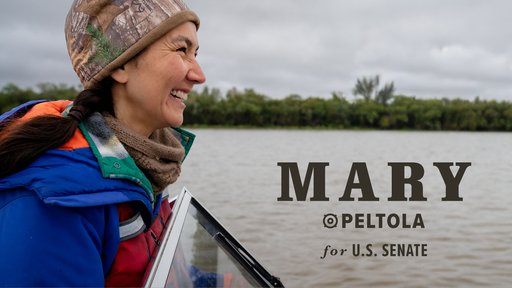
Mary Peltola
Former U.S. Representative; 2026 U.S. Senate candidate · U.S. House of Representatives (former)
Sharon Hildebrand
Tanana Chiefs Conference

Shauna Hegna
President · Koniag Incorporated
Treg Taylor
Attorney General of Alaska; 2026 gubernatorial candidate · Alaska Department of Law (former Attorney General)