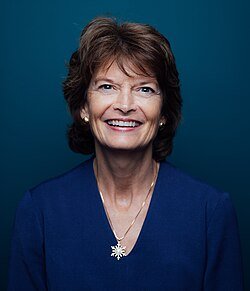
Senate Indian Affairs (Murkowski): Hearings to examine housing needs in native communities, including S.5354, to reauthorize the Native American Housing Assistance and Self-Determination Act of 1996.
Alaska News • • 91 min
Source
Senate Indian Affairs (Murkowski): Hearings to examine housing needs in native communities, including S.5354, to reauthorize the Native American Housing Assistance and Self-Determination Act of 1996.
video • Alaska News
Good afternoon. We call this hearing to order. Today the committee will consider S. 5355. Housing Assistance Act of 1954, the NAHASDA Modernization Act. This is legislation that I've introduced with the Vice Chairman to reauthorize and modernize the Native American Housing Assistance and Self-Determination Act.
We'll also take a broader look at the state of tribal housing and the NAHASDA program. We had originally planned to hold this hearing back in July. It was postponed due to a family emergency, but that delay actually gave us some additional time to hear from tribal housing leaders and to incorporate several of their recommendations into what I think is an improved bill. We introduced this before the August recess. This year marks the 30th anniversary of NAHASDA.
For 3 decades, this landmark law has been built around a simple principle that has transformed tribal housing: that tribes, not Washington, D.C., are best positioned to determine the housing needs of their communities. Reauthorizing NAHASDA has been a shared priority for Vice Chairman Schatz and me for several Congresses, and this anniversary gives us an opportunity not only to reauthorize the law but to ensure that it's ready to meet the housing challenges of the next 30 years. When I became chairman of the committee, I asked my staff at the time, I said, take a look at NAHASDA and tell me where we can strengthen and modernize it. Let's just not do just straight reauthorization. Let's actually make sure that we are updating it.
At the same time, Congress was considering a major national housing package. This is the Road to Housing. That legislation made some pretty significant investments in housing, but despite my efforts and those of others, it did not make the commitment to tribal communities that I believe was needed, and that makes this reauthorization all the more important. Working with HUD, tribal leaders, and housing stakeholders, we have developed legislation that streamlines environmental reviews, strengthens program administration, expands opportunities for homeownership, and provides new tools to address homelessness in Native communities. One example is the bill's new homeownership flexibility provision.
Similar to the flexibilities provided for non-tribal members in the Road to Housing Act, Our bill would allow tribes the option to use up to 20% of their homeownership assistance funds to assist families earning up to 120% of area median income. And this matters because we hear from so many, so many families, so many working families, whether they're teachers or healthcare workers, law enforcement officers, essential workers, but the problem is they earn just a little too much. To qualify under current limits, but they still can't afford to buy a home in their community. So it's these folks that get caught in that awful situation. So rather than have the federal government make that decision for them, our bill gives tribes greater flexibility to decide how to meet their own housing needs.
And I think this is really what self-determination is all about.
We had the good fortune to have Secretary Turner visit us in Alaska last summer. He came up to Napakiak. Napakiak is a small village on the Kuskokwim River. It's accessible by air during— well, I guess all the year, but boat sometimes and sometimes snow machine. But it provides a pretty good sense of the housing challenges that face many of our rural Alaska communities because it's geographically isolated.
They experience significant erosion, land subsidence, some severe weather. While we were there, we saw firsthand the progress of a decades-long effort to move the community to safety because they've got a collapsing shoreline there. And we saw the skid that the community uses to move the homes out of harm's way. This is a village that is absolutely Determined, and their local leadership shows that they look to what their community needs, they're doing the work to make it happen, a great example of self-determination there. But I look forward to continuing to work with HUD, our committee members, and our housing leaders to advance NAHASDA because housing is foundational to nearly every issue that this committee works on, from education and workforce development to public safety, healthcare, and economic opportunity.
Stronger Native communities require housing programs that support them. And finally, before I close, I want to recognize Chad Atallah as he marks 18 years of public service with HUD's Office of Native American Programs. Chad has been a trusted partner to tribes in Alaska and across Indian Country, and I want to thank him for his dedication to advancing tribal housing. I'm asking unanimous consent to enter into the record several letters from tribal housing leaders that recognize Chad's— Chad's service. Senator Schatz, the vice chair, is not able to be here this afternoon, but he does have an opening statement that will be included as part of the record.
Before we turn to the witness panel, Senator Armstrong, I understand that you might want to introduce one of the witnesses this afternoon.
Thank you, Chair McCowsky, and I am honored today to introduce a distinguished leader from the great state of Oklahoma, the Deputy Principal Chief of the Cherokee Nation, Brian Warner. As an Oklahoman, I am very proud of the Cherokee Nation's leadership and the commitment that it has to strengthening communities across our state and beyond. And Deputy Chief Warner has been a strong advocate of something I particularly appreciate about our tribes in Oklahoma, and that is preserving the Cherokee culture and language and expanding educational opportunities and strengthening our workforce development, uh, while supporting the health and well-being of our Cherokee families. So as a former educator, Deputy Chief Warner has worked to expand opportunities for Cherokee students including higher education scholarships, public school support, access to STEM education, and early childhood development. He has also been an active leader in the Cherokee Nation's rural economic development efforts and has championed improved behavioral health and addiction services through his work as co-chair of the Tribal Advisory Committee for the Centers for Disease Control and Prevention.
No audio detected at 32:30
Deputy Chief Warner, thank you for appearing before the committee today, and I'm really honored to get to welcome you And I look forward to hearing your testimony. Thank you. Thank you, Senator Armstrong.
And welcome to you, Deputy Principal Chief Warner. We're pleased to have you with the committee. We are also welcomed this afternoon by Hilary Atkin. Ms. Atkin is the Acting Deputy Assistant Secretary for Native American Programs at the Department of Housing and Urban Development here in Washington. And we are also joined by Alicia Puente-Cackley, who is the Director of the Financial Markets and Community Investment Government Accountability Office, the GAO.
So, welcome to all of you. I will remind you that we do have your full testimony. It will be part of the official hearing record. So if you can keep your oral testimony to no more than 5 minutes so that we've got plenty of time. For questions.
And with that, we will begin with Deputy Chief Warner. Well, OCO, Chairman Murkowski, and members of the committee, I want to say wahtoh. Thank you for the opportunity to testify today. I am Brian Warner, Deputy Principal Chief of the Cherokee Nation. It is my honor to appear before you on behalf of more than 477,000 citizens of the Cherokee Nation and the National Congress of American Indians.
30 Years ago, Congress recognized a simple but powerful truth: Tribal nations are best positioned to determine how housing resources should be invested in their own communities. That decision transformed housing in Indian Country. It gave tribes the flexibility to build homes, expand ownership, rehabilitate aging housing, support veterans and elders, and strengthen communities according to our own priorities. Today, tribal nations across Indian Country are united in support of reauthorizing and modernizing the Native American Housing Assistance Indian Self-Determination Act, better known as the HOSDA, because we know this model works. Cherokee Nation experience is one example.
Today, the Housing Authority of the Cherokee Nation serves thousands of families each month through rental assistance, homeownership rehabilitation, and related housing programs. Since 2019, the Cherokee Nation has constructed more than 500 homes, completed more than 3,500 housing rehabilitations, and expanding housing opportunities for veterans, elders, families, and workers. But our experience also demonstrates something larger. Good housing policy is more than building homes. It's about building strong tribal nations.
Housing supports workforce recruitment. It strengthens public safety. It improves access to healthcare, and it drives economic development. In Adair County, our Cherokee— our Cherry Tree Grow Initiative combines housing rehabilitation with infrastructure improvements, public safety enhancements, and outdoor recreation to revitalize one of our historic communities. Through HUD's Section 184 Skilled Worker Demonstration Program, the Cherokee Nation became the first tribe in the nation to construct workforce housing for Cherokee Nation marshals, helping us recruit and retain law enforcement officers who keep our communities safe.
We also view the housing as a tool for preserving our language and our culture. Through our Cherokee Speaker Village initiative, we are creating housing where fluent Cherokee speakers can live in a community with one another, strengthening opportunities to pass our language to future generations. Housing is simply not preserving buildings. It helps us preserve our identity. Cherokee Nation has not waited for Washington, D.C. to solve our housing challenges.
Through our Housing Jobs and Sustainable Communities Act, we have invested more than $190 million in housing and community development since 2019. This law also will harness at least $40 million on 3-year cycles into perpetuity. In our Public Health and Wellness Fund Act, we have budgeted more than $5.5 million for housing support services annually, and we are poised to invest tens of millions of additional dollars for affordable housing construction in the years ahead. Both these laws draw from our tribal businesses and healthcare third-party revenue rather than federal funds. But these investments are designed to complement, not replace, the federal trust responsibility embodied in NAHASDA.
For much of the last decade, the Indian Housing Block Grant formula funded remaining essentially flat at about $645 million annually. Adjusting for inflation and population growth, HUD spends roughly the same today on IHBG than it did when NAHASDA was enacted 30 years ago. Congress took a bold step in FY24 by boosting the IHBG funding to $1.11 billion. The next step is to modernize NAHASDA. The legislation before you provides tribal nations with practical tools to meet today's challenges.
It streamlines environmental reviews, reduces unnecessary administrative burdens, strengthens Section 184 homeownership opportunities, permanently authorizes tribal HUD-VASH for Native veterans, and gives tribes greater flexibility to address local housing needs. These are practical, practical reforms They mean less time navigating bureaucracy and more time building homes. The question before Congress is not whether NAHASDA has succeeded, because it has. The question before Congress is whether to build upon its success by enacting this proposed NAHASDA reauthorization. Good housing policy is more than building homes.
Again, it's about building strong tribal nations. I will, I will close with a request. NAHASDA was last reauthorized in 2008. And over the last 13 years, Congress has had plenty of opportunities to revisit this landmark law. This is the third time Cherokee Nation under the Hoskin-Warner administration has testified before Congress on this very topic.
We need to get this across the finish line before the end of the calendar year. Congress could have included reauthorization language in the recently enacted 21st Century Road to Housing Act, but it chose not to. It is imperative that we finish the job today. On behalf of the Cherokee Nation and the National Congress of American Indians, I respectfully urge Congress to enact the Nahasda Modernization Act of 2026. And I say wado for this opportunity.
Thank you for the time to testify today. Deputy Chief, thank you for that. And I appreciate your admonition to us at the end to get this over the finish line. It has been too long, and we do not need to have more excuses as to why it remains unresolved. So know that we will continue to work with those at Cherokee Nation and across the country.
Thank you, Chairman. Thank you. Ms. Atkin, welcome.
Thank you, Chairwoman Murkowski, Vice Chairman Schatz, and members of the Senate Committee on Indian Affairs for this opportunity to testify on the housing needs in Native communities. I would also like to acknowledge and thank the committee staff, not only for coordinating this hearing, but for their ongoing engagement with HUD staff on issues that impact Native American communities across our nation. I also want to thank and recognize my fellow panelist, Dr. Puente Cacquille, Deputy Principal Chief Warner of Cherokee Nation, and say thank you for recognizing Jada Tala, a colleague of mine for many years. As the Acting Deputy Assistant Secretary for Native American Programs, I have had the privilege of meeting with tribal leaders from across Indian Country, both in their communities and here in Washington, D.C., to learn firsthand about the housing challenges they face and the innovative solutions they are developing. Serving as Acting Deputy Assistant Secretary has also given me the opportunity to hear directly from tribal leaders about what we need to do to strengthen and improve HUD's programs so that they better support housing opportunities and economic advancement in tribal communities.
Native American communities continue to face severe overcrowding, a shortage of affordable housing, and inadequate infrastructure. These compounding factors create significant barriers to prosperity and self-sufficiency. At the same time, we are seeing some of the most innovative housing strategies and developments happening in tribal communities today. Hud recognizes the solemn duty to uphold the federal government's treaty and trust responsibilities to tribes. Our staff at hud work tirelessly alongside our tribal partners to find practical solutions and overcome obstacles while also promoting successful practices that so many tribes have employed to support their people.
This year marks the 30th anniversary of the Native American Housing Assistance and Native American Self-Determination Act of 1996, NAHASDA. Over the past 3 decades, NAHASDA has helped build, acquire, and rehabilitate more than 160,000 homes in Indian Country while furthering tribal sovereignty and tribal self-determination. By recognizing the unique government-to-government relationship between the federal government and tribal nations, NAHASDA has enabled tribes and HUD to work together to address longstanding housing barriers and economic stability.
NAHASDA's flexible, locally driven model has built new and preserved existing housing stock across Indian Country, from remote Alaska Native villages to Southwest Pueblo communities, to the timberlands of the East and Pacific Northwest, and the tribal nations of the Plains. NAHASDA has continued to help HUD carry out its mission and uphold the federal government's trust responsibility. Moreover, the housing needs of the 575 federally recognized tribes vary significantly across geographic, economic, and cultural traditions, and tribes are best positioned to develop solutions that reflect the unique circumstances of their communities.
Provides a flexible framework to design and implement housing programs tailored to those needs. The reauthorization and modernization of NAHASDA represents an important opportunity to work towards the goals of strengthening the relationship between the federal government and tribal nations by streamlining requirements, updating programs, and strengthening tribal self-determination in housing. Secretary Turner remains committed to working with tribal nations to expand housing opportunities in Indian Country consistent with our trust responsibilities and statutory authorities. HUD appreciates the committee's efforts and looks forward to continue working with the committee to refine and strengthen this legislation. HUD remains committed to working alongside tribal nations to ensure that families across Indian Country have access to safe, affordable, and stable housing for generations to come.
Thank you again for this opportunity to appear before you today. Thank you, Ms. Adkins. And now we will hear from Dr. Puente-Cockley. Chairman Murkowski and members of the committee, thank you for the opportunity to provide preliminary observations from our ongoing body of work on Native American housing and homelessness issues. Native American communities, including American Indian, Alaska Native, and Native Hawaiian populations, have long faced housing challenges, including poor housing conditions, overcrowding, and homelessness.
These communities also face obstacles to developing new housing, such as insufficient infrastructure, remote locations, and restrictive land use regulations. In fact, the issues of housing and homelessness are interrelated in profound ways. Today I'd like to share with you some early results from two engagements we are conducting on Native American housing and homelessness. First, from our housing program work, our preliminary analysis identified 30 federal programs that can provide housing support through grants and mortgage assistance targeted to American Indian, Alaska Native, and Native Hawaiian populations. All 12 of the tribes we spoke with for this part of our work said they used federal support, such as Indian Housing Block Grant funds, to maintain existing housing, and many said they used federal support to help build new housing as well.
However, many tribes said the federal funds they received did not fully meet their needs. Tribes we spoke with said federal housing support was generally helpful, but they also cited its limitations. Program restrictions, such as income limits, affected tribes' ability to support housing needs of middle-income households. The inability of federal funds to keep pace with construction, rehabilitation, or maintenance costs was another major concern. And just the low availability of housing in tribal areas limited tribes' use of some programs, such as certain homeownership programs.
Turning now to the challenges tribes face and the strategies they use in addressing homelessness, we spoke to 19 tribes and tribal organizations who told us that while tribal communities experience both sheltered and unsheltered homelessness, doubling up, or temporarily staying with others, is also widespread in tribal areas. Doubling up can lead to overcrowded living conditions and unsafe situations. For example, when I met with a group of residents from Teller, Alaska, while participating in a congressional trip investigating tribal housing issues, they described significant negative effects of overcrowding, such as excessive humidity from too many people enclosed in too small a space, leading to dangerous mold, which then caused health problems for residents and serious deterioration of the housing stock itself. The need to double up is attributed by HUD and the communities themselves to a shortage of housing. For example, one tribe we spoke with told us they needed 400 to 500 additional units to adequately house their current population, given the level of overcrowding.
To address homelessness, including overcrowding, some tribes focused on developing additional housing on or near tribal lands. Others operated seasonal shelters, year-round shelters, or transitional housing. Some tribes provided financial assistance or supportive services for individuals or families experiencing or exiting homelessness, and some partnered with or referred people to local non-tribal service providers. Many of the tribes we met with discussed using IHBG or supplemental funding made available during the COVID-19 pandemic to support their homelessness strategies. However, they said the lion's share of IHBG funds were needed to maintain the tribes' already existing housing, with limited amounts available for homelessness-related efforts.
And while many tribes used COVID-19 relief funds to build or operate shelters, or provide emergency housing assistance during the pandemic, they didn't expect those efforts to be sustainable once the funding expired. Most of the tribes we spoke with are not participating in the federal homelessness assistance program known as Continuums of Care, or CoCs. Some tribes found the CoC program to be difficult to navigate and burdensome to participate in, especially tribes with limited staff capacity. Tribes also had concerns about their ability to access and compete for funding when their members' experiences of homelessness, such as doubling up, may not meet HUD's requirements. The same is true for CoC fair housing and nondiscrimination requirements, which they believe may conflict with tribes' desire to prioritize serving tribal members.
Some tribes participate in the Tribal HUD VASH program, which pairs HUD-supported rental assistance for American Indian and Alaska Natives veterans experiencing or at risk of homelessness with case management from VA. However, some tribes we spoke to noted that housing shortages in tribal communities meant that rental assistance funding may go unused as veterans struggle to find available units. Chairman Murkowski and members of the committee, this completes my prepared statement. I'd be pleased to answer any questions you have. Thank you.
Thank you all for, for your testimony today. And, um, just your willingness to participate on these very important issues. I want to direct my first question, um, uh, to focus on Section 5 of the legislation. I mentioned this in my opening. This is the new provision that would allow tribes and tribally designated housing entities, uh, as well as the Department of Hawaiian Homelands, to use up to 20% of their homeownership assistance to serve families that are earning up to 120% of area median income.
And again, my comment about those that are in the middle here, and Dr. Keckley, you speak to this in your comments and in your written testimony.
Can you share— I mean, you have given an example of the situation in Teller there, so I know you've been up to my state. We appreciate that. But how does this current 80% area median income limit are tribal members, whether again you're a teacher, you're law enforcement, you're a tribal administrator, who are maybe just over the limit, but again, do not— are not able to afford homes in their community. Can you speak to what you heard while you were out there? Absolutely.
We definitely talked to tribes not only in Alaska but across the U.S. And the issue of the challenges of serving the middle-income tribal members is something that was raised in many places.
In some instances, tribes talked to us about the fact that they have— there may be other funding sources but they're not enough to actually serve— they're not large enough, they're not easy to get, and so not being able to use IHBG funds because of the income limit means that they just aren't able to serve those populations. They also talked about the fact that some of their tribal members who may leave the reservation, say, to get educational opportunities, to go to college, they can't come back because there's no place for them to live. They, as you said, are earning just too much and there isn't something available. And we heard the same thing from the Department of Hawaiian Homelands, that they have similar challenges in serving this population. Well, and then you have those who want to try to come back.
There isn't housing. And so it ends up being in this doubling up situation or tripling up, as it may be. Ms. Adkins, so within this Section 5, we give each tribe or TDHE the choice to address these missing middle families, these essential workers, the young families that are, again, earning just above the income limit and can't buy a house out there. Some tribes want the flexibility to meet these homeownership needs We certainly know the high cost of housing, the need for more working families, but if a tribe— if a tribe uses a part of its own allocation to assist these households with incomes that are, again, just slightly above the current limit, would that reduce another tribe's allocation? Could it more broadly impact the formula?
How does HUD view this? Thank you, Senator. We do not expect this provision to have a meaningful adverse impact on the formula or allocations. The formula is based on need and FCAS. It is not reduced because a tribe chooses to serve a family at a higher income tier.
There are some tribes that do not currently accept their annual formula allocation, and maybe they would choose to accept it to serve those types of folks. But it's a very small portion of the overall program that makes that choice currently. Okay, so it's not something that you're looking at and saying we need to resolve that in any way? No, we expect minimal impact. Okay, okay.
I'm gonna ask— I'm gonna turn to my colleagues here in just a second, but let me, let me ask you, Deputy Chief Warner, in your experience with housing on Cherokee Nation. Will this address a need where you have those who, again, are just above the income limit? Yes. Thank you, Chairman. Yes, speaking for the Cherokee Nation, it absolutely will.
We run into these all the time. I don't need a spreadsheet or anything else to tell me, because I see the faces. Each and every day. I take the phone calls, I take the visits. Uh, we did a housing study of our own and found that we, uh, an estimated housing investment that is needed for the Cherokee Nation only is $1.75 billion.
About 600 plus— 6,000 plus, uh, households are on a waiting list. And a lot of times these individuals, while they're waiting on that waiting list, other, other tribal programs have elevated them up, and now they don't meet that need. And we feel like that there is a big chunk of people. We— some— in some instances, we know where these people are. We know what they're doing.
A lot of them work for us, having over 14,000 employees at the Cherokee Nation in our businesses. So we just want to make sure that we give that leg up, that hand up to those households that have been through trials, been through tribulations, and have found their way to taking a hold of that opportunity, but then just finding themselves just a little bit outside those income guidelines. And we know from past in the COVID-19 pandemic, where we were able to utilize COVID dollars and ARPA funds to move some of those income guidelines as needed, that we see a great need there. And we know that we have a whole lot of people that feel like they are stuck in the middle. Yeah, we're hearing it all.
Good. Thank you for that. I appreciate it. Senator Smith.
Thank you so much, Madam Chair. I appreciate very much you and Vice Chair Schatz and your work on this bill. I think it's really important and I know that we've been working on the HASDA reauthorization for a long time, so I appreciate your dedication and persistence. And Madam Chair, I also just want to take a moment of personal privilege to recognize Chair Michael Fairbanks, Chair of the White Earth Nation, and representatives from White Earth who are in the audience today. Many of our— many folks are here, of course, because of NCAI, so it's great to see you, Chair Fairbanks.
And, you know, so I know that we all can agree that the NAHASDA reauthorization is long overdue and that the needs of Indian country have changed a lot since the last bill expired. And so I want to actually talk with you, Deputy Chief Warner. Thank you so much for being here today. I can tell that this conversation— I appreciate you being here in good spirit, and I can also tell that this is a bit frustrating because we've talked about these things before. But I'm wondering if you could just help us understand how this long overdue reauthorization— I mean, like, what makes it hard that it hasn't been reauthorized?
What— how does this get in the way of the housing work that you are doing or want to be doing in the Cherokee Nation? What's the— I mean, I'm trying to understand more clearly what the cost of our inaction is. Absolutely. Well, thank you, Senator, and a great question. I think the cost is it's been time.
So many, so many times. If you look at the NAHASDA authorization, one thing about the funding, we are appreciative of those continued funding efforts as we've moved along. But as my testimony stated, that we— those, those levels have remained at the original level. So due to the cost inflation, all these other pieces, that's one aspect of it. A lot of the other aspects of it, there's provisions that are within this new Modernization Act that will do exactly that.
It will modernize it. It will make it a tool That way the folks that are working behind the scenes, that are behind the curtain getting things done, that they don't have duplicative reporting when you start to add two different types of federal funding together. Another way is environmental review. We don't ever want to— we leave environmental protections in because it's a must, but we don't— those same standards of that funding and having to redo that review over and over, being able to put HUD on a time clock. If you will, when you look at if we do a waiver for an environmental review of that 60 days, it has to be answered.
That's another piece that will help move us along. There's so many things here that, that have stymied what we've done. Obviously, money is one thing, but time is of the essence. And our citizens, they're looking for outcomes. They want to hear the sound of swinging hammers.
They want to hear that saw running. They want to see dirt turning on their land. And these are the important pieces. And I think it's very important to understand that nation to nation, although we have so many similarities across Indian Country, each tribal nation is unique to its own standard. And some nations have been— they have more opportunity, if you will, to move and be more fluid.
But in the end, having that standard of looking at, you know, taking that— if we accomplish what Congress provides, that flexibility, And those resources are two of the big main key components of what we're going to do. I absolutely—. So it's both—. It costs time, time costs money, everything costs more anyway, so having updated programs is just going to make a big difference. And I think also implicit in what you're saying is that there are, you know, many different tribes of many different sizes, tribal nations.
Some tribal nations have different capacity to try to navigate these complicated federal programs. And that is often a big barrier. I know for tribal nations in Minnesota who are trying to figure out how to navigate these complex programs, those administrative burdens can be tedious and time-consuming. And a lot of times those tribes don't have the, the infrastructure in place within their own tribe to handle that administrative burden. And that, that creates that barrier.
Then you just keep moving an individual down the list. The waiting list continues to grow. Or do you shut this waiting list down? Those are real things. And when you shut a waiting list down, that sends fear throughout all out those other individuals, and it starts to reduce hope that there's an opportunity for me because we look past the back to the 7 generations and we understand where we're at today, but we're planting a seed for the next 7 generations.
Those individuals have been yet to be formed in the womb, and in tribal nations, they hold dearly to their community values, and housing is a public health issue, and that leads to so many other things. That's right, and I, you know, I was struck by the conversation about overcrowding, which is is kind of a polite word for understanding the broad cultural value in tribal nations that you don't let your relatives sleep outside. That's right. And so you make space, you make room even when there physically isn't room. And that has long and lasting impacts on folks.
I think old folks, but especially also young folks who are— We're trying to figure out how to make it work. I know I'm out of time, Chair Murkowski. I just want to appreciate what you said about how many of us worked hard to include some of these provisions or provisions relating to native housing in the Road to Housing bill. We weren't successful. You and I have worked on many of these proposals over the years, including making improvements to the Continuum of Care program so that it works for native folks, and of course, the Senate has passed NAHASDA.
We know what to do. We just need to finish the job. Thank you. That was Minnesotan, pretty polite from Minnesota. That was pretty polite.
We appreciate it. We're going to finish the job. Senator Armstrong.
Thank you, Chair Murkowski. First of all, I'll start with Deputy Chief Warner. This is on— I believe it's in Section 22 of the bill— clarifies that CDFIs are approved lenders for Section 184 home loans. And that kind of caught my attention when I looked through the bill. Can you elaborate on how the 184 home loan program addresses home financing issues unique to Indian Country?
Yes, sir. Thank you, Senator. I think Section 184 exists because mortgage lending on tribal lands and trust land, it presents an issue many times with conventional mortgage products. They're just not designed to address some of those things that you see. The program, 184, uses federal guarantee and on tribal trust land, a mortgage on a home and leasehold interest rather than underlying trust land.
And the big piece for me, these CDFIs, they're valuable because they already work directly in a lot of Native communities. Native communities, they rely on trust, trusting one another, building that relationship, and so they can, you know, understand that the land credit financing issues, they already have a pretty good idea of how to do that. The provision does not replace traditional lenders, and it expands the number of qualified institutions over time that can utilize Section 184 to get that capital, that net capital, to those Native families and those Communities. Okay. So it's somewhat related to the fact that the land that the housing is on is in trust and therefore difficult to get a conventional loan on that?
Many times, yes, sir. Yes, sir. Thank you. Let's see. Let me go next to Ms. Atkin.
Can you give a summary on how tribes generally receive the housing funding? And where I'm going with this is trying to understand the formula works in terms of allocating federal funds to the various tribes and the needs. Can you explain that, please?
Thank you, Senator. You're asking me to explain the formula funding and how it gets out to communities? Yeah, and kind of what the primary features are. It seems like we have such a variety of tribes that are affected by housing and some which have access to economies that are pretty significant and some that don't. And so it's not clear to me how the federal government decides and allocates that funding when there's such a variety of opportunities and economies.
Okay. Thank you. Thank you for elaborating. Quite frankly, the formula is pretty complicated. There are some main factors that look at need.
It was negotiated with tribal leaders, so at this point we have a program negotiated— gone through negotiated rulemaking, looks at different factors as agreed to with the tribes. Once we get funds appropriated from you all, we work to run the allocation formula, which is done in accordance with that negotiated rule. Get that money through some internal processes and then get the money out into the communities. So in some ways there's a lot to it because what was negotiated does bring a lot into it, but in some ways there's not because we do what is outlined in the negotiated rule. We put it through the processes that are required and we get it out as fast as we can.
Okay. So that negotiation takes place each year or after— what is the frequency of that negotiation? There is no set frequency to the negotiated rulemaking. The last time that we had a negotiated rulemaking was after NAHASDA reauthorization. So that is one trigger.
If NAHASDA is reauthorized, we will go into negotiated rulemaking. Otherwise, there's no name trigger. Okay. And so how does the federal government on one hand, how do they accept the representation and making sure that there's fair representation of all the tribes? That's a great question, Senator.
I'd be happy to get back with my team and get you some more details on that. The last time we had a negotiated rulemaking, I did participate, but I don't— I'm not familiar with all the details. Okay, thank you. Thank you. Um, and, um, next, it really, uh, again for Ms. Atkin on the, um, federal permitting regime.
And I heard Deputy Chief comment on this, but how much delay do you think is coming from environmental permitting and kind of the redo of the environmental permitting that the Deputy Chief mentioned? Do you have good measure on that? Thank you for the question, Senator. I think it's hard to say exactly how much delay is caused by, some might say, some inefficiencies in the environmental review process. You're Minnesota polite too, it sounds like.
Michigander polite. Okay.
We do have some averages we look at from time to time to get a sense for the timing and be happy to provide that to you and your staff. There are some flexibilities and efficiencies in the NAHAS reauthorization which should help with the delays that people experience now. Okay, great. Thank you.
Thank you. Thank you all for being here. Ms. Atkins, let me follow up on that because that was one of my questions on the permitting. To the extent that you could provide us the challenges now and hopefully the changes for the better, if not, as NAHASDA gets passed into law, I would like to see that. My understanding is that there's some challenges with permitting right now, environmental reviews, and it's slowing down some of the development.
So I am hopeful this is going to speed some of that up. So whatever you could provide to the community, I would appreciate. Um, Deputy Chief, let me ask you this. You talked a little bit about, um, the pairing of stable housing with supportive services, and, and that helps Native veterans build and rebuild their lives and remain connected to, to their communities. Can you speak to the benefits of permanently authorizing VASH, this program, and what it means to our veterans and Native veterans?
Yes, thank you, Senator. Well, and we all know that, uh, how we all hold our Natives in high regard, our Native veterans especially. We've served at a very high rate amongst the population, uh, for, uh, since time immemorial on this land. We, I think for us, what it would help to do, it bring consistency to a program. It would bring, it'd be something that we know is coming, that if that gets permanently authorized in this bill, that is something that is paramount for those veterans.
I can paint a story for you. We do, we get 20 vouchers of those rental assistance vouchers a year. We've got 60 individuals, and this has been since I was on Tribal Council, the legislative branch of 2017 when these HUD-VASH programs started in. And you can see that that 60, that's not very many when we go to our veteran programs and we do these things. But the goal here is to find these individuals in a stable environment.
I can tell you so many stories. One story, we've got a female veteran. She comes in. She's looking for financial stability. She qualifies for HUD-VASH.
She's excited. She gets in this rental property. All of a sudden, she gets a new career, a new job, and she moved into homeownership. Well, guess what that does? That creates another slot for this individual.
She upskilled her life and took that opportunity. But for us, we want to offer more for our veterans. And from the Cherokee Nation's perspective, we would like to have that where, hey, this program is actually absolutely here. It's not just a demonstration. Grant program for veterans, because that's hard to say to a veteran.
This is a demonstrate— we need to demonstrate what we're doing. Then over time, when will this become permanent? So those are some of the things that is very meaningful to our tribe. Thank you. But Dr. Cackley, I also caught what you said.
Even if we are to reauthorize VASH, is there a concern that there's not enough supply of housing that would be able to accommodate the need for this program? Yes, there is definitely concern that the housing supply, whether for veterans or for any part of the population that is currently experiencing or at risk of homelessness, that's a concern. But that's currently. If we are to reauthorize this, that might help with that supply in conjunction with passing the 21st Road to Housing. Act.
I think that would address some of the issues. As the reauthorization, making the program permanent, and, and, um, it would do—. Would be helpful in just in terms of, of, um, uh, giving stability to both the people who are, who are going to be served and the people who are, who are running the program as well. And in conjunction with, with some of the things that are in the Road to Housing Act, that, um, that is also Those can go hand in hand. Yeah, and I hope that as we are looking at the reauthorization, but also in conjunction with the 21st Road to Housing Act, there are some things that are compatible here for our tribes that we have focused on, even though we couldn't get some of these provisions into that bill.
And one of them I want to talk about, Ms. Adkins— Ms. Adkins, excuse me— is manufactured homes. To what extent has the Office of Native American Programs had conversations with HUD about using manufactured homes to meet tribal housing needs. In the 21st Century Road to Housing bill, we put programs in there to really incentivize and look at the ability to have more manufactured homes, having those that are in manufactured homes make improvements to their homes. Is this something you're looking at and talking to some of our tribes about as well? Thank you for the question, Senator.
NAHASDA is a flexible funding source and certainly can be used for manufactured housing. We have many examples out in Indian Country of tribes using manufactured housing for their citizens. So were the NAHASDA authorization to pass and were there opportunities under RHOAD to partner with other offices in HUD on manufactured housing. We'd be there in the Office of Native American Programs. I know my time is out, but there's a program in there that I had worked on called the PRICE program, Preservation Reinvestment Community Enhancement, focused on manufactured homes that will help in our tribal community, so I'd hope you take a look at that as well.
Thank you, Madam Chairwoman.
Appreciate that. Good questions, everyone. So several have raised the issue of permitting and the challenges. I think it is worth noting that within the 21st Century Road to Housing Act, they do have provisions there to address environmental reviews and designed to reduce delays in housing development. And we take that further in our legislation in Section 3 by allowing a single HUD environmental review for projects that are using multiple federal funding sources.
We expand the CEs for low-risk activities, provide practical flexibility for radon testing, lead testing in remote communities, floodplain management, wetland compliance. So I guess the question is best directed to you, Ms. Atkin. So do we need to add these given what is already incorporated in the Road to Housing Act to better facilitate the environmental review? I think they are good, but I would like to hear it from the Agency from the department. Thank you.
The environmental review provisions in the Road to Housing do reduce unnecessary burden and delays, but the NAHASDA reauthorization bill builds on these efforts by addressing additional challenges that tribes have identified. The provisions in the reauthorization are still needed because they're broader. They encompass more programs than the Road to Housing Act. Than what is provided for tribes and covers multifamily projects. A single tribal housing project often combines multiple funding sources, which can trigger overlapping reviews of the same ground.
We have heard from tribes that this can result in development delays and increased cost. The provisions in the reauthorization authorize one environmental review across projects with multiple federal funding sources, removing that redundancy. It also has several additional categorical exclusions on low-risk activities that pose little environmental impact but still require a lot of staff time and attention. The bill would right-size the review to, to look at the actual risk and speed up execution of those projects. I could go on.
The bill's provisions on radon and lead testing, floodplain management, wetlands compliance, address conditions in remote communities where there's limited access to specialized testing contractors and laboratories. I recall my—. Just let me help you out here because it sounds like these are not redundant, that this actually, as you say, it broadens it and effectively it is allowing for a more efficient process, which I think we're all looking at, but it would also seem to me that you are— you're strengthening tribal self-determination. You still have appropriate environmental protections in there, but you're allowing for a process that— maybe we should replicate this beyond just Native housing here, because it sounds to me like it's common sense. So thank you.
Thank you for walking us through that.
Dr. Cackley, you talked about the Continuum of Care program. And, you know, we look to Continuum of Care in Alaska as a very important tool for addressing homelessness. And it's tough to hear that that tribes are not really successful in being able to access the program. We do include several provisions intended to reduce these barriers and to make the continuum of care program more accessible. Have we gone far enough in doing so?
Through your lens, would you have us do more here? So from my lens, you've definitely made—. There's definitely progress. The pieces that we heard most from tribes about the continuum of care program, the complexity of the program, so there's probably some work that could still be done on that. Just it is burdensome to work your way through the system and whether you're joining a continuum of care that already exists or creating a tribal continuum of care.
And as I think has been said before, not all tribes have the same infrastructure, the same staff capacity to do that. Another piece is the concern that tribes have about the fair housing and nondiscrimination requirements and whether that impacts their ability to prioritize tribal members, and that is something that is covered in the reauthorization. So I think that will go a long way to at least not sort of stopping tribes in their tracks before they even consider the program, which I think is more of what's happening now, is tribes are choosing not to participate because they don't think they can prioritize. Another piece is just the definition of homelessness, which is not addressed in either NAHASDA or anything in the Road to Housing Act, so that's something else that would still need to be considered and addressed is the fact that for tribes and in Indian country more generally that the phenomenon of doubling up and overcrowding is much more what, you know, what you see, and it has negative impacts, but it doesn't meet HUD's clear definition of homelessness. Which, as we have seen, is so much a part of the challenge and the problem.
And you noted in your visit in Teller I don't remember what year it was that we had an Indian Affairs Committee field hearing out in Savoonga focused on housing and had an opportunity to take the staff and those attending on a quick tour of 3 homes.
And they were a home, it was a structure for people to live in. In one home, it was a 2-bedroom home. There were 12 people that lived there. The families took shifts in sleeping, and they explained that part of the challenge with the time of year that we were at was that school was going to be starting in, in another week or so. So the children who had been, been sleeping during the day.
Well, it was the— was the VPSO was one of the ones who had to work during the day, so he got the regular sleep hours and the kids basically worked around him. But they needed to now make the shift because now the children needed to be in school and needed to get sleep. You looked at, uh, you looked at a home that, um, uh, for most of us would say was shocking, and yet for that family, for that extended family, it was the way they were living. And so how we define homelessness actually matters, and it, it's not only— it not only impacts whether or not you are, you are in a place with a roof over your head. But to the point that you made, when you have too many people, you don't have— you've got safety issues when you're dealing with, with mold buildup.
You have issues that will have implications on a child's education if you cannot sleep given the conditions in your home. Overcrowding It's tough when people do not have a level of space or privacy or consideration and other challenges present themselves. So it is something that is clearly a struggle and needs to be recognized and addressed.
I want to ask Senator Armstrong if he has additional questions. I have a couple more here. Thank you. We're talking again, Dr. Cackley, about how homelessness looks different in many of our tribal communities. In Alaska, Alaska Natives make up about 20% of the population, but an estimated 60 to 70% of the homeless population in our state.
Many tribes Many tribes would like it if resources allowed to be able to use the Indian Housing Block Grant funds to address the homelessness, but the limitations on how the funds can be used, including the tribal HUD VASH voucher holders. So if there were greater flexibility in the use of the Indian Housing Block Grant funds combined with what we're trying to do with the reforms in this bill, do you think that that helps to give more flexibility in those? I think more flexibility is always a good thing. It—. Because tribes know what they need and they—.
And different places will have different strategies, you know, to meet different challenges. What I will say in terms of the IHBG funds, what we heard is is that most of the funds that tribes are getting, they just need to maintain the housing that they have. And so in order to address homelessness, there's not very much left for that specific purpose. But having more flexibility would definitely allow them to, you know, sort of work the system as best they can.
And to that point, maybe I'll conclude with you, Deputy Chief Warner, if you had additional flexibility to utilize different sources of funding through the Indian Housing Block Grant, how would that be helpful? Thank you, Senator. Thank you, Chairman. It is— it's absolute paramount because we're able right now in order to extend out and to do some different things, we harness that Public Health and Wellness Act which takes 10% of our third-party revenue off of of our healthcare side, and we've plugged that in to help build a crisis shelter for those individuals that are experiencing homelessness right now in a particular area. But if we had more flexibility, I can see other tribes that don't have that opportunity that we do to be able to utilize— if their third-party revenue may not be that robust, I think that it will definitely help them.
When I sit with the CDC TAC members, we often talk about the different disparities amongst our tribes, the different opportunities that we all have. And that's one thing that's always— resources are always going to be king. But the other piece of that is flexibility, being able to utilize those dollars, make the moves that we need to make. Because when you have a citizen that comes in and they tell you, I'm homeless, but like you said, they have a roof over their head, they're living with their aunt, they're living with their grandmother, there's 3 generations within that household. They're still technically, in my mind, they're still homeless.
And we need to try to push them over and So many times when you get that many generations in one household, when you go to look at the guidelines within the HAZA, they take the collective efforts of everybody that's putting food on the table. All the money that they make go into that calculation, and that makes it difficult. So a lot of times people, that household may not meet that need that is needed. So given that flexibility, whether it's moving that income median, being able to utilize those dollars to do other things, that would definitely help us especially in that homelessness area, because one crisis shelter is not going to fix our issue. Well said.
I really appreciate not only the testimony that's been presented here today, but the work that has gone into it. Thank you for helping our teams here, as the Vice Chair and I have worked to build out this NAHASDA modernization effort. I do think we are in a much stronger place. I think you layer this onto the Road to Housing that is now law, maybe, just maybe, we're going to start to make some incremental gains in an area that is so critically important. There's a lot of talk right now about affordability in this country and being able to be in a home to be a housed individual is not something that should be considered extravagant.
It is something that we should all work to make sure that our systems work, we are efficient, and we, we recognize what, what the imperative is. So I appreciate the efforts, and I particularly want to acknowledge the work of the folks on our committee, on both sides of the dais here, and all the members who have weighed in as we work to advance this. So the goal here is to try to get this over the line, and we will be working to do just that. For members who have those who have not been able to join us here today, the committee record will be held open for 2 weeks if anyone wants to submit follow-on questions for the record. So we would ask for your assistance with that.
But with that, the committee stands adjourned. Thank you.
No audio detected at 1:29:30
No audio detected at 1:30:30