House Natural Resources (Begich): Oversight hearing titled “Examining the President's FY 2027 Budget Request for the Department of the Interior.”
Alaska News • • 280 min
Committee on Natural Resources will come to order without objection. The chair is authorized to declare recess of the committee at any time. The committee meeting today— it's meeting today to hear testimony on examining the president's FY 2027 budget request for the Department of Interior. For purposes of planning, there will be a 10-minute recess at noon. There will also be food for members.
Under Committee Rule 4, any oral opening statements are limited to the chairman and the ranking member. I therefore ask unanimous consent that all other members' statements be made part of the hearing record if they are submitted in accordance with Committee Rule 3. Without objection, so ordered. And I recognize myself for an opening statement. Well, good morning and welcome.
Welcome, especially to Secretary Bergum, to this important oversight hearing on President Trump's fiscal year 2027 budget request for the Department of Interior. Our abundant natural resources really are the backbone of our nation. Multiple uses of our public lands provide the food, the fuel, and fiber that benefit Americans across the country. Oil, gas, and coal and other energy sources developed on our public lands power our cars, our homes, and our businesses. Timber resources create jobs in rural communities and provide the raw materials necessary to build homes, schools, and businesses.
Water is both essential for life and a vital source of power and transportation. The scope of our committee's jurisdiction is significant and carries with it profound responsibility. As stewards of our natural resources, it is imperative that we manage and conserve these assets not only for our own benefit, but also for the well-being of future generations. The Department of the Interior and its agencies oversee more than 480 million acres of surface land, 750 million acres of subsurface and mineral estate, and more than 2.5 billion offshore acres. These lands and waters are expected to generate more than— or right up close to $20 billion for the American taxpayer in 2027.
While awe-inspiring, proper stewardship requires strong leadership, something that's been a breath of fresh air under this administration. Building on the momentum of the working family tax cuts, Committee Republicans have continued to unleash American energy and strengthen domestic mineral supply chains. To remain energy dominant, we must continue to unlock our resources and build the critical infrastructure needed to fuel our country and our allies. In 2025 alone, the Bureau of Land Management held 22 oil and gas lease sales across 10 states that generated more than $355 million in revenue. These lease sales help us reduce our reliance on our foreign adversaries to create good-paying American jobs and boost local economies.
Congress and the administration must continue to work together to unleash American energy building our current momentum, and also so our nation can remain secure and energy dominant. We must also work together to prevent catastrophic wildfires, restore forest health, and protect communities. With more than 44 million homes at risk in the wildland urban interface, the need to act quickly has never been greater. Across the West, snowpack is at its lowest level in more than 4 decades, an ominous sign as we enter the high— of the wildfire year. That's why I'm pleased to see the administration's budget so closely aligned with our bipartisan Fix Our Forests Act, including creating a Wildland Fire Intelligence Center, tripling the size of existing categorical exclusions, and codifying emergency authorities.
Secretary Bergum, I look forward to working with you to get this bill to President Trump's desk so we can give you the tools you need to address our wildfire— our wildfire and forest health crisis. In the West, President Trump and Secretary Burgum have made water delivery a top priority, reducing regulatory bottlenecks and streamlining the construction of water infrastructure. Republicans' Working Families Tax Cuts included a significant investment in Western water storage and conveyance project. Under the Secretary's leadership, the department has invested nearly $890 million in water projects to ensure reliable and secure water deliveries for for farmers, ranchers, and households across the West. Again, our natural resources are the backbone of our country.
We must steward our resources well and responsibly develop them for the benefit of our nation and for our allies. Secretary— Secretary Bergum, I do welcome you back to the committee. I look forward to your testimony and discussion how we can work together to responsibly manage our resources. And with that, I now recognize Ranking Member Huffman for an opening statement. Thank you, Mr. Chairman.
Welcome back, Mr. Secretary. Since you were last here, things have unfortunately gotten worse for the department and a lot worse for the American people. President Trump is gutting funding and personnel in the agencies that manage our public lands, ordering what's left of the beleaguered National Park Service staff to whitewash history, shutting down projects that are ready to bring cheap, reliable, clean energy to millions of families who are struggling with skyrocketing utility bills and bullying the offshore wind industry into abandoning billions in investments that would bring even more affordable energy online. He promised Big Oil that he'd give them everything they want if they funded his 2024 campaign, and he has delivered on that by driving U.S. energy policy down a one-way street of fossil fuel dependency, blocking the off-ramps, with his war on clean energy, and now crashing the car with the war in Iran. 15 Months in, the reality of these decisions is setting in.
Oil and gas prices are soaring. As America pulled back from global leadership on clean energy technology, China stepped right in to fill the void. And while your administration promotes oil, gas, and coal, the fuels of the 20th century, the rest of the world is looking to the future. And rushing to buy EVs, batteries, solar panels, and wind turbines from China and others. Trump's policies have been terrible for our competition with China, terrible for working families trying to pay their bills.
There is only one group that benefits from these policies, and that is the oil and gas oligarchs who funded Trump's campaign. Mr. Secretary, at every turn, You've helped all this happen. You have treated the public lands and waters that you've been entrusted with like assets on a corporate balance sheet, so that billionaires, foreign companies, and political donors can profit. You've enabled a culture of corruption where people in your agency are making decisions that line their own pockets and enrich their families and friends. Under your leadership, Department of Interior has been a billionaire's dream, but a nightmare for the public and a betrayal of our obligations to future generations.
Families across the country right now can't even afford essentials like gas, healthcare, and groceries. But instead of trying to make their lives better, Trump has been obsessed with a raft of vanity projects, and you've been one of the principal enablers. You've fed his hyperfixation on buildings that glorify him, like the ridiculous gilded ballroom and the massive Arch de Trump that he's trying to build right in front of Arlington Cemetery. You even put his picture on park passes. You let him replace Martin Luther King Jr. Day with his own birthday as a free National Parks Day.
Under your budget, which you say in your testimony is about fiscal responsibility, just about everything that benefits tribes, public lands, wildlife, and water is facing deep cuts, which makes the increased funding for Washington, D.C. beautification and the endless time and money that you seem to have for projects that stroke Trump's massive ego even more glaringly disconnected from the needs and reality that most American families are facing right now. This is the most nakedly corrupt administration in American history. My oath of office requires me to be very candid about that. One tally of cash and gifts received by the Trump family from selling the presidency comes to $2.6 billion and that is almost certainly an understatement. Donald Trump Jr. invested in a small mining startup that has ballooned to 10 times its original value after Daddy bought a chunk of the company with taxpayer dollars, and then issued a Department of Defense loan for $620 billion more.
In fact, Trump has been on a spending spree, buying chunks of lots of companies, including foreign-owned mining companies like Trilogy Metals, which is proposing a mine in the Alaska wilderness. And meanwhile, Trump appointees are making a mockery of ethics while reaping personal benefits. At the Fish and Wildlife Service, an official got her family business a permit for its captive animal breeding operation. Your associate deputy secretary inked an undisclosed $3.5 million water rights deal with a mining company. My colleagues and I have been working around the clock to keep up with this steady churn of scandal created by Trump and your Interior Department, but Mr. Secretary, you and your agency have stonewalled us at every turn.
We're asking important questions, but the lack of transparency raises bigger questions. What are you hiding, and for whose benefit? Mr. Secretary, we expect truthful answers to our questions The American people deserve that. They deserve to see that public office is a public trust, not an investment opportunity for billionaires and plutocrats, and not a vessel for one man's insatiable self-aggrandizement. The American people deserve better.
I yield back. Gentlemen, time has expired. I now will introduce our witness, the Honorable Doug Burgum, Secretary of the U.S. Department of Interior, in Washington, D.C. Secretary Bergum, you're getting to be a pro at this. You've done it enough now. But I'll remind you that under committee rules, you must limit your oral statement to 5 minutes, but your entire statement will appear in the hearing record.
To begin your testimony, please press the on button on the microphone. We do use timing lights. When you begin, the light will turn green. At the end of 5 minutes, the light will turn red, and I'll ask you to please complete your statement. And I recognize Secretary Bergum for 5 minutes.
Thank you, Chairman. And thank you, Ranking Member Huffman. Let me add on top of my written remarks that, Ranking Member, I think that you would know that I would find your opening statements filled with factual inaccuracies and, and grossly misleading statements that I'm hoping over the time today that we'll have an opportunity to address those assertions. But as we know, this department touches the lives of billions of Americans. It manages America's vast energy supply and natural resources.
We honor federal trust responsibilities and unique relationship with tribal nations. We deliver water to the West, we fight fires, we enforce the law, and we steward our treasured wildlife refuges and national parks. And our efforts extend across the country to ensure border security. The department manages 41% of the southwestern border, as well as the safety of Indian Country. This broad portfolio of tens of trillions of dollars, belongs to the American people and should be managed, conserved, and put to use according to the law.
This budget reflects President Trump's priorities to pursue American energy dominance, deliver services more efficiently, uphold law and order, and make federal lands safe and accessible for all Americans, all of which will make life more affordable for families across this country. Under this administration, Interior, along with the rest of the administration, is committed to increasing our energy production, reestablishing our position as dominant in critical minerals, protecting our economic and national security. And by energy dominance, we mean selling energy to our friends and allies so they don't have to buy from those that are waging war against our allies or waging terrorism against the world. But we have eliminated burdensome ideological, counterproductive regulations that undermined efficient land management. While maintaining appropriate protections of our wildlife and environment.
Ongoing regulatory reform to cut red tape will continue to secure supply change, unlock American energy, reduce prices, deliver better outcomes for the American people and tribal nations, and secure sustainable financial returns for the American people on their federally owned land and mineral resources. The department estimates that revenues in 2027 will exceed nearly $20 billion. That's revenue coming in from managing resources, now more than, more than offsetting the operational costs of the department. The department is also reducing costs by making our operations more effective. The budget includes 3 unification proposals which we hope to have an opportunity to talk about.
One is unifying our 4 wildland fire programs into the new U.S. Wildland Fire Service. The budget also includes the unification of the firefighting components of the the U.S. Forest Service into this one national U.S. Wildland Fire Service. Unifying duplicative endangered species responsibility that is split between NOAA and UN Fish and Wildlife under the Fish and Wildlife Service, and reunifying the department's two existing offshore mineral management bureaus into a single entity, the Marine Minerals Administration. These unification efforts will streamline bureaucracy and make our work to fight fires, manage forests, protect wildlife and the environment all faster, safer, smarter, and more effective.
We are expanding our efforts to cooperate with tribes and federal agencies to fulfill trust responsibilities by committing to open-door engagement, transparency, and sustained communication with all of our 575 federally recognized tribes. The millions of Americans visit Interior lands each year, fueling a booming $1.3 trillion outdoor economy and supporting supporting jobs and small businesses nationwide. The 2027 budget focuses on, on the continued recreational use as well as the beautification of Interior's assets. One big ask that we would have for this committee is to expeditiously reauthorize the Great American Outdoors Act Legacy Restoration Fund passed by Congress and signed by President Trump during his first term. Reauthorization for an additional 5 years would again help protect and ensure that we have the capital budgets to maintain these essential resources.
In addition, as we celebrate America's 250th, the budget focuses on visitor-facing operations that are parks, wildlife, and public lands, and this will help improve visitor experience, drive tourism, create jobs, and generate revenue.
Simply put, this budget puts America first and Americans first while securing peace and prosperity for our country's future. I appreciate the committee's support for the department's mission, and I look forward to working closely with each of you to advance the important mission and responsibilities of the Department of Interior. Thank you.
Gentlemen yields back. Thank you, Secretary Bergman, for your valuable testimony. We'll now move into questions, and I'll recognize members for 5 minutes, beginning with Ms. Hageman, the subcommittee chair for our water, wildlife, Fisheries Subcommittee. Ms. Hageman, you're recognized. Thank you, Mr. Chairman and Secretary Bergum.
I want to start today by thanking you for your work on the Department of Interior's finalization of its NEPA implementing regulations to make it easier to permit, access, use, hunt, recreate on, develop, and build on our federal lands in the United States. I co-led a letter with Western Caucus Chair Malloy thanking you for your work on these regulations and stressing the importance of permitting reform for our country's economic development and national security. And I also thank you for being an example to other federal agencies and leading the charge on rolling back bureaucratic overreach that is outside congressional intent. Mr. Secretary, your team has been terrific in helping my state of Wyoming have a better energy future with your support of our coal industry. Wyoming has led in coal production since 1986. and we now produce approximately 40% of the coal that is used in the United States.
A February report from the Wyoming Energy Authority recently confirmed that after more than a decade without new federal coal leasing, domestic and international demand could outpace supply by 2030, which is a dire situation for this country. We need new coal leases and expanded production to prevent this scenario. And as you know, part of the coal leasing process BLM must analyze the fair market value of coal to ensure that the citizens are getting a fair return. Our past administrations, most specifically Obama and Biden, who did not support coal leasing, they actually provided a return, uh, to taxpayers of zero as they did everything in their power to destroy our coal industry. What is your team doing to ensure we develop a fair market value of coal, uh, that would reflect real market conditions but encourage leasing as well as rooted in current market realities so we can lease more coal in Wyoming.
Thank you, Representative. Obviously, having affordable, reliable baseload energy is key to America's future and key to us winning the arms race with China. China was mentioned earlier. China added last year 93 gigawatts of coal. They're on track to do a similar amount this year.
We know the technology exists in your state, my home state, to produce energy cleanly from coal. That coal also includes critical minerals. Some of the highest concentrations of critical minerals that we need that we're now captive to China are in that coal. The co-production of critical minerals and thermal energy is, is essential to our future. And of course, we're getting back to our basics at the U.S. Geological Survey, which we say is mapping is the core technology.
We have gone through a preliminary assessment and estimated that The coal resources on federal land that belong to the American public are worth $8 trillion. $8 Trillion. And so developing those provides return to our taxpayers. It lowers energy costs. We can do it cleanly and we can help solve the critical minerals.
So again, appreciate the support we have from you in the state of Wyoming to ensure that we can not only win the arms race, which requires power, but to get out of the stranglehold that China has on virtually the whole world regarding critical minerals. Well, the fact is that it is difficult to, to permit and lease coal in Wyoming and elsewhere, and it is a process that needs to be streamlined. I don't know if you are— it's also astronomically expensive with years and years and years tied up in the permitting before any of our coal mines can actually start producing. The last coal lease was issued in 2014. As I indicated, 2030 is kind of a drop-dead date by which we need to have some of this permitting done.
I have introduced a bill that would address the bonus bid process for coal in the state of Wyoming and elsewhere. I'm not sure if you've had an opportunity to look at that, but I would really welcome the administration's support for that particular effort to make sure that we can continue to produce coal. But I also want to talk about some other things that you've done. In December of last year, the BLM amended a Biden-era BLM regulation to extend the phase-in date for compliance with the minimum bond amount for statewide oil and gas leases. In fact, what this rule would do is increase the cost of a single lease for bond from $10,000 to $150,000, and statewide blanket bonds from $25,000 to $500,000, a 1,400% increase.
Obviously, this will have an enormous impact. While this rule has been put back until June of 2027, it is still hanging over our heads, and it would have a devastating impact on my independent producers in the state of Wyoming, especially. What is the administration or your office doing to attempt to address what was really a horrific rule coming out of the Biden administration, attempting to increase the cost of oil and gas development to the point that it became infeasible? Well, Representative, you're accurate that the purpose of those was to actually try to drive an industry out of business, an industry that we desperately need, an energy industry. And of course, you mentioned leasing.
We do know that, you know, every president from Harry Truman, including President Obama, held the quarterly required, legally required lease sales all the way through up until the Biden administration, where in the first 2 years they did not hold a single quarterly lease sale as required by law. That went to federal court and the states prevailed. We're following the lease sales per the law, per the law passed even by this Congress with the Working Families Tax Cut. And we're taking a look at those egregious bonding rules that were put in to make sure that they're appropriately protecting the resources of America, but also making sure that we're not adversely penalizing those that are trying to lower prices for Americans for energy. Thank you.
I yield back. Gentlelady's time has expired. The chair now recognizes the gentlelady from Nevada, Ms. Lee, for 5 minutes. Thank you, Mr. Chair.
Thank you, Secretary, for being here. Just weeks after you were here last year in June, Interior published its July 15th memo requiring your personal approval on any and all solar and wind permits. This basically created a total permitting mess in my home state of Nevada, stalling 93% of all new energy capacity capacity in our state. This new red tape had gotten so bad that our Republican Governor Joe Lombardo ended up having to, uh, what he said, call an audience with the president in an attempt to clean it up. On December— on a December podcast, here's how the governor said his meeting went, uh, quote, Nevada utilizes solar energy more than any other state in the nation.
I walked President Trump through it and he goes, "Okay, sounds good. I'm glad you brought it up. I'll call Burgum and tell him it's allowable in Nevada." So my first question is pretty simple, Mr. Secretary. Nevada currently has the third highest unemployment rate in the country. Our governor himself has emphasized that solar, if unleashed, would bring tens of thousands of good-paying jobs.
And several billion dollars of economic benefits to our state. My question is, did the president keep his promise and personally call you to tell you that solar development is allowable in my home state? We're following the law required for permitting, and I want to—. I just— it was just a yes or no. Did the president call you based on his conversation with the governor?
President Trump has been clear about the energy dominance agenda that we have, and we're instructed to work on anything that is, that is affordable, reliable, and secure, and that we're following the law in terms of the permitting to get that done. We know that there are projects moving forward. But one thing to clarify, your opening statement said that I personally have to— that the— it actually says that the secretary's office, the secretary's office includes all the administrative staff. Not just a local district office or—. Okay, can I reclaim my time?
Since for the past year in my home state, there have been zero permits issued on solar. And with respect to following the law, the fact of the matter is a judge actually struck down the July 15th memo last month. So regardless of whether or not you agree with the court order. I, I guess my question is, what's the immediate impact that that's having? Are you just not going to abide by the court order?
Well, we had a— you're referring to a single district judge that felt that he had the authority to, uh, tell a federal court—. So are you appealing it? Yeah, absolutely, because we reject the whole premise. I mean, the idea that a single judge could decide what the process that we're supposed to go through internally to make sure that we're complying with the law through a complex permitting process is absurd. And I think that you would, you would object to a judge telling— a single judge telling this committee how to run the committee.
I mean, we have three separate equal branches of government that each have their own responsibilities, and ours is to execute on the permitting responsibilities that we have. So with respect to that, I want to get back to your assertion that You're looking at all affordable types of energy. According to Lazard, the world's largest independent investment bank, when faced with the choice of what kind of new power sources to build, wind and solar are the clear cheapest choice when accounting for capital, fuel, operations, and maintenance costs. That's true even without the federal wind and solar subsidies that Republicans and the president have unwound in the GOP budget that passed in July. So my point is this: as you said, we are in an arms race, an AI arms race.
In Nevada, our own governor has contended it is a fact that solar energy, 93% of our new capacity of energy in our state is on hold. And my only request is, based on what we understand the conversation to have been between the governor and the president, that solar development be allowable in our state. I mean, you're a businessman. To have projects and billions of dollars of investment literally be stalled in their tracks in a form of energy. And I am— I have always been a contender that we should look at all forms of energy.
But in my home state of Nevada, solar energy is the predominant, clearest choice when you look at new capacity of cheap energy coming online. And my only request of you and your department, whoever it is in your department that will make the decision, that we look at these and start to pass these permits along so we can get this development processed. And by the way, I'll just say this: when you're looking at permitting reform, the single thing that prevents it from happening is this memo, this July 15th memo that is stalling. If you would just rescind that memo, we could get permitting reform passed this Congress. And we can start to talk about permitting all forms of energy.
So I just ask, Mr. Secretary, that we work on making sure we can move solar development along. Thank you, and I yield. The chair now recognizes—. Mr. Chairman, could I respond quickly on one thing?
The Lazard analysis that suggests that this is the cheapest form of energy, all of these projects you're describing in Nevada have one thing in common. When the sun goes down, they produce zero electricity. And this nation over-rotated towards intermittent forms of energy. And, and the idea that we could add intermittent and shut down baseload is what put our grid at deep risk. And the idea that it's the cheapest— if you want to add intermittent, you have to keep everything else.
And so the— so we have to have a discussion about the total cost of grid, not the cost of the incremental, because it's true on an incremental basis. You may have an incremental source, but it doesn't work. The whole thing, the whole machine doesn't work when the sun goes down. And there's examples from around the world of this happening. And so it's, it's, you know, cherry-picking an analysis that doesn't look— we're looking at reliable, affordable, and secure.
And I would encourage everybody here to get in a skiff and to understand that most of these components, very few of these components for the solar industry are coming from the U.S. They're coming from China. And just like we had with Huawei equipment, there, there is There's modifications on those that would allow foreign governments to interfere with our grid. And I just want to have a rational discussion with everybody. This is not an ideological thing.
It's about reliable, affordable, and secure. Those three things. I'm all for rational conversation about it. I'll just say we are not shutting down baseload energy to build solar. And I will contend we have battery storage as well.
So we're going to move on to the next one. Next question. The chairman, I request unanimous consent to enter into the record this amazing new technology that apparently the secretary is unaware of. It's a battery. China's figured it out.
That's why they're cleaning our clock on clean energy. But I want to enter that into the record.
Without objection. So ordered. Could we also include that China is the world's largest emitter as part of that submission? And let's include the fact that far more clean energy was created in China last year. The gentleman mentioned there coal.
Coal was a fraction of the new energy in China. We're going to move on to the next member or we'll never get through this hearing. The chair recognizes the gentleman from Wisconsin. Mr. Chairman, may I be allowed to ask my questions? I'm trying to recognize you, Mr. Tiffany.
I see that you're doing that. 93 Gigawatts of coal. Is that what I heard? You haven't been recognized yet, Mr. Tiffany. I'm sorry, what's that?
I said you haven't been recognized yet. But the chairman of the Subcommittee on Federal Lands, the gentleman from Wisconsin, Mr. Tiffany, you're now recognized for 5 minutes. Thank you for keeping order, Mr. Chairman. 93 Gigawatts of coal. Is that what I heard in China?
Yes, just in one year. Yeah. So the witnesses stated it very well. Do you know how much the subsidies are that we pay for these intermittent sources of power? $50,000 An acre.
We are destroying some of the most productive farmland in America as we speak, including in places like the great state of Wisconsin. And guess what's happened to the great state of Wisconsin and their utility rates since then? We went from the second lowest in the Midwest to the second highest. And that's because of this movement towards intermittent sources of power. When the wind doesn't blow and the sun doesn't shine, you do not get power from it.
And you have to keep the baseload power. You have to, unless you want to be like Germany and fall behind the rest of the world. You cannot decommission all that you have. Um, uh, real quickly, in regards to U.S. Wildland Fire Service, I'm looking at the budget and the numbers we have here that were provided to us. It appears there's a significant increase.
Is that correct, Mr. Secretary, in regards to the U.S. for Wildland Fire budget? Yes, through the, through the unification of the existing groups across BLM, BIA, and National Park Service and U.S. Fish and Wildlife. Those 4 plus the U.S. Forest Service is included in this budget, also being included in that thing. So it's a transfer from, transfer from the USDA budget as well.
Yeah. Mr. Chairman, I want to thank the Secretary for presiding over that. Because what is the one thing that we've been hearing as we've traveled around the West is that there are all these silos that have been out there and they did not coordinate amongst themselves to fight these fires. And stopping the scourge of fire in the West is probably the greatest challenge you have other than producing more energy for America. And I want to thank you for doing that.
I want to get on to another issue that's quite different. The Obama administration opened up a loophole in our immigration policy in regards to a paroling Chinese nationals in without having to get a visa. The Biden administration codified it. Are you taking action working with the Department of Homeland Security to shut down that loophole that allows communist Chinese to come into America and then have children here, have babies here, and then they become citizens solely as a result of having birth in a place that is part of America. Thank you, Representative.
Yes, birth tourism is, is on our radar, and in particular we've had some issues in our territories that we manage in the Pacific where China was exploiting low-cost, high-volume tourism visas to flood some of our places like the Commonwealth of Northern Marianas Islands with visitors. And so we— it's a real thing that we're directly involved in. So thank you for bringing attention to this issue. And you are taking action, is that correct? Well, we're working with those that control immigration, certainly.
Yeah. Mr. Chairman, something really important that we do. There were more births that were going on in the Mariana Islands by Chinese nationals than there were of Americans. As a result of this loophole. It's important to shut it down.
National Park System, do you believe in public-private partnerships? Absolutely. And tell us some of the actions that you're taking to make that happen. Well, I would— I'm pleased to say that again, we've got a number of organizations like the National Park Foundation, which is raising a record amount of dollars. We're excited, would invite all of you to join us around the Fourth of July for the opening of the Theodore Roosevelt Presidential Library and Museum.
This is an over $450 million project. 100% Of that is non-federal money coming from the private sector. It could be a role model for the kinds of things we could do at entrance communities to our 63 national parks. We should be doing far more of this, shouldn't we? Because there's an enormous wealth in this country that would like to participate, isn't there?
Yeah, absolutely. Yeah, for sure. I want to talk about EAJA real quick here in closing. Equal Access to Justice Act, I'm sure you're familiar with it. Extreme environmental groups have used this to be able to shut down project after project across America, including groups like the National— or the Natural Resources Defense Council, and they fundraise it off— fundraise off from it.
What actions has Interior taken, if any, to try and create better reporting and transparency around that so these extreme environmental groups aren't ripping off the taxpayers of America? Well, we're certainly working on trying to create the transparency around these organizations that position themselves as somehow conservation groups but don't spend any money at all on conservation. They spend it all on lawsuits. They have high-paid lobbyists and CEOs as their officers. They tell people to be afraid, send us a check, we'll solve the problem.
They sue, and under IJA, if they sue, they settle, they get paid. The taxpayer is on the hook for paying their legal fees, and it's become a giant business. I mean, there's a business model involved in suing over these issues and then turning that into a profit center, and I think Congress should take the steps to make sure that we're not using taxpayer money for groups that are blocking America. We know in this country that we can do two things at the same time. We can build great things and we can protect the environment.
There's not— this is a false trade-off that's being presented by these organizations, and we shouldn't be funding them with taxpayer dollars. Who knew these massive environmental groups would be ripping off the taxpayers of America? I yield. Gentlemen, time's expired. The chair now recognizes the gentleman from Colorado, Mr. Neguse, for 5 minutes.
Thank you. Thank you, Mr. Chairman. Uh, thank you, Mr. Secretary, for being here today. Uh, I want to start first with a letter that myself and Senator Michael Bennet of Colorado wrote to your agency on April 29th. This was a letter of April 29th of this year in regards to the historically low snowpack that we're experiencing, as you know, in the Rocky Mountain West, including in Colorado.
Obviously very concerned about the wildfire season that is upon us. The letter makes a number of requests around prepositioning assets, extending federal contracts for aerial resources, I would just ask for your commitment to respond to that letter, if you might be willing to make that commitment. Absolutely. And I appreciate your attention to this. We are facing a potentially dangerous situation with the low water levels in the Colorado River Basin relative to wildfire.
And that's why, again, we appreciate all the support we can get from you in unifying the new U.S. Wildland Firefighting Group. That's going to allow us to have a essentially a Joint Chiefs of Staff that can make the command and control decisions that you're asking us to look at. Thank you. Thank you, Mr. Secretary. And we look forward to your response on that front.
I want to follow up on a point that the ranking member referenced. This is in regards to a decision that your agency made last year in December, as you know, removing the two federal holidays that honor Black History from the free entrance day list for the National Park Service. You're familiar with that decision? Yes. Okay.
I believe those two days, by the way, are Martin Luther King Day, as you know, and Juneteenth. It's my view that Juneteenth provides all citizens with an opportunity to really recommit ourselves, renew our commitment to equality. Would you agree with that statement? Yeah, absolutely.
I guess Part of my confusion about why, given your agreement on that front, given the fact that as governor you proclaimed Juneteenth back in North Dakota several years ago, why you would now allow the agency— or I presume you were involved in that decision— to remove those two holidays from the list. It just strikes me that that is not consistent with the view that you just articulated, and I would urge the National Park Service to reverse that decision. I think it is short-sighted, and I don't think it's in the best interest of the country. I recognize my colleagues disagree with me on the other side of the aisle, perhaps some of them, but that's my view. I want to ask you about one last topic.
Can I just say, I want to make sure on that topic, on that topic, that we understand that no one is, uh, changing these holidays, the holiday designation, whatever. There was a an ability to choose free days, uh, and part of that was, you know, where do we space the free days, where do we put them, do they match up against weekends. And, and again, trying to get more of the— more of those days into the summer months when we have higher visitation. I hear you. At the same time, I think you could understand how many Americans would perceive a decision by your department to remove Martin Luther King Day as a free entrance day— the National Park Service.
I, I just At the end of the day, again, we'll have to agree to disagree on that front, but I will move on. Are you familiar with Atlantic Industrial Coatings?
I'm not familiar with that. So Atlantic Industrial Coatings is a company. Are you familiar with that company? You're saying Atlantic? Atlantic Industrial Coatings, correct?
Are you familiar with it? I'm not familiar with Atlantic. Okay. Atlantic Industrial Coatings. Is the company that received a no-bid federal contract for the project at the Lincoln Memorial Reflective Pool.
Are you familiar with that now? I'm familiar with that project. Yes. But not the company. I wasn't familiar with that specific name of the company.
Okay. You're familiar with the fact that a company received a no-bid contract to do the work on that project, correct? I'm familiar that we have— that we're working on a project to restore the reflecting pool before the summer season with record attendance. Yes, yes. And that was through a no-bid $13 million contract, right?
That's not—. That's not up for debate. That's a fact. I, I'm positive that we followed all of the required bidding rules. So you're— you're emphasizing the word no-bid like something nefarious has Okay, then explain it to me here.
I'll ask you the question. My understanding of the federal procurement rules is that a no-bid contract is reserved for situations where, quote, any delay would cause serious injury to the government. What is your— your proposition is what, that there'd be serious injury to the government if this company didn't get the $13 million contract to do this particular project right now? Well, I think we do have a sense of urgency. I mean, we got handed a record amount of deferred maintenance.
We had 19 fountains across the city that didn't work. That's a serious injury to the government? A serious injury to the government? I'm not— I suppose a lawyer could decide that, but I think that maybe all of us could agree that we would want to have our nation's capital looking great for the 250th. I mean, this is a common-sense decision.
I would say— just last question. Who picked this company? Because President Trump a few months ago in a New York Times article said, I have a guy who's unbelievable at doing swimming pools. He looked at it. He called me up.
He said, sir, we can do something on it. Last night he posted on Truth Social. Also, I did not give out the contract. Interior did to a contractor I did not know and have never used before. So Interior, he's talking about you.
Did you give this $13 million no-bid contract to this company that's never done business with the federal government before? The gentleman's time has expired. I think the secretary can answer the question. The gentleman that you're talking about that has done construction work regarding pools and fountains for President Trump is not part of this contract. He's just a citizen that cared about it and offered some free advice.
There's nothing there there in terms of any dollars flowing to anybody that worked for President Trump. Who picked this company? That's what I'm getting at. The National Park Service—. We're going to—.
The leaders on the National Mall are the ones that picked it. They went through the process, picked the person that was best, and part of their selection process was picking somebody who had the capability to complete the project in a timeframe and in a budget that would actually fix the problem. I mean, there are past presidents that have worked on this thing. It's been shut for 2 years. Read the article.
There was $38 million spent on this. Between 2010 and 2012, and it was never fixed. Mr. Secretary, we're going to move on. And some of these questions, if you want to refer or answer them in writing when there's more time, that would be fine. But we're going to move to the gentleman from Minnesota, the chairman of the Subcommittee on Energy and Mineral Resources.
Mr. Sauber, you're recognized for 5 minutes. Secretary Burgum, thank you very much for being here. In November 2020, the first Trump administration finalized a rule to delist the gray wolf under the Endangered Species Act. As is often the case, the rule was quickly litigated by activist groups. For the past 5.5 years, this rule has been stuck in the courts as both the Biden administration and the current Trump administration have defended it.
According to data from the Fish and Wildlife Service and state wildlife agencies, over half of the gray wolves present in the lower 48 can be found in the district, I am proud to represent Minnesota's 8th Congressional District. Our inability to properly manage gray wolf is an issue for my constituents, and they face that every day. Secretary Berggren, can you confirm that the Trump administration still holds the position that the gray wolf should be delisted under the ESA? Yes. And so to confirm defending—.
But I want to say again, as you know, we got gray wolves, we got Mexican wolves, we've got some places where they're, They're not downlisted versus delisted. I mean, it's a complex situation, but I guess what I say I'm agreeing with is that we do have a wolf management issue and we're actively engaged in trying to resolve this and find the right balance. So confirming defending the November 2020 delisting rule is still the administration's strategy?
I would say yes, but we're also taking a look at downlisting as well. Because in some cases, the delisting could actually make things worse than just downlisting. And so we're taking a look at how we can achieve the goals of better wolf management. Okay. Does the department have any additional tools to delist these wolves and other species administratively, or must Congress step in to help you?
We're gonna do everything we can administratively within the rules that we have. Certainly would welcome any discussions with Congress to try to come up with a rule. 'Cause again, we have a patchwork state by state right now and wolves don't, unfortunately, don't know where the state lines are. No. I will tell you that we have to celebrate the success of the ESA like DeGray Wolf.
And I appreciate your responses. Switching gears to northern Minnesota, we're home to the incredible critical mineral wealth, including the Duluth complex. The largest— the, the largest untapped copper-nickel deposit in the entire world. And I want to thank you for your recognition of this incredible opportunity we have in northern Minnesota, along with your entire department's work to make responsible critical mineral mining in northern Minnesota a reality. That said, we don't have a complete picture of the full extent of the mineral wealth in the Duluth complex or other mineral formations around the country, due in part to the lack of data and —analysis.
In this area, for example, the data we have is largely extracted from the commercial drilling and mapping of proposed projects. But beyond those project areas, what we have is just an estimate, not a full picture. What is the USGS and the department doing to address this? Well, I agree with you, Representative. And of course, as I stated in my remarks, we're trying to get USGS back to its core mission of mapping.
And of course, the ability to do better mapping with higher tech, with less intrusion, is certainly available. But we're definitely getting that agency focused on its core mission of mapping. There's a— and it's essential to this larger issue of winning the critical minerals race with China. It's huge, hugely beneficial to us. So again, will the department prioritize mapping of the Duluth complex and other geological formations in northern Minnesota?
Yes. Thank you. Before my time is up, I want to turn to your role as chair of the president's National Energy Dominance Council. While I recognize we need an all-of-the-above approach to energy and mineral development, part of which includes working with our allies overseas, Americans enjoy vast energy and mineral wealth here at home in the United States. Many Americans, including those in my district, are frustrated to see the administration run overseas first.
While proposed projects continue to languish here in our country. These are projects that will employ American skilled labor and directly benefit from them. Will you commit to prioritizing these domestic energy and mining projects over projects overseas? Yes, certainly. And we've got some partners like Canada and Australia.
They're going to be key in helping us revive— we've killed the mining industry in this country. We graduated 36,000 1,000 lawyers last year. About 300 students graduated in mining or metallurgical degrees. We, we, we— 30 years ago, the US led the world in critical and rare earth minerals. Now, now we're completely dependent on the top 20, 85 to 100% on China.
So it's not just mining companies, it's also universities. It's also, you know, getting back. And again, if people care about the planet, we should do it all here because we do it cleaner, better, safer, smarter than anyone else. We've got an EPA, we do reclamation. Shoving mining to other parts of the world is horrible for the global environment and it undermines our national security.
Thank you, Mr. Secretary, and continue the good work. Thank you.
Gentlemen, time has expired. The chair now recognizes the ranking member for 5 minutes, gentleman from California, Mr. Huffman. Thank you, Secretary Bergman. I want to start with something I hope we can just agree on. Would you agree that most Americans are struggling right now to afford basic necessities of life because of rising costs?
Yeah, I would say again, we— this administration—. Yes or no, do you agree they're struggling? I agree that— I agree that this administration inherited the highest inflation in 40 years. Mr. Secretary, do you agree that families are struggling across this country with rising costs? Yes or no?
I agree that during the first year of office, we did more— this administration did more to lower costs than any other administration. Maybe you wouldn't know, Mr. Secretary, you know, whether they're struggling. I mean, you're in a different economic strata, but I think most of us understand there's a struggle out there because of this administration's economic and energy policies. And while you are slashing just about every other part part of the Department of Interior's budget, including for national parks, you have spent a lot of the department's time, resources, and taxpayer dollars to serve Donald Trump's vanity. You put his face on national park passes.
No audio detected at 1:02:00
You're helping him build a billion-dollar ballroom. You're letting him paint the reflecting pool blue on a no-bid contract. You're building a 250-foot Arch de Trump that will overshadow our veterans' final resting place. And Mr. Secretary, it's hard to understand how these projects to stroke Trump's ego do anything for the American people with their day-to-day struggles to afford daily life. And the ballooning costs of these tributes to Donald Trump, um, really speak to the lack of fiscal responsibility, uh, in this budget, not to what you said in your testimony that this is all about fiscal responsibility.
So can you just confirm You know, with this arch specifically, who is this arch for? Who's it being built for? I think you're probably aware that there's been no final agency action around building something on a site. That was not my question about—. No, but you're—.
Technicality on final agency action. Who's it being built for? It's not a technicality. You're acting—. This is my question, Mr. Secretary.
I'm sorry, that's the way it works. Who is the arch being built for?
You're— you— the frame of your question is that there has been an approved proposal and something is actually being built. Let's forget about final agency action and other legalese. There is a proposal to build this arch. Who is it for? There is a discussion about it.
I wouldn't say there's a— there's not a proposal. Who's it for? Well, for the American people, just like everything else in this thing, because it's a— there are 68 democratic capitals around the free world that have arches, and I guess that somehow the United States building an arch for the people to celebrate—. We're going to build one just a little taller than the one in Pyongyang because someone in the White House insists that ours be the biggest. Mr. Secretary, you may not be aware of this, but actually I'm sure you are aware, Donald Trump was asked this question specifically on the record, and he said this arch is for him.
He said— his answer was, "Me." We can enter that into the record by unanimous consent if you'd like, but I'm pretty sure you're aware of that. Mr. Secretary, while you're funneling billions into these vanity projects, gas is up by an average of $1.40 a gallon from last year. In March, President Trump posted this message: He said, "The United States is the largest oil producer in the world by far, so when oil prices go up, we make a lot of money." Who's the "we"?
Well, it could be states, the federal government, the American people. When they— we collect royalty rates on oil production on federal lands, and so prices are higher, then there's more revenue coming into the system. So this is good for American families that they're paying $1.40 more a gallon for gas? I'm not saying that, but I'm thrilled that they're paying— I'm thrilled that they're paying about a buck less than they were during the Biden administration. I mean, that's exciting.
And these prices are going to drop quickly again because now we actually have supply. You know, prices are determined—. Secretary, again, there's a real disconnect here. Americans are not celebrating this spike in gas prices that you seem to think is just great. And your only answer is to harken back to the depths of the pandemic.
It wasn't the depths of the pandemic, it was just a year ago and it was a series of energy subtraction. Americans are paying $1.40 more a gallon and there's no end in sight to this energy crisis created by the war in Iran. They're the ones who can't afford to keep the lights on and put food on the table. But the "we" that's making a lot more money are, let's be honest about it, it's the big oil billionaires. Mr. Secretary, you're the energy czar.
I mean, is all of this proceeding according to your plan? Is everything going well? The fact that we've displaced two-thirds of the Russian gas in Western Europe, the fact that we've shut down Iranian exports and Venezuelan exports, which were creating record cheap oil for our adversaries—. You're feeling pretty good about our trajectory right now? I feel like that this president has changed the geopolitical structure of the energy wing, which is the determined almost all conflicts for the last 47 years, has shifted from the Middle East to the Western Hemisphere.
And when Alaska continues to come online to serve our Pacific allies, we're going to see a historic shift. Everything's going great. We—. The— what has been accomplished in the last 15 months to reshift the geopolitical alignment of energy production towards reliable, affordable, and secure energy, those countries, nothing short of remarkable. And the— and we are in a This is a temporary, not a long-term thing.
We're on a path towards affordability, reliability, and security. I'm going to take that as a yes, that you believe everything's going great. Thank you, Mr. Secretary. I yield back. Mr.
Chair. Mr. Chairman, may I enter into the record? I'd like to submit to the record a letter directed towards California Governor Gavin Newsom from Arizona's Democrat Governor Katie Hobbs and Nevada's Republican Governor Joe Lombardo. Which highlights concerns they have in regards to California state legislation related to refinery inventory supplies, which impacts these supplies and is causing higher costs for consumers and gravely impacting transportation infrastructure across, across the West. Without objection.
And Mr. Chair, I have a unanimous consent request as well. The Secretary is keenly aware—. Gentlemen, pause. Without objection, Mr. Staubers is recognized.
Mr. Hoffman, you're recognized. For unanimous consent, that the Secretary is keenly aware of the new coal capacity China has added. He neglected to mention— maybe he's not aware— that China added about 4 times as much clean energy in 2025 than coal. So here is an article from Ember entitled Chinese Energy Trends pointing out those facts. Without objection.
So, Mr. Begich, you're recognized. Can we include in that that China still gets 60% of their electricity from coal, and so 2 2 out of 3 electric vehicles in China ought to have a bumper sticker that says "Powered by coal." Sure. As long as we include the fact that they're dominating EV sales around the world and this administration has neutered the American auto industry. Yeah, let's put that in the record too. Mr. Begich, you had a submission for the record.
I ask unanimous consent to submit to the record the fiscal year 2023 National Park Service budget justification showing the Biden administration's request for funds to repair the reflecting pool. Which has had existing problems and is now finally being restored by President Trump. Without objection, so ordered. Chair now recognizes the gentleman from Colorado, the chair of the Subcommittee on Indian and Insular Affairs. Mr. Hurd, you're recognized for 5 minutes.
Thank you, Mr. Chairman. Secretary Bergum, welcome. Good morning. I want to say I appreciate the department's continued engagement on the Shoshone water rights preservation project in western Colorado. This is critical for ag, it's critical for rural communities and for water supply in the West.
Can I count on your department's continued engagement with my office as we work to get this effort across the finish line? Yeah, absolutely. Wonderful. Thank you, Mr. Secretary. Separately, I also appreciate the department's continued attention to proactive wildfire mitigation, also a huge issue in western and southern Colorado, and your efforts to prevent further wolf introduction to Colorado.
I trust that your work in these areas will continue as well. Yes, absolutely. Wonderful. Thank you. Mr. Secretary, as Chairman of Indian Insular Affairs, I wanted to ask about tribal public safety and work that your department is doing in Indian Country in that regard.
I continue to hear from tribal communities across the country about concerns they have, serious concerns about public safety, challenges facing Indian Country from cartel activity, narcotics trafficking, and also violent crime. I want to thank you for the recent Secretarial Order that you issued, I believe it was earlier this month, honoring our commitment to protecting Indian Country communities and your focus on opioid enforcement and stopping crimes against children. Can you tell us a little bit about how the department sees the Indian Country Violent Crime Task Force improving coordination among tribal governments, federal governments, state governments, and local governments over the long term? Well, yes, Representative, I think you know that we've got a— I would say fall through the cracks or some gaps. And we know that the organized crime, including cartels that are involved in human trafficking and drug trafficking, know that, that sometimes they can fall into a pocket of tribal land and avoid state and local jurisdictions, and that at the federal government, that we're sometimes not coordinated Uh, the— and so having better coordination, obviously we've got a huge issue which we're addressing around the missing and murdered, uh, Indigenous women, uh, over 6,000 unsolved cases.
We've got a collaboration going with the FBI that we've never had. The FBI has put together a special task force related to this on these unsolved cases. And, and again, on the violent time— Violent Crimes Task Force, they're working, uh, one of the— they had a fun It just happened this week, so it hasn't been made public yet, but there was a bust through this group that was working that picked up close to 40,000 fentanyl pills in one bust on tribal land, and over 50 pounds of other drugs and narcotics. And so, you know, enough to like kill tens of thousands of Americans in the wrong hands. So, it's a real issue, and I know from my time as governor when we were involved, working on trying to stop cartels that were working out of Mexico, that were working with gangs in Detroit, that were coming by Amtrak into 3 tribes in North Dakota.
We arrested 55 people in 1 day as one of those things. These are part of the things that we want to get back at doing at a regular pace, in a more intense pace than we have been, because the safety in Indian Country is the thing— any consultation, it's the thing that comes up. Up. We're in— we've underfunded the infrastructure in terms of detention, jails, and other things in Indian Country as well. It's a big issue.
Completely agree. Thank you so much for that emphasis on that, Mr. Secretary. I cannot tell you how important that is in Indian Country. How can Congress best support the department's efforts to promote and protect public safety in Indian Country? What can we do more than we've been doing?
Well, I think part of it is funding, and part of it's raising awareness. I mean, It's just, it's shocking to me that we'll have case after case of, of a, uh, a someone going missing in Indian Country, and then, and, and it's never reported in the news. And then we have, you know, a co-ed goes missing on spring break and it becomes a 10-part Netflix series. And so we— but yet we've got, uh, just this ongoing issue. And so again, for each of you in your districts, if you interface with, with tribal areas, again, people want to, you know raise their hand, work with us.
I mean, we need a whole-of-government approach, and we've got to figure out a way. In North Dakota, we created a lot of MOUs between state, local, and federal. That helped a lot because some of this is— it's like the, it's, it's like the 1930s, you know. People, bad guys crossed into tribal country, and in some states, the state highway patrol can't even follow them, right, because they don't— because they've refused to solve the multi-jurisdictional problems. So there's a number of things we could work on together there.
Well, as a representative of a lot of rural communities, I know just how important that cross-jurisdictional coordination is. What measures are in place to ensure coordination between the task force that we're talking about here that was in your secretarial order and local and state law enforcement? Well, this is a— it's a work in progress because of the complex jurisdictional things, and we've got some places in the country where it's working well, others not so well. But that's part of what we need to do is keep, you know, pushing to make sure we've got coordination everywhere. Great.
Thank you, Mr. Secretary, for your time and attention in this regard. Mr. Chairman, I see my time has expired. Gentlemen, time has expired. The chair now recognizes the gentleman from California, Mr. Mann, for 5 minutes. Thank you, Chair Westerman, Ranking Member Huffman, for holding this hearing.
Thank you, Secretary, for coming back before this committee. In 2024, then-candidate Donald Trump campaigned on cutting energy costs, promising to cut utility rates in half in his first 12 months in office. We are now about 16 months in, and residential electricity rates are at a 10-year high in the United States. Meanwhile, your department has refused to approve hundreds of wind and solar permits, preventing nearly 57 gigawatts of new energy from coming online, energy that could power millions of homes. In July of last year, the Department of the Interior announced it would require all wind and solar permits, nearly 70 types of permits, to be personally approved by you.
But your department has effectively rejected every one of those applications to date. In fact, in April of this year, a U.S. District Court judge ruled in favor of clean energy project developers, agreeing that your department was, quote, "slow walking the approval of wind and solar permits against the law," and issued a preliminary injunction against your department. Now, Secretary, I have reviewed your past testimony. I would say it seems very clear you have a vendetta against renewable energy. A vendetta that you're making clear again today.
You've stated, for example, that we, quote, have to have massive taxpayer subsidies to produce renewable energies because once the Working Families Tax Cut bill was passed last year and the subsidies ended, most of these renewable energy projects dropped off the queue. And in fact, that's a false statement. In fact, at the end of 2025, the queue for renewable solar, wind, and storage was over 6 times larger than that for gas. I would also note that if we're talking about subsidies for energy, some might say that the $75 billion and counting that we are paying right now for this illegal war in Iran is a direct subsidy for oil and gas, much larger than for renewables, along with the billions that we spend each year in the Middle East to maintain military bases. But I digress.
I also want to point out that you once described wind and solar as unreliable, intermittent energy projects that hold America back from achieving U.S. energy dominance. Now, again, I would say this is a false statement because advancements in energy storage innovation, including batteries and long-duration storage, have allowed us to deal increasingly effectively with the energy variability of renewables while getting Americans the energy they need. But speaking of U.S. energy dominance, Secretary, I just ask you a simple yes/no question. Do you agree that China is also trying to achieve total energy dominance? Yes, no?
Uh, okay, it's not a yes/no. I'll reclaim my time. Do you know how much new energy China put online last year? Last year? New energy.
Intermittent or baseload? Any, all energy. 543 Gigawatts. Do you know how much of that was renewable? I do not know how much of it did not—.
434 Gigawatts. But only when the wind is blowing. 80%, They put on 434 gigawatts annually. 80% Of the new energy that they put online last year was renewable. 80%.
You don't have to take my word for it. I'm Asian, so good at math, but you can look that up. 80% Of the energy they put up was renewable. Meanwhile, the United States, under your, quote, total energy dominance strategy of rejecting renewable energy, put up 53 gigawatts of new energy last year, less than 10% of what China put up. Now, your clear bias against renewable energy in the face of all evidence is harming our national security, harming our ability to have energy independence, and putting us further and further behind the Chinese.
And the cancellation of TotalEnergies offshore wind leases last year is a case study on your department's economically illiterate and unlawful energy strategy. In March 2026, Trump settled with TotalEnergies, a French oil company, for $1 billion in exchange for cancellation of its offshore wind leases. If completed, TotalEnergies projects would have produced enough energy to power 1.7 million homes in the United States. Furthermore, the administration paid this company $1 billion again from a fund strictly reserved for settlements resulting in active or imminent litigation requiring monetary compensation, which was not the case with Total, because in fact, in March 2026, the CEO of Total told CNBC that their company had approached you, had approached the federal government for reimbursement after Trump had paused all offshore wind permitting. So again, a simple yes/no question for you.
While constituents deal with sky-high utility prices, Do you think it's appropriate that your department sent $1 billion to a foreign oil company to stop producing energy? There's so many things that you said that are false or misleading, I don't know where to start. But I will start with one thing, that Total was refunded their money. They essentially gave the U.S. government an interest-free loan, and their money was refunded to them. I know you've described this as a refund in the past.
I'm not interested interest in semantics. You gave them a billion dollars. It's not producing energy. It's not semantics. It is semantics.
You gave them a billion dollars out of a fund reserved for settlements. Is that not true? You gave them a billion dollars out of a fund reserved for legal settlements. I didn't give them anything. I—.
We refunded their money, but only under—. Only if— only you gave them a billion dollars, right? How are you going to characterize everything? Which they have already— which they've already invested in energy. My time.
Thank you very much. Already invested that. —Energy projects in the U.S. Your department conducted cost-benefit analysis for engaging in this—. Gentlemen, time has expired.
Gentlemen, time has expired. Now I'm going to go to Mr. Gosar, the chairman of the Subcommittee on Oversight. You're recognized for 5 minutes. Thank you, Chairman. Thank you, Secretary Bergren, for joining us today.
I also want to let out a special thank you to the subcommittee staff director, Michelle Lane. Who organized this hearing and is embarking on her next chapter. This was next week. So I want to say thank you very much for all that you've done. It's been a passion for Arizonans all across the board.
Secretary Bergum. Uh, Mr. Chairman, can we make sure that I can— the mic is close enough so I can hear clearly there? Okay, thank you. Are you familiar with the Hualapai water settlement? I'm sorry, the Hualapai up by Kingman, Arizona?
Oh, the Wallapai? Yes, the only one outstanding right now. You're aware of it? I'm aware that we have a number of tribal water deals that are outstanding, if that's what you're saying. Yeah.
So if the settlement isn't fully funded by 2029, the United States will, for the first time in history, have failed to meet a statutory obligation for— to a tribe under a constitutionally enacted water settlement, and the settlement will become void. Void in 2029. So thank you for including the $58 million in the settlement of the President's fiscal year 2027 budget. Can Congress expect to see continued investments to ensure the settlement does not become null and void?
Yes. As the President delivers on affordability for Americans, I have begun the discussions to reshape how congressional water settlements have been launched. And funded. Customers use— customer or user fees may offer a temporary solution to find these settlements without inflating the national debt. Are customer user fees a possible link for— we'll look, we'll look at all options.
I also think your continued commitment to clean water is, is to everybody, especially in Arizona. It's no easy task to inherit the Colorado River Compact negotiations from the Biden-Harris administration. As the saying goes, whiskey's for drinking and water's for fighting over. To solve this crisis, I encourage the department to improve existing water infrastructure like the Yuma Desalinization Plant in my district. Construction of the YPD— YDP concluded in 1992, but the facility remains dormant.
I believe the desalinization is the future of our access to clean water in my district. The YDP offers Arizona the opportunity to become closer to self-sufficiency and sustainability and source clean and deploy water within its own borders and reduce the burden on Lake Mead. Secretary Bergman, what is the current operational status of the YDP and what would it take to to get it up and running to full capacity? I want to make sure that the current status of the, I didn't hear the initials. It's the YVD, it's the Yuma Desalination Plant.
Oh, yeah, well, on the broader topic of the Colorado water system, I think everybody knows in the basin that we've got a big shortage. We've got to figure out a way to get desalinization and any other thing we can do to get more supply with the, you know, population increases, with the record amount of economic development activity going on, you know, versus what the Colorado River plan from 100 years ago is. The river produces less water than originally thought. We've got to figure out ways to add, to add more supply. So let me catch you in there.
So the YP would be something we would look at? Yeah, absolutely. We have to look at every idea we have to get more water into the Colorado system. Okay, switching on subject, uh, a big thank you to Mr. Secretary for rescinding the BLM Conservation and Landscape Health Rule on Monday. Under this rule, the Biden-Harris administration attempted to block up— lock up public lands from public use.
My bill, H.R. 34, The LASSO Act, encourages the responsible use of public lands according to the multiple use doctrine of the Federal Land Policy Management Act of 1976 to benefit Americans and their hard-earned Social Security benefits. Importantly, my bill does not expand the development or raise the fees of our activity on public lands. Do you believe my bill would change the mission of the Federal Land Management? I, I believe that the, the original law of multiple use is, uh, is a direction we need to go, and certainly, uh, We support the revoking of this rule that would have allowed no use to be a use on public land.
So how would the LASSO Act impact the president's and Department of the Interior's current strategy for energy dominance? It would be positive, wouldn't it not? Well, again, multiple use is positive for Americans, is positive for the sustainable use of our land. So, yes. Thank you, Secretary.
I yield back. The chair now recognizes the gentlelady from Oregon, Ms. Dexter, for 5 minutes. Thank you, Mr. Chair, and thank you, Mr. Secretary, for being here again today. Mr. Secretary, do you have any conflicts of interest as Secretary of the Interior?
No. Good. I would hope not. I'm glad to hear it. Then I want to ask you about Dr. Jennifer Chatfield, a political appointee who was quietly installed last last year as Deputy Assistant Secretary for Fish and Wildlife and Parks.
It appears she has been involved in approving a permit application for her family's animal breeding facility to allow them to breed endangered wildlife. The available record also shows she may have been untruthful to the ethics officer. If the Office of the Inspector General finds that she broke ethics laws, will you fire her? Well, certainly we'll, uh, take a look and follow anything that would come from ethics, but as far as I know right now, uh, everything that is— all the, uh, you know, guidance and rules have been followed. I just want to make sure, so if the Inspector General finds that she broke ethics laws, will you hold her to the same level of integrity that you're holding yourself to?
I certainly will look at all the facts. I mean, one thing I learned as a governor is I can't prejudge an outcome until I see all the evidence. Certainly I don't have all the—. I just I'm talking about when that is concluded. So I appreciate that your commitment is to hold her accountable to ethics laws.
So now let's talk about priorities. Mr. Secretary, the president's vanity projects are so out of control that they now require their own budget. Trump is putting his face on park passes and passports. He's carving his name into the Kennedy Center. He's repainting the reflection pool American flag blue.
He's trying to put up a massive 250-foot Arch de Triomphe in front of Arlington National Cemetery. And then there's the ballroom. First, the American people were told this ballroom would not disrupt public access to the West— East Wing of the White House. That hasn't been the case. Then they said they would mostly be privately funded and only cost about $200 million.
But then it was $250 million, then $300 million, then $400 million. Now reporting suggests taxpayers are footing a whopping $1 billion bill for Trump's ballroom and White House upgrades. Mr. Secretary, your budget cuts the National Park Service by $1 billion, a 32% cut. If you put this $1 billion towards our national parks instead of Trump's ballroom, you could avoid that cut. That would benefit every single American.
Mr. Secretary, at any time Did you object to this level of spending for the ballroom? I think a couple things. First of all, the—. I want to be really careful with my time. As you know, we keep running out.
So I want to be careful. I want to be careful about what we're talking about because I think everybody in this room knows that there's a massive security complex. We're not talking about that, Mr. Secretary. We're talking about a $1 billion line item for White House upgrades. What do you have included in that line item?
Is it all this? It's clear to me and everyone here that you —do anything to stop Trump from—. I'm sorry to interrupt. No, no, this is my time, Mr. Secretary. I'm going to take it.
I'm sorry. Similar to how you did nothing to stop Trump from spending $13 million with a no-bid contract to paint the reflecting pool. So this is a question I think the public wants answered. When is it enough? At what point do you tell Trump no, Mr. Secretary?
There is no painting going on at the reflecting pool. The reflecting pool leaks 40,000 gallons a day at the current rate. Let's just refocus on the $1 billion—. Can we refocus on, on not misrepresenting things? Because it's not paint, it's a, it's a liner, it's a liner so the pool doesn't leak.
$1 Billion investment. Is it— can we not— I'm not sure why people keep calling it the President Trump's ballroom, because it will be completed in time. Oh my goodness, Mr. Secretary, did you know that 90% of the American public supports our national parks? And 2 to 1, they do not support the investment in the East Wing and the new ballroom. So are you supporting Mr. Trump's vanity projects, or are you supporting the national parks that our people in this country treasure?
This is a false trade-off. It is not a false trade-off. It is absolutely a false trade-off. Our budgets are values documents, Mr. Secretary. You said this in your opening comments, that your priorities and your values are where you're spending money, and you are refusing to stand up to to our president who is investing in vanity projects instead of our federal lands and our national parks.
That is—. I came, I came in, I asked you to reauthorize the Great American Outdoors Act, which President Trump will sign, which will invest billions in our national parks. So let's talk about that. How many rangers need to lose their jobs before you stand up to these vanity project investments? If you want to talk staffing, I'm happy to talk staffing because we have hired thousands and thousands of people into the national park system.
And if any of you would look at the budget and see—. So again, I'm looking at my time being—. Reduction to your seat in the national party. I ask you to stand up for the American people and stand up against these investments. And I think we've heard all we need to hear today.
You are failing to stand up for the American people. Completely and totally false assumption. Ladies and gentlemen, Mr. Speaker, Mr. Chair, Mr. Chair, may I ask unanimous consent to enter the record an article from 2012 during the Obama administration titled DC's Not-So-Reflecting Pool is Full of Algae After $34 Million Renovation.
The second one was these renovations were so bad, in fact, they had to enter another article, another article into the record showing that the Biden administration's National Park Service had to shut down the Reflecting Pool every year to clean out trash, debris, and goose droppings. And finally, the third, I'd like to enter in the record an article from Politico from this year This article says the initial estimates for the Reflecting Pool projects were upwards of $300 million. DOI is now getting this project done for a fraction of the cost, ahead of schedule, in time for the 250th anniversary of this great nation. And, uh, I ask unanimous consent. Without objection, so ordered.
Chair now recognizes the gentleman from Virginia, Mr. Whitman, for 5 minutes. Well, thank you, Mr. Chairman. Mr. Secretary, thank you so much for joining us today. I'd like to thank you and the president and the administration for all that you're doing to really look at and roll back burdensome regulations that have prevented or greatly inhibited access for our hunters and anglers. We know how incredibly important that is to this nation.
We appreciate too your effort and your order to go to the agencies, ask them to identify any provisions there that would be inhibitory to access for our, for our outdoors and specifically for for anglers and hunters. Those things I think are critical. These lands belong to the taxpayers. They belong to our citizens for them to be able to use. Those things I think are critical.
We're happy too that this committee was able to pass the Protecting Access for Hunters and Anglers Act, which is a way to make sure that we're looking specifically at instances where policies are, are limiting access for hunters and anglers, especially with carte blanche bans and things that actually take away the ability for folks to use things like lead ammunition and lead fishing sinkers, all when used properly, are responsible uses of our environment. Wanted to just get your perspective. Are there additional ways that you're looking at in balancing the stewardship responsibilities for these federal lands with access for the citizens, the owners of these public lands? Well, access is a key focus that we have. And of course, public lands were meant to be accessible by the public.
That's why they're called public lands. And we inherited a situation where in many cases, essentially the switch was turned to off and you had to fight to get public access. We've sent out a secretarial memo to all of the people that manage it and say the presumption should be that that these public lands are open to the public unless deemed for other reasons, whether it's for, you know, you know, fire danger, environmental reasons, something has to be closed or closed temporarily. But we have— we have opened up hundreds of thousands of acres to hunting and fishing access. We're reviewing millions of acres more and trying to figure out a way to— how do we get the red tape out of Americans actually having access to the lands that are theirs?
And we know, of course, we care about conservation. The largest donors to American conservation are hunters and anglers. And I'm not talking about billionaires. I'm talking about the, you know, the people that shop at Bass Pro Shop, you know, the people that do checkoff signings, the people that, you know, that contribute to conservation groups, whether it's Delta Waterfowl, Pheasants Forever, Rocky Mountain Elk Foundation. You know, the average American that is working on the land, hunting and fishing on the land, they're the ones that support conservation.
Conservation. Uh, and we— and when we provide public access, we're supporting a $1.3 trillion outdoor recreation industry that employs 3% of America. So it is— really appreciate your comments, and, uh, absolutely anything you can do or this committee can do to help ensure public access, we appreciate it. Thank you, Mr. Secretary. I want to now talk too about the energy dominance agenda and the things that need to be done to make sure we're unleashing the energy here in this country, especially things that are underutilized, things like nuclear power, natural gas, the renewable energy sources here.
It needs to be an all-of-the-above energy policy. That's the only way they're going to meet this demand. As I go around and meet with electric co-ops and electric providers across the Commonwealth of Virginia, what I hear is a very gray scenario. And that gray scenario essentially means that there will be times where there will be power shortages, there will be brownouts. I think people will be surprised by that because we haven't kept up with generating the electricity necessary to power this nation.
I know that you have looked at a number of different ways for us to address those issues. In, in Virginia, we have an offshore wind project that is coming to completion, so that'll add some capacity to the grid. How do you view the necessary elements in the energy dominance agenda and what we need to do here at Congress to further lower energy prices. Obviously, a lot of things going on today, but we want to make sure that we are developing our own energy to put that downward pressure on energy prices. Well, when we, we talk about, uh, reliable, affordable, and secure, those are the three elements that we look at.
And, and of course, across that, nuclear is a key element. President Trump signed four executive orders last year. Uh, we've revived the entire nuclear industry. There's over a dozen different companies competing in this country on small modular nuclear that has a bunch of advantages when those can, when those can come to fruition because we can stop spending trillions of dollars on transmission. I mean, we can put the load generation right next to where the demand is, and that's going to be fantastic.
Geothermal, we're close to some major breakthroughs there. Again, thanks to, thanks to the all the hydrocarbons space, the oil and gas space, The precision drilling that's going on in the shale revolution is going to enable new levels of really low-cost, reliable, dispatchable, 7 by 24 in terms of geothermal. And then hydro, Bureau of Reclamation, we're the number 2. We have 400 dams. The U.S. Army Corps of Engineers has 700.
The federal government operates 1,100 dams. Many of them haven't been repowered in the last 30 or 40 years. I think we can get you know, 20 or 25% more power out of that and without coming to Congress, because we could probably get some of those done with private-public partnerships. But all of what I'm talking about is dispatchable baseload to help counteract the over-rotation towards the intermittent weather-dependent sources. Mr. Chairman, I yield back.
Thank you. Gentlelady from Arizona, Ms. Ansari, you're recognized for 5 minutes. Thank you, Mr. Chair. Secretary Burgum, hi.
As you are aware, The Colorado River is in a historic drought that is impacting water users throughout the entire basin. In my home state of Arizona, the drought is not only impacting municipalities and tribes, but threatening American semiconductors, national security, and critical agriculture production that rely on water from the Colorado River. As you're well aware, earlier this month, the three lower basin states of Arizona, California, and Nevada proposed a 2-year comprehensive package for near-term operations that will commit a minimum of 3.2 million acre-feet of Lower Division water savings, helping stabilize the entire Colorado River. Regardless of whether a larger 7-state deal is reached, the federal government has tools currently at its disposable— disposal to help mitigate the drought. The Deputy Commissioner of the Bureau of Reclamation testified at a Senate hearing in March that there is still approximately approximately $1 billion available from the Inflation Reduction Act for drought mitigation in the Colorado River.
To that end, will you commit to working with me and my colleagues in the Colorado River Basin to expedite the expenditure of remaining IRA funding, as well as identify other funding for durable projects that will help mitigate the drought basin-wide? I would say yes, we're all hands on deck, and we've engaged with all 7 governors from the 7 basin states. We've had them meet in person in my office. We've had calls not just with the water commissioners, but this is all hands on deck issue. And the challenge is the lower basin states have been fantastic in terms of their conservation efforts and what they're putting on the table.
But as you know, we have not been able to reach a 7-state agreement. And so we did execute under the drought authorities that we have through Interior and the Bureau of Reclamation to put a plan in. So at least The water users know what the plan is for this year so that people can start planning. But yeah, the low snowpack this year comes at a time when we were already short. And so it's going to be— the one thing I know for certain is that we're not going to have enough water for any of the 7 states.
So looking for a solution and how do we get through with a resource that's a smaller pie when we'd all like to have it at a time when with economic development, others, we need a bigger pie. Thank you, and I look forward to working with you on that as well. I also wanted to ask you about the department's interim Colorado River actions. In April, the department announced plans to release up to 1 million acre-feet from the Flamingo Gorge. Do you anticipate moving the entire 1 million acre-feet?
The current, the current plan, uh, is, is estimated to, uh, that we would do the 1 million acres from Flaming Gorge. I believe the order that I signed indicates a 600,000 to 1 million, but the people should presume that it's going to be at the high range unless we have some events this summer that would drive new information into the hydrology. And we'll be making those hydraulic assessments almost every 2 weeks as we go through this season. Got it, thank you. I know the department also announced plans to reduce the annual release volume from Lake Powell to Lake Mead by 1.48 million acre-feet.
Lake Mead is vital to Arizona's hydropower and water supply, and optimizing Lake Powell to Lake Mead release volumes is crucial to protecting Lake Mead from falling below critical elevations. If conditions change and Colorado River hydrology improves, would a reduction in Flaming Gorge releases only occur with the corresponding increase of Lake Powell to Lake Mead release? Yeah, the answer to that is likely. But again, you're hitting on all the important topics, including, you know, power generation, recreation, water supply. It's a complex set of stakeholders we're trying to balance.
Thank you. And then lastly, I wanted to ask you about the WaterSMART program. At a time when drought in the West is forcing us to do more with less water, programs like WaterSMART are providing states, tribes, local governments, and water users with so many critical resources to plan for and implement actions to increase our water supply and modernize existing infrastructure. Unfortunately, the department's budget request for fiscal year 2027 zeros out 6 critical WaterSMART programs. Given the current serious drought conditions we're facing in Arizona and all the 7 basin states that you highlighted yourself, shouldn't we be putting more money into programs like WaterSMART instead of cutting them?
The, you know, the budget was put together before, at a time when we thought we still were going to have more significant runoff this year. So this is obviously something that we're taking a look at because your statement is absolutely factual that we— this is a time when we meet, we likely would benefit from additional resources that are not in the budget as originally created. So you'd consider proposing something different in the future? Well, The budget is the budget that's been submitted right now, but I'm just saying your observation is factual, which is that across those 7 states, you know, their states and private sector guys are always looking for grants to help drive these WaterSMART projects. Some are better than others, some are effective, some aren't, you know, some are great.
But I think we— again, this is a season when we have to look at everything. I'll just end by— I just want to ask unanimous I ask for consent to enter into the record a letter from 142 organizations and stakeholders which speaks to the importance of WaterSMART and the need for robust funding. Thank you. Without objection. So ordered.
The gentlelady's time has expired. The chair recognizes the gentleman from California, Mr. McClintock, for 5 minutes. Mr. Secretary, this discussion over wind and solar compels me to point out that California has the largest portion of its electricity generated by wind and solar in the country. We are the second highest in our electricity rates. We're second only to Hawaii that has— ranks 3 in its percentage of wind and solar.
That's a result, that's a choice made by the leftists in California and directly affects the affordability of life in California. We also pay the highest gasoline prices by far in the country. Regular gas was up to $6.27 a gallon at Sacramento Airport yesterday. California's biggest fuel problem is not the war with Iran, it's the war on fossil fuels waged by leftist Democrats. In 1980, California was the second largest oil producer in the country with 40 refineries refineries producing everything our state consumed and then some.
Due to massive regulations imposed by these leftist governors, last year we were down to 9 refineries. 2 Have since closed. That leaves 7. Of those 7, 5 are now warning of imminent closures. 60% Of our fuel is now imported.
We've gone from producing 15% of the nation's fuel supply to less than 1%. Obviously, this is self-inflicted wounds caused by the fools who run California. But are there any steps that the administration can take to save us from these ruinous policies, bring down California's gas prices, and make the state less dependent on foreign oil? Well, a very clear-eyed analysis there, Representative. It is true that California's situation is not only causing high prices prices for citizens, but it's actually created a national security risk.
The—. With the— over 60% of California oil is now imported. And as you noted, with the collapse in the refining sector and no ability to really import any significant oil or refined products through pipelines, because those have also been blocked, creating California's energy island from the abundant production we have in the U.S. Is, is driving California's lowest prices. Uh, during 2025, before the Iran war, the lowest prices for energy were higher than, than virtually every other state's highest prices. And so that they are, they are kind of in a league by their own.
They were the only state that was really dependent on any fuel or oil coming out of the Strait of Hormuz. And some of the refined product, uh, transverses the world. It like leaves, uh, leaves some ports, goes around the world, gets refined in Korea, and then comes to, uh, to, to Long Beach or San Francisco to be offloaded. You mentioned electric prices. That's not a coincidence.
The, the data from the Department of Energy will confirm that states that pursued a high degree of renewables, uh, while shutting down baseload achieved, uh, about 50% higher electrical rates, uh, than states that, that did not do that, uh, and but of course that mirrors the experience of countries like Germany and others as well. So it is when you say what can we we're trying to do, one of the things we're trying to do is revive oil production in California. There's still abundant resources, and of course the technology today to be able to extract that safely, environmentally safely, is there. But California then sues to stop us from that production or moving that production to the refineries. Is there anything we can do about that?
That's BLM land that's owned by the American people. It is, but there's currently lawsuits by the state of California trying to block the movement of oil production to refineries. And as you noted, there are more refineries that may be shutting down. And so it's the, you know, it'd be when we talk about the average price of gasoline in this country, it's, you know, your, your experience is going to vary by state. We're going to have wildly different differences and not just on gas.
We're going to have wildly different outcomes in terms of where capital flows go, because no capital is going to flow for the entire AI revolution. People aren't going to manufacture artificial intelligence in a place where they've got high electrical rates. And those states that have been taking, assuming policies that drive electrical rates and energy rates up are going to miss out on, you know, there's estimated about a trillion dollars of CapEx that's coming. It's not going to be flowing to those places that are opposed to having low-cost energy policies. These are deliberate choices made by fools who happen to hold power in state like California, and we're counting on this administration to counter them wherever you can, particularly when we're involved in federal lands.
I also just want to thank you on a personal note for responding to so many concerns regarding Yosemite management. We'd suffered a succession of incompetent superintendents who tolerated gross inefficiencies. They ignored many suggestions from gateway communities to improve the visitor experience. Under Yosemite's new superintendent, Ray McPhee, Mr. Padden, these deficiencies are finally being addressed. He's instituting a large number of improvements that have been advocated by the gateway communities for over a decade.
He's meeting regularly with local representatives and businesses and residents. And on behalf of the gateway communities that I represent to the Yosemite Valley, thank you very much for your responsiveness to these concerns. The chair and I recognize the gentlelady from Michigan, Ms. Dingell for 5 minutes. Thank you, Mr. Chair.
Good to see you, Mr. Secretary. As co-chair of the Great Lakes Task Force, I know that the Great Lakes are far more than a natural resource. They're more than 20% of the world's— not the United States, the world's— freshwater. And they're an economic engine for 2 countries and many states. They are drinking water, our economy, our jobs, our recreation, and a way of life.
More than 30 million Americans and Canadians rely on the Great Lakes for clean drinking water and their livelihoods. Mr. Secretary, we need to protect our drinking water and our economic security. I think you believe that's the case also, but budget cuts might indicate otherwise. How can we work with you to make sure we are protecting the Great Lakes, which budget cuts are not going to do right? Right now.
Well, I think you know, Congresswoman, that we'd be happy to work with you on anything that would protect the Great Lakes. It is such an important resource. If there's anything specific you have, I'd be happy to— if you reached out to us, happy to do it. Be great to hear about it. So I want to say to you point blank, we can't monitor toxic algae blooms, invasive species, or water quality if we fire all the scientists doing the work.
The way that's written into the budget. So how do we— well, I don't want to tell millions of families across the Great Lakes region that safe drinking water is now something too expensive to protect. So if we specifically go to the Great Lakes Science Center in Ann Arbor, under your 2027 budget request, this center is effectively shut down. The center lost approximately 20% of its staff last year. And now with what was submitted, you're eliminating 108 of those 137 positions.
That means, I mean, the staffs haven't been cut yet, but they've been told that they're going to be. You wanna zero out the budget. You can't test water when there's nobody there.
So what can we do about that? Well, I think we should have a conversation offline and, and take a look at this. Obviously, there are the core, you're describing core functions. They are core functions. Yes, and there's a lot of things that have been happening that are not core functions, and we're trying to get people, make sure we're staffed appropriately to address those core functions.
I mean, and it matters because we have to tell, I mean, they're coming to me. Which lakes are you no longer gonna receive invasive species monitoring? We not going to protect? Which communities— and it's not just mine in Michigan— down to Marcy Kaptur's are going to lose the data that they rely on predicting flooding and harmful algae blooms. And it's not just there.
It's Minnesota. It's New York. It's Canada. So, you know, and I'm going to say this to you. You often talk about running government like a business.
The Great Lakes fishery supports a $7 billion economy. The Great Lakes Science Center costs $15 million annually. I don't consider that a waste when it's protecting the drinking water of 30 million people and a $7 billion economy. The ROI is nearly 500 to 1. So can you work— do you believe it's good business to jeopardize the $7 billion economy and the region's source of clean drinking water just to save that $15 million?
What I'd like to do is, uh, work with you to make sure that we're supporting all the key core functions that need to occur out of that science center.
Okay. I'm gonna— there are a lot of issues and I wanna know what I'm gonna say to a lot of people who are really upset in all branches. So I'm gonna count on that. Actually, Mr. Wahlberg and I are gonna invite you to Michigan too. But Mr. Chairman, for the record, I somehow have become the— not somehow, Somehow I care about gray wolves and bats.
So I'm going to ask unanimous consent to enter into the record a Wall Street Journal article published 2 days ago reporting that the White House is moving forward to reduce protections for gray and Mexican wolves as an economic handout to the cattle industry, which of course means that reduced protections are not based on the best available science. Without objection. So ordered. Thank you. And I'll yield to the ranking member, Mr. Hoffman, my 42 seconds.
I thank the gentlelady. Mr. Secretary, just very quickly about Freedom 250. I want to just ask if you directed anyone at the National Park Service or anyone else at Interior to form the Freedom 250 LLC. Did that come from you? No.
Do you know who did? I mean, it happened under your watch. It involves your agency. Who made that decision? Who ordered that?
I'm not aware of the final decision maker on Freedom 250. Would you get that information to us, please? I mean, I think that's significant. Sure. Yeah.
Thank you, sir. Yield back. Time has expired. The chair now recognizes the gentleman from Florida, Mr. Webster. You're recognized for 5 minutes.
Thank you, Mr. Chairman. Thank you, Secretary, for being here, giving your time up to come and testify before us. Thank you for the work, your good work, great work you're doing in promoting the President's America First agenda. Thank you for that. I have some questions.
The Department of Interior released a map in November dealing with potential gas and oil leases for the years 2029 and 2030 in the eastern portion of the Gulf of America. How will Department of the Interior balance those interests with Floridians and with the necessity of maintaining American energy dominance?
I—. The relative to the, the Gulf, uh, of course, as you said, the balancing is key. Uh, and I think, you know, as we go through that, that long-range planning, we— you know, there's a process where you start with a big scale and it keeps winnowing down. We're in the middle of that process right now. Uh, if there's specific input that you have, uh, we'd love to hear from you as we go through the next round following the law in terms of us holding required leases for offshore energy production.
So the President Trump's proposed budget proposal is transferring natural— well, the National Marine Fisheries Office and also protected resources and also the Endangered Species Act and the Marine Mammal Protection Act. Those responsibilities were given to the U.S. Fish and Game— Wildlife, I'm sorry, U.S. Fish and Wildlife Service. Can you share the goal of reducing red tape and making government more efficient?
Well, effectively today, as it relates to certain fish, we have two endangered species lists. There's the one that's under NOAA, under Marine Fisheries, and then there's the one that's under US Fish and Wildlife. And of course these create conflicts without doing anything to protect wildlife. You've got two different agencies, two different sets of procedures. Companies on the same watercourse have to deal with two different ESA approaches, and it just is common sense that they should have to deal with one, and that all of the aquatic, marine mammals or fish are all managed in one area relative to endangered species.
And so this is taking, you know, those scientists and staff from NOAA and bringing them into U.S. Fish and Wildlife and what I call a unification. It's not a cut, but a unification of those functions so that we can get a single process for managing those species. So do you think that'll reduce redundancies and streamline efficiencies? Absolutely, I mean, the objective is to protect the species, but it's also to make sure that we're not creating duplication redundancies, and this is a poster child for redundancy, because in the same watercourse, you could have two different federal agencies coming up with two different sets of rules.
It's very confusing for states, for counties, for water boards, and for wildlife organizations. I mean, it's a, It's a long overdue simplification.
Okay, what permitting reforms do you think are needed for pipelines and gathering systems, export facilities, transmission and infrastructure, supporting oil and gas production? Well, I think permitting for all projects in this country has become incredibly burdensome, and there's an estimated $1.5 trillion of capital that boards of directors, states, companies, small businesses have committed to spend, but they're waiting to get a permit to get it done. I mean, we're creating a huge logjam through red tape that is preventing our economy from really reaching its fullest potential and adding really no value. And so again, I know there's legislation in front of Congress. I would encourage everybody to keep driving forward on that because If you care about affordability and care about all the things that people say about the economy, about working-class people, then one of the biggest things that Congress could do is pass a permitting reform bill that would allow us to build the infrastructure which lowers the cost for Americans.
Thank you very much for your presentation. I yield back. Gentleman yields back. The chair now recognizes the gentlelady from Washington, Ms. Ms. Randall, you're recognized for 5 minutes. Thank you, Mr.
Chair, and thank you, Secretary Bergum, for appearing before the committee today. I represent Washington's 6th District, which includes the most popular national park in our state. In 2024, Olympic National Park welcomed over 3.7 million visitors, contributing $380 million to our local economy, and supported almost 3,000 jobs. A huge impact. Tourism and natural resources Park-based jobs are the foundation of our community and are critical for my neighbors in the 6th.
However, peak hiking season is just around the corner, and our local partners are worried that they won't have the staff they need to keep trails open and keep hikers safe this summer, let alone be able to empty trash cans and take care of bathroom facilities like like this that we've seen on Cairo News lately. Last year, the Trump administration doged 4,000 National Park workers, and you're requesting a 25% cut to the National Park Service in the president's FY 2027 budget, eliminating another 3,000 jobs. For example, Olympic National Park is down to only one permanent staffer on their fisheries team. 12 Federally recognized tribal nations also reside and thrive on their ancestral lands that are part of my district. And as Secretary of Interior, you manage federal lands, natural resources, national parks, and wildlife.
And you are charged with honoring this country's promises to tribal nations and carrying out our trust and treaties responsibility. Mr. Secretary, you are not meeting the mark. I'm deeply concerned about the state of deferred maintenance across all of our parks, staffing reductions, and upholding our commitment to tribes. And I'm hoping you will commit to working with me to better serve the American people. Secretary Bergman, you've been very clear as you cut Park Service staffing and budget that you want to redirect resources from headquarters in Washington, D.C. and regional offices to the field so that visitor experience is maintained.
No audio detected at 2:00:00
Is that a correct characterization? Yes. Thank you. And so I'm surprised by this budget request because it seems to me that you are more focused on DC over roads, trails, and buildings in our national parks across the country. For example, your budget asks for $10 billion for a new— and I'm quoting here— Presidential Capital Stewardship Program for priority construction and beautification projects in and around Washington, D.C. At the same time, your budget asks for less than $3 billion for repairs and maintenance in parks in the rest of the country next year.
So that's $10 billion for new, uh, preservation in D.C. and less than $3 billion for parks and maintenance across the country. You're proposing that the vast majority of funding for park construction be spent in D.C. at the direction of President Trump, not in our communities. This is wrong. It's misguided. Here's a photo from one of my neighbors hiking on the North Fork of the Quinault Trail in the Olympic National Park.
This is a popular trail taken by young families and is very clearly a safety hazard. There's a backlog of $300 million in deferred maintenance and repairs needed for Olympic National Park alone. And we have another photo, AI image that President Trump posted about a beautification project that he wants done in D.C. This project would drain the reflecting pool at the Lincoln Memorial so the bottom can be repainted or resurfaced in blue instead of white. And you're actually in this image, Secretary Burgum.
Of these two images, which do you think should be the higher priority? Fixing a bridge that is a safety hazard for hikers or changing the bottom of the reflecting pool? Well, my answer would be both, and that's why we're encouraging this committee and Congress to pass the GOA law. Please don't dodge my simple question, Mr. Bergel. Which is the more urgent maintenance?
I'm not dodging. I'm not dodging. We have deferred maintenance issues all over the country. Yes, we do. Can I—.
Can I—. Prioritizing $3 billion for those nationwide deferred maintenance projects and $10 billion for capital preservation in D.C. I can tell you that my neighbors— this is my time. Thank you. And I believe if you ask me questions, am I not allowed to answer?
Is this just a simple question? You decided to go off on a tangent. You answered a question with a false hypothesis. It's my time, Secretary. Most Americans think that it's much more urgent to improve public safety in the national parks and make sure everyone can safely enjoy the outdoors.
But in fact, you find President Trump's vanity projects more important because you waive procurement rules to issue an emergency no-bid contract—. False. —Worth over $10 million to repaint the reflecting pool. And I see that my time has expired, so I will end by— asking for unanimous consent to enter into the record these two articles from the New York Times reflecting pool repairs to cost $13.1 million. Trump had promised $1.8 million, and reflecting pool repairs uneven and behind schedule.
Objection. Mr. Chairman, at some point do I ever get to address the false and misleading statements that are being made during some of these exchanges? You can address those in writing and Can I, can I just say one for everybody so I don't have to keep covering it, which is we keep citing this thing that there's 25% reduction in the national parks. I would ask the members and their staffs to take a look at two things. One is we're taking all the firefighters out of the National Park System, putting them into the wildland firefighting.
So that's part of that, quote, 25% reduction. But they're not going anywhere. They're going to a unified force. Then there's another 2,000 people that are being moved across comms, HR, and IT that were spread all over the country, sometimes working remotely, that are being unified into centralized groups so we can do, do all the best stuff across those things, you know, better, cheaper, faster. That also pulls things out of the national park budget and puts it into the secretarial office budget.
So, so a huge chunk of that 25% is not— didn't disappear. They're just being put to work in places where—. I don't know where this time coming from for all of these, for all this spin. Speaking of time, we're up right up against our 12:00 noon break we said we were going to take. So we're going to take a 10-minute break.
There is food for members in the back office, and then we will reconvene for questions after that. The committee stands in recess.
The hearing will come to order. We will resume.
Questions. And I'll just remind members, when you ask a question, please give the witness an opportunity to respond to the questions. We do need to stay on schedule. Um, I'm going to recognize myself for 5 minutes. And Secretary Bergum, again, thank you for being here.
A lot of things have already been discussed. Two issues I'm concerned about are the Fix Our Forest Act and permitting reform. We passed the SPEED Act out of this committee. And I just want to yield to you and have you explain the importance of passing both the Fix Our Forests Act so that we can manage our forests and permitting reform so that we can build an America again. First of all, first of all, Mr. Chairman, I want to thank you for your leadership and your leadership specifically on Fix Our Forests.
It's great that we actually have a forester, uh, that's actually helping lead legislation for America. I know that people that work in our forests, our firefighters, are all grateful for your, your knowledge, your expertise, your passion for making sure that we take care of our forests. So thank you. And, and of course, the biggest thing on Fix Our Forests, I think, when we talk about, uh, is, you know, is fires. Fire starts with a number of things, but one of them is fuel load.
And I know that you have a number of common-sense, practical things included in Fix Our Forests which would allow our on-the-ground firefighters to more effectively more safely do their job. And then of course, as it relates back to permitting and stopping all the red tape, one of the things that we as a nation— we now, uh, we, we— last year in BLM, we spent 9 times more on, on firefighting dollars out the door in BLM than we took in timber lease sales revenue coming into, uh, the citizens of America. We spent 9 times more with revenue from taxpayers going out to fight fires. Those two things are actually correlated. We had the private sector back back in.
We can revive their timber industry, revive rural communities with the advances, as you know, that are occurring in, uh, whether it's in the, the timber side and the, and the lumber harvesting, or whether it's actually in the lumber mills have gone very high-tech. It's a very high-tech industry, and we can get great things done. We import now about the same amount of timber that we used to harvest in America. So again, in an effort to, uh, to quote, protect our forest, some cases turning them into wilderness areas, also just almost turns them— it's like a death sentence. 25 Years later, after they become a wilderness area, we're gonna have the fuel load is so high that they're gonna burn.
And then we've got rules where a person can't go into those wilderness areas, a firefighter with a chainsaw or a wheelbarrow, 'cause that's considered, you know, equipment, and that is illegal to use in a wilderness area. So we set ourselves up to cause these catastrophic fires, which of course are the biggest contributors to air quality issues in the country. So we solve a lot of problems when we fix our forests. You're focusing on the upper level upstream end of it with the legislation, and that's absolutely fantastic. And on the permitting side, as I said earlier, this is one of the biggest things that Congress could actually do, is to actually, you know, get permitting reform done so that capital could actually get spent in this country.
We need to be a nation that understands that in this era of abundance that we can actually build great things, do them cleanly, safely, protect the environment, and make sure that we've got— putting our resources to use to make life affordable for Americans. We can do both of those things at the same time. Of course, those are both bipartisan bills that have passed out of this committee and have passed out of the House. And we appreciate your continued work on that. I also want to allow you the rest of my time to talk about things like energy dominance or staffing, anything you feel like you haven't had a chance to adequately explain that you would like to clarify.
Okay. Well, one thing, it's surprising to me the reflecting pools come up so many different times during this this, this thing. But of course, it's been noted by what you've entered into the record, I mean, this thing has been broken and failing. As I said, there, you know, 40,000 estimated gallons, uh, a day that's, you know, that, or that's coming out of this thing, uh, millions in a year. And it needs to be fixed.
And so, you know, we took out 2.5 miles worth of, of rotting, uh, seam material that connects the different components in the base of the pool for where these expansion joints are. And, and there's been a lot of I don't call it mocking, maybe it's just misunderstanding about the color. The color American flag blue is meant to enhance the reflectivity. It's called the reflecting pool. It's not a look to the bottom and see how deep it is pool.
It's a reflecting pool. And anyone that is from the experts in this industry know if you want to have a reflecting pool in some kind of fountain or some kind of place around the world, you want to have a dark base on the color. There was a time in history when this reflecting pool was actually asphalt black. This is— it reflects, you know, the patriotic nature of the color. It's the same blue as the navy blue that's in our American flag, so it's the appropriate color choice.
And I think when it's completed, people are going to see that— again, 47 million people come to the National Mall every year. It's the most visited site. It's one of the most photographed sites that we have. And, and the place was a complete mess, uh, not just leaking but algae-filled, chlorine lines broken, all these things. So, so that idea that somehow everything that that we want— everybody wanted to have a clean, safe, and beautiful Washington, D.C.
But if this president makes it a priority and personally says we're going to get it done for our 250th, then the word vanity gets inserted in something like the ballroom. President Trump's, you know, the thing will— he'll never even get to use it. It's going to come for every president that comes after us. And this nation deserves to have a secure convening space for heads of state, for Americans, for Congress to come there, as well as having the secure facilities that were beneath it that were, you know, originally built. FDR built built some of those in the, you know, FDR did the Reconstruction back, you know, pre-World War II.
You know, Teddy Roosevelt tore stuff down to build the West Wing. Were those vanity projects? No, they're still helping the nation, uh, today. And so again, I think the characterization of these things are false, uh, and, and I'm not sure what the endgame is. I would think all of us would want to make sure that our Capitol is the best, most secure, most beautiful Capitol in the world.
Thank you. Thank Thank you, Mr. Secretary. And I, uh, will point out I've been under the reflecting pool and there's stalactites growing down from the, from the leakage there. The chair now recognizes the gentlelady from California, Ms. Rivas, for 5 minutes. Thank you, Mr.
Chair, for recognizing me. I ask for unanimous consent to enter an article from the Santa Barbara News-Press published on May 11th, 2026, titled Two People Suffer Minor Injuries in Carpintería natural gas rig fire. Without objection, so ordered. Thank you. Earlier this week, news outlets reported that emergency crews responded to a fire on the Platform Habitat in the Santa Barbara Channel.
Platform Habitat is an offshore natural gas rig. The U.S. Coast Guard reported that 26 crew members were safely evacuated, with 2 people reporting minor injuries. Thankfully, due to the quick work of the U.S. Coast Guard and the local fire department, first responders were able to contain the situation quickly and prevent further harm. It's essential that the Bureau— Bureau of Safety and Environmental Enforcement be allowed to do their job and conduct a thorough and complete investigation. The families along the California coast deserve answers.
The Bureau of Safety and Environmental Enforcement, or BSEE, has been successful in improving safety and ensuring environmental protection in the offshore energy industry. Despite the risks, the Trump administration is proposing the haphazard merger of the Bureau of Safety and Environmental Enforcement and the Bureau of Ocean Energy Management, a move that would weaken its ability to respond to crises like the rig fire in the Santa Barbara Channel. Uh, the country has experienced catastrophic disasters involving offshore rigs, um, that have cost billions of dollars in damage to the economy, public health, and the environment. Um, there are still communities in California that are still recovering from these oil spills, fires, and explosions. Currently, the separation of the two bureaus is purposeful.
It's an approach that puts our environment and people first. BSEE focuses on safety and environmental protection, while BOEM focuses its time for developing resources in an environmental responsible way. However, the Trump administration continues to ignore history and put our country at risk. President Trump's proposed budget would have the two bureaus merged as the newly created Marine Minerals Administration. This sounds like a government efficiency budget decision.
However, there's a catch. The merger of these two essential bureaus actually means less staff and less resources. Budgets will be slashed by $95 million and staff cut— a staff cut of 224 employees. This means an inability for the country to enforce safety and environmental protection. As you cut safety and environmental protections, you're also increasing offshore oil drilling, such as through the 6 offshore lease sales off the California coast between 2027 and 2030 alone.
Secretary Burgum, can you assure the American people that merging these bureaus while cutting staff and resources will not increase the risk of another catastrophic offshore oil disaster off the California coast or anywhere in the country? Well, the key here is that we're unifying, not merging. And of course, if you talk to those which we have that work in both these agencies, they do work in collaboration. I think the key thing on safety is inspections. And, and through the unification, if we can eliminate redundant overhead— in many cases, these two agencies are actually, you know, on the same floor or different floors of the same building, but we've got different layers of overhead.
If we—. The intention here is to, just as it is with other parts, get more people that are actually in the jobs that actually matter. So get more inspectors, more inspections happening, uh, less, less people. You're saying more inspectors, but you're cutting staff to those bureaus. I mean, you're saying that you're unifying for efficiency, but I'm talking about people and our environment, right, which are now at risk of harm because there will be less people overseeing these environmental disasters or preventing them.
The goal in all cases is to have more people actually doing the important work that you're describing and less people in HR, less people in comms, less people in overhead jobs, less managerial jobs, more people actually doing the work so we can accomplish these two things. We can have a more effective delivery of the things I have significant concerns with this haphazard proposal for merging these two bureaus. Well, first of all, there's nothing—. These changes are a recipe for another environmental disaster off our nation's coast. That's a false assertion.
You know, as a Californian, I think this proposal will result in more risk for our coast, less staff, less funding. All of this being done just to ensure that Trump's polluting donors have another large Checked. Completely and totally false. Thank you. And I yield back.
But, Mr. Chair, I seek unanimous consent to enter into the record 3 additional items. I ask unanimous consent to enter into the record this 2008 report from the Office of the Inspector General, which finds, and I quote, the single most serious problem our investigation revealed is a pervasive culture of exclusivity exempt from the rules that govern all other employees of the federal government. We also discovered a culture of substance abuse in the royalty-in-kind program, both within the program and in concert with industry. Without objection, I ask for unanimous consent to enter into the record the official report to the president on Deepwater Horizon, which recommends the creation of an independent agency to oversee offshore oil and gas safety, which of course became BSEE.
Which you are now getting rid of once again. Without objection. And finally, I ask unanimous consent to enter into the record this Federal Register page on expected rollbacks of the Well Control and Blowout Preventer Rule. Of course, the Deepwater Horizon disaster stemmed from the failure of a blowout preventer. Without objection.
So ordered. The chair now recognizes the gentleman from Michigan, Mr. Wahlberg. You're recognized for 5 minutes. Thank you, Mr. Chairman, and, uh, Mr. Secretary, it's good to see you again. Thank you for the work you do.
As chairman of the Education Workforce Committee, I often say the reason for a quality education in this country is to have a great workforce, and a great workforce then is able to enjoy the fruits of their labor and the greatness of this country, its resources, um, that include all of the wonderful national lands but also the resources that expand their opportunities for their workforce. So thank you for the work you're doing. As a proud Michigander and a sportsman, I wanted to briefly discuss the importance of combating aquatic invasive species. We're blessed with having the jewel of fresh water for the world surrounding Michigan with the Great Lakes, but we also don't want to see the jeopardizing of our country's $230 billion recreational boating and sports fishing industry, the economy that goes with that, 1.1 million American jobs tied to that. Last year, President Trump established the Make America Beautiful Again Commission, which you chair.
And so based upon that, Mr. Secretary, could you describe the importance you see ensuring that we protect our waters, from aquatic invasive species, which pose a growing problem across the country, and how we can continue to balance stewardship and economic growth. Well, absolutely. And thank you, Representative, for your, for your leadership and your care for the importance of our nation's water and water resources. Obviously, as I stated earlier, a big chunk of that $1.3 trillion outdoor recreation industry is related to our rivers, our streams, our lakes. And whether that's boating, rafting, fishing, marine manufacturers, it's a key, key part of that.
And they're, of course, these are people that are, you know, our anglers are some of the biggest folks that are advocates for conservation in this country, including making sure that we've got, you know, great fisheries and, and healthy water bodies. So with that, uh, you know, this is something obviously that is part of our responsibility, but we're grateful for for your partnership and your concern as we ensure that we keep our Great Lakes great. Well, we want to be an ally. I also want to highlight the work you're doing alongside the President ensuring access for hunting and fishing by switching to an open or less posted closed model, which I think is a historic shift in how we look at our lands, which are our nation's lands, our people's lands, our constituents' lands. It undoubtedly provides greater access.
And so I want to hitchhike on that as chairman of the— co-chairman of the Congressional Motorcycle Caucus. I wonder if you could share how we might be able to apply the same model to our trail system on federal lands to ensure we expand access to motorized recreational use. This is something we're taking a look at. The biggest intersection here of motorized is in on Bureau of Land Management lands in our western states where we have to make sure that this is, is part of public access where appropriate, that we make sure that we have, have access for, for motorized. And of course, this is in an era where e-bikes are coming in.
You know, this is an accessibility issue as well as we get older generations of people that maybe want to accessing bike trails across our public lands. So big opportunities with innovation for us to continue building and expanding our trail system. Trails, trail systems are economic development. We see that around the nation where entire communities have, have built not just around a small location, but a network of trails becomes as big an economic driver as, as a park might. Yeah, the Backcountry Discovery Route movement has proven that the impact on small communities that would be left out but for the use of those trails, and they also improve those trails themselves.
I want to briefly discuss the importance of reauthorizing the Great America Outdoors Act. As our country celebrates its 250th anniversary, could you describe why it's so important that we continue to make these critical investments, not only in deferred maintenance, but also in expanding access to our parks and federal lands? Well, as we've noted here in other presentations, we have a tremendous backlog, and the Legacy Restoration Fund, you know, started making a dent in that. A lot more work to do. Couldn't be a bigger, better gift for America on its 250th birthday than for Congress to pass the Great American Outdoors Act one more time.
I wish you all the best. Thank you. I yield back. Gentleman yields back. The chair recognizes the gentleman from Florida, Mr. Soto.
You're recognized. For 5 minutes. Thank you, Mr. Chairman. Mr. Secretary, thanks for being here. I'm honored to represent the Central Florida area where we're blessed with beautiful natural resources.
Most Floridians, we like going outdoors. Tourism's big, obviously protecting our habitat, water supply, also our local growers and ranchers too. So, um, home to the Northern Everglades, Kissimmee Channel Lakes and River, St. Johns, Indian River Lagoon. So I want to start by saying I appreciate the investment in the Everglades Agricultural Area reservoir construction. I know that's been something we've gotten some bipartisan support on.
I am concerned as we see, uh, U.S. Army Corps of Engineers operations and maintenance budget has $3 billion less in this proposal versus last year, which is going to be critical to this restoration of the Kissimmee Chain of Lakes and Indian River Lagoon. I know that they don't go directly to you, but you all work very closely with, uh, with Army Corps on water research projects. So if Congress dug deep to fund the operations maintenance budget, would Interior be ready to partner to get these major water projects moving? I would say that our collaboration between Bureau of Reclamation, which is our big water group, and the Army Corps of Engineers has never been stronger. So the answer is, is yes.
These are two agencies that have a big opportunity to collaborate with each other across, as I mentioned earlier, the 1,100 dam and water structures that those two agencies manage. Sure. Then we see what US Fish and Wildlife— the initial budget is proposing a 20% cut. Again, Congress may fund more than that. You've been a governor before, so you know how that works.
Uh, the Kissimmee River, which is at the headwaters of the Everglades, the Pelican Island and, and Nathaniel Reed Hope Sound and Indian River Lagoon, where it's big manatee habitat, that's all managed by the US Fish and Wildlife Services and You know, we worked on trying to save after a major mortality event a few years ago. So again, if we get the full funding, are you all going to be ready to work with U.S. Fish and Wildlife under your leadership to protect these species in these key areas? The answer is yes. And again, I would refer to members and their staff that U.S.
Fish and Wildlife, just like the national parks, there are what looks like a big cut. Some of that is transfer of the firefighting unit out of US Fish and Wildlife to the Wildland Firefighting Service. And then there's also this unification of communications, IT, and HR, where we know we can gain efficiencies across those two— over those three overhead groups, pulls those into the Secretary's office. So those, those will look like reductions within a national park or US Fish and Wildlife budget, but the people are still there. Okay, well, that's helpful.
Uh, as you know, NOAA manages a lot of marine species— whales, dolphins, sea turtles, coral reefs. We have the third largest reef track in the world with the Great Florida Reef. They have a lot of the longtime knowledge. I notice in the budget proposal there's a transferring of those responsibilities to U.S. Fish and Wildlife, which does manage the manatees already.
So what is the rationale for transferring those, those responsibilities from NOAA to U.S. Fish and Wildlife? The key goal is to have one endangered species list, not two. And one set of regulations that follows the ESA law as opposed to two, because again, it's a nightmare for permitting. Literally in the same watercourses, we'll have a, you know, one fish that's, quote, a U.S.
Fish and Wildlife fish, and then we'll have another, another aquatic fish or mammal that is under NOAA, and companies don't know where to go. And then they have— they face two different, two different permitting regimes. And all this does, it doesn't protect the fish or the marine mammals, it just slows things down and hurts projects. And it's complicated for whether you're a city, a state, an NGO. This is just a— this is a common sense thing where we could do a better job of protection for the environment and do a better job of ensuring that projects get completed.
If that were passed, would NOAA experts then transfer over to U.S. Fish and Wildlife so we don't lose institutional knowledge? Yeah, absolutely. I believe that there's about 180 people from NOAA that would would, they wouldn't have to physically move, just organizationally they would be unified with the U.S. Fish and Wildlife ESA team.
I want to ask you to work with the Florida delegation on this. Obviously, water is— we have a different water problem than you all have out west when you were the governor of North Dakota, in that we, uh, you know, we have a lot of water and we need to manage it correctly. Last thing I want to talk about is, uh, you know, there are some proposed cuts to the Bureau of Indian Affairs. Obviously, being from North Dakota, you know how important this agency is. We're seeing rising unemployment in the Native American community at about 8.8%, rural, which is areas that you're familiar with, and that we have some both urban and rural with the Seminole Tribe.
So, what can we be doing to improve and lower that unemployment rate, increase economic activities for rural Native Americans? Well, economic development takes capital investment. It always takes a labor force. One thing, one big victory we've got is that we in 2025, we did have the highest graduation rate, uh, in recent history across the, uh, the BIE K-12 school system that we operate through the Department of Interior. So that's a plus, but there's more we can do, particularly when it relates to workforce preparedness.
So those graduates, and then matching that with capital to come and do projects, but part of that is, is federal permitting. We make it hard for, for private sector to invest on on tribal lands. It's difficult. That's why you see a lot of capital investment happening just outside a reservation as opposed to inside, because our permitting— our permitting environment. So we have to attack both of those vectors.
Thanks. Yodel back. And when time expires, the chair recognizes the gentleman from Idaho, Mr. Fulcher, recognized for 5 minutes. Thank you, Mr. Chairman. And to the Secretary, thank you for spending time with us today for your testimony.
I want to thank you for just your leadership But in this great state of Idaho, we've got a lot of federally controlled land, and we do a lot of interactions with Interior. And the communication and just interaction has been much better under your administration. I want to thank you for that. We've got a wildfire year coming up that we're worried about. This is— this is a— with low moisture and low snowpack, we're fearful that there's going to be a very significant wildfire year in Idaho and the Pacific Northwest in general.
And under the newly restructured firefighting organization under Interior, of course we still have the National Fire Center in Boise, but there's yet some organizational things that need to be worked out, it appears. And just one of the concerns in our state is that our State Department of Lands might be somehow disadvantaged in terms of just the coordination with this new firefighting structure and organization. And our State Department of Lands has been pretty effective given, given the responsibilities that they've had. Can you provide some comfort that with the firefighting management generally being rolled under Interior that there's going to be ample or even possibly better provisions for involving our local departmental lands in those decisions and the operations? Excellent question, Representative.
And, and obviously, coordination with, uh, local and state, uh, firefighting is key. Just, just like wolves, fire doesn't know where the boundaries are. Uh, and of course, across the West, we know we've got this checkerboard of land that's often, you know, one, one section's federal, the next section's state, the next section's private. We've got to make sure that we're coordinating. And I think one of the key elements in this, this unification is that we'll now have, uh, you know, if you got your frontline, uh, wildland firefighters, they will report to firefighters who report to firefighters who report to firefighters all the way up to the top, uh, and including our new wildland national wildland fire chief who will report reports to me.
And the way we have right now, it could be different across BIA, National Parks, U.S. Fish and Wildlife. In some places, those chains of reporting are interrupted by people that would be considered land managers. And if you've got a situation where you've got a state that's trying to put a fire out and then we've got a land manager that works for the federal government that thinks that fire is a good thing and they're going to let it burn— this happened last last year, uh, where we had different agencies and different groups with different strategies about whatever. This way we can actually be coordinated.
And of course, this year in the dry year, we've already put out a secretarial order saying that we're going to be under full suppression. I mean, that's— that until the conditions change, if there's a fire, uh, the job of the fire— BLM fire is put it out. If there's a— there's a place for prescribed burns, but that place isn't right now when we're short of resources. Resources in short of capability, and we could have a long firefighting season ahead of us. So I expect that that clarity of communication is one of the key complaints that we would hear from local.
And when I was on the governor's side, it was one of the things that, that we were always challenged with, was trying to coordinate with the feds and getting the feds, including aviation resources, to our state. I mean, one— there was a time when I was governor, we called for, for help from the feds on a Saturday morning when we had a, you know, out-of-control wildland fire, and they showed up. On Tuesday, we called on Saturday morning, we had 2 ranchers perished, uh, livestock, massive livestock losses, 128,000 acres. And there was aircraft sitting on the ground in Bozeman, Montana, an easy flight away from western North Dakota. No one could make the decision to deploy that aircraft in time to make the decision.
So I've seen it on the other side. Now we're trying to fix it on this side with the help of this committee and others. But I appreciate you're asking because that coordination with the locals essential. I mean, we're— everybody's out there working together with one goal this year, and that's get these fires out. Thank you for that.
Quickly to another topic. We got a few grizzly bears in Idaho, and, uh, my understanding is, is that they went on the endangered list in about 1975. There was somewhere around 800 bears in North America at that time. So understandably, since then, this has been a wildly successful program. 2026, I think we're somewhere around 60,000.
We got plenty of bears. And I know there's some activity going on right now with the courts, but I'm about out of time. But can we get those off the D-listed list, the endangered species, the grizzly bears? And if not, can we at least engage with the current legislation on our State Management Act to try to address that issue? I would say we're pursuing both of those angles.
We do have a great success story in terms of the number of grizzly bears, but now we've got another challenge with both humans and wildlife that needs to be managed. Thank you, Mr. Secretary. Mr. Chairman, I yield back. Time has expired. The chair recognizes the gentlelady from Maryland, Ms. Elford.
You're recognized for 5 minutes. Thank you, Mr. Chair. Thank you, Mr. Secretary. I represent 45,000 federal employees, many of whom work at Interior.
We talked about this last year. It's my understanding that about 20% of Interior's workforce has left since January 25th, and as we're entering peak park season, about 4,000 fewer National Park Service staff than in 2024. We've talked about that at this hearing. We've talked about the $1 billion being spent on the president's ballroom. At the same time, we're seeing a $1 billion cut to NPS.
We've talked about the unilateral canceling of renewable energy projects in the midst of of an energy crisis. But I want to focus in on your testimony today because you highlighted operational efficiency and effective use of taxpayer dollars. So I'm going to start with park passes. On January 1st, Interior began issuing America the Beautiful park passes for our national parks with President Trump's image. I have one here today.
The Federal Lands Recreation Enhancement Act of 2004 requires Interior to hold an annual competition to select the image for the pass. You did that, and yet the winners were not included on the most popular passes. Those passes feature now the president's face. I'd ask how you came to this conclusion, but I think that's pretty clear, so I'm just going to skip ahead to making sure people who have these passes can actually use them. It's my understanding Interior now has a policy where you're invalidating park passes that have a sticker covering the president's face.
I spent a lot of my career at the State House and now in Washington working on ensuring opening up public access to our public lands. I hope that's something you care about as well. Yet this policy is now invalidating people's ability to access their public lands. Can you tell me about this, and could you possibly commit to this committee today that you will no longer be invalidating those park passes that have stickers on them? The policy that you refer to, if you can, uh, if you happen to have an older or prior year park pass will see that, uh, that policy about, uh, defacing or modifying your park pass has been in place long before this selection was made.
And so it's not a new policy, it's one that existed prior. Anywhere on the pass? If I put a smiley face on George Washington's face, it's the same policy? Yes, the— if it will— and on prior passes, this is not a new policy. This is a policy that existed before, uh, that was there for the, the benefit of the people that work in our parks that have to see whether it's a valid pass.
I would just suggest that we rethink that policy for the purposes of ensuring people can access their public lands that they've helped pay for. I'm going to move on to grants. One of the most important things that your department does is issue grants to tens of thousands of our communities across Republican and Democratic districts, and yet I understand you've now an internal policy where you require Secretary-level approval for any grant over $50,000. Mr. Secretary, based on FY25 numbers, that's 82% of the 23,000 grants, so about 19,000 grants. We did the math.
If you are personally reviewing and approving every grant, you'd have to spend, uh, one grant every 10 minutes every day until the end of the calendar year. Again, these are critical grants for all of our communities. Can you give me an understanding of where those grants lie? You talked about efficiency. Improving operational efficiency, maximizing the effectiveness of taxpayer dollars.
This is micromanagement at its worst. I'm hoping you can give me a better answer as to how many grants you're approving and getting out the door to our communities today, and if you can commit to this committee that you're going to have a more efficient process moving forward. The thing—. I—. It's just come up so many times today, I think there's confusion across the committee.
Please let us know how if we have that wrong. I've, I've asked Fish and Wildlife when they were last here. Did you want me to answer, or do you want to just keep it? Because I'm—. By all means, Mr. Secretary.
Okay, the— there seems to be some confusion, uh, that when, when an order says the secretarial office, it gets elevated up to the Secretary of Health's office, which has— there's a lot of people that work in the Secretary's office. It's not me personally on my desk. But are you satisfied that there's been no know it's still as efficient as it was in prior administrations? Because it's my understanding many grants are still being held up, whether it's by you or your office. And so I'm asking about the efficiency of getting those grant dollars out the door.
The— when we took— when we came into office, there was over 36,000 grants and contracts, and there was a record number of those grants and contracts that got blown out the door between, uh, the election in November in 2024 and January 20th. Many of those were going, going out that, that in my mind, uh, were a poor use of taxpayer dollars, weren't thoroughly reviewed. They were greenlit. And so we put in a policy that said, hey, if we're going to stop blowing billions of dollars out the door at the end of administration for, for, for without going through the thorough review, then we should take a look at those. And by putting that policy in place, in a team that we had looking at those, we uncovered all kinds of of egregious conditions that were happening.
Mr. Secretary, if my uncle Yogi were here, he'd say that I asked you where you're going and you tell me where you've been. So I'm just asking you to tell us the efficiency today moving forward, not what happened in past administrations. Well, we have saved billions of dollars. There's been a lot of discussion, billions of dollars that have been saved because we've stopped projects that were going out for grant programs that were not for their intended use. Mr.
Chair, I don't think I'm going to get an answer today, but I appreciate the time and I yield back. Gentlemen, ladies, time has expired. The chair recognizes the gentleman from North Carolina, Mr. McDowell. You're recognized for 5 minutes. Thank you, Mr. Chairman, and thank you, Secretary Bergum, for being with us today.
In the past, you've spoke about the essential role that hunting advocates like the National Wild Turkey Federation and the Rocky Mountain Elk Foundation and Delta Waterfowl and and others play in preserving the outdoors. Can you tell us more about the work that the Department of Interior is doing to partner with these groups to further hunting and conservation efforts? Well, a great example was last night I had an opportunity to meet with the U.S. Fish and Wildlife Foundation, NFWF as it's known, one of the most successful organizations in the country in terms of raising private sector dollars, hundreds of millions of dollars a year. And of course, at, at their event last night, all of the groups that you described were in attendance, plus many more, including, you know, Everglades.
I mean, all of these great groups from around the country. And, and with those groups, one of the things, again, what goes back to permitting, if we have a project that needs to get done and if it's going to take— goes through the federal process and it's going to take 3 to 4 years at double the cost, we're these folks can raise private dollars, put them out to one of these organizations, they can do a conservation project often half the time and half, half the time at half the price. And so again, that's a super efficient use. And if there's ways again where we can do private-public partnerships to support that activity, it's a win-win. It's a win for the taxpayers, it's a win for wildlife, it's a win for conservation.
How important are license revenues that are generated by sportsmen to conservation and habitat restoration efforts nationwide? It's, it's essential. And I would tell you that as former governor, the, uh, at both the federal and the state level, whether it's federal duck stamp or whether it's, uh, state licenses or, or permits that are put out there, that's a key part of that, that foundation for conservation projects. So on permitting, what impact do prolonged permitting timelines have on energy prices and domestic manufacturing competitiveness? They raise the price of everything and often accomplish nothing.
So can you explain why permitting reform is especially important for critical mineral projects that are tied to defense, semiconductors, and advanced manufacturing? Well, it's, it's absolutely essential for that. And I think some people get confused is, you know, critical minerals, rare earth minerals. You just have to think about it as, you know, do you own a cell phone? Do you drive a car?
Do you look at a flat screen at any point in time during the day? You know, any of these things that we just take for granted, including your refrigerator and your microwave, will include components that would fit under the 60 identified critical minerals that the USGS puts out as the critical minerals list. And the fact that we don't control them, it is a national security risk, but it also raises the cost, the price of everything, which is why we've just got to get back in our country and to, to stop demonizing things that we can do well here cleanly, safely, smartly, and protect the environment like mining, like forestry, like grazing, like oil and gas production. We can do all of those things without, without and do it better for the, better for the global environment than if it were if we outsourced it to another country. And when we do that, we're going to improve national security and we're going to lower prices.
So if you want, if you want to champion affordability, then you should be championing permitting reform. A lot of my colleagues have done something I found to be interesting. They've chosen to ask you questions and then not given you the opportunity to respond to them. So I'd like to give you the remainder of my time to address any of those questions that you've not been able to answer. Okay, well, I appreciate— thank you for Thank you for doing that.
There, there was a discussion earlier regarding the merger of BOEM and BSEE, or I should say the unification of those two agencies to get more people actually doing the work, which the Congresswoman and I would agree on. We want more inspectors, we want increased safety, we want to do that. The assumption that somehow that this is a— was going to defer all that I mean, it's, it's true. There was in the early report 15 years ago that said there was an issue with the revenue-generating component being tied with the regulation. That revenue-generation component work is done by a group called ONRR, with no H, the Office of Natural Resource Revenue.
That group, ONRR, is still separate. So any potential conflicts of interest between who's collecting collecting royalties, which she mentioned in one of the submitted articles, is not this combination of the people that are actually doing the safety and inspection work. Because again, if we're going to issue a permit to someone, guess what, we need the safety inspection people out there for exactly the reasons that she described. And those folks work hand in hand today, and we can create additional efficiencies. We can get— our estimate is we can have more inspection and more inspectors with more frequent visitors in off-site locations if we unify than if we don't.
So I think we, you know, we might all agree on the objective that it's safety and the pejorative— pejorative, how should I say— assumption or assertion that somehow that the oil and gas industry on or offshore doesn't care or doesn't want the environment. The number one contributor to coastal restoration in America is the Gulf of America energy producers by a long shot, because those are the communities that all their employees live in. They live live there. Of course they want clean water, they want wildlife, they all hunt. And so this idea that there's this—.
There—. That they are some, you know, faceless group of people that don't care about the environment, it's just false. It's an insult to every American who works in the industry. Those are the patriots that are keeping the lights on for everybody here who drove a car to get to work today. Thank you.
Yield back. Gentleman's time has expired. The chair recognizes—. Mr. Chair, may I ask for unanimous I would just consent to submit two things into the record.
You're recognized, Ms. Texter. Thank you, Mr. Chair. The first is the White House statement dated July 31st, 2025, on the ballroom, which says the purpose of the ballroom is to solve the President's longing for a large event space on the White House complex that can hold substantially more guests than currently allowed, has nothing to do with national security. And the second is this article from The Washington Post April 27th, 2026.
The top headline reads, Dinner Lacked Highest Security Level. Again, the correspondence— dinner shooting wasn't due to the environment, it was the lack of security. Thank you, Mr. Chair. Without objection, so ordered.
The chair now recognizes the gentlelady from Oregon, Ms. Hoyle. You're recognized for 5 minutes. Thank you, Mr. Chair. Thank you, Mr. Secretary.
I represent Oregon's 4th Congressional District, which includes nearly a million acres of BLM forestland in Southwest Oregon. And Western Oregon snowpack is at an unprecedented low level. Last I checked, we were at 5%. So the fire season is going to be horrific. I have greater concerns as— and I know it's not your jurisdiction, but FEMA and disaster response has been politicized, and I'm very concerned about how we're going to be able to respond.
I would like to be able to get ahead of this, and, uh, I met with state and federal fire officials to learn more last week about what we can expect, and they're doing everything they can with the tools that they have. But I am concerned that the administration's cut to agency staffing are leaving, leaving us to respond to historically dry conditions with hands tied behind her back. So you've said that DOI is on track to be fully staffed at 5,700 firefighters for this year. Is that correct? That's— I believe that's permanent.
There's much more seasonal that would go into that number. Okay. Um, yeah, and the seasonal would also include some of the red cards that you use. Although we have 11% of them that have been dismissed or left DOI, so there's some staffing issues. But, um, was that last year's number of people that took, that took the early retirement last year?
Yeah, yeah, because we're, we're staffing, staffing up. We got open recs hiring, summer hiring, uh, and hiring is going really well this year across parks and across wildland fire. That's good, thank you. Um, now the 5,700 firefighter number I believe is based on the National Fire Management Analysis System, and the last time the department conducted an analysis under that system was in the '90s. And as you well know, I mean, you were governor, fire danger is significantly greater.
And I think that, that we're in a wildfire crisis much greater. And what is the plan to address the discrepancy and add more wildland firefighters than we thought was appropriate in 1990, and I mean permanent staff firefighters. Well, staffing is, uh, is one of the components, but of course the other thing I spoke of, uh, just, uh, not long ago is that this year, because of the extreme conditions, which you and I both agree on, uh, is it's important that we're under full suppression from the get-go because you don't need— if you find a fire and put it out in the first hours or in definitely in the first day, you don't need as many firefighters. Where we end up really, really, really taxing our resources, flying people around, flying teams from other states, is when these, these giant fires get occurring. And part of that has occurred when we've decided that, oh, we're going to try to let, let them burn to manage fuel load.
And you and I agree on fire suppression when, when there's danger. But I'm saying the faster we put them out, the more efficient we use the resources we have. We don't disagree on that. So talking about the 11% of DOI's workforce that departed, um, we lost nearly 200 staff from BLM alone last year in Oregon, um, in addition to another 200 from other DOI agencies. And I want to know, those, those people tend to fill gaps on the incident management teams.
What are we doing to fill those gaps so that we can be responsive? Well, I, I would have to get down at the state-by-state level, but to make sure that we're talking about the same numbers, because some of the people that may show up as, as not in BLM, uh, were also the same thing— comms, HR, IT folks were unified to the Secretary's office, and then the wildland firefighters were pulled into the separate wildland firefighting. So again, this repetitive thing that down a bunch of headcount is they're still there. They're maybe just in different areas. I have a very short amount of time.
I would love to talk to you more about that offline. BLM announced its plan to revise the Western Oregon Resource Management Plan, which covers 2 million acres of Oregon ONC's lands, mostly my district and Cliff Bentz's district. And it says BLM is seeking his historically higher levels of timber production. Can you be specific about what annual harvest volume you are seeking, and, um, will BLM be planning to make old growth eligible for commercial timber harvest in Western Oregon? I, I, I can't be specific about your— the number of board feet that you're looking for because I don't have that level of detail on the top of my head, uh, but would happy to meet with your team and discuss part of this is managing fuel load, is if we got out of the timber business.
And then what about the— I'd love to follow up with you on that. Yep. What about old growth? Uh, old growth, uh, I think as a policy we've been trying to avoid old growth, but we also have to figure out a way to manage fuel load in that old growth area. And some of these places that where we created wilderness areas to protect old growth actually became their death sentence because we weren't managing fire loads.
So I think we got to find the right balance of protecting those old-growth forests. Great. I'm looking forward to working with you on that. Okay. Thank you.
Gentlemen, ladies, time has expired. The chair recognizes the gentleman from Mississippi, Mr. Isale. You're recognized for 5 minutes. Thank you, Mr. Chairman. Thank you, Mr. Secretary, for being here with us today.
I want to touch on a few issues that are especially important to my home state of Mississippi and the Gulf Coast communities that rely on water, fisheries, and working coastlines to make a living. Folks back home want to know the federal government is working with the states, not, not over the states, because people closest to the land and water usually understand it best. I appreciate this administration's focus on partnerships with state and local communities. Mr. Secretary, one issue I continue to hear about back home involves the aquatic invasive species and efforts to combat the Asian carp throughout the Mississippi River Basin. These programs are very important for protecting fisheries, waterways, and local economy in Mississippi and across the basin.
Can you give us an update on the status of FY25, FY26 aquatic invasive species funding, including carp management funding and state aquatic nuisance species plan funding for these basin states? I would have to say we understand how important it is, but off the top of my head, I don't know the funding status. So if you give an opportunity for my team to connect with you on that topic, we'd love to meet with you. What are some of the challenges that the department has run into while doing this? Well, I think that, you know, one of the things we talked about earlier was the— this idea that we are proposing and is in the budget as proposed from the OMB and from the White House is the consolidation of the NOAA, you know, the oceanographic team that manages their endangered species list effectively with the one that's managed U.S.
Fish and Wildlife, because that's an area where if we had the support to consolidate that into one, you know, but that can also help us when we're talking about these invasive aquatic species, which we know can be very damaging to the ecosystems. But we'd love to have your support on that. Oh, absolutely. I'm sure that you're aware of the challenges we've been seeing with the double-breasted cormorant and the impacts they continue to have on our fisheries and aquaculture operations that occur off the Gulf Coast. I've heard directly from producers who are dealing with these issues firsthand.
I'm pleased we're finally seeing some movement on this issue, including passage of the Cormorant Bill, because states need a little more flexibility to respond to the challenges happening on the ground, or in this case, in the water. Can you speak— Department of DOI is working with the Gulf states. Can you speak a little bit about working with some of our stakeholders and improve condition coordination and provide a little more flexibility on cul-de-sac managing efforts. Uh, again, I would, would say that we're, you know, now with our, our team in place from U.S. Fish and Wildlife, we have a great leader, Brian Nesvik, who is the head of Game and Fish in Wyoming.
He's built out his team. Uh, we've got you know, a great group that's working to try to make sure that we're, you know, following the law and, and that we are cutting red tape, both of those things at the same time. And if there's specific folks from industry that, that you would recommend that we meet with, happy to talk with them and get their input. Thank you. I also appreciate the importance the administration has placed on working directly with our states and regional partners instead of relying on one-size-fits-all approach from Washington.
How is DOI coordinating with organizations like the Gulf States Marine Fisheries Commission to make sure Gulf states have a strong voice in fisheries and coastal resource discussions? Mississippi and other Gulf states have invested heavily in improving the fisheries science and collecting better regional data, especially when it comes to red snapper and counts and stock assessments. Do you see opportunities for states to continue having a larger role in fisheries data collection and management decisions-making moving forward? Well, you know, absolutely, because as you, as you said in your opening remarks, I mean, nobody cares more about the land, the water, the fish, and the data behind all of that than the people that live there. And the opportunity for us to collaborate more with state agencies agencies.
As a governor, I had great experience in this. We had the only joint fish hatchery in the country between U.S. Fish and Wildlife and the state of North Dakota. Highly successful, uh, great benefit, lowered the cost for the feds, improved the outcomes for the state. We'd love to see more opportunities like that.
At the end of the day, we all want practical solutions, strong state partnerships, whether it's invasive species, fisheries management, coastal mapping or storm preparedness. We need policies that recognize the people closest to the water and the land usually know best. Thank you, Mr. Chairman. I yield back. Mr. Chairman.
Gentlemen, it's time to expire. The gentlelady from New Mexico is recognized. I would like to offer unanimous consent regarding what the Secretary just mentioned of potentially consolidating the NOAA and Fish and Wildlife programs. I wanted to say I'm not opposed to that, but you actually need an act of Congress to do that, and we have not received any congressional language to date. And also, it's not reflected in either of the budgets that were submitted for NOAA or for Fish and Wildlife.
So I'd like to ask for unanimous consent to enter these into the record. Without objection, so ordered. Thank you. The chair recognizes the gentlelady from Arizona, Ms. Grajalva. You're recognized for 5 5 minutes.
Thank you, Mr. Chairman. Secretary Burwell, thank you for being here today. I want to start by reading a statement: True government-to-government partnership requires time, intentionality, and a commitment to collaboration. Do you agree with that statement? Yes.
Yay! Because you made that statement in 2019 while serving as governor of North Dakota during the 23rd Tribal Leaders Summit, where you emphasized progress in state-tribal relationships. Relationships. You also said at the time, collaboration and partnership aren't just words to us. We're not going into meetings, holding summits to check a box.
We're there to do work with you to build on those relationships and partnerships. So those are strong commitments about how government should engage with tribal nations. And I represent Arizona's 7th Congressional District, a district that encompasses 300 miles of the U.S.-Mexico border, 6 62 of those miles are in the Tohono O'odham Nation. And so I want to turn to the department's responsibility to protect tribal lands and sacred cultural sites. A recent reporting showed that construction related to the administration's second border wall project damaged a roughly 1,000-year-old indigenous archaeological site in Arizona's Cabeza Prieta National Wildlife Refuge.
That site, known as Las Playas en Taglio, is culturally significant to the Tohono O'odham Nation, and portions of it were reportedly bulldozed during construction activities. This destruction of the, um, intaglio is not just about losing a piece of history, it's about losing a connection to the land that helped guide generations of O'odham people. Did the DOI conduct consultation with the Tohono O'odham Nation before construction activities moved forward in that area? Yes or no? I would just say that I had a chance to meet with the head of the Customs Border Patrol and with the new Homeland Security chief, Mark Wayne Mullen.
This is a super unfortunate thing that happened. They've both— Mark Wayne and the Border Patrol commissioner, they both apologized to the tribe. There was— I mean, this is just a—. I mean, unfortunately, once it's destroyed, you can't undo that. And so would you agree that once that's site was destroyed.
We—. As much as there's apologies, the damage can't be undone. Well, it's a— it was a portion of the site. You know how long it is? It's about 60%.
Yeah, yeah. Well, photographs I saw would have been less, but we're arguing it's still a tragic thing that happened. But the contractor was supposed to start at the other end. Uh, there was all— there was a series— as it is, there's a series of mistakes that happened along the way, but zero intention. And, uh, we've delivered direct apologies, and I think that they're— we're working, uh, with the, you know, with the tribe to see whatever we can do.
Even though it's, uh, that damage has been done, uh, this is something that we're seriously— and I'm personally involved in trying to find out how we can get steps forward. Great, I'm glad to hear that, because, um, while we as an administration claim to respect tribal sovereignty and tribal heritage, while sacred indigenous sites are being destroyed under federal oversight. Many are concerned with the Quito Vaquito Spring as possibly being next on the destruction list for Trump's secondary border wall as it gets closer. So will you commit that US Fish and Wildlife Service and National Park Service avoid Quito Vaquito Springs and minimize impact by using groundwater— not using groundwater within 5 miles— and monitor those water levels closely closely as the border wall is being built? Well, I, I— that's a very specific thing that I won't jump ahead and commit to without fully understanding all the complexities.
But you can count that we're going to stay close to this issue and make sure— and I know that from talking to the, uh, to Mark Wayne and to the, the head of the Border Patrol— is that the consultation about any additional work on a secondary border wall is going to be done in consultation to the tribe. And if one of those solutions is to build a single versus a double wall there, then there's going to have— then there'll be other remediation that could maybe be done, which achieve both goals, secure the border but make sure we're protecting. Well, and I think part of the major issue there is that this is part of the secondary one, and that's the worry, especially by that spring. And CPP has made the commitment with Fish and Wildlife, so I just wanted to get your commitment on that as well. And then the Department of Interior.
So I'm concerned for the second year in a row now, your budget eliminates dedicated funding for tribal colleges and universities that serve Native students and are often the primary point of access to higher education. So I want to ground that in a story of an individual from my district, Thurman Lynch, who is a Diné student at the Tohono O'odham Community College and is pursuing a biology degree with the goal of becoming a veterinarian. He's overcome a lot of things, would not have been able to do it without them. So did the department conduct an analysis of the economic harm that these cuts are going to make to rural and tribal communities before proposing them? The answer to that is no.
But we have a, we have a big issue. You know, we fund two tribal college— we fund two colleges out of Interior, and then we give grants to other tribal colleges around the country. But there are some great examples including in your home state, Arizona State University has got more, has more tribal students than almost any university in the country. And they're doing it without federal subsidy and they're doing a great job of it. And some of these schools where we're funding on a cost per student, we're way out of whack.
And I'm not sure we're giving a high-quality experience. So, so we have to keep, we have to look at how do we find the right solution. And it could partnerships with universities that are committed to the same admission could be really helpful, right? And I know my time has expired. I just think BIA-funded schools are achieving record-breaking, like, things to brag about— graduation rates of over 90%.
Yeah, on K-12, absolutely. So we want fully, fully committed to K-12, but the two institutions of higher education that we operate, uh, those, uh, we working with them and working with those that support them, we have to look at because those are— those models, uh, are really challenged right now. So as I know my time expired, we're going to move on to the chair. Can I, can I submit to the record? If you want me to wait, I can go ahead.
All right. Thank you. I just would like to submit to the record two records. One, that the Hoonahdam Community College thriving as it tries to weather proposed deep cuts to tribal college funding. And then the other out of the North Dakota Monitor, federal cuts would be the death knell for North Dakota tribal colleges.
Campus Presidency. Without objection. Mr. Chair, Mr. Stauber, you're recognized. I ask unanimous consent to enter into the record a research paper from the American Institute of Biological Sciences titled The Challenges of Success, which reports that 50 years ago gray wolves in the United States numbered only about 750 individuals confined to northern Minnesota and Iroquois, Michigan.
Today there's over 6,000 that occupy suitable habitat across 11 states in the lower 48. That does not include Alaska, which has an estimated 7,700 to 11,200 wolves. And I'm entering this into the record on behalf of— or because my good friend and colleague from Michigan stated something quite different. And I yield. Objection.
Mr. Chairman, another UC. Ms. Stansbury, you're recognized. Mr. Chairman, I would like to ask for unanimous consent to enter into the record the Department of Interior's budget and brief in which it outlines how K-12 education for tribes are cut by over $250 million and how secondary education is cut by $105 million. I would hardly call that support for tribal education. Thank you.
Without objection, so ordered. Mr. Vince, you're recognized. Mr. Chair, I'd like to ask unanimous consent to enter a document into the record. Without objection.
The breakdown of this— this document is breakdown of the White House's security requests related to the East Wing modernization project. There's been some suggestion from the other side of the aisle that this funding will not be used for security purposes, but the official breakdown, which is reflected in this document, makes it clear that this funding will go toward things like hardening the complex with bulletproof glass, drone detection technologies, chemical and other threat filtration detection systems, new secure screenings for visitors and large-scale events, and training Secret Service agents. Without objection, so ordered. Chair now recognizes the gentleman from Utah, Mr. Kennedy. You're recognized for 5 minutes.
Thank you, Mr. Chair, and Secretary Bergum, thanks for being here. Every time I listen to you, I, I'm impressed with your capacity to keep the facts in mind while you apply good policy. And, and particularly for states like Utah where 67% of our state is federal lands, we understand better than most the importance of those public lands. They're the foundation of energy production, our grazing economy, outdoor recreation, and the livelihoods of countless rural communities.
For too long, many in the West felt locked out of decisions affecting the lands that they know best. I appreciate your department's efforts to restore a more balanced, multiple-use approach to public land management. That includes reopening conversations around responsible energy development, improving access for recreation, supporting grazing communities, and reevaluating a number of Biden-era policies that many Utahns believe prioritize land restriction over practical stewardship. Whether it's energy development, access to roads and trails, or protecting multigenerational ranching, Utah appreciates your Interior Department— your willingness to work with our local communities instead of against them. We're grateful for an approach that prioritizes collaboration over confrontation and recognizes the people who live and work close to these lands.
So, Secretary, travel management plans were originally designed to balance access and conservation as well as multiple use across those federal lands. Many stakeholders argue that travel management planning has evolved into a lengthy bureaucratic exercise that delays access and creates uncertainty without delivering measurable improvements. In your view, are these plans still serving their intended purpose?
I think there's a Some challenges there, let me just say that. Do you see some need for reform, and what would those reforms look like in these travel management plans? Well, I think that again, it's hard to, when you look at some of these specifics where the things were actually designed to actually block certain things, it's always the balance. Were they trying to block the progress, block projects, block some of these things, or were they actually trying trying to achieve an objective. And I think we just have to make sure we're, you know, balancing, uh, people, wildlife, economic development when we take a look at these.
But we certainly interested in your thoughts on this. Yeah, well, I appreciate your willingness to consider that because many of us in Utah struggle with these plans being used to obstruct the natural use of these lands. So if there's ways that we can work with you, and I'm, I'm appreciative of your willingness to engage with us in those possible reforms that might be useful. Can you speak about whether the department is evaluating alternatives to the current travel process that would provide more flexibility for counties, recreation users, and grazing interests, and energy development, while also being sensitive to the important natural resource and protecting them in the way that we should? I think the broad answer there is yes, we're trying to do that because we are— these are— many of these lands are under multi-use and You can have an overlay plan that was created that wasn't, you know, part of the original enacting law on how to use these lands.
And suddenly that blocks all of their uses. Again, it's— we have to go back to, again, when we say follow the law, follow the science, and with innovation, I think, you know, innovation, we can find solutions to these, to these problems. Thank you for that. Going to the Great Salt Lake, which is important for us in Utah and frankly for the Mountain West generally is the president has proposed an appropriation of approximately $1 billion to support the Great Salt Lake and the surrounding water infrastructure. Can you provide us with any updates on the department's willingness to do that, and how would you distribute or deploy this funding?
What requirements would be involved associated with that? Well, first of all, I'm thrilled to be asked a question about something that is in our budget, because as important as we do need to secure, hardened facility for the executive branch for the next 100 years going forward. The, the so-called ballroom is not in the Interior budget. I just would point that out. But the Great Salt Lake, a billion dollars is.
And this is a, an area that's not that well understood in the country, but this is an area that's not part of the Colorado, it's not part of the Mississippi, it's not part of the Columbia. This is a basin that drains into itself. It's got unique challenges. It's been underfunded, and in this entire area is one where if we don't take steps now for the long term, that we could find ourselves in serious challenges. And I think that there's— well, there's the way that's written right now.
It's got some sort of broad directives, but again, it would be spent over a period of time, not in one year. It would be done in collaboration, I'm sure, in terms of just like all these water grants. There's, there's state, there's local, local other grants that would come into play, but at least it would put into motion the recognition that we've got some long-term challenges in an area that's really important. It's important to recreation, it's important for the mineral development, it's important to, uh, our population growth. And so I was excited to see that the, uh, the White House wanted this included in the budget.
Great. We'd love to work with you on how that money is deployed, making sure that it's deployed effectively. The lake effect snow and our ski industry obviously in the water needs that I know Montana shares with us is compelling. So, Mr. Chair, thank you for the time.
And Secretary Bergum, thank you for being with us. With that, I yield back. Gentleman's time has expired. The chair recognizes the gentleman from Rhode Island, Mr. Magaziner. You're recognized for 5 minutes.
Thank you, Mr. Chairman. Mr. Secretary, gasoline is over $4.50 a gallon. Price of diesel is way up. The price of electricity is way up. The American people can't afford their energy bills.
People are having to decide whether to put gas in their cars or food on the table. People can't afford health insurance because their energy costs are so high. And yet you have been blocking dozens of wind and solar energy projects from coming online. Clean energy projects that will expand our energy supply and lower costs for consumers. And what frustrates me about this, Mr. Mr. Secretary, is that I know you know better.
Please run the video.
I think we need the audio because we are blessed with so many sources of energy, including, uh, including our renewable sources. And so again, as we lead in our all-of-above energy approach. North Dakota has become the 6th leading producer of wind. We're not slowing down. So now there are over 2,000 wind turbines in North Dakota.
We know that a number of those blades are manufactured right here in Grand Forks. We will not allow a windmill to be built in the United States. They're killing us. So my question is simple: who is right about wind energy, Governor Burgum or President Trump? I would just say the thing that I've heard many times today is that this is the lowest source of energy.
And that's just— that's not true. Well, let me ask you, were you wrong then as governor? When you were governor, North Dakota became what, number 6 in the country for wind energy? I would like nothing better than for you to play the entire hour of my speech, which includes—. But let me ask you this again.
What percentage of North Dakota's energy electricity came from renewables by the time you left office? It depends when the—. Across a full year on average. It was a small—. 35% From wind, another 5% or so from solar, 40% overall.
One of the highest in the country. No, no, no. You're using rated, you're using the rated number, not the actual production. So reclaiming my time, I'll just say again, were you wrong as governor in North Dakota to expand wind energy? I wasn't wrong because we expanded.
Exactly. And it's not—. No, because we expanded baseload. We did not over-rotate. Yeah, but as a percentage basis, renewables expanded during your time as governor.
And so again, why don't other states around the country deserve the same? We do. In Rhode Island and other states around the country, we deserve access to these wind and solar projects that you are blocking. That's what gets me is that you know better. When you were governor, to your credit, when you were governor, you did the right thing by the people of North Dakota.
You allowed them access. To cost-competitive renewable energy, wind in particular, and also solar. But now you are—. I would just—. I just want to hear utility-scale projects.
I just want to say, nice try that you would try to say that somehow you know more about power in North Dakota and the things—. I know that you get—. That you—. Are you or are you not in North Dakota one of the top 10 or so in the country for renewable energy as a percentage basis, so weighted over a full year? For rated?
But when the wind doesn't blow and the sun doesn't shine, they produce—. Mr. Secretary, we have these things called batteries. We've had them since Benjamin Franklin. They come in much bigger sizes than this, and we are expanding battery capacity at roughly double a year. We add the equivalent of 5 or 6 power plants a month worth of battery storage, which makes solar and wind useful, not just off-peak but on-peak as well.
And so listen, if you know, if you know all this about batteries, could you, could you share with me—. You are blocking projects that would bring down prices. People can't pay their bills right now. People's electric bills are too high, and you are blocking projects, and you know better. Because you know better, what I do— I'm going to ask you to help clear up a few things for us.
President Trump said, what I do know for sure, near your house, they— the noise causes cancer. True or false, Mr. Secretary?
False. The noise does not call— according to the American Cancer Society, they have not found any evidence that any kind of noise causes cancer, particularly noise from wind energy. China has very, very few wind farms. True or false?
The answer is false. China added more wind generation last year than the rest of the world combined. They get 15% of their electricity from wind. Which is almost as high as North Dakota. The most expensive form of energy ever, wind and solar, says the president.
True or false? That's, that's true. And according— well, not according to the Department of Energy under the Trump administration. The EIA under this administration projects that over the next 5 years, solar, $58 per megawatt hour on average, wind, $56. Combined cycle turbines, including natural gas, $77.
So according to the administration's own data, that is not true. Enough of the games. The American people want lower energy costs. They want lower prices. Okay.
Can I say—. They want these projects not blocked. And the last thing I'll say is this. Chairman Westerman, to his credit, has been working with both sides of the aisle to pass permitting reform, something that we need to do. The number one thing preventing that from happening is the administration playing games blocking clean energy from getting to the grid.
I'll yield back. I just have a question. Can you explain why the states that have pursued the policies you're describing have the highest power prices in the country? Does North Dakota have one of the highest power prices in the country? Because you have one of the highest percentage of renewables.
We weren't pursuing a policy of let's shut down our coal flow and go with renewables. No one's talking about it. You have 40% renewables. Is that the right thing we need to do? Governor, is that the right thing when you were governor.
Why isn't it the right thing now? We're going to move on to the next, uh, false, false, false, false. The data doesn't lie, Mr. Secretary. No, the data—. Yeah, the data is a lie.
States that have high renewables pay the highest prices. North Dakota pay the highest price. Iowa.
Okay, chair recognizes the gentleman from Colorado. Mr. Crank, you're recognized for 5 minutes. Thank you, Mr. Chairman. Mr. Secretary, Thank you for being here today. Just one quick question.
Do you know why my colleagues weren't overly upset or concerned when the average price of gas in June of 2022 was $5.01 a gallon? Would it be who, who was occupying the White House at that time? I, I don't know why they weren't concerned. I don't know why. And this, so it's, but it's true.
It's true that the administration that got the energy prices down the fastest in the shortest amount of time was President Trump during his first months in office. In 2020. 2022, We— the United States produced, uh, well, in 2019 we produced 12.3 million barrels of oil a day. In 2022, we produced 11.91, a significant reduction. In 2021, 11.26, almost a million barrels of, of oil per day less produced.
And now today, we produce 13.3 million barrels of oil per day. Any, any thoughts on that? Yeah, the, the energy transition was always a lie. It was energy subtraction. And the idea that you could take base load energy and replace it with renewables without maintaining all of the base load, without adding trillions of dollars of transmission, which are not included in the numbers that were required, that were described there.
That's how you end up with higher energy prices for the so-called renewables. Because, and again, it's not— what's the price of— and what do you pay for the price of an Uber when you don't know if it's going to get you to your location or not? It may not have enough energy to get there. We have to have The key to the energy grid is having power that runs 24 hours a day. And the idea of the insisting that somehow we can do intermittent, weather-dependent, with foreign source materials and not maintain the entire baseload.
So the economics, when they say it's the cheapest, that's the incremental. It's not the whole cost of the base. We still need the entire base. During the winter storm Fern this year, wind and solar produced 2% of the energy in 22 states. We would Tens of millions of people without power just 4 months ago in our own country.
Wood and, wood and trash produced 3% in those states because in Vermont they still burn wood and some, some cities burn trash as part of electrical generation. And we spent hundreds of billions of dollars subsidizing something. You know what saved our bacon during that storm? Coal flexed up 50%. Natural gas flexed up 50%.
Nuclear was 11% of the power in those 22 states before, during, and after because there's no no dial to turn it up. It was reliable, it was secure, it was clean. But the idea that somehow that we have a— that we can solve this thing by pursuing— Germany spent $500 trillion on their, on their green energy, and now they have 20% less electricity at 3 times the cost, and no one will build an AI data center. The folks that want to win this argument are going to end up with no— fine, win the argument for your state, and you will lose the next CapEx battle because There's no CapEx is going to go to any place where electricity prices are high and energy prices higher. California has designed a set of policies to have the highest energy prices in the country.
And guess what? The only thing they're going to lead in is outmigration. Yeah. And we all have— some of us have amnesia from 2022 and when prices were well over what they are today. We still need to get gas prices down.
And we'll get them down again. We know how to get them down. You get them down with more supply, less regulation, and lower taxes. We have the formula. The folks that are, that are saying it's unaffordable were the ones that drove these high prices.
Yeah, Mr. Secretary, we're blessed with abundant energy and mineral resources, but we can't responsibly develop that if we don't have, uh, that fully identified and mapped. Better geological mapping is, uh, is very important to us. What steps is the Interior taking to support and accelerate these mapping efforts so we can better understand and utilize our domestic resource base. The new mantra at USGS is going back to the roots. It's map, baby, map.
That's what that group was created for. You use federal dollars to do the mapping, you release that information to the public, the private sector follows, and we get ourselves back into— get ourselves out of this bind that we're in, being completely out of the critical minerals business. And I mean, just as the USGS just released a map last week that indicates that in Appalachia, the northern Appalachian We have 300 years worth of lithium, which with 300 years worth of imports, we import it now. And of course, we need that for all these little batteries that everybody is holding up. And the last thing I would say, folks that want to hold up batteries, I would just ask you how much power, grid-based power, if we said everything shut down, we're going to switch to batteries.
It's about 12 minutes of battery power for the nation. That's what we have now. So, of course, on a teeny little base, you can double the amount of battery power every year. But it would take— it'll take us a century to have a meaningful amount to be able to run the grid when the sun's not shining, which we know that happens every day, and the wind's not blowing, that happens. The Germans actually invented a word called dark doldrums because they have companies missing their earnings calls because it didn't— the sun didn't shine as much as they thought because of that cloudy days and the wind didn't blow.
And I don't think at a time when we're— when we were talking about winning the arms race where we need more electricity than we've ever needed, we can take electricity, a kilowatt of electricity, and turn it into intelligence. That's even more amazing than turning it into light or heat at that time that we want to bet on the weather. And if there's one more comment that's made here about China, the comments that are being made here, go look online. They're being posted by pro-China organizations almost immediately when the speakers are done being speakers. And Ranking Chair laughs.
It's true. I'm not making that up. They love that when we have all these pro-China things. You know why China's doing all the renewables? Secretary, because they— China is thrilled with your energy policy.
Well, I— You've handed the future to them. Don't insult our intelligence. The gentleman's time is up. Just ask the mayor. China's pursuing all this renewable because they import 11.5 million barrels a day.
They're not insulted by our stuff. They wish they had our abundant resources. That's why they were going around the world buying stuff from Iran and Venezuela at a discount. I mean, just ask the mayor from California that was just arrested about China. You're welcome.
Thank you, Mr. Chairman. Gentlemen, as time expired, I recognize myself to submit for the record a report from the National Center for Energy Analytics titled The Battery Storage Delusion: Utility-Scale Batteries Are No Silver Bullet, which reports that utility-scale lithium-ion batteries are fundamentally limited as a grid solution. They discharge charge for only 1 to 4 hours, degrade at 3 to 7% annually, last just 10 to 13 years, and deliver real-world efficiency closer to 70% than advertised. At national scale, the material and energy costs are staggering. Backing up a single winter day would require 1.3 billion tons of raw materials and 850 terawatt-hours of input energy, repeated every decade.
Safety risk from thermal Runaway weak recycling economics for low-value lithium-ion phosphate chemistries and inconsistent global waste regulations that shift environmental harm to lower enforcement jurisdictions further undermine the technology's viability. Treating batteries as a scalable clean energy solution risks misallocating resources, eroding grid reliability, and diverting critical investment away from the firm dispatchable generating capacity. That actually keeps the lights on. And as someone from a congressional district that has one of the world's largest deposits of lithium, I'd love to see more lithium batteries, but we have to improve the technology if we're going to have any kind of grid-level storage. Without objection.
So ordered. The chair stands back. I'd like to ask for unanimous consent to enter another report into the record. This one is from the International Monetary International Monetary Fund from December of 2022 that is entitled The World Has Gone from Plentiful Cheap Energy to Scarcity Amid Low Investment and War. And the important part about this report about global oil markets is that what drove oil prices in 2021, which the gentleman just referred to, was war in Ukraine.
Just as the largest single oil disruption on planet Earth that's happening right now is the illegal war in Iran. And the president's choice to go to war in Iran.
Without objection. Mr. Chairman, I have unanimous consent. So ordered. No Ms. Stansbury, you're recognized, Mr. Huffman. Thank you, Mr. Chairman.
So I ask unanimous consent to enter into the record a report on the energy storage market outlook, which states that the U.S. is expected to have over 600 gigawatt-hours of total capacity by 2030, about the equivalent of 300 Hoover Dams. This battery storage is significant. It's real. Grid operators know how to use it in conjunction with renewables to keep the lights on.
Without objection, so ordered. The chair now recognizes the gentleman from New Mexico, Mr. Hernandez. You're recognized for 5 minutes. Okay. That's what I thought.
Sorry. Puerto Rico, you're recognized. Thank you. I appreciate it, but I don't want to leave.
Thank you, Mr. Chairman.
So, Mr. Secretary, the Compact of Free Association Amendments Act of 2024 codified the Interagency Group on Freely Associated States to address implementation issues as they arise. Your department co-chairs it alongside the Department of State. As you know, the freely associated states continue to serve in the U.S. Armed Forces at disproportionately high rates. Yet many veterans living there still must travel thousands of miles at personal expense to access earned care benefits. VA's explanation for why veterans in the freely associated states still cannot access services like telehealth health mail order pharmacy and beneficiary travel benefits has shifted over time.
Initially, VA indicated it lacked legal authority to act. More recently, VA has suggested appropriations may be the issue, yet implementation still has not occurred. Given DOI's role coordinating implementation of the compact amendments, will you commit to engaging with the VA to resolve whatever barriers remain to implementing these veterans' services in the Freely Associated States. I'll not only commit to it, I've already spoken to Secretary Collins about this, and we're grateful for the high level of military participation among both our territories and, uh, and, and our— the Compact of Free Associated States. And this health care issue is an issue, and, and of course a lot of them got to fly to Hawaii, uh, thousands and thousands of miles away for care, and that's an impact on them and their families.
So, so absolutely, we're working on this. Do you have a timeline for when you can expect to have a solution for them? Uh, it's ultimately that's going to come out of the VA budget, but I think we're advocating strongly on as part of our role in helping to oversee and manage the territories in the COFA states. I'll take that as we don't have a timeline yet. Moving on, uh, Secretary Bergum, on February 9th, a 265 a 125-foot fuel barge ran aground at the entrance to San Juan Harbor and struck the structure of El Morro.
It sat on the rocks for over 2 weeks. As you know, the National Park Service manages El Morro both as a National Historic Landmark and a UNESCO World Heritage Site. Did NPS assess the structural and environmental damage to El Morro from this incident? And if so, when will you share that assessment with Congress? Yeah, we'll be happy to share that publicly when that report's completed.
Do you have an estimate for when the report will be completed? I don't. Has the report been started? I'll—. Is there a report in progress?
I'm certain there's a report in progress, but I don't know when. I don't know when it'll be finished. Okay. You know, El Morro has stood for nearly 500 years. It has survived hurricanes, invasions, and centuries of history.
It should not be at risk from a barge with a broken towline. Mr. Secretary, what formal role does NPS play in protecting El Morro from maritime safety risks? And will you commit to working with the Coast Guard to strengthen that role so El Morro can stand for another 500 years? Yes. And has NPS estimated the cost of the structural and operational impacts caused by this incident?
I'm sorry, I didn't understand the question there exactly. Do you have a cost estimate of the structural and operational impacts that the barge incident cost to the national park? No, I don't, I don't have that today, but well, I will ask to make sure it's included in the report. The report that we're not certain if it exists. Frankly, this incident demonstrates—.
I'm certain it's underway, I just don't know the timeline and when it would be delivered.
Good management practices set deadlines. Frankly, this incident demonstrates how vulnerable Puerto Rico remains when energy policy and infrastructure planning fail to adequately account for operational risk. The island already depends heavily on fuel shipments because of the fragility of the grid. But if that dependence is not matched with strong oversight, modern infrastructure, and serious contingency planning, the consequences can extend far beyond the energy sector and threaten cultural, environmental, and economic assets that cannot be replaced. Thank you.
And I yield back. Gentleman yields back. The chair now recognizes the gentleman from Montana, Mr. Mr. Downing, you're recognized for 5 minutes. Thank you, Mr.
Chair, and thank you, Mr. Secretary, for being here. Mr. Secretary, I want to thank you first for championing American energy dominance in your role in the Department of Interior, in particular your support for coal mining. It's invigorated a crucial industry and helped secure jobs in rural communities, including mine in my home district of central and eastern Montana. So first, I'd like to hear your insights on this administration's vision for the future of American coal. Can you explain why the administration believes coal remains a critical component of baseload electricity generation, particularly as we see demand increases from AI data centers and domestic manufacturing growth?
Well, the coal is critical. It's critical as a baseload energy source. It's a, you know, reliable 7 by 24. it doesn't get disrupted by supply chains because most of the power that we're generating is near, near the mines that produce that coal, as it is in your state and my state. The, the other thing, of course, is that we now know that in some of these coal that we've got really high concentrations, some of the highest in the country, of critical minerals that we need. The opportunity for co-processing of those critical minerals at the same time we're doing thermal generation is significant.
The number one thing we can do to make sure we maintain stability of the grid is stop shutting down reliable baseload. Uh, in this last year, the Trump administration, uh, through the, the 202 authorities that Chris Wright had as Secretary of Energy, uh, and also, uh, just utilities realizing that they were putting themselves in a precarious over-rotation towards, uh, intermittent unreliable sources. 17 Gigawatts of baseload coal remained open, and, and that was critical to getting through the peak winter days this winter. So again, the administration is fully supportive and appreciates your support for this. Thank you.
Um, and so kind of, uh, you know, moving on from there, can you discuss how the prior administration's restrictions on federal coal leasing affected long-term planning investment decisions for domestic mining companies? Well, it was, it was a full-on assault that started during the Obama administration, and then it accelerated during the Biden administration. But in some cases, there was rules and regulations that were put in, put in place strictly to try to shut down coal. And of course, if there's a coal plant operating in America today, it's clean. Because it survived this 20-year onslaught.
And there's a— this is a— it's remarkable how the industry has been able to respond to produce the clean power source that they do. Thank you. The Trump administration has actively moved to reverse the previous administration's war on coal mining in Montana, and this includes President Trump signing into law my CRA resolution reversing Biden's coal leasing ban on the Powder River Basin, as well as the Department Department of Interior under your leadership implementing emergency permitting measures that have helped sustain mining operations such as the Bull Mountains Mine in Musselshell County. So, Mr. Secretary, how important is it for Congress to act to codify these efforts to ensure the long-term viability of coal mining in America? Well, I think it's incredibly important because, as we've discussed here, I mean, we need baseload power is absolutely— it's imperative imperative that we maintain that baseload power, and it would be imperative that we can move some of these energy discussions away from, you know, out of ideology and into having the durability of Congress passing laws to support them.
Thank you. In the interest of time, I'm going to move on. Something that's very important to me, support in Indian Country. I want to thank you for those answers, but one of the important roles that the Interior, Department of Interior has in place in Indian Country supporting our tribes including the 8 tribes that we have located in Montana's 2nd Congressional District. So first, Mr. Secretary, I appreciated you highlighting in your testimony the importance of the federal government upholding its trust responsibilities to our tribes.
Can you elaborate on how President Trump's fiscal year '27 budget for the Department of Interior will support fulfilling those obligations? The key thing here is driving towards supporting sovereignty. And part of that is making sure that we're creating the right kind of environments for tribes to have their— to be self-sustaining. And so, again, reviewing programs that are ineffective and laden with overhead versus making sure that we're getting dollars in the place that actually helps the tribes. Thank you.
What steps can be taken both at a congressional level and administrative level to ensure that the Bureau of Indian Affairs serves tribes and fulfills fulfills its obligations in a timely and efficient manner? Well, I think that, you know, the number one area for Congress to focus on is ensuring that we've got appropriate funding and staffing for BIA law enforcement, because again, we're finding that there's, you know, cartels and other organized crime are using these as safe havens. Yeah, unfortunately, Mr. Secretary, I've run out of time. So on that, Mr. Chair, I yield.
Mr. Chairman, I'd like to ask unanimous consent to enter into the record Tribal leaders say the Trump administration failed to consult with them on Education Department changes. And so while we're saying that we're committed to strengthening tribal education, the administration has failed to consult with tribal nations on significant redistricting— restricting of tribal education. This article also highlights concerns that the BIE does not have the necessary capacity to support the transfer without Education Department staff. Without objections, so ordered. The chair recognizes the gentlelady from New Mexico.
Ms. Stansbury, you're recognized for 5 minutes. Thank you, Mr. Chairman. Secretary Burgum, I know it's been a long day, um, but I really do appreciate you being here today. There are few agencies that have a greater impact for New Mexico than the Department of Interior and its management of tribal affairs, public lands, our waters, our natural resources. And, you know, as I was preparing for today's hearing, I was looking back at your confirmation and your bio, and one of the things I was really struck by is your personal story.
You know, as I understand it from your statement when you were sworn in, you were born and raised in a small town called Arthur, raised by a single mom, and you grew up working with your hands. And as somebody who myself grew up in a rural community in New Mexico with a single mom working with my hands, um, I understand exactly where you come from, and I appreciate that. But I, I do want to say that that is what makes this budget particularly perplexing for me, especially because during your confirmation you made a commitment to both sides of the aisle that you would prioritize tribal trust and treaty responsibilities and consultation. And our tribal communities are not unlike the communities you and I grew up in. You know this.
Now, I have to say, I know you just answered a question about this, but I used to work at OMB in the Interior Branch. I'm very familiar with these budget tables. I actually did BIA and BIE's budget. And though you just said that you're prioritizing tribal self-government, your budget cuts self-governance compacts by $83 million. Your budget makes over a billion dollars in cuts to core tribal programs, to BIA and BIE.
It makes over $744 million cuts to BIA alone. It cuts tribal colleges by $150 million. It reduces school construction in tribal communities by 85%. And when you compare that with the other cuts in the president's budget in HUD and other programs, it eviscerates tribal housing programs, law enforcement sanitation and water projects, irrigation projects, basic infrastructure, roads, economic development, and zeros out basic education and cultural programs. And this is on top of the other budgets that are scattered all across the president's budget that eviscerate the core programs that support low-income communities like the ones we grew up in.
No audio detected at 3:59:00
On top of that, I'm sure you're aware— I hope you're aware— that the Department of Interior is not doing well by tribes right now. It isn't. Tribes are not getting phone calls back from the Bureau of Indian Affairs. They cannot get appointments with you. You won't see tribes when they come to Washington, D.C. BIA regional offices are not approving contracts.
Tribes have been unable to process basic paperwork. Basic paperwork to protect their tribal lands, to put land into trust, management of drought operations during the worst drought in recorded history. It's bad. This is the worst most tribes have seen it in their lifetime since the self-determination era began in the 1970s. And when I looked at your budget, I actually went back and did my homework.
These are the largest single cuts in tribal funding since before the Reagan era.
I don't know how you defend that. I also don't know how you can say that you consulted with tribes when your Department of Interior is seeking to open up one of the most sacred tribal landscapes in the state of New Mexico right now without any tribal consultation. Which is Chaco Canyon, which is right behind me. Now, in addition to that, I have to say— now, I, I understand how these budgets get made. I know that the White House puts their fingerprint on things, but I don't know how you can sit there and defend a billion dollars for a ballroom at the White House, $15 million for a tribal arch— I mean, for an arch right in front of Arlington Cemetery which veterans are actually opposed to, and a $10 billion slush fund for beautification projects in Washington, D.C., when we don't even have teachers in tribal schools right now.
When you're seeking to zero out tribal housing money, people are going to be homeless because of your budget if it passes. And you're defending this?
That's not okay. That is not okay. And you know it because you and I grew up in the same kind of place and we weren't raised to do this. So, Mr. Secretary, there isn't time for me to ask you any questions. But what I hope that I can appeal to you is to do right by tribes and to know that who you actually serve— while you may serve at the pleasure of this guy, The people you actually serve are the people who hold this place to be the most sacred place on planet Earth.
And I hope you'll do right by our tribes. Thank you. Ladies, time has expired. The chair—. First, I recognize myself.
Mr. Chairman, just for the record, I want to— even though I'm not allowed to speak, apparently, I'd want to acknowledge that there was many misrepresentations made during that prior statement.
I recognize myself for the submission to the record this U.S. Energy Information Administration report that says U.S. battery capacity increased 66% in 2024. But when you look at the footnotes, it says even though battery storage capacity is growing fast, in 2024 it was only 2% of the 1,230 gigawatts of utility-scale electric generating capacity in the United States. Being generous, 2% is less than 30 minutes of capacity in battery storage. And again, if we could build batteries that could store at the grid level and actually meet our needs, that would be a good thing. So I ask unanimous consent.
Without objection, so ordered. Chair recognizes the gentlelady from Colorado, Ms. Boebert. You're recognized for 5 minutes. Thank you, Mr. Chairman, and thank you, Mr. Secretary, for being here. I'm going to actually cut some of my questions at the end and give you an opportunity to respond.
Respond to the statements that were made prior to my time here, so I'll try to keep mine quick. Secretary Bergman, in December, in your December statement, you issued a clear warning to Colorado, quote, this is a warning: if Colorado does not get control of the wolves immediately, we will, end quote. You and the U.S. Fish and Wildlife Services threatened to terminate the memorandum of agreement and reclaim management authority after the state released 15 Canadian gray wolves between January 12th and 18th of 2025 without any notification to citizens or local governments, and then re-release wolves, uh, wolf number 2403, a known, uh, uh, depredator from Copper Creek pack that has already cost ranchers in Colorado over $450,000 in compensation. So what specific actions have you and this department been able to take since that warning on January 18th reporting a deadline to hold Colorado accountable?
Well, we've been in direct discussions with the governor, the governor's office, and their Colorado head of Fish and Wildlife with our head Brian Nesvik, who's the head of U.S. Fish and Wildlife. You know, Colorado finds itself in a predicament of having this narrowly recently passed ballot measure around, you know, wolf releases. And, and of course, as it is, you know, the, you know, I'm sure the Denver metro area carried the ballot, carried the, it over the top by a few votes. But then all the people that live in ranch country that have to deal with the outcomes are dealing with it.
And again, we're trying to find a solution to, to manage that, to make sure it's safe for, safe for school children, safe for and safe for people that are raising livestock. Yes, thank you. And did Colorado provide, um, the complete reporting on wolf activities from December 2023 onward as demanded in the FWS letter? And if they haven't, um, or if the reporting is insufficient, will the department terminate the Biden-era, uh, MOA and, uh, 10-J experimental population agreement and take back back federal management of the wolves in Colorado? I, I don't want to be predetermined, but, uh, you know, all options are on the table in terms of making sure that we get the wolf situation, uh, under control in the West.
Yes, I, I do want to note that I'm grateful to my neighbors in Wyoming every time we get a phone call and they say you have a caller to pick up. But I recently detailed in a letter to the Fish and Wildlife Service how the current 10-J rule is failing ranchers. How is the department addressing CPW's pattern of re-releasing or translocating problem wolves and sidelining local counties and our ranchers?
Releasing wolves that were known to have predatory, you know, prior action is not a good idea. And of course, we would— if the US Fish and Wildlife gets involved, that's something that would not be happening. Okay. And, you know, ranch— ranching families in my district, we are stewards to 32 million acres and over 4.5 million head of cattle. They're seeing mounting verified depredations compensation claims exceeding $1 million annually and outstripping funds plus indirect losses from herd stress, reduce weight gain, and expensive non-lethal measures.
I introduced H.R. 7487, The Rural Jobs— excuse me, sorry, I introduced my Pet and Livestock Protection Act, and that has passed the House. We would love for that to pass the Senate and help you in this. And I do want to jump ahead just quickly to my hydropower bill here that I would hope that you you'd be supportive of in this administration and that we could get it over to the White House and have that signed into law. But I introduced the Rural Jobs and Hydropower Expansion Act to amend the Reclamation Project Act of 1939 and give the Bureau of Rec exclusive authority on non-federal hydropower development within the reclamation projects.
How would granting Reclamation sole authority under my bill reduce these delays that we have seen in the past and unlock more clean, reliable hydropower energy? Well, hydropower is key to this country, and Bureau of Reclamation operates over 400 dams. We think that there's a big opportunity to repower those to generate more power. Thank you. And I don't have a lot of time to give you, but I would love for you to have a response since you had 5 minutes to just sit and listen to someone lecture you.
I yield to the secretary. The gentlelady—. Oh, she went 30 seconds over. Give him 30 seconds to respond to her, if you will, Mr. Chairman. We've given a lot more than that.
We're going to have to stay on schedule. The chair recognizes the gentleman from California, Mr. Gray. You're recognized for 30— or for 5 minutes. Thank you, Mr. Chairman. Good afternoon.
Good afternoon, Mr. Secretary. Nice to have you here. You may remember on your last visit that my grandparents farmed in Cooperstown, North Dakota, and my mother grew up there, and I have very fond memories of visiting your state. But you also may remember that I represent the largest agricultural valley in the world, in California, San Joaquin Valley, most productive, over $21 billion annually in production. And California water policy, especially as it relates to agriculture, is extraordinarily complex, and the Central Valley Project remains one of the most important water infrastructure systems anywhere in the country.
Last year, you and I discussed the need for better outcomes for the CVP and the importance of making real investments in water infrastructure. In fact, when the the reconciliation package came through this committee, I offered an amendment to spend $8 billion on 20-some projects throughout California that would actually add 2 million acre-feet of water to the system and really help the western states in a significant way. Unfortunately, this committee rejected that proposal, but the final bill did include about $1 billion for western water infrastructure with roughly $540 million of that allocated to California, which certainly is a start, although I'll note it falls far short of the scale of the problem we're dealing with and what is necessary. Not only did the administration's reconciliation bill fail to seriously address the level of infrastructure investment that we need, but it also appears to have failed to maintain adequate staffing levels. Specifically at the Bureau of Reclamation.
And I bring this up because we continue hearing serious concerns about staffing shortages, and my understanding is that staffing levels have dropped by more than 40% since last year. Now, I want to note for the, the public, these are the people responsible for reviewing permits and moving projects forward, which is what we need to happen. In my district alone, at least 5 water projects are effectively stalled because there aren't enough staff to process approvals. And, Mr. Secretary, that undermines the work this committee is trying to do, the bipartisan work, I'll note, on permitting reform. You know, legislation like the SPEED Act, of which I'm a co-sponsor, the ESA Amendments Act, my bill, the Valley Water Solutions Act.
So from where I sit, there's just a real gap between what California farmers are being told and what they're seeing on the ground, whether it's project delays, low, uh, CVP allocations, or the lack of long-term infrastructure investment. The other issue I want to raise is, you know, I have several major hydropower relicensing efforts underway before FERC in my district, and hydropower remains an important source of reliable baseload energy, and it's certainly critical to our local economy and to agriculture. And so the two questions I have, first, what specific steps will the department take to make sure the investments Congress has already approved actually translate into more water reliability and real infrastructure improvements for Central Valley producers in my district? Two, can you commit to working with me and others to ensure those relicensing processes move forward efficiently fairly and in a way that keeps costs manageable for both ratepayers and local communities. Because I think what's happening in hydropower now is not that.
And I think we need your help and you to engage directly. So those are my two questions and you got about a minute left. So I'm happy to make time to meet with you one-on-one, you know, at a different later date to go over these in depth. But I'd like to hear your response. Well, I think the, the next steps are specifically that.
I mean, we're interested in And I appreciate your coming with specifics, Representative. If there's 5 projects that you're looking at, we should go one by one, find out where the permitting issues are, find out if it's being held up because of staffing or some other, some other reason why it's not getting done. But we're interested in working with you to solve all of the issues that you described. I mean, water is critically important, and the agriculture in your area is renowned around the country, and it's important that we make sure we're managing those scarce water resources in a smart way. I appreciate that response, Mr. Secretary.
I'll follow up with your office and get those specifics to you. And with that, Mr. Chairman, I yield back the remainder of my time. Mr. Speaker, I ask for unanimous consent to enter into the record a Grist article titled How the Trump Administration is Putting Hundreds of Sacred Sites at Risk, which speaks to how Trump's so-called national energy emergency has cut the window for tribal, historic, preservation officers to review projects that could have impacts on tribal sites and resources from 30 days to 7, all while cutting funding for the THPOs. Without objection, so ordered. And I will commend Mr. Gray, who just left, for yelling back the most time of any member today.
Chair now recognizes the gentleman from Oregon, Mr. Bentz. You're recognized for 5 minutes. Thank you, Mr. Chair. Thank you, Mr. Secretary, for your patience.
So your department is extraordinarily, unbelievably important to Oregon, and the reason, of course, is that for the past 40 years Oregon has been governed by Democrats from the governor's office. For 40 years. And for the last 20, approximately, it's been governed by Democrats from the House and the Oregon Senate. I was in the Oregon House and Senate for a total of 12 years, not one day in the majority. So I'm so happy to be sitting here talking to you right now about your department, which controls about 75% of my district of 70,000 square miles.
And so you are incredibly important, and your, your agency is incredibly important. Let me just share with you why we have to look to your agency for help. Under the 40 years of Democrat administration in Oregon, we have become 40 47th out of 50th when it comes to being attractive to business. 47Th out of 50th. Under Democrat leadership, we are 49th out of 50 when it comes to 4th grade math and reading proficiency.
49Th out of 50 under Democrat leadership. Um, under Democrat leadership, we are often the worst in the nation when it comes to wildfire occurrence. Under Democrat leadership, we are 43rd out of 50 when it comes to economic outlook. Thank goodness we have Medicaid because we are third— fifth in the nation when it comes to needing Medicaid. Thank goodness we have that program, fifth in the nation.
Thank goodness we have SNAP because we are second or third in the nation when it comes to needing it. And again, it's because our economy is in shambles, particularly when it comes to the rural areas where your agency is in place to do some things about this. Oregon is 42nd in the country when it comes to housing affordability. Oregon is 13th highest when it comes to closing businesses, and Oregon has land zoned for industrial use near the lowest amount in the nation. Other than that, Oregon's doing great.
So we have to look to you and say, what in the world can we do? And I want to start by talking about the Oregon and California lands, the ONC lands, 2 million acres of land in the, in the southern part of Oregon that your agency has control over. And thank goodness you are looking at the possibility of increasing the removal of timber from that O&C land. That land was under a 1937 law set up to provide timber to local communities on a sustainable basis. I know you're aware of this, but can I ask if, if, uh, if, if I can help in any way in, in you in that process of getting us to more timber off that land?
Because what, right, what we're doing right now, you mentioned it earlier, is we're just setting all of that wonderful timber up for burning is what we're doing. Perhaps you can comment on that. Well, first of all, would love to engage with you, Representative, on how we can help revitalize those rural areas on public lands, particularly as it relates to timber development, because timber development by the private sector and saving our forests from catastrophic fires go absolutely hand in hand about reducing that fire load. And so very much looking forward to you doing that. We—.
There's not enough dollars in the world for us to have the federal, federal government just go in and send in crews when we could actually have the private sector who knows how to today with the technology to be able to remove timber and still maintain and protect the watersheds, protect the forests, and then help rebuild the economies in those rural communities. But anyway, we look forward to partnering with you. Thank you. And so do I. Let me turn to mining.
Again, my district is 70,000 square miles, and a huge part of it is blessed with incredible mineral resources. Now, the president today is in China, and his ability to negotiate for us is dramatically curtailed by our lack of having access to rare earth minerals and the ability to process them. Yet we have them in my district. And so is your agency looking to try to help access those minerals on the lands that you are in charge of? Well, the answer, answer is yes, and we're working closely with the National Security Council, the National Energy Dominance Council, where there's a team that's working to identify potential areas for critical mineral development, mining, and processing in this country.
And so if you've got either specific projects or, or things you'd like to meet with, happy to have you meet with that team and make that they're aware of what the opportunities are as we look to try to rebuild this industry in America. We will definitely take you up on that. And I want to thank you— take this opportunity to thank you for your work on the Klamath, because the Klamath Lake and that area is in my district. And your help in trying to balance the application of the limited water resources has been invaluable. And we look forward to continuing to work with you to keep— or reach a better outcome for all concerned in that basin.
Thank you so much. I yield back. Gentleman yields back. The chair now recognizes the gentlelady from Virginia, Ms. Kiggins. You're recognized for 5 minutes.
Thank you, Mr. Chairman, for holding this oversight hearing to discuss the President's fiscal year '27 budget request for Department of the Interior. Secretary Burgum, thank you for taking the time to be with us today for so long. As you know, I have the privilege of representing Virginia's 2nd Congressional District in Southeast Virginia, home home to the mouth of the Chesapeake Bay, the entire Atlantic coastline of Virginia, and our East Coast master jet base, Naval Air Station Oceana, and one of the highest densities of military personnel and installations anywhere in the country. Because of that, my district sits at the intersection of energy development, environmental stewardship, and national security in a very real and immediate way. That balance is not theoretical for us.
It directly impacts our economy, our grid reliability, and our military military readiness. As I reviewed the '27 budget request, I took note of several proposals aimed at streamlining permitting and improving efficiency, including the consolidation of BOEM and BSEE into the proposed Marine Minerals Administration. I also recognize the department's role in advancing domestic energy production across a range of resources while ensuring that projects are developed responsibly in coordination with our national security priorities. At the same time, I think critical that we pursue these goals, we ensure that projects that have already undergone years of federal review and coordination are able to move forward with certainty, and that interagency processes, particularly those with the Department of War, remain consistent, predictable, and effective. In coastal districts like mine, where energy infrastructure and military operations operate side by side, that coordination is essential, not just during permitting but throughout the life of a project.
So with that in mind, I want to better understand how the department is approaching coordination, reliability, and implementation under this budget. How does the Department of Interior coordinate with the Department of War to ensure that we balance the speedy development of new energy projects with national security and the need to preserve military priorities? Well, one of the things that we're coordinating with the Department of War, which affects your district, is the SeaVal project, which is the, you know, this giant offshore project. It was the Department of Department of War's request and their secure report that was, that was essentially states what I think we all would understand, which is that if you've got large-scale offshore wind that interferes with radar and also interferes with underground sonar, even if these things were permitted and approved even 4 or 5 years ago, if you go back pre, pre-Ukraine, Russia, pre what's going on in Iran right now is that the, the warfare today is very different than we might have thought it was even 5 years ago, which is low-flying, uh, large-scale drone attacks is a key thing. And if you're going to attack the United States, uh, if you were an adversary that was going to do that, you would have— you'd launch large-scale drone attacks.
It wouldn't hide— you wouldn't be hijacking an airplane, you wouldn't be shooting a rocket at us, uh, you would just go against our defense facilities like in Virginia or high population areas like the Northeast, and you would be launching those drones through that. So it is, you know, I know people keep saying it's ideological. It's not. There's a real and actual national security risk. And so the request for us to review those actually came from the Department of War.
So we supported them in that request. Notwithstanding that, if you're not talking about offshore and you're not talking about you know, protecting those things, then the— there's other considerations like, you know, grid stability and security of supply. But in this case, it's actual physical kinetic security was one of the concerns with the offshore. And you mentioned grid security, and I'm glad you did, because right now my Naval Air Station on the East Coast has no grid security. And you know the benefit of that, that one offshore project and why I personally am very protective and our former Governor Glenn Youngkin and Congressman Whitman as well, because of the benefit of Dominion Energy giving a $500 million power grid upgrade to my Naval Air Station that we cannot do with our defense budget.
So I just hope, hope you look at the whole picture when we're talking about funding, especially in our funding challenges, and that we need to, of course, on the defense budget side, devote that to warfighting, to our warfighters, to our military families. So that public-private partnership, I want to maximize that benefit. So I just throw that out there, but thank you for, for sharing your opinion as well. And with the proposed consolidation of BOEM and BSEE into the Marine Minerals Administration, how will funding be used to improve permitting timelines and provide more certainty for projects already in the pipeline? Additionally, how will this new structure improve coordination with the Department of War for some of those offshore energy projects?
Well, the key here is a unification where we, you know, increase— we increase our ability to do not just permitting, but also inspections once projects are up and running. And with the unification, we can do that. So it's reducing overhead, whether it's, you know, HR, communications, IT, but more people on the ground doing the, doing the actual work and then separating what was ONRR, the Offshore Natural Resources Revenue Group, keeping that separate. But BOEM and BSEE coming together because those two work hand in hand today. And if we can send one person person to a platform instead of 2 to do the job.
We're not sacrificing any outcome, but we're being more efficient, do more inspections, visit more sites. And I know my time has expired. I appreciate that. I just ask that we again take a look at how we can integrate national security and the concerns that you listed with the benefits of some of our, our energy projects that we have, especially in Virginia. Thank you.
And I yield back. Ladies, time's expired. The chair recognizes the gentleman from Alaska, Mr. Begich. You're recognized for 5 minutes. Thank you, Mr.
Chair. Um, first of all, Mr. Secretary, I want to thank you for the outstanding job that you and your department are doing with respect to tribal consultation in Alaska. Under the previous secretary, uh, there were a number of groups in Alaska that attempted to get meetings with Interior and were unable to do so, and we appreciate you prioritizing our tribal membership in Alaska. So thank you. Um, I'd like to talk a little bit about a challenge facing Alaska's Southeast communities.
The sea otter population in Southeast Alaska has expanded dramatically, and while that is a, uh, conservation success in one sense, it is coming at a steep and growing cost to shellfish, crab, and mariculture operations that Alaska Native communities and commercial fishermen depend on for their economic survival. Sea otter predation is devastating these fisheries. One important management and cultural tool is the licensed tannery system under the U.S. Fish and Wildlife Service, which enables Alaska Native artisans to process sea otter pelts consistent with the Marine Mammal Protection Act. There is a critical shortage of licensed tanneries, and a primary driver of that shortage is the federal reporting requirements are simply too burdensome for small operations to sustain.
The result is that this cultural and management tool is functionally unavailable to communities that need it most. My understanding is that the Secretary has the administrative authority to calibrate tannery reporting requirements. Would you commit today to having your team engage with my office on this issue, specifically to explore whether reporting obligations for small tanneries can be right-sized to maintain appropriate oversight while making participation operationally feasible? Yeah, happy to make that commitment. Outstanding.
Mr. Secretary, I want to take a moment as well to give you the opportunity to speak directly about what this administration has accomplished for Alaska. The NPRA lease sale in March was historic by every measure. The most revenue ever generated in the NPRA, the most tracts receiving bids in a single lease sale under a predictable leasing schedule that the previous administration simply refused to maintain. The work on the PLO 5150 conveyance, the ANWR leasing schedule, the permitting process reforms at BLM, the King Code Rove, they're all tangible, tangible wins. In fact, The Financial Times just yesterday named Alaska as the hottest oil play anywhere in the world.
Can you walk this committee through the headline accomplishments Interior has delivered for Alaska under this administration and give us a sense of what is in the pipeline for Alaska? Well, I would say you've touched on a number, Representative, but I just want to talk about the geopolitical importance importance of Alaska. Alaska, of course, we've got our traditional Pacific allies, South Korea, we've got 29,000 troops there. Japan, we've got 50,000 troops. Our U.S. territories, our COFA states, where we've got troops in places like Guam, uh, where, you know, the military is the biggest economic developer, employer.
All of those, all of those states and all of those countries that are allies, uh, are highly dependent on energy coming from the Middle East. That could all be displaced by energy coming from Alaska. The interest in Alaska being a supplier to our— both our territories, our states like Hawaii, and include California in that as well, that we have an opportunity to be supplying U.S., U.S. territories and states and allies. This is sell energy to our friends and allies. Sell energy to ourselves as opposed to don't have to buy it from our adversaries that are holding the world hostage, that this is— Alaska plays just an incredible role.
And when you talk about, you know, a renaissance, the lease sale, the reason why it was a record lease sale is that the private sector ahead of the USGS is uncovering the fact that we've got reserves in the National Petroleum Reserve Alaska, not a wilderness area, not a national National Park, an area the size of Indiana that was set aside to be a national petroleum reserve, that the reserves there could be multiple folds larger than anybody ever anticipated. And so whether it's oil or gas, the future for Alaska is very bright. We just have to be able to build that infrastructure and get the permitting done to be able to build it out for Alaskans and America and our allies to benefit. Thank you. And it is, it is such a refreshing experience knowing that we have an ally again with Interior.
You know, Alaska's 365 million acres and more than 60% of that is owned by the federal government. In order for Alaska to benefit and for our nation to benefit, we've got to unlock the oil and gas and other energy resources of our state, the minerals resources of our state, and every other resource that we can offer and to make our industries self-reliant in this country again. And I appreciate your leadership at Interior. I look forward to seeing you in Alaska in the coming days. And I just can't tell you how much we appreciate as Alaskans your commitment to the prosperity of our state and our nation.
And with that, I yield back.
Gentleman yields back.
Looks like the dais is pretty much emptied out. But Secretary Bergman, I want to thank you again. Again for being here, for enduring several hours of questions, and for your candid answers. And also a bit of an apology for the questions you got with no time to respond.
And we got one more round of questions for you. It's Miss Malloy is here right at the— right at the bell.
Chair recognizes the gentlelady from Utah, Ms. Malloy. You're recognized for 5 minutes. Thank you, Mr. Secretary. I'm sorry I walked in right at the end. I'm stuck in an appropriations markup today, so I was hurrying over as quickly as I could.
I have a couple of things. One, we've talked about this before, but as you're aware, the president included $1 billion for the Great Salt Lake in his budget. As the only appropriator in the state of Utah, I'm working to make sure we can get as much of that in the appropriations bills as we can. Will you work with my team and with the state on a plan for what that should look like? Yeah, absolutely, we will, Representative.
Okay, thank you. As we're trying to get, uh, language in the appropriations bills, the number one question is, what does Interior want? So I would love for us to figure that out together. Um, and then I have been kind of—. While you're catching your breath, I would just say big opportunities in the basin on water supply, water infrastructure, water conservation.
As I described earlier, I mean, it's a unique thing. It's not part of the Colorado River Basin. It's not part of the Missouri. It's not part of the Columbia. This is a basin that flows into itself and has a unique set of opportunities and challenges, and it's been overlooked overworked and underfunded.
And there's a lot that we could do together with the states, with the tribes. And again, with a, you know, 60-plus percent of the land in Utah being federal land, for us to be able to get the most return on that federal land, whether it's recreation, whether it's grazing, whether it's mineral development, we need to have water infrastructure. So this is an investment actually in back into the United States. This is is developing a resource that we have for the benefit and the use of the American people. So we look forward to coming up with a plan that has smart usage and a high ROI.
Thank you, I appreciate that. This is a, a top resource concern for the state of Utah, and I'm excited about the opportunity to have the state and the administration working together to solve it. Um, and thank you for the opportunity to catch my breath. In return, I'm going to, uh, give you some of my remaining time. I've, I've been kind of following the hearing, and I know there have been several points brought up that you didn't get a chance to respond to.
I have about just a little under 3 minutes left. Is there anything you would like to say, uh, especially about staffing or solar power, that you haven't had a chance to say because the time keeps running out? Well, I, I think, uh, one, one thing that I would say was that in the comments related to, uh, in the 5-minute, uh, discussion with no chance to respond relative to, to tribal issues. Again, just for those folks that are working on the budgets, uh, to take a close look. I mean, when, when, when we're moving the wildland fire group, you know, out of things like BIA, you know, into wildland fire things, it looks like a cut if you're just comparing two numbers.
But we've taken a big function and large amounts of staff, moved them from national parks, moved them from BIA they move them from you and Fish and Wildlife and put them into a new bucket, and no one is like, oh, there's a big increase over here. No, it's a, it's a transfer as part of the unification. So that's one. The second thing we're doing to achieve these efficiencies is taking all of comms, all of IT, and all of HR, uh, and pulling all those into the Secretary's office. So that'll look like a cut to, you know, pick your, pick your bureau—NPS, uh, U.S.
Fish and Wildlife, or BIA—it looks like a but it's actually a place where we can have an opportunity to be more efficient. So that's just one thing to point out. So then that's a misstatement to describe these things as cuts when they're— when it's actually— it is about unification. But the assertion that a tribe can't get a meeting is— that's absurdly false. From my first week in office, we were meeting with tribes, and a week doesn't go by that I don't meet with tribes.
And when I go out to the thing, as Representative from Alaska knows, that's what we're doing. I mean, one of the first groups that was in my office was the, was the North Slope Bureau, which is all Native Alaskans that were there. And they were in my office and it was a memorable meeting because what did they say to me? They said they had come to D.C. 8 times in 4 years and never got a meeting with the secretary. I've met with them 4 times.
And I'll be meeting with them the 5th time. That's in person, and that doesn't count my deputies and it doesn't count other staff. We're working with all of them. So in terms of the, particularly related to New Mexico, one of the first, in the 2nd week I was in office, the Navajo entered my office and they said, we've lost our mineral rights on this buffer zone around the Chaco Monument, which is a new thing. It's not in law.
Buffer zones aren't a thing. They're not part of the Antiquities Act, they're not part of creating national monuments. It was a thing that got created, and it's, it's 535 square miles of buffer that covers Navajo land, including people that had private allotments for mineral rights. And I think everybody in this room probably believes in personal property rights. So in my second week in office, I had Navajo in my office saying that they were encroached on.
And now someone is saying that we don't do tribal consultation. Consultation. Sometimes even the tribes don't agree with each other, and we talk to both sides. So it's, it's a gross misstatement to say that we're not doing it. We believe in it, we're committed to it, and we're looking for solutions to these, uh, solutions to these challenging problems.
But we absolutely, we absolutely do listen with our, to our tribal partners with whom we share geography. Thank you, I appreciate that. And my time is expired, so I will yield. Young ladies, time has expired. And Mr. Secretary, I don't think there's any member that on either side of the dais that hasn't used their time today.
So again, we appreciate your willingness to be here to answer questions. And for those questions you didn't get a chance to thoroughly answer, you can provide written answers for the record. And there could be additional questions that members would I want to ask for you to respond in writing as well. Under Committee Rule 3, members of the committee must submit those questions to the committee clerk by 5 p.m. on Monday, May 18th. The hearing record will be held open for 10 business days for these responses.
If there's no further business, without objection, the committee stands adjourned.
No audio detected at 4:38:00
Speakers in this transcript
Bruce Westerman
Chairman of the full committee · House Committee on Natural Resources
Celeste Maloy
Darren Soto
Representative · U.S. House of Representatives
Dave Min
U.S. Representative from California; Member, House Committee on Natural Resources · U.S. House of Representatives; House Committee on Natural Resources
Doug Burgum
Secretary, U.S. Department of the Interior
Harriet Hageman
Jared Huffman
Joe Neguse
Ranking Member · House Natural Resources Subcommittee on Federal Lands
Mike Ezell
U.S. Representative / Member of Congress · U.S. House of Representatives
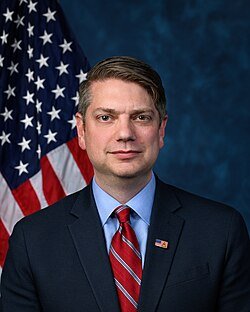
Nick Begich
U.S. Representative · U.S. House
Paul Gosar
Pete Stauber
Subcommittee Chair · House Committee on Natural Resources
Russ Fulcher
U.S. Representative · U.S. House of Representatives
Sarah Elfreth
Representative in Congress · U.S. House of Representatives
Tim Walberg
Tom McClintock
U.S. House of Representatives
Tom Tiffany
Troy Downing
Representative · U.S. House of Representatives
Val Hoyle