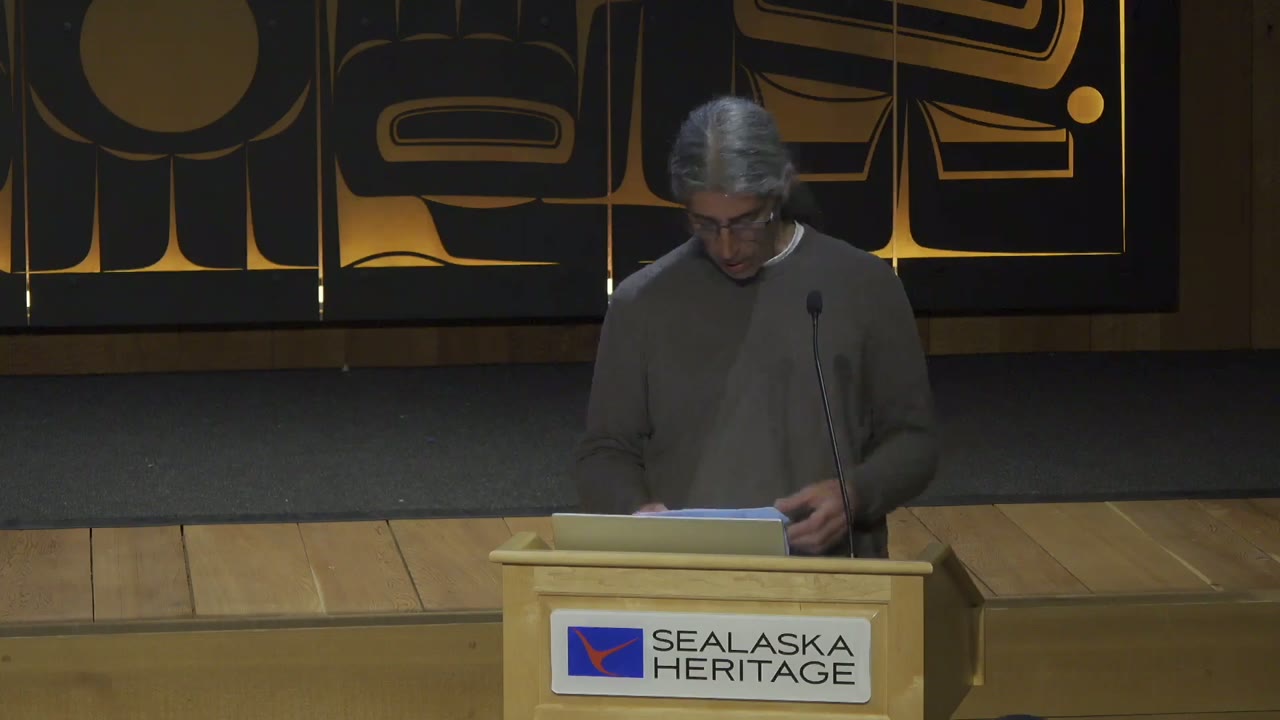
Renaud Chandivert
26:32 - 27:31
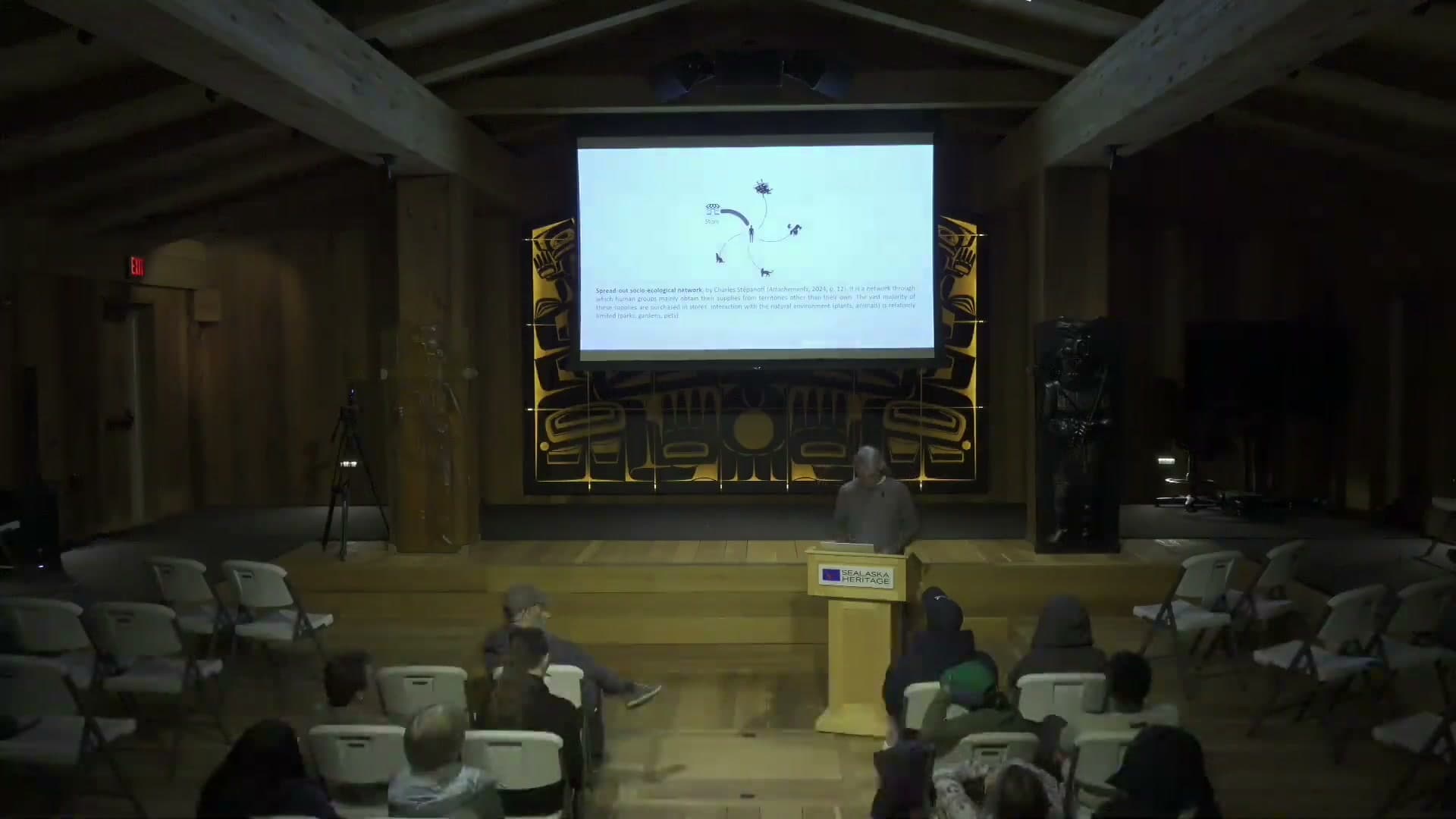
"one can consider that what I have described about traditional food corresponds to the notion of dense social ecological networks developed by this French scholar. These networks are made up of multi-species and are crisscrossed by multidimensional connections between humans and between humans and the living world."
“one can consider that what I have described about traditional food corresponds to the notion of dense social ecological networks developed by this French scholar. These networks are made up of multi-species and are crisscrossed by multidimensional connections between humans and between humans and the living world.”
- Speaker
- Renaud Chandivert
- Timestamp
- 26:32 – 27:31
- Community
- Alaska News
- Location
- Juneau
- Captured at
- July 1, 2026
From the transcript
You can also follow them without talking about them because they go without saying, you know. "Oh, okay, that's evident." And for example, another friend of mine pays close attention to the quality and the precision of the fish cuts, you know, cutting the fish the perfect way. He doesn't say, "You must pay respect to the fish." He's just doing it in practice, you know, being a accurate in cutting the fish. So returning to what I was saying earlier about the work of the anthropologist, French anthropologist Charles Képanoff, one can consider that what I have described about traditional food corresponds to the notion of dense social ecological networks developed by this French scholar. These networks are made up of multi-species and are crisscrossed by multidimensional connections between humans and between humans and the living world.
Related Coverage
French anthropologist reframes Tlingit foodways as living relational system, not subsistence
Renaud Chandivert of Université Paul-Valéry Montpellier III lectured at Sealaska Heritage Institute in Juneau, arguing that Tlingit traditional foodways form a multidimensional 'archipelago of connections' that federal subsistence law cannot adequately describe or protect.
 by Bill AlaskaNews3mo ago2 min read