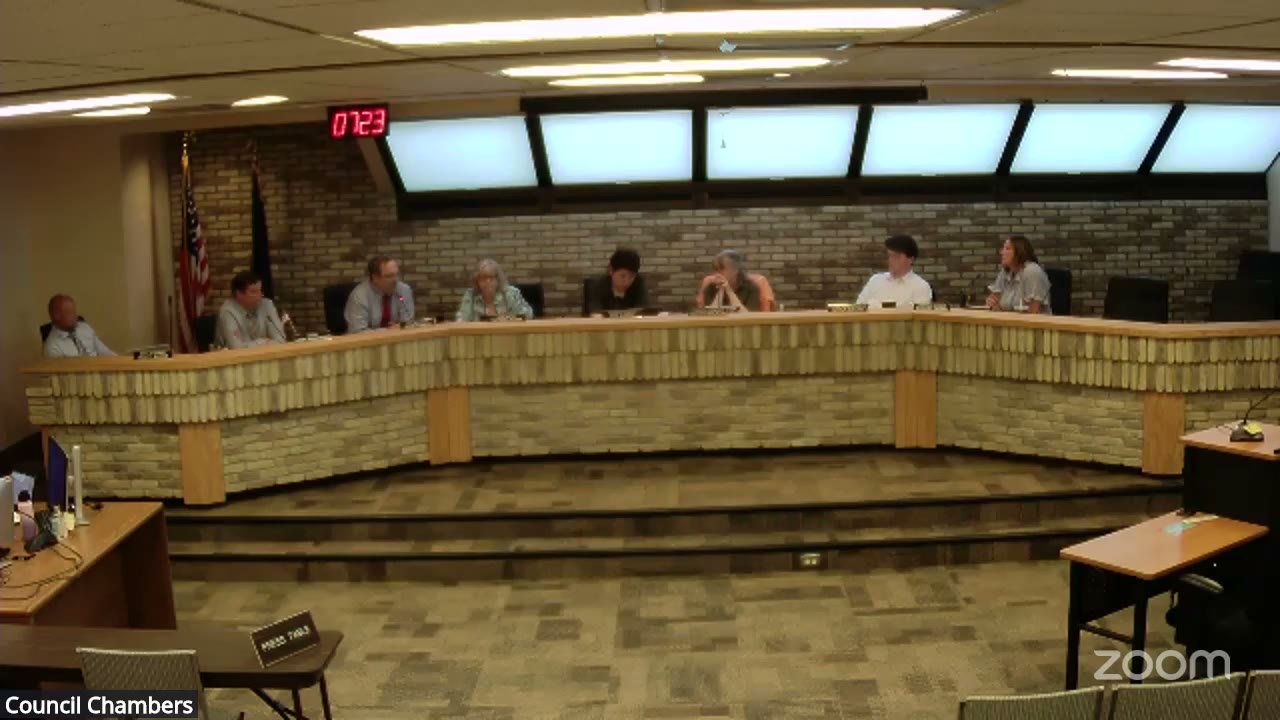
Terry Eubank
86:40 - 87:45
“The majority of this is mirrored after the code that deals with recreational vehicles. Campers and RVs both require a primary structure on the property in order to have tents. Or if it's a vacant property, it needs to be adjacent to A property owner with a primary structure, it limits the length of time a tent can be erected to three consecutive days or seven days within a 30 day period where a recreational vehicle is limited to no more than 30 days.”
- Speaker
- Terry Eubank
- Timestamp
- 86:40 – 87:45
- Community
- Alaska News
- Location
- Kenai
- Captured at
From the transcript
The majority of this is mirrored after the code that deals with recreational vehicles. Campers and RVs both require a primary structure on the property in order to have tents. Or if it's a vacant property, it needs to be adjacent to A property owner with a primary structure, it limits the length of time a tent can be erected to three consecutive days or seven days within a 30 day period where a recreational vehicle is limited to no more than 30 days. That is one difference between the two. And both still have all those other same requirements of requiring them to provide or have adequate sanitary facilities, both refuge and for sewer and things like that.
Related Coverage
Kenai adopts $42.1M budget with swim team grant, airport upgrade
Kenai City Council adopted a $42.1 million budget for fiscal year 2027, approving $296,402 in amendments for a swim team grant, airport billing automation expected to recover $130,000 in missed revenue, and council chambers technology upgrades.

Kenai limits tent camping to 2 tents per property, defines 3+ as campground
Kenai allows up to two tents on private property indefinitely, but three or more tents now require conditional-use approval and are classified as a campground.