Speaker A
1:23 - 1:42
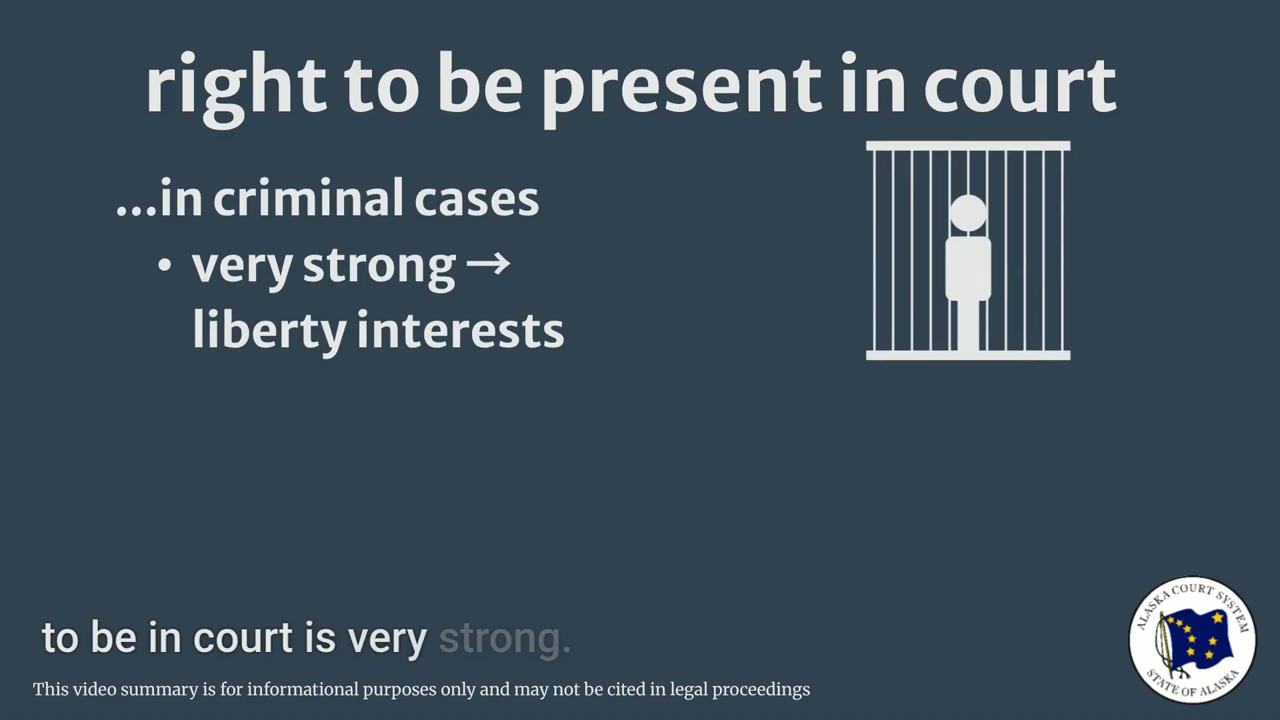
"Even then, if a person is too disruptive, that person can be removed. In a civil case like this one, the right to be present is not as strong as in a criminal case. The court must balance a person's right to be there against the other side's right to a fair trial. The court must also warn the person before removing him from trial."
“Even then, if a person is too disruptive, that person can be removed. In a civil case like this one, the right to be present is not as strong as in a criminal case. The court must balance a person's right to be there against the other side's right to a fair trial. The court must also warn the person before removing him from trial.”
- Speaker
- Speaker A
- Timestamp
- 1:23 – 1:42
- Community
- Alaska News
- Location
- Alaska
- Captured at
- September 9, 2026
From the transcript
Even then, if a person is too disruptive, that person can be removed. In a civil case like this one, the right to be present is not as strong as in a criminal case. The court must balance a person's right to be there against the other side's right to a fair trial. The court must also warn the person before removing him from trial.
Related Coverage
Alaska Supreme Court says a judge may remove a plaintiff from his own trial, after warnings
The Alaska Supreme Court held for the first time that a trial judge may exclude a disruptive civil plaintiff from his own trial after warnings, ruling in a June 5, 2026 property-line case that the right to be present is weaker in civil cases than in criminal ones.
 by Walter AlaskaNews1w ago2 min readAI