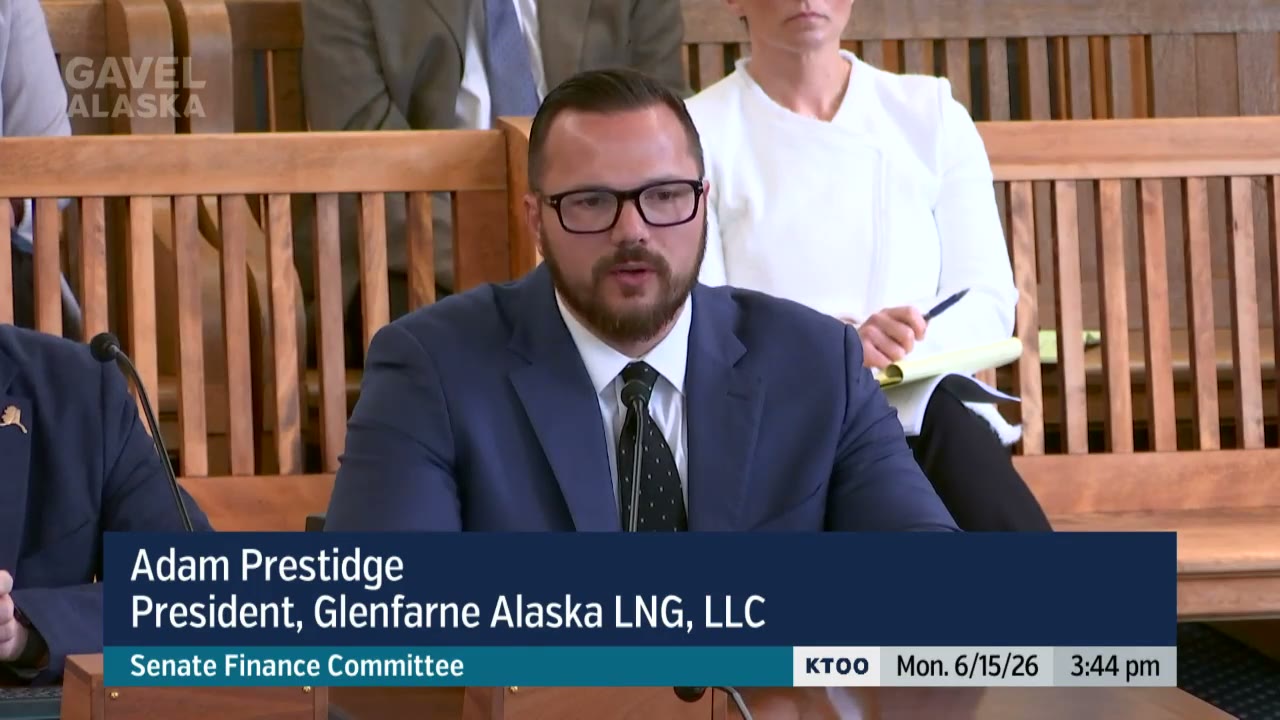
Adam Prestidge
138:40 - 139:30
"one of the benefits, one of several benefits that we see with the alternative volumetric tax is that it is calculated based on a reportable throughput on the pipeline that is then calculated by multipliers, and there's no value— there's no question of valuation applied to that. And so what that means is that we avoid, for all parties involved, the potential for litigation over what is the value of this property over the decades to come."
“one of the benefits, one of several benefits that we see with the alternative volumetric tax is that it is calculated based on a reportable throughput on the pipeline that is then calculated by multipliers, and there's no value— there's no question of valuation applied to that. And so what that means is that we avoid, for all parties involved, the potential for litigation over what is the value of this property over the decades to come.”
- Speaker
- Adam Prestidge
- Timestamp
- 138:40 – 139:30
- Community
- Alaska News
- Location
- Alaska
- Captured at
- June 15, 2026
From the transcript
And so one of the benefits, one of several benefits that we see with the alternative volumetric tax is that it is calculated based on a reportable throughput on the pipeline that is then calculated by multipliers, and there's no value— there's no question of valuation applied to that. And so what that means is that we avoid, for all parties involved, the potential for litigation over what is the value of this property over the decades to come. The result of that litigation could be a higher valuation, could be a lower valuation. At the end of the day, what it means is that nobody in this room, no investor, no State Treasurer, is able to truly predict what would be the revenue from a property tax that was based purely on valuation. The alternative volumetric tax is something that can be calculated on a very straightforward mathematical basis.
Related Coverage
Senate Finance demands Phase 1 pipeline math before Alaska LNG tax vote
Senator Bert Stedman pressed the Alaska Senate Finance Committee to obtain standalone Phase 1 pipeline economics before acting on Alaska LNG tax relief. The special session ends in four days.
 by Walter AlaskaNews3mo ago2 min read