Speaker A
1:44 - 2:13
"Removing him from the trial was a last resort that was necessary to make sure the defendants had a fair trial. For this reason, the Supreme Court held that the Superior Court did not abuse its discretion when it removed him. The man also made other arguments, but he did not provide any legal or factual support for his arguments. Even self-represented litigants must provide more than just a simple statement to have their claims heard."
“Removing him from the trial was a last resort that was necessary to make sure the defendants had a fair trial. For this reason, the Supreme Court held that the Superior Court did not abuse its discretion when it removed him. The man also made other arguments, but he did not provide any legal or factual support for his arguments. Even self-represented litigants must provide more than just a simple statement to have their claims heard.”
- Speaker
- Speaker A
- Timestamp
- 1:44 – 2:13
- Community
- Alaska News
- Location
- Alaska
- Captured at
- September 9, 2026
From the transcript
In this situation, the man was given many warnings, but he still made it impossible for the trial to continue. Removing him from the trial was a last resort that was necessary to make sure the defendants had a fair trial. For this reason, the Supreme Court held that the Superior Court did not abuse its discretion when it removed him. The man also made other arguments, but he did not provide any legal or factual support for his arguments. Even self-represented litigants must provide more than just a simple statement to have their claims heard.
Related Coverage
Alaska Supreme Court says a judge may remove a plaintiff from his own trial, after warnings
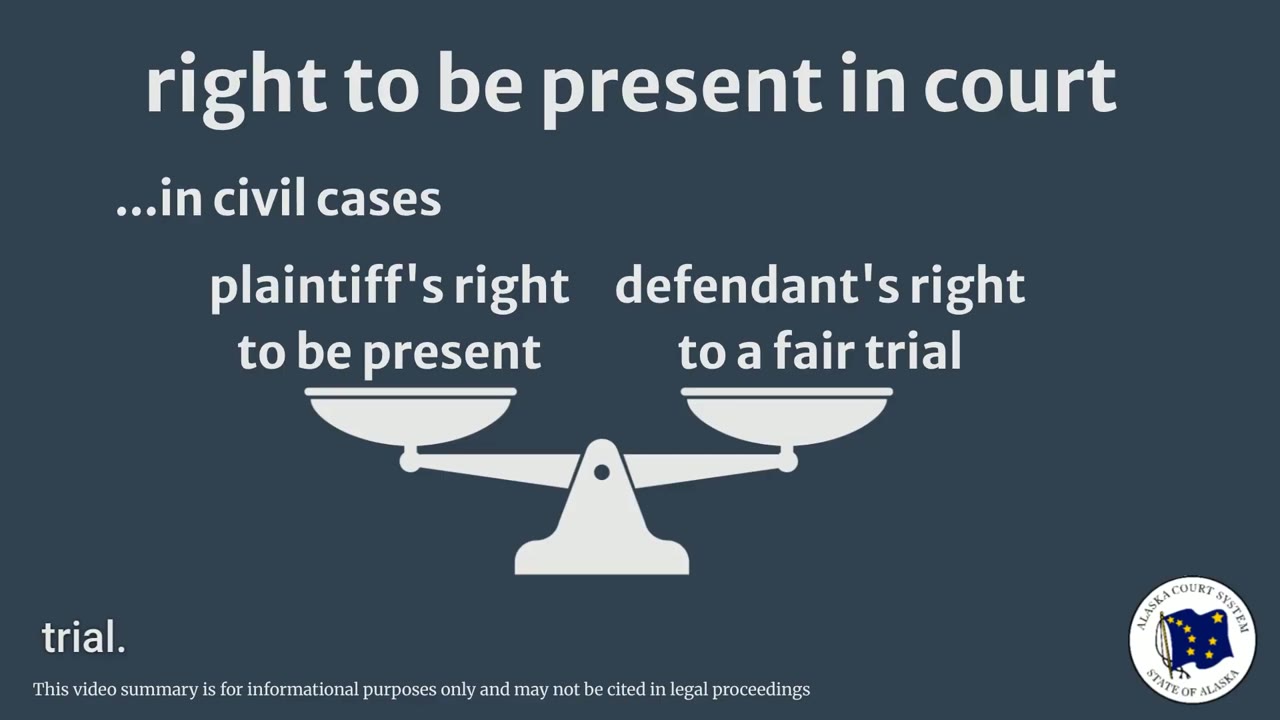
The Alaska Supreme Court held for the first time that a trial judge may exclude a disruptive civil plaintiff from his own trial after warnings, ruling in a June 5, 2026 property-line case that the right to be present is weaker in civil cases than in criminal ones.
 by Walter AlaskaNews1w ago2 min readAI