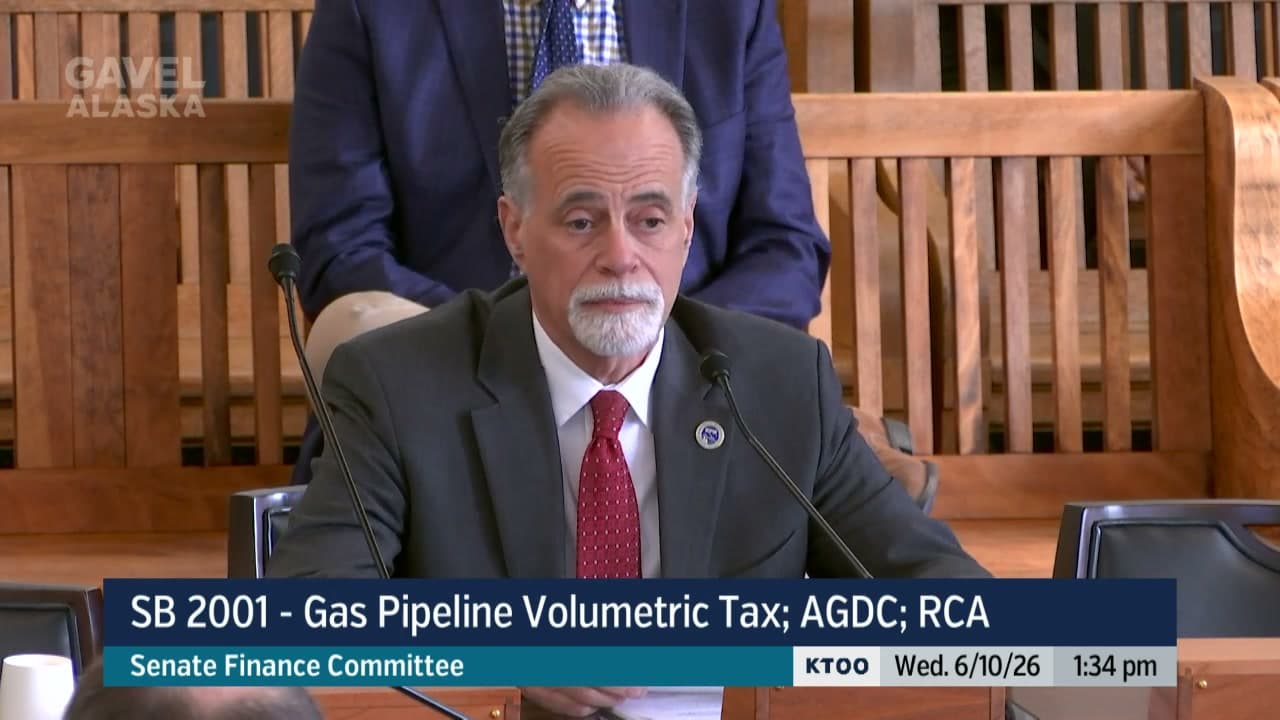
Peter Micciche
13:38 - 14:15
"It is nearly 9 times the footprint and 13 times the production capacity of similar projects the small community has experienced in the past. It's a large project. It will require the relocation of our highway since two-thirds of the facility footprint is located on the east side of the highway, one-third on the west side of the highway, the inlet side."
“It is nearly 9 times the footprint and 13 times the production capacity of similar projects the small community has experienced in the past. It's a large project. It will require the relocation of our highway since two-thirds of the facility footprint is located on the east side of the highway, one-third on the west side of the highway, the inlet side.”
- Speaker
- Peter Micciche
- Timestamp
- 13:38 – 14:15
- Community
- Alaska News
- Location
- Kenai Peninsula
- Captured at
- June 10, 2026
From the transcript
It is nearly 9 times the footprint and 13 times the production capacity of similar projects the small community has experienced in the past. It's a large project. It will require the relocation of our highway since two-thirds of the facility footprint is located on the east side of the highway, one-third on the west side of the highway, the inlet side. We're not exactly sure where the highway will have its final location, but we do know that it will bisect Nokiski from the remainder of the peninsula. While we contribute to and absorb the cost, reconnecting subdivisions in the area, and we're supportive.
Related Coverage
Senate Finance weighs Alaska LNG tax worth $124M a year — and whether it's enough for host communities
Kenai Peninsula Borough Mayor Peter Micciche told the Alaska Senate Finance Committee Wednesday that the House version of the Alaska LNG tax bill provides a workable 70% property tax reduction, while the original 90% cut would have left local taxpayers subsidizing the project.
 by Walter AlaskaNews3mo ago3 min readAI