John Sims
29:02 - 29:48
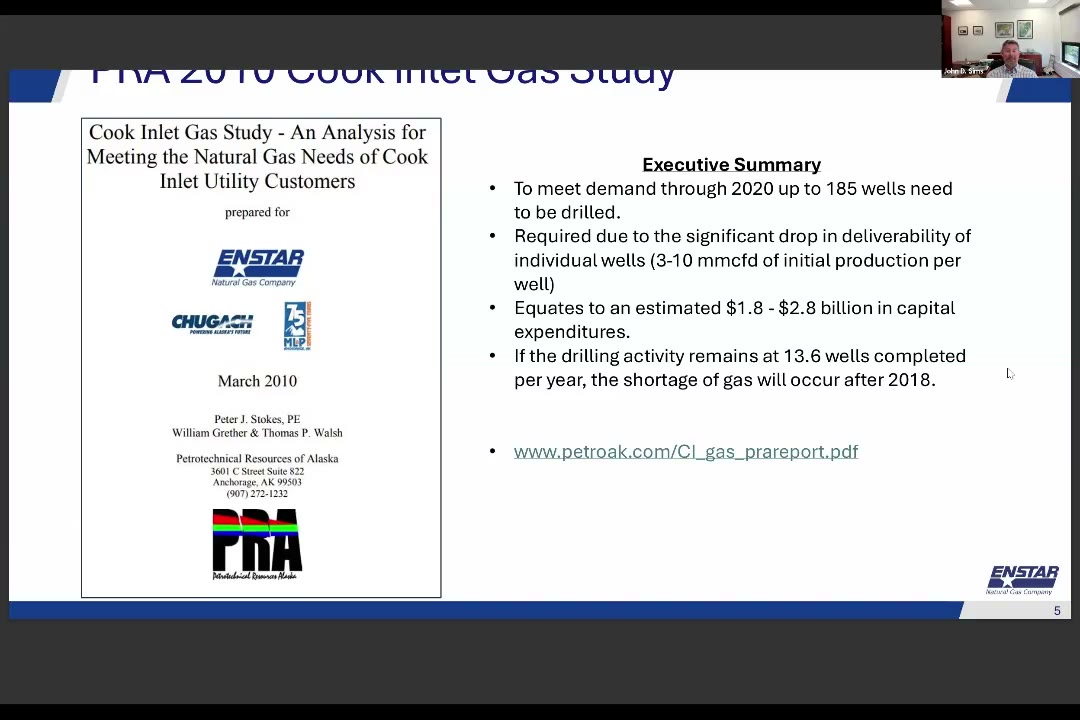
"Well, they didn't do 185 wells, they did 192 wells, and they've spent over $1.5 billion over that time frame, again, to make sure that Cook Inlet customers, both on the natural gas side, on the electric side, had energy."
“Well, they didn't do 185 wells, they did 192 wells, and they've spent over $1.5 billion over that time frame, again, to make sure that Cook Inlet customers, both on the natural gas side, on the electric side, had energy.”
- Speaker
- John Sims
- Timestamp
- 29:02 – 29:48
- Community
- Alaska News
- Location
- Alaska
- Captured at
- June 9, 2026
From the transcript
So moving on to the next slide, what's happened since then? I pulled these directly from a January 28th presentation from Hilcorp to House Resources. Here's a look at what Hilcorp has done since 2012. Well, they didn't do 185 wells, they did 192 wells, and they've spent over $1.5 billion over that time frame, again, to make sure that Cook Inlet customers, both on the natural gas side, on the electric side, had energy. That required a significant lift and somebody with a significant balance sheet to come in drill those 192 wells, and Hilcorp, from day one since they've been in the Cook Inlet, has done a fantastic job of ensuring that there was enough gas into the Cook Inlet to meet customer demand.
Related Coverage
Enstar faces 2033 supply gap as Hilcorp contract expires, no Cook Inlet producer can match drilling scale
Enstar Natural Gas faces losing its primary gas supply in 2033 when its contract with Hilcorp expires, leaving Southcentral Alaska utilities with no Cook Inlet producer capable of matching the scale of investment that has kept the basin producing for the past decade.
 by Bill AlaskaNews4mo ago2 min read