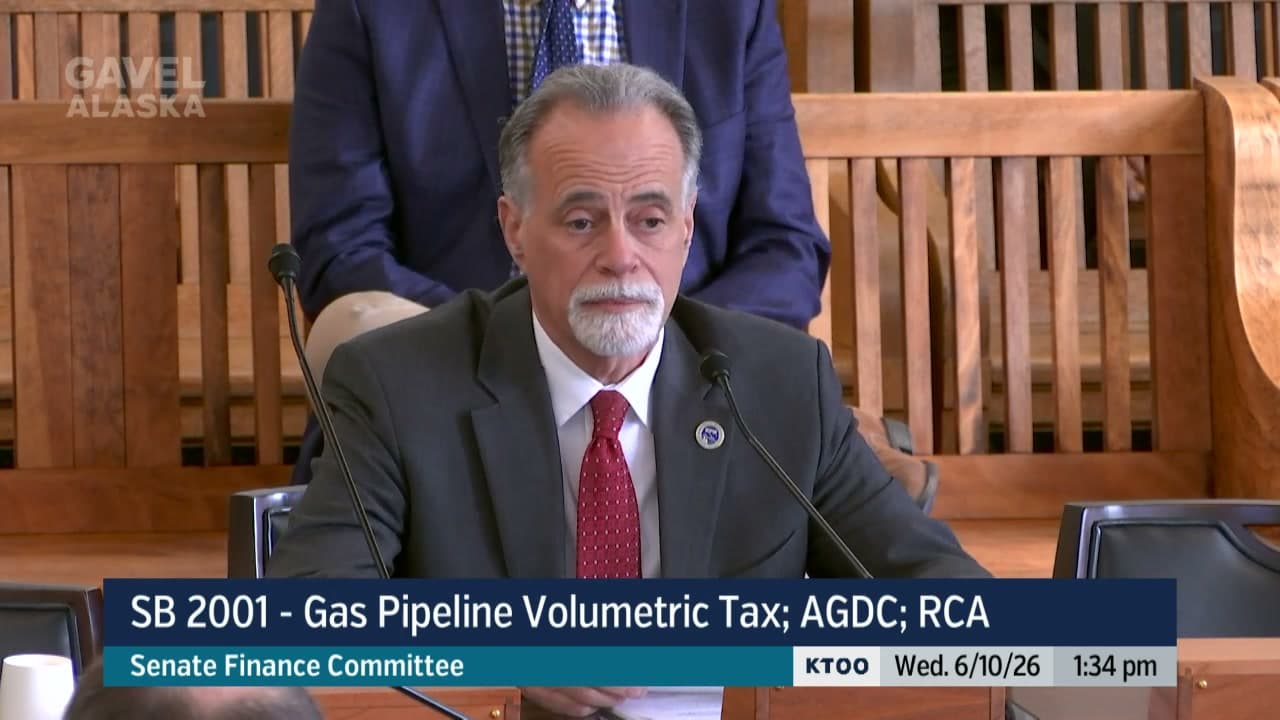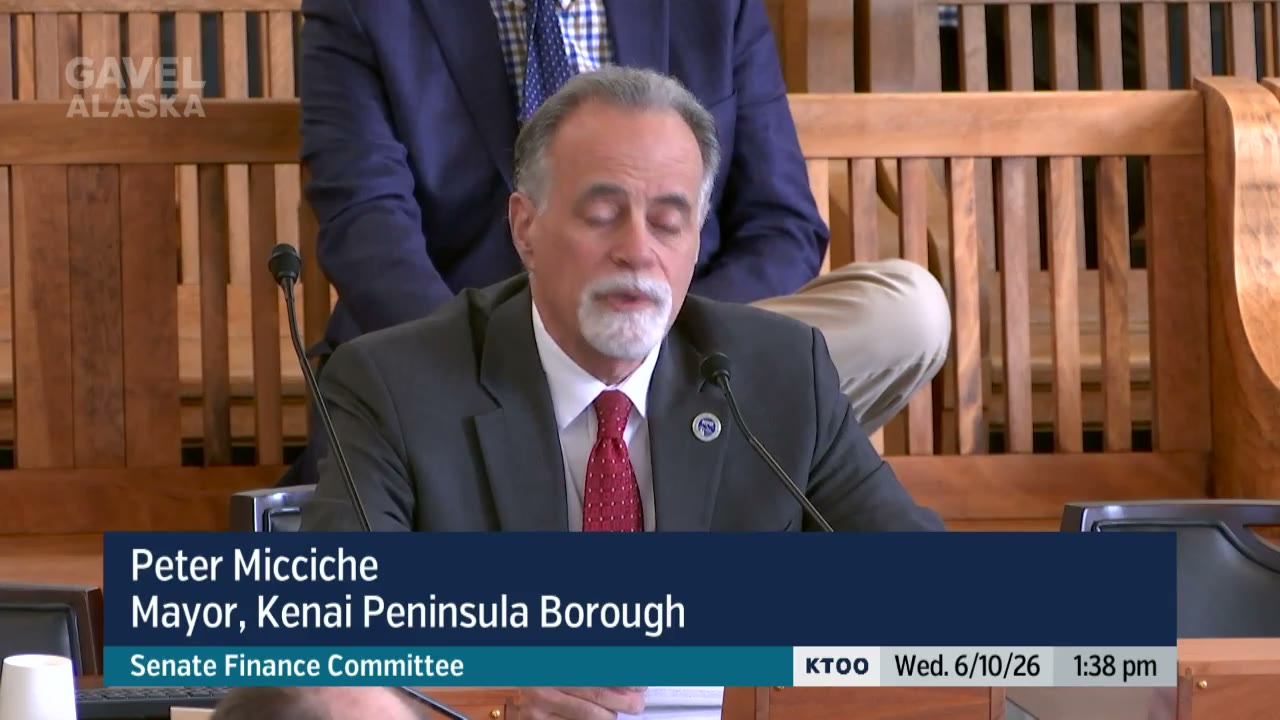
Peter Micciche
13:07 - 13:37
"42.7% Of the value of this project will be located in the Kenai Peninsula Borough. 900 Acres, 3 liquefaction trains, 2 240,000 cubic meter storage tanks, terminal facilities, 2 berths in Cook Inlet, moving up to 2.5 BCF a day, which means a ship or 2 will always be present. This project will nearly double the population in Akiski for 4 years during construction."
“42.7% Of the value of this project will be located in the Kenai Peninsula Borough. 900 Acres, 3 liquefaction trains, 2 240,000 cubic meter storage tanks, terminal facilities, 2 berths in Cook Inlet, moving up to 2.5 BCF a day, which means a ship or 2 will always be present. This project will nearly double the population in Akiski for 4 years during construction.”
- Speaker
- Peter Micciche
- Timestamp
- 13:07 – 13:37
- Community
- Alaska News
- Location
- Kenai Peninsula
- Captured at
- June 10, 2026
From the transcript
We will adjust to changes. But I do want to talk about the changes. 42.7% Of the value of this project will be located in the Kenai Peninsula Borough. 900 Acres, 3 liquefaction trains, 2 240,000 cubic meter storage tanks, terminal facilities, 2 berths in Cook Inlet, moving up to 2.5 BCF a day, which means a ship or 2 will always be present. This project will nearly double the population in Akiski for 4 years during construction.
Related Coverage
Senate Finance weighs Alaska LNG tax worth $124M a year — and whether it's enough for host communities
Kenai Peninsula Borough Mayor Peter Micciche told the Alaska Senate Finance Committee Wednesday that the House version of the Alaska LNG tax bill provides a workable 70% property tax reduction, while the original 90% cut would have left local taxpayers subsidizing the project.
 by Walter AlaskaNews3mo ago3 min readAI