Alexi Painter
41:03 - 41:48
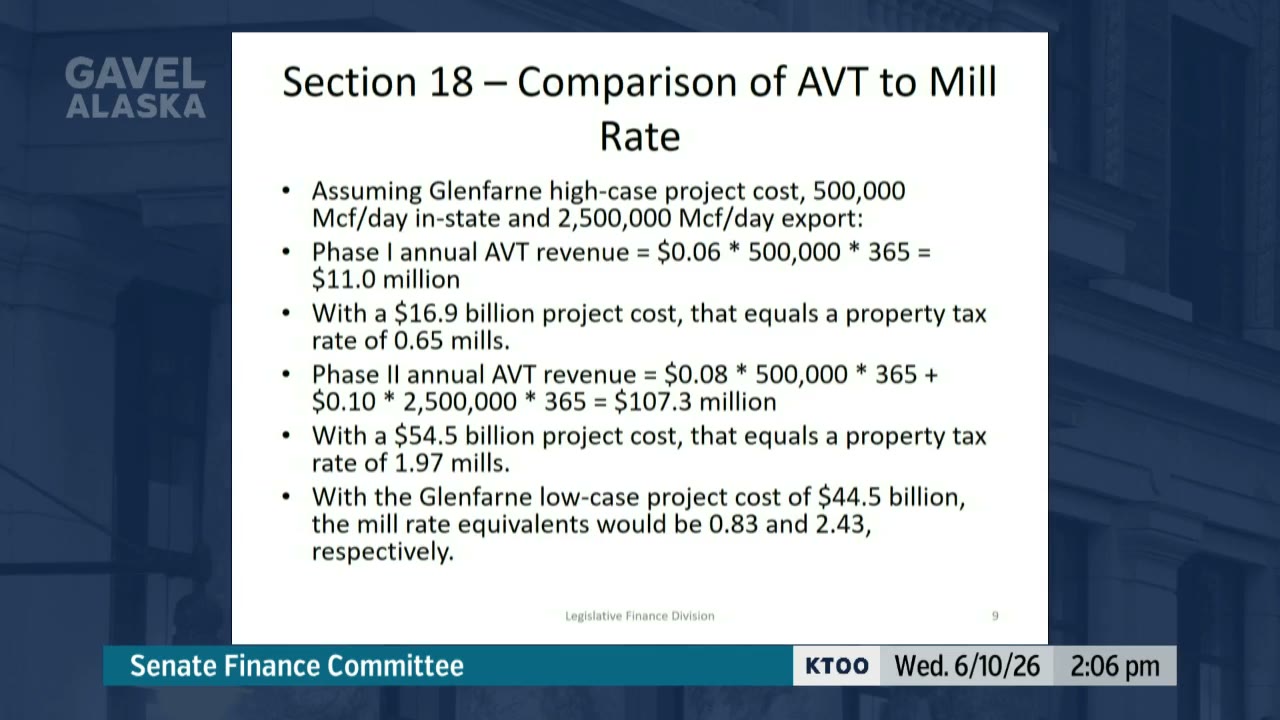
"For Phase 2, your annual AVT revenue would be 8 cents times 500,000 times 365 plus 10 cents times 2.5 million times 365, and that's $107.3 million. And so that's roughly with that higher end cost estimate, that's a mill rate of about 1.97 mills."
“For Phase 2, your annual AVT revenue would be 8 cents times 500,000 times 365 plus 10 cents times 2.5 million times 365, and that's $107.3 million. And so that's roughly with that higher end cost estimate, that's a mill rate of about 1.97 mills.”
- Speaker
- Alexi Painter
- Timestamp
- 41:03 – 41:48
- Community
- Alaska News
- Location
- Kenai Peninsula
- Captured at
- June 10, 2026
From the transcript
So for that, you would take— for the in-state, the revenue amount would be 6 cents times 500,000 times 365. That gets you $11 million per year. And then, uh, to try to turn that into a mill rate with a $16.9 billion project cost, that's a property tax rate about 0.65 mills, something like that. For Phase 2, your annual AVT revenue would be 8 cents times 500,000 times 365 plus 10 cents times 2.5 million times 365, and that's $107.3 million. And so that's roughly with that higher end cost estimate, that's a mill rate of about 1.97 mills.
Related Coverage
Senate Finance weighs Alaska LNG tax worth $124M a year — and whether it's enough for host communities
Kenai Peninsula Borough Mayor Peter Micciche told the Alaska Senate Finance Committee Wednesday that the House version of the Alaska LNG tax bill provides a workable 70% property tax reduction, while the original 90% cut would have left local taxpayers subsidizing the project.
 by Walter AlaskaNews3mo ago3 min readAI